
2027 How to Get Into Healthcare Administration with No Experience

Co-Founder and Chief Data Scientist
A hospital may run on doctors and nurses, but it thrives because of strong administration. Behind every efficient healthcare facility are professionals managing budgets, compliance, staffing, and operations. These roles are vital, and they are increasingly open to people who are just starting out.
Healthcare administration offers a stable career path with room for growth, even if you have no prior experience. Many professionals enter the field from other industries, bringing transferable skills in leadership, communication, and organization.
In this guide, I will walk you through the steps to break into healthcare administration without a background in the field. You will learn about entry-level opportunities, the value of certifications, and how to showcase transferable skills. By the end, you will have a clear roadmap to launch your career in this fast-growing industry.
Key Benefits of Getting into Healthcare Administration in 2027
- The average salary for healthcare administrators is $94,295 annually, offering financial stability from the start (ZipRecruiter, n.d.)
- Employment in healthcare administration is projected to grow 23% from 2024 to 2034, far outpacing many other fields (BLS, 2025).
- The role of a healthcare administrator provides both personal fulfillment and professional growth, allowing you to make a difference in patient care while building leadership skills.
- What are the key responsibilities of a healthcare administrator? Responsibilities
- What is the best educational path for breaking into healthcare administration? Educational Path
- What skills make you stand out as a beginner in healthcare administration? Essential Skills
- What are the top entry-level opportunities for healthcare administrators? Entry-Level Opportunities
- What is the salary starting point in healthcare administration with no experience? Starting Salary
- How can you build relevant experience without a background in healthcare administration? Gaining Experience
- Can someone transition into healthcare administration from a completely different industry? Can someone transition into healthcare administration from a completely different industry?
- What certifications can boost your career even with no healthcare administration experience? Certifications
- What are the best job search strategies for aspiring healthcare administrators without direct experience? Job Search Tips
- What is the job outlook for healthcare administrators? Job Outlook
How can you enter healthcare administration with no experience?
Breaking into healthcare administration is possible even if your resume does not include a hospital, clinic, or insurance company role yet. The challenge is proving that you understand how healthcare organizations operate and that your existing skills can support patient services, staff coordination, compliance, records, scheduling, billing, or department operations.
This guide is for career changers, recent graduates, office professionals, business majors, public health students, and healthcare support workers who want to move into administration. You will learn what healthcare administrators do, which entry-level roles are realistic, what education or certifications can help, how salaries may start, and how to build experience before applying.
The goal is not simply to “get into healthcare.” It is to choose a path that fits your background, budget, timeline, and long-term career goals.
Quick answer: the most practical first step
The fastest way to start in healthcare administration with no direct experience is to apply for entry-level administrative roles in healthcare settings while building basic knowledge in medical terminology, patient privacy, electronic health records, billing, scheduling, and healthcare compliance. A bachelor’s degree can help for management-track roles, while certificates or short courses may be enough to qualify for front-office, records, coordinator, or assistant positions.
If your goal is to move into leadership sooner, advanced programs such as accelerated online MBA options in healthcare administration can help experienced professionals add business, finance, and healthcare leadership training.
What healthcare administrators actually do
Healthcare administration focuses on the business and operational side of care delivery. Administrators do not usually provide clinical care, but their decisions affect how efficiently patients are served, how staff are supported, and how well the organization follows rules and manages resources.
Core responsibilities often include:
- Regulatory and privacy compliance: Helping the organization follow healthcare laws, patient privacy expectations, accreditation requirements, and internal policies.
- Budget and revenue support: Tracking expenses, supporting billing processes, helping allocate resources, and identifying operational inefficiencies.
- Staff coordination: Assisting with schedules, onboarding, training logistics, workforce planning, and communication between departments.
- Operational management: Improving workflows, resolving administrative bottlenecks, monitoring department performance, and supporting daily facility needs.
- Patient experience: Creating smoother check-in, communication, referral, billing, and follow-up processes that improve how patients move through the system.
- Healthcare technology use: Working with electronic health records, scheduling platforms, reporting tools, and other systems used to document and coordinate care.
| Responsibility area | What it looks like in an entry-level role | Why it matters |
| Scheduling and coordination | Managing appointments, room availability, provider calendars, or department meetings | Delays and missed appointments affect patient access and staff productivity |
| Records and documentation | Updating patient files, verifying information, and handling EHR tasks | Accurate records support care quality, billing, compliance, and continuity of care |
| Billing and insurance support | Checking coverage, submitting claims, correcting coding or documentation issues | Revenue cycle problems can disrupt cash flow and patient billing accuracy |
| Compliance support | Following privacy rules, safety processes, and internal reporting procedures | Healthcare organizations face legal, financial, and reputational risk when compliance fails |
| Patient communication | Answering questions, explaining processes, directing patients to the right department | Clear communication improves trust and reduces confusion during care |
What is the best education path for healthcare administration beginners?
The right educational path depends on where you are starting. A person with office management experience may only need healthcare-specific training to compete for entry-level roles. A recent student targeting leadership may benefit from a healthcare administration or business degree. A mid-career professional seeking department-level management may eventually need a master’s degree.
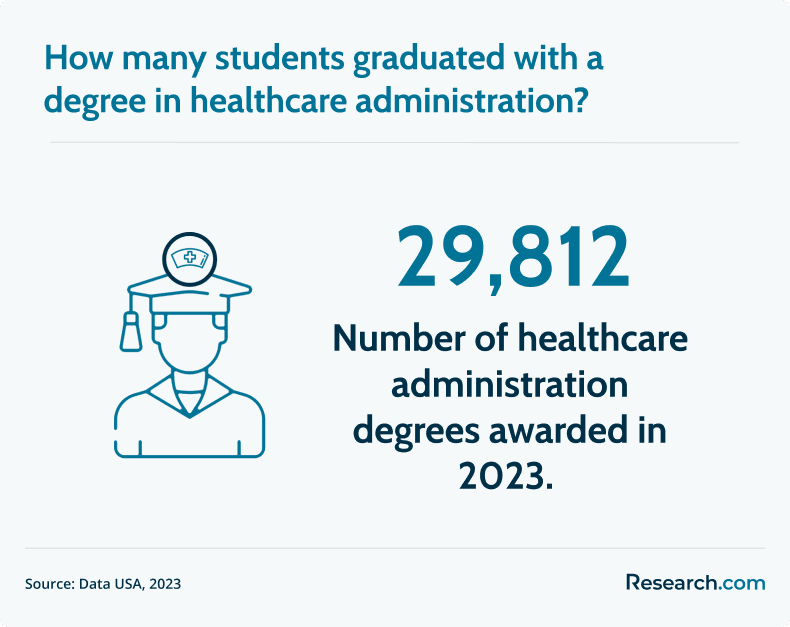
Healthcare administration degrees remain a common route into the field. Data USA reports that 29,812 degrees in healthcare administration were awarded in 2023, showing that many students are using formal education to prepare for this career area.
| Education option | Best for | What it can prepare you to do | Important caution |
| Bachelor’s in Healthcare Administration | Students or career changers who want a direct healthcare management foundation | Apply for coordinator, assistant manager, medical office, patient services, or operations support roles | Program quality, internships, and employer connections can matter as much as the degree title |
| Bachelor’s in Business Administration | People who want broader business flexibility with healthcare as one possible industry | Use skills in management, finance, HR, analytics, and operations in healthcare settings | You may need healthcare-specific coursework or experience to compete with healthcare administration graduates |
| Bachelor’s in Public Health | Students interested in population health, policy, community programs, or health systems | Work in program coordination, community health administration, compliance support, or nonprofit health roles | Some business operations roles may prefer stronger finance or management preparation |
| Master of Healthcare Administration | Professionals aiming for hospital, clinic, health system, or department leadership | Prepare for mid-level and senior administrative responsibilities | It is usually more valuable after you have some healthcare or management exposure |
| MBA in Healthcare Administration | Professionals who want business leadership training with healthcare specialization | Move toward strategy, finance, operations, consulting, or executive-track roles | Compare curriculum carefully; some programs are business-heavy with limited healthcare depth |
| Certificate in Healthcare Administration | Beginners who want targeted knowledge without committing to a full degree | Build familiarity with healthcare operations, compliance, billing, records, and office management | A certificate may improve your resume, but it does not replace experience for management-level jobs |
How to choose the right path
- If you need a job quickly: Start with entry-level healthcare office roles and add a short certificate or course in medical administration, billing, records, or compliance.
- If you do not have a bachelor’s degree: Consider a healthcare administration, business, or public health degree if you want long-term advancement.
- If you already have a bachelor’s degree: Look for healthcare certificates, internships, volunteer work, or coordinator roles before committing to a graduate program.
- If you already manage people or budgets: A graduate degree may help you translate existing leadership experience into healthcare-specific roles.
What skills help beginners stand out in healthcare administration?
Employers hiring for entry-level healthcare administration roles often look for reliability, accuracy, professionalism, and the ability to communicate with patients and staff under pressure. You do not need to know everything on day one, but you do need to show that you can learn healthcare processes quickly and handle sensitive information responsibly.
Beginners can stand out by connecting their prior experience to healthcare needs. For example, customer service can translate into patient communication. Retail scheduling can translate into appointment coordination. Accounting support can translate into billing or revenue cycle work. HR experience can translate into staffing, onboarding, and compliance support.
| Skill | Why employers value it | How to prove it without healthcare experience |
| Communication | Administrators must explain processes clearly to patients, providers, insurers, and staff | Highlight customer service, client support, training, call center, or team coordination experience |
| Organization | Healthcare offices depend on accurate schedules, records, forms, and follow-up tasks | Show examples of managing calendars, files, inventory, projects, or deadlines |
| Attention to detail | Small mistakes in records, billing, or patient information can create serious problems | Emphasize data entry, bookkeeping, quality checks, reporting, or document review work |
| Patient care awareness | Even administrative employees affect the patient experience | Mention volunteer work, caregiving, front-desk roles, social services, or service-oriented jobs |
| Home health familiarity | Home-based care has distinct scheduling, documentation, and coordination demands | Describe caregiving, dispatch, logistics, case coordination, or community support experience |
| Social work or case support | Resource coordination and sensitive communication are useful in healthcare settings | Connect case management, counseling support, nonprofit work, or advocacy experience to patient navigation |
| OSHA awareness | Workplace safety knowledge helps support safe environments for patients and staff | List safety training, compliance tasks, incident reporting, or workplace procedure experience |
| Technology comfort | Healthcare organizations rely on EHRs, scheduling systems, reporting tools, and secure communication | Include CRM, ERP, spreadsheet, database, scheduling, or records systems you have used |
Compensation can differ widely by role, employer, region, and experience. Reviewing hospital administrator salary information can help you understand how earnings may change as responsibilities increase.
For beginners, the strongest resume is usually not the one with the most credentials. It is the one that clearly shows transferable skills, healthcare interest, and proof that you can handle confidential, detail-heavy, people-facing work.
What entry-level healthcare administration jobs should you target first?
Most people do not begin as hospital administrators. They start in roles that expose them to healthcare operations, records, patients, billing, staffing, or department coordination. These jobs can help you learn the language of healthcare while building experience that supports promotion into supervisor or manager roles.
| Entry-level role | Main responsibilities | Good fit if you have experience in... |
| Medical Office Administrator | Scheduling, patient intake, billing support, records, phone communication, and daily office coordination | Office administration, reception, customer service, scheduling, or small business operations |
| Patient Services Coordinator | Helping patients navigate appointments, referrals, questions, forms, and communication with providers | Customer service, hospitality, social services, call center work, or client relations |
| Healthcare HR Assistant | Supporting recruitment, onboarding, training records, staff files, and employee communication | Human resources, recruiting, payroll support, training coordination, or administrative support |
| Medical Records Clerk | Maintaining patient records, entering data, handling documentation, and supporting privacy compliance | Data entry, records management, filing, document control, or administrative accuracy |
| Administrative Assistant in Healthcare | Coordinating meetings, preparing documents, supporting leaders, managing communication, and organizing department tasks | Executive assistance, office support, project coordination, or general administration |
| Billing and Coding Specialist | Supporting insurance claims, coding accuracy, payment follow-up, and revenue cycle documentation | Bookkeeping, accounting support, insurance, finance, claims, or detail-heavy administrative work |
| Clinical Operations Assistant | Helping departments coordinate daily workflows, supplies, schedules, reports, and communication among clinical teams | Operations, logistics, project support, team coordination, or facility administration |
If your background is in workforce planning, staffing, employee relations, or compliance, an accelerated online master’s in human resources management may be a useful alternative route because many healthcare organizations need administrators who understand hiring, retention, training, and labor regulations.
Which entry-level role is best for advancement?
There is no single best starting job. Choose based on the type of healthcare administration career you want:
- For clinic management: Medical office administrator or patient services coordinator can be strong starting points.
- For hospital operations: Administrative assistant, department coordinator, or clinical operations assistant may provide better exposure.
- For finance or revenue cycle: Billing and coding specialist can build valuable technical knowledge.
- For HR leadership: Healthcare HR assistant can lead toward workforce planning and employee relations roles.
- For compliance or data roles: Medical records clerk can help you build documentation, privacy, and EHR experience.
What salary can you expect when starting with no healthcare administration experience?
Healthcare administration pay varies by job title, facility type, location, credentials, and level of responsibility. For beginners with no prior background, the 25th percentile is about $49,000 annually, which is often a reasonable reference point for an entry-level starting range. This should not be treated as a guaranteed offer; actual pay depends on the specific role and employer.
Long-term earning potential can be much higher as administrators gain experience, manage larger teams, oversee budgets, or move into hospital and health system leadership. Top earners often make over $150,000, but that level typically reflects more advanced responsibility, stronger experience, and often additional education or specialized expertise.
Graduate education can influence advancement opportunities, especially for professionals moving into management or executive-track positions. Reviewing salary outcomes after an MBA in healthcare management can help you compare the potential value of advanced study against tuition, time, and opportunity cost.
| Career stage | Typical focus | What may increase earning potential |
| Entry level | Scheduling, records, patient services, billing support, HR support, or office coordination | Healthcare-specific training, strong software skills, professionalism, and reliability |
| Early career | Coordinator, lead administrator, revenue cycle support, department support, or assistant manager duties | Experience with EHRs, compliance, budgeting, team coordination, and process improvement |
| Mid-career | Managing staff, supervising departments, tracking performance, supporting budgets, or leading projects | Bachelor’s or master’s education, leadership results, project experience, and healthcare operations knowledge |
| Advanced leadership | Department, facility, hospital, health system, or executive administration | Graduate education, strategic leadership experience, financial expertise, and measurable operational results |
For a visual overview, the chart below shows the salary spectrum for healthcare administrators by percentile.
How can you build healthcare administration experience before your first job?
If you do not have direct healthcare experience, your first goal is to create evidence of readiness. Employers need to see that you understand basic healthcare workflows, can work with sensitive information, and can function in a regulated environment. You can build that evidence through volunteering, short-term roles, coursework, projects, and networking.
- Volunteer in a healthcare setting. Look for hospital, clinic, senior care, nonprofit health, or community health opportunities where you can observe patient flow, front-desk work, records, or communication processes.
- Apply for internships or temporary assignments. Short placements can be valuable if they expose you to scheduling, billing, patient services, HR, records, or department operations.
- Use administrative experience from other industries. Scheduling, payroll, office management, bookkeeping, project coordination, compliance, and customer service are directly relevant if you explain the connection clearly.
- Complete targeted online coursework. Focus on medical terminology, healthcare administration basics, billing and coding, EHR systems, HIPAA-related privacy concepts, or healthcare quality.
- Request informational interviews. Ask healthcare administrators what their entry-level teams do, which tools they use, what mistakes beginners make, and what skills they wish new hires had.
- Build a small portfolio. Include sample process maps, mock scheduling workflows, spreadsheet dashboards, training checklists, or policy summaries that show how you think operationally.
Project management experience can also transfer well into healthcare operations because many administrators coordinate timelines, teams, resources, and performance goals. Comparing an MBA project manager salary with healthcare administration earnings may help you think through the value of combining business, project, and healthcare skills.
| If your background is... | Emphasize this on your resume | Target these healthcare entry points |
| Retail or hospitality | Customer service, conflict resolution, scheduling, fast-paced operations | Patient services coordinator, front desk administrator, medical office assistant |
| Finance or accounting | Billing accuracy, reporting, claims, reconciliations, data analysis | Billing specialist, revenue cycle assistant, finance administrative support |
| Human resources | Recruiting, onboarding, training records, employee communication, compliance | Healthcare HR assistant, staffing coordinator, training coordinator |
| Education or nonprofit work | Program coordination, communication, documentation, resource navigation | Community health coordinator, patient navigator, program assistant |
| Operations or logistics | Workflow improvement, inventory, scheduling, team coordination, reporting | Clinical operations assistant, department coordinator, facilities support |
Can you transition into healthcare administration from another industry?
Yes. Healthcare administration is a realistic career-change option for people from business, finance, human resources, education, customer service, operations, social services, and project management. The key is not to present yourself as “new to everything.” Instead, show which parts of your prior work already match healthcare administration needs.
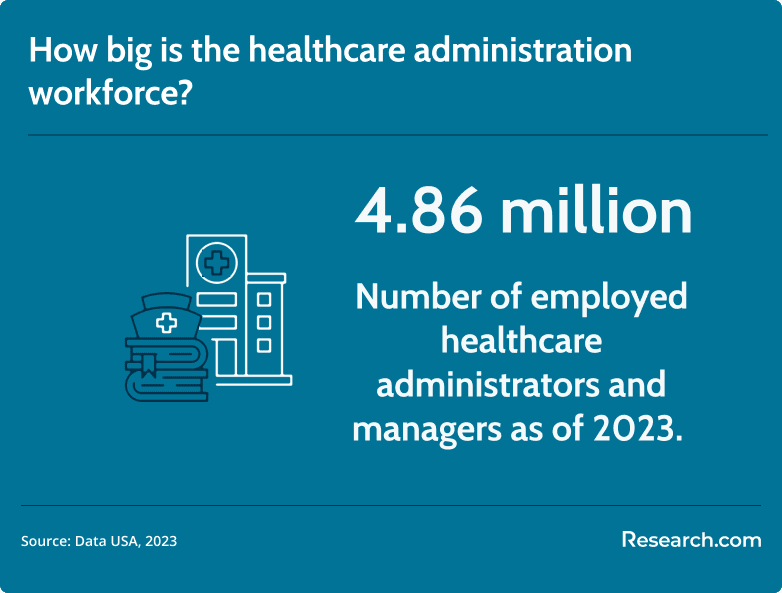
Data USA reported over 4.86 million professionals working in healthcare administration roles in 2023. That scale reflects a wide range of employers and job functions, from small medical offices to large health systems, insurers, public health agencies, senior care organizations, and specialty clinics.
Some career changers enter through administrative or operations roles. Others come from clinical backgrounds and move toward management. For example, the nurse administrator career path is a specialized route for nurses who want to lead teams, departments, or care delivery operations.
When a career change into healthcare administration makes sense
- You are comfortable working in regulated environments where accuracy and documentation matter.
- You want a people-centered administrative career, not a purely back-office business role.
- You can handle fast-moving priorities and communication with patients, clinicians, vendors, and managers.
- You are willing to learn healthcare terminology, privacy rules, insurance basics, and clinical workflow expectations.
- You can accept that your first healthcare role may not match your previous seniority level while you build industry credibility.
When you may want a different path
- You dislike detailed documentation, compliance procedures, or frequent process changes.
- You want predictable workdays with little interruption or urgency.
- You are not comfortable interacting with patients or families during stressful situations.
- You expect to move directly into senior leadership without healthcare exposure or relevant management experience.
What certifications can help if you have no healthcare administration experience?
Certifications can help beginners demonstrate commitment and build vocabulary, but they should be chosen carefully. A certificate is most useful when it matches the role you are targeting. For example, a front-office role may benefit from medical administrative training, while a revenue cycle role may require billing and coding knowledge.
| Certification or credential area | What it signals | Best for |
| Certified Healthcare Administrative Professional (CHAP) | Knowledge of healthcare administration concepts, office operations, compliance, and leadership basics | Beginners targeting administrative roles in healthcare offices, clinics, or health systems |
| Certified Medical Assistant (CMA) | Administrative and clinical support preparation, including patient interaction and documentation | People who want direct exposure to both patient care and office procedures |
| Certified Medical Administrative Assistant (CMAA) | Front-office skills such as scheduling, records, billing support, and patient communication | Applicants targeting medical office, clinic, and patient services roles |
| Patient Care Technician (PCT) Certification | Basic direct-care exposure and understanding of patient-facing healthcare work | Beginners who want hands-on healthcare experience before moving into administration |
| Certified Occupational Therapy Assistant (COTA) | Therapy support knowledge and patient recovery exposure, with some administrative relevance | People interested in rehabilitation, therapy services, or care coordination environments |
If you are not ready for a full degree, compare short, job-focused programs first. For example, affordable online patient care technician certification programs may be a practical way to gain patient-facing exposure while deciding whether healthcare administration is the right long-term direction.
How to evaluate a certification before paying
- Check employer demand: Search job postings in your area and note which certifications are actually requested.
- Confirm the issuing organization: Make sure the credential comes from a recognized professional or training body.
- Compare total cost: Include exam fees, books, renewals, required courses, and retake fees.
- Look for skill alignment: A certification should connect directly to the job you want, not just sound impressive.
- Ask about hands-on practice: Training that includes EHR simulations, billing exercises, or office workflow practice may be more useful than theory alone.
What job search strategies work best for beginners?
Your first healthcare administration job search should be targeted, not broad. Applying to every “healthcare administrator” opening can waste time because many postings use that title for experienced managers. Beginners should search for assistant, coordinator, clerk, specialist, representative, and support titles inside healthcare organizations.
- Build a healthcare-focused resume. Rewrite your resume around scheduling, records, customer service, billing, compliance, HR, reporting, or operations instead of listing unrelated tasks.
- Use entry-level search terms. Try medical office assistant, patient services coordinator, administrative assistant healthcare, medical records clerk, billing assistant, care coordinator assistant, clinic coordinator, and healthcare HR assistant.
- Apply to multiple healthcare settings. Include hospitals, physician groups, urgent care centers, dental and specialty clinics, senior care facilities, home health organizations, behavioral health centers, and public health agencies.
- Network with purpose. Use LinkedIn, alumni groups, professional associations, and informational interviews to learn which departments hire beginners.
- Contact healthcare staffing agencies. Temporary or contract roles can provide the first healthcare line on your resume.
- Prepare a strong interview story. Be ready to explain why you want healthcare administration, what transferable skills you bring, and how you handle confidentiality, pressure, and accuracy.
If you decide formal study is the best bridge into the field, review guidance on choosing a healthcare management degree program so you can compare curriculum, cost, flexibility, accreditation, transfer policies, and career support before enrolling.
| Common beginner mistake | Why it hurts your chances | Better approach |
| Applying only for “healthcare administrator” jobs | Many of those roles require management experience | Search for assistant, coordinator, clerk, specialist, and representative roles |
| Using a generic resume | Hiring managers may not see how your prior work connects to healthcare | Translate experience into scheduling, records, compliance, communication, billing, or operations language |
| Choosing a program based only on tuition | Low cost does not always mean strong employer recognition, support, or career outcomes | Compare accreditation, curriculum, placement support, transfer policies, and total fees |
| Assuming online programs always meet career requirements | Some roles or credentials may require specific coursework, exams, or in-person components | Ask schools and credentialing bodies what is required before enrolling |
| Ignoring healthcare privacy and compliance | Healthcare employers need people who understand confidentiality and documentation discipline | Learn basic privacy, records, safety, and compliance concepts before interviews |
| Relying only on rankings | A highly ranked program may not fit your budget, schedule, location, or career target | Use rankings as one data point, not the whole decision |
What is the job outlook for healthcare administrators?
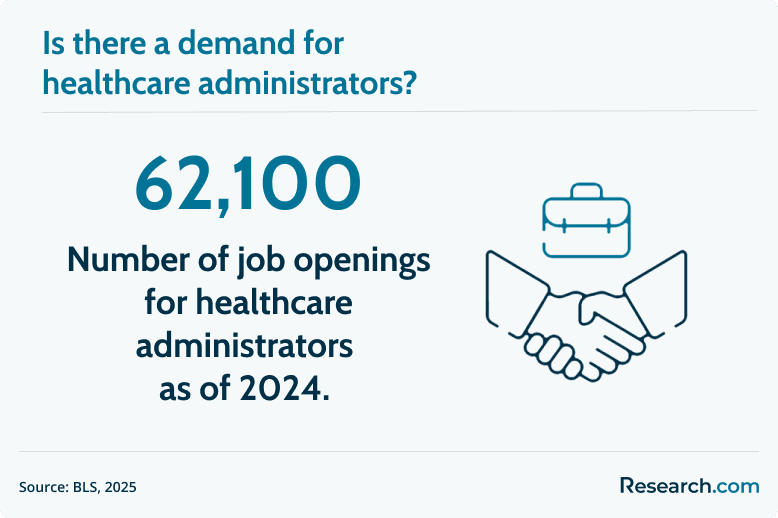
The outlook for healthcare administration is strong. Employment for health administrators and medical services managers is projected to grow by 23% from 2024 to 2034, which is much faster than the average for all occupations. The Bureau of Labor Statistics also reports about 62,100 openings each year, driven by growth and replacement needs.
Several forces are shaping demand for healthcare administrators:
- An aging population: More people needing ongoing care increases demand for facilities, services, staffing, coordination, and administrative oversight.
- Turnover and retirement: Openings are created when experienced professionals retire, change roles, or leave the occupation.
- More complex healthcare systems: Administrators must help organizations manage technology, payer requirements, reporting, compliance, and new care models.
- Expansion of clinical teams: Growth among physicians, nurses, allied health workers, and support staff increases the need for people who can coordinate operations.
- Greater focus on quality and compliance: Healthcare organizations need leaders who can support patient safety, performance improvement, policy changes, and documentation standards.
Technology is also changing the work. Healthcare administrators increasingly need comfort with electronic health records, data dashboards, telehealth workflows, cybersecurity awareness, automation tools, and digital communication systems. AI may streamline documentation, reporting, scheduling, and analytics, but it also raises new oversight needs around accuracy, privacy, bias, staff training, and workflow design.
Professionals who want advanced academic preparation may also explore combined master’s and doctorate pathways, especially if their goals include senior leadership, research, teaching, consulting, or policy-focused work.
How to decide if healthcare administration is worth it for you
Healthcare administration can be worth pursuing if you want a stable, mission-connected business career and are willing to learn the rules, systems, and pressures of healthcare. It may be especially attractive if you enjoy improving processes, supporting teams, solving operational problems, and helping patients receive smoother service.
It may not be the right fit if you want a low-stress administrative job with minimal regulation. Healthcare can involve urgent issues, emotional conversations, staffing shortages, budget constraints, compliance demands, and constant change.
| Choose healthcare administration if... | Think carefully if... |
| You want a management career connected to patient care and public service | You prefer work with little regulation, documentation, or accountability |
| You are comfortable coordinating people, systems, schedules, and information | You dislike interruptions, changing priorities, or high-pressure communication |
| You can learn healthcare terminology, compliance rules, and digital systems | You want to avoid ongoing training and policy updates |
| You are willing to start in support roles and build industry credibility | You expect to move directly into high-level leadership without healthcare exposure |
| You value long-term advancement potential more than an immediate senior title | You need a role with guaranteed salary growth or predictable promotions |
Questions to ask before choosing a program or career path
- What job title am I trying to qualify for first?
- Do local employers require a degree, certification, experience, or all three?
- Will this program teach practical skills such as EHR use, billing, compliance, healthcare finance, and operations?
- Does the school or training provider have career services, internships, employer partnerships, or alumni outcomes?
- Can I transfer credits if I later pursue a higher degree?
- What is the total cost, including fees, books, exams, technology, and transportation?
- Will online coursework fit my schedule, and does it include any in-person requirements?
- How will I gain experience while studying?
- Which skills from my current job can I reposition for healthcare administration roles?
- What salary range is realistic for the specific entry-level jobs in my region?
References
- American Association of Medical Assistants. Certification. AAMA certification information. Retrieved 13 September 2025.
- American College of Healthcare Executives. Fellow of the American College of Healthcare Executives (FACHE). ACHE FACHE application information. Retrieved 13 September 2025.
- American Council on Education. Organization profile. ACE organization profile. Retrieved 13 September 2025.
- Data USA. Medical and health services managers profile. Data USA occupational profile. Retrieved 13 September 2025.
- Healthcare Compliance Association. Certified in Healthcare Compliance (CHC). HCCA CHC certification information. Retrieved 13 September 2025.
- Healthcare Financial Management Association. Certified Healthcare Financial Professional (CHFP). HFMA CHFP certification information. Retrieved 13 September 2025.
- National Association for Healthcare Quality. Certified Professional in Healthcare Quality (CPHQ). NAHQ CPHQ credential information. Retrieved 13 September 2025.
- Professional Association of Health Care Office Management. Certified Medical Manager (CMM). PAHCOM CMM credential information. Retrieved 13 September 2025.
- Transfedu. Certified Healthcare Administrative Professional. CHAP program information. Retrieved 13 September 2025.
- U.S. Bureau of Labor Statistics. Medical and health services managers. BLS occupational outlook for medical and health services managers. Retrieved 13 September 2025.
- ZipRecruiter. Healthcare administrator salary. ZipRecruiter healthcare administrator salary table. Retrieved 13 September 2025.
- Zippia. Health care administrator salaries. Zippia health care administrator salary data. Retrieved 13 September 2025.
Key Insights
- You can start without direct healthcare experience, but you need a targeted entry point. Look first at roles such as patient services coordinator, medical office administrator, medical records clerk, billing assistant, healthcare HR assistant, or clinical operations assistant.
- Transferable skills matter when you explain them correctly. Scheduling, customer service, data entry, HR, finance, compliance, project coordination, and office management can all connect to healthcare administration.
- Education should match your goal. A certificate may help you qualify for entry-level support work, a bachelor’s degree can support management-track roles, and an MHA or MBA is usually more useful for professionals aiming at leadership.
- Entry-level pay is not the same as long-term earning potential. The 25th percentile is about $49,000 annually, while top earners often exceed $150,000, but higher salaries usually require experience, responsibility, and stronger credentials.
- The job outlook is favorable, but competition still exists. Employment is projected to grow by 23% from 2024 to 2034, with about 62,100 openings each year, so candidates who combine healthcare knowledge with practical operations skills will be better positioned.
- Do not choose a program or certification blindly. Check employer requirements, total cost, accreditation or recognition, career support, transfer policies, and whether the training teaches practical healthcare administration skills.
Other Things You Should Know About Healthcare Administration
While prior experience helps, skills like communication, problem-solving, and understanding healthcare operations are crucial for success in 2027. Familiarity with healthcare technology and data management can boost your capability to adapt and thrive in this field.
Online courses like the Healthcare Administration Basics on Coursera or Healthcare Management on edX offer foundational knowledge. These programs typically cover healthcare systems, finance, and management principles, providing a valuable start without requiring prior experience, and can be completed in a few weeks.


