
2027 How Much Does a Hospital Administrator Make?

Co-Founder and Chief Data Scientist
Hospital administrators serve as the logistical anchors of healthcare. Their responsibilities extend far beyond paperwork, encompassing financial oversight, regulatory compliance, and strategic planning. As such, hospital administrator salary reflects the critical role they play in maintaining the stability and growth of hospitals.
Salaries in this field vary widely depending on education, experience, geographic location, and the size of the healthcare organization. So, in this guide, I will break down what hospital administrators really make. From average salaries to the highest-paying industries, you’ll get the full picture of the factors shaping hospital administrator salary in 2027.
Key Points About Hospital Administrator Salaries
- Hospital administrators at the highest pay level earn up to $168,000 annually, highlighting the vital impact of their leadership in healthcare management (ZipRecruiter, n.d.).
- Employment of hospital administrators and healthcare managers is projected to grow 23% from 2024 to 2034, much faster than the average for all occupations (BLS, 2025).
- The role often serves as a gateway to executive-level positions in healthcare, opening doors to even higher-paying leadership opportunities.
- What is the average Hospital Administrator salary? Average Salary
- Which key drivers affect Hospital Administrator salary? Salary Drivers
- Which industries offer the highest Hospital Administrator salary? Top-Paying Industries
- How does a Hospital Administrator salary compare to the US national average wage? How does a Hospital Administrator salary compare to the US national average wage?
- Which US companies pay the highest Hospital Administrator salary? Top-Paying Employers
- Which states offer the highest Hospital Administrator salary? Highest-Paying States
- How can advanced technical training drive Hospital Administrator salary growth? How can advanced technical training drive Hospital Administrator salary growth?
- Which states have the lowest Hospital Administrator salary? Lowest-Paying States
- What strategies can boost Hospital Administrator salary? Salary Boosters
- How significant is the gender gap in Hospital Administrator salary? Gender Wage Gap
- What is the job outlook for Hospital Administrators in the next 10 years? What is the job outlook for Hospital Administrators in the next 10 years?
What is the average Hospital Administrator salary?
The hospital administrator salary reflects both the weight of responsibility and the scope of leadership required in modern healthcare. While the average provides a clear benchmark, the true value is seen in how salaries range across experience levels and facility sizes.
Here’s a breakdown of how hospital administrator salaries stack up across different percentiles:
- Top Earners: Around $168,000, representing the most experienced administrators in high-demand markets.
- 75th Percentile: About $139,000, earned by seasoned professionals with strong track records.
- Average: Roughly $110,278, the midpoint salary across the profession.
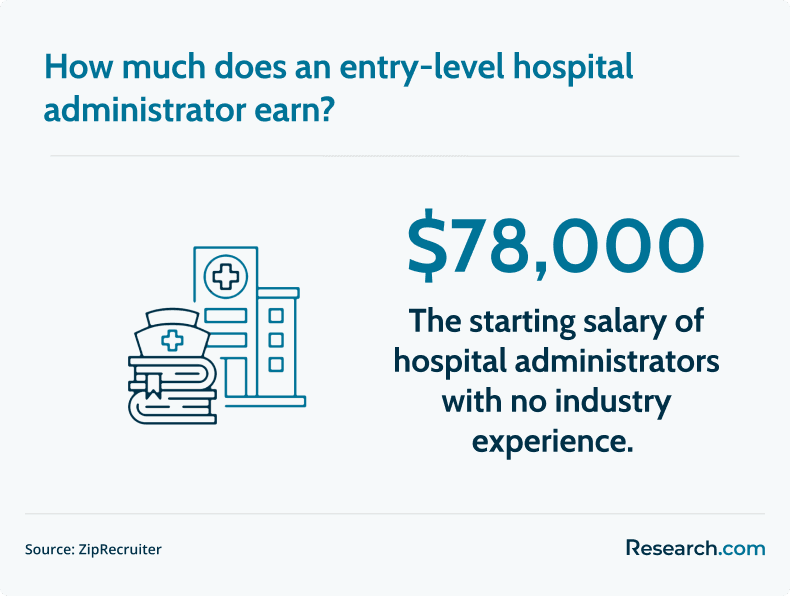
- 25th Percentile: Around $78,000, typically entry-level roles or positions in smaller facilities.
Some professionals expand into specialized areas, such as quality management or policy, while others explore nursing leadership. For example, learning how to become a nurse administrator can open similar opportunities for advancement, combining clinical expertise with executive-level decision-making.
Which key drivers affect Hospital Administrator salary?
The hospital administrator salary is shaped by more than just years on the job; it’s tied directly to the scale, complexity, and demands of the facility. Administrators running large, urban hospitals face very different financial realities than those managing smaller community facilities.
Here are the key drivers that influence hospital administrator salary:
- Size of the Facility: Administrators at large hospitals with multiple departments and thousands of staff typically earn more than those at smaller community hospitals.
- Type of Healthcare Organization: Salaries vary between general hospitals, specialty care centers, and academic medical institutions, with the latter often paying at the higher end.
- Geographic Location: Administrators in urban or high-cost-of-living regions usually command higher salaries than those in rural areas.
- Level of Education and Certifications: Advanced degrees (like an MHA or MBA) and certifications in healthcare management can significantly boost earning potential.
- Hospital Performance Metrics: Compensation often reflects how well administrators manage budgets, improve patient outcomes, and ensure regulatory compliance.
Many professionals look to graduate programs to sharpen their skills and increase their competitiveness in the job market. Exploring the best online master of health administration programs is a practical next step for those ready to pursue higher-level roles in hospital management.
Which industries offer the highest Hospital Administrator salary?
The hospital administrator salary shifts significantly by industry. Different healthcare settings bring unique challenges, budgets, and levels of responsibility, all of which influence pay. Some industries consistently lead the pack when it comes to rewarding administrative leadership.
Here’s a breakdown of which industries offer the highest hospital administrator salary in 2027:
- Government: Average salary of $132,620, reflecting the complexity and scale of federal healthcare operations.
- Hospitals: Around $130,690, driven by the need for large-scale organizational leadership.
- Outpatient Care Centers: About $106,990, as these facilities expand to provide cost-effective alternatives to inpatient care.
- Offices of Physicians: Roughly $100,780, where administrators manage smaller teams but still oversee compliance and operational efficiency.
- Nursing and Residential Care Facilities: Around $99,250, often lower due to tighter budgets but still essential for long-term patient care.
Hospital administration isn’t the only path to strong earning potential in healthcare. With technology transforming how patient data and systems are managed, new opportunities are emerging across digital health. Exploring health informatics careers salary offers valuable insight into another growing field where expertise and leadership are highly rewarded.
How does a Hospital Administrator salary compare to the US national average wage?
The average hospital administrator salary is $110,278, significantly higher than the US national average wage of $66,622. The difference of over $43,000 annually shows how hospital administration provides strong earning power compared to many other professions.
This premium reflects the specialized knowledge required in areas like compliance, finance, and staff management. Few careers outside of medicine and executive leadership consistently offer such a wide margin above the national average.
When viewed in the broader labor market, the average hospital administrator salary underscores both the value and demands of the role. The financial rewards are balanced against the pressure of running facilities that directly impact patient care and community health.
For comparison, many professionals in related healthcare leadership roles also experience strong compensation, and understanding the broader health administration salary landscape can help job seekers identify career paths that best align with their professional and financial goals.
For your visual reference, here's a side-by-side comparison of the difference between a hospital administrator salary vs. the national average wage.
Which US companies pay the highest Hospital Administrator salary?
Hospital administrator salary levels don’t just vary by state or industry; they also depend on the employer. Large healthcare systems, state departments, and specialized organizations often offer compensation well above the national average. These companies reward administrators who can handle complex operations and deliver measurable results.
Here are some of the top employers offering the highest hospital administrator salaries in the US according to Indeed (2025):
NYU Langone Health (New York, NY)
Offers between $118,614 and $185,850, reflecting the scale of one of the nation’s top academic medical centers. With cutting-edge research, world-class patient care, and a large workforce, administrators here manage highly complex healthcare operations.
New Jersey Department of Health (Trenton, NJ)
Pays $118,420 to $169,532, offering strong opportunities in statewide healthcare policy and program management. Administrators here play a vital role in shaping public health initiatives and ensuring compliance across hospitals and facilities.
LeaderStat (Columbia, MO)
Provides $150,000 to $180,000, underscoring the premium placed on hospital executive leadership. LeaderStat specializes in healthcare recruiting, meaning this role often involves leading entire hospital operations with high accountability.
Healthcare Recruiters International (Los Angeles, CA)
Average yearly pay is about $131,868. This executive search and recruitment firm specializes in placing healthcare leaders, with competitive compensation for administrative and management talent.
Throttle and Thrive (Palos Verdes Estates, CA)
Average yearly pay is approximately $106,103. As a healthcare services organization, Throttle and Thrive supports hospital operations and staff, offering strong salaries for administrators overseeing organizational growth and efficiency.
Many professionals interested in these employers begin by starting a career in healthcare administration through entry-level coordinator roles, graduate internships, or healthcare management degree programs. Building experience in clinical operations, patient services, or quality improvement can create a strong foundation for advancing into these high-paying hospital administrator positions.
Which states offer the highest Hospital Administrator salary?
Hospital administrator salary levels vary widely across the US, shaped by cost of living, demand for healthcare services, and state-specific regulations. Some states consistently lead the pack, rewarding administrators for managing complex hospital systems in competitive markets.
Here are the states offering the highest hospital administrator salary:
- California: Average salary of $92,858, reflecting both high demand and the elevated cost of living in major healthcare hubs like Los Angeles and San Francisco.
- Delaware: Around $89,535, with strong opportunities tied to its growing healthcare sector and proximity to major East Coast cities.
- New Hampshire: Roughly $88,835, where administrators are rewarded for managing care in a state with smaller but essential healthcare systems.
- Arizona: About $87,048, boosted by rapid population growth and rising demand for healthcare services across the state.
- Nevada: Around $85,965, reflecting the challenges of healthcare delivery in both urban centers like Las Vegas and more rural regions.
Geography is just one factor in determining hospital administrator salary, but it’s a reminder of how pay can shift across healthcare roles. Many professionals also look at alternative leadership tracks when considering advancement.
Reviewing data on the clinical nurse leader salary offers another lens on how expertise and responsibility translate into compensation in today’s healthcare system.
How can advanced technical training drive Hospital Administrator salary growth?
In an era of rapid digital transformation, hospital administrators who bolster their technical expertise can optimize operations and command higher compensation. Mastery of digital health systems, data analytics, and streamlined financial software enables more effective decision-making and operational efficiency. Pursuing targeted programs, such as affordable medical billing and coding programs, equips administrators with essential skills to improve billing processes and revenue cycle management, ultimately supporting long-term career advancement in a technology-driven healthcare landscape.
Which states have the lowest Hospital Administrator salary?
Not every region rewards hospital administration at the same level. In fact, some states offer salaries well below the national average, often due to lower costs of living and smaller healthcare systems. These differences show how location can greatly influence the overall value of a hospital administrator salary.
Here are the states with the lowest hospital administrator salary:
- Florida: Average salary of $54,104, reflecting a large number of healthcare facilities but lower wage structures overall.
- Arkansas: Around $55,161, tied to smaller hospitals and more limited healthcare budgets.
- Mississippi: Roughly $55,870, with compensation affected by fewer large-scale medical centers across the state.
- Kansas: About $56,172, where administrators often manage community hospitals with tighter margins.
- Oklahoma: Around $56,515, showing how regional healthcare demand and lower living costs impact salary levels.
If you’re exploring compensation across other healthcare roles, it’s worth broadening the comparison. Be sure to check out our guide on the PCT salary to see how pay stacks up in one of the industry’s most in-demand support positions.
What strategies can boost Hospital Administrator salary?
Earning potential in hospital administration can be shaped by the choices professionals make throughout their careers. From education to geography, there are targeted strategies that can significantly raise pay. The key is knowing which levers directly impact a hospital administrator salary.
Here are some of the most effective ways to boost hospital administrator salary in 2027:
- Pursue Advanced Degrees: Completing an MHA, MBA, or related master’s program can open doors to higher-paying leadership roles in large hospital systems.
- Specialize in High-Demand Areas: Administrators with expertise in compliance, finance, or healthcare technology are often rewarded with higher compensation.
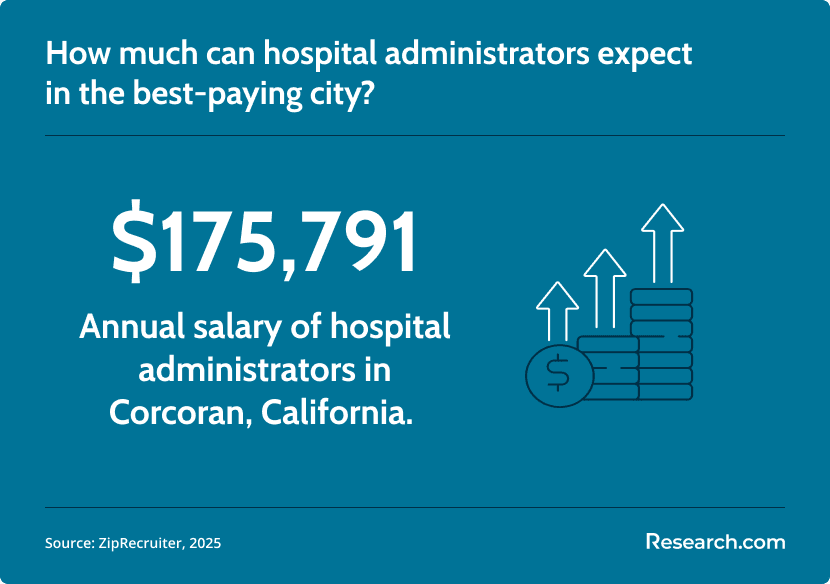
- Relocate to High-Paying Locations: Moving onto a different city can have a dramatic impact. Corcoran, CA, for instance, pays an average of $175,791, the highest hospital administrator salary of any city in the US.
- Target Large or Academic Medical Centers: Salaries tend to be higher in complex facilities with multiple departments, research programs, and large staff bases.
- Demonstrate Performance in Key Metrics: Administrators who improve patient outcomes, reduce costs, and maintain
Ultimately, boosting a hospital administrator salary comes down to strategy and adaptability. By investing in education, pursuing specialized expertise, and aligning with the right opportunities, administrators can significantly increase their earning potential.
How significant is the gender gap in Hospital Administrator salary?
The hospital administrator salary landscape in 2027 shows a workforce that is slightly female-dominated, with 53.7% women compared to 46.3% men. Yet, despite holding the majority, women continue to earn less than men in the same roles. This underscores that representation alone does not ensure equal pay.
In a study by Zippia (2025), female hospital administrators earn $73,579, while men earn $79,861. This means women make about 92 cents for every dollar earned by men. Even in a field where women hold more positions, compensation inequities remain evident.
The gender pay gap in hospital administrator salary highlights a broader challenge in healthcare leadership. Addressing this gap requires transparency, pay equity initiatives, and stronger support for career advancement among women. Without meaningful change, salary disparities are likely to persist, even in roles where women are the majority.
For those considering entering this field, it may also be useful to understand how to choose a healthcare management degree that aligns with your long-term goals. Programs that emphasize leadership development, negotiation skills, and mentorship can play a critical role in helping future healthcare administrators advance equitably and confidently within the profession.
The following chart illustrates this gender wage gap in hospital administrator salary, making the disparity between male and female earnings clear at a glance:
What is the job outlook for Hospital Administrators in the next 10 years?
The hospital administrator salary outlook is closely tied to the strong growth expected in the field over the next decade. This expansion underscores both the stability of the role and the increasing demand for skilled leadership in healthcare.
Here are the main forces driving this outlook:
- Rapid Expansion: A 23% growth rate from 2024 to 2034 places hospital administration among the fastest-growing career paths in healthcare.
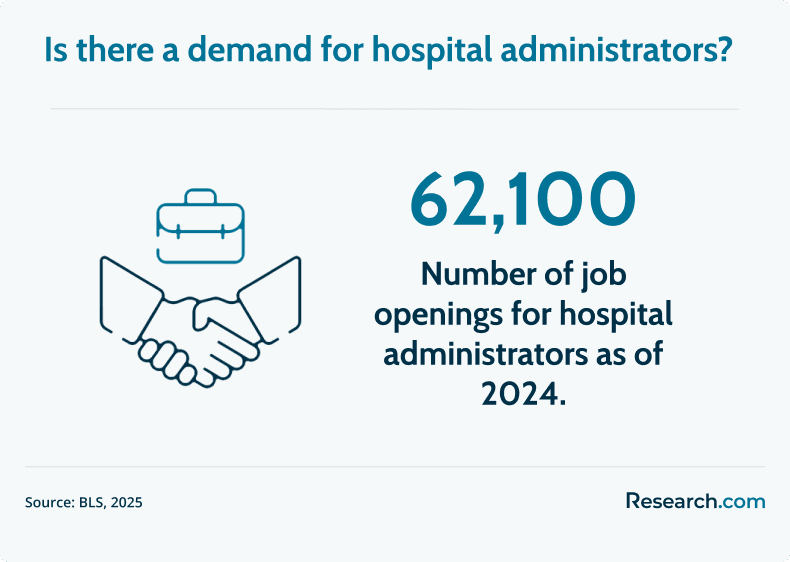
- Consistent Openings: An estimated 62,100 job openings each year reflect ongoing workforce transitions and retirements.
- Demographic Pressures: An aging population is accelerating demand for healthcare facilities, procedures, and managers to oversee them.
- System Complexity: Advances in technology and evolving regulations are reshaping care delivery, requiring administrators to provide structure and leadership.
This strong job outlook highlights not only career stability but also long-term growth potential for hospital administrator salary across the country. For those looking to enter the field more quickly or enhance their qualifications for leadership roles, 1 year online MPA programs can offer an accelerated pathway to gain management expertise and prepare for administrative positions in healthcare settings without delaying career progression.
Key Findings
- The starting salary of hospital administrators with no industry experience is approximately $78,000 annually.
- The average hospital administrator salary is $110,278, significantly higher than the US national average wage of $66,622, with a difference of over $43,000 annually.
- The government leads as the highest-paying industry for hospital administrators, offering an average salary of $132,620 due to the scale and complexity of federal healthcare operations.
- California ranks as the top-paying state for hospital administrators, with an average salary of $92,858, driven by high demand and the elevated cost of living in hubs like Los Angeles and San Francisco.
- Florida offers the lowest average salary at $54,104, reflecting a broad network of healthcare facilities paired with lower wage structures overall.
- Corcoran, CA pays an average of $175,791, the highest hospital administrator salary of any city in the US.
References:
- American College of Healthcare Executives. (n.d.). FACHE. Ache.org. Retrieved 10 September 2025.
- Indeed. (n.d.). Hospital administrator salary. Indeed.com. Retrieved 10 September 2025.
- PAHCOM. (n.d.). Certified Medical Manager (CMM). Pahcom.com. Retrieved 10 September 2025.
- Social Security Administration. (n.d.). Average wage index (AWI). Ssa.gov. Retrieved 10 September 2025.
- US Bureau of Labor Statistics. (n.d.). Medical and health services managers: Occupational outlook handbook. U.S. Department of Labor. Bls.gov. Retrieved 10 September 2025.
- ZipRecruiter. (n.d.). Hospital administrator salary. Ziprecruiter.com. Retrieved 10 September 2025.
- Zippia. (n.d.). Hospital administrator demographics and statistics. Zippia.com. Retrieved 10 September 2025.
Other Things You Should Know About Hospital Administrator Salaries
As of 2027, hospital administrators in the United States earn an average annual salary of approximately $115,000. This figure can vary based on factors such as location, hospital size, and level of experience.
In 2027, hospital administrators earn salary ranges varying significantly based on location, experience, and institution size. On average, in the United States, they earn between $80,000 and $150,000 annually, with urban areas typically offering higher salaries due to larger hospital operations and increased demand.
In 2027, hospital administrators typically earn between $80,000 and $200,000 annually. This range depends on factors such as location, size of the facility, and level of experience.


