
2027 Addiction Counseling Degrees Explained: Are They Classified as Professional Degrees?

Co-Founder and Chief Data Scientist
Choosing an addiction counseling program is not just a question of degree level. The more important question is whether the program supports the credential, license, or career role you actually want. Some addiction counseling programs are academic introductions to the field. Others are professional pathways designed around state licensure, supervised clinical practice, certification exams, and employer expectations.
That distinction matters because counseling roles are regulated differently by state, setting, and scope of practice. According to the U.S. Bureau of Labor Statistics, employment for substance abuse and behavioral disorder counselors is projected to grow 22% from 2022 to 2032, which makes choosing the right credential especially important for students entering a high-demand but credential-sensitive field.
This guide explains what counts as a professional addiction counseling degree, who should consider one, how common programs differ, what accreditation means, what admissions and training requirements usually look like, how costs and financial aid work, and how the degree can affect career options and salary potential.
Key Benefits of Professional Addiction Counseling Degrees
- Professional addiction counseling degrees often qualify graduates for leadership roles, enhancing career advancement within healthcare and social services sectors.
- Graduate degree holders typically enjoy up to 20% higher salaries, supporting strong return on investment and long-term financial stability.
- These degrees meet eligibility requirements for licensure and advanced certifications essential for regulated roles in clinical and counseling environments.
What Is Considered a Professional Addiction Counseling Degree?
A professional addiction counseling degree is a career-focused program designed to prepare students for regulated counseling work with clients affected by substance use disorders. It is not simply any psychology, human services, or general counseling degree with one or two addiction-related courses. The key difference is whether the program aligns with licensing, certification, supervised practice, and clinical competency expectations.
With the projected 23% growth in employment for substance abuse and behavioral disorder counselors, students should be careful not to assume that every addiction studies program carries the same professional value. A degree may be useful academically but still fall short of professional licensure requirements in a student’s state.
What usually makes a program “professional”
- Specialized addiction curriculum: The program covers substance use disorders, assessment, treatment planning, relapse prevention, ethics, co-occurring disorders, and evidence-based counseling methods.
- Clinical preparation: Professional programs usually include practicum, internship, or supervised field experience so students can apply counseling skills in real treatment or community settings.
- Licensure alignment: The program is built to help graduates meet state licensing or certification requirements, although students must still verify requirements with their own state board.
- Recognized accreditation: The school, and in some cases the program, should meet accreditation standards that employers, licensing boards, and financial aid agencies recognize.
- Career-specific outcomes: Graduates are prepared for roles in behavioral health, treatment centers, community agencies, correctional programs, hospitals, or integrated care settings.
Common misconceptions
- Myth: Any counseling or psychology degree is automatically a professional addiction counseling degree.
Fact: A professional addiction counseling degree must include focused addiction treatment training and, when relevant, supervised clinical preparation. - Myth: Completing an addiction counseling degree always qualifies a graduate for licensure.
Fact: Licensure depends on state rules, degree level, coursework, supervised hours, exams, and accreditation status. - Myth: Addiction counseling degrees are mainly theoretical.
Fact: Professional programs are built around applied skills, client care, documentation, ethics, treatment planning, and supervised practice.
Students comparing professional addiction counseling degree requirements should start with the credential they want to earn, then work backward to the degree, accreditation, and fieldwork requirements. Those considering doctoral-level leadership or education roles may also review related pathways such as EDD degrees, though these are not substitutes for state addiction counseling licensure requirements.
Who Should Pursue a Professional Addiction Counseling Degree?
A professional addiction counseling degree is best for students who want a structured path into clinical, counseling, prevention, case management, or treatment-related roles where credentials matter. It is especially relevant for people who plan to work directly with clients, pursue licensure, or move into advanced behavioral health positions.
Enrollment in addiction counseling programs has increased by 15% over the past five years, reflecting rising demand in substance use disorder treatment nationwide. Still, the degree is not the right fit for everyone. It is most valuable when it matches a clear professional goal.
Strong candidates for this degree
- Students planning to become licensed addiction counselors: These students need programs that align with state education and supervised practice requirements.
- Behavioral health workers seeking advancement: Case managers, peer support workers, treatment aides, and prevention specialists may use the degree to qualify for higher-responsibility roles.
- Licensed counselors or therapists adding a specialization: Professionals already licensed in counseling, social work, marriage and family therapy, or psychology may pursue addiction-focused education to expand their clinical scope.
- Career changers entering human services: People from education, healthcare, criminal justice, ministry, or nonprofit work may find addiction counseling a focused route into behavioral health.
- Students who want structured clinical training: A professional degree can provide supervised experience, ethics training, and practical preparation that short certificates may not offer.
When another pathway may be better
- If you only want introductory knowledge: A certificate, minor, or non-licensure addiction studies program may be enough.
- If your goal is independent mental health practice: You may need a broader counseling, social work, marriage and family therapy, or psychology degree that includes addiction specialization.
- If your state requires a different degree title: Some states require degrees in counseling, clinical mental health counseling, social work, or closely related fields rather than addiction counseling specifically.
Flexible graduate options can help some students change careers or add clinical credentials. For example, students comparing counseling and social work pathways may also review accelerated MSW programs as a related route into clinical and community-based behavioral health roles.
Before enrolling, prospective students should ask three questions: Does this program meet my state’s licensing rules? Does it include the supervised experience I need? Will employers in my target setting recognize the credential?
What Are the Most Common Professional Addiction Counseling Degree Programs?
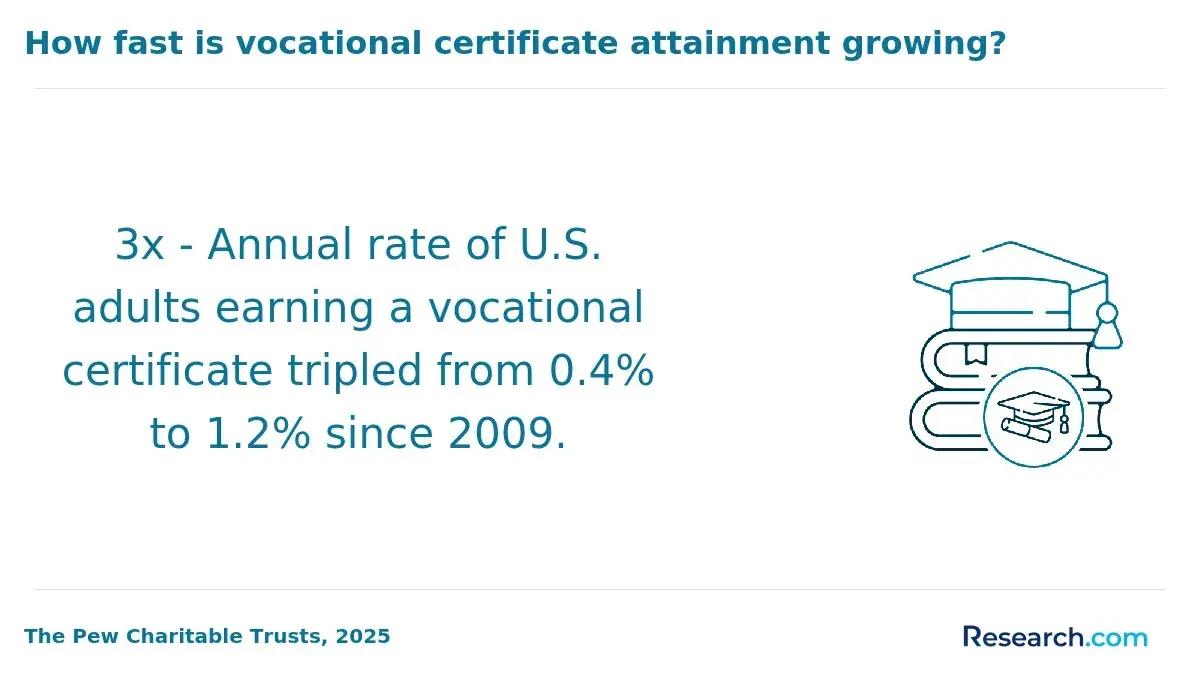
The most common addiction counseling pathways include associate, bachelor’s, master’s, and certificate programs. Each serves a different purpose. Some prepare students for entry-level or support roles, while others are designed for licensure, clinical practice, or advancement. With the field expected to grow 23% over the next decade, choosing the right level can affect both job eligibility and long-term mobility.
Common program types
- Associate degrees: These programs introduce addiction studies, human services, counseling basics, crisis intervention, and community resources. They may support entry-level roles, but they often do not meet requirements for independent or advanced counseling licensure.
- Bachelor's degrees: Bachelor’s programs provide broader preparation in psychology, sociology, behavioral health, substance abuse, ethics, and counseling techniques. In some states, they may support certain addiction counseling credentials, usually with supervised experience.
- Master's degrees: Master’s programs are the most common professional route for students seeking advanced clinical practice. They typically emphasize diagnosis, assessment, evidence-based interventions, relapse prevention, co-occurring disorders, ethics, and supervised clinical hours required for licensure.
- Certification programs: Certificates can be useful for working professionals who already hold a degree or need targeted addiction counseling coursework. They may help satisfy certification prerequisites but should not be mistaken for a full degree unless a licensing board accepts them for the intended credential.
How to compare degree levels
- Choose an associate degree if you want a lower-cost starting point and expect to continue into a bachelor’s program or entry-level support work.
- Choose a bachelor’s degree if you want broader behavioral health preparation and may later pursue graduate study or state certification.
- Choose a master’s degree if your goal is clinical licensure, advanced counseling roles, supervision, or stronger long-term career flexibility.
- Choose a certificate if you already have a qualifying degree and need addiction-specific coursework for a credential, promotion, or specialization.
The most important step is to compare the program against the credential requirements in the state where you plan to work. A degree that is professionally useful in one state may not satisfy licensing rules in another.
Are Professional Addiction Counseling Degree Programs Accredited?
Many professional addiction counseling degree programs are accredited, but accreditation is not automatic and not all accreditation carries the same weight. Students should check both institutional accreditation and, when available, programmatic accreditation before applying. Accreditation can affect federal financial aid, transfer credit, employer recognition, certification, and licensure eligibility.
Enrollment in accredited addiction counseling programs has risen by over 15% in recent years, which reflects growing awareness that program quality and recognition matter in regulated counseling fields.
Institutional vs. programmatic accreditation
- Institutional accreditation: This evaluates the college or university as a whole. It is often essential for federal financial aid and broad academic recognition.
- Programmatic accreditation: This evaluates a specific program or field of study. In addiction counseling, specialized accreditation may signal that the curriculum meets professional standards for addiction education and training.
Common accreditation misconceptions
- Myth: All addiction counseling degrees are accredited by the same organization.
Fact: Professional addiction counseling program accrediting bodies may include institutional accreditors and specialized programmatic accreditors, each serving a different role. - Myth: Accreditation is optional if the curriculum looks strong.
Fact: Accreditation may be required for licensure, federal financial aid, transfer credit, and employer acceptance. - Myth: Online programs are less credible by default.
Fact: Online format is not the issue. Accreditation, state authorization, field placement quality, and licensure alignment are the deciding factors.
Recognized accreditation organizations for addiction counseling degrees include regional bodies like the Higher Learning Commission (HLC) and national organizations such as the Council for Higher Education Accreditation (CHEA). Specialized programmatic accreditors like the National Addiction Studies Accreditation Commission (NASAC) ensure that programs meet rigorous addiction counseling education standards.
Students should also contact their state licensing board before enrolling. A school may be accredited, yet the degree may still fail to meet a specific state’s required coursework or supervised hour rules. Prospective students comparing related counseling fields can also review accredited marriage and family therapy programs online while researching licensure, cost, and program recognition.
What Are the Admission Requirements for a Professional Addiction Counseling Degree?
Admission requirements vary by degree level, but professional addiction counseling programs usually look for academic readiness, ethical maturity, communication skills, and evidence that the applicant understands the demands of counseling work. Enrollment in these programs has risen by over 15% in the last five years, so applicants should prepare materials carefully and confirm requirements early.
Typical admission requirements
- Bachelor's Degree: Graduate-level programs generally require a completed undergraduate degree from an accredited college or university. A major in psychology, sociology, social work, human services, criminal justice, or a related field can help, but many programs also consider applicants from other backgrounds.
- Minimum GPA: Most programs expect a GPA between 2.5 and 3.0. Some may allow conditional admission if an applicant shows strong experience, recommendations, or recent academic improvement.
- Experience: Work or volunteer experience with substance use populations, behavioral health agencies, crisis services, shelters, correctional settings, or community organizations can strengthen an application.
- Letters of Recommendation: Programs often ask for references who can speak to the applicant’s reliability, judgment, interpersonal skills, ethical awareness, and readiness for counseling training.
- Personal Statement: A strong essay explains why the applicant is entering addiction counseling, what populations they hope to serve, and how the program fits their career and licensure goals.
- Standardized Tests: Some institutions may require exams like the GRE, but this is becoming less common as admissions shift toward holistic evaluations.
How to strengthen an application
- Connect your goals to the program’s training model rather than writing only about personal motivation.
- Show that you understand professional boundaries, confidentiality, and the emotional demands of counseling work.
- Ask recommenders early and choose people who can provide specific examples of your readiness.
- Confirm whether prerequisite courses are required before admission or can be completed after enrollment.
- Check whether the program requires background checks, interviews, or field placement eligibility screening.
When asked about his experience applying, a recent graduate described the process as both demanding and clarifying. “Submitting my personal statement was nerve-wracking,” he said, “but it forced me to clarify why this field mattered so much to me.” He also noted the challenge of securing meaningful recommendation letters while balancing part-time work. For many applicants, the process itself becomes a useful test of commitment to the field.
What Courses and Practical Training Are Required in a Professional Addiction Counseling Degree?
Professional addiction counseling programs combine classroom learning with supervised practice. The goal is not only to understand substance use disorders but also to develop the clinical judgment, ethical discipline, documentation habits, and communication skills needed to work safely with clients.
Students should review the curriculum against state licensing requirements before enrolling. Course titles can vary, but professional programs commonly include the following areas.
Common coursework
- Theories of addiction: Students examine biological, psychological, social, and environmental factors that contribute to substance use disorders.
- Counseling techniques: Courses introduce individual, group, and family counseling approaches used in addiction treatment settings.
- Assessment and diagnosis: Students learn how to gather client histories, screen for substance use, identify risk factors, and recognize co-occurring mental health conditions.
- Treatment planning: Training covers goal setting, care coordination, relapse prevention, documentation, and referral processes.
- Ethics and legal issues: Programs address confidentiality, boundaries, mandated reporting, informed consent, professional conduct, and regulatory responsibilities.
- Co-occurring disorders: Students learn how addiction intersects with depression, anxiety, trauma, personality disorders, and other behavioral health concerns.
- Research and evidence-based practice: Coursework helps students evaluate treatment models, interpret research, and apply evidence-based interventions appropriately.
- Case management: Students learn to coordinate services across healthcare, housing, employment, legal, and community support systems.
Practical training requirements for addiction counselors
- Practicum: A supervised introductory field experience where students begin applying counseling and observation skills.
- Internship: A more intensive placement that may involve assessment, group work, documentation, treatment planning, and client support under supervision.
- Supervised clinical hours: Many licensing pathways require documented supervised experience during or after the degree.
- Professional feedback: Students receive evaluation on counseling skills, ethics, cultural responsiveness, documentation, and readiness for client-facing work.
Program quality depends heavily on field placement support. Before enrolling, ask whether the school helps secure practicum sites, whether online students can complete placements locally, and whether the placement meets your state’s requirements. Students building toward graduate-level addiction counseling from a lower-cost starting point may consider an affordable online bachelor's degree in a related field.
How Much Do Professional Addiction Counseling Degrees Cost?
Professional addiction counseling degree costs vary by school type, degree level, residency status, delivery format, and clinical placement requirements. On average, total program costs, including tuition and fees, range from $10,000 to $40,000 for bachelor's or master's degree programs in this field.
Students should look beyond advertised tuition. The true cost includes required fees, books, technology, field placement expenses, licensure preparation, and the opportunity cost of reducing work hours during internships.
Major cost categories
- Tuition and fees: This is usually the largest expense. Public institutions may charge different rates for in-state and out-of-state students, while private institutions may use one tuition rate.
- Textbooks and materials: Specialized counseling, assessment, ethics, and addiction treatment materials can add several hundred to a few thousand dollars over the full program.
- Clinical practicum or internship costs: Students may need to pay for background checks, drug screening, liability insurance, immunization records, placement fees, transportation, or required supervision documentation.
- Technology costs: Online and hybrid students may need reliable equipment, software, webcam access, and secure internet for coursework or telehealth-related training.
- Application and enrollment fees: These may include application fees, transcript fees, enrollment deposits, and graduation fees.
- Licensing and certification expenses: Exam preparation, application fees, certification fees, and continuing education can affect the total cost of becoming credentialed.
Ways to manage cost
- Compare total program cost, not just per-credit tuition.
- Ask whether field placement fees are included or billed separately.
- Check whether online students pay the same tuition regardless of state residency.
- Confirm whether the program is eligible for federal financial aid before applying.
- Look for employer tuition assistance if you already work in behavioral health or human services.
- Estimate transportation and schedule costs for practicum and internship hours.
Some students compare flexible online degrees when planning an affordable route into counseling-related careers. Online delivery can reduce commuting and relocation costs, but students should still verify accreditation, field placement support, and state licensure alignment.
Do Professional Addiction Counseling Degrees Qualify for Financial Aid?
Many professional addiction counseling degrees qualify for financial aid when they are offered by accredited institutions and meet federal aid requirements. Eligibility depends on the school, program type, enrollment status, degree level, and the student’s financial circumstances. Nearly 60% of graduate students in health-related counseling fields rely on financial assistance to help manage costs.
Common aid options
- Federal student loans: Eligible graduate students may use Direct Unsubsidized and Grad PLUS loans for qualifying programs.
- Scholarships: Students may find awards through colleges, behavioral health organizations, counseling associations, nonprofit groups, and community foundations.
- Employer tuition assistance: Behavioral health agencies, hospitals, government agencies, and nonprofit employers may help employees pay for job-related education.
- Public service loan forgiveness: Graduates working in qualifying public service roles may be able to explore forgiveness options if they meet program rules.
- State or workforce funding: Some students may qualify for state training funds, behavioral health workforce grants, or agency-sponsored education support.
Financial aid myths and facts
- Myth: Addiction counseling degrees do not qualify for federal student loans because the field is nontraditional.
Fact: Many addiction counseling degrees at accredited institutions are eligible for federal financial aid, especially master’s or professional degree programs. - Myth: Certificate programs always qualify for aid.
Fact: Some certificates qualify, but others do not. Students must confirm aid eligibility directly with the school’s financial aid office. - Myth: Scholarships are rarely available for addiction counseling students.
Fact: Students may find scholarships through professional behavioral health organizations, employers, schools, and public service programs.
When I spoke with a graduate of a professional addiction counseling degree about her financial aid experience, she emphasized the importance of early planning. She said the paperwork felt overwhelming at first, especially when comparing loan options and searching for scholarships. After receiving confirmation of multiple aid sources, she described a sense of relief because the program became manageable.
Reflecting on the process, she noted, “It wasn’t easy, but understanding what options were truly available helped me feel empowered rather than stuck.” Her experience points to a practical lesson: students should contact financial aid offices early, ask program-specific questions, and document all deadlines.
Are Professional Addiction Counseling Degrees Required for Certain Careers?
Professional addiction counseling degrees are required for some careers, especially roles involving clinical counseling, treatment planning, diagnosis-related responsibilities, supervision, or independent practice. Other entry-level or support roles may accept certificates, associate degrees, or bachelor’s-level preparation, depending on the state and employer.
The U.S. Bureau of Labor Statistics forecasts a 23% growth in substance abuse and mental health counseling jobs from 2022 to 2032, but job growth does not remove credential requirements. Students should identify their target role first, then confirm the required degree, supervised hours, exam, and license or certification.
Roles that commonly require stronger credentials
- Licensed addiction counselor: Most states require a qualifying degree, supervised clinical hours, and an exam for licensure or certification.
- Clinical substance abuse counselor: Roles involving assessment, counseling, and treatment planning often require advanced education and state-approved credentials.
- Clinical supervisor: Supervisory positions usually require advanced credentials, experience, and documented competence.
- Program manager or treatment coordinator: Employers may prefer or require professional degrees for leadership roles in treatment programs.
- Integrated behavioral health roles: Positions in hospitals, community health centers, or mental health agencies may require graduate-level preparation or licensure.
Roles that may not require a full professional degree
- Peer support specialist: These roles may rely on lived experience, training, and state certification rather than a full counseling degree.
- Behavioral health technician: Some positions accept a high school diploma, certificate, associate degree, or related experience.
- Prevention specialist: Requirements vary and may include training, certification, or a bachelor’s degree depending on the employer.
- Case management assistant: Some entry-level roles focus on coordination and support rather than clinical counseling.
Common misconceptions
- Myth: No degree is required to become a licensed addiction counselor.
Fact: Most states require a professional degree in addiction counseling or a closely related field, along with supervised clinical hours, to obtain licensure. - Myth: All addiction counseling jobs need a full professional degree.
Fact: Some entry-level or paraprofessional roles accept certifications or associate degrees, but responsibilities are usually more limited. - Myth: Therapy and treatment planning jobs do not require specialized education.
Fact: Positions involving therapy or treatment planning typically require accredited education recognized by state boards. - Myth: Formal degrees do not affect advancement.
Fact: A professional addiction counseling degree can be crucial for regulated, supervisory, or higher-level roles.
Do Professional Addiction Counseling Degrees Lead to Higher Salaries?
A professional addiction counseling degree can support higher earning potential, but it does not guarantee a specific salary. Pay depends on location, employer type, experience, licensure level, certification, job duties, and whether the role includes supervision, clinical responsibility, program management, or specialized treatment work.
The strongest financial value usually comes when the degree qualifies a graduate for credentials or positions they could not access otherwise. A degree that does not meet licensing requirements may have limited salary impact, even if the coursework is relevant.
How the degree can affect earnings
- Licensure eligibility: Professional degrees can help graduates qualify for licensed roles, which often have broader responsibilities than non-licensed support positions.
- Specialization: Training in substance use disorders, co-occurring disorders, trauma-informed care, or clinical assessment may improve competitiveness for specialized roles.
- Supervisory opportunities: Advanced credentials may be required for clinical supervision, program leadership, or administrative positions.
- Employer recognition: Accredited professional degrees can carry more weight with treatment centers, hospitals, government agencies, and community behavioral health employers.
- Long-term mobility: A qualifying degree can make it easier to move between settings, pursue additional credentials, or meet continuing professional requirements.
Salary myths and facts
- Myth: Holding a professional addiction counseling degree guarantees a significantly higher salary than associate-level or non-professional credentials.
Fact: Professional degrees can lead to specialized or supervisory roles with better pay, but actual salary increases depend on geographic location, experience, employer, licensure, and additional certifications. - Myth: Professional addiction counseling degrees do not influence eligibility for higher-paying roles.
Fact: Many licensing boards and certification agencies require a professional degree for advanced credentials, which can be important for clinical supervision or program management. - Myth: The cost of the degree always outweighs the financial benefit.
Fact: Upfront costs can be significant, but graduates who use the degree to obtain licensure, advancement, or stable behavioral health roles may see stronger long-term value than those with lower-level or unaccredited credentials.
Before enrolling, students should compare program cost with realistic job outcomes in their state. Look at local job postings, required credentials, supervision expectations, and whether employers specify accredited degrees or particular licenses.
What Graduates Say About Their Professional Addiction Counseling Degree
- Christopher: "I approached the professional addiction counseling degree with a practical mindset, knowing how it would enhance my credentials. The program's flexible structure made it feasible alongside my busy work schedule, and the reasonable costs were a bonus. This degree has significantly elevated my professional standing and effectiveness in the addiction counseling field."
- Ahmed: "Choosing to pursue a professional addiction counseling degree was a deeply reflective process. I weighed the modest cost of attendance against the potential for meaningful impact, and I'm glad I did. The program's flexibility allowed me to learn at my own pace, and it truly shaped how I approach my role in helping others."
- Levi: "The flexibility of the professional addiction counseling degree program was a game-changer for me. Balancing work, family, and education seemed impossible until I found a program that fit my schedule perfectly. Considering the average cost of attendance was manageable, pursuing this degree was one of the best decisions for advancing my career in the field."
Other Things You Should Know About Addiction Counseling Degrees
In 2027, the recognition of addiction counseling degrees by state licensing boards varies considerably. Some states require specific accreditation for recognition, while others mandate additional exams or supervised clinical hours to qualify for licensure.
Yes, as of 2027, addiction counseling degrees typically require supervised clinical hours to ensure practical, hands-on experience. This is essential for developing the skills and competencies needed for effective client interaction and is often mandated by state licensing boards.
Addiction counseling degrees are recognized by state licensing boards in 2027, but requirements can vary by state. Most states require programs to be accredited and include specific courses and supervised clinical hours to qualify for licensure. It is essential to check individual state requirements for up-to-date information.
References
- How Much Can You Make as an Addiction Counselor? https://www.hazeldenbettyford.org/graduate-school-addiction-studies/drug-alcohol-counselor-salary
- Addiction Treatment Myths: Separating Fact From Fiction https://lakedetox.com/news/addiction-treatment-myths-separating-fact-from-fiction/
- Addictions Counselor Educational Program https://www.umb.edu/academics/program-finder/addictions-counselor-educational-program-acep/
- A Guide to Professions in Addiction Studies and Recovery https://www.ucumberlands.edu/blog/guide-to-professions-in-addiction-studies-and-recovery
- Why Addiction Staff Credentials Matter | Cedar Oaks Wellness https://cedaroakswellness.com/addiction-staff-credentials-cedar-oaks/
- Common Myths About Addiction Treatment, Debunked - Renew Health https://renewhealth.com/common-myths-about-addiction-treatment-debunked/
- Addictions Training Institute – The Rewards of Being an Alcohol and Drug Counselor: An Opportunity to Transform Lives https://addictionstraininginstitute.com/the-rewards-of-being-an-alcohol-and-drug-counselor-an-opportunity-to-transform-lives/
- Addiction Counseling Transforms Lives and Offers Hope | TUW https://www.tuw.edu/school-news/addiction-counseling-transforms-lives/
- Addiction Specialist Degrees, Certifications, and Qualifications https://americanaddictioncenters.org/admissions/degrees-qualifications
- 7 Things to Know Before You Pursue Your Addiction Counselor Certification - New Creation College https://newcreationcollege.org/7-things-know-pursue-addiction-counselor-certification/


