
2027 Biology Degree vs. Certificate: Which Should You Choose?

Co-Founder and Chief Data Scientist
Today's students and professionals face important decisions when choosing between earning a degree or a certificate in biology. Both educational paths can advance a career in fields like healthcare, research, or environmental science, but they differ in time commitment, depth of study, and career opportunities. Understanding these differences helps learners align their education with personal and professional goals.
A biology degree typically requires two to four years, offering a broad foundation in science and more comprehensive training. In contrast, certificates focus on specific skills or topics and can often be completed within months. This article will compare key differences to assist readers in making an informed choice suited to their career and lifestyle needs.
Key Points About Biology Degree vs. Certificate Programs
- A biology degree offers comprehensive knowledge and research skills, enhancing job prospects and median salaries, which can exceed $60,000 annually, versus certificate holders earning significantly less.
- Certificates provide targeted skill development for specific roles, ideal for quicker entry into biotech or lab technician positions, but limit advancement compared to degree holders.
- Degree programs demand 3-4 years of study, fostering critical thinking and broader career flexibility, while certificates typically require months and focus narrowly on practical expertise.
What Are the Differences Between Biology Degree and Certificate Programs?
Both biology degrees and certificate programs offer valuable pathways into related careers, but they differ in several important aspects. Recognizing these differences can help students select the educational route that aligns best with their career goals and available time.
Below is a comparison of key factors distinguishing biology degrees from certificate programs.
- Depth of Learning: Biology degrees provide comprehensive and in-depth study across multiple subfields, ideal for those seeking a broad scientific foundation. Certificates focus on specific skills or topics, making them suitable for learners wanting targeted knowledge or quick skill acquisition.
- Time Commitment: Degree programs generally require several years of study, demanding a substantial time investment. Certificates typically take less time, offering a faster route to gaining credentials for those balancing work or other responsibilities.
- Career Advancement: A biology degree often opens doors to advanced positions and graduate studies due to its extensive curriculum. Certificates may enhance qualifications for particular roles or allow professionals to diversify skills without a full degree commitment.
- Curriculum Structure: Degrees usually combine theory, laboratory work, and research, fostering critical thinking and problem-solving. Certificate programs emphasize practical and job-ready skills, designed for immediate application in the workplace.
- Target Audience: Students seeking a foundational and versatile education in life sciences typically pursue degrees. Conversely, those aiming to quickly enhance expertise or pivot to a specialized niche often find certificates more practical.
How Long Does It Take to Complete a Biology Degree vs. a Certificate Program?
Completion time is a critical consideration for students deciding between pursuing a biology degree vs. a certificate program. Understanding the typical duration and flexibility of each option helps align educational goals with personal circumstances.
- Typical Duration: A biology degree duration in the USA generally ranges from two years for an associate degree to about four years for a bachelor's degree (B.S.). Advanced degrees such as a master's or doctoral program extend this period to six years or more. In contrast, certificate programs are designed to be shorter and can often be completed in just a few months up to two years, offering a much faster pathway to credentials.
- Flexibility: Biology certificate programs typically provide more flexible pacing options than degree programs. Students can choose part-time, evening, or online formats that accommodate work and personal commitments. Degree programs, especially at the undergraduate level, often require full-time study, which may limit scheduling flexibility.
- Factors Affecting Timeline: The comprehensive curriculum required for degrees includes general education and elective courses beyond core biology, lengthening completion time. Certificates focus on specialized, skill-based content that streamlines study requirements. Additionally, prior experience and transfer credits can shorten the time for both paths. Many students opt for certificates to quickly gain targeted expertise, such as through a 6-month certification program that pays well.
When evaluating how long to finish a biology certificate program, prospective students should consider their goals for study depth, credentialing needs, and schedule flexibility. Certificates may suit those seeking faster entry into the workforce or skill development, while degrees require a longer multi-year commitment for comprehensive knowledge and advanced career opportunities.
Can You Complete a Biology Degree or Certificate Entirely Online?
Online education has grown rapidly, offering students flexible options to earn academic credentials in biology. Many U.S. universities now provide fully online biology degree programs, allowing learners to access lectures, assignments, and discussions remotely. For example, Empire State University offers a Bachelor of Science in biology that can be completed 100% online without any on-campus requirements.
However, if you wonder you can get a biology degree online entirely, it's important to note that some programs, like Arizona State University's, require in-person components such as an organic chemistry lab conducted either on campus or at approved locations. This blend of online and hybrid formats reflects the demand for practical experience alongside virtual coursework.
Hands-on laboratory training is crucial for developing essential practical skills in biology, which often includes required lab work, internships, or clinical experiences that cannot be replicated virtually. These elements are especially important for students pursuing licensure or careers in research and healthcare.
If you want to understand what format suits your goals best, consider whether you need extensive lab or fieldwork. Fully online certificates may suit those seeking foundational knowledge or career advancement without licensure needs. For further insights on various online programs and options, explore degrees for seniors to find suitable pathways.
What Are the Admission Requirements for a Biology Degree vs. a Certificate Program?
Admission requirements play a crucial role when deciding between pursuing a biology degree or a certificate program. They help define your eligibility, set realistic timelines, and shape your overall educational and career planning.
The following side-by-side comparison highlights the typical admission criteria for both program types to aid in making an informed choice.
Admission Requirements for Biology Degree Programs
- Educational Background: Applicants generally need a high school diploma or equivalent, with strong performance in science and math courses such as biology, chemistry, algebra, and sometimes calculus.
- Minimum GPA: Most degree programs require a minimum cumulative GPA, often ranging from 2.0 to 2.75. For example, Penn State requires at least a 2.0 GPA, while some graduate programs expect a 2.75 GPA in the last 60 undergraduate credits.
- Prerequisite Courses: Completion of introductory biology and chemistry courses with a minimum grade, usually a C or better, is commonly required by universities like the University of Washington.
- Standardized Tests: Some institutions request SAT or ACT scores for first-year applicants, though many are moving toward test-optional policies.
- Application Materials: Submitting transcripts is standard, and some programs may require essays or short written responses to evaluate motivation and program fit, such as those at Western Washington University.
Admission Requirements for Biology Certificate Programs
- Educational Background: Typically, a high school diploma or GED is sufficient, making certificate programs accessible to individuals seeking targeted biology skills without committing to a full degree.
- Minimum GPA: GPA requirements are usually more flexible or may not be required at all.
- Prerequisite Courses: Most certificate programs do not demand prior college-level science coursework, providing easier eligibility for those new to biology.
- Application Materials: The process is often streamlined, requiring only basic personal information and proof of education; essays and standardized tests are rarely requested.
By understanding these distinctions in biology degree admission requirements and biology certificate program eligibility, prospective students can better align their academic preparations and career goals. For those interested in accelerated study options, exploring a fast associate degree might also be beneficial.
How Many Credits Do You Need to Complete a Biology Degree vs. a Certificate?
Knowing the credit requirements for biology programs helps students organize their studies and estimate how long it will take to finish. This understanding is essential when deciding between pursuing a full degree or a certificate in biology.
Here is a comparison of the typical credit expectations for each option:
- Biology degree: Generally requires between 120 and 180 total credits, which includes both biology-focused courses and general education classes necessary for graduation.
- Biology certificate: Designed as a shorter pathway, usually needing only 12 to 18 credits concentrated on core biology topics and lab work, ideal for gaining foundational knowledge.
One student who chose to pursue a biology certificate shared his experience, explaining that although the certificate required far fewer credits, the courses were intensive and demanded focused effort. He mentioned, "It was challenging to balance the labs and theory in such a compressed schedule, but it gave me solid skills quickly without the broader coursework a degree demands."
He appreciated the certificate's flexibility and the way it allowed him to explore biology alongside his full-time job. Reflecting on the journey, he said, "The credit load felt manageable, and completing the certificate gave me confidence in my biology knowledge without committing to a four-year program." This decision helped him stay motivated while advancing his career goals in a practical, efficient manner.
What Is the Average Tuition for a Biology Degree vs. a Certificate?
Tuition costs are a major factor when deciding between pursuing a biology degree or a certificate, as they directly shape your financial commitment and potential return on investment. Comparing average tuition ranges and cost factors can help clarify which educational path best fits your budget and career goals.
Below is a detailed comparison of the average tuition for biology degree programs versus certificate programs, highlighting key cost influences.
Average Tuition for Biology Degree Programs
- Tuition Range: The average cost of a biology degree in the US typically ranges from about $27,776 per year for a bachelor's program to $42,316 annually for master's degrees.
- Public vs. Private Schools: Public universities generally charge lower tuition, whereas private institutions tend to exceed $37,000 per year, impacting overall costs significantly.
- In-State vs. Out-of-State Costs: Out-of-state students at public universities often pay much higher tuition, sometimes over $34,000 yearly, compared to in-state residents.
- Program Level: Graduate-level biology programs usually have higher tuition fees than undergraduate programs, reflecting advanced coursework and resources.
- Additional Expenses: When including fees, books, housing, and personal expenses, total costs can reach $46,000 to $84,000 annually at larger universities.
Average Tuition for Biology Certificate Programs
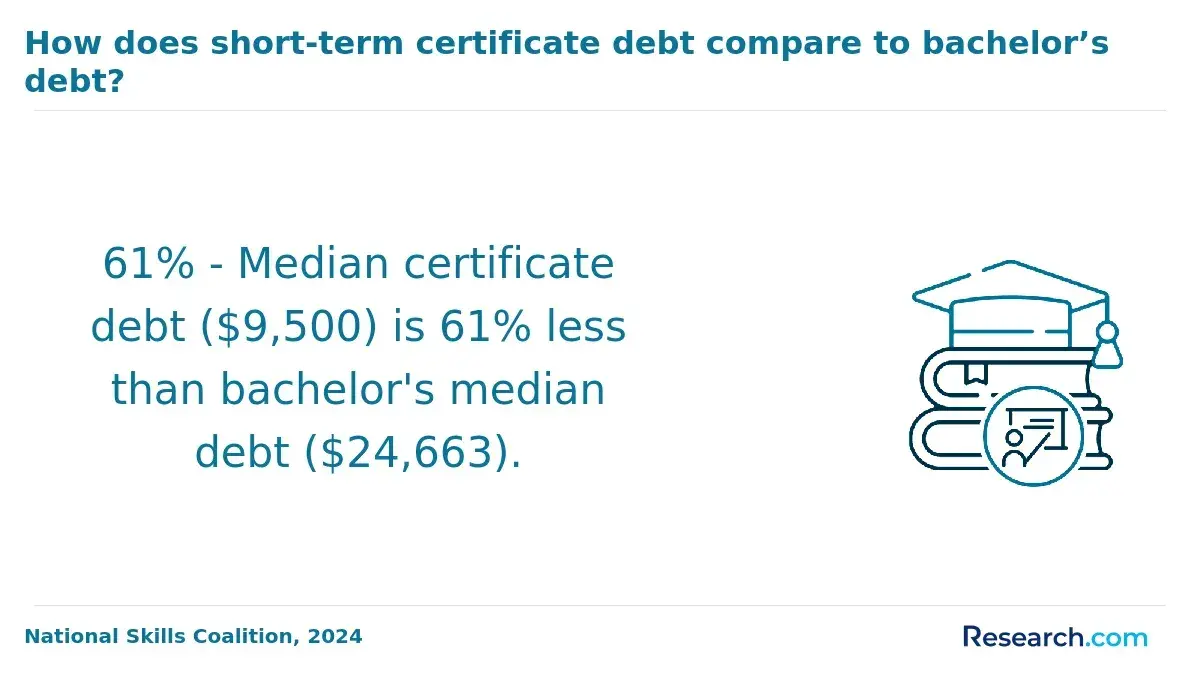
- Tuition Range: Biology certificate program tuition comparison shows that certificates usually cost between $5,000 and $15,000 total, offering a more affordable alternative to degree paths.
- Program Length: Certificates are typically shorter, lasting several months to a year, reducing overall tuition compared to multi-year degrees.
- Vocational vs. Academic Certificates: Vocational certificate programs tend to be less expensive than academic post-baccalaureate certificates, which sometimes approach degree-level tuition.
- Online vs. On-Campus: Many certificate programs are available online, lowering tuition and eliminating housing and commuting costs.
- Financial Aid: These programs often offer fewer financial aid options, which may affect out-of-pocket expenses for some students.
For those considering advanced study options, it is worth exploring the shortest PhD programs available online, which can affect the total tuition investment and duration of study.
Can You Transfer Certificate Credits Toward a Biology Degree Later On?
Yes, certificate credits in biology can often be transferred toward a biology degree, but this depends on various factors. Transferability is usually determined by the accreditation of the institution offering the certificate and how closely the courses align with the degree requirements.
Many universities have specific policies regarding which credits they accept, often requiring equivalency between certificate courses and their own curriculum. Additionally, institutions typically review the content and academic level of the biology courses before allowing transfer credits.
Key considerations include limits on the number of transferable credits and minimum grade standards, commonly a C or higher. Some schools cap transfer credits to ensure students complete a significant portion of their degree onsite.
Securing approval may involve submitting course syllabi and obtaining departmental confirmation before enrolling in the certificate program. To avoid surprises and maximize time and money, students should verify transfer policies with prospective degree-granting institutions early in their planning process.
When I spoke with a student who pursued a biology degree after finishing a certificate program, she shared how navigating credit transfers was initially confusing but rewarding. She explained that after completing the certificate, she had to provide detailed course descriptions and meet with advisors to determine which credits counted.
"It was a bit stressful not knowing what would transfer," she recalled, "but once the process was clear, I felt more confident about my path." In the end, she was able to transfer a substantial portion of her credits, which shortened her time to degree completion and validated her earlier efforts. Her experience highlights the importance of persistence and proactive communication in the transfer process.
Are Certificate Programs Accredited the Same Way as Biology Degrees?
Certificate programs in biology are not accredited in the same manner as biology degree programs. Biology degrees, such as associate's or bachelor's, are provided by accredited colleges or universities that undergo thorough evaluation by regional or national accrediting organizations. This ensures the programs adhere to established academic standards necessary for further education or professional licensing.
In contrast, biology certificate programs may lack independent accreditation and often rely on the reputation of the institution offering them. While many certificates come from accredited schools, the certificates themselves usually do not have specific program-level accreditation and may be tailored more toward technical or vocational skills without formal external review.
Accreditation is important because it guarantees educational quality, eligibility for federal financial aid, and can affect credit transferability as well as recognition by employers and graduate programs. When assessing programs, students should verify that the institution holds accreditation from a recognized agency and determine if a certificate aligns with industry standards or professional associations.
Confirming that the program is delivered by an accredited school helps ensure the credential holds value. Prospective students should always check accreditation status with trusted accrediting bodies before committing to any biology education path.
What Jobs Can You Get with a Biology Degree vs. a Certificate?
Both biology degrees and certificates open doors to various career opportunities, but they often lead to different types of roles with varying levels of responsibility. A degree typically prepares graduates for broader, more complex positions, while a certificate focuses on specialized or technical skills.
Below is a comparison of potential careers associated with each credential.
Jobs You Can Get with a Biology Degree
- Biologist: Conducts research and experiments to study living organisms and their environments, typically working in labs or field settings.
- Environmental scientist: Assesses environmental data to develop policies or solutions for ecological challenges, often employed by government agencies or private firms.
- Research scientist: Designs and performs scientific studies to advance knowledge in biology-related fields, frequently based in academic or corporate laboratories.
- Wildlife conservationist: Works to protect endangered species and habitats through fieldwork and advocacy with conservation organizations.
- Regulatory affairs consultant: Ensures compliance with laws and regulations in biotechnology or pharmaceutical industries, assisting in product approvals.
Jobs You Can Get with a Biology Certificate
- Laboratory technician: Supports scientists by preparing experiments, maintaining equipment, and recording data in clinical or research labs.
- Environmental technician: Collects samples and monitors environmental conditions to assist in pollution control and compliance efforts.
- Microbiology specialist: Focuses on studying microorganisms for applications in health, agriculture, or industry, often performing routine analyses.
- Project manager (with advanced certificates): Oversees specific scientific projects, coordinating teams and resources to meet defined goals.
- Lab administrator: Manages logistics and administrative tasks to ensure smooth operation of laboratory facilities.
What Is the Average Starting Salary for a Certificate vs. Biology Degree Graduates?
Salary potential often varies significantly between biology certificate holders and graduates with a biology bachelor's degree. Understanding these differences can help prospective students make more informed decisions about their education paths.
Below is a side-by-side comparison of the average starting salary for biology degree graduates versus those completing a biology certificate program, along with key factors influencing these earnings and future career outlooks.
- Typical Salary Range: The average salary for biology degree graduates starts around $47,000 per year in the United States, while biology certificate program starting salary typically ranges between $32,000 and $45,000, depending on the specific role and location.
- Influence of Program Type: Degree holders are qualified for a broader range of entry-level science and lab positions, whereas certificate programs generally prepare graduates for technical or support roles within healthcare or related fields.
- Industry Impact: Certificate holders working in healthcare sectors like medical assisting or lab technology often earn more than those in general biology roles, but usually less than degree graduates employed in research or biotechnology industries.
- Location Variability: Salary levels for both categories vary by region, with urban and high-demand areas tending to offer higher pay, reflecting local cost of living and job market conditions.
- Experience and Career Growth: While certificate holders may start with salaries comparable to the lower end of biology degree graduates, those with degrees generally experience faster wage growth and greater long-term earning potential due to expanded advancement opportunities.
- Educational Resources: Students interested in these paths can explore programs offered by nationally accredited schools to ensure recognized credentials and better employment prospects.
Here's What Graduates of Biology Programs Say About Their Degree or Certificate
- Miller: "Pursuing the biology certificate program was a great choice for me because it offered a focused learning experience with a faster pace than a full degree. It was more affordable, too, which helped me gain essential skills without the financial strain of a degree program. This accelerated path allowed me to quickly advance in my lab technician role. "
- Emery: "The biology degree program provided a comprehensive learning journey, diving deep into various subfields that a certificate couldn't cover. Though more time-consuming and costly, the in-depth education has opened many doors in research and higher-level positions for me. Choosing between the two depended heavily on my long-term career goals and willingness to invest both time and money. "
- Gabriel: "Having completed both the biology certificate and degree programs, I can confidently say each serves distinct purposes. The certificate gave me immediate, practical skills at a lower cost and faster pace, while the degree expanded my theoretical knowledge and improved my job prospects substantially. Balancing cost with career ambitions was key when deciding to pursue both. "
Other Things You Should Know About Biology Degrees
Biology certificates usually focus on practical, technical skills such as laboratory techniques, data collection, and specific software or equipment use. In contrast, biology degree programs cover a broader theoretical and research-based curriculum alongside these practical skills. Certificates are designed for quick skill acquisition in targeted areas rather than comprehensive scientific study.
In 2027, financial aid availability for biology degree programs is generally broader, often offering more options like grants and scholarships. Biology certificate programs may have limited financial aid options, focusing on scholarships targeted at specific certificates or career goals, affecting accessibility for students depending on their financial needs.
References
- Accreditation vs. Certification: What’s the Difference? - ACGI https://acgisoftware.com/accreditation-vs-certification-whats-the-difference/
- Biology Degree for Transfer https://www.taftcollege.edu/academics/programs/biology-degree-for-transfer.php
- Certificate Programs https://www-archiv.fdm.uni-hamburg.de/b-online/ibc99/missouri/certificate.html
- What's the Difference Between a Professional Certificate and a Degree? https://sopa.tulane.edu/blog/whats-difference-between-professional-certificate-and-degree
- What To Do With a Biology Degree (Besides Go to Medical School) https://colsa.unh.edu/blog/2024/03/what-do-biology-degree-besides-go-medical-school
- Top 15 Highest‑Paying Pharmacy Jobs in the UK 2025 (Including Salaries) https://apexlearning.org.uk/highest-paying-biology-degree-jobs-2025/
- Tuition & fee estimator https://www.douglascollege.ca/current-students/enrolment-services/fees-related-information/tuition-estimator
- Certificate vs. Degree: Pros, Cons, and Career Outcomes | National University https://www.nu.edu/blog/certificate-vs-degree/
- Dr. Omics Education; https://www.dromicsedu.com/blog-details/bioinformatics-certificate-vs-degree-which-is-better-for-fast-career-growth


