
2027 How Fast Can You Get a Machine Learning Degree Online?

Co-Founder and Chief Data Scientist
An online machine learning degree can be a practical route if you need formal training in artificial intelligence, data science, algorithms, and model development without relocating or leaving the workforce. The main question is not simply whether you can study online, but how quickly you can finish without weakening the value of the credential or your ability to apply the skills.
Completion time depends on the credential level, course format, transfer credit, prior learning, and how many hours you can realistically dedicate each week. Some learners need a traditional multi-year path to build foundations in programming, statistics, and mathematics. Others with technical experience may move faster through accelerated or competency-based programs.
This guide explains how long online machine learning programs usually take, when accelerated options make sense, how prior credits and experience can shorten the timeline, and what to check before choosing a fast-track program.
What are the benefits of pursuing a degree in Machine Learning online?
- Fast-track Machine Learning degrees online can reduce completion time to under two years, catering to the increasing demand for skilled professionals in a growing AI-driven job market.
- Flexible online formats allow students to balance coursework with jobs or family, offering asynchronous lectures and modular assignments tailored to diverse schedules.
- Programs often emphasize practical skills through project-based learning, enabling immediate application of Machine Learning techniques in real-world settings, enhancing employability.
How long does it typically take to earn a degree in Machine Learning?
The time required to earn an online machine learning degree depends most on the degree level. A bachelor’s program usually takes longer because it includes general education, foundational computing, mathematics, and major coursework. A master’s program is shorter but more intensive because it assumes prior preparation in programming, statistics, and computer science concepts.
Typical timelines include:
- Bachelor's degrees: Usually about four years for full-time students. Students with transfer credits, an associate degree, or an accelerated schedule may finish sooner, depending on institutional policy.
- Master's programs: Often around two years of full-time study. Part-time students may need longer, especially if they are balancing work, family responsibilities, or prerequisite coursework.
- Certificate programs and non-degree courses: May be completed in under a year, typically seven months. These are best for targeted skill development rather than a full academic credential.
- Advanced degrees such as PhDs: Require a significantly greater time investment and are less commonly available fully online.
Students who want the fastest route should first identify the credential they actually need. A certificate may be enough for upskilling in model deployment, Python, or applied AI tools. A master’s degree may be more useful for career advancement, research-oriented roles, or positions that require graduate-level training. A bachelor’s degree is usually the longer path but may be necessary for students without an undergraduate credential in a related field.
Are there accelerated Machine Learning online programs?
Yes. Accelerated machine learning online programs are available, but they are not all structured the same way. Some shorten the academic calendar with compressed terms. Others use asynchronous delivery, year-round enrollment, or competency-based progression. The fastest option is usually best suited to students who already have technical experience, strong study habits, and enough weekly time for programming-heavy coursework.
Examples of fast-track machine learning degree options include:
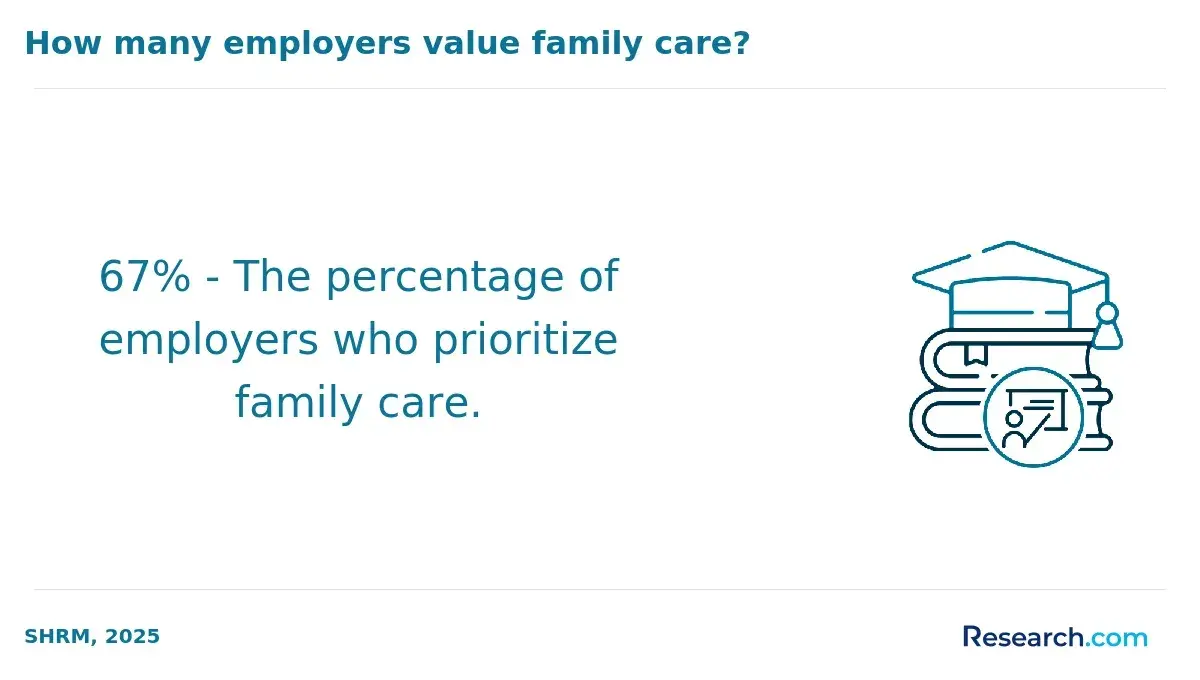
- Western Governors University (WGU): WGU offers a fully online master's in computer science with a specialization in artificial intelligence and machine learning. Its competency-based model allows students to progress at their own speed, with 67% completing the degree in about 19 months. The curriculum includes deep learning, natural language processing (NLP), and ethical AI development. WGU is regionally accredited and emphasizes practical skills.
- Georgia Institute of Technology: Georgia Tech offers the Online Master of Science in Computer Science (OMSCS) with a machine learning specialization. Students take core coursework in areas such as algorithms and machine learning, with electives including reinforcement learning and deep learning. The program is typically completed in two to three years and offers flexible part-time study.
- Seattle University: Seattle University offers a fully online Master of Science in Artificial Intelligence with substantial machine learning coursework in a 49-credit multidisciplinary curriculum. The program is designed for completion in about two years and is accredited by the Northwest Commission on Colleges and Universities. Students complete applied projects and benefit from industry-connected learning opportunities.
Before choosing an accelerated program, compare the schedule against your actual availability. A shorter calendar does not mean less work; it usually means the same or similar academic expectations in a tighter timeframe. Students comparing graduate options can also review 1 year masters degree programs to understand how accelerated models work across fields.
How do accelerated Machine Learning online programs compare with traditional ones?
Accelerated and traditional online machine learning programs can lead to similar academic outcomes, but they differ in pace, workload, and how much time students have to absorb technical material. The better choice depends on your background, work schedule, and tolerance for intensive coursework.
- Duration: Accelerated programs condense coursework into shorter terms, often as brief as eight weeks, and may allow completion in about one year. Traditional programs may take two or more years, especially at the graduate level or for part-time students.
- Weekly workload: Accelerated students often complete readings, coding assignments, labs, and projects on a compressed schedule. Traditional formats spread the same type of work over a longer period, which can make them easier to manage with full-time employment.
- Curriculum and credits: Both formats typically require the same number of credits and cover core areas such as algorithms, data mining, and neural networks. A faster format should not mean a thinner curriculum.
- Flexibility: Online programs often allow students to access lectures and materials at convenient times. However, accelerated programs may offer less room to pause, repeat material, or recover from a difficult term.
- Project and research time: Traditional programs may give students more time for internships, research, portfolio projects, or deeper exploration of advanced topics. Accelerated programs prioritize faster completion and quicker movement toward career goals.
Accelerated programs may fit students who already know programming fundamentals and can commit focused weekly study time. Traditional programs may be better for students who need to strengthen math, statistics, or computer science foundations while maintaining work or family responsibilities. Those comparing workload and program difficulty can also review guidance on the easiest masters degree options, while remembering that machine learning is typically technical and math-intensive regardless of format.
Will competency-based online programs in Machine Learning affect completion time?
Competency-based education can affect completion time significantly because students advance by demonstrating mastery rather than waiting for a fixed semester schedule to end. In a machine learning program, this may allow experienced learners to move more quickly through subjects they already understand, such as programming, data preparation, statistics, or model evaluation.
This format can be especially useful for students who have professional experience in software development, analytics, data engineering, or related technical work. If you can already demonstrate proficiency, you may spend less time on familiar material and more time on advanced topics such as neural networks, deep learning, or applied machine learning systems.
However, competency-based programs require strong self-direction. Students must manage deadlines, prepare for assessments, and maintain steady progress without the structure of a traditional classroom calendar. Some learners may finish in less than 19 months, but that outcome depends on the program design, prior preparation, and the student’s ability to consistently complete assessments.
The main advantage is flexibility. The main risk is underestimating the independence required. Before enrolling, ask how competencies are assessed, how often assessments can be attempted, what faculty support is available, and whether tuition is charged by term or credit.
Can you work full-time while completing fast-track Machine Learning online programs?
Yes, it is possible to work full-time while completing a fast-track online machine learning program, but it is demanding. Machine learning coursework usually requires more than watching lectures and taking quizzes. Students spend substantial time writing code, debugging models, working with datasets, reviewing mathematical concepts, and completing applied projects.
Some programs are designed for working adults through 4-week blocks or 8-week terms with one course at a time. That structure can make scheduling easier, but the workload remains intensive. A single accelerated course may require frequent programming assignments, project milestones, discussion participation, and exams within a short window.
Students working full time should be especially cautious with math-heavy and coding-heavy courses, including linear algebra, calculus, statistics, algorithms, and neural network development. These subjects often require uninterrupted concentration, which can be difficult after a full workday.
For many working students, 6 to 9 credits per semester is a more realistic balance than an overload schedule. A faster path only helps if you can complete the work well enough to retain the skills and build a usable portfolio. Before enrolling, estimate your weekly study hours, confirm whether deadlines are flexible, and ask whether courses are offered asynchronously or require live attendance.
Can prior learning assessments (PLAs) shorten Machine Learning degree timelines?
Prior learning assessments can shorten a machine learning degree timeline if the school awards credit for college-level knowledge gained outside a traditional classroom. PLAs may evaluate professional training, certifications, portfolios, challenge exams, or documented experience in areas such as programming, databases, analytics, or data science.
For example, Texas Tech University offers up to 9 credits via PLA for online AI-related degrees, while Arkansas State University accepts up to 90 transfer credits for its Digital Technology program with an AI focus. Most schools limit PLA credits to around 25-30% of degree requirements to preserve academic depth in advanced topics such as deep learning and neural networks.
PLA credit is not automatic. Students typically must be admitted to the institution, submit documentation, and show that their prior learning matches specific course outcomes. Some schools charge assessment fees, although these fees are typically lower than regular course costs.
The best strategy is to ask early. Before applying, request the school’s PLA policy, eligible subject areas, documentation requirements, credit limits, and whether PLA credits apply to major requirements, electives, or only general education courses.
Can prior college credits help you get a degree in Machine Learning sooner?
Yes. Prior college credits can shorten the time needed to earn an online machine learning degree, especially if your completed coursework aligns with mathematics, statistics, computer science, programming, or data-related requirements. Transfer credit can also reduce tuition costs by lowering the number of courses you need to complete at the new institution.
To evaluate whether your credits can apply, follow these steps:
- Collect official transcripts: Request transcripts from every college or university you attended. Include coursework in mathematics, statistics, computer science, information systems, and related technical fields.
- Review transfer policies: Check the maximum number of credits the program accepts and the minimum grade required. Some programs typically allow up to half of the total credits to count toward the degree.
- Compare course requirements: Match prior coursework to requirements such as programming, calculus, discrete mathematics, data structures, databases, and statistics.
- Submit supporting materials: Schools may request syllabi, course descriptions, catalog pages, or lab details to determine whether a prior course is equivalent.
- Ask about accelerated pathways: Some institutions offer accelerated or "FastTrack" options that allow qualifying students to apply graduate-level coursework toward both bachelor's and master's requirements.
Transfer rules vary widely. A course accepted by one institution may not be accepted by another, especially if it is old, lacks a lab component, or does not match the program’s technical depth. Students searching for the shortest masters degree programs online should request a written transfer evaluation before committing to a program.
Can work or military experience count toward credits in a degree in Machine Learning?
Work or military experience may count toward credits in some machine learning-related degree programs, but the credit usually applies only when the experience can be verified and mapped to specific college-level learning outcomes. Schools are more likely to award credit for documented training, certifications, exams, or evaluated military coursework than for general job experience alone.
Institutions may use American Council on Education (ACE) recommendations, CLEP, DSST, challenge exams, portfolios, or internal faculty review. Military students may also receive credit for service-related training when it has been formally evaluated and aligns with degree requirements.
In most cases, experiential credit is more likely to reduce general education or elective requirements than core machine learning requirements. Courses in programming, statistics, algorithms, data structures, and machine learning methods are often still required because they build the technical foundation for advanced study.
Students with professional or military backgrounds should ask each school which experiences are eligible, how credits are evaluated, whether there is a cap, and whether awarded credits apply to the major or only to electives. This step is especially important for students trying to shorten the degree timeline without delaying graduation through unexpected credit limitations.
What criteria should you consider when choosing accelerated Machine Learning online programs?
When choosing an accelerated online machine learning program, focus on quality, fit, and evidence of outcomes. A fast program is not automatically a good program. The goal is to finish efficiently while gaining skills that employers, graduate schools, or research teams will recognize.
- Accreditation and institutional reputation: Choose a properly accredited school. Accreditation helps ensure academic quality and may affect transfer credit, employer recognition, and eligibility for certain forms of financial aid.
- Curriculum depth: Look for coverage of machine learning fundamentals, statistics, algorithms, data mining, deep learning, natural language processing, and programming in Python or R. The program should balance theory with applied projects.
- Faculty expertise: Instructors with research, industry, or applied AI experience can provide stronger guidance on current tools, ethical issues, and real-world model development.
- Delivery format: Confirm whether courses are asynchronous, synchronous, competency-based, or term-based. Accelerated formats can be efficient, but they require predictable time commitments.
- Project experience: Strong programs include hands-on work with datasets, model evaluation, deployment considerations, and portfolio-ready projects.
- Student support: Academic advising, technical support, tutoring, library access, and career services can make a major difference in a compressed program.
- Credit transfer and prior learning: Policies for transfer credits, PLAs, professional certifications, and military learning can significantly affect total completion time.
- Career outcomes: Ask about graduation rates, average time to completion, career placement, alumni roles, and whether the school reports outcomes for online students specifically.
- Ethics and responsible AI: Machine learning programs should address bias, privacy, transparency, and responsible AI use because these issues increasingly affect professional practice.
Students considering highly compressed academic paths should compare program requirements carefully. Resources on one year doctoral programs online can also help readers understand how accelerated study works at advanced levels, though machine learning doctoral work typically requires substantial research depth.
Are accelerated online Machine Learning degrees respected by employers?
Accelerated online machine learning degrees can be respected by employers when they come from accredited institutions, include rigorous technical coursework, and produce graduates who can demonstrate practical skills. In machine learning, employers often care not only about the degree title but also about whether candidates can build, evaluate, explain, and improve models using real data.
Employer perceptions of online degrees have become more favorable, especially in technology fields where remote collaboration and digital learning are common. Still, perceptions vary. Some employers may look more closely at the school’s reputation, accreditation, curriculum, and the applicant’s portfolio before treating an accelerated online degree the same as a traditional one.
To strengthen the value of the credential, students should graduate with evidence of ability: completed projects, code repositories, model documentation, internship or work applications, and a clear explanation of tools used. Relevant skills in data analysis, AI application, programming, and responsible model development can help offset concerns about delivery format or pace.
Cost also matters. Students comparing affordable pathways can review the cheapest online schools for working students, but price should be weighed alongside accreditation, technical rigor, and career support.
What Machine Learning Graduates Say About Their Online Degree
- : "Completing my online Machine Learning degree in just under two years was a game-changer for my career. The accelerated pace kept me focused without sacrificing depth, and the affordable tuition made the program accessible. The skills and credential helped me secure a promotion within months of graduation. Santino"
- : "I appreciated that the online Machine Learning program combined rigorous coursework with practical projects I could apply directly to my job. The curriculum was demanding, but instructor support made the intense schedule manageable. Looking back, the experience transformed how I understand AI and data science. Jaime"
- : "The professional focus of the accelerated Machine Learning degree helped me build expertise while continuing to work full time. Even with the swift completion timeline, the learning outcomes were thorough and relevant. The program increased my confidence in deploying ML solutions at work, and the value made it a smart investment. Everett"
Other Things to Know About Accelerating Your Online Degree in Machine Learning
In 2027, many online machine learning degree programs aim to enhance employability by offering specialized certificates as part of the curriculum. These certificates might focus on niche areas like neural networks or data science, allowing students to gain additional qualifications alongside their degree.
Many online Machine Learning degree programs offer asynchronous coursework, allowing students to access lectures and assignments at their convenience. However, certain courses or capstone projects may require scheduled group work or live sessions. Prospective students should verify the schedule flexibility when selecting a program to balance study with other commitments.
Online Machine Learning degrees can often be completed more quickly than traditional on-campus programs, with some institutions offering accelerated options. This flexibility enables students to finish their degrees in as little as 18 months, depending on course load and prior credits.
References
- How long are AI ML courses - IABAC https://iabac.org/blog/how-long-are-ai-ml-courses
- Earn a Master’s in Artificial Intelligence in One Year - MastersInAI.org https://www.mastersinai.org/degrees/one-year-masters-in-ai/
- Data Science & AI Bootcamp | Study Remotely | MTU & Institute of Data https://bootcamp.mtu.edu/datascienceai
- Can You Work Full-Time While Doing an Online MBA? 2025 Guide https://rowanblog.com/2025/08/can-i-work-full-time-while-doing-an-online-mba/
- How I Finished Andrew Ng’s Deep Learning Specialization in Just 4 Weeks https://medium.com/@jiwon.jeong/how-i-finished-andrew-ngs-deep-learning-specialization-in-just-4-weeks-51818f0d452e
- How Long to Complete An AI Course if You’re Working Full Time? https://emeritus.org/in/learn/how-long-to-complete-an-ai-course/
- School of IT/Artificial Intelligence and Machine Learning - INTERNATIONAL EUROPEAN UNIVERSITY, POLAND | EUROPE | STUDY IN POLAND | STUDY IN EUROPE | MBBS | GENERAL MEDICINE | BUSINESS | ENGINEERING | IT | EUROPE https://ieu.com.pl/european-school-of-it-home/school-of-it-artificial-intelligence-and-machine-learning/
- Machine Learning vs Traditional Programming - Oxford Training Centre https://oxfordcentre.uk/resources/artificial-intelligence/machine-learning-vs-traditional-programming/
- Full article: Exploration of Skillification and Its Use in Awarding Credit for Prior Learning https://www.tandfonline.com/doi/full/10.1080/07377363.2023.2279808
- Veterans in Machine Learning: A Military‑to‑Civilian Pathway into AI Careers https://machinelearningjobs.co.uk/career-advice/veterans-in-machinelearning-military-to-civilian-pathway-ml-jobs


