
2027 Construction Management Careers: Skills, Education, Salary & Job Outlook

Co-Founder and Chief Data Scientist
Choosing a construction management career means deciding whether you want a role that combines job-site problem-solving, business judgment, technical knowledge, and leadership under pressure. Construction managers are responsible for bringing building and infrastructure projects from plan to completion, which makes the work high-impact but demanding.
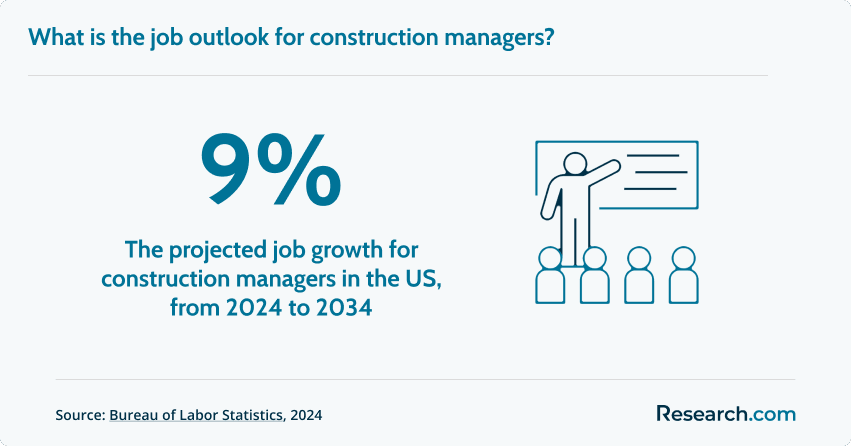
The field can be attractive for people who want visible results from their work, steady responsibility, and a path into leadership. Employment is projected to grow 9% through 2034, and median salaries are above $100,000. At the same time, success usually requires education or training in construction methods, scheduling, budgeting, codes, safety, contracts, and team coordination.
This guide explains what construction managers do, what skills and credentials matter, how salaries and job outlook compare, and what trade-offs to consider before entering the field. It is designed for students, career changers, trades professionals moving into management, and anyone evaluating whether construction management is a practical long-term career path.
Key Things You Should Know About Construction Management Career
- The typical earning potential for a construction manager is a median annual salary of $106,980 in the United States as of May 2024.
- Job opportunities in construction management are projected to grow by 5% from 2022 to 2032, reflecting stable demand fueled by new construction and infrastructure projects.
- A bachelor's degree in construction management, civil engineering, or a related field is the standard qualification needed to start a career, though significant experience can sometimes substitute.
- Success in this field depends on strong project management, budgeting, scheduling, leadership, communication, problem-solving skills, and familiarity with construction management software.
- The career path often begins in roles like assistant project manager or field engineer, advancing to construction manager, then senior project manager or director, with potential for executive leadership managing large or multiple projects.
What do Construction Managers do?
Construction managers plan, coordinate, and supervise construction projects from preconstruction through closeout. Their job is to make sure work is completed safely, legally, on schedule, within budget, and according to the contract documents. They translate drawings, specifications, schedules, budgets, and client expectations into daily action on the job site.
The role sits between the office and the field. A construction manager may review bids in the morning, meet with subcontractors on-site at midday, resolve a schedule conflict in the afternoon, and update the owner or client before the day ends. The work requires technical understanding, but it is not only a technical job. It is also a leadership, communication, risk management, and decision-making role.
A Day in the Life of Construction Managers
A typical day may include checking project progress, reviewing safety conditions, coordinating subcontractors, approving change orders, tracking material deliveries, updating schedules, and communicating with architects, engineers, owners, inspectors, and trade crews. When delays, design conflicts, weather issues, or labor shortages occur, construction managers are expected to find workable solutions quickly.
The work can be rewarding because results are visible. Construction managers help deliver schools, hospitals, offices, homes, roads, bridges, and other spaces that people use every day. It can also be stressful because decisions often affect cost, safety, quality, and the reputation of everyone involved in the project.
What are the key responsibilities of Construction Managers?
Construction managers are accountable for the practical execution of a project. Their responsibilities vary by employer, project size, and contract structure, but most roles involve coordinating people, schedules, budgets, materials, documentation, safety, and communication.
- Plan and manage project schedules: Build timelines, sequence work, identify dependencies, and adjust schedules when delays or conflicts occur.
- Coordinate subcontractors and field teams: Organize trade work, review performance, resolve coordination problems, and keep crews aligned with project goals.
- Monitor budgets and costs: Track spending, review invoices, evaluate change orders, control waste, and help prevent budget overruns.
- Maintain quality standards: Compare work against plans, specifications, codes, and client expectations before problems become costly.
- Enforce safety requirements: Support job-site safety procedures, respond to hazards, and make sure safety expectations are followed.
- Communicate with stakeholders: Keep owners, clients, architects, engineers, inspectors, administrators, and contractors informed and aligned.
- Manage documentation: Track contracts, schedules, RFIs, submittals, permits, reports, meeting notes, inspections, and closeout records.
The Most Challenging vs. The Most Rewarding Tasks
The most challenging part of the job is often managing uncertainty. Weather delays, late materials, labor shortages, design revisions, site conditions, and inspection issues can affect the schedule and budget at the same time. A strong construction manager must solve problems without ignoring safety, quality, or contract obligations.
The most rewarding part is seeing a project move from drawings to a completed structure. For many professionals, the appeal is direct: their planning, decisions, and leadership produce something tangible. If you are still exploring degree options for entering this field, reviewing best accelerated bachelor's degree programs can help you compare faster routes to a relevant credential.
What are the key skills for Construction Managers?
Construction managers need a mix of technical, financial, legal, and interpersonal skills. The best candidates are not only familiar with building methods; they can also lead teams, communicate clearly, manage risk, and make decisions when information is incomplete.
Hard Skills
- Project scheduling and planning: Create realistic timelines, sequence activities, identify critical tasks, and adjust plans when conditions change.
- Budgeting and financial management: Estimate costs, review bids, track expenses, evaluate change orders, and protect project margins.
- Building codes and regulatory compliance: Understand safety rules, permitting requirements, inspections, specifications, and quality standards.
- Contract and document management: Read contract terms, manage RFIs and submittals, document decisions, and maintain accurate project records.
- Construction technology proficiency: Use BIM, project management software, scheduling tools, and digital collaboration platforms to improve coordination.
Soft Skills
- Leadership: Set expectations, hold teams accountable, and keep people focused during pressure-filled phases of a project.
- Communication: Explain problems clearly to technical and nontechnical stakeholders before confusion becomes conflict.
- Critical thinking: Compare options, understand trade-offs, and choose solutions that balance time, cost, quality, and safety.
- Active listening: Understand owner priorities, field constraints, and subcontractor concerns before making decisions.
- Judgment and decision making: Act quickly when needed while recognizing which decisions require additional input or documentation.
The One Overlooked Skill That Separates the Good from the Great
Strategic stakeholder management is often what separates competent construction managers from exceptional ones. The best managers do not wait for conflict to surface. They anticipate where owners, designers, inspectors, subcontractors, suppliers, and field crews may have competing priorities, then address those issues early.
For example, identifying a likely permitting or inspection concern before work begins can prevent costly rework and schedule delays. This skill becomes especially valuable in complex environments such as heavy and civil engineering construction, where technical requirements, public impact, safety expectations, and stakeholder interests are often more difficult to balance.
Students building a foundation for this career can compare accessible undergraduate pathways, including the easiest bachelor's degree to earn, while keeping in mind that employers typically value communication, project planning, contract management, field awareness, and technological proficiency together.
Construction Management Careers: A Step-by-Step Guide to Getting Started
There is no single path into construction management, but most successful candidates build the same core ingredients: construction knowledge, job-site experience, project coordination skills, and proof that they can manage responsibility. Trades professionals, engineering students, architecture graduates, business majors, and career changers can all enter the field if they close the right skill gaps.
- Learn the fundamentals of construction. Study construction methods, drawings, materials, estimating, scheduling, safety, contracts, and project management. This can happen through a degree, certificate, apprenticeship, trade background, or employer training.
- Get field experience early. Internships, assistant roles, apprenticeships, and entry-level construction jobs help you understand how work actually happens on-site. Classroom knowledge is useful, but field judgment develops through exposure to real constraints.
- Build technical and administrative skills. Learn scheduling software, cost tracking, document control, BIM basics, reporting, and communication practices. Many early-career roles involve documentation and coordination before full project authority.
- Move into assistant project or field supervision roles. Positions such as project coordinator, field engineer, assistant superintendent, or assistant project manager can help you build credibility and manage smaller scopes of work.
- Earn relevant credentials when they support your goals. Certifications can strengthen your profile, especially when paired with experience. They are most useful when they match the type of projects and employers you are targeting.
- Advance through larger projects and higher responsibility. Over time, seek exposure to budgeting, subcontractor management, client communication, claims, change orders, safety leadership, and closeout.
The key is to avoid treating construction management as a desk-only career. Employers often look for people who understand both the paperwork and the physical realities of the job site.
What education, training, or certifications are required?
Many construction manager roles prefer or require a bachelor's degree in construction management, civil engineering, architecture, building science, or a closely related field. An associate degree may be enough for some entry-level roles when paired with significant hands-on experience, but a bachelor's degree remains the most common educational foundation for long-term advancement.
Useful coursework often includes construction materials and methods, estimating, scheduling, surveying, contracts, safety, building codes, project management, accounting, and construction law. Internships and cooperative education can be especially valuable because they connect academic learning to real project conditions.
On-the-job training is also central to the career. New managers commonly develop practical skills through supervised roles lasting up to two years, often starting as assistants, coordinators, field engineers, or supervisors before taking full responsibility for a project.
Common Certifications
- Certified Construction Manager (CCM): Offered by the Construction Management Association of America, this credential can help validate professional construction management competence.
- Associate Constructor (AC): Offered by the American Institute of Constructors, this credential is often relevant for early-career professionals.
- Certified Professional Constructor (CPC): Also offered by the American Institute of Constructors, this credential is generally positioned for more experienced professionals.
Are advanced degrees or niche certifications worth the investment?
Advanced degrees such as a Master of Science in Construction Management or an MBA with a project management focus can support movement into senior roles such as project executive or director. They can also elevate earning potential by up to 10%. Advanced credentials such as the Certified Professional Constructor may create a competitive edge for large or complex projects.
The trade-off is cost and time. Bachelor's degrees alone take around four years and can be expensive, while master's programs and certifications add more expenses and preparation time. Not every entry-level or mid-career role requires advanced education, especially when a candidate has strong field experience, leadership ability, and a reliable professional network.
A practical approach is to choose education based on your target role. If you want to manage large commercial, industrial, civil, or public projects, a strong degree and recognized credentials may matter more. If you are moving up from the trades or a smaller contractor, documented experience and results may carry more weight. You can also compare related academic pathways by reviewing the highest paying bachelor's degrees.
What is the earning potential for Construction Managers?
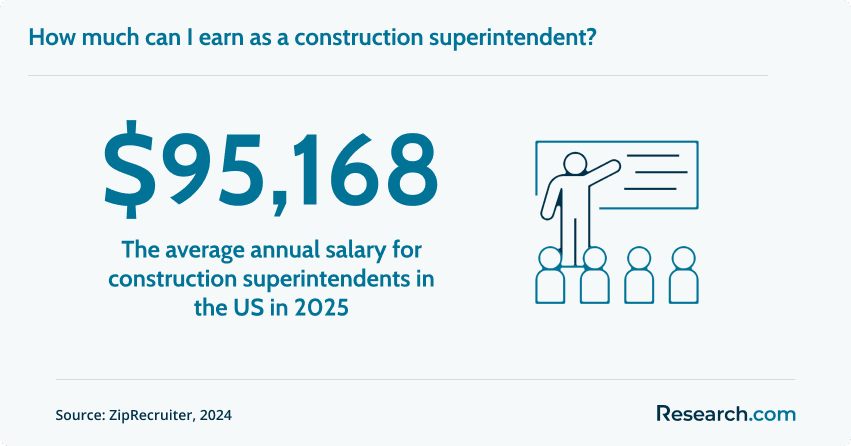
Construction management can offer strong earning potential because the role directly affects project cost, schedule, quality, safety, and client satisfaction. The median annual salary is $106,980, making the field financially attractive compared with many occupations that require similar levels of education and responsibility.
Pay varies widely by experience. Entry-level managers typically earn around $65,530 per year, while senior-level positions can exceed $174,240 annually. The difference reflects more than years on the job. Higher compensation usually comes with larger project responsibility, stronger budgeting authority, client-facing leadership, specialized expertise, and a record of delivering work successfully.
What affects construction manager pay?
- Experience level: Managers who can run larger scopes, lead teams, and handle risk generally earn more.
- Project type: Heavy and civil engineering, large commercial work, industrial construction, and complex infrastructure projects may offer stronger pay than smaller residential work.
- Location: Higher salaries often appear in regions like New York or Massachusetts, where project costs, labor markets, and demand can be different.
- Employer size: Large general contractors and construction management firms may offer more structured advancement and higher compensation bands.
- Specialization: Expertise in estimating, safety, BIM, sustainability, claims, scheduling, or complex project delivery can improve earning potential.
When evaluating salary, look beyond the base number. Bonus structures, travel expectations, overtime demands, vehicle allowances, relocation requirements, and benefits can significantly affect the real value of an offer.
What is the job outlook for Construction Managers?
Employment for construction managers is projected to grow 9 percent from 2024 to 2034, much faster than the average growth rate of 3 percent for all occupations. This outlook suggests solid long-term demand, though construction employment can still be affected by interest rates, public funding, private development cycles, labor availability, and regional market conditions.
The Key Factors Shaping the Future Outlook
Several forces support demand for construction managers. Infrastructure investment, sustainability work, building restoration, and energy-efficient construction all require professionals who can coordinate complex projects. At the same time, retirements and labor shortages can create openings for managers who understand both field operations and modern project controls.
Technology is also changing the role. Building Information Modeling (BIM), digital scheduling, mobile documentation, drones, sensors, and AI-supported workflows can improve coordination and reporting. These tools do not replace construction judgment, but they increase expectations for managers to work with data, documents, and digital collaboration systems.
The strongest candidates will likely be those who combine field credibility with technology fluency, communication skills, and cost awareness. Professionals considering longer-term education strategies can explore formats such as two year doctoral programs as an example of how accelerated learning options may fit broader career planning.
What is the typical work environment for Construction Managers?
Construction managers usually split time between offices, job sites, and meetings with clients, designers, subcontractors, inspectors, and internal teams. The work environment is active and variable. One day may focus on budgets and schedules; the next may involve site walks, safety issues, deliveries, and field coordination.
Most construction managers work in nonresidential building construction (24%), building equipment contractors (22%), and residential building construction (15%). These settings can differ significantly. Residential projects may involve faster timelines and direct owner interaction, while commercial, industrial, and civil projects may involve more formal documentation, larger teams, and greater regulatory complexity.
The schedule often exceeds the standard 40-hour workweek. Evenings, weekends, early mornings, and on-call responsibilities may be required when project milestones, inspections, emergencies, or delays demand attention. Some administrative tasks can be completed remotely, but full remote work is uncommon because job-site presence remains essential for inspections, coordination, safety, and decision-making.
What are the pros and cons of Construction Manager careers?
Construction management can be a strong fit for people who like visible results, leadership, movement between office and field, and solving practical problems. It is less suitable for people who want predictable hours, low-stress work, or minimal conflict. The career offers meaningful rewards, but the pressure is real.
Pros
- Tangible results: You can see the outcome of your work in completed buildings, infrastructure, and spaces people use.
- Strong earning potential: The role can pay well, especially as responsibility and project complexity increase.
- Leadership opportunities: Construction managers coordinate diverse teams and make decisions that shape project outcomes.
- Varied workdays: The mix of office work, field visits, meetings, planning, and problem-solving can keep the job engaging.
- Transferable skills: Budgeting, scheduling, negotiation, safety, and team leadership can apply across many construction sectors.
Cons
- High pressure: Schedule delays, cost overruns, safety concerns, and client expectations can create intense stress.
- Long or irregular hours: Project demands may require early starts, late days, weekends, or emergency availability.
- Constant conflict management: Construction managers often mediate between owners, designers, subcontractors, suppliers, and inspectors.
- Heavy accountability: Mistakes can affect budgets, safety, quality, legal compliance, and company reputation.
- Weather and site conditions: Outdoor work, travel between sites, and changing field conditions are common parts of the job.
If you want leadership but also enjoy hands-on industries, comparing trade school career paths can help you understand how construction management fits with other practical, skill-based careers.
What are the opportunities for advancement for Construction Managers?
Advancement in construction management usually comes from handling larger projects, managing more people, improving financial results, and developing specialized expertise. The path can lead to senior project leadership, operations management, executive roles, consulting, or business ownership.
Clear Paths for Promotion in Construction Management
Construction management career advancement opportunities are broad, with professionals able to progress from project engineer roles to executive director positions within 10-15 years while earning 30-50% salary increases at each level. Actual timelines and pay growth depend on employer size, project type, market conditions, performance, and willingness to relocate or take on complex assignments.
- Project engineer / assistant project manager: Support documentation, coordination, scheduling, submittals, RFIs, cost tracking, and communication.
- Assistant superintendent / field supervisor: Help coordinate field crews, subcontractors, safety practices, inspections, and daily site progress.
- Project manager / superintendent: Lead projects or field operations, manage budgets and schedules, coordinate teams, and maintain client relationships.
- Senior project manager / project executive / operations manager: Oversee multiple large projects, guide project teams, support business development, and influence company strategy.
- Director or executive leadership: Manage portfolios, regional operations, client relationships, risk, staffing, and long-term organizational growth.
Exciting Options for Specialization
Specialization can be just as valuable as promotion. Construction career paths and specializations extend beyond traditional management tracks, giving professionals options in technical leadership, safety, sustainability, finance, technology, and entrepreneurship.
- Construction technology and BIM: Lead digital coordination, model-based planning, clash detection, and software-driven project workflows.
- Safety management: Focus on hazard prevention, compliance, training, incident response, and safety culture.
- Sustainability and green building: Build expertise in efficient systems, sustainable materials, environmental requirements, and LEED certification.
- Construction finance and cost estimating: Specialize in budgeting, value engineering, bid analysis, cost forecasting, and financial controls.
- Scheduling and claims: Develop expertise in delay analysis, critical path management, documentation, and dispute prevention.
The best advancement strategy is to become reliable in the fundamentals first, then choose a specialization that matches market demand and your strengths.
What other careers should you consider?
If construction management interests you but the schedule, stress, or job-site demands feel uncertain, several related careers use overlapping skills. Comparing alternatives can help you choose a path that better matches your preferred work environment, education plan, and strengths.
- Project Manager: Manages timelines, budgets, teams, and deliverables across industries. This may suit people who like coordination and leadership but do not necessarily want to stay in construction.
- Property Manager: Oversees buildings after construction, including maintenance, vendor coordination, tenant needs, budgets, and compliance.
- Building or Quality Inspector: Reviews construction work for code compliance, safety, and quality standards. This path may appeal to detail-oriented professionals who prefer evaluation over full project leadership.
- Architect: Focuses more on design, planning, building systems, and client vision. This path typically requires a different education and licensure route.
- Project Estimator: Analyzes drawings, materials, labor, bids, and costs to determine project feasibility and pricing.
- Facilities Manager: Manages the operation, maintenance, safety, and efficiency of existing buildings and campuses.
- Construction Safety Manager: Specializes in preventing job-site injuries, enforcing safety programs, and supporting regulatory compliance.
Use the comparison to clarify what you actually enjoy: leading field teams, managing money, solving technical problems, reviewing details, working with clients, or maintaining completed facilities. The right path should match both your skills and the kind of pressure you are willing to manage.
Here's What Professionals Say About Their Construction Management Careers
- : "Watching the building come to life when the main switchgear powers up is unforgettable. I still remember the first time I stood on-site as the transformers hummed and the lights flickered on. It felt like the project was waking up. Each job has its own story, but knowing that what I helped create will serve its purpose for decades gives me a deep sense of accomplishment. It is physical proof that my work helped turn blueprints into something real. —Marcus"
- : "Balancing the job with family time and evening classes was not easy at first. I had to coordinate multiple subcontractors, adjust timelines, and respond when unexpected problems appeared on-site. What helped most was learning to communicate clearly and rely on the team instead of trying to carry every issue alone. Each problem I handled made me more confident and helped build my reputation in the industry. —Nadia"
- : "I still get a real sense of pride when I step back after a difficult project and see it finished on schedule and within budget. Bringing together different teams, materials, schedules, and decisions to build something people use every day is hard work, but it is rewarding. The pressure can be intense, but delivering the finished building makes it worth it. —Tomas"
Other Things You Should Know About Construction Management
Technology such as AI, drones, and Building Information Modeling (BIM) is transforming what construction managers do daily. AI helps with project scheduling, risk assessment, and cost estimation, while drones provide real-time site monitoring and safety checks. BIM supports better planning and coordination across trades, reducing errors and rework. These advances require construction managers to be digitally fluent and adapt to rapidly evolving infrastructure skills.
In 2027, successful construction managers need technical skills, such as proficiency in project management software, and soft skills, like leadership and communication. Understanding sustainable construction practices and leveraging technology to optimize workflows are also increasingly vital in the field.
In 2027, construction managers often leverage Building Information Modeling (BIM) to enhance project management. BIM facilitates detailed digital representations of building projects, allowing managers to collaborate efficiently, optimize designs, improve resource utilization, and foresee potential challenges, ultimately streamlining construction processes.
References
- Construction Manager | Alternative Jobs https://settlement.org/alternative-jobs/architect/construction-manager/
- Frequently Asked Questions about Construction Manager Careers https://www.jobzmall.com/careers/construction-manager/faqs
- Construction manager https://www.prospects.ac.uk/job-profiles/construction-manager
- Career Paths in Construction Management - CORBINS https://corbins.us/career-paths-in-construction-management/
- 15 Roles You Can Pursue With a Construction Management Degree https://ccaps.umn.edu/story/15-roles-you-can-pursue-construction-management-degree
- Stories of people in construction https://www.goconstruct.org/construction-careers/stories-of-people-in-construction
- Construction Managers | My Future https://myfuture.com/occupations-industries/occupations/construction-managers/
- Construction Managers: Salary, career path, job outlook, education and more - RaiseMe https://www.raise.me/careers/management/construction-managers/
- Procore Company Logo https://www.procore.com/library/construction-management-career-paths
- Construction management 101: 25 frequently asked questions - PlanRadar https://www.planradar.com/sg/construction-management-frequently-asked-questions/


