
2027 Curriculum & Instruction vs. Instructional Design Degree: Explaining the Difference

Co-Founder and Chief Data Scientist
Choosing between a Curriculum & Instruction degree and an Instructional Design degree is really a choice between two ways of improving learning. One path is usually better for educators who want to shape curriculum, teaching practice, assessment, and school or district improvement. The other is often a stronger fit for people who want to design online courses, training programs, multimedia lessons, and technology-supported learning experiences.
The overlap can be confusing because both fields use learning theory, assessment, instructional strategy, and educational technology. The difference is in the center of gravity: Curriculum & Instruction typically asks, “What should learners be taught, how should it align with standards, and how can instruction improve across a classroom, program, or institution?” Instructional Design more often asks, “How should a learning experience be built, delivered, tested, and improved for a specific audience?”
This guide compares the two degree paths in practical terms: what each program covers, where they overlap, how they differ, what skills they build, how difficult they may feel, what careers they can lead to, what costs to expect, and how to decide which option fits your goals.
Key Points About Pursuing a Curriculum & Instruction vs. Instructional Design Degree
- Curriculum & instruction degrees often focus on teaching methods and content development, usually leading to classroom teaching or school administration careers, with average tuition around $15,000 per year.
- Instructional design degrees emphasize technology integration and learning experience design, preparing graduates for corporate training or e-learning roles, typically lasting 1-2 years with tuition near $12,000.
- Both programs vary by institution, but Instructional Design generally offers faster completion and broader career options outside traditional education settings.
What are curriculum & instruction degree programs?
Curriculum & instruction degree programs are typically graduate programs designed for educators who want to improve what is taught, how it is taught, and how learning is measured. They are especially common among licensed teachers, instructional coaches, curriculum specialists, department chairs, and school leaders who want deeper expertise in curriculum design, instructional improvement, and educational research.
These programs usually focus on classroom and school-based learning. Students examine how standards, learning objectives, lesson design, assessment, cultural context, and student needs come together in a coherent curriculum. The goal is not only to create individual lessons, but to improve instruction across grade levels, subject areas, departments, schools, or districts.
The programs typically require 30 to 36 credit hours, divided among core courses, specialized focus areas, and electives. Common topics include educational research methods, curriculum theory, instructional strategies, assessment design, technology use in education, and the social and cultural contexts that shape curriculum decisions.
Many programs require a capstone, applied research project, or professional portfolio. These assignments often ask students to analyze an instructional problem, evaluate curriculum effectiveness, design improvements, and present evidence-based recommendations. For working educators, this applied structure can be valuable because projects may connect directly to their current classrooms, schools, or districts.
Admission is generally aimed at practicing educators with teaching experience, though requirements vary by institution. Prospective students should check whether a program requires a teaching license, classroom experience, minimum GPA, letters of recommendation, or a statement of purpose. They should also verify whether the degree supports their intended career goal, such as curriculum leadership, instructional coaching, teacher leadership, or preparation for further graduate study.
What are instructional design degree programs?
Instructional design degree programs prepare students to create structured, effective learning experiences for schools, colleges, businesses, nonprofits, government agencies, healthcare organizations, and online education providers. Instead of focusing mainly on school curriculum systems, these programs emphasize how to design, build, deliver, and evaluate instruction for a defined learner audience.
Coursework often combines learning theory, design strategy, educational technology, multimedia development, and evaluation. Students may learn to conduct needs assessments, write measurable learning objectives, choose delivery formats, create digital learning materials, design assessments, use learning management systems, and revise courses based on feedback or performance data.
Core classes generally cover needs assessment, foundational learning theories, digital literacy skills, and strategies for integrating technology into educational environments. Many programs also introduce instructional design models and production workflows used in online learning and workplace training.
Bachelor's degrees typically require about 120 credit hours and take four years to complete. Master's programs are shorter, lasting one to two years and usually requiring 30 to 36 credit hours. Undergraduate applicants generally need a high school diploma or equivalent, while graduate candidates must hold a bachelor's degree and meet minimum GPA criteria.
Instructional design programs can be a fit for teachers who want to move into digital learning, corporate training, or education technology. They can also suit career changers with backgrounds in communication, design, technology, human resources, subject-matter training, or project management. Because job duties often involve software tools and production deadlines, applicants should look carefully at whether a program includes hands-on projects, portfolio development, and exposure to current e-learning tools.

What are the similarities between curriculum & instruction degree programs and instructional design degree programs?
Curriculum & instruction and instructional design programs both aim to make learning more effective. Each field uses learning theory, intentional planning, assessment, and evidence-based improvement. Both ask students to think beyond simply presenting information and instead design learning that supports clear outcomes.
The strongest similarity is that both degrees prepare graduates to make instructional decisions based on learner needs, goals, context, and evidence. Whether the setting is a K-12 school, college course, online program, or workplace training module, both fields require careful planning and continuous evaluation.
- Shared learning goals: Both programs teach students to define learning objectives, align instruction with outcomes, and assess whether learners are making progress.
- Overlap in coursework: Instructional theory, assessment, technology integration, learner engagement, and research-based practice often appear in both curricula.
- Focus on improvement: Students in both fields learn to evaluate what is working, identify gaps, and recommend changes that make instruction clearer, more relevant, or more effective.
- Flexible formats: Each degree is often available online, hybrid, or on campus, which can help working professionals continue their education while maintaining employment.
- Program duration: Master's degrees in both fields typically take 18 to 24 months, depending on full-time or part-time enrollment.
- Admission requirements: Entry criteria typically include a bachelor's degree, letters of recommendation, a statement of purpose, and sometimes teaching experience or portfolios; some programs may also request GRE scores.
The practical overlap matters because graduates from either path may work on lesson design, assessment, technology integration, training materials, or program improvement. However, the context usually differs. Curriculum & instruction is more often tied to schools, standards, and educator leadership, while instructional design is more often tied to course production, e-learning, and training systems.
Those interested in expedited options for advanced study can explore the fastest online degree programs for working adults, which may offer flexible scheduling without requiring students to pause their careers.
What are the differences between curriculum & instruction degree programs and instructional design degree programs?
The main difference is scope. Curriculum & instruction programs usually focus on the content, standards, sequence, and instructional improvement of educational programs. Instructional design programs usually focus on building specific learning experiences, often with technology, multimedia, and structured design models.
A simple way to compare them is this: Curriculum & Instruction is often about improving an educational system or program; Instructional Design is often about designing a learning product or experience. Both can use technology, both can involve assessment, and both can improve teaching. But they prepare students for different daily work.
- Primary focus: Curriculum & instruction addresses educational content, standards alignment, instructional quality, and program coherence. Instructional design concentrates on delivery methods, learner experience, technology, and the design of effective learning materials.
- Typical setting: Curriculum & instruction is most closely associated with K-12 schools, districts, higher education, and education agencies. Instructional design is common in higher education, online learning companies, corporate training, healthcare, government, nonprofits, and technology-supported education.
- Scope and application: Curriculum & instruction may shape broad curricula, grade-level expectations, course sequences, and school improvement plans. Instructional design more often develops specific courses, modules, simulations, job aids, videos, or digital training programs.
- Skill development: Curriculum & instruction students learn curriculum mapping, standards alignment, assessment analysis, instructional coaching, and educational leadership. Instructional design students build skills in learning theory, design models, multimedia production, usability, technology integration, and project management.
- Career paths: Graduates with curriculum & instruction degrees often work as curriculum coordinators, instructional coaches, teacher leaders, or education consultants. Instructional design graduates often become instructional designers, eLearning developers, training specialists, or learning experience designers.
- Use of technology: Instructional design usually requires stronger technical and production skills with authoring tools, learning management systems, multimedia platforms, and online delivery. Curriculum & instruction may integrate technology, but it remains more rooted in pedagogy, curriculum planning, and instructional improvement.
Students should also consider credentialing. A curriculum & instruction program may be more likely to assume or require teaching experience, while instructional design programs may be open to a wider range of professional backgrounds. However, requirements vary, so applicants should read admissions criteria carefully before applying.
What skills do you gain from curriculum & instruction degree programs vs instructional design degree programs?
The skills you gain depend on whether the program is built around educational leadership and curriculum improvement or around the design and production of learning experiences. Both degrees can strengthen your ability to plan instruction, use evidence, and support learner success, but they develop different professional toolkits.
Skill Outcomes for Curriculum & Instruction Degree Programs
- Curriculum mapping: Students learn to align lessons, units, assessments, and learning goals with academic standards and program expectations.
- Assessment and data analysis: Graduates develop the ability to interpret student performance data, identify learning gaps, and recommend instructional changes.
- Instructional leadership: Programs often prepare educators to guide colleagues, support professional development, and contribute to school or district improvement initiatives.
- Standards alignment: Students learn how to connect curriculum decisions to state, district, institutional, or discipline-specific standards.
- Equity-focused curriculum review: Many programs ask students to examine whether curriculum materials reflect diverse learners, reduce barriers, and support inclusive instruction.
Skill Outcomes for Instructional Design Degree Programs
- Learning theory application: Students learn to use frameworks such as ADDIE and Bloom's Taxonomy to design structured learning experiences.
- Needs assessment: Graduates develop skills in identifying performance gaps, learner characteristics, training goals, and the conditions that affect learning.
- Multimedia production: Programs often build skills in creating videos, interactive modules, digital lessons, and other e-learning assets.
- Learning management system (LMS) implementation: Students may learn how to organize, deliver, track, and evaluate learning through digital platforms.
- Project and stakeholder management: Instructional designers often work with subject-matter experts, managers, faculty, or clients, so communication and revision workflows are important.
The core distinction is practical: curriculum and instruction degree skills focus heavily on what should be taught, how it fits within a larger program, and how educators can improve instruction. Instructional design program skills focus more on how learning should be built, delivered, experienced, and refined.
Graduates with a curriculum and instruction degree typically pursue roles such as curriculum coordinators or instructional coaches, shaping K-12 and higher education programs. Those with an instructional design degree often become e-learning developers or corporate trainers, blending pedagogy with technology in digital education and training environments.
For learners comparing education options at different stages of life, exploring degrees for older adults can provide additional context on flexible academic pathways.
Which is more difficult, curriculum & instruction degree programs or instructional design degree programs?
Neither degree is automatically harder for every student. The more difficult option depends on your background, work experience, comfort with technology, writing ability, and preferred type of academic work. Curriculum & instruction can feel more demanding for students who are less comfortable with educational research, theory, standards, and school-based analysis. Instructional design can feel more demanding for students who are less comfortable with digital tools, multimedia development, and iterative project work.
Curriculum & instruction degrees typically require deep engagement with educational theory, standards alignment, curriculum evaluation, and applied research. Students may complete extensive research projects, capstone portfolios, or thesis-style writing. This can be challenging for students who have not recently written academic papers or who are unfamiliar with school accountability systems.
Instructional design programs often emphasize technology proficiency, multimedia production, learning design models, and project management. Assessments may involve creating eLearning modules, testing usability, revising prototypes, or presenting design rationales. This can be challenging for students who are new to software tools, visual design, online course development, or client-style feedback cycles.
Limited student survey data shows similar completion rates between the two, generally ranging from 65-80% for master's degrees. That figure should be treated as a broad indicator rather than a guarantee, because completion depends on the institution, student support, course load, program format, and individual circumstances.
Students with strong classroom experience may find Curriculum & Instruction more intuitive because the coursework connects directly to teaching practice. Students with strengths in technology, communication, design, or workplace training may find Instructional Design more natural. The best way to judge fit is to review sample courses, capstone requirements, software expectations, and final project examples before enrolling.
For students weighing academic interests against career prospects, reviewing the best paying majors can add useful perspective during program research.
What are the career outcomes for curriculum & instruction degree programs vs instructional design degree programs?
Both degrees can lead to careers focused on improving learning, but they usually point toward different labor markets. Curriculum & instruction graduates are more likely to work in schools, districts, higher education, curriculum publishing, or education consulting. Instructional design graduates are more likely to work in online learning, corporate training, learning and development, higher education course design, healthcare training, government training, or education technology.
The biggest career distinction is portability across industries. Curriculum & instruction is strongest for educators who want to advance within education systems. Instructional design can be broader because many organizations need training, onboarding, compliance education, product education, and digital learning materials.
Career Outcomes for Curriculum & Instruction Degree Programs
Those pursuing curriculum and instruction degree career opportunities in the United States typically enter or advance within the K-12 education system, higher education, or state education agencies. Demand in this field is often tied to school budgets, educational policy, standards changes, and institutional priorities. Salary growth may be moderate, especially in public-sector roles where compensation is shaped by district or agency pay structures.
- K-12 Teacher: Develops and delivers daily lesson plans aligned with state and district standards.
- Curriculum Specialist: Evaluates and improves school curricula to enhance student achievement.
- Instructional Coordinator: Oversees curriculum implementation and trains teachers on instructional strategies.
Career Outcomes for Instructional Design Degree Programs
Instructional design degree job prospects in 2025 are robust, fueled by growth in eLearning and corporate training across multiple industries including healthcare, government, and technology. The median income for related roles is higher, reflecting greater demand and adaptability to technological advances.
- Instructional Designer: Creates educational content and digital training programs using learning science and technology.
- eLearning Developer: Produces interactive online courses and multimedia learning tools for diverse clients.
- Training Specialist: Designs and delivers corporate training initiatives, often collaborating with organizational leaders.
When comparing outcomes, consider the kind of workday you want. Curriculum roles may involve teacher collaboration, standards review, assessment analysis, professional development, and school improvement planning. Instructional design roles may involve storyboarding, course authoring, multimedia development, learner testing, project timelines, and collaboration with subject-matter experts.
Prospective students seeking stable roles within traditional educational institutions may prefer curriculum and instruction. Those seeking flexibility across industries, remote-friendly project work, or digital learning production may prefer instructional design. Additional resources on choosing cost-conscious programs can be found by exploring the best inexpensive online colleges.
How much does it cost to pursue curriculum & instruction degree programs vs instructional design degree programs?
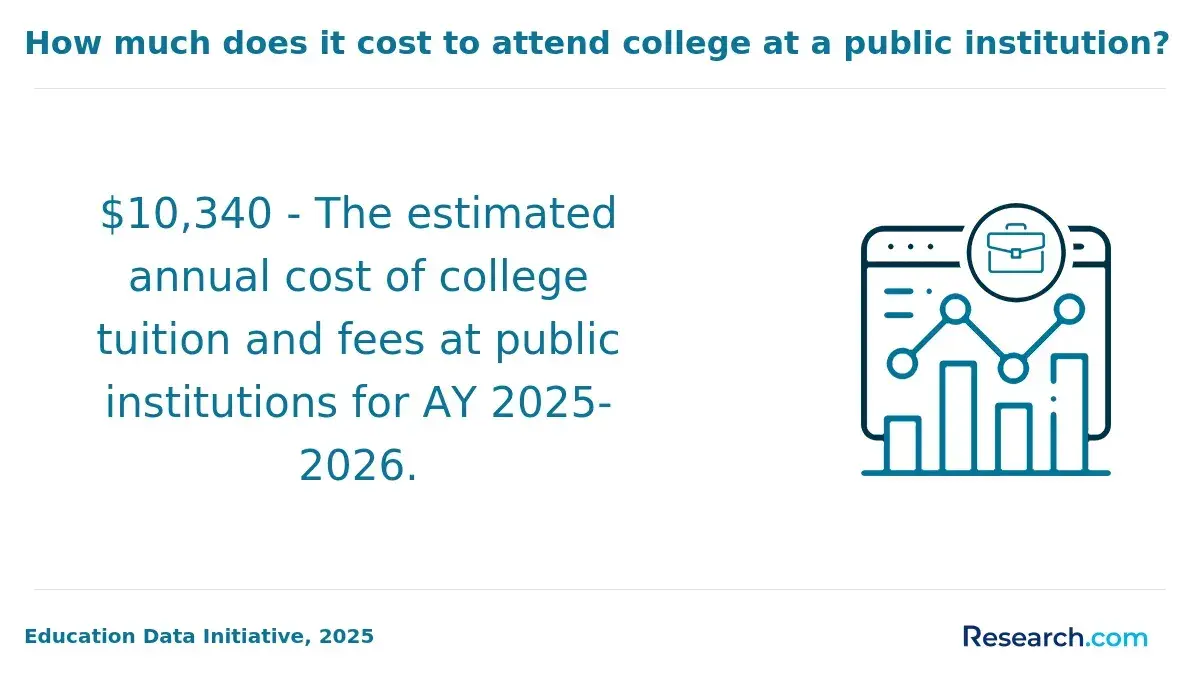
The cost of a curriculum & instruction or instructional design degree depends on degree level, school type, residency status, delivery format, credit requirements, and fees. Public universities often cost less for in-state students, while private institutions and out-of-state rates can be substantially higher. Online programs may reduce relocation and commuting costs, but they can still include technology fees, course fees, books, software, or required campus visits.
In curriculum & instruction programs, national average tuition ranges from about $12,000 to $30,000 at the master's level. Public institutions may offer in-state tuition as low as $4,477 per year, such as at the University of Florida, whereas out-of-state students might pay over $25,000 annually.
Online C&I options often reduce costs further; some programs have total tuition below $7,000, with the median among affordable choices around $5,850. Students comparing these programs should confirm whether the listed tuition reflects total program cost, annual tuition, per-credit pricing, or tuition before fees.
Instructional design master's programs, which may be called Educational Technology or Instructional Systems, also display broad cost differences. For example, Florida State University charges roughly $1,076 per credit for out-of-state online students, totaling nearly $38,700 for 36 credits. The University at Albany offers an online MS in Curriculum Development and Instructional Technology with non-resident tuition around $6,520 per semester, which can add up to roughly $13,000 for a 30-credit program.
Cost comparisons should go beyond tuition. Applicants should ask whether a program requires paid software, portfolio platforms, background checks, clinical or field experiences, travel, exam fees, or additional technology. Instructional design students, in particular, may benefit from programs that provide access to authoring tools or multimedia software rather than requiring students to purchase everything independently.
Accredited programs frequently have financial aid options available, including scholarships, grants, and federal loans. Students should verify institutional accreditation, program expectations, total cost of attendance, transfer credit policies, employer tuition assistance options, and whether part-time enrollment affects aid eligibility.
How to Choose Between Curriculum & Instruction Degree Programs and Instructional Design Degree Programs
Choose Curriculum & Instruction if you want to improve teaching, curriculum, assessment, and instructional systems in schools or education programs. Choose Instructional Design if you want to build learning experiences, online courses, training modules, or digital education products for schools, colleges, companies, or other organizations.
The right choice depends less on which degree sounds broader and more on the work you want to do after graduation. Before applying, compare programs by career alignment, project requirements, admissions expectations, technology use, and the kinds of employers graduates typically pursue.
- Career focus: Curriculum & Instruction centers on designing and improving school-wide, district-wide, or program-level curriculum. Instructional Design targets the creation of specific courses, modules, interactive lessons, and training experiences.
- Work setting: Curriculum roles are common in K-12 or higher education, whereas Instructional Design careers often span education, corporate training, healthcare, government, nonprofit, and technology-supported learning environments.
- Skill development: Curriculum programs emphasize leadership, standards alignment, assessment, communication, and instructional improvement. Instructional Design builds expertise in technology, multimedia learning, learner experience, and production workflows.
- Personal preference: Choose Curriculum & Instruction if you enjoy big-picture educational planning, teacher collaboration, and systemic improvement. Choose Instructional Design if you enjoy solving learning problems with digital tools, prototypes, feedback, and course design.
- Research and learning style: Curriculum & Instruction often involves academic research, policy context, and collaboration with educators. Instructional Design focuses more on learning psychology, project management, usability, and iterative design.
- Admissions fit: If you are a licensed teacher, Curriculum & Instruction may align naturally with your background. If you come from training, design, communications, technology, or another field, Instructional Design may offer a more direct entry point, depending on the program.
- Portfolio value: Instructional design applicants should look for programs that help build a portfolio of learning products. Curriculum & instruction applicants should look for applied projects that demonstrate curriculum analysis, assessment design, and instructional leadership.
For those asking how to choose instructional design vs curriculum and instruction degree programs, start with the role you want, then work backward. If your goal is curriculum leadership in schools, a Curriculum & Instruction degree is usually the more targeted option. If your goal is e-learning, learning and development, corporate training, or course production, Instructional Design is usually more directly aligned.
If you want to compare education and career paths through an earnings lens, visit what trade school pays the most for additional career-decision context.
Ultimately, select Curriculum & Instruction if your passion lies in shaping educational systems, improving teaching practice, and aligning learning with standards. Select Instructional Design if you want to create engaging learning experiences using technology, design strategy, and measurable learner outcomes.
What Graduates Say About Their Degrees in Curriculum & Instruction Degree Programs and Instructional Design Degree Programs
-
: "Completing the instructional design degree pushed me to develop not only technical skills but also creative problem-solving abilities essential in today's e-learning industry. The program's hands-on projects provided unique insight into real-world challenges, making job transitions smoother than I expected.
— Armando"
-
: "The curriculum & instruction program was intellectually demanding yet incredibly rewarding. It exposed me to diverse educational theories and practical strategies applicable in both K-12 and corporate training environments. These experiences boosted my confidence and equipped me to lead curriculum development initiatives at my workplace.
— Damien"
-
: "Thanks to the instructional design degree, I gained a comprehensive understanding of digital learning environment design and emerging technologies. Since graduating, I've seen a significant increase in my career opportunities and income prospects, affirming the program's value in a competitive market.
— Aiden"
Other Things You Should Know About Curriculum & Instruction Degree Programs & Instructional Design Degree Programs
In 2027, an Instructional Design degree typically offers more skills applicable to industries outside traditional education. This program emphasizes e-learning, technology, and design skills that can be utilized in corporate training, healthcare, and tech companies, thus broadening career opportunities beyond educational institutions.
Yes, online degree options are widely available for both Curriculum & Instruction and Instructional Design programs in 2027. Both fields recognize the importance of accommodating diverse learners, ensuring students can access coursework remotely to fit their schedules while maintaining a robust and interactive learning experience.
Instructional Design degrees generally offer greater flexibility outside traditional education. Graduates can work in corporate training, healthcare, government, and technology sectors designing learning programs. Curriculum & Instruction degrees tend to prepare students more specifically for K-12 or higher education roles, making them less transferable to non-educational industries.
References
- How to Transition From Teacher to Instructional Designer [2025 Guide] | Devlin Peck https://www.devlinpeck.com/content/teacher-to-instructional-designer
- The effects of differentiated instruction on teachers’ stress and job satisfaction - ScienceDirect https://www.sciencedirect.com/science/article/pii/S0742051X22003377
- What Is Instructional Design? Definition, Purpose & Business Value https://university.sigma.software/en/what-is-instructional-design
- Curriculum and Instruction Overview - CareerExplorer https://www.careerexplorer.com/degrees/curriculum-and-instruction-degree
- Where Do Instructional Designers Work? | Goodwin University https://www.goodwin.edu/enews/where-do-instructional-designers-work
- The Step-by-Step Guide to Transitioning from Teaching to Instructional Design - Your eLearning World https://yourelearningworld.com/the-step-by-step-guide-to-transitioning-from-teaching-to-instructional-design
- Comparing Instructional Design vs Curriculum Development https://infonative.net/blog/comparing-instructional-design-and-curriculum-development-key-definitions-and-distinctions
- How Instructional Design Is Operationalized in Various Industries for job-Seeking Learning Designers: Engaging the Talent Development Capability Model https://pmc.ncbi.nlm.nih.gov/articles/PMC8320718
- Curriculum Developer vs Instructional Designer: Which to Pursue? https://www.youtube.com/watch
- Instructional Designer Career Overview and Outlook https://online.stu.edu/degrees/education/ms-ed-instructional-design-technology/instructional-designer-career-outlook


