2027 Is Supply Chain Management a Hard Major? What Students Should Know

Co-Founder and Chief Data Scientist
Supply chain management is often perceived as a challenging major due to its blend of analytical, logistical, and managerial demands. In reality, it combines practical problem-solving with strategic thinking, making it rigorous but manageable. Notably, according to recent data, enrollment in supply chain management programs in the U.S. has grown by over 25% in the past decade, reflecting increasing industry demand and student interest.
This article explores what makes the major demanding, including course rigor, workload intensity, and essential skills like data analysis and communication. It will also examine how personal interests and strengths influence how difficult students find the major, helping prospective learners make informed decisions.
Key Benefits of Supply Chain Management as a Major
- Supply chain management develops versatile skills like logistics, data analysis, and strategic planning, aiding career changers and undergraduates in adapting to complex industries.
- It supports full-time workers by offering practical, applicable knowledge that enhances professional growth and eases balancing coursework with jobs.
- Students gain confidence through structured problem-solving tasks, preparing them for real-world challenges in supply chain roles with a growing job market forecasted to expand 22% by 2030.
Where Does Supply Chain Management Rank Among the Hardest College Majors?
Supply chain management usually falls in the middle range of college major difficulty rankings. It is generally seen as less intense than majors like engineering, mathematics, or chemistry, which require significant abstract reasoning, complex problem-solving, and extensive lab work. Instead, supply chain management focuses more on practical business applications and analytical skills.
Programs often include coursework in data analytics, optimization, and forecasting, requiring a solid understanding of quantitative methods. Unlike harder STEM fields, students in supply chain management typically face fewer mandatory lab hours or research obligations.
For example, surveys show that supply chain management students spend an average of 15-20 hours per week on coursework and projects, which is moderate compared to more demanding majors that often require 25 or more hours.
The difficulty perceived by students can vary widely depending on the institution and personal background. Elite programs at schools like MIT emphasize advanced quantitative techniques and competitive case studies, making the major as challenging as some engineering tracks.
Conversely, regional or less specialized schools may have less rigorous math requirements, focusing more on industry best practices. Compared to fields like business administration or humanities, supply chain management demands stronger analytical skills but less theoretical depth.
For students with a quantitative mindset, the material feels approachable, while those less confident in math might find components like statistics and operations research more challenging. Ultimately, difficulty depends largely on a student's preparation and learning style.
What Factors Make Supply Chain Management a Hard Major?
Certain academic and skill-related demands create significant challenges for students pursuing supply chain management. The major's complexity arises from a combination of rigorous coursework, analytical requirements, and practical experience demands.
Key factors influencing the academic difficulty of supply chain management include:
- Academic rigor: Supply chain management programs emphasize a strong foundation in operations, logistics, and quantitative methods. Universities such as the University of Maryland's Smith School and USC's Marshall School often require students to maintain a minimum GPA of 3.0, reflecting consistently high performance standards.
- Technical and analytical complexity: The curriculum involves advanced optimization, statistical analysis, systems modeling, and data-driven decision-making. These topics demand strong mathematical and critical thinking skills, with coursework and research designed to uphold the rigor of analytical methods applied.
- Time commitment: Graduate programs commonly require around 30 credit hours, combining core and elective courses that demand substantial study and preparation time. Undergraduate entry also can be competitive, often needing a high school GPA above 3.4 or ranking in the top 8% of the class.
- Field-specific demands: Assignments including group projects, case studies, and real-world simulations require collaboration, leadership, and adaptability, mirroring the dynamic challenges encountered in supply chain roles.
For those considering expedited options, exploring one year degree programs in related fields can offer an alternative path while still exposing students to rigorous training.
Who Is a Good Fit for a Supply Chain Management Major?
Identifying who is best suited for supply chain management helps students focus on the skills needed to succeed in supply chain management and ultimately thrive in this demanding major. Supply chain management requires a blend of analytical and interpersonal abilities to navigate its complex coursework and practical challenges.
Here are the traits of ideal students:
- Analytical Thinkers: Students who excel in data analysis and process optimization find supply chain management aligns well with their problem-solving skills. Their ability to dissect complex systems helps them manage the major's detailed workload effectively.
- Strong Communicators: Effective communication is critical, as the major stresses cross-functional collaboration within organizations. Those with strong teamwork and interpersonal skills excel in group projects and stakeholder engagement.
- Detail-Oriented Organizers: Managing supply chains involves overseeing numerous variables where small mistakes can cause disruptions. Students who are meticulous and organized perform well by minimizing errors and maintaining system integrity.
- Adaptable Decision-Makers: The dynamic nature of supply chains demands quick, confident decisions amid uncertainty. Flexibility helps students balance competing priorities and respond to changing market conditions.
- Tech-Savvy Learners: Interest in digital tools and quantitative models gives students an edge, as modern supply chain management relies heavily on technology and data analytics.
Those looking for an easy masters path should note that supply chain management requires a strong foundation in these traits but rewards students driven to solve real-world business challenges. The best traits for supply chain management students consistently include being communicative, flexible, and analytically minded.
How Can You Make a Supply Chain Management Major Easier?
Supply Chain Management can present significant challenges, largely due to its quantitative demands and broad scope. However, applying effective strategies can help students navigate the coursework more smoothly and reduce stress.
- Develop Core Math and Statistics Skills: Building a solid grasp of quantitative fundamentals early on supports success in complex analyses later in the program.
- Engage in Active Learning: Techniques like rephrasing concepts and teaching peers reinforce understanding far better than passive review.
- Implement Strategic Time Management: Dividing assignments into manageable segments and tracking progress with calendars reduces last-minute pressure.
- Utilize Academic Support Services: Regularly consulting tutors, professors, and study groups correlates with higher academic performance.
- Apply Theory to Real-World Problems: Working through case studies deepens comprehension and bolsters exam readiness.
When I spoke with a graduate who majored in supply chain management, she shared how overwhelming the volume of information initially felt. "I remember feeling swamped by all the formulas and logistics concepts," she explained. She gradually discovered that breaking complex topics into smaller goals and focusing on practical examples made the material less intimidating.
She recalled spending hours discussing real cases with classmates, which helped clarify abstract ideas. "It wasn't just about memorizing; it was about understanding how everything connected," she said.
Over time, cultivating those study habits transformed her experience from daunting to rewarding, proving that even the toughest parts of the major can become manageable with persistence and the right approach.
Are Admissions to Supply Chain Management Programs Competitive?
Admissions to supply chain management programs are generally competitive, mainly because of high applicant demand, limited slots, and the growing appeal of logistics careers.
Top schools like the University of Pennsylvania have acceptance rates close to 6%, reflecting intense competition. Meanwhile, some larger public universities admit a larger proportion of applicants, so selectivity varies.
Many programs also require strong academic records and prerequisite coursework, adding to the challenge of gaining admission.
Factors influencing admissions selectivity include high GPA standards and standardized test scores, typically SATs between 1250 and 1540 or ACTs from 28 to 35 at selective institutions. Prerequisites often cover math and business fundamentals, and some graduate programs expect relevant work experience.
Demand continues to rise sharply, with most bachelor's degrees in the field earned at large public universities, and strong career prospects are drawing more candidates.
When I spoke with a supply chain management graduate professional, he described the admissions process as "both exciting and intimidating." He shared how he retook certain math courses to meet requirements and felt pressure during the application due to the program's reputation.
Ultimately, he said, "Persistence and careful preparation made the difference," highlighting how challenging but rewarding the path to admission was for him.
Is an Online Supply Chain Management Major Harder Than an On-Campus Program?
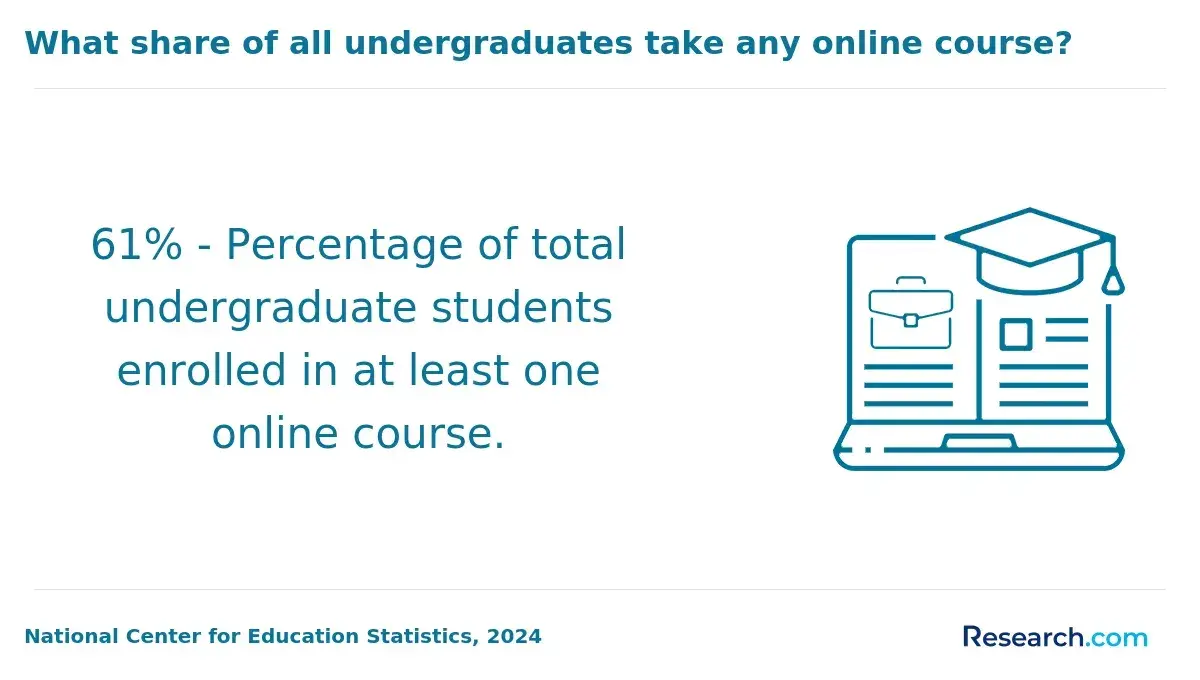
Online supply chain management degree difficulty is generally considered comparable to that of on-campus programs, but the experience varies due to several unique factors. While the academic rigor remains consistent, differences in learning format create distinct challenges for students.
Below is a comparison of online vs on-campus supply chain management programs:
- Academic Expectations: Accredited online programs maintain the same curriculum and assessment standards as campus-based majors, ensuring similar difficulty levels.
- Workload and Pacing: Online students must independently manage deadlines and study schedules without in-person reminders, demanding strong self-discipline.
- Interaction and Support: On-campus students benefit from immediate professor access and peer collaboration, while online learners need to proactively seek support and adapt to less spontaneous communication.
- Learning Environment: The flexible nature of online learning allows balancing work or family obligations, which may ease stress for self-motivated individuals.
- Unique Challenges: Online students may face technical issues and a lack of direct interaction, which can increase difficulty for those less comfortable with digital formats.
Ultimately, the level of academic challenge in supply chain management remains consistent across formats, though some will find that online programs demand greater independence.
Prospective students interested in how this field compares with others in terms of earning potential may explore what majors make the most money to inform their educational choices.
Are Accelerated Supply Chain Management Programs Harder Than Traditional Formats?
Accelerated supply chain management programs are generally more difficult than traditional formats due to their compressed timelines and intensified weekly workload. The increased content density and fast pacing demand strong time management skills and quick mastery of complex materials.
Below is a comparison of both degree formats to highlight key differences affecting student experiences:
- Course Pacing and Content Density: Accelerated programs compress material typically covered over two years into twelve months or less, resulting in a higher volume of content to absorb each week.
- Workload Management: Traditional programs spread 30-60 credits over two years, offering a slower pace better suited for students balancing work or other commitments, whereas accelerated paths require intensive weekly study.
- Academic Expectations and Skill Demands: Accelerated tracks often have fewer electives and fixed schedules, demanding students enter with solid foundational knowledge and maintain a fast pace alongside peers in cohort-based settings.
- Learning Retention and Stress Levels: The compressed nature of accelerated programs can reduce time for reflection and review, increasing stress and potentially impacting retention compared to the more gradual progression in traditional formats.
- Flexibility and Scheduling Structure: Many accelerated online programs offer flexible schedules that help working professionals integrate coursework, contrasting with the more structured and spread-out timing in traditional programs.
Can You Manage a Part-Time Job While Majoring in Supply Chain Management?
Balancing a part-time job while majoring in supply chain management is attainable for many students, especially when programs offer flexible scheduling and manageable weekly workloads. Graduate-level courses often require about 8-10 hours per week and may include asynchronous online content catered to professionals.
The complexity of the course material and program structure significantly influences whether students can work concurrently with their studies. Individual factors like effective study habits and realistic course loads also determine the feasibility of managing both commitments.
Students commonly navigate part-time employment by prioritizing strong time management and selecting courses that minimize overlapping deadlines or rigid attendance.
The supply chain management curriculum generally focuses more on analytical assignments and case studies rather than fixed lab hours, which can allow for adaptable study sessions. Project-intensive courses involving data analysis and reading demands might challenge some students, while internships or cooperative education opportunities often complement academic learning.
Access to online resources and campus support further helps learners balance work and study without compromising academic progress.
What Jobs Do Supply Chain Management Majors Get, and Are They as Hard as the Degree Itself?
Career paths for supply chain management graduates vary widely in difficulty, responsibility, and the skills required. While some roles match the analytical rigor of the major, others can be less demanding or challenge professionals in different ways.
Here are some common supply chain management career paths:
- Supply Chain Analyst: This role centers on analyzing supply chain data, forecasting demand, and identifying improvements to boost efficiency. It requires strong quantitative and problem-solving skills, making the job generally as demanding analytically as the degree itself.
- Logistics Manager: Responsible for overseeing goods' movement, storage, and distribution, logistics managers coordinate teams to meet deadlines and budgets. The position is as fast-paced and complex as the degree but leans more on leadership and real-time problem-solving under pressure.
- Purchasing/Procurement Specialist: Professionals in this role handle supplier negotiations, contracts, and sourcing materials. The focus on negotiation and relationship-building means it is less quantitatively demanding than the academic workload but still challenging in other important ways.
- Warehouse Operations Manager: Managing inventory and staff, these managers emphasize daily operations, safety, and process optimization. While the role involves considerable responsibility, it typically requires less analytical intensity than the coursework of the major.
- Director of Supply Chain/Operations: Senior leaders develop strategy, manage large teams, and oversee entire supply networks. These positions are more demanding than the major, requiring advanced leadership, strategic thinking, and high-stakes decision-making across departments.
Entry-level supply chain management jobs and challenges often reflect this spectrum of demands and skills, allowing graduates to choose roles that suit their individual capabilities.
For those considering further certification to advance or specialize, resources highlighting what are some certifications that pay well can be valuable to explore.
Do Supply Chain Management Graduates Earn Higher Salaries Because the Major Is Harder?
There is no clear link between the difficulty of a supply chain management major and higher salaries for its graduates. Earnings are more influenced by market demand and specific skills than by how challenging the coursework is.
While some programs include complex quantitative tasks and hands-on projects, studies do not show that tougher academics directly lead to increased pay. Instead, salary growth reflects how companies value expertise in logistics, operation optimization, and managing disruptions.
Developing specialized skills and gaining relevant certifications often matter more for compensation than academic rigor alone.
Several factors shape pay for supply chain management graduates, including the industry they enter, their job title, location, and experience level. For example, sectors like pharmaceuticals, IT, and financial services tend to pay above $160,000, whereas agriculture and manufacturing often offer lower wages.
Senior roles such as directors or vice presidents can earn between $206,000 and $285,000, while entry-level positions typically start around $74,000 to $80,000.
Geographic differences are also significant; median salaries in Plano, TX, reach about $140,812, compared to $66,814 in Fort Myers, FL.
Advanced degrees and professional certifications like APICS can boost earnings by 27% on average, highlighting the importance of continual professional growth.
What Graduates Say About Supply Chain Management as Their Major
- Alma: "Majoring in supply chain management was definitely challenging but incredibly rewarding. The coursework pushed me to think analytically and practically about real-world logistics and operations, which has been invaluable in my career. Considering the average cost of attendance was steep, I felt the investment was worth it because it opened doors to high-demand industries. "
- Selena: "Reflecting on my time studying supply chain management, I can say it was tough yet manageable with dedication. The complexity of coordinating global networks requires a lot of problem-solving, but this major provided me with skills that shaped my professional path significantly. Although the financial cost was considerable, understanding the return on investment helps me appreciate the education even more. "
- Ian: "From a professional standpoint, supply chain management is no easy feat; it demands mastery of various processes and strategic thinking. The major challenged me consistently, yet it prepared me well for the dynamic field of logistics and operational management. With tuition and other expenses averaging high, I advise prospective students to weigh the cost against the robust career opportunities this field offers. "
Other Things You Should Know About Supply Chain Management Degrees
In 2027, technology remains integral to supply chain management studies. Students need to understand the use of AI, blockchain, and data analytics to optimize operations and enhance efficiency, making technological proficiency essential.
Supply chain management students must master statistics, calculus, and linear algebra to handle complex data and optimize processes. These math skills are essential for cost management, demand forecasting, and strategic decision-making, which are integral parts of the supply chain curriculum.
Many supply chain management programs strongly encourage or require internships or cooperative education experiences. These practical experiences are critical for applying classroom knowledge to real-world settings and improving students' job readiness after graduation.
References
- Business Administration (BBA) - Logistics and Supply Chain Management Concentration https://www.uagrantham.edu/online-degrees/business-administration-bba-logistics-and-supply-chain-management-concentration/
- Four things learnt studying Supply Chain Management - University of Wollongong – UOW https://www.uow.edu.au/the-stand/2021/four-things-learnt-studying-supply-chain-management.php
- Report Reveals Rewarding Jobs and Opportunities https://www.ascm.org/ascm-insights/supply-chain-salary-and-career-report-reveals-rewarding-jobs-and-opportunities/
- Accelerated, Executive, & Advanced-Standing Master’s in SCM https://supplychainmanagementedu.org/degrees/accelerated-executive-advanced-standing-masters/
- 5 Tips for Students: Navigating the Complex World of Supply Chain in Your Dissertation! - Supply Chain Game Changer™ https://supplychaingamechanger.com/5-tips-for-students-navigating-the-complex-world-of-supply-chain-in-your-dissertation/
- Can I study supply chain management course online? https://zabeelinstitute.ae/blog/can-i-study-supply-chain-management-course-online/
- Transforming supply chains: Do you have the skills to accelerate your capabilities? https://www.mckinsey.com/capabilities/operations/our-insights/transforming-supply-chains-do-you-have-the-skills-to-accelerate-your-capabilities
- Part-time master (Erhvervskandidat) | CBS - Copenhagen Business School https://www.cbs.dk/en/study/graduate/supply-chain-management/part-time-master-erhvervskandidat