2027 How Fast Can You Get a Media Arts Degree Online?

Co-Founder and Chief Data Scientist
Online Media Arts degrees provide a flexible and efficient pathway for students looking to complete their education faster than traditional programs. Many students choose online formats to balance creative projects, internships, and digital portfolios at their own pace, essential in a field driven by evolving technologies and software.
Accelerated online courses often condense content without sacrificing quality, catering specifically to multimedia design, animation, and visual storytelling. This approach supports rapid skill acquisition crucial to competitive media careers. This article will explore typical timelines, program structures, and tips to help you navigate earning a Media Arts degree online efficiently.
What are the benefits of pursuing a degree in Media Arts online?
- Accelerated online media arts degrees often allow completion in 18 to 24 months, benefiting students seeking quicker entry into creative industries experiencing 7% growth.
- Flexible schedules accommodate working professionals and parents, enabling study alongside jobs or family without sacrificing quality or support.
- Programs emphasize practical skills like digital editing and animation, aligning education with industry demands for versatile, job-ready graduates.
How long does it typically take to earn a degree in Media Arts?
The length of time it takes to complete a media arts degree varies significantly based on the specific credential sought. Whether pursuing an associate, bachelor's, or advanced degree, students should expect different timelines depending on enrollment status and program format.
For online Media Arts programs, typical durations include:
- Bachelor's degree: Approximately four years for full-time students starting without prior credits.
- Part-time bachelor's degree: Five or more years, depending on course load and personal scheduling.
- Associate degree (e.g., Associate in Applied Science in Digital Media Arts): About two years of full-time study.
- Advanced degrees such as master's or certificates: Generally one to two additional years beyond the bachelor's degree.
Online formats often provide flexibility, allowing students, especially working professionals, to tailor their pace. Media arts programs typically integrate creative, technical, and communication skills designed to meet the dynamic demands of the industry, emphasizing adaptability and time management.
Are there accelerated Media Arts online programs?
Accelerated online media arts degree programs offer motivated students the ability to complete their studies faster through shorter coursework and flexible scheduling. These programs often feature asynchronous formats and multiple start dates per year, allowing learners to tailor their pace.
Below are examples of fast-track options:
- Texas Tech University provides an Online Bachelor of Arts in Digital Media & Professional Communication with 8-week accelerated courses. This regionally accredited program covers digital media, professional communication, and portfolio development. The asynchronous format and year-round starts make it a prime example of accelerated online Media Arts degree programs in Texas.
- Point Loma Nazarene University (PLNU) offers a fully online Bachelor of Arts in Creative Digital Media featuring flexible, self-paced coursework and six annual start dates. The curriculum emphasizes digital content creation, media ethics, and public relations, culminating in a digital portfolio. PLNU's program is built for working adults aiming to finish quickly while balancing other responsibilities.
- California Baptist University (CBU) delivers an Online BA in Graphic Design and Digital Media with classes starting every eight weeks across three semesters per year. The program focuses on practical projects in design, typography, and web media. Its accelerated and asynchronous structure supports students with prior credits to graduate faster. CBU is also regionally accredited.
Students interested in these programs may also explore options for advancing their education with a 1 year masters degree to continue building expertise in media arts and related fields.
How do accelerated Media Arts online programs compare with traditional ones?
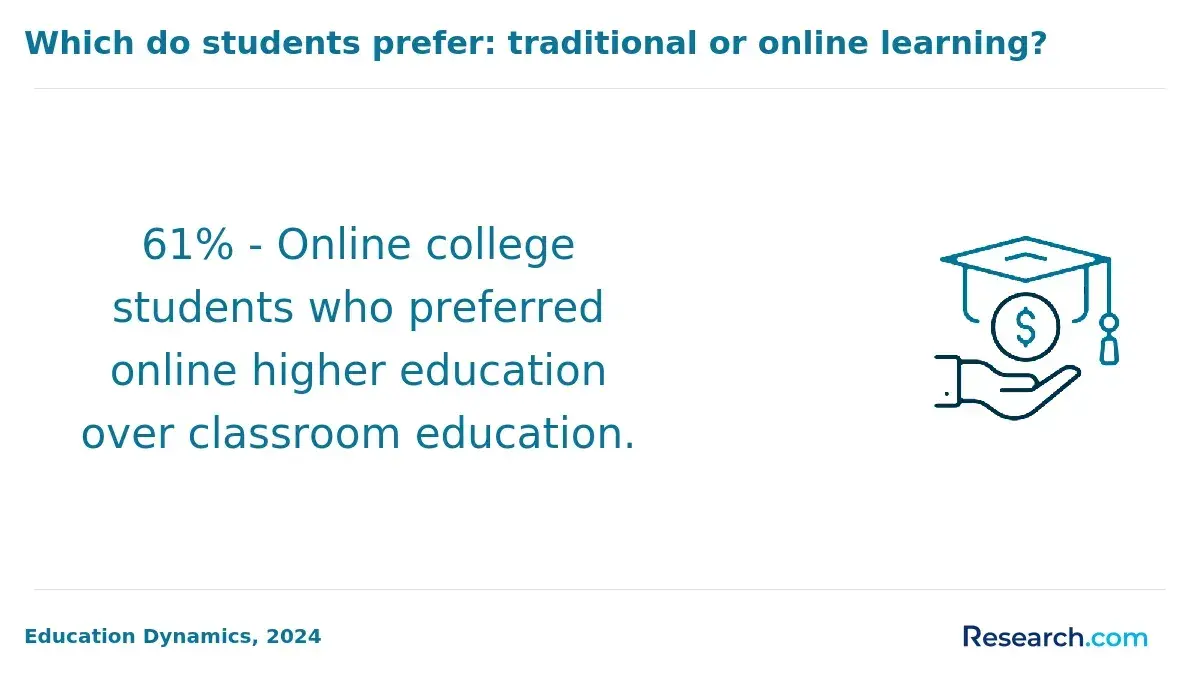
Accelerated media arts degree online vs traditional formats in the United States highlight key differences in pacing, structure, and student flexibility. Understanding these distinctions can help prospective students choose the best path for completing their education:
- Pacing: Fast-track online Media Arts programs United States typically condense courses into shorter sessions, such as 7- or 8-week terms, allowing quicker completion compared to traditional 15-week semesters.
- Course Structure: Accelerated programs are usually asynchronous, letting students access lectures and complete assignments on their own schedules, unlike fixed in-person class times common in traditional programs.
- Flexibility: Multiple starting dates each year in accelerated online formats enable continuous enrollment, which benefits working adults and those managing family responsibilities.
- Workload: The compressed timeline demands higher weekly workloads, requiring strong time management as students tackle the same material in less time.
- Accreditation and Outcomes: Both formats meet similar accreditation standards and aim for equivalent learning outcomes, focusing on competencies in digital storytelling, media production, and design.
Those exploring options may also consider the availability of easy doctoral programs that fit various career goals. Choosing accelerated versus traditional paths ultimately depends on one's lifestyle, learning preferences, and career timeline.
Will competency-based online programs in Media Arts affect completion time?
Competency-based media arts programs offer an accelerated path to degree completion by allowing students to demonstrate mastery of essential skills instead of adhering to fixed class schedules. This model enables learners to move forward at their own pace, often finishing faster than traditional programs.
Students can expect to engage with practical, skill-focused modules covering areas like video production, graphic design tools, and portfolio building. The structure supports independent learning, emphasizing real-world applications that help sharpen technical abilities efficiently.
Ultimately, how quickly a student progresses depends on both their motivation and the way the program is structured, making this approach particularly suitable for self-driven individuals aiming for a fast track into creative industries.
Can you work full-time while completing fast-track Media Arts online programs?
Balancing full-time work with an accelerated online media arts degree is challenging but possible with firm commitment. The program's intensive pace, requiring 14-18 credits every eight weeks, demands significant time management. Full-time students must be prepared for a heavy workload beyond traditional coursework.
Media arts education is distinct because it emphasizes hands-on projects, technical skills, and portfolio development, which require extensive studio time outside class hours. Students often spend an additional 15-20 hours weekly on production assignments, software practice, and collaboration.
Although online classes eliminate commute time, the need for continuous creative effort makes evening study sessions less effective. Prospective students should realistically consider reducing work hours or shifting to part-time employment to maintain academic performance and produce quality professional work.
Can prior learning assessments (PLAs) shorten Media Arts degree timelines?
Prior learning assessments (PLAs) can reduce the time needed to finish an online media arts degree by awarding credit for relevant skills and experience. Schools evaluate PLAs using portfolios, work samples, third-party verifications, and résumés that demonstrate proficiency in areas like digital media, audio, video, and social or web media production.
Most programs limit PLA credits to about 25% of total degree requirements, such as up to 30 credits for a Bachelor of Fine Arts or 9 credits for a digital media major. Eligibility generally requires enrollment or application to the program and submission of formal documentation.
While PLAs help accelerate graduation and lower costs, acceptance criteria and credit limits vary by institution, and not all prior experience qualifies. Some assessments are pass/fail and can only be attempted once.
Can prior college credits help you get a degree in Media Arts sooner?
Prior college credits can significantly accelerate the completion of an online media arts degree, making it possible to graduate sooner than the typical four-year timeline. Many accredited institutions allow transfer of relevant coursework, helping students avoid repeating classes and reduce overall time to degree.
Here are the key steps to determine credit eligibility and transfer limits:
- Review transfer policies: Check the maximum number of credits a school allows to transfer toward the Media Arts program, often up to 90 of 120 semester credits.
- Evaluate course relevance: Confirm your prior coursework aligns with the Media Arts curriculum and meets grade requirements (usually a minimum of C).
- Submit documentation: Provide transcripts, course descriptions, and sometimes portfolios to support the evaluation, especially for studio-based classes.
- Consult with advisors: Work with faculty mentors or transfer coordinators to assess how credits apply to degree requirements.
- Understand residency requirements: Some schools, like National University, require partial residency credits, meaning only a portion can be transferred.
To accelerate an online media arts degree with prior learning credits, it is crucial to confirm specific policies as they vary by institution. For those seeking even faster degree pathways, exploring quick masters programs can provide additional options for advancing education efficiently.
Can work or military experience count toward credits in a degree in Media Arts?
Previous work or military experience can sometimes be converted into college credits, helping students complete their media arts degree more quickly. This pathway allows learners to leverage skills and training gained outside traditional classrooms for academic progress.
Colleges often evaluate military experience using the American Council on Education (ACE) Military Evaluations, documented through the Joint Services Transcript (JST).
For civilian work experience, schools may offer credit-by-examination or portfolio assessments to measure job skills against academic standards. Institutions vary in how many credits they award and typically limit the amount applicable toward core media arts courses, often placing some credits in elective or general education categories.
Prospective students should check how individual colleges integrate these credits into their specific media arts curriculum to make the most of their professional background.
What criteria should you consider when choosing accelerated Media Arts online programs?
Choosing the right accelerated online degree in media arts requires careful evaluation of multiple factors to ensure quality, credibility, and a fast timeline. Students pursuing media arts online degree accelerated programs benefit from selecting institutions that meet rigorous standards and offer efficient learning paths.
Here are essential criteria for choosing fast-track digital media arts degree programs:
- Accreditation: Look for programs accredited by recognized bodies like the Accrediting Council on Education in Journalism and Mass Communications (ACEJMC) to ensure adherence to industry standards and employer recognition.
- Faculty Expertise: Confirm that instructors teaching online courses are the same seasoned professionals as on-campus faculty, not adjuncts hired solely for digital classes, for consistent, quality instruction in media production and digital storytelling.
- Course Delivery Format: Choose asynchronous classes if you need flexibility to complete coursework on your schedule; semester-based programs usually offer faster completion than quarter systems.
- Student Support: Robust tutoring, technical assistance, and academic advising are vital to avoid delays, especially in accelerated programs where pacing is faster.
- Credit Transfer Policies: Programs that accept credits from prior learning, professional experience, or community college coursework can reduce total credit hours and shorten time to degree.
- Diploma Equity: Verify the program issues the same diploma for online students as for on-campus to maintain the degree's market value and reputation.
- Reputation and Rankings: Research reputable sources listing the best online universities to find programs recognized for excellence and student satisfaction.
Are accelerated online Media Arts degrees respected by employers?
Many prospective students wonder about employer perception of accelerated media arts degrees, especially when earned online. The respect these degrees receive often depends on the institution's accreditation and reputation rather than the program's delivery format or duration.
In the field of media arts, employers focus heavily on the quality of a candidate's portfolio and practical experience. They respect online degrees, particularly when programs emphasize hands-on projects, use industry-standard tools, and provide strong faculty feedback, which together help graduates build compelling portfolios that showcase their skills effectively.
Programs lacking regional accreditation or academic rigor can negatively affect employer perception. However, many universities now offer online media arts degrees with curricula and outcomes equivalent to their on-campus counterparts, making concerns about accelerated formats less relevant in hiring decisions.
For those seeking career guidance, resources like the top career path for introverts can provide valuable insight into related fields.
What Media Arts Graduates Say About Their Online Degree
- Conor: "Completing my Media Arts degree online was a game-changer for my career; the accelerated program allowed me to graduate in just under two years while working full-time. The hands-on projects and industry-relevant curriculum gave me the confidence to transition smoothly into a creative director role. Also, the affordability, with an average cost below traditional programs, made it a smart investment. "
- Justin: "The online Media Arts program offered me a unique opportunity to explore my passion at my own pace without compromising quality. The faculty's support and interactive digital workshops enriched my learning experience, making complex concepts clear and applicable. I'm grateful for how quickly I gained marketable skills that boosted my freelance opportunities."
- Colby: "Pursuing an accelerated online degree in Media Arts was a professional milestone that allowed me to deepen my expertise in digital storytelling and multimedia production. What stood out was the program's focus on both creative and technical skills, which helped me develop a versatile portfolio in less than three years. The program's reasonable tuition fees meant I could focus more on learning than on financial stress. "
Other Things to Know About Accelerating Your Online Degree in Media Arts
Yes, having prior relevant credits can shorten the time required to complete a Media Arts degree online. Many institutions in 2027 offer credit transfer options, allowing students to complete their degrees faster by applying past academic work towards their program.
An accelerated online Media Arts degree program typically takes about 18 to 24 months to complete. These programs are designed for fast-paced learning, allowing students to finish their degrees quicker by taking more intensive courses over shorter terms.
In 2027, fast-track online Media Arts degrees typically require a reliable computer, high-speed internet, creative software like Adobe Creative Cloud, and access to a webcam and microphone for virtual collaboration and presentations. Some programs may also recommend additional hardware such as a drawing tablet or a second monitor.
Besides standard tuition, accelerated Media Arts online programs may charge extra fees for software licenses, technical support, or materials required for digital projects. These costs can vary by institution and should be factored into overall financial planning. Prospective students should request a detailed fee schedule to avoid unexpected expenses.
References
- Master in Media Arts https://www.kristiania.no/en/studies/masters-degree/master-in-media-arts/
- Bachelor of Media / Arts | UNSW Sydney https://www.unsw.edu.au/study/undergraduate/bachelor-of-media-arts1
- Competency-Based Education | East Texas A&M https://www.etamu.edu/competency-based-education/
- Bachelor of Media Arts degree https://www.ufv.ca/calendar/current/ProgramsM-P/MEDIA_BMA.htm
- Employer Perceptions: Online Degree vs Traditional https://vignanonline.com/blogs/do-employers-see-online-degrees-as-valuable-as-traditional-degrees
- Checklist for Choosing the Best Online Digital Media Degree https://blogs.iu.edu/online/bachelor-degree-programs/checklist-for-choosing-the-best-online-digital-media-degree/
- Change by degrees https://www.oca.ac.uk/weareoca/education/change-by-degrees/
- Do College Credits Ever Expire? | National University https://www.nu.edu/blog/do-college-credits-ever-expire-what-you-need-to-know-before-transferring/
- WVU College of Creative Arts and Media | Online Programs https://creativeartsandmedia.wvu.edu/online-programs
- Accelerated BA to MA Program https://www.bgsu.edu/arts-and-sciences/media-and-communication/communication/accelerated-ba-to-ma-program.html