
2027 Interdisciplinary Studies Degree vs. Certificate: Which Should You Choose?

Co-Founder and Chief Data Scientist
Today's students and professionals face important decisions when choosing between earning a degree or a certificate in interdisciplinary studies. Both options can significantly advance careers by providing diverse knowledge and skills, but they differ in time commitment, cost, and depth of study. Understanding these differences is crucial for aligning education with personal and professional goals.
An interdisciplinary studies degree often requires several years of study and offers a broad, in-depth academic experience, while a certificate typically takes less time and focuses on specialized skills. With over 40% of interdisciplinary studies graduates pursuing flexible careers, this article compares key factors to help select the best path for your career and lifestyle.
Key Points About Interdisciplinary Studies Degree vs. Certificate Programs
- Interdisciplinary studies degrees offer comprehensive skill development and higher salary potential, with graduates earning an average of 20% more than certificate holders.
- Certificates provide focused, shorter-term training ideal for skill enhancement or career shifts but may limit advancement to entry-level roles.
- Degree programs support long-term professional growth through broad knowledge integration, while certificates suit those seeking immediate, specific expertise.
What Are the Differences Between Interdisciplinary Studies Degree and Certificate Programs?
Both interdisciplinary studies degrees and certificate programs offer valuable career pathways but differ in several important ways. Choosing between them requires understanding these differences to align with personal goals, timelines, and educational needs.
Here are the main distinctions between an interdisciplinary studies degree and a certificate program:
- Depth of Learning: Degree programs provide a comprehensive, broad-based education across multiple disciplines, ideal for students seeking deeper knowledge and critical thinking skills. Certificates focus on specific skills or topics, appealing to professionals wanting targeted expertise without a lengthy commitment.
- Time Commitment: Degrees typically demand several years of study, suiting those who can invest time in a full academic experience. Certificates usually require less time, making them better for individuals needing quicker credentials to enhance their qualifications.
- Flexibility and Customization: Interdisciplinary degrees often allow students to tailor their curriculum by combining various fields of interest. Certificates are more narrowly focused with predetermined coursework, fitting learners with clear, specialized objectives.
- Career Advancement: Degrees may open doors to a wider range of careers and higher-level positions due to their extensive curriculum. Certificates serve well for skill enhancement or entry into specialized roles, particularly for those already in the workforce.
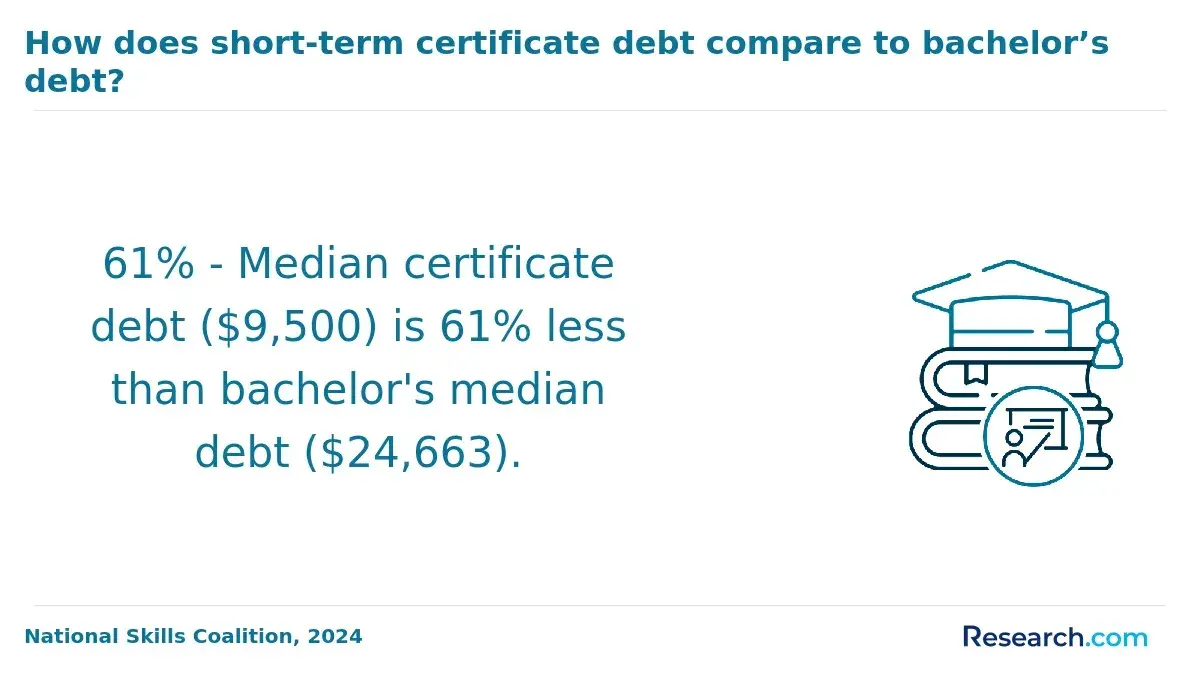
- Cost and Accessibility: Generally, certificates are more affordable and accessible, offering a practical option for continuous learning while working. Degree programs require a larger investment but offer a more recognized academic credential.
How Long Does It Take to Complete a Interdisciplinary Studies Degree vs. a Certificate Program?
Completion time is one of the most important factors for students deciding between an interdisciplinary studies degree vs. certificate. Understanding the typical duration and flexibility of each option helps prospective students choose the right educational path based on their goals and schedules.
- Typical Duration: An interdisciplinary studies degree usually requires about 120 credit hours, equating to four years of full-time study for new students. However, transfer students with previously earned credits can often finish in one to two years, especially when up to 84 or 90 credits are accepted. In contrast, a certificate program demands only 12 to 18 credit hours and can be completed in as little as one semester or up to a year part-time.
- Flexibility: Degree programs often offer both full-time and part-time options, and some schools provide accelerated formats. Certificate programs emphasize flexibility and are often self-paced or designed to accommodate working professionals seeking targeted skills, which generally makes the time to complete a certificate in interdisciplinary studies shorter.
- Factors Affecting Timeline: Transfer credits notably shorten the time required for a degree. Prior relevant experience may reduce coursework for degrees and certificates alike. Program structures such as online or hybrid formats provide additional scheduling flexibility, potentially speeding up or extending completion depending on the student's availability.
Students looking for the fastest way to get associate's degree online may find that similar accelerated options exist in interdisciplinary studies degree programs through credit transfer and pacing. Ultimately, the choice depends on balancing time commitment with educational goals when considering an interdisciplinary studies degree program length or certificate duration.
Can You Complete a Interdisciplinary Studies Degree or Certificate Entirely Online?
The growth of online education has expanded opportunities for students across the U.S. to pursue interdisciplinary studies degrees and certificates without attending campus. Many universities-including Oklahoma State University, Arizona State University, Liberty University, SUNY Empire, and Louisiana State University-offer fully online interdisciplinary studies bachelor's degree programs.
These programs allow students to complete coursework, discussions, and assignments remotely using platforms like Canvas. While certificate programs in interdisciplinary studies are less commonly featured, those interested can often earn an interdisciplinary studies certificate online as well. However, some institutions provide hybrid options or may require occasional in-person sessions, so it is important to review each program's details for on-campus commitments.
When deciding between an online degree or certificate, consider requirements for hands-on training, internships, or professional licensure. Most interdisciplinary studies degree programs emphasize academic and professional skills without needing laboratory or fieldwork, making them suitable for online study.
However, careers requiring state licensure or supervised internships might demand in-person practicum components. For maximum convenience, choose formats that suit your schedule and goals. Those seeking broad career applications or further study may prefer a full degree, while certificates serve well for targeted skill development or career advancement.
For more information on related programs, see this guide to the easiest bachelor of science degree.
What Are the Admission Requirements for a Interdisciplinary Studies Degree vs. a Certificate Program?
Admission requirements are a crucial consideration when deciding between an interdisciplinary studies degree and a certificate program, as they influence your eligibility and preparedness for each path. Comparing these requirements side-by-side can help prospective students determine which option aligns best with their academic history and career goals.
Admission Requirements for Interdisciplinary Studies Degree Programs
- Educational Background: Most degree programs require a high school diploma or equivalent, with some institutions asking for additional prerequisites such as prior college coursework.
- Minimum College Credits: Applicants usually must have completed between 15 to 45 college credits, depending on the university. For instance, Lasell University requires at least 15 credits at a U.S. institution, while Clayton State University requires 45 semester credit hours.
- GPA Standards: Many degree programs set a minimum cumulative GPA, often between 2.0 and 3.0, with schools like UNC Chapel Hill requiring a minimum 3.0 GPA for admission into their interdisciplinary studies major.
- Proposal or Plan of Study: Submitting a detailed academic proposal outlining your interdisciplinary focus and objectives is commonly required, typically with faculty approval.
- Application Materials: Standard submission materials include an online application, personal statement, official transcripts, and sometimes a resume.
- Faculty Approval: Approval from faculty members within relevant departments is often necessary, usually with at least one agreeing to act as a major advisor.
Admission Requirements for Interdisciplinary Studies Certificate Programs
- Educational Background: A high school diploma or equivalent is generally required, but certificate programs often waive additional academic prerequisites common in degree programs.
- Prior College Credits: Certificate programs typically do not require significant prior college coursework, making them accessible to a broader range of applicants.
- GPA Standards: These programs usually have minimal or no specified GPA requirements, allowing for more inclusive entry.
- Application Materials: The process is often more streamlined, usually requiring just an application form and proof of prior education such as a diploma or transcript.
- Faculty Approval or Proposal: Unlike degree programs, certificate programs rarely ask for a formal academic proposal or faculty advisor approval.
It is important to review admission requirements carefully as degree programs in interdisciplinary studies tend to demand more advanced preparation, documentation, and academic planning than certificate options.
For individuals exploring academic pathways, comparing these criteria can help identify the best fit. Those interested in affordable options may also want to explore the cheapest associates degree opportunities as part of their educational planning.
How Many Credits Do You Need to Complete a Interdisciplinary Studies Degree vs. a Certificate?
Knowing how many credits you need to complete an interdisciplinary studies program is essential for managing your time and setting realistic academic goals. This clarity helps students weigh the commitment involved in pursuing either a degree or a certificate.
Below is a comparison of typical credit requirements for both paths.
- Interdisciplinary studies degree: Generally requires about 120 credit hours, combining general education, elective courses, and focused major classes across multiple disciplines to build a comprehensive foundation.
- Interdisciplinary studies certificate: Usually demands 12 to 18 credits, designed for concentrated study on specific areas without the extensive scope of a degree, often completed within a year of part-time coursework.
What Is the Average Tuition for a Interdisciplinary Studies Degree vs. a Certificate?
Tuition costs are a crucial factor when deciding between pursuing an interdisciplinary studies degree or an interdisciplinary studies certificate program cost comparison. These costs directly impact your financial investment and the overall value of your education. Understanding the typical tuition ranges and related factors can guide you in choosing the option that best fits your budget and career objectives.
Below is a comparison of average tuition ranges for each educational path.
Average Tuition for Interdisciplinary Studies Degree Programs
- Tuition Range: Most undergraduate interdisciplinary studies degrees cost between $9,900 and $32,650 per year for tuition and fees, depending on whether you attend a public or private institution and your residency status.
- Per Credit Cost: Online programs usually charge $340-$580 per credit. For full-time students taking around 30 credits annually, this amounts to about $10,000-$17,400 per year.
- Graduate Degree Costs: Master's programs range from $11,800 to $24,800 annually. These costs vary based on credit load and institution type.
- Influencing Factors: Tuition depends on whether the school is public or private, in-state or out-of-state, and whether courses are taken online or on campus.
- Additional Fees: Program fees, technology fees, and administrative costs can add several hundred to a few thousand dollars yearly.
Average Tuition for Interdisciplinary Studies Certificate Programs
- Tuition Range: Certificate programs are generally much less expensive, with total tuition typically ranging from $1,000 to $7,000 for the entire program, which is significantly lower than degree programs.
- Per Credit Cost: Costs often range between $300 and $600 per credit, similar to degree programs but with far fewer credits required, usually between 12 and 24 credits total.
- Program Length: Most certificates can be completed in less than a year, resulting in lower overall costs compared to multi-year degree pathways.
- Transfer Potential: Some institutions allow credits earned in certificate programs to transfer into degree programs, potentially reducing future tuition expenses.
- Additional Fees: Application, enrollment, and evaluation fees may apply but are usually lower than those levied in degree programs.
When evaluating options, consider not only the tuition but also program structure, credit requirements, and potential credit transfers that might impact long-term costs and educational value. For information about affordable and flexible options, check out this list of top universities online to explore programs that fit your needs.
Can You Transfer Certificate Credits Toward a Interdisciplinary Studies Degree Later On?
You can often transfer certificate credits toward an interdisciplinary studies degree, but this depends largely on institutional policies. Many universities require that credits come from accredited institutions and that courses align closely with the interdisciplinary curriculum to qualify for transfer. Some schools allow a substantial portion of the degree-up to 75%-to be fulfilled through transferred credits if they meet quality and relevance standards. Transferability is not guaranteed and varies by program, so understanding each institution's specific rules is essential.
Key factors influencing transferability include limits on how many credits you can apply toward your degree, usually capped at around 75%, and grade minimums, commonly requiring a C or better. It's crucial to confirm in advance whether your certificate courses will count, as policies differ widely among schools. Early communication with academic advisors helps avoid unexpected roadblocks. Taking these steps ensures you make the most of your educational efforts and investments.
Are Certificate Programs Accredited the Same Way as Interdisciplinary Studies Degrees?
Certificate programs in interdisciplinary studies are not accredited in precisely the same way as degree programs. Most interdisciplinary studies degrees, especially at the bachelor's and master's levels, come from regionally accredited institutions, which is considered the most respected accreditation type in the U.S. This means the entire institution meets rigorous academic standards, and credits typically transfer easily between regionally accredited schools.
Certificates, however, may be offered by a broader variety of schools, including community colleges and for-profit institutions, some of which hold only national accreditation. Unlike degrees, certificates rarely have specialized programmatic accreditation because interdisciplinary studies cover a wide, unregulated field.
Accreditation is important because it assures the program meets established quality standards, influencing credit transfer, financial aid opportunities, and employer acceptance of credentials. When evaluating programs, students should verify that the institution is accredited by a recognized regional accreditor, confirm the program itself is part of the accredited offerings, and check for programmatic accreditation if it's relevant to their career goals.
Careful confirmation of accreditation through legitimate bodies is essential before committing to any interdisciplinary studies program.
What Jobs Can You Get with a Interdisciplinary Studies Degree vs. a Certificate?
Both an interdisciplinary studies degree and a certificate can create pathways to various careers, though they usually prepare graduates for different levels and types of positions. While a degree often suits roles requiring broader expertise, certificates typically target entry-level or support jobs. Below is a comparison of potential career options for each credential.
Jobs You Can Get with a Interdisciplinary Studies Degree
- Human resources specialist: Manages recruitment, employee relations, and workplace policies within organizations.
- Project manager: Oversees planning and execution of projects, coordinating teams and resources to meet goals.
- Public relations specialist: Develops and maintains a positive public image for companies or clients through media communication.
- Data analyst: Interprets data to help organizations make informed decisions across various sectors.
- Counselor: Provides guidance and support to individuals facing personal, social, or psychological challenges.
Jobs You Can Get with a Interdisciplinary Studies Certificate
- Administrative assistant: Supports office operations through scheduling, communication, and clerical tasks.
- Project coordinator (junior): Assists project managers by tracking progress and organizing project details.
- Social media assistant: Helps manage and create content for social media platforms to engage audiences.
- Technical support specialist: Provides troubleshooting and user support for technology systems.
- Research assistant: Supports research activities by collecting data and preparing reports under supervision.
What Is the Average Starting Salary for a Certificate vs. Interdisciplinary Studies Degree Graduates?
Salary potential often varies significantly between those who hold an interdisciplinary studies degree and individuals with a certificate in interdisciplinary studies. Understanding the differences in starting salaries can help prospective students make informed decisions about their education and career paths.
Below is a side-by-side comparison outlining key aspects of starting salaries and career outlooks for graduates from each program type.
- Typical Salary Range: Graduates with an interdisciplinary studies degree typically start at around $37,500 per year, with ranges from approximately $21,500 to $83,000 depending on role, education level, and location. More experienced holders can earn up to $74,440 annually on average.
- Certificate Starting Salary: Those with a certificate in interdisciplinary studies usually see starting salaries between $30,000 and $45,000 per year in entry-level positions, particularly in administrative support, healthcare assistance, or skilled trades.
- Common Influencing Factors: Industry demand, geographic location, prior experience, and specialized skills heavily influence pay. For example, technical or healthcare certificates often provide higher starting salaries, while interdisciplinary studies graduates may find better pay in business or project management roles.
- Career Outlook: A bachelor's in interdisciplinary studies offers broader career options and higher long-term earning potential. Certificates provide a quicker, sometimes more direct path into technical or support positions.
- Additional Insight: For those exploring options in skilled trades, reviewing the top paying trade school jobs can provide useful salary benchmarks relevant to certificate holders.
Here's What Graduates of Interdisciplinary Studies Programs Say About Their Degree or Certificate
- Jaime: "Pursuing the interdisciplinary studies certificate program was a game-changer for me. The pace was just right to balance with my full-time job, and I appreciated that the cost was significantly lower than a degree, making it a smart choice financially. For anyone considering this path, the certificate is a great way to deepen your knowledge quickly without the longer commitment of a degree.-"
- Enzo: "Choosing the interdisciplinary studies degree meant committing to a comprehensive learning experience that took longer but provided a much richer understanding of multiple fields. The cost was definitely higher than the certificate program, but the career opportunities that opened up for me made it worthwhile. I recommend thinking about your long-term goals because the degree is ideal if you're aiming for substantial professional growth and versatility."
- Rowan: "I completed both the interdisciplinary studies certificate and degree programs, and each served a distinct purpose in my career development. The certificate offered a quick, affordable way to enhance my skills and made me realize the value of continuing with the degree, which was more rigorous and expensive but deeply rewarding. If you're debating the two, consider starting with the certificate to test the waters before investing time and money into the degree."
Other Things You Should Know About Interdisciplinary Studies Degrees
In 2027, choose a degree if you're seeking in-depth knowledge with a focus on research and academic advancement. Opt for a certificate if you need a faster, skills-focused education tailored for immediate career benefits. Consider career goals, time commitment, and financial investment.
Transfer policies vary by institution, but many schools allow certificate credits to count towards an interdisciplinary studies degree. It's essential to check with the specific program as credit transferability can depend on course content alignment and accreditation standards specified by the institution.
References
- Is interdisciplinary studies a good choice? https://www.boisestate.edu/online/2025/01/31/is-interdisciplinary-studies-a-good-choice/
- Degrees vs. Certificate Programs: What's the Difference? https://www.snhu.edu/about-us/newsroom/education/certificates-vs-degrees
- Interdisciplinary Studies https://online.pennwest.edu/programs/interdisciplinary-studies/index.php
- Multi- / Interdisciplinary Studies Career Tuition https://www.collegetuitioncompare.com/career/multi-interdisciplinary-studies/
- Certification vs Accreditation: What’s the Difference? https://www.british-assessment.co.uk/insights/certification-vs-accreditation-whats-the-difference/
- Bachelor of Interdisciplinary Studies Admissions https://www.tru.ca/arts/programs/bachelor-of-interdisciplinary-studies/admissions.html
- Minors and Certificates - Interdisciplinary Studies https://www.usm.edu/undergraduate-programs/minors-certificates-interdisciplinary-studies.php
- Multidisciplinary Academic Programs and Certificates https://yalecollege.yale.edu/academics/multidisciplinary-academic-programs-and-certificates
- Interdisciplinary Studies Certificates | SUU https://www.suu.edu/hss/inds/certificates.html
- Interdisciplinary Studies in Contemporary Education Certificate and Diploma https://education.ok.ubc.ca/degrees-programs/interdisciplinary-studies-in-contemporary-education-certificate-and-diploma/


