
2027 Is an Online Elementary Education Bachelor's Degree Worth It?

Co-Founder and Chief Data Scientist
Imagine a working professional with a non-education background aiming to switch careers but constrained by time and location. Pursuing an online elementary education bachelor's degree offers flexibility but raises questions about its value and recognition in the job market. According to the National Center for Education Statistics, enrollment in online teacher preparation programs has increased by 35% over the last five years, reflecting growing acceptance. This article explores the practical benefits, challenges, and career outcomes tied to earning an online elementary education degree-helping readers decide if this path aligns with their professional goals.
Key Things to Know About the Value of an Online Elementary Education Bachelor's Degree
- Online elementary education bachelor's degrees provide flexible scheduling and military-friendly credit transfers, helping diverse learners balance life goals with academic progress.
- Accredited programs offer competitive tuition rates and higher salary potential, yielding a strong return on investment compared to non-degree alternatives.
- Graduates typically meet state certification requirements, enhancing employment prospects in K-6 teaching and enabling advanced study opportunities.
What Are the Real Costs of Earning an Online Elementary Education Bachelor's Degree, and How Do They Compare to On-Campus Programs?
Online elementary education bachelor's programs generally offer more affordable tuition per credit hour compared to traditional on-campus programs. According to IPEDS and the College Board's Trends in College Pricing report, online tuition typically ranges from $200 to $400 per credit hour, which can be 10 to 30 percent less than on-campus costs. This depends on whether the institution is public or private and if students can access in-state rates.
- Tuition Per Credit Hour: Online rates are often more budget-friendly, making it easier for working parents and mid-career professionals to enroll without taking on excessive debt.
- Fees: On-campus students face additional expenses such as activity, lab, and facility fees, which can total several hundred dollars each semester. Online learners may have technology fees, but they are often lower or sometimes waived altogether.
- Required Technology: Students pursuing an online degree need reliable internet, a suitable computer, and sometimes peripherals like webcams or headsets. These costs, averaging $500 to $1,000, are usually less than commuting or campus housing.
- Indirect Costs: Online programs reduce or eliminate costs associated with transportation, parking, and housing. Opportunity costs-like time taken off work-are also more manageable due to the flexibility of online study.
For those interested in cost comparison of online versus on-campus elementary education degrees, several accredited institutions offer competitively priced programs below the national average for online elementary education bachelor's degrees, including Western Governors University, Fort Hays State University, University of Central Florida, and Southern New Hampshire University.
- Net Price Versus Sticker Price: The sticker price reflects total cost before financial aid, but many students pay much less after scholarships, grants, and federal aid.
- Financial Aid: Programs widely accept military benefits, employer tuition reimbursement, and other forms of support that can significantly reduce actual expenses.
These cost factors allow students-including recent high school graduates, military veterans, and working adults-to realistically evaluate their investment and understand long-term financial implications. Exploring financial aid options can be particularly helpful for those assessing tuition and fees for online elementary education bachelor's programs. For additional insights on affordable paths, consider researching the easiest online degree opportunities relevant to your goals.
What Is the Return on Investment (ROI) of an Online Elementary Education Bachelor's Degree Over a Career Lifetime?
Return on investment (ROI) in higher education evaluates the balance between money spent earning a degree and the financial benefits gained from increased lifetime earnings. In the context of an online elementary education degree, this means comparing tuition, fees, and related expenses against the projected salaries of graduates working in teaching and related careers. The Georgetown University Center on Education and the Workforce notes that education degrees typically offer stable but moderate earnings potential, influencing the ROI calculation when compared to other fields.
A practical ROI framework calculates total degree costs-including tuition, books, and opportunity costs like lost income during study-then compares that figure to average annual earnings multiplied by an estimated working lifetime, often 40 years. According to PayScale's College ROI Report, many low-cost online elementary education programs show positive returns within 10 to 20 years. This is especially true when tuition and living expenses remain low, which is a key factor for those seeking an affordable path back to school. For advice on affordable graduate studies in a related field, consider exploring the cheapest master's in counseling online.
- 10-Year ROI: Affordable online programs often recover initial expenses within the first decade due to steady demand for qualified elementary teachers and consistent salaries.
- 20-Year ROI: Over two decades, investment usually leads to significant net gains as median salaries improve with experience and tenure.
- National Average Comparison: While the overall ROI for bachelor's degrees tends to be higher because of STEM and business salaries, the elementary education degree offers competitive value within its field, especially when obtained online to minimize debt.
Beyond financial metrics, an online elementary education degree also delivers important non-monetary benefits. These include enhanced professional credibility that builds trust with employers and parents, opportunities for career mobility through certifications or graduate studies, and meaningful job satisfaction tied to positively impacting children's learning. These factors enrich the overall degree value but often go unmeasured in strict financial ROI analyses.
Considering the long-term earnings of elementary education bachelor's graduates alongside program costs, accreditation standards, transfer credit policies, and employer perceptions can help prospective students-including working parents, veterans, or mid-career professionals-make confident enrollment decisions and optimize their return on investment.
How Do the Salary Outcomes for Online Elementary Education Bachelor's Graduates Compare to Those With Traditional Degrees?
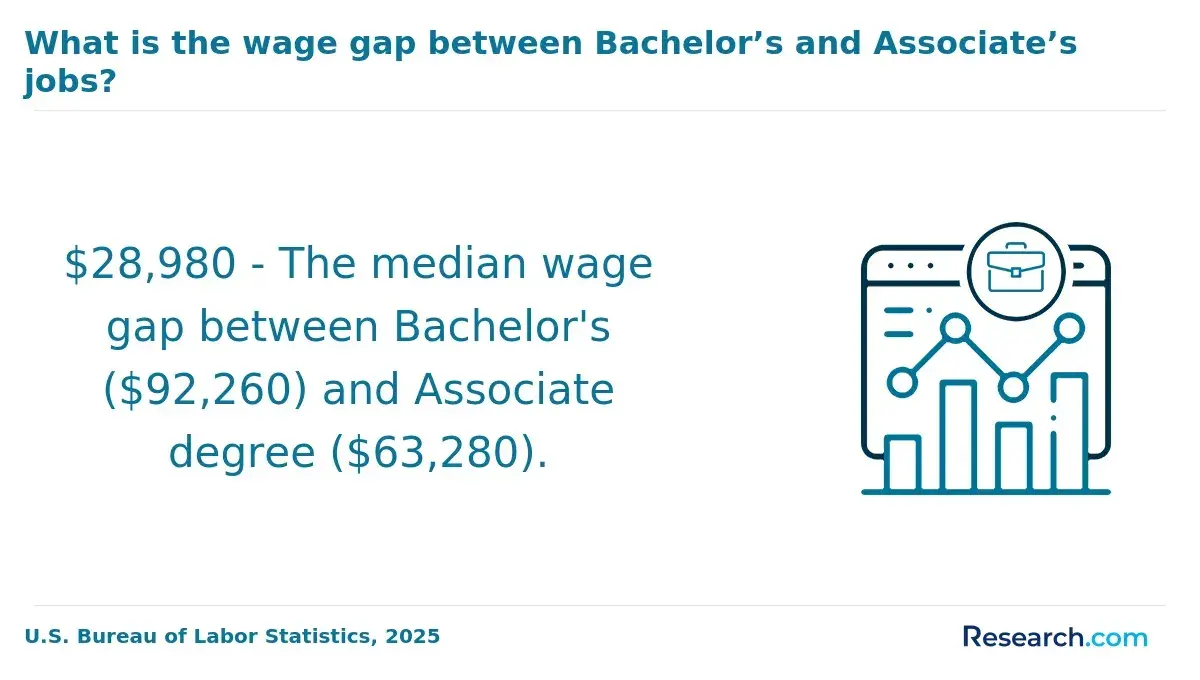
Graduates of online elementary education bachelor's programs generally begin with median salaries between $40,000 and $45,000 nationwide, closely matching those who complete traditional on-campus programs. Variations often stem from local school funding and district budget constraints rather than the study format itself.
By around five to ten years into their careers, teachers with these degrees typically see salaries rise to the $55,000-$65,000 range. Institutional transparency reports show that alumni from accredited online programs achieve salary growth comparable to peers holding traditional degrees and similar experience.
Location, teaching specialization, years of experience, and institutional reputation usually have a more substantial impact on earnings than whether a degree was earned online. Urban districts or regions facing teacher shortages may offer higher pay, and specializations such as bilingual or special education can enhance long-term income potential.
IPEDS data indicate that completion rates and licensure exam passage for online elementary education students are aligned with those in traditional settings, supporting positive employment and salary trajectories. Specialized credentialing within elementary education often correlates with increased earning opportunities over time.
A professional who pursued an online elementary education bachelor's degree described balancing coursework with family responsibilities and navigating the transfer of military training credits. He noted, "The flexibility to study on my own schedule was crucial, especially while working full-time. Initially, I worried about how employers would view my online degree, but over time, my experience and certifications spoke louder." He emphasized that perseverance and seeking out programs with clear, transparent outcome data helped him "build confidence in my career pathway and salary prospects."
What Career Paths and Job Opportunities Are Available to Online Elementary Education Bachelor's Degree Graduates?
An online elementary education degree jobs market offers multiple roles, most notably as elementary school teachers who provide instruction for grades K-6. While a bachelor's degree is essential, public school teachers also require state licensure, which may include further professional development. According to the Bureau of Labor Statistics, this occupation is expected to grow approximately 7% over the next decade, reflecting steady demand consistent with average professional growth.
- Elementary School Teacher: Primary classroom instructors needing state certification and licensure, with continuing education sometimes required.
- Special Education Teacher: Focuses on students with disabilities, typically requiring additional certification or graduate studies. This field's growth is about 8%, spurred by increasing inclusion efforts.
- Educational Coordinator: Responsible for curriculum development and teacher training, often preferring candidates with graduate degrees. This cluster is projected to expand by 10%, as schools emphasize program quality.
- Instructional Designer: Creates educational content and online learning tools, benefiting from digital skills alongside the foundational elementary education background.
- Teacher Assistant/Paraprofessional: Supports teachers in classrooms and may accept an associate degree, serving as an entry point for practical experience.
Choosing a concentration within an online elementary education program-such as literacy, bilingual education, or STEM teaching-can tailor career options to specific markets or student needs, enhancing both employability and advancement. Exploring financial aid and transfer credit policies thoroughly helps prospective students maximize their return on investment. For those comparing fields, a affordable online criminal justice degree might also be worth considering depending on individual career goals.
What Student Support Services Do Online Elementary Education Bachelor's Programs Provide to Promote Success and Retention?
Personalized guidance supports students in navigating course selections, degree pathways, and transfer evaluations, helping to align educational goals with career plans despite evolving personal circumstances. Online tutoring in fundamental subjects like reading, writing, and math is accessible through live sessions and flexible asynchronous formats, catering to students managing busy lives.
Specialized assistance focuses on developing effective communication skills and offers targeted feedback on lesson plans and educational research papers essential for teaching careers. Telehealth services address stress management, time organization, and personal challenges, providing vital emotional support for online learners balancing multiple responsibilities.
Comprehensive programs coordinate internships to provide hands-on classroom experience required for certification. Additional supports include job placement help, resume development workshops, alumni mentorship, and strong connections with employer partnership programs within the elementary education field to facilitate smooth career transitions.
Research from the National Survey of Student Engagement backs the importance of these support systems, revealing higher graduation and retention rates at institutions offering integrated student services. A solid support network is among the strongest indicators of on-time completion for online bachelor's degree students.
Reflecting on her experience, a professional who built her career after completing an online elementary education bachelor's program shared how vital these supports were. She recalled feeling overwhelmed balancing work and family while progressing through coursework, but advisers helped craft a manageable plan tailored to her schedule. Frequent tutoring sessions kept her skills sharp, and mental health counseling provided balance when stress peaked. Internship coordination connected her with a local school, offering real-world teaching experience just before graduation. She emphasized, "Without these resources, completing my degree on time and confidently entering the classroom would have been much harder."
Is an Online Elementary Education Bachelor's Degree Respected by Employers and Recognized Across Industries?
Recent surveys by the Society for Human Resource Management (SHRM) reveal that over 85% of employers regard online bachelor's degrees as credible when awarded by regionally accredited institutions and aligned with industry standards. In elementary education, this acceptance is particularly strong because state certification mandates ensure graduates, whether online or on-campus, meet equivalent quality benchmarks.
Large employers like the New York City Department of Education and Los Angeles Unified School District openly recruit candidates with online elementary education degrees from accredited programs, valuing certification and hands-on experience equally alongside the degree itself.
Yet, in specialized educational settings emphasizing in-person practicum or networking, some employer preferences may still lean toward traditional degree paths. Candidates possessing exclusively online degrees in these niches might encounter more scrutiny or need to supplement their credentials with substantial fieldwork. Therefore, a prospective student's choice of program should reflect how targeted employers view online credentials within their specific contexts.
Careful research into job postings, consultations with school HR representatives, and analysis of alumni outcomes offer critical insights into employer acceptance. Accreditation, state licensure, and proven experience typically carry more influence than whether a degree was earned online or in person. Aligning program selection with these factors helps maximize employment prospects post-graduation.
- Employer Credibility: SHRM data indicates most employers treat online degrees as equally valid when the institution is properly accredited and certification aligns with standards.
- Licensure Equivalence: Online elementary education degrees satisfy the same state certification requirements as on-campus programs, ensuring qualified eligibility for teaching roles.
- Active Recruitment: Prominent school districts recruit graduates from reputable online programs, demonstrating market acceptance of these credentials.
- Field-Specific Preferences: Certain education roles valuing in-person practicum may show hiring biases favoring traditional degree formats.
- Informed Program Selection: Prospective students should evaluate employer attitudes and alumni success to guide their decision on online versus on-campus study.
What Accreditation Standards Should an Online Elementary Education Bachelor's Program Meet to Be Considered Legitimate?
Accreditation plays a critical role in choosing an online elementary education bachelor's degree, influencing credit transfer, employer recognition, and graduate school acceptance. Regional accreditation is widely regarded as more valuable than national accreditation for these reasons. Regional bodies typically accredit traditional nonprofit and public institutions, ensuring rigorous academic standards and broader professional acceptance. Conversely, national accreditation often applies to career, technical, or religious schools and may limit credit transfer and recognition.
The six regional accrediting bodies recognized by the U.S. Department of Education include:
- HLC: Higher Learning Commission, covering central U.S. states
- SACSCOC: Southern Association of Colleges and Schools Commission on Colleges
- NECHE: New England Commission of Higher Education
- MSCHE: Middle States Commission on Higher Education
- NWCCU: Northwest Commission on Colleges and Universities
- WSCUC: WASC Senior College and University Commission, covering western states
To confirm a program's accreditation, prospective students should use the Council for Higher Education Accreditation (CHEA) and the U.S. Department of Education (ED) databases-trusted sources that reflect current accreditation status and flag any lapses.
Additionally, some elementary education programs hold programmatic accreditation from the Council for the Accreditation of Educator Preparation (CAEP). This specialized credential indicates adherence to high teaching standards and is often preferred by school districts and state licensing authorities, easing teacher certification processes.
Choosing institutions without proper or current accreditation carries significant risks: students may lose eligibility for federal financial aid, and their credits may not transfer, hindering career advancement. According to the National Center for Education Statistics, approximately 95% of graduates from regionally accredited institutions found employment or entered graduate studies within a year of graduation-demonstrating the durable value of accredited programs.
How Long Does It Take to Complete an Online Elementary Education Bachelor's Degree, and What Factors Affect the Timeline?
Completing an online elementary education bachelor's degree generally requires about 120 credit hours, which most students complete in roughly four years. This duration reflects a traditional timeline designed for full-time study. However, various factors influencing duration of elementary education bachelor's program-such as enrollment pace, course format, and transfer credits-can either shorten or extend this period for online learners.
Many programs accelerate graduation by offering eight-week courses instead of the conventional 16-week semester, allowing students to take more classes annually. Competency-based education (CBE) pathways also enable students to advance by demonstrating mastery of skills instead of spending set time in class, making it possible for motivated learners to finish in two to three years. Year-round enrollment options without summer breaks further support continuous study, expediting degree completion.
Institutions like Western Governors University report average completion times near three years for their competency-based elementary education programs. Brandman University similarly offers accelerated formats with typical completion between 2.5 and 3.5 years, depending on prior credits and course load. These examples highlight how program structure affects time to complete an online elementary education degree.
Faster completion not only reduces direct tuition costs but also lowers opportunity costs related to delayed full-time employment. Prospective students-including working parents and military veterans converting service credits-should weigh these benefits against the demands of accelerated schedules requiring strong time management.
For those exploring career paths or broader degree options, understanding what is a project management degree may offer additional perspective on interdisciplinary skillsets valuable for educators advancing in administration roles.
What Financial Aid, Scholarships, and Tuition Assistance Are Available for Online Elementary Education Bachelor's Students?
Financial aid options for online elementary education bachelor's in the US can significantly reduce the financial burden of earning a degree. Federal Pell Grants provide need-based funding that does not require repayment, with awards up to about $7,000 annually, based on financial need determined through the FAFSA (Free Application for Federal Student Aid). Direct Subsidized and Unsubsidized Loans are also available-subsidized loans do not accrue interest while enrolled at least half-time, whereas unsubsidized loans start accruing interest immediately. Both require FAFSA completion.
- Institution-Specific Scholarships: Many accredited programs offer scholarships targeting elementary education students. Examples include the TEACH Grant, which offers up to $4,000 yearly for those committing to teach in high-need or low-income areas.
- State Grant Programs: These vary by state but often support residents pursuing elementary education degrees, such as New York's TAP and California's Cal Grant, with differing eligibility and award amounts.
Additional scholarships specifically for online elementary education students include the NEA Foundation Student Achievement Grant-awarding up to $2,500 to education-focused candidates; the Knowles Science Teaching Foundation Scholarship, providing $3,000 annually to future STEM educators; and the Future Teachers Scholarship from Educators Rising, designed for incoming education majors.
The FAFSA process requires submitting income and demographic details early-preferably when the application opens each October-to maximize award opportunities before funds are depleted. Many students benefit by layering multiple sources of aid, such as combining grants, scholarships, employer tuition reimbursement, and federal work-study programs to minimize out-of-pocket costs.
Students looking for accredited elementary education programs can consult resources like non profit universities that offer transparent financial aid options aligned with federal and state support systems.
What Are the Admission Requirements for Online Elementary Education Bachelor's Degree Programs?
Admission criteria for online elementary education bachelor's degrees differ significantly across institutions, reflecting varying levels of selectivity. More competitive programs typically require applicants to have completed high school or earned a GED, maintain a GPA of about 3.0 or higher, and some still ask for SAT or ACT scores-though many have transitioned to test-optional policies.
Less selective or open-access programs often accept students with GPAs closer to 2.0 and do not mandate standardized tests, appealing particularly to adult learners, veterans, or career changers who prioritize flexibility. Rolling admissions are common in these programs, allowing applications at any time without strict deadlines, which reduces pressure and supports working individuals balancing education with other commitments.
- High School Diploma or GED: Completion of secondary education or its equivalent is generally required across programs.
- Minimum GPA: Competitive programs expect roughly a 3.0 GPA, whereas open enrollment options may accept 2.0 or above.
- Standardized Tests: Some programs still require SAT/ACT scores, but many now waive this to widen access.
- Prerequisite Coursework: Basic competencies in math, English, and occasionally science or social studies are often necessary; specific course requirements vary.
- Rolling Admissions: Continuous application acceptance benefits nontraditional students managing work or military obligations.
- Enhancing Applications: Applicants with lower academic standings can strengthen applications by:
- Completing relevant community college classes.
- Acquiring certifications in teaching or childcare fields.
- Submitting strong recommendation letters highlighting experience and dedication.
How Should Prospective Students Evaluate and Choose the Right Online Elementary Education Bachelor's Degree Program for Their Goals?
When evaluating online elementary education programs, consider these essential factors to ensure a well-informed choice.
- Accreditation: Confirm the program's recognition by credible agencies, ideally regional or specialized in teacher preparation, which safeguards educational quality and licensure eligibility.
- Cost and ROI: Look beyond tuition to include technology fees, proctored exam charges, textbooks, and any required on-campus residencies. Weigh these costs against expected salary and career growth opportunities.
- Program Format and Flexibility: Seek programs offering asynchronous courses, part-time options, or accelerated pathways that accommodate your personal and professional schedule.
- Career Outcomes Data: Use trusted sources such as the U.S. Department of Education's College Scorecard and IPEDS Data Center to analyze graduation rates, licensure exam success, employment figures, and alumni trajectories.
- Student Support Services: Review availability of dedicated advising, tutoring, career counseling, and technical assistance tailored to online learners.
- Transfer Credit Policies: Investigate how many credits can transfer, including military or prior college work, to reduce time and expense.
Utilize institutional net price calculators and official data portals to compare finalist programs side-by-side, ensuring transparency and precision in your evaluation.
- Schedule Informational Interviews: Engage admissions staff and faculty to clarify questions and program specifics.
- Request Net Price Estimates: Obtain personalized cost projections factoring in financial aid.
- Review Financial Aid Deadlines: Keep track of key dates for scholarships, grants, and loans.
- Audit Existing Transfer Credits: Verify eligible past coursework to avoid redundant classes.
- Set a Target Enrollment Date: Plan application steps and prepare documentation accordingly.
What Graduates Say About the Value of Their Online Elementary Education Bachelor's Degree
- Mordechai: "I chose the online elementary education bachelor's degree program because it offered the flexibility to balance work and study. The program's affordable tuition made it a smart investment, especially considering the career boost I received afterward. Thanks to this degree, I was able to secure a teaching position that I truly love, and I feel prepared for the challenges of the classroom."
- Casen: "Reflecting on my experience, the online elementary education degree stood out because of its well-structured curriculum and supportive faculty. The cost was reasonable compared to other programs, and the return on investment became clear as I advanced professionally. This program gave me practical skills and confidence that translated into promotions and recognition at work."
- Walker: "The flexibility and accessibility of the online elementary education degree made it the ideal choice for me as a busy parent. The relatively low tuition fees were manageable, and the value was undeniable when I started applying what I learned in my teaching career. This degree opened doors and allowed me to make a meaningful impact in my students' lives."
Other Things You Should Know About Elementary Education Degrees
Online elementary education bachelor's programs typically deliver coursework through a combination of video lectures, readings, interactive assignments, and virtual discussion boards. Many programs use learning management systems that allow students to access materials and submit work asynchronously, providing flexibility for working adults and other busy students. Despite the remote format, most programs incorporate synchronous sessions, group projects, or virtual classrooms to foster interaction and peer support. Clinical experiences and student teaching placements still require in-person attendance, arranged locally by the program.
Students in online elementary education bachelor's programs often have options to specialize in areas such as special education, literacy and reading instruction, bilingual education, or STEM education. These concentrations tailor coursework to specific student needs or teaching environments and help graduates develop targeted skills for their careers. Offering these options online allows students to align their studies with their career goals without sacrificing access or flexibility. Availability of specializations varies by institution, so prospective students should check program offerings closely.
Holding an online elementary education bachelor's degree from an accredited institution generally does not hinder admission to graduate education programs. Graduate schools typically focus on accreditation status, GPA, and relevant experience rather than delivery format. Many candidates with online degrees advance to master's degrees in curriculum development, educational leadership, or specialized teaching endorsements. However, students should verify graduate program prerequisites to ensure the online degree aligns with their long-term goals.
References
- 10 Cheapest Online Bachelor’s Degrees in 2026 | UoPeople https://www.uopeople.edu/blog/10-cheap-online-bachelors-degrees/
- Online Bachelor of Education (Elementary) https://www.uregina.ca/academics/programs/education/online-bachelor-education-elementary.html
- Guide to Online Education Degrees | OEDb.org https://www.oedb.org/rankings/online-education-programs/
- What does it mean to be an ‘accredited’ online school? - Academy21 https://academy21.co.uk/resource/blog/what-does-it-mean-to-be-an-accredited-online-schoo/
- Pros And Cons Of Online Elementary School https://ignitelearningacademy.com/blog/236-pros-and-cons-of-online-elementary-school
- Establishing a Practical, Return-on-Investment Framework for Education and Skills Development to Expand Economic Opportunity - FREOPP https://freopp.org/whitepapers/establishing-a-practical-return-on-investment-framework-for-education-and-skills-development-to-expand-economic-opportunity/
- Choosing a bachelor's in elementary education | edX https://www.edx.org/resources/how-to-choose-a-bachelors-in-elementary-education
- Elementary Education, B.S. - Online - Bluefield State University https://bluefieldstate.edu/degree/elementary-teacher-education-online/
- Financial Aid For Online Colleges https://www.affordablecollegesonline.org/financial-aid/financial-aid-for-online-colleges/
- Top 20 Education Scholarships to Apply for in December 2025 https://bold.org/scholarships/by-major/education-scholarships/


