
2027 Is Creative Writing a Hard Major? What Students Should Know

Co-Founder and Chief Data Scientist
The difficulty of a creative writing major is often misunderstood, with many assuming it lacks rigor compared to STEM fields. However, the program demands strong critical thinking, disciplined practice, and constant revision. According to the National Center for Education Statistics, nearly 3,000 students annually earn bachelor's degrees in creative writing, reflecting its growing popularity and competitive nature.
This article will explore the course rigor involved in creative writing, typical workload expectations, essential skills students must develop, and factors like personal passion and writing experience that affect how challenging the major feels to different individuals.
Key Benefits of Creative Writing as a Major
- Creative writing enhances communication and critical thinking skills, benefiting career changers adapting to new professional fields.
- It offers flexible coursework, supporting full-time workers returning to school with manageable assignments and practical deadlines.
- Traditional undergraduates gain specialized expertise and confidence through rigorous projects, preparing them for competitive academic and literary careers.
Where Does Creative Writing Rank Among the Hardest College Majors?
Creative writing generally occupies a moderate position in national college major difficulty rankings, not as demanding as STEM fields but more challenging than some social science or business majors. Unlike disciplines requiring extensive lab work or quantitative analysis, creative writing centers on consistent writing, revision, and critical thinking.
These demands result in a significant time commitment, often involving rigorous workshop participation and peer critique. For instance, many programs expect students to submit multiple polished pieces regularly, reflecting a steady workload throughout the semester rather than episodic exams or problem sets.
The perceived difficulty of creative writing varies widely depending on the institution and the student's background. Highly selective programs, such as Boston University's MFA with acceptance rates under 1%, tend to be more intense and competitive.
Compared to tougher majors like engineering or physics, creative writing leans less on technical skills but requires strong emotional resilience and dedication. Conversely, it is usually seen as more demanding than general studies or business administration due to the creative and evaluative nature of the coursework.
Ultimately, whether creative writing feels hard or manageable depends on a student's writing ability, openness to feedback, and time management skills rather than a simple ranking system.
What Factors Make Creative Writing a Hard Major?
Certain academic and skill-related demands make creative writing a hard major for many students. These challenges arise from rigorous coursework, substantial time investment, and the need for advanced technical and analytical abilities.
- Academic Rigor: Extensive coursework is required, such as Knox College's requirement of twelve credits including five writing courses, with at least three at the 300-level, plus electives focused on literature, film, or theory. Meeting these standards involves consistent interaction with complex texts and sophisticated writing techniques.
- Time Commitment: Balancing workshop participation, reading, and frequent writing assignments demands significant time. For instance, Emory University's program includes five writing workshops and six upper-level English courses, resulting in workloads comparable to STEM majors, with regular deadlines and multiple drafts.
- Technical and Analytical Complexity: Students must master various genres-poetry, fiction, nonfiction-and engage deeply in critical analysis. The creative writing program difficulty includes revising work based on peer feedback and honing both creative intuition and analytical precision.
- Field-Specific Demands: There is pressure to produce original, publishable work and demonstrate versatility across genres and historical periods. Programs like Harvard's require maintaining a GPA of 3.0 or higher in advanced courses and passing rigorous prerequisites, including critical reading and writing exams.
For those considering this path but concerned about balancing these demands, exploring accelerated programs for bachelor's degree options may provide additional flexibility while managing the creative writing major workload.
Who Is a Good Fit for a Creative Writing Major?
Understanding which students thrive in creative writing programs is essential for those considering this major, as it demands both personal and intellectual strengths. Recognizing the best personality traits for creative writing majors helps applicants assess their fit and preparedness for the challenges ahead.
Students who excel typically display:
- Strong imagination and openness: These students embrace self-expression and enjoy storytelling, fueling their creativity across genres and helping them develop a distinct literary voice.
- Curiosity and observation: Attentive to details and diverse perspectives, they enrich their writing through deep engagement with the world, an important skill needed to succeed in creative writing programs.
- Persistence and discipline: The major requires consistent practice, meeting deadlines, and a commitment to revising work, which benefits those comfortable with structure and self-motivation.
- Critical thinkers: Analytical skills are sharpened by evaluating literature and writing techniques, allowing these students to improve craft and appreciate nuanced feedback.
- Adaptability and collaboration: Flexibility in experimenting with styles and responding to peer critiques fosters growth, confidence, and resilience throughout the program.
Students seeking flexible options can often find open enrollment programs that support varied skill levels and schedules within creative writing studies.
How Can You Make a Creative Writing Major Easier?
Many students struggle with creative writing due to its blend of subjective evaluation and rigorous discipline, but adopting specific techniques can make the workload less daunting. Implementing well-chosen methods helps students navigate complex assignments and develop essential skills more efficiently.
- Strategic time management: Planning long-term goals with set deadlines for drafts and revisions reduces anxiety and encourages steady advancement across projects.
- Consistent writing practice: Regularly writing beyond coursework fosters skill growth, boosts confidence, and aids in overcoming blockages or hesitation.
- Utilizing academic support: Engaging with tutors, peers, and writing groups provides constructive critique and clarity, enriching the learning experience.
- Expanding reading habits: Analyzing diverse genres sharpens vocabulary, reveals narrative techniques, and deepens understanding of storytelling dynamics.
- Connecting with the community: Participating in workshops and forums offers inspiration, practical tips, and emotional encouragement, enhancing persistence throughout the degree.
When discussing how to ease a creative writing major, a graduate shared that initially she felt overwhelmed by the abstract nature of assignments and frequent deadlines. She explained, "Breaking down larger projects into smaller, manageable steps was a game changer. It made revision sessions feel less intimidating."
She also emphasized how joining a campus writing group helped her receive honest feedback, stating, "Sometimes hearing another perspective made me realize where I was stuck or how to take my work further." Reflecting back, she noted that cultivating a regular habit of journaling outside class not only sharpened her style but also made her writing process feel more natural.
"The sense of community and steady practice turned a stressful experience into something I genuinely looked forward to," she said, highlighting how these strategies transformed her academic journey.
Are Admissions to Creative Writing Programs Competitive?
Admissions to creative writing programs are indeed competitive, mainly due to high applicant numbers and limited class sizes. Many institutions have prerequisites that applicants must satisfy before applying, which further narrows the pool.
Prestigious schools, in particular, face intense competition as only a small number of students are accepted from a large volume of applicants. This selectivity reflects both the popularity of the major and resource constraints within programs.
Several elements influence how selective a creative writing program is, including minimum GPA requirements often set at 3.0 or above and completion of certain English or writing courses. Applicants typically need to submit portfolios showcasing original work, which plays a crucial role in the admissions decision.
Moreover, increased student interest over recent years has made gaining admission even more challenging, with top programs admitting as few as 2-5% of applicants.
When I spoke with a professional who majored in creative writing, he shared his experience applying to a highly competitive program. "I knew the competition was fierce, but preparing my portfolio and retaking courses to improve my GPA felt like climbing uphill," he explained.
The process demanded persistence and constant refinement of his work, and although stressful, he valued how it pushed him to grow as a writer. "Getting in wasn't just about talent; it was about dedication and perseverance," he reflected.
Is an Online Creative Writing Major Harder Than an On-Campus Program?
An online creative writing major is generally neither harder nor easier than an on-campus program; rather, the difficulty depends on various factors unique to each format. These differences can shape the experience and challenge level for students in distinct ways.
Here is a comparison of online vs on-campus creative writing degree difficulty, focusing on key aspects such as academic expectations, workload, pacing, interaction, and support:
- Academic expectations and workload: Both online and traditional programs require substantial original writing, often 35 to 40 pages per course at the undergraduate level, with even greater demands at the graduate level, reflecting similar rigor across formats.
- Flexibility of online creative writing programs: Online studies allow students to manage submission schedules independently, which benefits those balancing work or family but requires strong self-discipline and time management to avoid falling behind.
- Learning environment and pacing: On-campus programs provide structured class times and physical spaces conducive to focus, offering immediate feedback and face-to-face support, which can help maintain engagement.
- Interaction and support: Virtual workshops and discussion forums in online courses encourage diverse global viewpoints but may lack the immediacy and personal connection found in in-person settings.
- Challenges unique to each format: Online learners must create their own accountability frameworks, while on-campus students might face less schedule flexibility but benefit from direct collaboration and networking opportunities.
Students considering a creative writing degree should weigh their personal learning preferences and circumstances, as well as the inherent differences in program delivery, to choose the path best suited for their success. Exploring a college major that makes the most money can also provide guidance on long-term prospects.
Are Accelerated Creative Writing Programs Harder Than Traditional Formats?
Accelerated creative writing programs are generally harder than traditional formats due to their condensed timelines and intensive workload, which demand rapid pacing and heightened focus from students. The compressed schedules mean students experience a denser concentration of assignments, readings, and feedback cycles compared to the more spread-out traditional approach.
Here is a comparison of accelerated versus traditional creative writing programs illustrating key differences:
- Course Pacing and Content Density: Accelerated programs cover the same material in a shorter timeframe, resulting in a fast-paced learning environment, while traditional formats allow more gradual progression.
- Workload Management: Students in accelerated creative writing programs intensive workload must balance heavy weekly tasks and quick turnarounds; traditional students typically have more time to absorb, revise, and reflect.
- Academic Expectations and Skill Demands: Both formats require rigorous writing and critique skills, but accelerated students face tighter deadlines and more frequent evaluations.
- Learning Retention and Stress Levels: Accelerated formats can increase stress and risk of creative burnout due to limited reflection time, whereas traditional programs offer greater flexibility to manage stress and deepen understanding.
- Flexibility and Scheduling: Online creative writing courses vs traditional workshops illustrate how program format impacts the ability to tailor schedules; accelerated programs tend to be more structured with less flexibility.
For students weighing their options, exploring the fastest highest paying degrees can offer additional perspective on balancing education speed with career goals.
Can You Manage a Part-Time Job While Majoring in Creative Writing?
Students majoring in creative writing can realistically manage part-time jobs, but success depends on factors like course intensity, weekly workload, and flexibility in scheduling. The curriculum emphasizes extensive reading, writing workshops, and project-based assignments rather than strict lab hours, providing some freedom to arrange work around academic commitments.
Time spent outside class often ranges from 15 to 18 hours weekly on coursework, making personal study habits crucial for balancing both roles. Those with good organizational skills and realistic expectations tend to handle both demands more effectively.
Typically, students juggle part-time work and creative writing studies by prioritizing flexible job types, such as freelancing or campus roles, which align with fluctuating academic deadlines. They often adjust credit loads to avoid overwhelming project cycles and rely on campus or online services for academic support, helping them manage feedback and deadlines.
The discipline's emphasis on long-form writing and peer critiques requires consistent time management, which can challenge some students more than others. For many, balancing these responsibilities is feasible but hinges on maintaining a structured and adaptable approach to both work and studies.
What Jobs Do Creative Writing Majors Get, and Are They as Hard as the Degree Itself?
Career paths for creative writing majors vary widely in difficulty, responsibility, and skills required. While some roles demand a level of creativity and discipline comparable to the major itself, others can feel less demanding or challenge graduates in different ways.
Here are common jobs for creative writing graduates and how they relate to the rigor of the degree:
- Author (Fiction, Nonfiction, Poetry): Authors spend much of their time writing, revising, and submitting manuscripts. They must be highly self-motivated and resilient, dealing with frequent rejection and strict deadlines. This role is generally as demanding as the major, requiring sustained creativity and discipline.
- Copywriter: Copywriters create persuasive marketing content for ads, websites, and social media. They focus on speed and commercial goals rather than deep artistic expression, making the job demanding in a different way than the degree.
- Editor/Proofreader: Editors review and refine material for clarity, grammar, and style. While this job is less creatively demanding, it can be stressful due to tight deadlines and high standards for accuracy.
- Journalist: Journalists research and write news stories under pressure, prioritizing speed and factual accuracy over creative exploration. The role is demanding differently, focusing on timeliness rather than sustained creative output.
- Content Writer: Content writers produce articles and web content across industries, often needing to adapt their style quickly. This position tends to be less demanding than the major, focusing more on clear information delivery.
For anyone curious about creative writing salary expectations or wondering what jobs do creative writing majors get, understanding the varying demands of these roles is key.
Students considering their career options might also explore what is the best career in trades for alternative paths that offer different challenges and rewards.
Do Creative Writing Graduates Earn Higher Salaries Because the Major Is Harder?
There is no clear evidence that creative writing graduates earn higher salaries because their major is more difficult. Salary figures for creative writing majors are similar to those in other humanities disciplines, indicating no direct link between academic challenge and higher income. Instead, earnings depend more on skill-building and how well these skills meet market demands.
Creative writing programs often emphasize activities like reading, writing, and peer feedback rather than rigorous exams or lab work, which doesn't inherently lead to higher pay. Overall, the complexity of the coursework does not strongly influence salary outcomes.
Several factors shape the earnings of creative writing graduates beyond the major's difficulty. Industry demand plays a large role. Writers and authors in information services had a median wage of $73,070, while those in religious grantmaking, civic, professional, and similar organizations made $66,490 yearly.
Location also matters significantly: metropolitan areas typically offer better opportunities and pay. Experience and job type influence income, as roles vary from staff writers and editors to marketing specialists and technical communicators, each with distinct salary ranges.
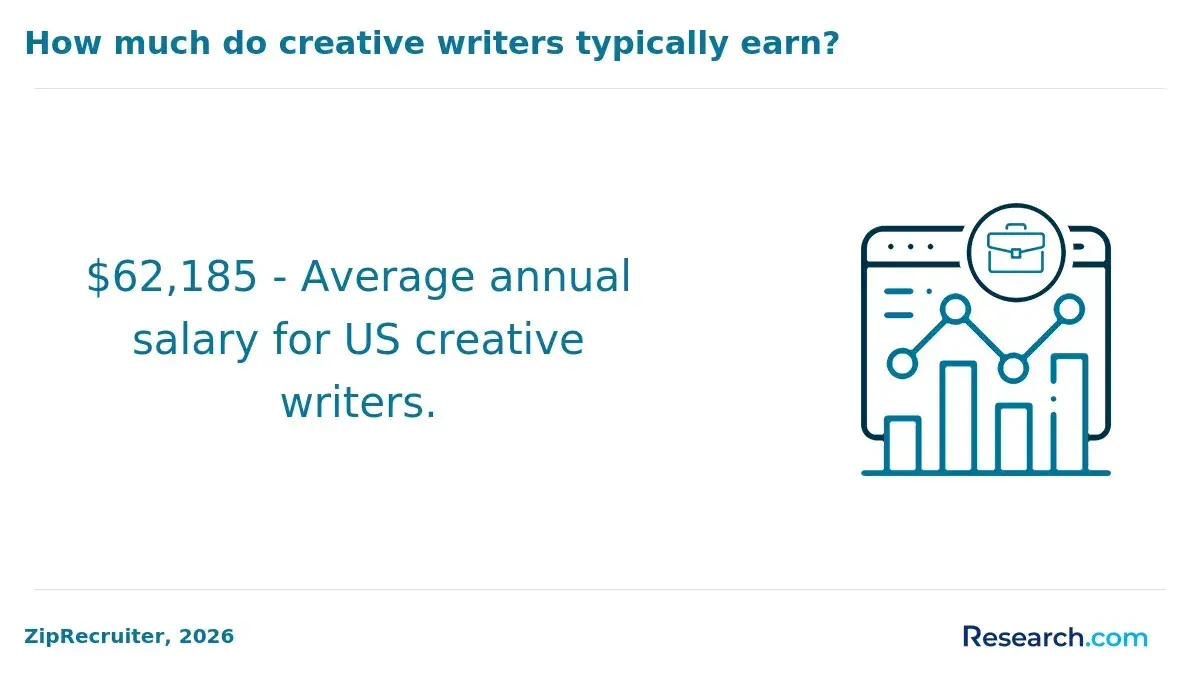
On average, creative writing degree holders earn around $62,185 annually, though advanced skills and specialization can raise this figure considerably.
What Graduates Say About Creative Writing as Their Major
- Jaime: "Pursuing creative writing was definitely challenging, especially balancing intensive workshops with critical feedback, but it sharpened my storytelling skills in ways I never imagined. While the average cost of attendance was steep, I believe the personal growth and career opportunities in publishing made it worth every penny. Creative writing pushed me to find my authentic voice, and now I feel prepared for a dynamic career in content creation. "
- Enzo: "Creative writing is a demanding major that requires dedication to both craft and critique, which can be tough but ultimately rewarding. The financial investment was significant, given tuition and materials, yet it opened doors for me in teaching and freelancing that wouldn't have been accessible otherwise. Reflecting back, it was the intellectual rigor and the cost that shaped my professional discipline positively. "
- Rowan: "Honestly, I found creative writing to be a fascinating blend of challenge and discovery; it was not always easy, but the learning curve was worth it for the passion it ignited in me. Considering the moderate expenses involved, it was a sensible investment in my creative career path, helping me land writing gigs I dreamed of. The experiences gained from this major continue to influence my work with enthusiasm and confidence. "
Other Things You Should Know About Creative Writing Degrees
In 2027, Creative Writing majors may encounter challenges such as maintaining originality amidst AI-generated content, adapting to digital publishing tools, and meeting high expectations in constructive peer feedback. Engaging with diverse storytelling formats and balancing creative pursuits with academic deadlines can also be demanding.
Yes, creative writing programs often include extensive reading requirements. This reading spans various genres and styles to expose students to diverse techniques and to inspire their own writing.
Feedback is crucial in creative writing courses as it helps students refine their writing style, develop their voice, and improve narrative techniques. Constructive critiques from peers and instructors allow aspiring writers to identify strengths and weaknesses, fostering growth and understanding of diverse perspectives in 2027.
References
- What Can You Do With a Creative Writing Degree? https://www.colum.edu/college-101/what-can-you-do-with-a-creative-writing-degree
- Should You Get an MFA in Creative Writing? (Pros and Cons) — Mary Adkins https://maryadkinswriter.com/blog/should-you-get-an-mfa-in-creative-writing
- 10 Considerations Before You Apply to a Creative Writing MFA Program — Set Your Muse on Fire! https://www.setyourmuseonfire.com/blog/10-considerations-before-you-apply-to-a-creative-writing-mfa-programnbspnbsp
- How much does someone with a creative writing major make right out of college? https://www.careervillage.org/questions/4175/how-much-does-someone-with-a-creative-writing-major-make-right-out-of-college
- Balancing a Part-Time Writing Program with a Full-Time Job - PocketMFA https://pocketmfa.com/balancing-a-part-time-writing-program-with-a-full-time-job/
- How to Survive College With a Creative Writing Degree (Part 1/3) https://medium.com/@elliesbradley12/how-to-survive-college-with-a-creative-writing-degree-part-1-3-60d254841e7c
- A-Level Requirements for Creative Writing https://www.immerse.education/university-preparation/entry-requirements/creative-writing/
- The Downsides to Studying Creative Writing https://www.writerscookbook.com/downsides-studying-creative-writing/
- The 12 Best Creative Writing Colleges and Programs · PrepScholar https://blog.prepscholar.com/best-creative-writing-colleges-majors-and-programs
- What Can You Do With a Creative Writing Degree? https://www.huffpost.com/entry/what-can-you-do-with-a-cr_b_14087964
- U.S. Bureau of Labor Statistics. (2025). Writers and authors: Occupational outlook handbook. https://www.bls.gov/ooh/media-and-communication/writers-and-authors.htm
- ZipRecruiter. (2026). Salary: Creative Writer (February, 2026) United States. https://www.ziprecruiter.com/Salaries/Creative-Writer-Salary
- Zippia. (2025). Creative writer education requirements: Degrees, majors, and colleges. https://www.zippia.com/creative-writer-jobs/education/


