
2027 Is Urban Planning a Hard Major? What Students Should Know

Co-Founder and Chief Data Scientist
Urban planning is often perceived as a challenging major due to its blend of technical, social, and environmental topics. In the U.S., enrollment in urban planning programs has grown nearly 20% over the past decade, reflecting rising interest despite concerns about course difficulty. The major demands a balance of analytical skills, creativity, and collaboration that can stretch student capabilities.
This article explores what makes urban planning rigorous, examining typical coursework, workload intensity, and essential skills like data analysis and community engagement. It also highlights how personal strengths and academic background influence a student's experience, helping prospective majors understand what to expect before committing to this multifaceted field.
Key Benefits of Urban Planning as a Major
- Urban planning cultivates critical skills like spatial analysis and policy evaluation, essential for career changers seeking practical expertise in a growing field with a projected 3%%% job growth by 2034.
- It offers flexible learning paths for full-time workers through evening or online courses, supporting academic progress without sacrificing professional responsibilities.
- Traditional undergraduates benefit from interdisciplinary study combining sociology, design, and environmental science, building confidence to handle complex, real-world urban challenges effectively.
Where Does Urban Planning Rank Among the Hardest College Majors?
Urban planning is generally ranked in the mid-range of national difficulty listings, falling between highly demanding majors like biochemical sciences and less challenging ones such as elementary education. This ranking reflects its interdisciplinary nature rather than intense technical rigor. Students face a varied workload involving coursework across architecture, public administration, environmental science, sociology, and economics.
Additionally, urban planning programs often require substantial fieldwork, including community surveys and GIS-based demographic analysis. A notable aspect is the blend of qualitative and quantitative tasks, which can significantly increase time commitments due to the need for both academic study and hands-on project involvement.
How hard urban planning feels often depends on individual abilities and program specifics. Those skilled in statistical methods, spatial thinking, and public interaction tend to find it engaging rather than overly difficult. In contrast, students less comfortable with data analysis or communication might encounter more obstacles. When compared to engineering-known for intense math and technical focus-or biology, which demands memorization of complex concepts, urban planning centers on synthesizing diverse knowledge and critical thinking.
Its difficulty is less about technical mastery and more about aligning one's strengths with its broad, interdisciplinary challenges, making it neither the hardest nor the easiest field but uniquely demanding in its own right.
What Factors Make Urban Planning a Hard Major?
Urban planning is considered challenging due to its combination of academic rigor and the need for diverse technical skills, which can test students' ability to manage complex, interdisciplinary material. These demands contribute significantly to the urban planning workload and make it a difficult major for many.
- Academic Rigor: Students must master subjects like economics, statistics, sociology, and environmental design. Programs such as those at the University of Illinois and UC Berkeley require maintaining a minimum 2.0 GPA and completing rigorous upper-division major courses, reflecting the program's emphasis on strong academic performance.
- Time Commitment: Most urban planning programs require at least 120 credit hours. Many schools mandate 40 or more upper-division courses, which are more demanding and research-intensive, increasing the overall workload and study time needed to succeed.
- Technical and Analytical Complexity: Strong analytical and technical skills are essential, including data collection, mapping, and data visualization. These skills are crucial for analyzing and solving complex urban problems and are often reinforced through hands-on projects and research activities.
- Field-Specific Demands: Students often complete a senior thesis or capstone project requiring independent research and synthesis of knowledge. Breadth requirements also mean taking courses outside the major, adding intellectual challenge and time commitments.
The academic rigor and urban planning workload demands may lead some students to consider alternatives, including more flexible options such as the quickest associate degree online programs for different career paths.
Who Is a Good Fit for a Urban Planning Major?
Identifying who should study urban planning helps students assess if their skills match the program's demands, which is important for long-term success. The skills needed for urban planning majors include a blend of analytical, social, and technical abilities that prepare students to tackle complex urban challenges.
- Analytical Thinkers: These students excel at examining complex urban systems and data. Their ability to think critically supports coursework focused on problem-solving and policy development.
- Strong Communicators: Effective communication is essential for presenting ideas, writing reports, and engaging with diverse communities, allowing students to translate technical concepts into actionable plans.
- Research-Oriented Individuals: Comfort with both qualitative and quantitative research helps students in mapping, data visualization, and policy analysis tasks.
- Collaborative Team Players: Urban planning involves group projects that mirror real-world planning, so teamwork skills help manage interdisciplinary coursework and hands-on assignments.
- Passionate about Social and Environmental Change: A commitment to sustainability and urban growth challenges motivates students to address pressing city issues and thrive in a demanding curriculum.
For those exploring programs, checking listings of the best open enrollment online colleges can provide accessible options to begin this path.
How Can You Make a Urban Planning Major Easier?
Urban planning can be demanding due to its interdisciplinary nature, combining policy, design, geography, and data analysis. Nevertheless, adopting focused strategies allows students to handle the workload more effectively and build confidence throughout their studies.
- Build effective time management: Urban planning projects often overlap with tight deadlines; breaking tasks into smaller steps and scheduling consistent study times prevents overwhelming last-minute work.
- Strengthen core skills early: Gaining proficiency in statistics, GIS, and data analysis from the outset eases progression into advanced topics reliant on these foundations.
- Engage experientially: Involvement in community projects, workshops, or internships transforms abstract theories into practical understanding and enhances professional skills.
- Leverage academic support: Regularly consulting professors, joining study groups, or using tutoring resources clarifies difficult concepts and promotes deeper learning.
- Organize complex materials: Creating visual aids like concept maps and concise summaries assists in connecting diverse topics typical of urban planning curricula.
When asked about making the urban planning major more manageable, a graduate shared that early semesters felt especially overwhelming as deadlines piled up and subjects like GIS demanded significant technical learning. By intentionally breaking down projects week by week and seeking peer study sessions, she found that the workload became less intimidating. She noted, "Using visual summaries helped me see how different course components linked together, which made studying feel more purposeful."
The graduate emphasized that tapping into faculty expertise regularly gave her confidence, transforming frustration into steady progress. This reflective approach helped her complete the program successfully while maintaining balance.
Are Admissions to Urban Planning Programs Competitive?
Admissions to urban planning programs in the United States vary widely in competitiveness, depending largely on the institution. Top-tier universities, such as MIT, often have acceptance rates below 10%, driven by high applicant numbers and limited program capacity. In contrast, many public universities offer admission to more than half of their applicants. These differences stem from factors like cohort size, diversity goals, and academic prerequisites, which shape how selective programs can be.
Selectivity is further influenced by each school's expectations regarding academic performance and background. Most programs require a minimum undergraduate GPA of around 3.0, along with prerequisite courses in fields such as economics, statistics, or social sciences. Work experience or volunteer involvement in related areas can strengthen applications, sometimes offsetting lower grades when paired with compelling essays and strong recommendations.
Additionally, spikes in student interest towards emerging topics like sustainable development can impact admission trends, leading to fluctuating selectivity across schools.
When I spoke with a professional urban planning graduate about his admissions experience, he recalled the competitive nature firsthand. He described carefully balancing his GPA with internship experiences and dedicating extra effort to craft thoughtful essays that communicated his passion for sustainable cities.
"It felt daunting at times," he shared, "because I knew the acceptance rates were low at my top choices. But focusing on what made my background unique and demonstrating real-world commitment really helped." His journey underscores how persistence and strategic preparation can make a difference in navigating competitive urban planning admissions.
Is an Online Urban Planning Major Harder Than an On-Campus Program?
Online urban planning programs are neither inherently harder nor easier than on-campus programs; the difference in difficulty depends on various factors unique to each format. Students face diverse challenges shaped by the structure and delivery of coursework. Below is a comparison focusing on academic expectations, workload and pacing, interaction and support, learning environment, and challenges unique to each program.
- Academic Expectations: Both formats maintain equally rigorous academic standards, though online learners may need extra self-motivation to meet deadlines without direct oversight.
- Workload and Pacing: On-campus programs follow fixed schedules, often intensifying time-management demands, while online courses offer flexibility but require disciplined pacing to stay on track.
- Interaction and Support: On-campus students benefit from immediate instructor feedback and face-to-face collaboration, whereas nearly 60% of online students report difficulty accessing equivalent academic support.
- Learning Environment: Hands-on experiences like GIS projects and community engagement are more seamlessly integrated on campus; online programs rely on virtual labs and independent arrangements that may not replicate these fully.
- Challenges Unique to Each Format: Online urban planning degree flexibility and workload demand high self-direction and creativity in arranging fieldwork, contrasting with the structured support available on campus.
Comparing on-campus vs online planning programs difficulty highlights that success hinges on matching your personal learning style to the program's structure. Students interested in urban planning might also explore the most profitable major options to align career outcomes with their academic choices.
Are Accelerated Urban Planning Programs Harder Than Traditional Formats?
Accelerated urban planning programs are generally harder than traditional formats due to their condensed timelines and intense course pacing, which lead to a higher workload intensity and academic demands. This increased rigor affects the student experience by requiring mastery of graduate-level content concurrently with undergraduate studies. Below is a comparison highlighting key aspects of accelerated versus traditional urban planning programs.
- Course Pacing and Content Density: Accelerated programs compress both undergraduate and graduate requirements into five years, increasing content density per semester compared to traditional six-year pathways.
- Workload Management for Different Students: The heavy coursework in accelerated formats demands excellent time management skills, often challenging students balancing academics with other commitments.
- Academic Expectations and Skill Demands: Students must maintain high GPAs-commonly 3.25 or above-and achieve "B" grades or higher in graduate courses while developing advanced skills such as GIS and spatial analysis earlier than in traditional tracks.
- Learning Retention and Stress Levels: The fast-track schedule can increase stress and limit opportunities for in-depth reflection, potentially affecting learning retention compared to the more flexible traditional format.
- Flexibility and Structure in Scheduling: Traditional programs offer more distributed workloads and flexible schedules, accommodating students who require extended time or work-study balance.
This comparison illustrates the challenges of fast-track urban planning degrees, demonstrating why they are considered more demanding overall. Prospective students should carefully evaluate their readiness for such a workload and pace. For those exploring options, reviewing rankings of best accredited non-profit online schools can provide additional guidance in selecting a program that fits their needs.
Can You Manage a Part-Time Job While Majoring in Urban Planning?
Balancing a part-time job with an urban planning major is achievable but depends on several critical factors. The demanding nature of the coursework-including design studios, technical tasks, and project deadlines-means students face intense weekly workloads. Schedule flexibility and individual study habits also play significant roles in successfully managing both commitments.
Ultimately, whether a student can juggle work and studies varies by program structure and personal time management.
Many urban planning students manage part-time jobs by carefully adjusting their credit loads and opting for flexible employment, such as on-campus positions or remote work. The discipline's cyclical project schedule, especially during studio or capstone courses, requires thoughtful planning to avoid overload.
Students often rely on campus academic support and online resources to handle heavy reading and technical assignments. Those who balance these demands effectively tend to utilize strong organizational skills and tailor their work commitments around peak academic periods.
What Jobs Do Urban Planning Majors Get, and Are They as Hard as the Degree Itself?
Career paths for urban planning graduates vary widely in difficulty, responsibility, and required skills. While some roles reflect the academic rigor of the major, others can be less demanding or challenging in distinct ways depending on work environment and focus.
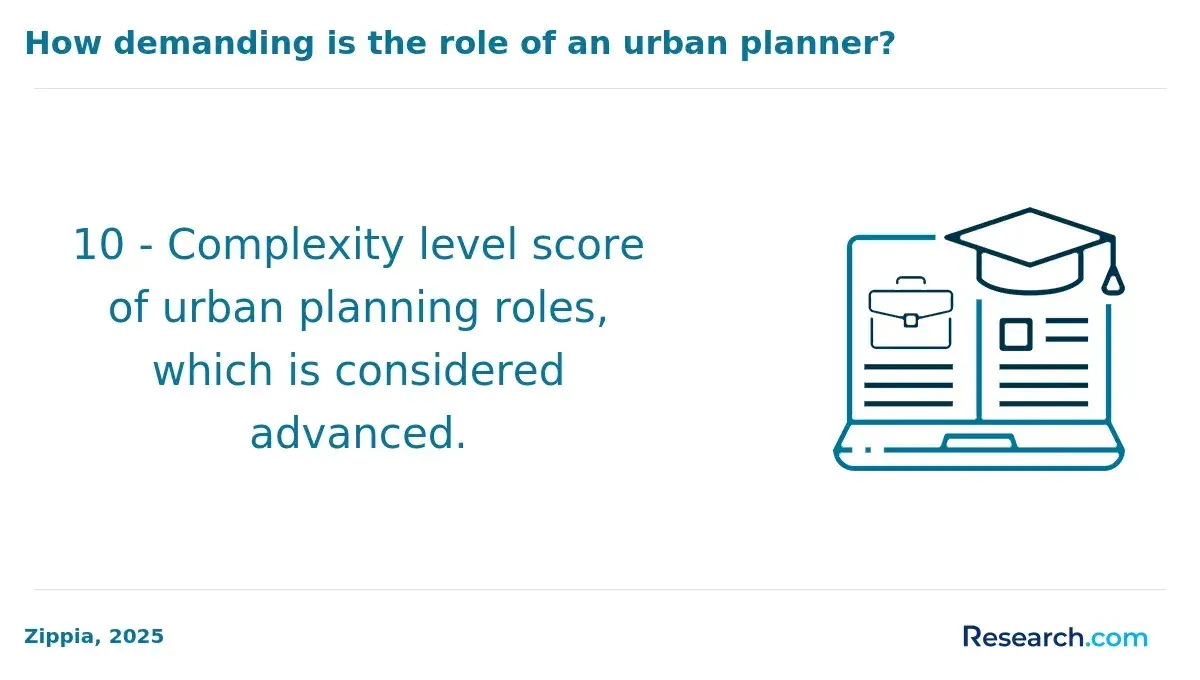
- Urban Planner: Designs and evaluates land use proposals, reviews zoning laws, and coordinates with government agencies to shape communities. This role is generally as demanding as the major itself, requiring strong analytical skills, regulatory knowledge, and frequent deadline management.
- GIS Analyst: Utilizes geographic information systems to analyze spatial data, create maps, and support planning decisions. Although technically demanding, the role often feels less stressful than the major's broad theoretical scope, focusing on specialized software and data interpretation rather than extensive policy work.
- Community Development Manager: Oversees programs to revitalize neighborhoods, administer grants, and engage stakeholders. This position is demanding in a different way, emphasizing project management and interpersonal communication over technical urban planning expertise.
- Project Manager: Leads teams executing large-scale development or infrastructure projects, handling budgets, timelines, and communications. This role can surpass the academic workload in responsibility, with real-world consequences for missed deadlines or mismanaged resources.
- Research Associate: Conducts data-driven analysis to support urban policy, land use, and market studies. This job tends to be less demanding than the degree's comprehensive requirements, focusing on specialized research tasks.
The average starting salary for urban planning graduates is about $48,000, rising significantly with experience, while median salaries for planners hover around $83,720. Those exploring urban planner jobs in DC or California or considering the broader urban planning career paths and salaries should also investigate nationally accredited online schools for flexible education options, available at nationally accredited online schools.
Do Urban Planning Graduates Earn Higher Salaries Because the Major Is Harder?
There is no direct link between the difficulty of an urban planning major and higher salaries for its graduates. Salary levels are influenced more by factors such as market demand, the development of specialized skills, and advanced qualifications rather than the academic challenge alone. Although the major involves analytical and problem-solving tasks, earnings tend to reflect the practical relevance and applicability of training to current job roles.
Essentially, the complexity of coursework does not guarantee better pay; instead, employers value expertise and experience aligned with industry needs.
Salary outcomes for urban planning graduates vary based on several key factors. Geographic location greatly affects earnings, with planners in areas like Washington, D.C., and California reporting median salaries exceeding $90,000, contrasting with the national average. Experience and job title are equally important: entry-level positions typically start between $54,000 and $62,000, while senior or specialized roles can surpass $100,000 annually.
Industry growth, especially in infrastructure and environmental planning, continues to boost demand and wages, supported by the U.S. Bureau of Labor Statistics projecting ongoing expansion in this field.
What Graduates Say About Urban Planning as Their Major
- Chelsea: "Pursuing urban planning was definitely challenging but incredibly rewarding. The combination of design, policy, and community engagement pushed me to develop a wide skill set. Although the average cost of attendance was steep, around $20,000 per year, the career opportunities and impact I can have on cities make it totally worth it. "
- Finn: "Urban planning turned out to be harder than I expected, especially balancing technical skills with social theory. Reflecting back, the investment was significant-not just financially but mentally-since tuition costs often exceeded $18,000 annually. However, this major gave me a meaningful perspective on sustainable development and shaped my commitment to public service. "
- Lance: "The workload in urban planning was tough at times, with complex projects and extensive research requirements, but it taught me to think critically about urban environments. Considering the average expenses that approach $22,000 each year, it wasn't an easy financial commitment. Still, the personal growth and professional preparedness I gained from this major have justified every dollar spent."
Other Things You Should Know About Urban Planning Degrees
Urban planning in 2027 is not heavily math-intensive but does require a basic understanding of statistics and geometry for spatial analysis. Students may benefit from competency in software tools that involve data visualization and mapping, which incorporate mathematical concepts.
In 2027, urban planning programs often incorporate fieldwork to help students gain real-world experience. Fieldwork may involve site visits, community assessments, and data collection. However, the extent can vary by program, with some schools emphasizing it more heavily than others as part of their curriculum.
Yes, writing is a significant part of urban planning education. Students frequently prepare reports, policy analyses, grant proposals, and research papers. Strong writing skills help communicate complex planning concepts effectively to diverse audiences, making writing an important skill to develop.
In 2027, knowledge of law and policy is crucial for urban planning students as it enables them to understand zoning regulations, land-use laws, and environmental policies. This understanding ensures effective planning that meets legal requirements and supports sustainable urban development.
References
- World's best Urban and Regional planning universities [Rankings] https://edurank.org/environmental-science/urban-planning/
- Admissions | Department of Urban and Regional Planning https://dcp.ufl.edu/urp/admissions/
- What can you do with an urban planning degree? https://study.uq.edu.au/stories/what-can-you-do-with-urban-planning-degree
- Urban Planning and Development with a Professional Placement Year (BSc) - Study - Cardiff University https://www.cardiff.ac.uk/study/undergraduate/courses/course/urban-planning-and-development-with-a-year-in-industry-bsc
- 5 Key Factors in Urban Planning https://www.eagleview.com/government/5-key-factors-in-urban-planning/
- All Master's in Urban Planning Programs - GISDegree.org https://www.gisdegree.org/programs/masters-in-urban-planning/
- Is Urban Planning a Hard Major? Decoding the Challenges - CollegeRanker https://www.collegeranker.com/is-urban-planning-a-hard-major/
- Why you should study an urban planning degree https://usic.sheffield.ac.uk/blog/why-study-urban-planning
- Urban planning education - Wikipedia https://en.wikipedia.org/wiki/Urban_planning_education
- What skills does an Urban Planner need? https://www.ube.ac.uk/whats-happening/articles/what-skills-does-an-urban-planner-need/
- Bureau of Labor Statistics. (2025, August 27). Urban and regional planners: Occupational outlook handbook. https://www.bls.gov/ooh/life-physical-and-social-science/urban-and-regional-planners.htm
- ONET Online. (2025, December 15). 19-3051.00 - Urban and regional planners. https://www.onetonline.org/link/summary/19-3051.00
- Zippia. (2025). Urban planner jobs and career data. https://www.zippia.com/urban-planner-jobs/


