
2027 Neurosonography Careers: Skills, Education, Salary & Job Outlook

Co-Founder and Chief Data Scientist
Choosing a neurosonography career means deciding whether a specialized medical imaging role is worth the training, clinical hours, certification exams, and responsibility that come with it. Neurosonographers use ultrasound technology to help evaluate the brain, nervous system, and related blood flow, so the work requires more than basic imaging skills. You need strong anatomy knowledge, technical accuracy, patient care judgment, and the ability to perform under pressure.
The payoff can be meaningful for the right person. The field connects hands-on patient care with diagnostic technology, and the career outlook is strong, with projections in this guide including 10% growth through 2034 and 13 percent growth from 2024 to 2034. Earnings are also competitive, with median salaries near $90,000 and salary ranges that can rise with experience, location, and specialization.
This guide explains what neurosonographers do, the skills and credentials employers expect, how to enter the field, what the work environment is like, and how to compare this path with related medical imaging careers. Use it to decide whether neurosonography fits your strengths, tolerance for clinical pressure, and long-term career goals.
Key Things You Should Know About Neurosonography Career
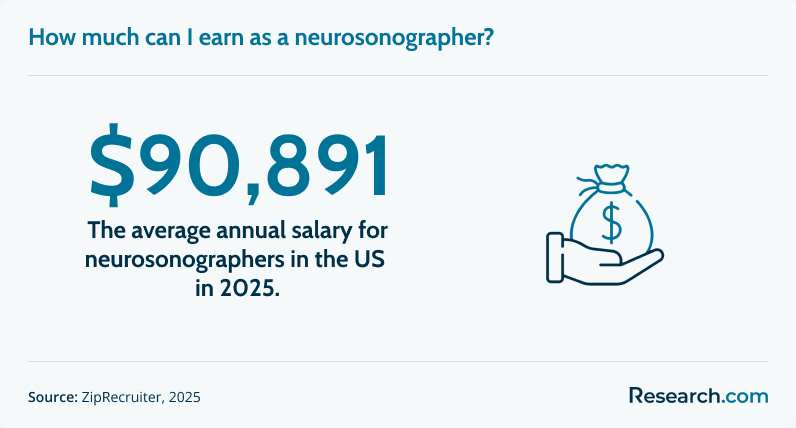
- The typical earning potential for a neurosonographer in the United States is around $89,340 annually, with salaries ranging from $68,500 to $113,000 depending on experience and location.
- This field is stable and growing quickly, with employment projected to increase 10% from 2022 to 2032, much faster than average for all occupations.
- Starting a career as a neurosonographer requires at least an associate's degree in diagnostic medical sonography or completion of an accredited sonography program, along with certification from organizations like the ARDMS.
- Success depends on strong technical skills with ultrasound equipment-especially Transcranial Doppler-along with attention to detail, clear communication, critical thinking, and the ability to perform well in fast-paced clinical environments.
- Career advancement can lead to roles such as lead sonographer, supervisor, or department manager, with opportunities for specialization, teaching, or research through additional certification and experience.
What do Neurosonographers do?
Neurosonographers are diagnostic medical sonography professionals who use ultrasound equipment to create images and measurements related to the brain, nervous system, and blood flow in neurological structures. Their scans help physicians evaluate conditions such as strokes, brain tumors, vascular abnormalities, neonatal brain concerns, and other neurological issues that require fast, non-invasive imaging support.
The role sits at the intersection of technology, anatomy, and patient care. A neurosonographer does not simply “take pictures.” They prepare patients, choose appropriate scanning techniques, adjust equipment settings, recognize whether images are diagnostically useful, and document findings for physician review. Accuracy matters because the images may influence urgent treatment decisions.
A Day in the Life of Neurosonographers
A typical day may include reviewing physician orders, preparing ultrasound equipment, explaining procedures to patients or families, positioning patients safely, capturing neurosonographic images, and working with physicians, nurses, and other imaging staff. In hospitals, the pace can change quickly when urgent cases arrive, especially in neurology, neonatal, emergency, or surgical settings.
The best neurosonographers combine calm patient communication with technical discipline. Patients may be anxious, critically ill, or unable to cooperate fully because of neurological symptoms. The neurosonographer must still obtain clear images while keeping the patient as comfortable and safe as possible.
What are the key responsibilities of Neurosonographers?
Neurosonographers are responsible for producing high-quality ultrasound images that physicians can use in neurological assessment and treatment planning. Their responsibilities begin before the scan and continue through documentation, quality review, and communication with the care team.
- Prepare, inspect, and maintain neurosonography equipment so scans can be completed safely and accurately.
- Review physician orders, patient history, and clinical context before beginning the exam.
- Schedule or coordinate patient appointments and manage imaging workflow to reduce delays.
- Explain procedures in clear, calm language and answer basic patient questions within the scope of the role.
- Position patients carefully, including patients with limited mobility, neurological impairment, pain, or anxiety.
- Operate ultrasound equipment, adjust settings in real time, and capture diagnostic-quality images.
- Recognize when images are incomplete, unclear, or require additional views before ending the exam.
- Document imaging results, technical notes, and relevant observations for physician interpretation.
- Communicate efficiently with physicians and clinical staff, especially when time-sensitive findings or urgent workflows are involved.
The Most Challenging vs. The Most Rewarding Tasks
The hardest parts of the job are often not purely technical. Neurosonographers may work with patients facing serious diagnoses, stroke symptoms, tumors, or neonatal neurological concerns. These cases can be emotionally demanding, and the work may require precision while the patient or family is frightened, confused, or physically uncomfortable.
The technical pressure can also be high. Poor positioning, patient movement, anatomy variations, or equipment limitations can make imaging difficult. A neurosonographer must know when to adjust the approach, when to ask for help, and when an image is not good enough for reliable clinical use.
The reward is direct clinical impact. A well-performed exam can help physicians move faster toward diagnosis, monitoring, or treatment. For students planning an efficient entry into healthcare, a relevant fast-track online associates degree may be one way to begin building the educational foundation needed for sonography training.
What are the key skills for Neurosonographers?
Neurosonographers need a mix of technical imaging ability, clinical judgment, and patient communication skills. Employers generally look for candidates who can produce reliable images, work safely with vulnerable patients, and function as part of a medical team.
Core technical skills
- Ultrasound equipment operation: Neurosonographers must adjust depth, gain, Doppler settings, transducer selection, and other controls to obtain usable images.
- Neuroanatomy and physiology: A strong understanding of the brain, nervous system, vascular structures, and normal versus abnormal presentations is essential.
- Image quality assessment: Neurosonographers must know whether an image is clear enough for physician interpretation and when additional views are needed.
- Medical terminology: Accurate documentation depends on using the right clinical language and understanding physician orders.
- Patient positioning and safety: Many patients have mobility limitations, neurological symptoms, or fragile medical conditions that require careful handling.
Core soft skills
- Active listening: Patients, physicians, and nurses may provide details that affect the exam approach.
- Critical thinking: Neurosonographers must adapt scanning techniques when anatomy, patient condition, or equipment issues complicate the exam.
- Social perceptiveness: Reading patient discomfort, fear, or confusion helps the sonographer communicate more effectively.
- Clear speaking: The role requires explaining procedures to patients and communicating technical details to healthcare teams.
- Composure: Urgent cases require steady performance, not rushed or careless scanning.
The One Overlooked Skill That Separates the Good from the Great
Adaptability is one of the most important advanced skills in neurosonography. Textbook scanning methods do not always work in real clinical settings. A critically ill neonate, an emergency stroke evaluation, or a patient with difficult anatomy may require the neurosonographer to adjust the scanning angle, equipment settings, patient position, or workflow without compromising image quality.
This skill develops through supervised clinical experience and repeated exposure to complex cases. It is also part of what can make experienced neurosonographers more valuable in specialized settings. For example, outpatient care centers are cited as a higher-paying industry sector, with a mean annual wage of $88,450. Professionals who combine strong core skills with flexible problem-solving are better positioned for competitive roles.
If you are still comparing early education options before committing to sonography, reviewing what is the easiest associates degree to get can help you understand how different associate-level pathways vary in workload and fit.
Neurosonography Careers: A Step-by-Step Guide to Getting Started
Becoming a neurosonographer usually requires a planned sequence of education, clinical training, credentialing, and entry-level experience. The exact path can vary by employer, state, and prior healthcare background, but most candidates follow the same general progression.
- Complete foundational education. Finish high school or the equivalent, with attention to science, math, anatomy, and health-related coursework when available.
- Enroll in a relevant postsecondary program. Common options include diagnostic medical sonography programs at the associate or bachelor’s level. Some students with prior healthcare training may pursue certificate programs.
- Complete supervised clinical training. Clinical rotations or internships are essential because neurosonography is a hands-on skill. This is where students learn patient positioning, scanning protocols, image quality control, and professional workflow.
- Earn professional credentials. Many employers expect certification from recognized credentialing organizations. Requirements may differ depending on the role and location.
- Apply for entry-level sonography roles. New professionals often begin in broader diagnostic medical sonography positions or clinical environments where they can build experience relevant to neurosonography.
- Build specialization over time. Advanced neurosonography skills may develop through employer training, specialty experience, additional certifications, mentoring, and exposure to complex cases.
The main mistake to avoid is treating neurosonography as a shortcut into healthcare. The field can offer strong earnings and meaningful work, but it requires serious clinical preparation. Before enrolling, confirm that the program includes hands-on clinical experience and aligns with the credentials employers in your target area prefer.
What education, training, or certifications are required?
The most common educational routes for neurosonography careers are an Associate of Science in Diagnostic Medical Sonography or a Bachelor of Science in Diagnostic Medical Sonography. These programs may include coursework in anatomy, physiology, physics, ultrasound instrumentation, patient care, vascular imaging, and specialty sonography. Some programs offer tracks or clinical experiences relevant to neurosonography.
Certificate programs lasting 12-24 months are also available, typically for students who already have prior healthcare education or clinical credentials. These can be useful for radiologic technologists, nurses, or other allied health professionals who want to move into sonography without completing another full degree.
Important credentials often include the Registered Diagnostic Medical Sonographer (RDMS) credential from the American Registry for Diagnostic Medical Sonography. Employers may also value certification through the American Registry of Radiologic Technologists (ARRT), depending on the role and facility. Basic Life Support certification is also commonly required because neurosonographers work directly with patients in clinical settings.
How to evaluate a program before enrolling
- Accreditation and recognition: Confirm whether the program meets employer expectations and supports eligibility for relevant certification exams.
- Clinical placement quality: Strong clinical rotations are critical. Ask where students train and how many supervised hours are included.
- Credential exam preparation: Review pass-rate information if the school provides it, and ask how the curriculum prepares students for certification.
- Specialty exposure: If your goal is neurosonography, ask whether the program includes neuro, vascular, pediatric, or related clinical experiences.
- Total cost and financial aid: Compare tuition, fees, equipment, commuting, exam costs, and lost work time—not just advertised tuition.
Are advanced degrees or niche certifications worth the investment?
Advanced degrees such as a Master of Science in Diagnostic Medical Sonography may be worthwhile for professionals pursuing leadership, education, research, program administration, or advanced clinical specialization. However, they are not always necessary for standard neurosonography roles, and they can require a major investment, sometimes ranging from $30,000 to $80,000 or more.
Niche certifications, such as Pediatric Sonography or Vascular Sonography, can strengthen your profile if they match the patients and procedures you want to work with. They may also help in competitive job markets or specialized hospital departments. Still, many employers place the greatest weight on core credentials, clinical competence, reliability, and relevant hands-on experience.
A practical strategy is to earn the qualifications required for entry first, then add advanced credentials once you know which specialty direction fits your goals. If graduate education becomes part of your plan, comparing affordable options such as the cheapest master degree online can help you weigh career value against debt and time commitment.
What is the earning potential for Neurosonographers?
Neurosonography can offer strong earning potential compared with many allied health careers, especially for professionals who build experience, pursue specialized skills, and work in higher-demand locations or settings. The median annual salary related to sonographers, including those in neurosonography, is around $89,340.
The neurosonographer salary range 2025 spans from entry-level salaries near $63,680 to senior-level positions exceeding $116,000 per year. This range is important because it shows that early-career and experienced professionals may have very different earnings. New graduates should not assume they will start at the median, while experienced specialists may have room to grow beyond it.
What affects pay the most?
- Experience level: Senior neurosonographers who handle complex cases, mentor others, or support quality assurance may earn more than entry-level staff.
- Specialization: Skills in neurovascular, pediatric, neonatal, intraoperative, or related advanced imaging areas can improve competitiveness.
- Work setting: Hospitals, outpatient care centers, physicians’ offices, and diagnostic laboratories may pay differently based on demand and staffing needs.
- Location: Metropolitan areas and regions with higher healthcare demand often offer higher wages, though cost of living should be considered.
- Schedule requirements: Roles involving nights, weekends, holidays, or on-call shifts may offer different compensation structures.
When comparing job offers, look beyond the base wage. Benefits, shift differentials, certification support, continuing education funding, retirement contributions, overtime rules, and commuting costs can materially change the value of a position.
What is the job outlook for Neurosonographers?
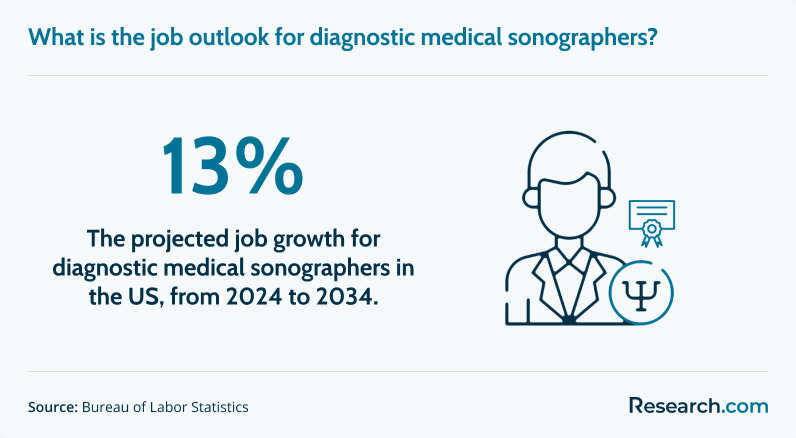
The job outlook for neurosonographers is favorable because the role falls within diagnostic medical sonography, a field tied to ongoing demand for non-invasive imaging. Employment of diagnostic medical sonographers, including neurosonographers, is projected to grow 13 percent from 2024 to 2034, which is much faster than the average for all occupations.
The Key Factors Shaping the Future Outlook
An aging population is one of the main demand drivers. As people age, neurological and vascular conditions become more common, increasing the need for diagnostic imaging that can help physicians evaluate symptoms, monitor disease, and guide treatment.
Technology is another factor. Improvements in ultrasound equipment, Doppler imaging, portability, and image quality can expand how ultrasound is used in neurological assessment. Because ultrasound is non-invasive and does not use ionizing radiation, it remains an attractive tool in many clinical situations.
Healthcare delivery trends also support demand. Preventive care, chronic disease monitoring, and faster diagnostic workflows can increase reliance on imaging professionals who can produce accurate results efficiently. However, job availability may still vary by region, employer type, and the number of local graduates entering the field.
For students who need lower-cost education options, researching the most affordable online schools that accept fafsa may help identify programs that fit broader budget and financial aid needs before moving into hands-on clinical training.
What is the typical work environment for Neurosonographers?
Neurosonographers usually work in healthcare facilities where imaging is performed directly with patients. Most work is indoors in hospitals, physicians’ offices, outpatient centers, or medical and diagnostic laboratories. State, local, and private hospitals account for 59% of jobs, physicians’ offices 20%, and laboratories 7%.
The work is highly collaborative. Neurosonographers interact with patients, physicians, nurses, radiologists, neurologists, surgeons, and other imaging professionals. In hospital settings, they may support urgent cases and coordinate with multiple departments. In outpatient settings, the workflow may be more scheduled, but accuracy and patient communication remain just as important.
A typical full-time schedule is usually around 40 hours per week. Hospital roles may require evenings, weekends, nights, holidays, or on-call coverage because imaging services may be needed at any time. Remote or hybrid work is generally not realistic for this career because the job requires direct patient contact and hands-on operation of specialized ultrasound equipment.
Physical and emotional demands
- Standing for long periods during exams.
- Positioning patients who may have pain, weakness, or limited mobility.
- Maintaining ergonomic scanning posture to reduce strain.
- Working with patients and families during stressful or uncertain medical situations.
- Staying focused when scans are technically difficult or clinically urgent.
What are the pros and cons of Neurosonographer careers?
Neurosonography can be a strong fit for people who want a technical healthcare career with direct patient impact. It is less suitable for those who want predictable desk-based work, minimal patient interaction, or a low-stress clinical environment. The best decision comes from weighing both the rewards and the trade-offs.
Pros
- Meaningful clinical impact: Neurosonographers help produce information that can influence diagnosis, monitoring, and treatment decisions.
- Strong earning potential: Median salaries near $90,000 and senior-level earnings exceeding $116,000 per year make the field financially attractive.
- Growing demand: Diagnostic medical sonography, including neurosonography, is projected to grow 13 percent from 2024 to 2034.
- Intellectually engaging work: The job requires anatomy knowledge, technical adjustment, pattern recognition, and real-time problem-solving.
- Patient-centered role: Neurosonographers often help patients feel calmer during stressful diagnostic procedures.
Cons
- Emotional stress: The role may involve patients with serious neurological symptoms, uncertain outcomes, or critical conditions.
- Technical pressure: Poor-quality images can delay diagnosis, so precision matters even when conditions are difficult.
- Physical strain: Long periods of standing, repetitive scanning motions, and patient positioning can cause fatigue or discomfort.
- Nontraditional schedules: Hospital roles may require nights, weekends, holidays, or on-call work.
- Training demands: Success requires formal education, clinical practice, certification preparation, and continuing learning.
If you like healthcare technology but are still comparing hands-on career options, reviewing other high paying jobs with trade school can help you see whether neurosonography is the best match for your schedule preferences, stress tolerance, and income goals.
What are the opportunities for advancement for Neurosonographers?
Neurosonographers can advance by becoming more clinically specialized, taking on leadership responsibilities, moving into education, or supporting imaging technology and quality improvement. Advancement usually depends on experience, credentials, reliability, communication skills, and the ability to handle complex exams.
Clear Advancement Paths
- Entry-Level Neurosonographer: Performs diagnostic work under appropriate supervision or within an early-career scope, builds speed and accuracy, and learns facility protocols.
- Experienced Neurosonographer: Handles a broader range of cases independently, improves image quality consistency, and becomes more efficient with challenging patients or anatomy.
- Senior/Lead Neurosonographer: Takes on complex cases, mentors junior staff, supports protocol compliance, assists with training, and may participate in quality assurance.
- Managerial/Administrative Roles: May include department supervision, clinical coordination, scheduling oversight, policy implementation, staff development, or imaging quality management.
- Education or Applications Roles: Experienced professionals may teach students, train staff, or work with ultrasound equipment companies as clinical applications specialists.
Exciting Specialization Options for Neurosonographers
- Neurovascular Sonography: Focuses on imaging blood vessels related to the brain and central nervous system, including carotid and transcranial Doppler studies.
- Pediatric Neurosonography: Involves neurological imaging for infants and young children, including neonatal cranial ultrasounds.
- Intraoperative Neurosonography: Supports neurosurgical procedures with live imaging, requiring advanced knowledge of surgical anatomy and sterile clinical workflow.
- Research Neurosonography: Involves clinical or academic research that may contribute to improved imaging methods, neurological assessment, or patient care practices.
The most strategic advancement plan is to first become excellent at core scanning and patient care, then choose a specialty based on the cases you enjoy, the credentials available, and the demand in your region.
What other careers should you consider?
If neurosonography interests you but you are not fully committed, compare it with related medical imaging and sonography careers. Similar roles may offer different patient populations, work schedules, certification paths, or advancement options.
- Vascular Sonographer: Images blood vessels to evaluate circulation and vascular health. This path may appeal to students interested in Doppler studies and blood flow assessment.
- Cardiac Sonographer (Echocardiographer): Focuses on ultrasound imaging of the heart. It shares the same need for anatomy knowledge, patient care, and precise image capture, but the clinical focus is cardiovascular rather than neurological.
- Radiologic Technologist (Radiographer): Uses imaging technology to support diagnosis across many body systems. This may be a better fit for students who want broader imaging exposure beyond ultrasound.
- Clinical Applications Specialist (Ultrasound Equipment): Trains healthcare teams on ultrasound systems and supports equipment use. This path can suit experienced sonographers who like teaching, travel, technology, and workflow improvement.
- Sonography Educator: Teaches and mentors future sonographers. This role usually requires strong clinical experience and may require additional education or credentials depending on the employer.
To choose well, compare each role by patient population, daily procedures, physical demands, schedule expectations, certification requirements, and long-term advancement. Neurosonography is a strong option if you want specialized neurological imaging, but it is not the only path to a stable and meaningful medical imaging career.
Here's What Professionals Say About Their Neurosonography Careers
- Anika: "Every shift brings something new for me, whether I'm using Doppler ultrasound to examine blood flow or assisting with fetal brain scans. I find it truly rewarding to provide patients and their families clarity during uncertain times. Being able to offer comfort and hope through detailed imaging feels like a meaningful way to contribute to their well-being. It's a job that challenges me technically but gives me emotional gratification every day."
- Desmond: "It took me years to feel confident interpreting complex neurosonographic images, especially when working with vulnerable patients who are understandably anxious. The technical skills were only part of the equation; learning to communicate with empathy and calm was just as crucial. Even now, I push myself to improve with every case, recognizing that this field demands ongoing dedication and patience. That gradual build-up of confidence has made all the difference in how I perform and connect with those in my care."
- Lila: "When a particularly difficult scan leads to a critical diagnosis, I feel a deep sense of fulfillment that stays with me long after the day ends. I remember one patient's sincere thank-you after weeks of uncertainty; moments like that remind me why I focus on this specialty. Helping doctors pinpoint serious conditions or simply making patients more comfortable during stressful procedures creates a unique reward that no other role has given me. The impact of my work is clear and profoundly meaningful."
Key Findings
- Neurosonographers use specialized ultrasound technology to support diagnosis and monitoring of brain, nervous system, and neurovascular conditions.
- The most common education paths include an Associate of Science in Diagnostic Medical Sonography, a Bachelor of Science in Diagnostic Medical Sonography, or a 12-24 month certificate program for those with prior healthcare education.
- Common credentials include the Registered Diagnostic Medical Sonographer (RDMS) credential from the American Registry for Diagnostic Medical Sonography, and employers may also value American Registry of Radiologic Technologists (ARRT) certification and Basic Life Support certification.
- The median annual salary related to sonographers, including neurosonographers, is around $89,340, with a neurosonographer salary range 2025 from entry-level salaries near $63,680 to senior-level positions exceeding $116,000 per year.
- Employment of diagnostic medical sonographers, including neurosonographers, is projected to grow 13 percent from 2024 to 2034.
- Most neurosonographers work in clinical settings, with state, local, and private hospitals accounting for 59% of jobs, physicians' offices 20%, and laboratories 7%.
- The career is best suited to people who can combine technical precision, patient empathy, physical stamina, and calm decision-making under pressure.
Other Things You Should Know About Neurosonography
To become a neurosonographer in 2027, one needs an associate or bachelor's degree in diagnostic medical sonography, a focus on neurosonography, and practical experience through clinical internships. Skills required include technical proficiency, attention to detail, and strong communication abilities.
In 2027, a neurosonographer can expect to earn between $65,000 and $85,000 annually, depending on experience and location. Salaries may vary based on factors such as regional demand and type of employment, with hospitals often offering competitive compensation packages.
References
- Neuro Ultrasound Tech https://healthcarecareercollege.edu/diagnostic-medical-sonography/be-an-ultrasound-technician/neuro-ultrasound-tech/
- Sonography Job Description https://www.sdms.org/resources/careers/job-description
- neuro sonographer education requirements https://app.sandiegogulls.com/libweb/p3tQPU/9OK167/neuro-sonographer__education__requirements.pdf
- Top 5 Paying Medical Imaging Jobs for 2025 https://www.ultrasoundschoolsinfo.com/top-5-paying-medical-imaging-jobs/
- Radiography or Sonography: What’s the best career for you? | Northeast College of Health Sciences https://www.northeastcollege.edu/learn/careers-in-radiography-vs-sonography
- Guide to Sonography: Types and Careers | MTMI https://www.mtmi.net/blog/guide-sonography-types-and-careers
- What Skills Do You Need for a Successful Career in Sonography? | Smith Chason College https://smithchason.edu/blog/what-skills-do-you-need-for-a-successful-career-in-sonography/
- Is Sonography A Good Job? | ARDMS Resources https://www.ardms.org/is-sonography-a-good-job/
- Neuro Sonographer Education Requirements https://wp.sba.gov.sa/virtual-library/p3tQPU/9S9167/NeuroSonographerEducationRequirements.pdf
- Ultrasound Techs Salary Gains With Certifications | StaffDNA https://staffdna.com/ultrasound-technician-salary-gains-through-advanced-certifications/


