
2027 Master's vs. MBA in Economics: Explaining the Difference

Co-Founder and Chief Data Scientist
The choice between a Master’s in Economics and an MBA with an Economics focus is really a choice between two career directions: becoming a specialist in economic analysis or becoming a business leader who uses economics to make better decisions. Both degrees can support careers in finance, consulting, analytics, policy, and management, but they train students differently and signal different strengths to employers.
A Master’s in Economics is built for students who want rigorous training in economic theory, statistics, econometrics, modeling, and research. It is often the stronger fit for roles that require technical analysis, policy evaluation, forecasting, or preparation for doctoral study. An MBA in Economics, by contrast, places economics inside a broader business curriculum. It is designed for professionals who want management, strategy, leadership, finance, and decision-making skills with an economic lens.
This guide compares the two options by program structure, curriculum, admissions expectations, difficulty, skills, career outcomes, cost, and fit. Use it to decide which degree better matches your strengths, work experience, and long-term career goals.
Key Points About Pursuing a Master's vs. MBA in Economics
- Master's in Economics programs typically span 1-2 years, costing around $20,000-$40,000, focusing on economic theory and quantitative skills for research and analyst careers.
- MBAs with an Economics concentration usually take 2 years, cost $50,000-$100,000, and emphasize leadership, management, and applied economics for broader business roles.
- Career outcomes differ: Master's graduates often enter policy, research, or data analysis, while MBA holders pursue executive or consulting roles with higher salary potential.
What are Master's in Economics programs?
A Master’s in Economics is a graduate degree focused on economic theory, quantitative analysis, econometrics, and applied research. Its main purpose is to train students to evaluate markets, policies, institutions, and business decisions using data and formal economic models.
These programs are often a strong fit for students who enjoy mathematics, statistics, research design, and analytical writing. Graduates may work in government agencies, consulting firms, financial institutions, research organizations, technology companies, or policy-focused roles. Some students also use the degree as preparation for a PhD in economics, public policy, finance, or a related field.
Full-time students usually complete these programs in 10 to 18 months, though some universities offer part-time formats for working professionals. The curriculum typically includes advanced microeconomics, macroeconomics, econometrics, statistics, and applied economic analysis. Depending on the school, students may specialize in areas such as policy analysis, finance, international economics, labor economics, development economics, or data science.
Many programs hold STEM designation because of their emphasis on quantitative and analytical training. This can matter for students who want a curriculum with strong technical depth and for international students evaluating post-graduation work options where STEM status may be relevant.
Admissions expectations vary by institution, but applicants are commonly expected to hold a bachelor’s degree and show evidence of quantitative readiness. Prior coursework in economics, calculus, statistics, or mathematics is often important. Some schools may require GRE scores, and a minimum GPA around 3.0 is commonly used as a baseline for consideration. Applicants without a strong quantitative background may need prerequisite courses before entering the program.
What are MBA in Economics programs?
An MBA in Economics is a business administration degree that combines core management training with coursework in economic analysis. Unlike a Master’s in Economics, which is built around theory, econometrics, and research, an MBA uses economics as one tool for solving business problems, evaluating markets, and making strategic decisions.
The typical full-time MBA takes two years, although part-time, executive, online, and accelerated formats are common. Students often choose an economics concentration, track, or set of electives rather than completing a standalone economics degree. Some schools also offer specialized tracks, such as Alternative Investments and Finance, for students who want to connect economic thinking with investment strategy, corporate finance, or financial markets.
The curriculum usually begins with broad business foundations: accounting, finance, marketing, operations, organizational behavior, leadership, and strategy. Economics coursework may cover managerial economics, global markets, pricing, competition, public policy, quantitative methods, or industry analysis. Case studies, team projects, simulations, and presentations are common because MBA programs are designed to develop decision-making and leadership skills in applied business settings.
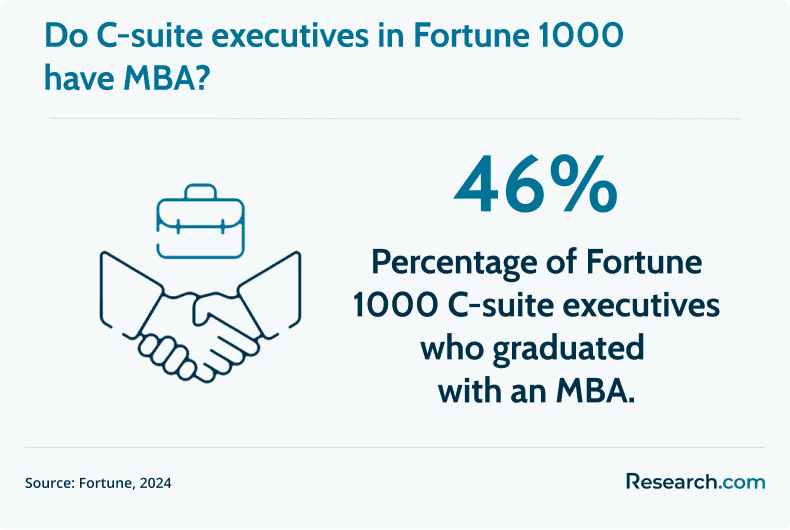
An MBA in Economics is often best suited for professionals who want to move into management, consulting, finance, corporate strategy, entrepreneurship, or executive roles. It can also help professionals who already work in technical or analytical roles translate their expertise into broader business leadership.
Many MBA programs now emphasize data-driven decision-making and the digital economy. Students may study how analytics, market data, consumer behavior, and macroeconomic conditions affect business strategy. The degree is less technical than most economics master’s programs, but it is broader in scope and usually stronger for networking, career switching, and management advancement.
What are the similarities between Master's in Economics programs and MBA in Economics programs?
Master’s in Economics programs and MBA in Economics programs both teach students to use economic reasoning to evaluate decisions, markets, risks, and trade-offs. Both are graduate-level credentials that can lead to roles in finance, consulting, analytics, policy, and business strategy. The main overlap is not that the programs are identical, but that both help students interpret data and connect economic conditions to organizational or public-sector decisions.
Key similarities include:
- Shared economic foundation: Both programs may include microeconomics, macroeconomics, statistics, financial analysis, and applied economic reasoning. Students learn how incentives, markets, competition, interest rates, policy, and global conditions affect decisions.
- Analytical skill development: Both degrees strengthen critical thinking, problem-solving, and data interpretation. Students are expected to evaluate evidence, compare alternatives, and defend recommendations.
- Use of quantitative methods: A Master’s in Economics is typically more mathematical, but MBA students in economics-focused tracks also use data, models, forecasts, and financial metrics to support business decisions.
- Applied learning: Both programs can include case studies, projects, research assignments, presentations, and real-world datasets. The balance differs, but each degree asks students to apply concepts rather than simply memorize theory.
- Career relevance across sectors: Graduates from both paths may work in consulting, banking, corporate strategy, government, policy organizations, market research, or data-driven business roles.
- Graduate admissions standards: Both require a bachelor’s degree. Some programs consider standardized test scores such as the GRE or GMAT, and both value evidence of quantitative ability. MBA programs may place more weight on professional experience.
The overlap can make the decision confusing, especially for students interested in business and economics at the same time. A useful way to frame the difference is this: both degrees teach economic thinking, but a Master’s in Economics uses it for technical analysis and research, while an MBA uses it for managerial and strategic decisions.
Students who need a more flexible undergraduate route before graduate study may also compare options such as the best accelerated online bachelor's degree for working adults.
What are the differences between Master's in Economics programs and MBA in Economics programs?
The biggest difference is purpose. A Master’s in Economics prepares students to become advanced analysts of economic data, policy, markets, and institutions. An MBA in Economics prepares students to manage organizations, lead teams, evaluate business opportunities, and apply economic reasoning to strategic decisions.
Prospective students should compare the programs across several practical dimensions:
- Academic focus: A Master’s in Economics centers on economic theory, mathematical modeling, statistics, econometrics, and research methods. An MBA in Economics combines economics electives with management, accounting, marketing, finance, operations, and strategy.
- Depth versus breadth: The economics master’s is deeper in technical economics. The MBA is broader and covers more areas of business leadership.
- Admissions profile: Economics master’s programs often prefer applicants with prior coursework in economics, calculus, statistics, or related quantitative fields. MBA programs accept a wider range of undergraduate majors and often place more value on work experience, leadership potential, and career progression.
- Classroom style: Economics programs often rely on problem sets, data analysis, research papers, and technical exams. MBA programs often rely on case discussions, group projects, presentations, simulations, and applied strategy work.
- Career direction: Master’s in Economics graduates commonly move into research, policy, forecasting, analytics, and economist-adjacent roles. MBA graduates more often pursue management, consulting, finance, corporate strategy, entrepreneurship, and executive-track roles.
- Student timing: Many economics master’s students enroll earlier in their careers or after completing a quantitatively oriented undergraduate degree. MBA students more often enroll after gaining professional experience and deciding they want leadership or career-switching opportunities.
- Program flexibility: MBA programs often offer more electives, concentrations, networking events, internships, and career-switching support. Economics master’s programs tend to be more structured and technically sequenced.
In simple terms, choose the Master’s in Economics if you want to be hired for analytical depth. Choose the MBA in Economics if you want to be hired for business judgment, leadership potential, and cross-functional decision-making.
What skills do you gain from Master's in Economics programs vs MBA in Economics programs?
Both degrees build analytical judgment, but the skill sets are not interchangeable. A Master’s in Economics develops technical economic and quantitative expertise. An MBA in Economics develops business leadership and strategic decision-making skills supported by economic analysis.
Skills gained in a Master’s in Economics program
- Econometric analysis: Students learn to test hypotheses, evaluate relationships in data, and interpret results using statistical and econometric methods.
- Economic modeling: Coursework trains students to use microeconomic and macroeconomic models to understand behavior, markets, growth, inflation, trade, labor, and policy effects.
- Quantitative problem-solving: Students strengthen skills in statistics, mathematics, forecasting, and applied data analysis.
- Policy and market evaluation: Graduates learn to assess how laws, regulations, incentives, and market conditions affect individuals, firms, governments, and industries.
- Research design and analytical writing: Many programs require students to write technical papers, evaluate evidence, and communicate findings clearly to expert and non-expert audiences.
These skills are especially useful for roles in economic consulting, research, policy analysis, forecasting, financial analysis, public-sector evaluation, and data-heavy business functions.
Skills gained in an MBA in Economics program
- Leadership and management: MBA students learn to lead teams, manage resources, negotiate priorities, and make decisions under uncertainty.
- Strategic thinking: Students use economics, finance, marketing, and operations concepts to evaluate competition, pricing, growth, risk, and organizational performance.
- Business analytics: Economics-focused MBA coursework helps students use market data, financial indicators, and performance metrics to support business decisions.
- Cross-functional business knowledge: MBA graduates understand how accounting, finance, marketing, operations, and strategy interact in real organizations.
- Communication and influence: Presentations, group projects, and case discussions help students practice explaining recommendations to executives, clients, investors, and teams.
These skills are especially relevant for consulting, financial management, corporate strategy, product leadership, operations management, entrepreneurship, and executive-track roles.
If flexibility is a major factor, students comparing graduate options may also review an easy online masters, while still checking whether the program’s rigor, accreditation, and employer reputation match their goals.
Which is more difficult, Master's in Economics programs or MBA in Economics programs?
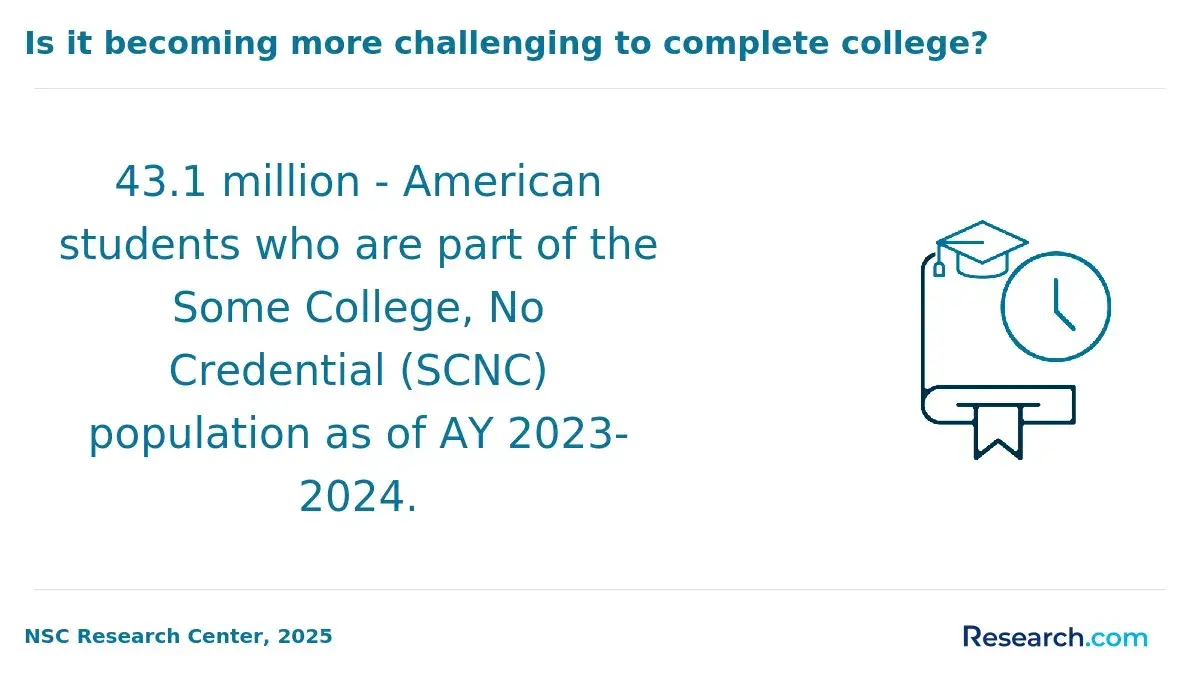
A Master’s in Economics is typically more difficult for students who are less comfortable with mathematics, statistics, abstract theory, and technical research. An MBA in Economics can be demanding in a different way because it requires teamwork, presentations, time management, leadership judgment, and the ability to apply concepts across many business functions.
The economics master’s is usually more academically rigorous in quantitative terms. Students often work with calculus, statistics, econometrics, optimization, formal models, and complex data analysis. Assessments may include problem sets, technical exams, research papers, and empirical projects. Applicants are often expected to have preparation in calculus, statistics, and econometrics or to show they can handle that level of work.
An MBA in Economics is generally broader rather than deeper. Students study management, marketing, accounting, operations, finance, strategy, and economics. The math is often less advanced, sometimes closer to algebra-level math, but the workload can still be intense because MBA courses frequently use group assignments, case discussions, presentations, networking commitments, internships, and career development activities.
Which program feels harder depends on your strengths:
- If you are strong in math and research: A Master’s in Economics may feel challenging but natural, especially if you enjoy technical analysis.
- If you are strong in communication and leadership: An MBA may feel more manageable, even with a heavy schedule and frequent team-based work.
- If you dislike ambiguity: Economics coursework may feel clearer because problems often have defined methods, while MBA cases may require judgment without one correct answer.
- If you dislike technical modeling: A Master’s in Economics may be the tougher path.
Empirical data is limited, but research-intensive master’s programs can have higher attrition than MBA tracks because of their technical demands and research expectations. Students comparing entry points into economics or business may also explore the fastest associates degree online pathways to understand earlier academic routes.
What are the career outcomes for Master's in Economics programs vs MBA in Economics programs?
Career outcomes differ because employers read these degrees differently. A Master’s in Economics signals technical analytical ability, quantitative training, and research competence. An MBA in Economics signals business judgment, leadership potential, and the ability to apply economic thinking to organizational decisions.
Career outcomes for Master’s in Economics graduates
Graduates of Master’s in Economics programs often move into roles where economic reasoning, data analysis, forecasting, or policy evaluation are central to the job. Common settings include government agencies, financial institutions, consulting firms, think tanks, research organizations, technology companies, and international organizations.
- Economic analyst: Interprets economic, financial, or market data to support decisions in government, finance, consulting, or corporate planning.
- Public policy analyst: Uses economic frameworks to evaluate programs, regulations, social outcomes, budgets, and policy trade-offs.
- Data scientist: Applies quantitative methods to large datasets, including economic, financial, consumer, or market data.
- Research associate or analyst: Supports empirical studies, forecasting work, industry research, or academic and policy research projects.
- Financial or market analyst: Evaluates trends, risks, pricing, demand, and economic conditions that affect investment or business decisions.
Advancement may lead to senior economist, research director, policy advisor, analytics manager, or specialized consulting roles. The median annual wage for economists was approximately $108,350 in 2020, indicating competitive compensation for specialized economics roles. Actual earnings depend on employer, location, experience, industry, and whether the role formally requires economist-level training.
Career outcomes for MBA in Economics graduates
MBA in Economics graduates usually pursue management, consulting, finance, strategy, and executive-track positions. The degree can be especially useful for professionals who already have industry experience and want to move into leadership, manage larger teams, or change functions.
- Financial manager: Oversees budgeting, forecasting, investment decisions, reporting, and financial strategy within an organization.
- Project manager: Coordinates people, budgets, timelines, and deliverables to complete business initiatives.
- Consultant: Helps organizations solve strategic, operational, financial, or market-entry problems using structured analysis.
- Corporate strategy manager: Evaluates growth opportunities, competitive positioning, pricing, market trends, and long-term planning.
- Executive roles, such as director, CEO, or CFO: Leads organizations or major business units and makes high-level financial and strategic decisions.
MBA graduates often move toward upper management, with salaries ranging from $115,000 to $125,000, and top executives earning upwards of $207,000 annually. These figures should be interpreted carefully because MBA outcomes vary widely by school reputation, prior work experience, industry, geography, and career level at graduation.
Students considering long-term academic or executive credentials may also compare options such as a 1 year doctorate, while confirming whether the credential is appropriate for their field and career goals.
How much does it cost to pursue Master's in Economics programs vs MBA in Economics programs?
Cost is one of the clearest differences between the two paths. A Master’s in Economics typically ranges from about $44,600 to $71,100, with an average near $62,800. MBA programs in Economics are usually pricier, averaging around $60,400 but can exceed $200,000 at elite institutions.
Master’s in Economics tuition varies by institution type and delivery format. Public universities generally charge lower fees, roughly $51,700, while private schools average near $62,550. Online programs can be more budget-friendly, often costing less than $20,000, with some as affordable as $5,500. MBA costs can be harder to control because tuition, fees, travel, networking expectations, and lost wages may be substantial, especially for full-time programs at highly ranked business schools.
Students should compare the total cost of attendance, not just tuition. Fees, textbooks, software, housing, transportation, health insurance, and living expenses may increase total spending by 30 to 40 percent beyond tuition. For full-time students, the opportunity cost of leaving the workforce can also be significant. Part-time and online formats may reduce lost income, but they can extend the time needed to finish the degree.
Financial aid is available for both paths, but the structure can differ. Master’s in Economics students may find institutional scholarships, research assistantships, teaching assistantships, grants, or employer support. MBA students may qualify for scholarships, fellowships, employer sponsorship, military benefits, or loans. Aid amounts and eligibility vary significantly by school and program.
When judging return on investment, compare cost against the role you actually want. A lower-cost Master’s in Economics may be a strong value if it leads to a technical analytics or policy role. A higher-cost MBA may be worth it if the program provides access to management roles, consulting pipelines, finance recruiting, alumni networks, or career-switching opportunities that would otherwise be difficult to reach.
How to Choose Between Master's in Economics Programs and MBA in Economics Programs
The best choice depends less on which degree sounds more impressive and more on what you want employers to hire you to do. If you want to build models, analyze policy, interpret economic data, or work in research-heavy roles, a Master’s in Economics is usually the more direct fit. If you want to lead teams, manage business units, switch into consulting or finance, or move toward executive responsibility, an MBA in Economics is usually the better match.
Choose a Master’s in Economics if:
- You want roles such as economist, economic analyst, policy analyst, research analyst, forecasting analyst, or data-focused consultant.
- You enjoy mathematics, statistics, econometrics, modeling, and evidence-based research.
- You may pursue a PhD or another research-oriented credential later.
- You want a specialized graduate degree with a strong technical identity.
- You are comfortable with a structured curriculum and rigorous quantitative coursework.
Choose an MBA in Economics if:
- You want management, consulting, finance, corporate strategy, entrepreneurship, or executive-track roles.
- You already have work experience and want to accelerate career advancement or change functions.
- You value networking, recruiting access, leadership development, and broad business training.
- You prefer case-based learning, teamwork, presentations, and applied decision-making.
- You want economics to support business strategy rather than become your main technical specialty.
Questions to ask before applying
- What job do I want immediately after graduation? Match the degree to target job titles, not only to broad interests.
- Do employers in my target field prefer one credential? Review job postings and alumni outcomes from specific programs.
- How strong is my quantitative background? Economics master’s programs may require more preparation in mathematics and statistics.
- How much work experience do I have? MBA programs often reward applicants who can contribute professional experience to classroom discussions.
- What is the total cost and expected payoff? Include tuition, fees, living expenses, lost income, financial aid, and realistic salary outcomes.
- Do I need flexibility? Full-time, part-time, online, and accelerated options can affect cost, networking, recruiting, and completion time.
For students who want both technical economics and business leadership, dual or joint degree options may be worth exploring. You can learn which universities offer dual degree programs and compare whether a combined path offers enough value to justify the additional time and cost.
What Graduates Say About Master's in Economics Programs and MBA in Economics Programs
-
: "Completing the Master's in Economics was intellectually challenging but incredibly rewarding. The advanced econometric techniques and real-world data analysis prepared me well for the demanding research-oriented roles I now undertake in financial consulting. The program genuinely expanded my analytical toolkit.
— Tony"
-
: "The MBA in Economics offered a perfect blend of theoretical knowledge and practical exposure, especially through its unique industry immersion projects. These hands-on experiences helped me pivot into a strategic planning role in the energy sector, which has been both fulfilling and lucrative.
— Denver"
-
: "Reflecting on my time in the master's program, the interdisciplinary approach was pivotal. It broadened my understanding beyond classical economics, equipping me with skills applicable in diverse workplace settings, including policy advisory and economic forecasting. This versatility noticeably boosted my career prospects.
— Kai"
Other Things You Should Know About Master's in Economics Programs & MBA in Economics Programs
An MBA typically provides broader business training that can facilitate career switching across industries such as finance, marketing, or consulting. A Master's in Economics offers more specialized skills focused on economic theory and quantitative analysis, which are ideal for roles within economics, policy, or research but less flexible for major career shifts outside these areas.
Master's in Economics graduates in 2027 often pursue analytical roles such as economic analysts, policy advisors, or research positions in government agencies, international organizations, and private sector consulting firms, requiring a strong foundation in economic theories and quantitative analysis.
In 2027, an MBA offers a better balance of theory and practical learning by integrating case studies, internships, and projects. A Master's in Economics is more theory-focused, emphasizing economic models and quantitative analysis, suitable for roles in academia or policy-making.
In 2027, a Master's in Economics primarily focuses on advanced economic theories, quantitative methods, and research, preparing students for analytical roles. An MBA program concentrates on practical business management skills, covering finance, marketing, and leadership, aiming to equip students for executive-level positions.
References
- Table of fees for graduate studies | SGH | Szkoła Główna Handlowa w Warszawie https://www.sgh.waw.pl/en/table-fees-graduate-studies
- MS in Economics vs Finance vs MBA: Which Is Right for You? https://graduate.northeastern.edu/knowledge-hub/economics-vs-finance-vs-mba/
- MBA – Master of Business Administration? What is it? https://mba.pg.edu.pl/mba-master-of-business-administration-what-is-it/
- MBA In Economics Programs - Noodle.com https://resources.noodle.com/articles/mba-in-economics-programs/
- Teaching economics to MBA Students https://economicsnetwork.ac.uk/showcase/swann_mba
- MBE vs. MBA https://www.whu.edu/en/news-insights/glossary/mbe-vs-mba/
- MBA | Management and Economics https://www.study-mba.eu/ekonomika-en.html
- What can you do with a masters in economics? | University of Surrey https://www.surrey.ac.uk/news/what-can-you-do-masters-economics
- MBA in Economics https://mbagate.in/economics
- Average Cost of a Master's Degree: 2025 Analysis https://educationdata.org/average-cost-of-a-masters-degree


