
2027 Mechanical Engineering vs. Electrical Engineering Degree: Explaining the Difference

Co-Founder and Chief Data Scientist
Choosing between mechanical engineering and electrical engineering is not just a choice between two college majors. It is a choice between two ways of solving technical problems: one centered on physical systems, motion, materials, and energy, and the other centered on electricity, electronics, signals, and power. Both degrees are mathematically demanding, widely respected, and connected to strong engineering careers, but they lead students toward different courses, labs, tools, industries, and day-to-day work.
This guide compares mechanical engineering degree programs and electrical engineering degree programs from a practical student perspective. It explains what each program covers, where the curricula overlap, how they differ, what skills graduates build, which major may feel harder, what career outcomes look like, how costs compare, and how to decide which path fits your strengths and goals.
Key Points About Pursuing a Mechanical Engineering vs. Electrical Engineering Degree
- Mechanical Engineering programs often focus on mechanics, thermodynamics, and manufacturing, leading to careers in automotive, aerospace, and robotics industries, with average tuition around $10,000-$25,000 per year.
- Electrical Engineering emphasizes circuits, electromagnetism, and signal processing, preparing graduates for electronics, communications, and energy sectors; tuition costs are similar to Mechanical Engineering degrees.
- Both degrees typically require four years, but Electrical Engineering may involve more advanced math, while Mechanical Engineering offers broader physical system applications and design experience.
What are mechanical engineering degree programs?
Mechanical engineering degree programs train students to design, analyze, build, and improve systems that involve motion, force, heat, fluids, materials, and energy. If a product or system has moving parts, structural loads, thermal behavior, airflow, engines, pumps, robotics, manufacturing processes, or mechanical components, mechanical engineers are often involved in its design and performance.
The curriculum usually begins with a strong base in calculus, physics, chemistry, computing, and introductory engineering. Students then move into core mechanical engineering subjects such as thermodynamics, fluid mechanics, dynamics, materials science, mechanical design, manufacturing, and engineering analysis. These courses teach students how to predict how machines and physical systems behave under real-world conditions.
Hands-on learning is a major part of the degree. Students often complete laboratory experiments, design projects, computer-aided design assignments, prototype builds, and a capstone design course. These experiences help connect equations and simulations to actual products, test results, manufacturing limits, safety concerns, and cost constraints.
Typically, a bachelor's degree in mechanical engineering in the US requires completing 120-132 credits and generally takes four years of full-time study to finish. Students should expect a structured sequence of prerequisites, meaning that falling behind in calculus, physics, or core engineering courses can delay graduation.
Admission usually requires strong preparation in high school mathematics and science, especially calculus and physics. Many institutions also consider SAT or ACT scores as part of a competitive application process. Students comparing programs should also look for accreditation status, lab facilities, internship access, senior design requirements, and elective options in areas such as robotics, aerospace, energy, automotive systems, or manufacturing.
What are electrical engineering degree programs?
Electrical engineering degree programs prepare students to design, test, and improve technologies that use electricity, electronics, electromagnetic fields, signals, and digital systems. The field covers everything from power grids and renewable energy systems to communication networks, microprocessors, control systems, sensors, and electronic devices.
Like mechanical engineering, electrical engineering starts with mathematics, physics, computing, and general engineering fundamentals. Students then progress into specialized subjects such as circuit design, digital electronics, signal processing, electromagnetics, microprocessor applications, and control engineering. These courses require students to work with both visible hardware and abstract models of current, voltage, frequency, fields, and signals.
Typically, completing the degree requires between 126 and 130 credit hours and takes about four years of full-time study. Because many courses build directly on earlier math, physics, circuits, and programming work, students need to plan their schedules carefully and pay attention to prerequisite chains.
Applicants usually need a solid background in high school mathematics and science, including coursework in calculus, physics, and chemistry. Some institutions also enforce grade minimums in these subjects to ensure students are prepared for advanced engineering classes.
Electrical engineering programs are especially well suited to students who enjoy abstract problem-solving, electronics labs, programming, systems thinking, and technologies that connect hardware with software. When comparing programs, students should review accreditation, lab access, faculty research areas, electives, internship connections, and opportunities in power, embedded systems, communications, automation, or renewable energy.
What are the similarities between mechanical engineering degree programs and electrical engineering degree programs?
Mechanical engineering and electrical engineering are different disciplines, but the academic experience has many similarities. Both are rigorous engineering majors built on mathematics, physics, design thinking, experimentation, and applied problem-solving. Students in either program learn to move from a technical problem to a tested, documented, and defensible solution.
- Strong math and science foundation: Both degrees require substantial coursework in calculus, physics, and analytical problem-solving. Students also use computational tools to model systems, analyze data, and test engineering assumptions.
- Structured engineering curriculum: Both programs follow a sequence of prerequisite-heavy courses. Early performance in math, science, and introductory engineering can affect progress through upper-level courses.
- Design and laboratory work: Students in both fields complete labs, design assignments, and team projects. Mechanical engineering labs may focus more on physical systems, forces, materials, and thermal behavior, while electrical engineering labs may focus more on circuits, signals, sensors, and control systems.
- Professional skill development: Communication, teamwork, documentation, ethical judgment, project planning, and technical presentations are important in both degrees. Employers expect engineers to explain complex decisions clearly to technical and nontechnical audiences.
- Admissions expectations: Both majors generally favor applicants with strong preparation in math and physics. Students should be ready for a demanding first year that often includes calculus, physics, chemistry, computing, and introductory engineering courses.
- Accreditation considerations: Students should verify whether a specific program is ABET-accredited when accreditation matters for employment, graduate study, or eventual engineering licensure.
- Graduate education options: Both fields offer pathways to M.Tech or MS programs and doctoral studies. Graduate education can support research, specialization, leadership roles, or advanced technical work.
Students who want to strengthen their technical profile beyond a degree may also compare short, career-focused credentials such as high-paying 6 month certificate programs, especially in areas that complement engineering skills.
What are the differences between mechanical engineering degree programs and electrical engineering degree programs?
The main difference is the type of system each degree teaches students to understand and improve. Mechanical engineering focuses on physical systems, machines, materials, energy transfer, and motion. Electrical engineering focuses on circuits, electronics, power, signals, electromagnetics, and control of electrical systems. That difference affects the coursework, tools, labs, internships, and industries students are most likely to encounter.
| Comparison area | Mechanical engineering degree programs | Electrical engineering degree programs |
| Primary focus | Machines, mechanical devices, thermal systems, fluids, materials, and moving components | Circuits, electronics, power systems, signals, electromagnetics, and embedded technologies |
| Common coursework | Mechanics, thermodynamics, materials science, dynamics, fluid mechanics, and mechanical design | Circuit theory, digital electronics, signal processing, electromagnetism, microprocessors, and control engineering |
| Typical lab experience | Testing mechanical parts, measuring forces, analyzing materials, building prototypes, and evaluating thermal or fluid systems | Designing circuits, testing electronic devices, programming microcontrollers, measuring signals, and using simulation software |
| Technical tools | CAD, structural analysis tools, thermal analysis, manufacturing tools, and mechanical simulation | MATLAB, circuit simulation, embedded systems tools, signal analysis, and power or control system software |
| Industries often associated with the major | Automotive, aerospace, manufacturing, energy, HVAC, robotics, and industrial design | Power utilities, telecommunications, automation, renewable energy, electronics, electric vehicles, and embedded systems |
Mechanical engineering may be a stronger fit for students who like visible physical systems, product design, manufacturing, mechanics, and hands-on building. Electrical engineering may be a stronger fit for students who enjoy circuits, electronics, power, programming, signal behavior, and abstract systems that cannot always be observed directly.
What skills do you gain from mechanical engineering degree programs vs electrical engineering degree programs?
Both degrees build strong analytical, technical, and design skills, but the skill sets point toward different types of engineering work. Mechanical engineering develops expertise in physical design and energy-related systems. Electrical engineering develops expertise in electrical behavior, electronic systems, and signal or power technologies.
Skill outcomes for mechanical engineering degree programs
- Computer-Aided Design (CAD): Students learn to create, revise, and communicate detailed designs for mechanical parts, assemblies, and products. This skill is central in automotive, aerospace, manufacturing, and product development roles.
- Thermodynamics: Students study heat, work, energy transfer, and system efficiency. This supports work in engines, energy systems, HVAC, power generation, and thermal management.
- Materials Science: Students learn how material properties affect strength, durability, safety, manufacturability, and cost. This is important in manufacturing, construction, aerospace, and consumer product design.
- Mechanics and dynamics: Students analyze forces, motion, stress, vibration, and structural behavior. These skills apply to machines, vehicles, robotics, structural components, and mechanical systems.
- Fluid dynamics: Students examine how liquids and gases move and interact with surfaces. This supports work in aeronautics, pumps, turbines, HVAC, and energy systems.
Skill outcomes for electrical engineering degree programs
- Circuit Theory: Students learn how electrical circuits behave, how to design them, and how to troubleshoot performance problems. This is foundational for electronics, power, instrumentation, and industrial systems.
- Power Systems: Students study electricity generation, transmission, distribution, and protection. These skills support careers in utilities, renewable energy, smart grids, and infrastructure.
- Embedded Systems: Students learn to design and program microprocessor-based systems that control devices. This applies to IoT, automotive electronics, medical devices, automation, and consumer technology.
- Signal processing: Students analyze and manipulate signals used in communications, imaging, healthcare, audio, security, and sensing applications.
- Control systems: Students learn how to model and regulate system behavior. This supports automation, robotics, industrial equipment, and advanced manufacturing.
There is also overlap. Both majors use mathematics, physics, computing, modeling, testing, documentation, and design judgment. Mechanical engineers may work with sensors, motors, and control systems, while electrical engineers may work on physical products that require mechanical integration. For that reason, students interested in robotics, electric vehicles, aerospace systems, or renewable energy should review electives carefully rather than assuming one major covers the entire field.
Students who need flexible study options can also explore online degrees for seniors and compare whether available engineering-related programs match their schedule, academic background, and career plans.

Which is more difficult, mechanical engineering degree programs or electrical engineering degree programs?
Both mechanical engineering and electrical engineering are difficult majors. The better question is which type of difficulty matches your strengths. Mechanical engineering tends to be challenging because students must master physical modeling, mechanics, design constraints, materials, manufacturing, fluids, and thermal systems. Electrical engineering can feel more difficult for students who struggle with abstract math, invisible system behavior, circuit theory, signals, electromagnetics, and advanced analysis.
Electrical engineering is widely considered more difficult due to its very high course content complexity and advanced mathematical demands. It involves abstract concepts such as electric currents, wireless signals, and magnetic fields that cannot be directly observed. Students often need to reason from equations, simulations, lab measurements, and models rather than from visible mechanical behavior.
This major heavily relies on trigonometry, calculus, and nonlinear partial differential equations, which require strong theoretical and abstract thinking. These challenges contribute to lower retention and graduation rates in electrical engineering compared to mechanical engineering.
Mechanical engineering, by comparison, often gives students more tangible systems to visualize. Many concepts can be connected to machines, structures, engines, materials, heat transfer, fluid flow, or moving parts. That can make some topics easier to picture, but not necessarily easy to master. Mechanical engineering still requires high math content, research intensity, disciplined problem-solving, and comfort with complex physical systems.
A practical way to judge fit is to look at the courses you are most likely to enjoy when they become difficult. If you prefer visible mechanisms, physical design, manufacturing, and energy systems, mechanical engineering may feel more manageable. If you enjoy electronics, coding, circuits, signals, and abstract systems, electrical engineering may be the better intellectual match even if it is demanding.
Students considering advanced study should also factor in cost and delivery format. For example, prospective doctoral candidates may want to compare affordable options such as low-cost online PhD programs before committing to a long graduate pathway in an engineering discipline.
What are the career outcomes for mechanical engineering degree programs vs electrical engineering degree programs?
Mechanical engineering and electrical engineering both lead to broad career options, but the industries and job functions differ. Mechanical engineering careers are often tied to products, machines, manufacturing systems, energy systems, transportation, aerospace, and physical infrastructure. Electrical engineering careers are often tied to power, electronics, automation, telecommunications, renewable energy, electric vehicles, and embedded technologies.
Career outcomes for mechanical engineering degree programs
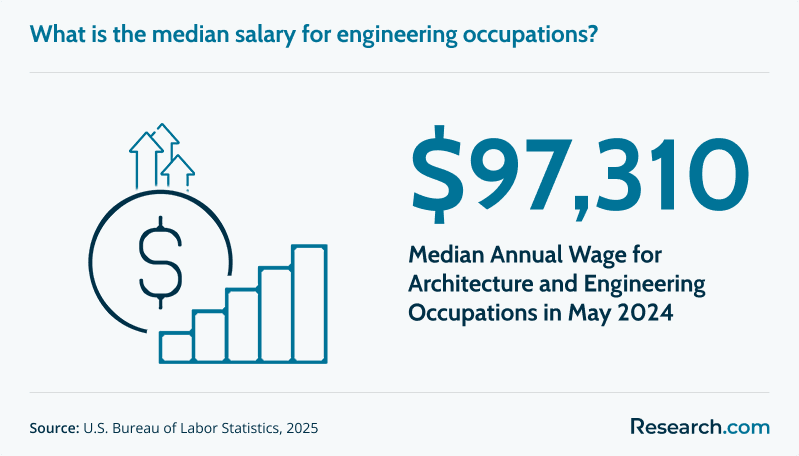
Mechanical engineering graduates find opportunities in industries such as automotive, aerospace, manufacturing, energy, and HVAC. The mechanical engineering degree salary in the United States reflects solid earning power, with a median annual wage of $102,320 as of 2024. Job demand for mechanical engineers is projected to grow 9% until 2034, driven by advances in automation and smart technologies.
- Mechanical Design Engineer: Develops, models, tests, and improves mechanical devices, parts, products, and systems.
- Manufacturing Engineer: Improves production processes, equipment, quality, efficiency, and manufacturability in industrial settings.
- Project Manager: Coordinates engineering teams, schedules, budgets, vendors, and technical deliverables to complete projects.
Career outcomes for electrical engineering degree programs
Electrical engineering graduates typically work in renewable energy, power utilities, telecommunications, and electric vehicle technology. The electrical engineering job outlook and career growth USA indicate a steady demand, with median wages around $111,910 for electrical engineers and $127,590for electronics engineers (excluding computer fields) as reported in 2024.
Employment in this sector is expected to grow 7% until 2034, fueled by ongoing innovation in energy systems and automation.
- Electrical Design Engineer: Designs electrical circuits, components, and systems for products, facilities, vehicles, or industrial applications.
- Power Systems Engineer: Works on power generation, distribution, protection, reliability, and infrastructure projects.
- Control Systems Engineer: Develops systems that monitor, regulate, and automate equipment, processes, or devices.
Career advancement in both fields can lead to senior engineering roles, technical specialization, engineering management, consulting, product leadership, or research and development. Advanced degrees may help graduates move into specialized areas such as robotics, renewable energy systems, advanced manufacturing, electronics, or applied research.
Students comparing accredited options can review accredited online colleges with no application fee to identify programs that may fit their academic goals, budget, and preferred application process.
How much does it cost to pursue mechanical engineering degree programs vs electrical engineering degree programs?
The cost of mechanical engineering and electrical engineering degree programs depends heavily on institution type, residency status, degree level, delivery format, fees, housing, transfer credits, and financial aid. Students should compare total cost of attendance rather than tuition alone, especially for on-campus programs where housing, transportation, books, lab fees, and insurance can significantly affect the final bill.
Mechanical engineering degrees tend to have higher tuition costs compared to electrical engineering programs, especially for out-of-state students at public universities or private institutions. For mechanical engineering, out-of-state undergraduate students typically pay about $33,141 annually, while in-state students spend roughly $11,134 per year. Graduate programs cost approximately $28,506 per year for those out of state and $12,365 for in-state learners.
Tuition at private universities, such as MIT, can exceed $53,000 annually regardless of program type, and some top public schools like UC Berkeley charge more than $41,000 for out-of-state students. Online mechanical engineering programs offer more budget-friendly options, with yearly costs between $4,000 and $16,000 depending on the institution and financial aid availability.
In comparison, electrical engineering bachelor's degrees average $17,709 per year, which is lower than mechanical engineering undergraduate programs. Associate degrees in electrical engineering are much less expensive, with annual tuition around $3,885. Master's degrees in the field typically cost $20,513 yearly.
| Program cost factor | Mechanical engineering degree programs | Electrical engineering degree programs |
| Typical undergraduate cost examples | About $33,141 annually for out-of-state students and roughly $11,134 per year for in-state students | Bachelor's degrees average $17,709 per year |
| Graduate cost examples | Approximately $28,506 per year for out-of-state learners and $12,365 for in-state learners | Master's degrees typically cost $20,513 yearly |
| Lower-cost pathway mentioned | Online mechanical engineering programs may cost between $4,000 and $16,000 yearly | Associate degrees in electrical engineering cost around $3,885 annually |
| High-cost examples | Private universities, such as MIT, can exceed $53,000 annually; UC Berkeley can charge more than $41,000 for out-of-state students | Costs vary by institution, degree level, and format |
Financial aid, scholarships, grants, employer tuition support, work-study, military benefits, and transfer credits can reduce net cost. Students should ask each school for a program-specific cost estimate, graduation timeline, engineering fees, equipment requirements, internship support, and whether the program is structured to help full-time students finish on schedule.
How to Choose Between Mechanical Engineering Degree Programs and Electrical Engineering Degree Programs
The best choice depends on what you want to build, what kinds of problems you enjoy, and which courses you are willing to work through when they become demanding. Both majors can lead to stable engineering careers, but they reward different interests and learning styles.
- Choose mechanical engineering if you prefer physical systems: This path fits students interested in machines, thermodynamics, materials, mechanics, energy, manufacturing, product design, aerospace, vehicles, HVAC, or robotics hardware.
- Choose electrical engineering if you prefer electrical and electronic systems: This path fits students interested in circuits, electronics, power, telecommunications, embedded devices, sensors, automation, electric vehicles, renewable energy, and AI-related hardware systems.
- Consider your learning style: Mechanical engineering often involves 3D modeling, physical prototypes, testing, and visible system behavior. Electrical engineering often requires comfort with abstract concepts, coding, circuit analysis, signals, and mathematical models of systems that cannot be directly seen.
- Compare the actual curriculum: Do not choose based only on the major name. Review required courses, electives, labs, capstone projects, and internship opportunities at each school.
- Think about career environment: Mechanical engineers may work in plants, labs, design offices, test facilities, field sites, or manufacturing settings. Electrical engineers may work in labs, utilities, electronics firms, automation environments, telecommunications, energy companies, or technology-driven product teams.
- Weigh salary and growth carefully: Median wages are similar-about $102,320 for mechanical and $118,780 for electrical engineers-with steady employment growth in both fields. Salary should matter, but fit, persistence, location, internships, and specialization often matter just as much.
Before deciding, try to gather evidence from real experiences. Shadow an engineer, visit department labs, attend an engineering open house, compare first- and second-year course plans, talk with current students, and look for introductory projects or internships. If you are still undecided, a general first-year engineering program may give you time to experience both areas before declaring a major.
Students who want to match career paths with personality and work style can also review this guide to careers for introverts to think through which engineering roles may fit their communication preferences, work environment, and long-term goals.
What Graduates Say About Their Degrees in Mechanical Engineering Degree Programs and Electrical Engineering Degree Programs
- Vicente: "Completing the mechanical engineering degree was challenging but incredibly rewarding. The hands-on lab projects and internships prepared me well for the industry's rigorous demands. Today, I work in automotive design, enjoying both the creativity and technical precision my job requires."
- Zane: "The electrical engineering program offered unique opportunities, like working with cutting-edge renewable energy systems. These experiences gave me a solid foundation for a career focused on sustainable technology. Reflecting on my journey, I appreciate how the curriculum balanced theory with practical applications, setting me up for success."
- Gael: "The career prospects after graduating in mechanical engineering exceeded my expectations. The program's focus on problem-solving and teamwork helped me land a role at a leading aerospace company with a competitive salary. It's been exciting to apply what I learned in such an innovative environment."
Other Things You Should Know About Mechanical Engineering Degree Programs & Electrical Engineering Degree Programs
In 2027, mechanical engineering students often work on projects like robotics or energy systems, while electrical engineering students may focus on circuit design or telecommunications. Senior projects typically involve team collaboration and span two semesters, with guidance from faculty advisors.
Both mechanical and electrical engineering students have access to a broad range of internships across industries such as automotive, aerospace, energy, and technology. However, the nature of the internship can differ, with mechanical internships often focusing on physical systems and product design, while electrical internships typically involve circuits, electronics, and software integration. Gaining internship experience in your chosen discipline is crucial for professional development.
In 2027, mechanical engineering focuses on materials, forces, fluids, and thermodynamics, while electrical engineering emphasizes circuits, signals, power systems, and electromagnetism. Both prepare students for diverse industries but require different core competencies and analytical approaches.
References
- Mechanical Engineers : Occupational Outlook Handbook: : U.S. Bureau of Labor Statistics https://www.bls.gov/ooh/architecture-and-engineering/mechanical-engineers.htm
- Electrical vs Mechanical Engineering: Key Differences & Similarities https://www.upes.ac.in/blog/advanced-engineering/electrical-engineering-vs-mechanical-engineering
- What is Mechanical Engineering? Meaning, Careers, Scope, Colleges, Etc https://hindustanuniv.ac.in/blogs/what-is-mechanical-engineering
- Career Pathways and Companies for Electrical Engineering Graduates | Engineering & Technology | University of Washington Tacoma https://www.tacoma.uw.edu/set/job-opportunities-EE-graduates
- What is Electrical Engineering? https://greatermanchester.ac.uk/blogs/what-is-electrical-engineering
- What is Mechanical Engineering? https://www.mtu.edu/mechanical-aerospace/mechanical-engineering/
- Electrical Engineer Job Description (Qualifications, Salary) https://www.goconstruct.org/construction-careers/what-jobs-are-right-for-me/electrical-engineer
- Mechanical Engineering - BSE | Degree Details | ASU Degree Search https://degrees.apps.asu.edu/bachelors/major/ASU00/ESMAEMBSE/mechanical-engineering
- Difference in Mechanical vs. Electrical Engineering | CWRU https://online-engineering.case.edu/blog/mechanical-vs-electrical-engineering
- What do Mechanical Engineers do? | College of Engineering https://engineering.oregonstate.edu/academics/discover-engineering/what-do-mechanical-engineers-do


