
2027 Most Popular Concentrations in Communication Degrees

Co-Founder and Chief Data Scientist
Choosing the right concentration in communication has become crucial as industries demand more specialized expertise. Recent data shows that roles requiring digital media and strategic communication skills are growing 15% faster than those in general communication fields. This shift reflects the need for targeted knowledge to navigate complex media environments and stakeholder relations effectively.
This article explores the most popular concentrations within communication degrees, providing insights to help students and professionals align their education with career ambitions. Understanding these options allows for better-informed decisions toward fields like public relations, journalism, or corporate communication that match personal and market needs.
Key Benefits of Popular Concentrations in Communication Degrees
- Specialized communication concentrations often lead to higher employability, with 72% of graduates securing roles in digital marketing and corporate communications within six months.
- These programs develop advanced skills in critical thinking, media literacy, and multimedia content creation, which are essential for adapting to rapidly evolving communication technologies.
- Industry demand favors candidates with niche expertise, such as public relations or health communication, where targeted knowledge improves strategic outreach and stakeholder engagement effectiveness.
What Are the Most Popular Communication Concentrations in 2027?
Interest in specialized communication study paths is rising as the workforce increasingly demands professionals with targeted skills that align with evolving industry priorities. As organizations seek to fill specific roles, students are choosing concentrations that offer clearer career trajectories and measurable impact in various communication sectors.
Top in-demand communication majors and specializations reflect this trend, revealing the best communication degree concentrations for 2025. The following five areas lead enrollment and employer interest:
- Business Communication: As companies strive for seamless internal alignment and effective external messaging, this concentration grows rapidly. Southern New Hampshire University's online communication program, awarding 608 degrees last year, highlights business communication as a key option.
- Strategic and Organizational Communications: This focus prepares students to develop comprehensive communication strategies that support organizational goals, identity, and leadership. Its emphasis on strategic storytelling and leadership aligns with how communication has become central to competitive advantage in many enterprises.
- Public Relations and Digital Media: Addressing the rise of social platforms and diverse audiences, this concentration equips graduates with skills in social media management, crisis communication, and influencer relations, blending traditional journalism capabilities with digital expertise.
- Professional Writing: Employers across various industries seek specialists who excel in technical documentation, proposal writing, and content strategy. This versatile concentration appeals to students pursuing adaptable career paths in communication.
- Journalism and Broadcasting: Despite other evolving concentrations, traditional fields like journalism and broadcasting maintain relevance by updating curricula to reflect current media consumption and technology trends.
For those exploring study options, a variety of pathways exist, including numerous accelerated online associate's programs that provide efficient entry into these in-demand communication fields.
What Skills Are Required for the Top Communication Concentrations?
Developing targeted skills is essential for success in specialized communication study paths, as evolving industry expectations demand versatile and practical competencies. Students must build abilities that not only support academic achievement but also align with current workforce priorities across diverse communication roles.
- Analytical Thinking: Business communication specialists rely on strong analytical capabilities to interpret data and provide clear insights, enhancing decision-making and organizational effectiveness. These skills are vital for translating complex information to varied audiences.
- Strategic Storytelling: Public relations professionals use strategic thinking and crisis management expertise to craft compelling narratives that shape public perception and maintain brand reputation, a critical competency in high-stakes environments.
- Digital Content Mastery: New media experts must excel in digital platforms and audience analytics to create engaging content across multiple channels, reflecting the digital engagement focus employers increasingly demand.
- Technical Writing and Communication Skills for Business: Professional writers need exceptional editing, research, and technical communication skills that produce clear and persuasive content, supporting varied industry needs and enhancing organizational communication.
- Oral, Written, and Interpersonal Communication Competencies: Across all concentrations, effective verbal, written, and interpersonal skills facilitate collaboration and stakeholder relationships, strengthening overall workplace performance and adaptability.
Students interested in these concentrations may find valuable options by exploring the easiest online bachelor's degree opportunities tailored to communication studies.
Do Different Communication Concentrations Have Different Admission Requirements?
Generally, admission standards are consistent across concentrations within the same institution, typically requiring a bachelor's degree, transcripts, and a minimum GPA, which are often 3.0 for master's programs and 2.0 for bachelor's programs. However, programs may weigh these criteria differently based on specialization complexity, prerequisite skills, or program standards.
This means that while the core requirements remain uniform, the evaluation process can vary to reflect the alignment between an applicant's goals and their chosen concentration's demands. Such tailored assessments ensure a better fit between student capabilities and program expectations, a factor often referred to in discussions about communication major admission standards by university.
For example, some concentrations may have higher GPA expectations or require prerequisite coursework specific to their focus area. Applicants to media production tracks might submit portfolios showcasing creative work, whereas those aiming for research-intensive concentrations could provide analytical writing samples.
Additionally, relevant professional experience may lead to reconsideration of borderline GPAs, highlighting the value programs place on practical background. These criteria help institutions manage competitiveness and capacity within popular concentrations.
Prospective students seeking affordable graduate options might explore resources like cheap masters online to balance cost with their targeted field. Overall, understanding GPA requirements for communication degree concentrations can guide applicants in preparing a strong, specialized application.
Do Specific Communication Concentrations Require Accredited Programs?
Accreditation plays a critical role for students in specialized communication fields, impacting their qualification for industry certifications and job readiness. Attending an accredited program often influences professional recognition and future employment possibilities.
- Credentialing Requirements: Certain certifications, like those from the Public Relations Society of America (PRSA), mandate completion of accredited programs that meet rigorous standards in curriculum, faculty expertise, and student assessment.
- Employer Preferences: Many hiring managers favor graduates from programs accredited by the Accrediting Council on Education in Journalism and Mass Communication (ACEJMC), especially for entry-level positions in journalism, advertising, and public relations.
- Curriculum Standards: Accredited programs typically ensure a structured curriculum, such as requiring around 40 semester credit hours in the major and additional coursework outside the core unit, promoting balanced academic preparation.
- Specialized vs. General Tracks: Custom or strategic communication concentrations might not always require accreditation but verifying the institution's accreditation status can enhance credibility and career prospects.
- Industry Compliance: Programs adhering to external accreditation often align closely with current industry practices and professional standards, preparing students for evolving communication roles.
Is the Quality of Online Communication Concentration Tracks the Same as On-Campus Programs?
With more students weighing online against on-campus options, the quality of communication concentration tracks has become a critical factor in choosing the best fit. This comparison centers on how well each format delivers educational value and career preparation.
- Curriculum and Accreditation: Both online and on-campus programs follow the same rigorous accreditation standards, ensuring comparable academic requirements.
- Faculty Expertise: Instructors typically possess equivalent qualifications and industry experience, regardless of teaching format.
- Learning Outcomes: Research shows that online students often perform as well as or better than their on-campus counterparts on key assessments and skill development.
- Technology Integration: Online courses leverage multimedia tools and interactive platforms to facilitate engagement with subjects like public relations and digital media strategy.
- Experiential Learning: On-campus students benefit from direct access to media labs and networking events, while online learners utilize virtual simulations and webinars to gain practical exposure.
- Student Support: Physical resources support on-campus learners, whereas online students often experience enhanced access to instructors through flexible communication methods.
When I spoke with a recent graduate from a popular communication concentration who completed a hybrid program, her experience shed light on the issue. She encountered distinct challenges balancing synchronous in-person labs with asynchronous online lectures but appreciated the flexibility to dive deep into digital case studies on her own schedule.
"The online discussions were surprisingly dynamic, sometimes even better than in classroom debates," she reflected. Yet, she acknowledged missing some spontaneous interactions and hands-on practice that campus facilities offer.
Overall, she felt the hybrid approach gave her a well-rounded skill set, stating, "Both environments complemented each other. The quality wasn't about where I learned, but how engaged I was." This balanced perspective highlights that with thoughtful design, online and on-campus communication concentrations can offer equally enriching educational experiences.
Which Communication Concentration Is the Hardest to Complete?
Some communication concentrations are more demanding due to factors like rigorous coursework, extensive skill development, varied workload, and program complexity. These challenges often arise from deeply technical content, interdisciplinary requirements, and high expectations for practical application.
- Technical Expertise: Concentrations such as digital communications require mastery of web design, SEO, video editing, and evolving digital tools, blending theory with hands-on practice.
- Interdisciplinary Integration: Science and technology communication demands understanding complex scientific concepts alongside communication principles, requiring cross-domain fluency and translation skills.
- Strategic Complexity: Programs focused on public relations or strategic communication involve creating multifaceted campaigns and managing communication within sophisticated organizational structures, necessitating advanced critical thinking.
- Technical Production Skills: Electronic and digital media production concentrations require proficiency in radio, film, television, and online platforms, often needing significant practical training and access to specialized equipment.
What Careers Can You Get with Each Communication Specialization?
Different communication concentrations equip graduates with targeted skills that align with varied career opportunities. Recognizing how each area corresponds to certain roles helps students select a focus that matches their goals and talents.
- Business Communication: Graduates often find roles in corporate and internal communication departments of large and mid-sized firms, taking on positions like business writer or communications manager. These careers involve shaping messaging strategies and engaging with stakeholders across organizational levels.
- Public Relations: This track prepares students for roles like PR directors and media relations managers, working in sectors including healthcare, tech, and nonprofits. Professionals craft compelling narratives and maintain a company's public image, with leadership roles among the highest paid in communications.
- New Media: Focused on digital content, graduates pursue careers in social media management, digital marketing, and content creation within tech and media industries. They develop online campaigns and manage brand identity across multiple platforms.
- Strategic and Organizational Communications: Those specializing here take on managerial roles that align communication plans with organizational missions, typically working as strategic communications managers across various sectors.
When asked about his experience navigating career options with a communication specialization, a professional who chose public relations shared how challenging it was to identify a path that combined creativity with leadership. "It wasn't just about crafting press releases. It was learning to build trust and respond to crises under pressure," he reflected.
Over time, gaining exposure through internships and networking helped clarify his direction, allowing him to confidently pursue roles that matched his passion for managing an organization's reputation. His journey underscores how exploration and adaptability are key in turning a communication concentration into a fulfilling career.
What Market Trends Are Shaping the Top Communication Concentrations in 2027?
Recognizing current industry shifts helps students pick a communication concentration that aligns with evolving job market needs and employer expectations. Specialized expertise is increasingly preferred, making informed choices critical for career success.
- Digital Transformation and Social Media Dominance: With social platforms shaping brand engagement, digital communications and game studies concentrations are growing. Programs now focus on skills like web design, SEO, and multi-platform content creation to meet employer demands for versatile digital communicators.
- Strategic Organizational Focus: Businesses invest in communication strategies that support stakeholder relations and reinforce identity. Concentrations in strategic and organizational communications appeal to students aiming for roles that integrate communication with business management and competitive positioning.
- Data-Driven Communication Methods: Analytics are becoming integral, prompting curricula to include statistical and research techniques. Graduates versed in interpreting audience data and measuring impact gain a crucial edge across various communication fields.
What Are the Average Salaries for Popular Communication Concentrations?
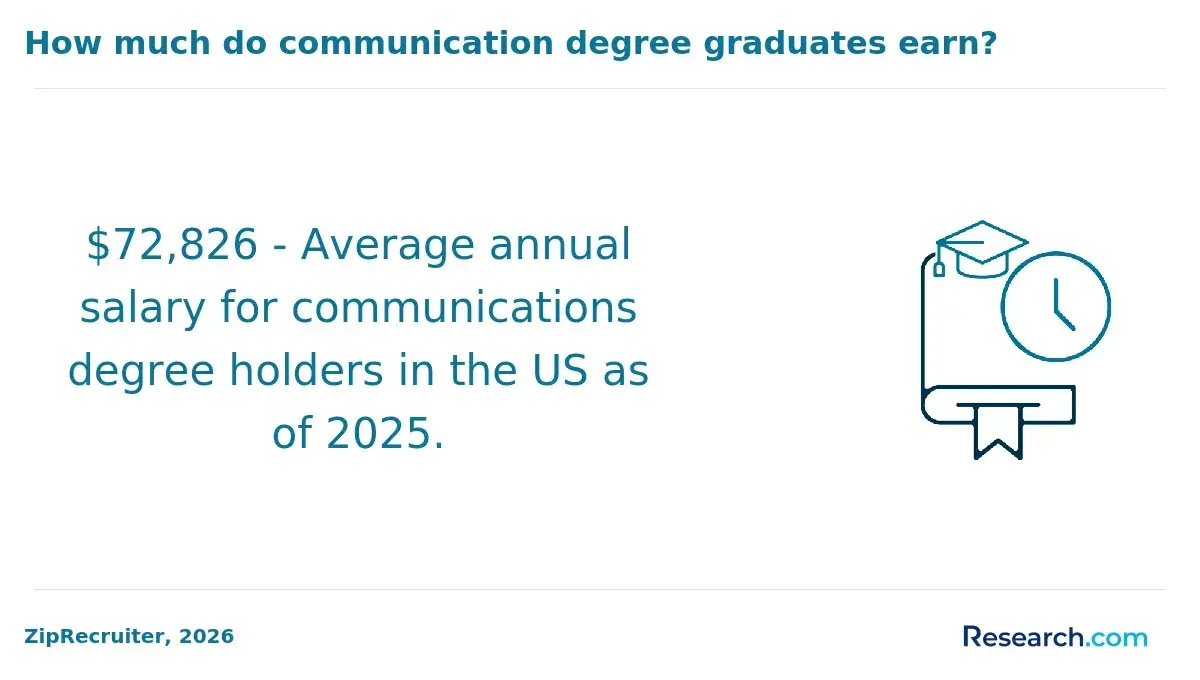
Salary prospects for communication degree holders vary widely depending on their chosen concentration, making it essential for students to consider these differences when shaping their career paths. Exploring which specializations offer stronger compensation can help align educational decisions with both financial and professional goals.
- Public Relations Manager: Representing one of the highest-earning communication roles, public relations managers earn median salaries around $132,870. Industry demand remains robust across corporate, nonprofit, and government sectors,.
- Communications Director: Earning between $94,490 and $102,257, communications directors carry leadership responsibilities that reflect their senior-level status. This position typically follows years of experience and is a critical step up for specialists seeking advancement.
- Communications Manager: Salaries for communications managers range from $75,144 to $108,855, varying according to company size and sector. This role provides broad opportunities, with potential for specialization across industries such as technology and healthcare.
- Communications Specialist: Averaging $76,214 nationally, this role offers an accessible entry point for those with bachelor's degrees. Career progression and salary growth depend heavily on gaining relevant experience and producing measurable results.
- Technical Writer/Communicator: Those combining communication expertise with technical knowledge earn a median wage of $91,670. This concentration appeals to professionals interested in simplifying complex information for diverse audiences.
For students considering these concentrations, researching best affordable accredited online colleges can provide accessible pathways to enter the field. Evaluating the highest paying communications jobs in 2025 can guide candidates toward roles offering the most financial reward while matching their skills and aspirations.
How Do You Choose the Best Concentration in a Communication Program?
Selecting the right concentration in a communication program is critical for aligning your education with your career goals and personal strengths. Making an informed decision helps ensure you develop relevant skills and access industries that suit your professional aspirations.
- Career Aspirations and Industry Alignment: Identify the industries and roles that genuinely interest you. For example, concentrations in digital or strategic communication are suitable for roles involving social media management and brand strategy, while media communications better prepare you for journalism, filmmaking, or broadcasting.
- Skill Development and Personal Strengths: Reflect on the communication skills you want to enhance. Technical communication focuses on simplifying complex information, whereas strategic communication emphasizes leadership and ethical awareness. Assess whether your strengths lie in written or verbal communication, creative thinking, or analytical problem-solving, as these vary by concentration.
- Program Requirements and Flexibility: Review the coursework and whether it aligns with your interests. Some programs allow combining a primary concentration with minors in complementary fields such as business or marketing, broadening your skills and career flexibility. Considering these factors supports effective communication degree concentration selection by career goals.
Choosing one of the best communication major concentrations for professional development involves evaluating how each concentration supports your long-term objectives and industry demands.
What Graduates Say About Their Popular Concentrations in Communication Degrees
- Folimar: "Pursuing a concentration in public relations within my communication degree was an eye-opening journey. The practical projects and internships made learning deeply engaging and applicable. Although the average cost of attendance was around $25,000 per year, the skills I gained opened doors to a rewarding career that far outweighed the investment. "
- Martin: "Reflecting on my time specializing in digital media during my communication degree, I realize how the curriculum's blend of theory and hands-on work prepared me for a rapidly evolving industry. The financial commitment, with costs averaging $20,000 annually, was significant, but the networking opportunities and confidence I developed have been invaluable."
- Annabel: "Focusing on organizational communication in my degree program provided me with a solid foundation in leadership and interpersonal skills. While managing the tuition fees near $22,000 a year was challenging, the professional growth and promotion I earned within my company validated every cent spent. "
Other Things You Should Know About Communication Degrees
The most popular concentrations in communication degrees for 2027 include digital media, social media strategy, public relations, corporate communication, and health communication. Programs increasingly focus on cross-platform storytelling and data-driven communication strategies in response to the evolving digital landscape.
In 2027, the popularity of communication degree concentrations is influenced by technological advancements, industry demand for digital media skills, and the integration of AI in communication strategies. These trends drive students toward concentrations such as digital media, public relations, and strategic communication.
Yes, interdisciplinary studies are common within communication degree concentrations. Students often combine communication with fields like marketing, psychology, journalism, or political science to broaden their expertise. This approach equips graduates with versatile skills that are applicable across various industries.
References
- Online Bachelor of Arts in Communication https://online.maryville.edu/online-bachelors-degrees/communications/
- Online Bachelor of Arts in Communication Studies https://online.lsu.edu/online-degree-programs/undergraduate/communication-studies/
- Advance Your Strategic Communication Career https://info.online.udel.edu/strategic-communication
- MS in Communication Degree Concentrations https://cla.purdue.edu/communication/online-program/ms-in-communication/ms-in-communication-degree-concentrations/
- Online Vs In-Person Classes: Is One Better Than The Other? https://unity.edu/articles/online-vs-in-person-classes/
- WVU College of Creative Arts and Media | Accreditation https://creativeartsandmedia.wvu.edu/reed-school-of-media-and-communications/about/accreditation


