
2027 Nurse Educator Degree vs. Certificate: Which Should You Choose?

Co-Founder and Chief Data Scientist
Today's students and professionals face important choices when deciding between earning a nurse educator degree or a certificate. Both credentials can advance a career in nursing education, but they differ in duration, depth of study, and career opportunities. For example, degree programs often prepare graduates for leadership roles, while certificates focus on specialized teaching skills.
According to the National League for Nursing, nurse educators with advanced degrees often report higher salaries and more job stability. However, certificates provide a faster, more flexible route to skill enhancement. This article compares the key differences to help you select the best fit for your professional goals and lifestyle needs.
Key Points About Nurse Educator Degree vs. Certificate Programs
- Degree programs offer comprehensive training, boosting advanced pedagogical skills and leadership opportunities, often leading to higher salary potential compared to certificate holders.
- Certificate programs provide focused, shorter training ideal for current nurses seeking specialized educator credentials without extensive time commitment.
- Degree paths typically require more clinical and research components, enhancing professional growth, while certificates emphasize practical teaching methods for immediate classroom application.
What Are the Differences Between Nurse Educator Degree and Certificate Programs?
Both nurse educator degree programs and certificate options offer valuable career opportunities, but they vary across several important factors. Understanding these distinctions can help students decide which path aligns better with their professional goals and time constraints.
Below is a comparison of key differences between nurse educator degrees and certificate programs:
- Career Advancement: Degree programs often prepare students for broader roles with leadership or administrative responsibilities, benefiting those aiming for significant career growth. Certificates typically focus on foundational skills, making them suitable for nurses seeking quick entry into teaching roles.
- Depth of Learning: Degrees provide comprehensive education covering theory, research, and pedagogy, ideal for learners who want an in-depth understanding of nurse education. Certificates concentrate on practical teaching skills and tools, appealing to professionals looking for focused training.
- Time Commitment: Degree paths usually require a longer duration due to extensive coursework, fitting those who can invest more time in education. Certificates are shorter and more flexible, accommodating working nurses needing faster completion.
- Educational Background Requirements: Degree programs generally expect prior academic credentials like a bachelor's or master's degree, whereas certificate programs may have more accessible entry points for registered nurses without advanced degrees.
How Long Does It Take to Complete a Nurse Educator Degree vs. a Certificate Program?
Completion time is a critical factor for students deciding between a nurse educator degree vs. certificate. Understanding how long each path takes helps prospective students align their education goals with personal and professional commitments.
- Typical Duration: Nurse educator degree programs typically require 30 to 39 credit hours, generally completed in 18 to 30 months full-time. For example, Western Carolina University offers part-time completion in as little as 18 months, while Saint Xavier University's program takes about 2.5 years. In contrast, nurse educator certificate programs are shorter, requiring 12 to 18 credit hours and can be finished in around three semesters, or 9 to 12 months part-time.
- Flexibility: Degree programs often provide full-time and part-time options, with part-time study extending timelines to three years or more. Accelerated tracks, like West Coast University's 8- to 24-month options, offer faster completion based on course load and pacing. Certificate programs are designed for nurses with a master's degree seeking quicker credentials and usually follow part-time schedules for convenience.
- Factors Affecting Timeline: Several elements impact nurse educator degree program duration, including enrollment status, transfer credits for prior coursework, program format such as online or accelerated options, and professional responsibilities that require balancing study with work obligations. Faster paths like accelerated college degree programs are gaining popularity in this space.
Overall, nurse educator degree program duration reflects a more comprehensive, in-depth preparation, while nurse educator certificate completion time offers a rapid credential add-on for advanced degree holders.
Can You Complete a Nurse Educator Degree or Certificate Entirely Online?
Online education for nurse educator degrees and certificates has grown significantly, making it easier for many students to access coursework remotely. Most U.S. universities now offer online nurse educator degree programs and nurse educator certificate programs online, with schools like Sacred Heart University, University of Alabama, and Chamberlain University providing fully online coursework.
However, some programs, such as Texas A&M, require brief on-campus visits or in-person clinical experiences despite primarily online delivery. Certificate programs tend to be shorter and more focused, often featuring fewer in-person requirements compared to full degrees.
Students should also consider hands-on training, internships, or clinical practica integrated into many programs, often requiring supervised teaching hours at approved sites near their homes. Licensure and certification, including the Certified Nurse Educator (CNE) credential, may mandate practice hours as well.
To maximize flexibility, prospective students should verify that a program is 100% online with no on-site components. Selecting the right format depends on individual professional goals and the necessity for practical experience.
For those exploring flexible options, it is useful to compare different formats and also explore certification programs that pay well.
What Are the Admission Requirements for a Nurse Educator Degree vs. a Certificate Program?
Admission requirements are a crucial factor when choosing between a nurse educator degree and a certificate program, as they determine your eligibility and help set the foundation for your educational journey. Understanding the distinctions in these criteria can guide you in selecting the right pathway based on your background and career goals.
Below is a side-by-side comparison of typical admission requirements for nurse educator degree and certificate programs in the United States.
Admission Requirements for Nurse Educator Degree Programs
- Educational Background: Most MSN-level nurse educator degree programs require a bachelor's degree in nursing (BSN) from an accredited institution. Some RN-to-MSN tracks accept an associate degree in nursing if additional prerequisites are completed.
- GPA Requirement: A minimum cumulative undergraduate GPA usually ranges between 2.5 and 3.0 on a 4.0 scale. Programs may focus on recent coursework or allow conditional admission for slightly lower GPAs with extra documentation.
- Registered Nurse (RN) Licensure: Applicants must hold a current, unencumbered RN license in the state where coursework or clinical placements occur.
- Professional References: Two or three professional or academic references are generally required, often including at least one academic reference.
- Transcripts: Official transcripts from all previously attended colleges or universities are necessary for review.
- Additional Materials: Some programs ask for a résumé, statement of purpose, and an interview with the faculty to assess fit and motivation.
- Prerequisite Coursework: Completion of a statistics course with a grade of B- or higher may be required prior to enrollment.
Admission Requirements for Nurse Educator Certificate Programs
- Educational Background: Nurse educator certificate programs typically require a master's degree in nursing (MSN), reflecting their advanced, post-graduate nature. Some accept applicants with a BSN and significant clinical experience, though this is less common.
- Registered Nurse (RN) Licensure: An active, unencumbered RN license is mandatory for all certificate applicants.
- Transcripts: Submission of official transcripts from prior nursing and graduate education is required.
- Professional References: One to two professional recommendations, often from supervisors or academic mentors, may be necessary.
- Work Experience: Some certificate programs prefer or require prior teaching or clinical experience in nursing education to ensure readiness.
Degree programs usually have broader and more rigorous nurse educator degree program admission requirements, reflecting their comprehensive scope. In contrast, certificate programs narrow their focus to post-master's preparation.
Choosing between these depends on your current credentials and career objectives, especially if you are aiming for the best majors to make money in healthcare education. For a deeper look at related educational opportunities, consider exploring best majors to make money.
How Many Credits Do You Need to Complete a Nurse Educator Degree vs. a Certificate?
Knowing the number of credits required for nurse educator programs helps students effectively plan their academic schedule and workload. This clarity is essential for managing time, finances, and career goals.
Here is a comparison of typical credit expectations for nurse educator degrees and certificates:
- MSN nurse educator degree: Usually involves between 33 and 39 graduate credit hours, combining core nursing courses, education theory, and practical teaching experiences.
- Nurse educator certificate: Generally requires 9 to 15 graduate credits focused specifically on education-related coursework, designed as a post-master's credential.
What Is the Average Tuition for a Nurse Educator Degree vs. a Certificate?
Tuition costs play a key role in deciding whether to pursue a nurse educator degree or a certificate, as they affect both the initial investment and potential financial return. Comparing the average tuition for each path helps clarify which option aligns best with your budget and career aspirations.
Below is an overview comparing the average cost of nurse educator degree program tuition with that of certificate programs.
Average Tuition for Nurse Educator Degree Programs
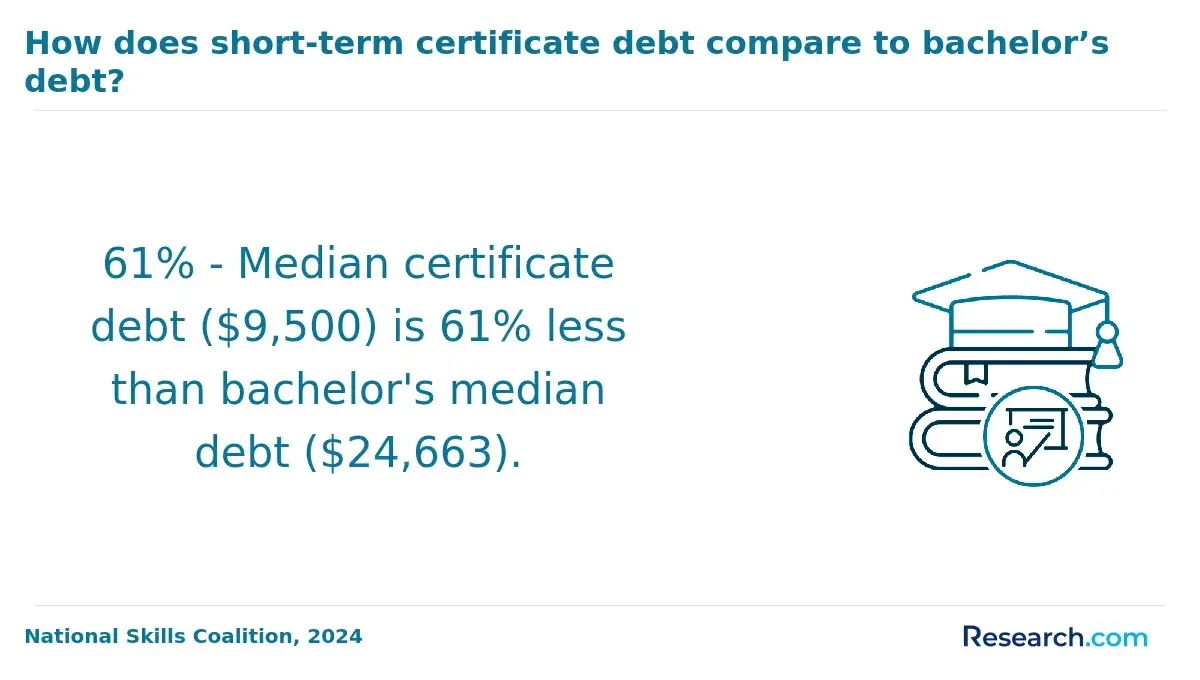
- Tuition Range: Master's-level nurse educator degrees (MSN) typically cost between $700 and $2,250 per credit hour at accredited universities, with doctoral programs sometimes exceeding $1,000 per credit hour.
- Total Program Cost: The full MSN nurse educator program usually ranges from $20,000 to $60,000, depending on factors like school choice, residency status, and program length.
- Public vs. Private Schools: Public universities generally offer lower tuition for in-state residents, often around $300-$1,200 per credit hour, compared to private institutions which may charge up to $2,250 per credit hour.
- Online vs. On-Campus: Online degree programs can offer cost savings and flexibility, although many require some in-person clinical work, which can increase overall expenses.
- Additional Expenses: Students should consider additional costs such as fees, course materials, and other incidental expenses, which may add several thousand dollars to the total program cost.
Average Tuition for Nurse Educator Certificate Programs
- Tuition Range: Post-master's nurse educator certificate programs generally cost less, with total tuition typically ranging from $5,000 to $18,000 for the entire certificate.
- Per Credit Hour Cost: Certificate programs often charge between $300 and $1,200 per credit hour, but the shorter program length (usually 12-18 credits) lowers overall tuition.
- Program Length: These certificates can often be completed within 6 to 12 months, significantly reducing tuition and living expenses compared to degree programs.
- Public vs. Private Schools: As with degrees, public institutions tend to charge less for residents, while private schools can have higher tuition.
- Online Options: Many certificate programs are available online, which can reduce costs by removing commuting and some campus fees.
When reviewing nurse educator certificate tuition comparison, it is clear that certificate programs provide a more affordable and shorter pathway, while degree programs represent a more extensive educational and financial commitment.
For students seeking affordable options, exploring inexpensive online universities that accept FAFSA may help reduce tuition costs further while pursuing either degree or certificate paths.
Can You Transfer Certificate Credits Toward a Nurse Educator Degree Later On?
Certificate credits can sometimes be transferred toward a nurse educator degree, but the possibility depends largely on the policies of the institution and the accreditation status of both programs. Generally, if the certificate is from an accredited program and the courses closely align with the degree curriculum, transfer is more likely to be accepted. However, many schools have distinct rules about credit transfers, so acceptance varies widely. Some universities explicitly allow coursework from their nurse educator certificates to count toward their master's degree programs, making the transition smoother for students.
Key factors to keep in mind include transfer limits, as many programs restrict the number of credits that can be applied toward a degree, often capping it at a portion of the total required hours. Grade requirements also play a role, with most programs insisting on a minimum grade-usually a B or better-for credits to transfer. It's crucial to confirm these details with the target institution before enrolling in a certificate program to ensure you don't face unexpected hurdles later. Verifying transfer policies ahead of time helps students make the most of their educational investment and plan their career path effectively.
Are Certificate Programs Accredited the Same Way as Nurse Educator Degrees?
Certificate programs for nurse educators are not accredited in the same manner as degree programs. While nurse educator degrees like the Master of Science in Nursing (MSN) with a focus on nurse education are accredited by national organizations such as the Accreditation Commission for Education in Nursing (ACEN) or the Commission on Collegiate Nursing Education (CCNE), certificate programs are generally connected to professional certification rather than academic accreditation.
For example, the Certified Nurse Educator (CNE) credential is awarded by the National League for Nursing (NLN) after passing an exam and meeting eligibility criteria. The NLN does not accredit certificate programs themselves but certifies the competency of individuals. Thus, degree programs undergo institutional and programmatic quality reviews, while certificates focus on individual qualifications.
Accreditation is important because it guarantees a program meets established standards for educational quality and rigor. Graduating from an accredited nurse educator degree often influences licensure, employment options, and eligibility for further study. For certificates, recognition by a respected certifying body is key for career advancement.
When choosing a program, students should verify accreditation status with agencies like CCNE or ACEN for degrees and check certification requirements and reputation for certificates. It's essential to review graduate outcomes and renewal policies. Prospective students should always confirm a program's accreditation through recognized organizations before enrolling.
What Jobs Can You Get with a Nurse Educator Degree vs. a Certificate?
Both nurse educator degrees and certificates provide pathways to careers in nursing education, but they typically prepare graduates for different roles and responsibility levels. Understanding the distinctions in career opportunities can help you choose the credential that aligns with your professional goals.
Below is a comparison of potential job options for each credential type.
Jobs You Can Get with a Nurse Educator Degree
- Academic nurse educator: Teaches nursing students at colleges or universities, focusing on curriculum delivery and student development.
- Clinical nurse educator: Works in healthcare facilities to train nursing staff and improve clinical practices.
- Program director or dean: Oversees nursing education programs, managing faculty and curriculum standards.
- Senior faculty member: Provides leadership within nursing departments, often mentoring junior educators and influencing academic policies.
- Curriculum developer: Designs and updates educational content for nursing programs to ensure current standards and best practices.
Jobs You Can Get with a Nurse Educator Certificate
- Clinical instructor: Provides hands-on training to nursing students or staff in healthcare settings.
- Staff educator: Focuses on ongoing professional development for nursing personnel within hospitals or clinics.
- Patient education coordinator: Develops and implements education plans aimed at improving patient knowledge and outcomes.
- Specialty educator: Offers specialized training in areas such as women's health or pediatrics, typically in practical or clinical environments.
What Is the Average Starting Salary for a Certificate vs. Nurse Educator Degree Graduates?
Salary potential for nurse educators varies significantly depending on whether individuals hold a certificate or a full degree. These educational differences often lead to varied starting salaries and career opportunities.
Below is a side-by-side comparison of the average starting salary by degree in the United States versus certificate holders, outlining key factors influencing pay and career outlook.
- Typical Salary Range: Nurse educator degree graduates generally start with an average salary around $87,090 per year as of 2025. In contrast, nurse educator certificate starting salary comparison US shows a lower range, typically between $44,000 and $75,000 annually.
- Education Level: Degree holders with master's or doctoral degrees (such as MSN or DNP) often qualify for higher-paying roles in universities or hospitals, whereas certificate holders usually fill positions in community colleges or vocational programs with lower salary ceilings.
- Certification and Experience: Certified nurse educators (CNE) earn a median of $81,220, and those with clinical or teaching experience can command higher salaries, especially in competitive regions or top-tier institutions.
- Location and Employer Impact: Salaries vary state to state; for example, Oregon and Texas offer starting salaries exceeding $100,000, while less populous states may pay closer to the lower certificate holder range.
- Career Outlook: Demand for qualified nurse educators with a degree remains strong nationally, especially in acute care and higher education, while certificate holders often face limited opportunities and growth.
For those considering various professional options, exploring a broad list of trade school careers may offer additional perspectives outside the nurse educator track.
Here's What Graduates of Nurse Educator Programs Say About Their Degree or Certificate
- Eiden: "Choosing the nurse educator certificate program was a game changer for me because it offered a faster-paced learning experience, allowing me to quickly gain foundational skills without committing to a lengthy degree. While the cost was more affordable compared to degree programs, I knew it would provide a solid stepping stone for advancing my career in nursing education. The certificate gave me the confidence and credentials needed to start teaching sooner."
- Yusuf: "Pursuing the nurse educator degree program truly deepened my understanding and broadened my expertise, though it required a significant investment of both time and money, often more than double the cost of certificate programs. I appreciated the comprehensive curriculum and rigorous pace, which prepared me for higher-level roles and long-term career growth. Reflecting on my journey, the degree has opened doors that a certificate alone might not have. "
- Riven: "After completing both the nurse educator certificate and degree programs, I recognize how each served different purposes: the certificate provided quick, practical skills, while the degree offered extensive knowledge and research opportunities. Balancing the two, I saw the cost gap clearly-certificates are more budget-friendly upfront, but the degree pays off in broader career impact. My experience was uniquely rewarding because I could tailor my learning pace and depth according to my personal and professional goals."
Other Things You Should Know About Nurse Educator Degrees
Clinical teaching or practical teaching experience is typically a component of nurse educator degree programs to ensure hands-on training. Certificate programs vary widely; some include teaching practicums while others focus more on theory. Degree programs usually provide more structured and supervised opportunities for developing clinical teaching skills.
In 2027, nurse educator degrees often open more doors for leadership roles and academic positions, while certificates might suffice for entry-level teaching positions. Degree holders are generally preferred for higher education roles, where a master's or doctorate enhances prospects, while certificate holders may need more experience to progress similarly.
References
- Nursing Certificate Programs https://www.chamberlain.edu/academics/nursing-school/graduate-certificate-programs
- Highest Paid Nursing Positions https://onlineprograms.sacredheart.edu/resources/article/highest-paying-career-paths-for-msn-graduates/
- Nurse Educator Salary and Jobs | Certification and Education https://www.graduatenursingedu.org/nurse-educator/
- Nurse Educator Certificate https://www.chatham.edu/academics/graduate/nurse-educator-certificate/
- Nursing: Nurse Educator, Graduate Certificate https://academics.charlotte.edu/program/nursing-nurse-educator-graduate-certificate-online/
- Nursing Education (CNE) | Programs | Methodist University https://www.methodist.edu/academics/program/nursing-education/
- Nurse Educator Certificate Admission https://www.angelo.edu/academics/programs/nurse-educator-certificate/admission/
- Nurse Educator Graduate Certificate Online - Penn State World Campus https://www.worldcampus.psu.edu/degrees-and-certificates/penn-state-online-nurse-educator-graduate-certificate
- Nurse Educator (Post-MSN Certificate) | Notre Dame of Maryland University http://www.ndm.edu/academics/school-nursing/nursing-programs/nurse-educator-post-msn-certificate
- Certification vs Degree: Which Advanced Nursing Route is Right For You? https://online.norwich.edu/online/about/resource-library/certification-vs-degree-which-advanced-nursing-route-right-you


