2027 Online Electrical Engineering Master's Programs at Accredited U.S. Universities

Co-Founder and Chief Data Scientist
Choosing an online electrical engineering master's program involves navigating a complex mix of factors that extend beyond course content. Accreditation, delivery format, and per-credit costs directly impact degree recognition, affordability, and time to completion, yet many applicants remain unaware of subtle variations in these areas. As reported by the National Center for Education Statistics in 2024, over 45% of graduate engineering students now opt for online formats, reflecting a shift toward flexible, remotely accessible education. This shift highlights the importance of evaluating admission requirements and financial aid availability alongside career outcomes and licensing recognition for a well-rounded decision.
Key Things to Know About Online Electrical Engineering Master's Programs at Accredited U.S. Universities
- Online electrical engineering master's programs often require foundational coursework, limiting admission flexibility for career changers lacking a technical undergraduate background, which may extend time-to-degree or increase preparatory costs.
- Most programs combine asynchronous coursework with synchronous labs, balancing accessibility with practical skill acquisition; however, this format can affect employer perceptions of hands-on readiness, influencing hiring decisions.
- Per-credit costs vary widely, and reported tuition often excludes mandatory technology or proctoring fees, making total investment opaque; this financial uncertainty impacts budgeting for working professionals and adult learners.
What Is the Overall Structure and Purpose of Online Electrical Engineering Master's Programs at Accredited U.S. Universities?
Online electrical engineering master's programs at accredited U.S. universities are structured to meet the demands of diverse learners who seek advanced technical training without the geographic or scheduling constraints of traditional campus programs. These programs exist primarily because they reconcile the rigorous curriculum and recognized credentialing essential for employer acceptance with the flexibility required by working professionals, career changers, and place-bound students. This balance allows candidates to strategically invest in graduate education while managing ongoing personal and professional responsibilities, but it also necessitates a careful evaluation of how the curriculum and delivery affect skill acquisition and career momentum compared to on-campus options.
- Purpose: These programs aim to deepen both theoretical knowledge and applied capabilities in electrical engineering, typically supporting career trajectories in industries like telecommunications, energy systems, and microelectronics, as well as advanced research roles. This focus distinguishes them from purely professional degrees by emphasizing a mastery of core engineering principles aligned with evolving technologies.
- Credit Load: Students generally navigate between 30 and 36 credit hours, a framework that reflects a balance between comprehensive coverage of essential topics such as signal processing and power systems, and the flexibility to concentrate electives on sector-specific skills. This credit requirement often influences time-to-degree and financial investment decisions critically.
- Delivery Methods: Coursework is mainly asynchronous, leveraging recorded lectures and digital simulations to accommodate varied schedules, with limited synchronous interactions designed to foster peer collaboration and instructor accessibility. This format prioritizes self-directed learning, which can be both an asset for motivated students and a hurdle for those who benefit from structured, real-time engagement.
- Time-to-Degree: Flexible pacing is common, allowing completion within two to three years based on full- or part-time enrollment. This adaptability is essential for working professionals but requires effective time management and self-discipline to avoid extended timelines that may dilute career impact or financial return.
- Accreditation: Accreditation by entities such as ABET is a critical quality marker, influencing licensure eligibility, graduate employability, and the transferability of credits. For prospective students, confirming accreditation safeguards that the program meets industry-driven content standards and that their degree holds value in regulated or competitive job markets.
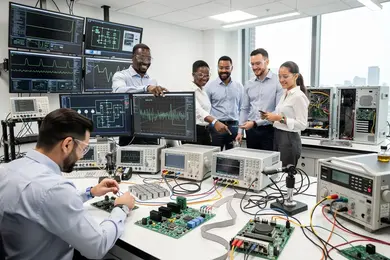
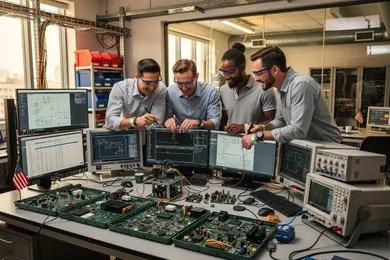
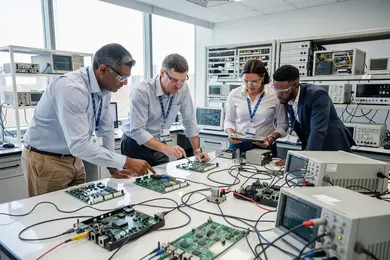
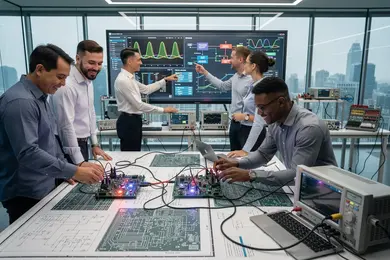
- Distinguishing Features: Compared to on-campus programs, online electrical engineering master's degrees demand greater autonomy and digital proficiency. They often incorporate virtual labs and remote access to research infrastructure, which partially replicates hands-on experiences but may lack some immediacy or collaborative depth inherent to traditional labs, impacting skill development in practical contexts.
Prospective students, including first-generation graduate learners, must weigh these structural elements carefully in relation to their career goals, financial capacity, and learning preferences. In making these decisions, resources like accelerated bachelors degrees pathways can offer insight into alternative pacing and credit arrangements, and provide comparative context for understanding graduate program structures.
Which Accrediting Bodies Recognize Online Electrical Engineering Master's Programs, and Why Does Accreditation Status Matter?
Choosing an online electrical engineering master's program without verifying its accreditation can derail career prospects, particularly when state licensure or employer preferences mandate specific standards. Accreditation is not merely an academic formality; it directly influences credit transferability, financial aid access, licensure eligibility, and employer recognition, creating critical tradeoffs for students balancing cost and career trajectory.
Two distinct accreditation types recognized by the U.S. Department of Education shape these outcomes: regional and programmatic accreditation. Regional accreditation assesses the institution as a whole, setting a baseline for overall academic quality and enabling access to federal financial aid and broader credit acceptance. Programmatic accreditation, notably through ABET for engineering disciplines, validates the degree's relevance to industry standards and licensure requirements, especially important in regulated fields like electrical engineering.
- Regional Accreditation: Confirms institutional integrity and academic quality, typically required for federal financial aid eligibility and smooth credit transfers between universities.
- Programmatic Accreditation: ABET accreditation attests that curricula meet engineering-specific competencies required for professional licensure and are recognized by employers prioritizing rigorous preparation.
- Credit Transferability: While regionally accredited credits usually transfer broadly, programmatic accreditation impacts employer and licensure board acceptance more than cross-institution credit recognition.
- Federal Financial Aid Eligibility: Available primarily through regionally accredited institutions, making this a foundational consideration for cost-conscious students.
- Licensing Board Recognition: Many states mandate ABET-accredited degrees or equivalent programmatic approvals for engineering licensure, without which graduates often face certification barriers.
- Employer Acceptance: Employers in competitive markets often require ABET accreditation to ensure graduates possess required technical rigor and practical readiness.
- Due Diligence Advice: Prospective students must verify alignment of both regional and programmatic accreditation with their career goals, state licensure rules, and employer standards before weighing tuition, format, or reputation.
What Are the Admission Requirements for Online Electrical Engineering Master's Programs at Accredited U.S. Universities?
Admission standards for online electrical engineering master's programs at accredited U.S. universities reveal significant variation shaped by institutional selectivity and public versus private status, affecting the competitiveness and composition of the applicant pool. Candidates should recognize that satisfying baseline requirements does not ensure admission, as many programs admit students well above minimum thresholds, especially when awarding financial aid or assistantships. This dynamic is visible when comparing more accessible public universities to highly selective private programs, signaling differences in academic rigor and cohort composition. For example, a working professional pivoting careers might find greater flexibility and bridge course options at public institutions, while recent graduates targeting research-intensive roles may face stringent criteria at private universities.
- Undergraduate GPA: Commonly, a minimum cumulative GPA near 3.0 is expected, but competitive programs often look for closer to 3.3 or above, impacting applicants' admissions chances.
- Prerequisite Coursework: Foundational knowledge in calculus, physics, circuits, and differential equations is essential; those lacking an electrical engineering bachelor's may need bridge courses or must demonstrate equivalent experience.
- Letters of Recommendation: Two to three letters highlighting academic or professional strengths are crucial, particularly for non-traditional applicants wanting to validate their technical readiness.
- Personal Statement: Clear articulation of career objectives and motivations serves as a qualitative asset in evaluating communication skills and alignment with program goals.
- Standardized Tests: While some programs still demand GRE scores, an increasing number, especially public institutions, have adopted GRE-optional or GRE-free policies to widen access.
- Professional Experience: Relevant work history can compensate for weaker academic records, often valued in programs geared toward mid-career learners.
- Institution Type and Selectivity: Public universities generally present more accessible admissions with diverse cohorts, whereas private or selective schools reflect higher rigor but lower acceptance rates.
- Competitive Versus Minimum Requirements: Applicants should examine the median admitted profile beyond minimums to realistically gauge admission chances and financial aid eligibility.
- Access for Non-Traditional Applicants: Career changers, those with lower GPAs, or lacking a related undergraduate degree can find programs with flexible pathways, bridge courses, and professional experience recognition.
Prospective students balancing quality and cost also benefit from exploring related master of social work programs for insight on admission flexibility and support mechanisms that may parallel opportunities in electrical engineering fields.
What Is the Minimum GPA Requirement for Electrical Engineering Master's Program Admission, and How Does Selectivity Correlate With Program Reputation?
Minimum undergraduate GPA requirements for admission to online electrical engineering master's programs vary considerably, reflecting distinct institutional priorities rather than a universal standard. While a 3.0 GPA is frequently cited as a baseline, selectiveness and program reputation influence these thresholds, with some competitive programs expecting closer to 3.5. However, a higher GPA cutoff does not inherently translate into better professional outcomes; graduates from less selective programs often achieve comparable licensure exam pass rates and successfully enter the workforce.
- Minimum GPA Requirements: Most programs require a GPA roughly between 2.75 and 3.25. This range serves as a signal of academic readiness but does not fully capture an applicant's potential in the field.
- Selectivity and Reputation: Higher GPA expectations are typical among programs with strong research portfolios and national rankings, but this selectivity may limit access without guaranteeing better employment success.
- Holistic Admissions: GPA is balanced with professional experience, recommendations, and statements of purpose. Candidates near or below minimum GPA thresholds can leverage relevant work history and personal narratives to strengthen their candidacy.
- Conditional and Alternative Pathways: Applicants falling short of GPA criteria might pursue conditional admission, bridge courses, or post-baccalaureate certificates, providing a route to demonstrate readiness without initial full acceptance.
- Competitive Versus Minimum Requirements: Meeting the minimum GPA is necessary but not sufficient. Successful applicants generally present stronger overall profiles, and understanding program-specific demands is vital to realistic application planning.
One graduate recounted applying to an online electrical engineering master's program with a marginal GPA just below the typical cutoff. The rolling admissions timeline created uncertainty, and they hesitated to submit additional materials immediately. Eventually, after reaching out to admissions staff and clarifying expectations about conditional enrollment options, they submitted a portfolio of work projects and letters of recommendation. This strategic patience and supplemental documentation ultimately led to acceptance, illustrating how flexibility in admissions processes can accommodate nontraditional applicants balancing the timing of application preparation with ongoing professional responsibilities.
How Many Credit Hours Are Required to Complete an Online Electrical Engineering Master's Program, and How Does This Affect Total Cost and Time-to-Degree?
Online electrical engineering master's programs at accredited U.S. universities typically require between 30 and over 60 credit hours, reflecting variations driven by factors such as whether a thesis, final project, or practicum is mandated. Compared to other master's fields, electrical engineering programs often demand higher credit loads due to the discipline's technical depth and application-focused curriculum. This elevated credit requirement directly influences total tuition costs since fees are charged per credit. For instance, a 36-credit program priced at $900 per credit amounts to $32,400, whereas a 60-credit program at $700 per credit totals $42,000-highlighting how a lower per-credit rate does not necessarily translate into overall affordability.
Part-time students face extended time-to-degree challenges when credit demands increase, as more semesters are needed to fulfill requirements. This lengthening not only raises living expenses but also incurs opportunity costs from delayed career advancement or workforce reentry. Consequently, decisions should weigh total credits alongside per-credit tuition to accurately forecast financial and temporal investments.
- Credit Load: Varies widely depending on program design, thesis, and practicum requirements, generally higher than many other master's fields.
- Total Cost: Product of credit hours and per-credit tuition; longer programs with lower rates can still be costlier overall.
- Time-to-Degree: Increased credits extend study duration, particularly impacting part-time students balancing work commitments.
- Opportunity Cost: Additional semesters mean higher living expenses and deferred income or career progression.
- Decision Advice: Evaluate total credit requirements alongside per-credit costs to understand true program investment.
What Specializations and Concentrations Are Available in Online Electrical Engineering Master's Programs at Accredited Universities?
Specializations and concentrations within online electrical engineering master's programs at accredited U.S. universities significantly shape graduates' career trajectories and influence tuition costs. For a working professional balancing time and financial investment, choosing a concentration track that aligns closely with market demand can enhance employability and justify the expense. For instance, an engineer targeting roles in renewable energy systems must confirm that the program's concentration offers advanced courses and practical modules relevant to energy technologies rather than general power systems.
Many programs offer concentrations as embedded tracks incorporated into the core degree, often requiring students to take a prescribed set of electives, while others present them as optional add-on certificates-each structure affecting credit load and time-to-degree differently. Programs with add-on certificates might extend total credits and duration, increasing overall costs. Candidates should scrutinize these variables alongside their work-life balance constraints.
A review of program openings in online electrical engineering master's program specializations at accredited US universities reveals common and emerging fields such as:
- Power Systems: Focused on electric grid technologies, this concentration addresses rising employer demand for engineers skilled in smart grid and energy distribution innovations.
- Communications Engineering: Emphasizes wireless, optical, and network communications, aligning with continued industry growth in 5G and beyond.
- Control Systems and Automation: Prepares students for roles in robotics and manufacturing automation, reflecting trends in industrial IoT adoption.
- Embedded Systems and IoT: Covers hardware-software integration critical in consumer electronics, automotive, and healthcare devices, sectors showing increasing hiring.
- Signal Processing: Relevant to medical imaging and multimedia applications, with growing demand in healthcare technology sectors.
Recognition by relevant licensing boards and faculty expertise in these specialized areas remain pivotal. Employers often assess whether a program's faculty have real-world experience, as this directly impacts the practical value of the education obtained. Graduates with concentrations taught by industry-seasoned professors generally have an edge in complex technical roles.
Consequently, selection criteria must extend beyond program existence of a specialization to its substantive rigor and recognition. Employment data, such as that from the Bureau of Labor Statistics, indicates that engineers with expertise in communications and control systems often command higher salaries compared to general electrical engineers, underscoring the financial implications of specialization choices.
Prospective students who are place-bound or engaged in career transitions should also weigh how concentrations align with licensure requirements and regional industry needs. Evaluating online program structures and cost frameworks in light of these factors is essential for making an informed decision.
For those also exploring credentialing options beyond degrees, examining resources like the best bookkeeping certification online may offer insights into professional certifications that complement engineering credentials depending on individual career goals.
How Do Online Electrical Engineering Master's Programs at U.S. Universities Compare in Format-Synchronous, Asynchronous, and Hybrid Delivery?
Choosing between synchronous, asynchronous, and hybrid delivery models in online electrical engineering master's programs involves more than scheduling preferences; it directly impacts educational quality, workforce readiness, and financial costs. Fully asynchronous programs offer unmatched flexibility, ideal for professionals juggling irregular hours or residing across time zones, but they can reduce opportunities for spontaneous peer collaboration and immediate feedback, which some employers value for signaling teamwork skills. Synchronous live-online formats simulate traditional classrooms with scheduled virtual sessions enabling real-time interaction, enhancing engagement and accountability; however, their fixed timing can disadvantage those with shift work or inconsistent availability and often come with higher tuition due to infrastructure demands. Hybrid models meld online learning with occasional on-campus residencies, providing valuable face-to-face networking and hands-on experience, but the requirement to travel can add significant expenses and complexity, potentially offsetting perceived savings from remote instruction.
- Fully Asynchronous: Self-paced coursework suited for variable schedules but limited real-time interaction.
- Synchronous Live-Online: Scheduled classes promote immediate peer and faculty engagement but require consistent availability and may increase costs.
- Hybrid Delivery: Combines online flexibility with in-person networking, adding travel costs and logistical challenges.
Prospective students must critically assess these models in light of their work hours, family obligations, access to reliable internet, and tolerance for travel. Simply accepting an "online" label overlooks nuances that affect learning outcomes and professional networking opportunities-factors that influence employability in technical fields like electrical engineering. Questions about the frequency and timing of synchronous sessions, mandatory campus visits, and technology platforms should guide enrollment decisions to align program demands with realistic personal and financial capacities.
A graduate recalled navigating rolling admissions while weighing program formats: delayed decision timelines prompted concern about missing collaboration opportunities in synchronous classes, but uncertainty about work schedule stability made asynchronous options more attractive despite the risk of isolation. This led to a strategic wait-accepting that timely acceptance was less certain but opting for flexibility to avoid compromising performance. Their experience highlights how enrollment timing and program modality interplay with professional realities, underscoring a need for transparent admissions communication and personal scheduling clarity before committing.
What Is the Average Cost per Credit Hour for Online Electrical Engineering Master's Programs, and How Does It Differ Across Institution Types?
Cost per credit hour is a critical financial factor when evaluating online electrical engineering master's programs, but it is only a starting point for complex decisions about quality, access, and long-term return on investment. For example, a working professional eyeing a program might face higher upfront costs at a private nonprofit institution but benefit from uniform tuition regardless of residency, whereas a recent graduate from a public university in-state could leverage lower in-state rates yet pay hidden fees that raise effective expenses. Employment outcomes and employer expectations vary; many employers increasingly value practical competencies alongside credentials, meaning cost-efficiency must translate into tangible career advantages.
- Public Universities: Average per-credit costs range from $500 to $1,200, with in-state residency providing significant tuition relief. These rates often exclude mandatory program fees for labs or technology, which can add several hundred dollars each term.
- Private Nonprofit Institutions: These programs usually charge between $900 and $1,700 per credit hour without residency distinctions, emphasizing consistency but typically resulting in higher costs than public in-state tuition.
- Private For-Profit Schools: Tuition ranges more widely from $800 to $2,200 per credit, often accompanied by extra fees and less transparent cost structures. Flexibility attracts students balancing unpredictable schedules but may come at a premium.
- Residency and Fees: State residency still substantially affects public university pricing, while additional fees and course materials inflate sticker prices beyond advertised rates, requiring careful budget planning.
- Sticker Price Versus Net Cost: Financial aid, scholarships, and employer tuition assistance can dramatically reduce actual expenses, making published per-credit rates an imperfect measure of total cost.
- Interpretation and Application: Because credit hour requirements and fees vary and financial aid can offset tuition, prospective students should use average per-credit cost data as a baseline, not a definitive comparison.
For those researching cost-effective pathways combining flexibility and recognized credentials, reviewing options at the best competency-based colleges can offer additional insights. Whether a place-bound student evaluating tuition differences for online electrical engineering master's programs by type of accredited university or a first-generation graduate comparing offers, anchoring financial decisions on detailed, real-world costs per credit hour enhances strategic enrollment choices.
How Do In-State and Out-of-State Tuition Policies Apply to Online Electrical Engineering Master's Programs, and Which Schools Offer Flat Residency-Neutral Rates?
In-state versus out-of-state tuition policies for online electrical engineering master's programs significantly affect the financial calculus for prospective students, especially those balancing quality with cost. Historically, public universities maintained steep tuition differentials for distance learners depending on residency, often pricing out-of-state students at rates far higher than in-state peers. This disparity can critically impact a graduate's return on investment, as out-of-state learners face a heavier upfront burden without guaranteed salary premiums. However, a noticeable shift toward flat residency-neutral tuition rates has emerged, reflecting the diminished relevance of physical location in online education delivery.
- Historical Distinctions: Public institutions traditionally charged out-of-state online students higher per-credit tuition, mirroring in-person residency subsidies and limiting access based on geography.
- Flat Residency-Neutral Rates: Numerous regionally accredited public universities now offer uniform tuition across residency lines for their online electrical engineering master's programs, leveling the financial playing field for remote learners.
- Examples of Uniform Pricing: The University of Florida, University of North Dakota, and Oregon State University exemplify this pricing evolution by implementing residency-neutral tuition models in their programs.
- Persistent Differential Pricing: Despite these advances, other reputable programs continue traditional residency-based pricing, increasing costs for out-of-state enrollees and complicating accurate affordability assessments.
- Tuition Reciprocity Agreements: Regional compacts such as WICHE, SREB, and the Midwest Student Exchange Program offer pathways for reduced out-of-state tuition at member institutions, providing strategic opportunities for eligible students.
- Policy Verification: Because online tuition policies may fluctuate annually and are not reliably updated in marketing materials, candidates should confirm current pricing directly with financial aid offices or bursars before enrollment commitments.
Decision-makers weighing offers from various programs will find that relocating for cost savings is less relevant when flat residency-neutral pricing is in place. Conversely, in states lacking reciprocity agreements or uniform rates, factoring in higher out-of-state tuition may influence program choice or encourage exploration of accelerated online degrees or alternative institutions. Navigating these nuances can optimize investment in an online electrical engineering master's degree with clear-eyed attention to long-term career outcomes and financial pressure points.
How do in-state versus out-of-state tuition rates affect costs for online electrical engineering master's programs in the U.S.? Identifying universities with flat residency-neutral tuition structures is a critical starting point for transparent budgeting and informed decision-making.
U.S. universities offering flat residency-neutral tuition for online electrical engineering master's degrees represent a growing cohort that acknowledges shifting workforce dynamics and the imperative to widen access through equitable pricing.
What Mandatory Fees and Hidden Costs Are Added to Tuition for Online Electrical Engineering Master's Programs?
Evaluating online electrical engineering master's programs based solely on per-credit tuition obscures critical, often substantial mandatory fees and hidden costs that affect total financial investment. Professionals balancing tuition with practical outcomes must anticipate expenses that vary widely by institution, program design, and state licensure demands, especially for offerings with practicum or fieldwork elements. Neglecting these fees risks underestimating true costs, impacting budgeting decisions and ultimately debt load, which influences career mobility and return on investment.
- Technology Fees: Typically several hundred dollars per semester, these cover digital platform access, software licenses, and technical support necessary for remote learning environments.
- Program Fees: Additional charges tied specifically to electrical engineering or graduate program administration, such as specialized resources and departmental services.
- Student Services Fees: Recurring term-based fees funding library resources, career counseling, and other campus amenities that remain relevant even for online students.
- Graduation Fees: One-time costs ranging around $100-$250 to process degree conferral and diploma issuance, often overlooked until the program's end.
- Liability Insurance and Background Checks: Mandatory for programs requiring in-person practicums or internships, ensuring compliance with institutional and legal standards.
- Proctoring Fees: Charged per exam to support remote test integrity through identity verification and surveillance technology.
- Required Software and Textbooks: Specialized simulation tools and technical texts essential for electrical engineering coursework can represent hundreds or more in additional costs.
- Licensing Exam Preparation Costs: For students targeting Professional Engineer licensure, expenses for prep courses and exam fees add further financial obligation beyond tuition.
Programs located in states with stringent licensure regulations or those incorporating hybrid formats with mandatory fieldwork frequently impose higher ancillary fees, which may increase total program costs by 10-20% or more beyond base tuition. Given that median starting salaries for graduates typically range from $70,000 to $85,000 annually depending on region and industry, unexpected fees can materially affect early-career financial stability. Prospective students should reach out to current enrollees or recent alumni for transparent insights into these hidden costs to make more informed, realistic comparisons across programs. This approach helps balance upfront investments against career readiness and employability outcomes.
What Graduates Say About Online Electrical Engineering Master's Programs at Accredited U.S. Universities
- Jireh: "Balancing a full-time job and family made going back to school feel impossible, but I chose an online master's in electrical engineering for its flexible schedule. The coursework was challenging, especially managing projects after work hours, but it helped me build a portfolio that caught the eye of a local firm. Although I didn't immediately land the job I wanted, the skills I gained were crucial for a recent internship that's opening doors to more experienced roles."
- Henrik: "I switched careers with a limited budget, so I sought out an affordable online electrical engineering program that emphasized practical skills over theory. It was a deliberate choice since companies here prioritize hands-on experience and certifications more than licensure. While I'm still competing for certain design engineer positions, the program accelerated my understanding and allowed me to secure a technician-level role with remote work options, which fits my current lifestyle perfectly."
- Weston: "After completing my master's in electrical engineering online, the biggest hurdle was realizing that many employers value internships and portfolios over degrees alone. I decided to invest extra time building real projects and securing an internship rather than pushing for licensure immediately, trading off faster salary increases for broader experience. That decision proved wise, as it led to a staff engineer position; however, I'm mindful that without a PE license, some career advancement pathways remain limited."
Other Things You Should Know About Electrical Engineering Degrees
In 2027, online electrical engineering master's degrees from accredited U.S. universities are generally recognized by employers and licensure boards. Accreditation ensures the program meets high standards, often aligning these degrees with their on-campus counterparts in terms of acceptance and credibility.
Graduates from well-established online electrical engineering programs often report similar initial employment rates to their on-campus counterparts, especially when the program features strong industry partnerships or internship components. However, licensure exam pass rates may vary more significantly and depend heavily on how thoroughly programs prepare students for fundamentals in electrical engineering principles. Students prioritizing long-term licensure and specialized credentials should select programs with dedicated exam prep support and proven outcomes, rather than assuming all online diplomas equally translate into career advancement.
Prospective students should assess curriculum relevance, faculty expertise, accreditation, and student support services. Comparing factors like tuition, program flexibility, and alumni outcomes will help ensure the program aligns with career goals while offering a good return on investment.
Online electrical engineering master's programs in 2027 typically require a reliable computer, high-speed internet, and specific software such as MATLAB or AutoCAD. Some programs may mandate additional tools for virtual lab work. Verify requirements directly with the institution you plan to attend.
References
- How Long is an Online Master's Degree Program? OnlineEducation.com https://www.onlineeducation.com/faqs/how-long-to-earn-masters-degree
- Applying to Electrical Engineering Programs: Graduate School Admissions Overview https://blog.accepted.com/applying-to-electrical-engineering-programs-graduate-school-admissions-overview/
- Average Cost of a Master's Degree: 2025 Analysis https://educationdata.org/average-cost-of-a-masters-degree
- How long does it take to get a master's degree? | edX https://www.edx.org/resources/how-long-does-a-masters-degree-take
- What is the cost of a typical MSEE degree? https://www.dsprelated.com/thread/10075/what-is-the-cost-of-a-typical-msee-degree
- Accreditation - ABET https://www.abet.org/accreditation/
- Best Online Master's In Electrical Engineering Degrees https://www.collegechoice.net/sciences/engineering/electrical/most-affordable-online-masters-degrees/
- MS Engineering GPA Requirements: Tiers, Benchmarks & Acceptance Odds https://thegpacalculator.com/blog/ms-engineering-gpa-requirements
- The Ultimate Guide to Accreditation for Master’s Students https://www.onlinemastersdegrees.org/student-resources/graduate-school-accreditation/