
2027 Online vs On-Campus Business Development Degree Programs: Pros & Cons

Co-Founder and Chief Data Scientist
Choosing between an online and on-campus business development degree is not just a question of convenience. It affects how you learn, how much you pay, how you build a professional network, and how easily you can balance school with work or family responsibilities. The right format depends on your schedule, budget, career stage, learning style, and the reputation of the school offering the program.
Online learning is now a mainstream part of higher education. Recent data from the National Center for Education Statistics shows that over 40% of undergraduate students engaged in some form of online learning. That growth gives students more options, but it also makes comparison more important: two programs may lead to similar credentials while offering very different day-to-day experiences.
This guide compares online and on-campus business development programs across structure, admissions, academic support, completion time, cost, financial aid, credibility, employer perception, salary potential, and fit. Use it to identify which format gives you the best chance of finishing the degree, developing relevant business skills, and using the credential effectively in the job market.
Key Benefits of Online vs On-Campus Business Development Degrees
- Online business development degree programs offer unparalleled flexibility, allowing students to balance work and study, with 85% of online learners reporting improved time management skills.
- The average cost of online business development degrees is typically 30% lower than on-campus options, making them more accessible to a wider range of students.
- On-campus programs provide valuable face-to-face networking opportunities, with 70% of employers preferring graduates who have demonstrated in-person collaboration and communication skills.
Are Online vs. On-Campus Business Development Programs Structured the Same Way?
Online and on-campus business development programs usually cover similar academic ground, including sales strategy, market analysis, customer relationship management, entrepreneurship, negotiation, marketing, finance, and organizational leadership. The biggest differences are not usually what students study, but how they access courses, interact with faculty, complete projects, and build professional relationships.
Students should compare structure carefully because business development is a highly applied field. A strong program should help you practice communication, persuasion, data-informed decision-making, and client or partner relationship-building, whether those experiences happen in a classroom, on a video call, or through a digital simulation.
- Course delivery: Online programs use learning management systems, recorded lectures, digital readings, virtual discussions, and online assignments. Some are asynchronous, meaning students can complete much of the work on their own schedule. On-campus programs rely more heavily on live lectures, in-person workshops, classroom discussion, and scheduled group activities.
- Class schedules: Online programs often offer more flexibility, which can be valuable for working adults, parents, military students, and students who cannot relocate. On-campus programs usually follow fixed weekly schedules, which may be better for students who want routine, accountability, and regular face-to-face instruction.
- Interaction and collaboration: Online students collaborate through discussion boards, video meetings, shared documents, webinars, and virtual presentations. This can mirror remote business environments, but it requires strong self-management. On-campus students benefit from informal conversations before and after class, real-time group work, and easier access to campus-based activities.
- Networking opportunities: Online programs may connect students with peers, faculty, alumni, and employers across different regions. However, students often need to be proactive about attending virtual events and following up with contacts. On-campus programs usually provide more spontaneous networking through student organizations, alumni events, employer visits, and local internship pipelines.
- Technology and resources: Online students depend on reliable internet access, digital libraries, collaboration software, and video conferencing tools. On-campus students can use physical libraries, computer labs, meeting rooms, advising offices, and campus facilities in person. Both formats can be effective, but the online format places more responsibility on the student to create a productive study environment.
The practical question is whether you want flexibility or structure. Online programs are often stronger for students who need control over their schedules. On-campus programs are often stronger for students who want a traditional college environment, immediate interaction, and more built-in opportunities to meet people in person.
Are Admission Requirements the Same for Online vs On-Campus Business Development Degree Programs?
Admission standards are usually similar for online and on-campus business development degree programs at the same institution. Schools typically want evidence that applicants can handle college-level business coursework, communicate clearly, and complete the program successfully. The difference is that online programs may pay closer attention to whether applicants are prepared for independent, technology-supported learning.
Applicants should not assume that an online program is automatically easier to enter. Reputable online programs still review academic history, prerequisites, application materials, and, for some graduate programs, professional experience. What may differ is the amount of flexibility schools provide around testing, transfer credit, prior learning, and professional background.
- Academic qualifications: Undergraduate programs generally require a high school diploma or equivalent, while graduate programs require a bachelor's degree. Minimum GPA standards like 2.0 or above may apply. Online programs may also look for recent academic performance or evidence that the applicant can succeed without daily in-person supervision.
- Standardized test scores: Many schools have reduced or eliminated SAT/ACT requirements for undergraduate admissions, especially for online applicants. At the graduate level, some programs waive GMAT or GRE scores for applicants with relevant professional experience, strong prior coursework, or other indicators of readiness.
- Professional or work experience: Work experience is not always required, especially for undergraduate degrees. However, online business development programs, particularly graduate-level options, may value applicants who have experience in sales, marketing, management, entrepreneurship, customer success, operations, or related roles.
- Application materials: Both formats commonly require transcripts, a personal statement, and letters of recommendation. Online applicants may also be asked to describe their readiness for remote study, access to technology, or ability to manage time independently.
- English language proficiency: Non-native English speakers may need to show English proficiency for either format. Online programs may provide more flexible testing options or alternative assessments, depending on institutional policy.
- Special pathways: Some online business development degrees offer alternative admissions routes, including performance-based admission after completing approved courses with minimum grades. Credentials such as the MicroMasters or CORe may also support admission or accelerate progress at some institutions.
Before applying, confirm whether the online and on-campus versions of a program are administered by the same college, taught by comparable faculty, and held to the same academic policies. Students comparing faster entry points may also want to review options such as a top associate's degree online in 6 months, especially if they plan to transfer credits into a business-related bachelor's program later.
Do Online Business Development Students Receive the Same Academic Support as On-Campus Students?
Online business development students can receive academic support comparable to on-campus students, but the experience is delivered differently. The strongest online programs provide remote tutoring, advising, faculty office hours, library access, writing help, career services, and technical support. The key is not whether support exists, but how easy it is to access when you need it.
Because business development programs often involve presentations, team projects, case analysis, and applied strategy work, students should look for support that goes beyond basic course access. Strong programs help students practice communication, receive feedback, prepare for interviews, and connect coursework to business roles.
- Tutoring services: Online students may use video tutoring, chat-based help, virtual study groups, and online writing centers. On-campus students can often visit tutoring centers in person and receive immediate help. Online students should check whether tutoring is available during evenings or weekends, not just standard business hours.
- Career counseling: Both formats may offer resume reviews, mock interviews, job search coaching, and career workshops. Online students usually access these services through video appointments and webinars, while on-campus students may also attend live employer sessions and career fairs. Employer perceptions of online business degrees have grown more favorable in recent years, but students still need to present their skills clearly.
- Library access: Online learners typically receive access to journals, e-books, databases, company research, market reports, and business case materials through digital library systems. On-campus students may also use physical study spaces, research desks, and print collections.
- Faculty interaction: Online students communicate with instructors through email, discussion forums, scheduled video calls, and virtual office hours. On-campus students have more opportunities for informal conversations after class or during office visits. In either format, students who ask questions early and seek feedback consistently tend to get more value from faculty support.
- Technology support: Online students should confirm that the school provides help for login issues, course platform problems, video conferencing, proctoring tools, and software requirements. Technical delays can affect assignment deadlines, so reliable support matters.
When comparing programs, ask direct questions: Are advisors assigned to online students? Are career services available remotely? Can online students join student organizations or alumni events? Are group projects supported by collaboration tools? These details often determine whether support is truly equivalent or only listed on paper.
How Long Does It Take to Complete an Online vs an On-Campus Business Development Degree?
The time required to complete a business development degree depends on degree level, enrollment status, transfer credits, course availability, and whether the program uses traditional semesters, accelerated terms, or self-paced formats. The delivery format matters, but it is only one part of the timeline.
- Online business development degree: Most online bachelor's programs typically take between two and six years to finish, with a full-time student averaging about four years. Online programs may allow part-time enrollment, year-round study, accelerated courses, self-paced progress, and transfer credits. Students with prior college coursework or professional experience may finish in as little as two to three years, depending on school policy.
- On-campus business development degree: Traditional campus-based degrees generally require four years of full-time study with fixed semester schedules and predetermined class times. Students who attend part time may need five or six years, especially if required courses are offered only during certain terms.
- Factors that can shorten the timeline: Transfer credits, prior learning assessments, summer courses, accelerated terms, and credit for professional training can reduce time to completion in both formats. These options are often easier to use in online programs because many are designed for adult learners and students with previous credits.
- Factors that can extend the timeline: Changing majors, failing or withdrawing from courses, taking fewer credits per term, waiting for required classes, and balancing school with work or caregiving responsibilities can all delay graduation.
A student choosing between formats should look beyond the advertised completion time. Ask how many credits are required, how often required courses are offered, whether courses are asynchronous, whether the program allows continuous enrollment, and how many transfer credits the school will accept.
One professional who completed an online program explained that full-time work and family responsibilities made on-campus attendance unrealistic. The self-paced structure allowed him to complete some courses faster when his schedule was lighter, and he finished the degree in just under three years. He said, "There were challenges managing deadlines while working, but the flexibility to take classes at night and on weekends made all the difference."
He also transferred several previously earned credits, which he said "shaved off nearly a year." His experience shows why completion time is highly personal: the same online program may be fast for one student and slower for another, depending on transfer credit, workload, and available study time.
Are Online Business Development Programs Cheaper Than On-Campus Ones?
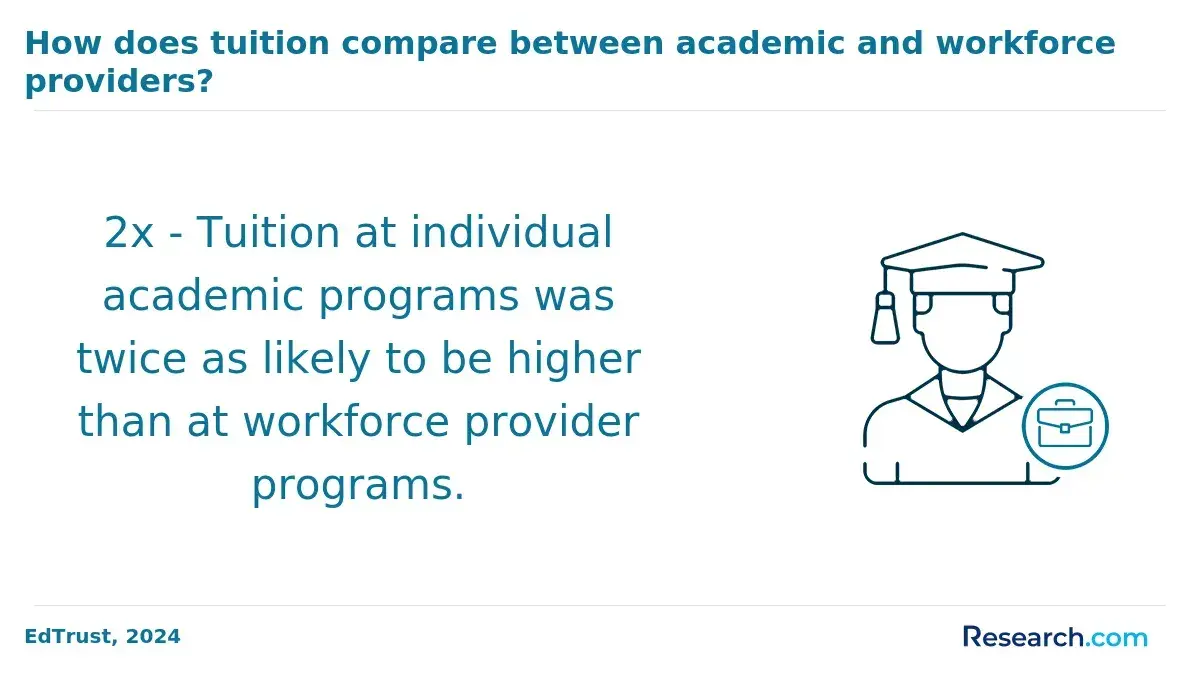
Online business development programs are often cheaper in total cost, but they are not automatically cheaper in tuition. The biggest savings usually come from avoiding campus housing, relocation, meal plans, and commuting. Tuition policies vary widely by institution, residency status, program level, and whether the school charges online-specific fees.
Students should compare total cost of attendance, not just tuition per credit. A program with slightly higher online tuition may still cost less overall if it lets you keep working, live at home, avoid transportation expenses, and finish faster through transfer credits or accelerated terms.
- Tuition and fees: The average cost of online business development degree programs at public universities is about $337 per credit hour for in-state students, compared to approximately $1,170 for private on-campus programs per credit hour. Some public institutions charge the same tuition for both formats, while about 16% impose higher online fees to cover additional administrative expenses. Students comparing online business development degree tuition vs on-campus costs should review tuition, mandatory fees, program fees, and technology fees together.
- Living expenses: Online students may avoid campus housing, meal plans, and commuting costs. On-campus students spend at least $1,290 yearly on transportation and around $2,670 more on meal plans than those living off-campus or at home. These non-tuition expenses can make a major difference in affordability.
- Technology costs: Online students need a reliable computer, internet access, required software, and sometimes a webcam or proctoring tools. These costs are real, but they are usually lower than room, board, commuting, and relocation expenses.
- Financial aid availability: Both online and on-campus students may qualify for federal financial aid if the program and institution meet eligibility rules. However, some online programs may offer less institutional aid. Many affordable online business degrees provide nearly 100% financial aid coverage at certain schools, but students should confirm what aid is grant-based and what must be repaid.
- Flexibility and opportunity cost: Online programs may allow students to keep working while enrolled, which can reduce lost income. Accelerated or self-paced options may also reduce the number of terms paid for, especially when students receive credit for prior coursework or professional experience.
If affordability is your main concern, compare net price, transfer credit policy, financial aid, and fees across each online business school rather than relying on tuition alone. Students exploring lower-cost entry points into higher education can also review what is the easiest associate's degree to get before committing to a longer business degree pathway.
What Are the Financial Aid Options for Online vs On-Campus Business Development Programs?
Financial aid can be available for both online and on-campus business development programs, but eligibility depends on accreditation, enrollment status, degree level, institutional policy, and whether the student meets federal, state, or scholarship requirements. Students should confirm aid eligibility before enrolling, especially in online or part-time programs.
The most important first step is to verify that the institution is properly accredited and that the specific program qualifies for the aid you plan to use. A low advertised tuition rate is less helpful if the program does not qualify for the grants, loans, employer benefits, or scholarships you need.
- Federal student aid: Accredited online and on-campus business development programs typically qualify for federal aid such as Pell Grants, work-study, and student loans. Online students usually must enroll at least half-time to maintain federal loan eligibility, which can be difficult for learners taking only one course at a time. Pell Grants adjust for part-time attendance, making them accessible to many online students.
- State aid: State grants and scholarships often require residency and enrollment at an in-state institution. These requirements may apply to both formats, but some states restrict certain awards to on-campus or full-time students. Online learners should check directly with their state's higher education agency.
- Institutional scholarships and grants: On-campus students may have broader access to institutional scholarships, especially awards tied to residential enrollment, campus leadership, honors programs, or traditional full-time attendance. Online students should ask whether they can apply for the same scholarships and whether start dates or part-time status affect eligibility.
- Employer tuition reimbursement: Both online and on-campus students may qualify for employer tuition assistance if their employer offers it. Online programs are often easier to combine with full-time work, which can make employer reimbursement more practical. Students should confirm reimbursement limits, grade requirements, approved schools, and whether they must remain with the employer after completing courses.
- Private student loans: Private loans may be available for either format, but lenders often consider school accreditation, enrollment level, credit history, and whether the student is enrolled at least half time. Students should compare interest rates, repayment terms, and borrower protections before using private loans.
When comparing aid packages, focus on net cost after grants and scholarships, not the headline tuition price. Also separate gift aid from loans. A program that appears generous may still leave a student with significant debt if most of the package consists of loans.
Professionals considering long-term academic pathways may also compare flexible graduate options such as online doctoral programs without dissertation, but aid rules and employer benefits should be reviewed separately for each degree level.
Are Online Business Development Programs as Credible as On-Campus Ones?
Online business development programs can be as credible as on-campus programs when they are offered by accredited institutions, use qualified faculty, maintain comparable curriculum standards, and produce graduates with relevant business skills. Credibility depends less on the delivery format and more on the school, accreditation, curriculum quality, student outcomes, and employer recognition.
Many universities apply the same academic standards to online and campus-based programs. Faculty members may teach in both formats, and courses may share learning outcomes, assignments, assessments, and graduation requirements. For business development students, a credible program should emphasize practical competencies such as prospect research, sales strategy, market expansion, negotiation, partnership development, analytics, communication, and ethical decision-making.
Accreditation is especially important. Students should confirm institutional accreditation and, when relevant, business-related accreditation or recognition. Accreditation affects transfer credit, financial aid eligibility, employer confidence, and admission to future graduate programs. A program that is inexpensive or convenient but lacks proper accreditation can limit the value of the degree.
Employer and academic perceptions of online education have improved, but they are not uniform. A 2025 survey reveals that 83% of HR professionals regard accredited online degrees as equal to traditional ones, with more than 75% willing to hire candidates holding online credentials for career-track roles. These findings suggest that online credentials from reputable schools are now widely accepted, especially when graduates can demonstrate strong skills and relevant experience.
Some employers and institutions may still value on-campus experiences for networking, leadership development, and in-person collaboration. However, virtual learning tools, real-time collaboration platforms, applied projects, and industry partnerships have narrowed the gap. In many hiring situations, the deciding factors are the institution's reputation, the graduate's experience, portfolio of work, interview performance, and ability to explain how the program prepared them for business results.
Do Employers Prefer Online vs On-Campus Business Development Degrees?
Employer preferences vary. Some employers treat accredited online and on-campus degrees similarly, especially when the degree comes from a recognized institution. Others remain more cautious about online credentials, particularly for roles that require leadership presence, client-facing communication, negotiation, or intensive team collaboration. For business development roles, employers usually care most about results-oriented skills, industry knowledge, communication ability, and evidence of initiative.
According to the 2025 GMAC Corporate Recruiters Survey, only a small fraction of U.S. employers (5%) strongly agree that online and in-person degrees hold equal value, while 34% disagree. This indicates that skepticism still exists, especially in some hiring environments. However, perceptions often improve when the online degree is from an accredited, well-known university with a strong business reputation.
Institution reputation often matters more than format. Research indicates that 83% of business leaders equate online degrees from well-known, traditional universities with their on-campus counterparts, and 92% of employers value online degrees issued by established brick-and-mortar institutions, compared with just 42% for degrees from exclusively online schools. This does not mean exclusively online schools have no value, but it does mean students should evaluate brand recognition, accreditation, employer partnerships, and alumni outcomes carefully.
Globally, attitudes are more balanced, with over half of employers viewing both degree formats as equally valuable. Remote and hybrid work have also changed expectations. Employers increasingly value candidates who can communicate digitally, manage projects independently, collaborate across locations, and use technology effectively. A well-designed online program can help students build those capabilities, but students must be ready to explain them in interviews.
A graduate of an online business development program said some employers initially asked about the format of her degree. She found that the best response was to emphasize the program's accreditation, the university's reputation, and the applied projects she completed. The flexibility of the online format also allowed her to keep working while studying, giving her real business examples to discuss during interviews.
Her experience highlights a practical strategy: do not simply state that you earned a degree online. Show what you learned, how you applied it, and how the program strengthened your ability to generate leads, manage relationships, analyze markets, present proposals, and contribute to revenue growth.
Do Online vs On-Campus Business Development Program Graduates Earn the Same Salaries?
Graduates of online and on-campus business development programs can reach similar salary outcomes, but salary is shaped by more than degree format. Employer reputation, accreditation, prior experience, industry, location, job level, sales or revenue responsibility, professional network, and measurable performance usually matter more than whether the program was completed online or in person.
Business development roles often reward practical results. A graduate who can identify opportunities, build partnerships, manage client relationships, support sales growth, and communicate value clearly may be competitive regardless of format. However, on-campus programs may offer networking advantages that help some students access internships, referrals, or employer pipelines more easily.
- Employer perception and accreditation: Employers are more likely to value an online degree when it comes from an accredited, reputable institution. Concerns about online legitimacy are less common than in the past, but some traditional employers or senior-level roles may still prefer candidates with strong in-person networking or leadership experiences.
- Networking opportunities: On-campus programs may provide easier access to alumni events, employer visits, student organizations, and local internships. These connections can lead to interviews or higher-paying opportunities. Online students can still network effectively, but they usually need to be more intentional about joining webinars, contacting alumni, attending virtual events, and using professional platforms.
- Cost and flexibility: Online degrees may allow students to keep working while enrolled, reduce debt, and gain experience at the same time. That combination can support salary growth because employers often reward both education and relevant work history.
- Skill development and specialization: Online and on-campus programs may offer comparable coursework, but students should look for applied learning in areas such as digital marketing, customer relationship management, analytics, negotiation, strategic partnerships, and project management. These skills can affect salary potential more directly than format.
- Experience and continuous learning: Salary growth is strongly linked to work experience, performance, certifications, internships, and ongoing professional development. Graduates who continue building measurable skills after the degree often improve their earning potential faster.
Students planning long-term advancement may eventually consider graduate or doctoral study. For some career paths, reviewing the shortest doctorate programs can help clarify whether additional credentials align with leadership, consulting, teaching, or research goals.
How Do You Decide Whether an Online vs On-Campus Business Development Program Is Right for You?
The right format is the one you can afford, complete, and use effectively after graduation. Online programs are often best for students who need flexibility, want to keep working, or cannot relocate. On-campus programs are often best for students who want a structured environment, in-person networking, and direct access to campus resources. Neither format is automatically better for every student.
Use the following factors to make a practical decision.
- Learning style: Choose an on-campus program if you learn best through live discussion, direct interaction, scheduled classes, and immediate feedback. Choose an online program if you are self-motivated, organized, comfortable with technology, and able to manage deadlines without daily in-person structure.
- Schedule and flexibility: Online business development degrees are often better for working professionals, parents, military students, and students with unpredictable schedules. On-campus programs require more consistent attendance and may be harder to combine with full-time work.
- Budget: Compare total cost, including tuition, fees, housing, food, transportation, technology, and lost income. Online degrees may cost less overall because students can avoid relocation and continue working, but tuition policies vary by school.
- Networking goals: If you want frequent face-to-face interaction, campus recruiting, student organizations, and local employer events, an on-campus program may offer advantages. If you are already working in business or have an existing professional network, an online program may be enough if it offers strong virtual networking and career services.
- Career stage: Early-career students may benefit from the structure and campus-based opportunities of an on-campus program. Mid-career professionals may prefer online study because they can apply coursework immediately at work.
- Campus resources: On-campus students can access libraries, advising offices, clubs, events, and faculty in person. Online students should confirm whether the school provides comparable digital access to advising, tutoring, career coaching, library databases, and technical support.
- Program quality: Check accreditation, faculty background, curriculum relevance, career services, internship options, alumni outcomes, and employer connections. A strong online program is usually a better choice than a weak on-campus program, and the reverse is also true.
A simple way to decide is to list your non-negotiables. If you cannot attend classes at fixed times, online may be the only realistic path. If you need in-person accountability and campus networking, on-campus may be worth the extra cost or logistical effort. If you want flexibility but still value face-to-face experiences, a hybrid program may be the strongest compromise.
Students exploring business career options can also strengthen their degree path with targeted credentials. Reviewing high paying certification programs may help identify practical add-ons in areas such as project management, analytics, marketing, or technology.
Here's What Graduates of Online vs On-Campus Business Development Programs Have to Say About Their Degree
- : "Completing my business development degree entirely online gave me the flexibility to balance work, family, and school without lowering my academic expectations. I had to become more disciplined with deadlines, but that also strengthened the digital communication and remote collaboration skills I now use at work. Employers responded well when I explained the projects I completed and the business problems I learned to solve. — Jamal"
- : "The on-campus business development program gave me the structure and personal connection I wanted. Being in the classroom, working on group projects, meeting professors face to face, and joining campus events helped me build confidence and a stronger network. The relationships I formed became just as valuable as the coursework. — Isabella"
- : "The hybrid business development degree gave me a balance that fit my goals. Online courses helped me manage my schedule, while the on-campus sessions gave me time to build relationships with classmates and faculty. The mix of formats improved my adaptability and prepared me for both in-person and remote business environments. — Ravi"
Other Things You Should Know About Online & On-Campus Business Development Degree Programs
In 2027, online programs offer flexibility, allowing students to learn at their pace, which is ideal for working professionals. However, they may lack networking opportunities. On-campus programs provide a structured schedule and face-to-face interactions, though they require a time commitment and relocation, which can be restrictive.
On-campus programs provide face-to-face interaction with professors and peers, which can improve networking and communication skills essential for business development. They also enable access to hands-on experiences, including group projects, internships, and campus events that simulate real-world business environments.
References
- In-person vs. Online Learning: The Pros and Cons https://www.mba.com/explore-programs/choose-and-compare-programs/in-person-vs-online-learning
- What’s the Difference Between Online vs. On-Campus Digital Marketing Master’s Programs? | Digital Marketing Institute https://digitalmarketinginstitute.com/blog/whats-the-difference-between-online-vs-on-campus-digital-marketing-masters-programs
- Online and on-campus colleges | University of Phoenix https://www.phoenix.edu/blog/cost-of-online-vs-traditional-college.html
- How Credible Are Online Degrees? And are they worth it? https://potomac.edu/are-online-degrees-taken-seriously-by-employers/
- Online MBA vs On-Campus: Which One Actually Pays Off in 2025? - Online MBA Programs TechevZ https://education.techevz.com/online-mba-vs-on-campus-which-one-actually-pays-off-in-2025/
- Online Education vs. On-Campus Tuition: How ACE Online Degree Programs Help Keep Your Costs Down | ACE Blog https://ace.edu/blog/online-education-vs-on-campus-tuition-how-ace-online-degree-programs-help-keep-your-costs-down/
- How Employers View Online Degrees and Distance Learning Programs https://londongatecollege.com/how-employers-view-online-degrees-and-distance-learning-programs/
- Master of Business Administration with a Specialization in Entrepreneurship and Business Development https://onlinedegree.uncw.edu/programs/business/mba/entrepreneurship-and-business-development/
- The Surprising Cost of Online Education: Why 83% of Online Degrees Aren’t More Affordable https://www.nexford.edu/insights/the-surprising-cost-of-online-education-why-83-of-online-degrees-arent-more-affordable


