
2027 Online vs On-Campus Leadership Degree Programs: Pros & Cons

Co-Founder and Chief Data Scientist
The popularity of online leadership degrees has surged, with recent data showing that over 40% of higher education students now take at least one course online. This shift reflects growing demand for flexible learning options that accommodate diverse schedules. Comparing online and on-campus leadership degree programs reveals distinct advantages and disadvantages in flexibility, cost, learning experience, and career outcomes.
Understanding these factors is crucial for prospective students seeking to align their education with professional goals. This article offers an expert analysis to help individuals make informed decisions about the best pathway to develop leadership skills in today's evolving academic landscape.
Key Benefits of Online vs On-Campus Leadership Degrees
- Online leadership degree programs offer flexibility, allowing students to balance work and study, with 63% of online learners reporting improved time management skills.
- They often provide access to a broader range of specialized courses and instructors beyond local campus limitations, enhancing learning diversity.
- On-campus leadership degrees foster direct networking opportunities and face-to-face mentorship, which 78% of students say deepens professional relationships more effectively than online formats.
Are Online vs. On-Campus Leadership Programs Structured the Same Way?
The structure of online and on-campus leadership degree programs differs significantly to accommodate diverse student needs, preferences, and lifestyles. These differences shape how courses are delivered, scheduled, and how students engage with their peers and instructors.
Below is a comparison of key structural elements in online and on-campus leadership programs.
- Course Delivery: On-campus programs require students to attend scheduled, in-person classes, promoting immediate interaction with faculty and peers. Online programs use digital platforms to deliver lectures and assignments either synchronously or asynchronously, offering flexibility but requiring more self-motivation.
- Class Schedules: Traditional on-campus formats follow fixed class times and academic calendars, providing structured routines. Online programs often allow students to complete coursework on their own time, especially when asynchronous, making it easier for those balancing work or family commitments.
- Interaction and Collaboration: In-person programs facilitate spontaneous collaboration through face-to-face group work and networking events. Online programs foster interaction via virtual discussion boards and group projects, which may include live sessions or occasional in-person residencies to enhance networking opportunities.
- Student Engagement: On-campus students benefit from access to extracurricular activities and a campus community that encourages spontaneous connections. Online learners engage through planned virtual events and digital tools, which suits self-directed students but may feel less immersive for others.
Are Admission Requirements the Same for Online vs On-Campus Leadership Degree Programs?
Colleges and universities generally uphold consistent academic standards across both online and on-campus leadership degree programs, ensuring that graduates meet comparable professional benchmarks. However, institutions may vary in how they evaluate an applicant's readiness for the specific challenges of online learning.
Below is a comparison of key admission criteria highlighting both shared expectations and distinctive elements between online and traditional campus leadership programs.
- Academic Qualifications: Both online and on-campus programs typically require a bachelor's degree and a minimum GPA, with similar evaluation of transcripts and prerequisite coursework to confirm academic readiness.
- Work Experience: Leadership programs value professional or managerial experience. On-campus options often emphasize traditional internships or direct leadership roles, while online programs accept diverse experiences including remote or virtual leadership, reflecting their flexible applicant base.
- Application Materials: Applicants to both formats submit resumes, statements of purpose, and recommendation letters. Online applicants might also provide additional proof of self-direction, such as a technology skills assessment or time management reflections, demonstrating preparedness for the digital learning environment.
- Interview Process: On-campus programs commonly conduct in-person interviews to assess interpersonal skills, whereas online programs frequently use virtual interviews or recorded video introductions to evaluate communication and leadership capacity remotely.
- Technical Requirements: Unlike on-campus students, online applicants must show access to reliable computers, internet, and basic digital literacy. This reflects the need for proficiency with technology in the virtual setting.
- Flexibility and Support: Online leadership programs typically provide greater scheduling flexibility and enhanced virtual support, such as online tutoring and career services. They also allow students to balance work and study more easily and often reduce costs related to commuting or campus fees, which is a noted benefit in the fastest online undergraduate degrees for working adults.
Do Online Leadership Students Receive the Same Academic Support as On-Campus Students?
Universities have made significant investments to expand academic support systems, ensuring that online leadership students receive comparable resources and assistance as their on-campus peers. This effort creates equitable opportunities for success regardless of the chosen learning format.
To provide a clearer picture, consider the following comparison of key academic support services available to both online and on-campus leadership students.
- Tutoring Services: Both groups typically have access to subject-specific tutoring. On-campus students may visit physical centers, while online students use virtual tutoring platforms, live chat, and video calls, guaranteeing timely support for all.
- Career Counseling: Career guidance, resume workshops, and job placement resources are available to both. Online students benefit from virtual career fairs and counseling sessions, mirroring the networking and support options of on-campus programs.
- Library Access: Online learners access extensive digital libraries featuring e-books, research databases, and academic journals, while on-campus students use both physical and digital collections. Expanded digital holdings ensure equal research opportunities for remote students.
- Faculty Interaction: On-campus students engage through face-to-face office hours and classroom discussions. Online students connect via scheduled video calls, discussion boards, and prompt emails, with many programs requiring regular virtual check-ins to support mentorship and guidance.
- Academic Advising: Both formats provide academic advising for course planning and degree progress. Online students typically meet advisors through video calls or chat, maintaining consistent support comparable to in-person meetings.
How Long Does It Take to Complete an Online vs an On-Campus Leadership Degree?
The time required to complete a leadership degree varies significantly depending on program delivery format, student pace, and scheduling flexibility. Online programs generally allow for more self-paced learning, while on-campus degrees adhere to a fixed academic calendar.
Here is a comparison of average completion times for online versus on-campus leadership degree programs, highlighting key differences in flexibility and duration.
- Online leadership degree: Online programs typically offer extensive flexibility, enabling students to progress according to their own schedules. Many online bachelor's degrees, such as those at institutions like WGU, can be completed in about 2.5 years on average, due largely to competency-based learning models and year-round enrollment options. Motivation, prior experience, and the ability to take multiple courses simultaneously often accelerate completion times for dedicated students.
- On-campus leadership degree: Traditional on-campus programs usually follow semester-based schedules with fixed class times, leading most full-time students to complete their degrees in approximately four years. However, many take longer-often five years or more-due to scheduling conflicts, course availability, or outside commitments. While on-campus degrees provide face-to-face networking opportunities, they generally lack the flexible pacing that online programs offer.
Both formats are generally respected by employers when accredited, and the choice between them often depends on a student's personal circumstances rather than perceptions of quality or career outcomes.
Reflecting on these factors, I spoke with a professional who completed an online leadership degree in just over two years. He described the experience as intense but rewarding, explaining that balancing full-time work alongside accelerated courses required disciplined time management and occasional sacrifices.
"There were moments when juggling deadlines with job responsibilities felt overwhelming," he said, "but the flexibility to move quickly through material when I had the time kept me motivated."
He also appreciated the ability to build on prior knowledge, which helped shorten his path compared to a traditional timeline.
Ultimately, the shortened duration allowed him to advance his career sooner than he initially expected, making the demanding pace worthwhile and confirming that online programs can offer a practical and effective route for many learners.
Are Online Leadership Programs Cheaper Than On-Campus Ones?
Tuition, fees, and other expenses for online leadership programs often differ from their on-campus counterparts, but not always in straightforward ways. While online formats can reduce certain costs, tuition itself may be similar or even higher in some cases compared to traditional campus-based leadership programs.
Here is a breakdown of the main cost factors influencing the total price of online versus on-campus leadership programs, highlighting areas where online students typically save or incur additional expenses:
- Tuition and Fees: Online programs at public institutions average about $316 per credit, and private online options around $488 per credit, which is generally lower than the $1,240 per credit charged for private on-campus programs. However, less than a quarter of schools lower tuition for online courses; some charge more due to added technology and regulatory costs.
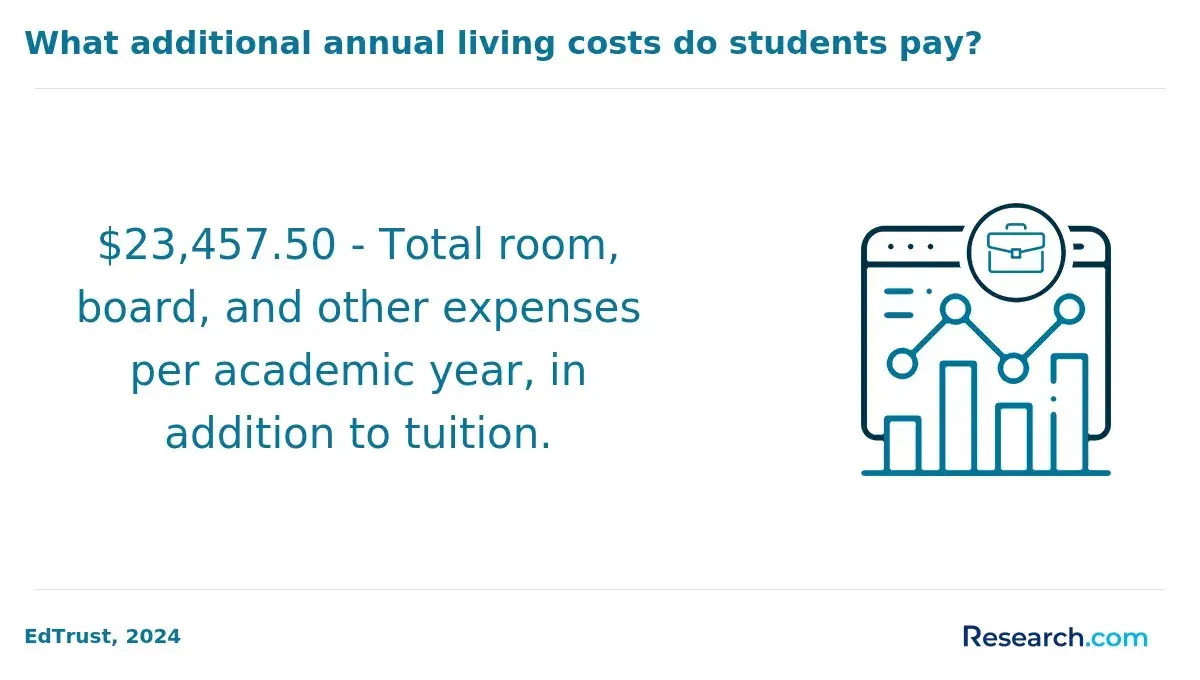
- Living Expenses: Online students often save significantly by avoiding costs related to campus housing, meal plans, parking, and commuting. This reduction can amount to thousands of dollars annually, especially for students who live at home or work during their studies.
- Technology Costs: Additional expenses may accrue from the need for computers, webcams, and reliable internet access. While these technology costs can add several hundred dollars yearly, they are typically offset by the savings from eliminating campus fees.
- Financial Aid Availability: Both online and on-campus leadership students usually qualify for federal financial aid, but scholarships may be less widely offered to online learners. Accelerated programs and transfer credits common online can further lower overall costs by reducing the number of required credits.
Prospective students searching for an easiest masters degree option should carefully consider these cost factors along with career outcomes to assess whether an online leadership degree cost comparison favors affordability in their individual situation.
What Are the Financial Aid Options for Online vs On-Campus Leadership Programs?
Both online and on-campus leadership students may qualify for financial aid, but eligibility and accessibility often differ depending on the program format and the policies of the institution. Understanding these differences is essential for students to navigate funding options effectively and maximize their support opportunities.
Below is a summary outlining and comparing the main financial aid options available for both online and on-campus leadership students.
- Federal Aid: Students in both formats can apply for federal financial aid, including Pell Grants, work-study, and federal loans through FAFSA. However, eligibility for certain federal loans often requires at least half-time enrollment, which can be a challenge for online students who tend to enroll part-time more frequently. Pell Grants may be adjusted for part-time status but could result in reduced amounts, highlighting the need to understand federal financial aid for online leadership degrees carefully.
- State Aid: State financial aid is generally available to both online and on-campus Leadership students, but some states limit access to residents attending eligible in-state programs. Online Leadership programs not recognized by certain state education boards might reduce a student's eligibility, making state aid more accessible for many on-campus students depending on their residency and program location.
- Scholarships and Grants: Institutional scholarships and grants tend to favor on-campus leadership programs, with many awards requiring full-time enrollment or attendance during specific terms. Research indicates that online students often receive a smaller portion of campus-based scholarships. For example, at Oregon State, less than 5% of scholarship funds went to online students, despite them representing 25% of the student body. This disparity underscores challenges in securing scholarships and grants for on-campus leadership programs.
- Employer Tuition Reimbursement: Many students, whether online or on-campus, may qualify for employer tuition assistance, particularly when their degree supports professional growth. Online programs offer greater schedule flexibility, which can help working professionals maintain employment while pursuing their degree and thus qualify for reimbursement more easily.
- Private Student Loans: Private loans are accessible to both groups, but lenders often impose stricter eligibility criteria for part-time or non-traditional programs typically found in online learning. Students should carefully compare lender policies, interest rates, and repayment conditions before committing to private student loans.
Cost considerations for online versus on-campus leadership degrees also vary, with online programs often reducing tuition, housing, and commuting expenses. Career outcomes and acceptance of online leadership credentials continue to improve, especially when earning degrees accredited by recognized institutions.
For those wondering what masters degrees pay the most, leadership remains a solid investment across both learning formats.
Are Online Leadership Programs as Credible as On-Campus Ones?
Online leadership programs from accredited institutions uphold the same rigorous academic standards as their on-campus equivalents. Accreditation bodies like the Higher Learning Commission and AACSB mandate identical criteria for curriculum quality, faculty qualifications, and learning outcomes across both formats.
This ensures that the core content, assignments, and assessments in online degrees are just as challenging and comprehensive as those delivered in person. Consequently, reputable online leadership programs are recognized by academic institutions and licensing bodies as equivalent to traditional degrees.
Graduates, therefore, remain eligible for the same professional certifications and career advancement opportunities regardless of delivery method.
Employer perception of online leadership degrees has notably improved in recent years. A 2023 survey by the Society for Human Resource Management found that 83% of employers now view accredited online degrees as equal in value to on-campus credentials, particularly for working professionals aiming to enhance their skills.
Research also shows that graduates of online programs experience similar salary growth and career progression, with no significant difference in job placement rates compared to their on-campus peers.
Innovations in virtual learning technology-such as interactive simulations and real-time collaboration tools-combined with strong industry partnerships for practical experience, further enhance the credibility of online leadership education.
These advancements help online students gain relevant, hands-on skills valued by employers, making online leadership degrees a credible and practical option for today's professionals.
Do Employers Prefer Online vs On-Campus Leadership Degrees?
Employer attitudes toward online and on-campus leadership degrees have grown increasingly comparable, especially when degrees come from accredited, reputable institutions.
Surveys such as the National Association of Colleges and Employers (NACE) Job Outlook 2024 show that 87.4% of employers have hired graduates with online degrees, often offering them the same starting salaries as those from traditional on-campus programs.
Despite this growing parity, the reputation of the institution remains a key factor, with 83% of business leaders equating online degrees from well-known institutions to their on-campus counterparts, while only 42% regard degrees from exclusively online universities as equally credible.
Program accreditation and verification of rigorous coursework further influence employer perceptions, ensuring that the quality of education meets industry standards. Thus, employers tend to prioritize the institution's prestige and the program's legitimacy over the delivery format itself when evaluating leadership candidates.
Changing workplace norms, particularly the rise of remote and hybrid work environments, have accelerated acceptance of online leadership education. Skills commonly developed in online programs-such as self-motivation, digital communication, and adaptability-are increasingly valued by employers, aligning well with modern work demands.
Research indicates that 96% of online leadership graduates report positive employment outcomes, reinforcing the strong career prospects these programs can offer. However, acceptance levels may vary across industries; for example, sectors like finance and accounting show somewhat higher equivalency rates between online and in-person degrees.
Ultimately, hiring decisions hinge more on demonstrated skills, relevant experience, and institutional prestige than on whether a degree was earned online or on campus.
I recently spoke with a professional who completed an online leadership degree and shared her reflections on employment outcomes. She noted that while some initial skepticism from employers existed about her online degree, her focus on highlighting practical skills, project management experience, and the program's accreditation helped reassure hiring managers.
"What really mattered was my ability to demonstrate leadership in real-world settings and communicate effectively, not where I took the classes," she explained. Her persistence paid off with a role in a well-regarded firm, confirming that an online leadership degree, paired with strong professional competencies, can open doors just as effectively as traditional programs.
Do Online vs On-Campus Leadership Program Graduates Earn the Same Salaries?
Salary comparisons between online and on-campus leadership graduates are increasingly shaped by factors such as program quality, employer perception, and individual career choices rather than the learning format alone. Recent studies indicate that online leadership degrees can provide competitive outcomes that rival traditional campus programs.
Several elements contribute to the salary comparison that online vs on-campus leadership degree graduates experience, as detailed below.
- Program Reputation and Accreditation: The credibility and accreditation of the institution offering the degree greatly affect salary outcomes. Highly ranked online schools like Excelsior College and Thomas Edison State University report Salary Scores above 90, often exceeding those of prestigious on-campus universities. Graduates of well-regarded programs tend to command higher salaries regardless of whether their studies were online or on campus.
- Employer Perception: Although employer bias toward online degrees is decreasing, some organizations still prefer on-campus credentials for senior leadership positions. However, the gap is shrinking as accredited online programs demonstrate rigor and relevance, leading to comparable career outcomes and salary growth for online graduates.
- Field of Study and Career Path: Salary variations are more dependent on industry and job roles than on the mode of education. For example, graduates in organizational leadership working as college administrators earn median salaries around $98,000 irrespective of study format, while those in business management see a range of $60,000 to $120,000. This highlights that career choices impact earning potential more than degree delivery method.
- Cost and Accessibility: Online leadership degrees often cost less-many master's programs are under $10,000-enabling graduates to enter the workforce with less debt. This affordability boosts immediate earning potential and long-term financial stability while allowing working professionals to balance study and career advancement.
- Academic Support and Networking: While on-campus programs may offer richer face-to-face networking, many online programs now provide robust virtual support, career services, and alumni networks. The quality and availability of these resources, rather than the delivery format, play a crucial role in salary progression and career success.
For students exploring options, researching the most popular online universities may reveal high-quality accredited programs that support competitive salary outcomes comparable to traditional on-campus degrees.
How Do You Decide Whether an Online vs On-Campus Leadership Program Is Right for You?
Choosing between an online or on-campus leadership program depends largely on your personal learning preferences, lifestyle, and professional goals. The right format can help you thrive academically and professionally. To better understand which option is the best fit for you, consider the key factors outlined below:
- Learning style: Those who prefer self-paced study and independent work might find the best online leadership degree for working professionals an ideal choice. In contrast, campus leadership degree benefits for student engagement appeal to learners who thrive with face-to-face interaction and structured settings.
- Flexibility needs: Online programs offer greater flexibility, allowing you to balance classes with work or family commitments. This adaptability suits many adult learners seeking affordable online schools for working adults, whereas on-campus programs require rigid attendance schedules that foster routine but less freedom.
- Budget: Online degrees often reduce expenses related to commuting and housing, which can make them more cost-effective overall. However, it's important to compare all fees, including technology costs, before deciding on your commitment.
- Networking opportunities: Traditional on-campus leadership programs provide easier access to in-person networking events and informal peer interactions. Many online programs now compensate with virtual networking platforms and alumni groups, but some find the face-to-face networking to be more impactful.
- Access to campus resources: Attending on campus typically grants you direct access to libraries, career services, and leadership workshops. Online students rely mainly on digital resources, which while convenient, may limit some experiential learning elements available on site.
Here's What Graduates of Online vs On-Campus Leadership Programs Have to Say About Their Degree
- Felix: "Finishing my leadership degree entirely online allowed me to balance work, family, and education in a way that traditional programs simply couldn't. The flexibility to study at my own pace empowered me to absorb material deeply and apply new concepts immediately in my current job. Thanks to this program, I landed a management position within six months of graduating and have since developed a passion for mentoring others remotely. The online format challenged me to be disciplined and self-motivated, skills that have been invaluable in my career growth. "
- Jimmy: "Attending an on-campus leadership degree program was a transformative experience that went beyond academics. The vibrant community, face-to-face interactions, and networking opportunities helped me build lasting relationships with professors and peers, which opened doors to internships and leadership roles early on. Being physically present on campus taught me the importance of collaboration and enhanced my communication skills. After graduation, I secured a role in nonprofit leadership where I actively contribute to programs supporting underprivileged youth, a cause close to my heart. "
- Logan: "The hybrid leadership degree program was the perfect blend of in-person and online learning, allowing me to benefit from hands-on workshops while maintaining flexibility for remote study. This format encouraged me to develop adaptability and time management skills critical in today's fast-paced work environment. I appreciated the opportunity to engage with diverse cohorts and industry professionals both virtually and face-to-face, which broadened my perspective on effective leadership strategies. Since graduating, I've advanced my career in corporate leadership and am passionate about fostering inclusive workplaces. "
Other Things You Should Know About Online & On-Campus Leadership Degree Programs
Online leadership degree programs can present challenges such as limited networking opportunities, difficulties in maintaining self-discipline and motivation, and potential technology issues. Students might also face a lack of immediate feedback from instructors compared to the real-time interaction available in on-campus settings.
Student engagement often differs widely between online and on-campus leadership programs. In 2027, online programs frequently utilize discussion boards, live virtual classes, and video conferences, while on-campus programs offer in-person interactions, seminars, and group activities. Each format has unique benefits tailored to different learning styles.
References
- Online degree costs vs traditional degrees: which is more affordable? https://collegeonline.io/blogs/online-degree-costs-vs-traditional-degrees
- Leadership and Management Online vs. On-campus degree: Which is better? - Australian National Institute of Management https://anim.edu.au/leadership-and-management-online-vs-on-campus-degree-which-is-better/
- Online Vs On-Campus Learning: Which Mode Of Study Suits You Better? https://www.unicaf.org/online-university-vs-on-campus/
- Online Learning vs. Campus Life https://online.usm.edu/blog/online-learning-vs-campus-life/
- Educational Leadership | Accelerated Online https://usm.maine.edu/academics/academic_programs/educational-leadership-online/
- Online Learning - Are online degrees 'easier' than on-campus degrees? | Postgraduate study | College of Medicine and Vet Medicine https://medicine-vet-medicine.ed.ac.uk/postgraduate/postgraduate-blog/are-online-degrees-easier
- Online Classes vs. On-Campus: Which Is Right for You? https://graduate.northeastern.edu/knowledge-hub/online-classes-vs-on-campus/
- Are online degrees respected by employers? https://onlineprograms.uic.edu/news-stories/are-online-degrees-respected-by-employers/
- On-campus vs online university degree: pros and cons https://www.idp.com/vietnam/blog/university-online-vs-on-campus/
- What’s the Difference Between Online vs. On-Campus Digital Marketing Master’s Programs? | Digital Marketing Institute https://digitalmarketinginstitute.com/blog/whats-the-difference-between-online-vs-on-campus-digital-marketing-masters-programs


