
2027 Part-Time vs. Full-Time Social Media Marketing Degree Programs

Co-Founder and Chief Data Scientist
Choosing between part-time and full-time social media marketing degree programs often poses a challenge for students balancing work, finances, and academic goals. Recent data shows that 45% of social media marketing enrollees opt for flexible learning schedules, reflecting the increasing demand for programs accommodating busy lifestyles and varied commitments.
This article will help clarify the key differences between part-time and full-time social media marketing studies, focusing on workload, pace, and career implications to assist readers in selecting the format best suited to their professional and personal needs.
Key Benefits of Part-Time vs. Full-Time Social Media Marketing Degree Programs
- Part-time programs allow students to balance work and study, enhancing career progression while earning experience relevant to social media marketing roles.
- They offer financial flexibility by spreading tuition costs over a longer period, reducing immediate financial pressure and potential debt.
- Part-time study supports better work-life balance, accommodating personal commitments and reducing burnout common among full-time social media marketing students.
How Are Part-Time Social Media Marketing Programs Structured Compared to Full-Time Programs?
Choosing between part-time and full-time social media marketing programs involves understanding how their structures affect the learning pace and overall academic experience. Scheduling differences play a key role in helping students balance education with other commitments or immerse themselves fully in their studies.
Part-Time Program
- Course Load: Part-time students typically enroll in 6 to 9 credit hours per semester, managing about half or less of full-time credit requirements.
- Weekly Time Commitment: These students spend around 12 to 18 hours weekly on classes and study, which is roughly half the time expected of full-time students.
- Scheduling Flexibility: Evening and weekend classes are common, allowing working professionals to attend without disrupting their regular jobs.
- Mode of Delivery: Online and hybrid formats are widely available, offering adaptability that fits varied lifestyles.
Full-Time Program
- Course Load: Full-time students take 12 to 18 credit hours per semester, demanding a more intensive focus on coursework.
- Weekly Time Commitment: These students dedicate approximately 30 to 40 hours per week to lectures, assignments, and group projects.
- Scheduling Flexibility: Classes are mostly scheduled during weekday daytime hours, limiting evening and weekend options.
- Mode of Delivery: Full-time programs primarily involve in-person sessions to provide consistent access to campus resources.
For students seeking to accelerate their education, exploring accelerated career programs might offer additional pathways.
How Long Does It Take to Earn a Part-Time vs Full-Time Social Media Marketing Degree?
Understanding how long it takes to earn a social media marketing degree helps students plan their academic and career timelines more effectively. The time to complete social media marketing degree programs varies widely depending on whether students enroll part-time or full-time, as shown in the breakdown below:
- Full-Time: Typically lasts two to four years, with bachelor's degree students often finishing in about four years, according to the National Center for Education Statistics. This path suits those aiming for quicker workforce entry.
- Part-Time: Usually extends beyond four years and can take six or more years. This option offers flexibility to accommodate work or personal commitments but requires a longer study period.
- Transfer Credits: Accepted credits can reduce the duration by fulfilling some course requirements ahead of time.
- Program Structure: Evening or weekend classes and availability of accelerated courses influence how quickly students complete their degrees.
For working professionals or individuals balancing other responsibilities, part-time study offers a practical option. Full-time study benefits those prioritizing faster degree completion. Those interested in flexible learning might explore degrees for older adults as well.
Are Admission Requirements Different for Part-Time vs Full-Time Social Media Marketing Programs?
While these programs share core elements, key differences reflect the distinct needs of their students. The choice depends on factors such as academic background, work experience, and schedule flexibility.
Understanding the differences in social media marketing degree admissions can help prospective students select the option that aligns best with their goals.
- GPA Expectations: Full-time programs usually expect a minimum GPA between 2.5 and 3.0 on a 4.0 scale, emphasizing readiness for immersive study. Part-time programs often allow more flexibility with GPA to accommodate working adults balancing education and employment.
- Prerequisite Coursework: Both formats typically require basic marketing, business, or communications courses. Part-time programs may sometimes substitute professional experience for formal prerequisites, recognizing practical skills acquired on the job.
- Professional Experience: Part-time social media marketing programs often require one to three years of relevant work experience, valuing career achievements. In contrast, full-time programs are more likely to admit recent high school graduates or applicants with limited work history.
- Standardized Tests: Many full-time social media marketing degree admissions still request SAT or ACT scores, though test-optional policies are increasingly common. Part-time programs usually waive these requirements, focusing more on professional and academic records.
- Supporting Documents: Both program types ask for letters of recommendation and personal statements. Part-time applicants are encouraged to emphasize career goals and accomplishments to demonstrate preparedness for advanced study.
For students curious about educational pathways and timing, exploring the answers to "How long does it take to get a associate degree?" can provide additional context to their academic journey, en route to making a suitable decision.
How Do Tuition Fees Differ for Part-Time vs Full-Time Social Media Marketing Programs?
Tuition costs for part-time and full-time social media marketing programs vary mainly due to how fees are structured and the number of credits taken each semester.
While many schools charge a consistent rate per credit regardless of enrollment status, full-time students often benefit from a flat-rate fee covering a typical credit range, making their cost per credit lower. This can significantly impact budgeting decisions for students depending on their availability and financial resources.
Below is a list of key facts:
- Per-credit tuition: Part-time students usually pay for each credit individually, which can add up quickly, especially if extra fees apply per course each semester. Full-time students often pay a fixed rate for a set credit load, lowering the cost of each credit comparatively.
- Total program expenses: Since part-time study extends program duration, it may increase overall tuition and related fees over time, unlike full-time study which is shorter but more intensive.
- Financial aid access: Full-time enrollees generally have access to a wider range of scholarships, grants, and loans, while part-time students may qualify for fewer funding options, affecting net costs.
- Additional fees: Both part-time and full-time students face extra charges such as technology, campus services, or course materials, though these can differ depending on enrollment status.
- Enrollment intensity: The pace of study influences not only tuition but also financial aid eligibility and potential cost savings through flat-rate billing for full-time students.
A graduate of a part-time social media marketing degree program shared her insights on tuition fees: "Paying per credit meant I had to stay constantly aware of costs each semester. There wasn't a flat fee to rely on, so budgeting was tricky when unexpected fees popped up. I appreciated the flexibility but sometimes felt stretched financially, especially when balancing work and studies."
She reflected on the slower pace, allowing her to manage expenses gradually, but admitted that the overall price sometimes felt higher than anticipated. Still, she valued the ability to progress at her own speed, which made the investment worthwhile despite the financial challenges.
Which Social Media Marketing Degree Program Format Offers More Online or Hybrid Course Options?
The part-time social media marketing degree format offers more online and hybrid course options than full-time programs. Full-time programs often focus more on on-campus experiences, though online offerings are gradually increasing. Below is a comparison of how each format typically handles course delivery styles:
- Program Design: Part-time programs are crafted for working adults, prioritizing flexibility with asynchronous online classes or hybrid models combining limited campus visits and remote learning.
- Student Demographics: Full-time tracks generally serve recent high school graduates or students pursuing a traditional college life, favoring immersive, on-campus experiences over remote options.
- Institutional Policies: Schools allocate more resources to support flexible learning in part-time formats, aiming to assist students balancing education with employment.
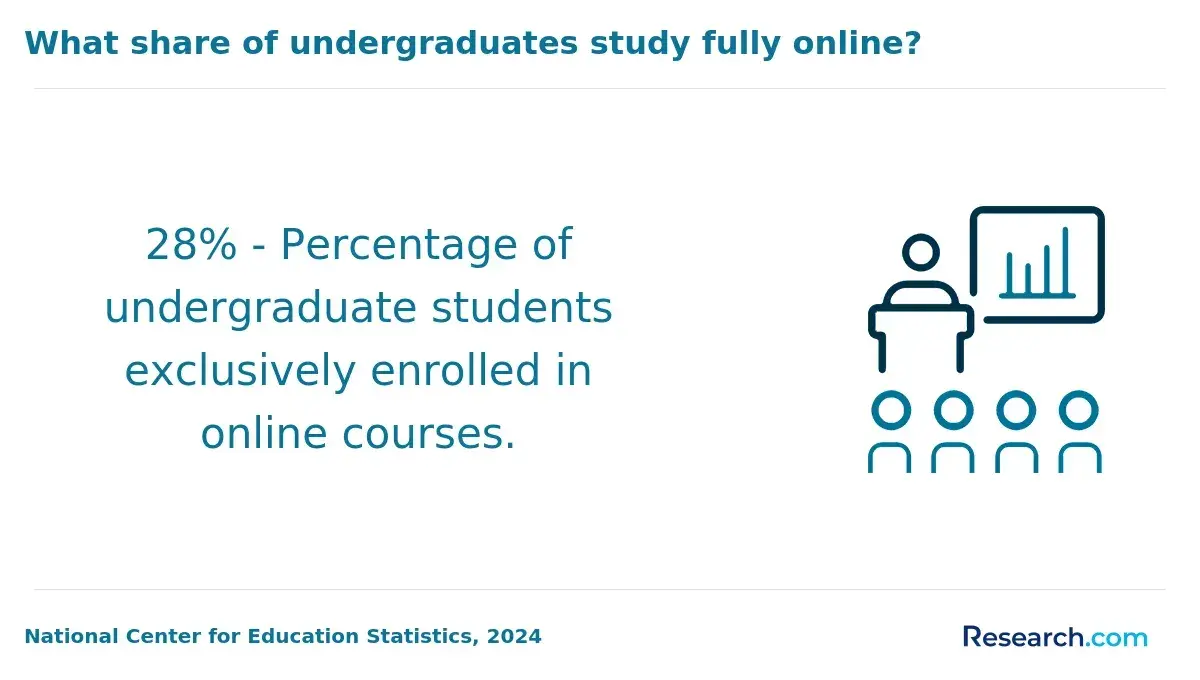
- Course Availability: According to a 2023 NCES report, approximately 75% of part-time social media marketing students enroll in hybrid or fully online courses, compared to just 40% in full-time programs.
- University Adaptation: While full-time degrees are expanding online options, institutions typically maintain stronger hybrid or online presence in part-time studies to accommodate professional schedules.
Can Social Media Marketing Students Switch Between Part-Time and Full-Time Enrollment?
Students in social media marketing programs can generally switch between part-time and full-time enrollment, though policies vary by institution. This typically requires a formal request through academic advising or the registrar's office, with approval depending on academic standing and institutional rules.
Before making a switch, students should evaluate how the change affects their financial aid, course schedules, and overall academic goals. These factors influence the feasibility and timing of enrollment changes.
Common requirements for switching enrollment status include maintaining satisfactory academic performance and securing approval from advisors. Financial aid eligibility can be impacted, as some grants and loans necessitate full-time enrollment.
Additionally, course availability might limit options, and changes can extend or shorten the time needed to graduate. Advising support is crucial to ensure any transition aligns with degree requirements and personal circumstances.
When I spoke with a graduate who transitioned from part-time to full-time social media marketing studies, he described the process as both challenging and rewarding.
"I initially balanced work with evening classes, but shifting to full-time helped me focus more deeply," he explained. He found that while the paperwork was straightforward, adjusting to the increased workload demanded careful planning.
Ultimately, the switch accelerated his graduation and enhanced his learning experience, making the effort worthwhile.
How Do Online, Hybrid, and Campus Social Media Marketing Program Delivery Formats Affect Part-time vs. full-time learning?
Delivery format significantly shapes the learning experience by influencing flexibility, engagement, and resource access, with distinct impacts on part-time and full-time social media marketing students. Online, hybrid, and campus options offer varying degrees of convenience and structure, affecting how students manage their studies alongside other commitments.
- Scheduling flexibility: Online programs provide the greatest flexibility, allowing part-time students to balance work and study effectively, while full-time learners benefit from rapid progression but must maintain discipline due to self-paced or synchronous formats. Hybrid formats offer moderate flexibility by mixing scheduled campus sessions with online work, suitable for those managing diverse schedules. On-campus programs generally require fixed class times, better fitting full-time students with limited outside distractions.
- Workload management: Full-time campus programs often involve intense semester workloads challenging for part-time students who adhere to rigid schedules. Online and hybrid formats allow spreading assignments over time, easing weekly demands. According to the National Center for Education Statistics, almost 60% of part-time online learners report improved workload management compared to traditional settings, an important consideration for those choosing between part-time vs full-time social media marketing delivery formats.
- Accessibility and resources: Online delivery removes geographic barriers, aiding both part- and full-time learners, especially working adults. On-campus students gain immediate access to libraries and face-to-face support, which some find invaluable for networking. Hybrid programs blend these benefits but may require commuting. For those exploring online hybrid campus social media marketing learning options, resource access often informs the choice.
- Learning pace and retention: Part-time online students can set their own pace, which often improves knowledge retention and practical application of social media marketing concepts. Full-time students on campus benefit from immersive environments promoting faster absorption but increase burnout risk. Hybrid delivery offers balanced rhythms catering to varying student needs.
- Student support services: Campus learners access counseling, career advising, and peer groups in person, enhancing engagement. Online programs increasingly provide virtual support, though responsiveness varies. Part-time students especially value flexible advising available in hybrid and online formats, as noted by the Online Learning Consortium's recent survey.
Students considering these formats may also explore options at accredited US colleges online with no application fee to find programs aligning with their scheduling, workload, and support preferences.
Do Employers Prefer Full-Time Social Media Marketing Degrees Over Part-Time Degrees?
Employers generally do not show a clear preference between full-time social media marketing degrees and part-time degrees; their focus tends to be on the candidate's overall skill set, experience, and ability to balance responsibilities.
Full-time programs are often perceived as more rigorous due to their intensive curriculum compressed into a shorter time frame, which can signal strong time management and dedication.
On the other hand, part-time degrees allow students to gain professional experience concurrently, a factor that about 68% of hiring managers prioritize according to a 2023 National Association of Colleges and Employers report.
In fact, candidates with a part-time social media marketing degree often benefit from applying real-world skills alongside their studies, giving them a practical edge that complements academic learning. This highlights the nuanced considerations employers have when evaluating the part-time versus full-time social media marketing degree value.
Industry trends increasingly acknowledge the advantages of flexible learning formats. Employers value the ability to juggle work and study, especially in fast-evolving fields like social media marketing, where up-to-date hands-on experience is critical.
The part-time path enables professionals to continue building relevant experience while earning their degree, reinforcing career readiness.
For students exploring their options, consulting resources such as the offerings of the best dual degree programs can help identify flexible, reputable choices that align with their professional and educational goals.
Is a Part-Time or Full-Time Social Media Marketing Degree More Worth It for ROI?
Return on investment (ROI) is a vital consideration when deciding between part-time and full-time social media marketing degree programs. It evaluates the educational value against expenses, including tuition, the duration of study, income forgone during that time, and the benefits gained after graduating.
Full-time courses often demand a larger upfront financial commitment and require students to pause their employment, raising the opportunity cost.
Full-time programs usually finish faster, typically within two years, and may offer stronger access to internships and professional networks, which can lead to higher initial salaries.
Part-time programs enable students to keep working, reducing lost wages and allowing tuition payments to be spread over time, though completion may take three to four years. This can support steady career growth despite lower immediate earnings post-graduation.
Here are more key facts:
- Total Cost: Full-time programs usually have higher tuition due upfront, while part-time options let students pay gradually, easing financial strain.
- Opportunity Cost: Full-time learners often stop working and lose income during study; part-time students maintain earnings, reducing this loss.
- Starting Salary: Graduates from full-time programs tend to earn 10-15% more early in their careers compared to part-time peers.
- Career Growth: Part-time students gain practical experience during study, supporting continuous professional development over time.
How Do You Decide Between a Part-Time and Full-Time Social Media Marketing Degree Program?
Selecting between a part-time and full-time social media marketing degree program is vital to align with your educational ambitions, career plans, and personal life. The right format can help you manage responsibilities while advancing professionally.
- Time availability: Full-time programs typically demand 12 to 18 credit hours per semester, suited for those who can dedicate most weekdays to study. Part-time options spread coursework over longer periods, ideal for balancing work or family obligations.
- Financial resources: Full-time study may lower overall tuition by finishing sooner but requires upfront financial readiness or aid. Part-time study allows earning while learning, easing immediate costs but possibly increasing total expenses due to extended duration.
- Career goals: Intensive full-time study is beneficial for rapid workforce entry, while part-time allows applying knowledge gradually, fitting those seeking flexibility in career development.
- Learning style: Immersive environments in full-time programs suit hands-on learners. Part-time learners often benefit from time to absorb and practice concepts between courses.
- Program duration and flexibility: Full-time tracks are shorter but less flexible; part-time formats offer extended timelines and adaptability to personal schedules.
What Graduates Say About Their Part-Time vs. Full-Time Social Media Marketing Degree
- Wade: "Enrolling in the full-time social media marketing degree was a transformative journey for me. The hands-on projects and real-world simulations made the steep cost well worth it, as I landed a role at a top firm within months of graduation. I truly believe this investment accelerated my career in ways I hadn't imagined. "
- Frank: "Pursuing the part-time social media marketing degree allowed me to balance work and study effectively, making the financial commitment manageable while gaining valuable insights. Reflecting back, the flexibility helped me apply what I learned immediately to my job, which enhanced my professional growth steadily over time. Considering the average cost, it was a smart and practical choice. "
- Logan: "The structured curriculum of the full-time social media marketing program offered a disciplined and immersive learning experience. Although the tuition was on the higher side, the comprehensive knowledge I gained justified every dollar, fueling my confidence to launch my own consultancy. For anyone serious about advancing in this field, this program is a professional game-changer. "
Other Things You Should Know About Social Media Marketing Degrees
In 2027, full-time social media marketing degree programs typically take 1-2 years to complete, depending on the institution and level of the degree. Part-time programs generally extend the duration to 2-4 years, allowing students to balance work, study, and other commitments.
Financial aid options in 2027 can vary, but both part-time and full-time social media marketing students might access scholarships, grants, and loans. Eligibility often depends on enrollment status; full-time students typically qualify for more federal aid. Check specific program requirements.
Yes, part-time social media marketing programs typically offer the same curriculum as full-time programs. The difference lies in the pace and schedule, allowing part-time students to balance other commitments while covering the same materials and meeting the same academic standards as their full-time counterparts.
References
- Social media top as Gen Z’s preferred job pick https://thebatt.com/news/social-media-top-as-gen-zs-preferred-job-pick/
- How to Become a Social Media Manager https://www.open.edu.au/advice/careers/business-management/social-media-manager
- Account Suspended https://cms.plasament.com/career-transitions
- Social Media Marketing Degree Online https://www.snhu.edu/online-degrees/bachelors/bs-in-marketing/social-media-marketing
- NZIE® - Is digital marketing the ideal side hustle? https://www.nzie.ac.nz/blog-is-digital-marketing-the-ideal-side-hustle/
- Social Media Marketing Degree: Is It Worth It in 2025? - JobPrepped https://jobprepped.com/social-media-marketing-degree-is-it-worth-it-in-2025/
- What’s the Difference Between Online vs. On-Campus Digital Marketing Master’s Programs? | Digital Marketing Institute https://digitalmarketinginstitute.com/blog/whats-the-difference-between-online-vs-on-campus-digital-marketing-masters-programs
- Is a Digital Marketing Degree Worth It? - MMC Learning https://mmclearning.com/digital-marketing/is-a-digital-marketing-degree-worth-it/
- Complete Digital Marketing Degree Subject Guide - FutureLearn https://www.futurelearn.com/info/blog/digital-marketing-degree-guide
- Should we teach in hybrid mode or fully online? A theory and empirical investigation on the service–profit chain in MBAs https://www.rennes-sb.com/faculty-research-news/teach-hybrid-mode-fully-online-theory-empirical-investigation-service-profit-chain-mbas/


