
2027 Pediatric LPN Careers: Skills, Education, Salary & Job Outlook

Co-Founder and Chief Data Scientist
Becoming a pediatric LPN is a practical entry point into child-focused nursing, but it is not a casual career choice. You need state-approved training, licensure, comfort working with children and families, and the emotional steadiness to care for young patients who may be frightened, sick, or unable to explain what they feel.
This guide is for prospective nursing students, career changers, and current healthcare workers considering pediatric licensed practical nursing. It explains what pediatric LPNs do, what training and certifications are commonly required, where they work, how pay and job outlook compare, and what advancement options may follow. Use it to decide whether this path fits your strengths, schedule, financial goals, and long-term nursing plans.
Key Things You Should Know About Pediatric LPN Careers
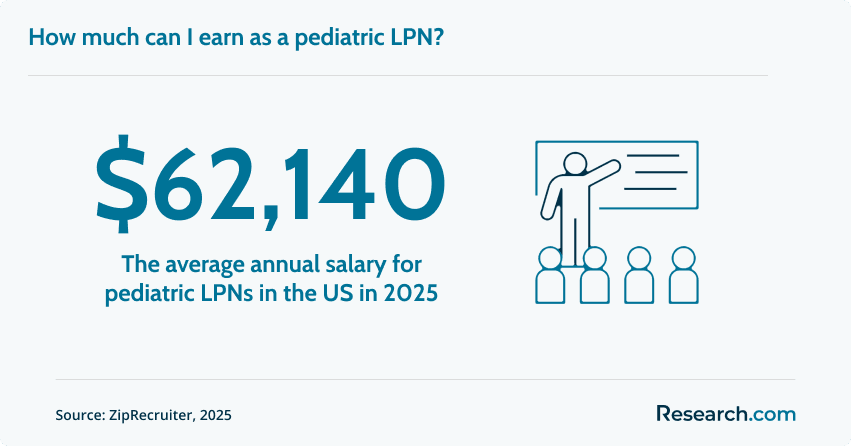
- A pediatric LPN typically earns around $63,142 annually, with starting salaries near $51,500 and experienced professionals making up to $84,129 or more.
- The field is stable and growing, with demand expected to rise at or above the average rate for all occupations, fueled by advances in pediatric medicine and higher rates of childhood illnesses.
- Entering this career requires completing a state-approved practical nursing program and passing the NCLEX-PN exam to become licensed.
- Success depends on strong communication and empathy, attention to detail in medication and monitoring, adaptability across pediatric settings, and solid clinical skills like taking vital signs and assisting with procedures.
- Long-term opportunities include moving into supervisory roles, gaining certifications, or advancing education to become an RN or specialize as a pediatric nurse practitioner.
What do pediatric LPNs do?
Pediatric LPNs provide licensed nursing care to infants, children, and adolescents under the supervision of registered nurses, physicians, or other authorized clinicians. Their work combines routine clinical tasks with age-appropriate communication, family support, and careful observation of changes in a child’s condition.
In practice, pediatric LPNs may take vital signs, give medications within their scope of practice, prepare patients for exams, assist with procedures, update health records, and help families understand care instructions. The exact duties depend on state regulations, employer policies, and the care setting.
A day in the life of pediatric LPNs
A typical shift can move quickly. A pediatric LPN may begin by reviewing assigned patients, checking vital signs, documenting symptoms, administering scheduled medications, and reporting concerns to an RN or provider. In a clinic, the day may involve rooming patients, preparing vaccines, assisting with exams, and teaching caregivers about follow-up care. In a hospital or pediatric unit, the work may include more frequent monitoring, bedside care, and coordination with a broader care team.
The pediatric part of the role matters. Children may not describe pain clearly, may fear needles or exams, and may need explanations at their developmental level. Families also need reassurance and clear instructions. Strong pediatric LPNs know how to provide clinical care while helping children feel safer and caregivers feel informed.
What are the key responsibilities of pediatric LPNs?
The main responsibility of a pediatric LPN is to deliver safe, supervised nursing care for children while supporting the clinical team and the family. Duties vary by state scope-of-practice rules, but the role is usually hands-on and patient-facing.
- Check and record vital signs, symptoms, pain levels, intake and output, and other basic health indicators.
- Administer medications, vaccines, or treatments as permitted by state law and employer policy, with careful attention to pediatric dosing and possible reactions.
- Assist physicians, nurse practitioners, physician assistants, and RNs during exams, diagnostic tests, wound care, or minor procedures.
- Prepare exam rooms, equipment, supplies, and pediatric patients for appointments or treatments.
- Document care accurately in electronic health records, including changes in condition, medication administration, and family teaching.
- Teach caregivers about home care instructions, medication schedules, warning signs, follow-up appointments, and preventive care.
- Comfort children during stressful procedures using calm communication, distraction, reassurance, and developmentally appropriate explanations.
- Report concerns promptly to supervising clinicians, especially changes in breathing, hydration, pain, fever, behavior, or response to treatment.
The most challenging vs. the most rewarding tasks
One of the hardest parts of pediatric LPN work is caring for children who are scared, in pain, nonverbal, or too young to explain what is wrong. A nurse may need to complete a time-sensitive task while also calming a child and answering a worried parent’s questions. That requires patience, emotional control, and sound judgment.
The reward is equally direct. Pediatric LPNs often see the effect of their care in real time: a child becomes less afraid, a parent understands the care plan, or a young patient begins to recover. For people who want a faster route into patient care, a quick degree or accelerated education path may be worth comparing with practical nursing programs, depending on career goals and licensing requirements.
What are the key skills for pediatric LPNs?
Pediatric LPNs need both clinical accuracy and strong people skills. Technical tasks must be performed safely, but the best pediatric nurses also know how to communicate with children, support caregivers, and notice subtle changes in behavior or condition.
Technical skills
- Vital signs measurement: Pediatric LPNs must know how to take and interpret age-appropriate vital signs, including temperature, pulse, respirations, blood pressure, oxygen saturation, and pain indicators.
- Medication administration: Children require careful dosing, timing, route verification, and monitoring for side effects. Accuracy is especially important because pediatric medication errors can carry serious risk.
- Phlebotomy and laboratory procedures: In settings where LPNs perform specimen collection, they need technique, preparation, and the ability to reduce distress for children and families.
- Assisting in pediatric examinations: Pediatric LPNs help position patients, prepare supplies, explain steps, and support safe, efficient exams and procedures.
- Documentation: Clear, timely charting protects patient safety, supports continuity of care, and helps meet legal and employer requirements.
Soft skills
- Active listening: Families often notice small changes first. Listening carefully can help identify concerns that need escalation.
- Social perceptiveness: Children may show distress through behavior, facial expressions, withdrawal, or agitation rather than direct explanation.
- Communication: Pediatric LPNs must explain care in plain language to caregivers and in age-appropriate terms to children.
- Patience: Pediatric care often takes longer because children may resist procedures, ask repeated questions, or need extra reassurance.
- Teamwork: LPNs coordinate closely with RNs, providers, medical assistants, therapists, and administrative staff.
The one overlooked skill that separates the good from the great
Family education is one of the most valuable pediatric LPN skills. A technically competent nurse can complete tasks correctly; an excellent pediatric LPN also helps families understand what to do after the visit or discharge. That may include how to give medicine, when to call a provider, how to monitor symptoms, or how to manage a chronic condition at home.
This skill improves safety because many pediatric outcomes depend on what happens outside the clinical setting. A caregiver who understands dosing, warning signs, and follow-up steps is less likely to make preventable mistakes. Nurses who communicate well may also be stronger candidates for pediatric clinics, hospitals, and family-centered care roles.
Career changers or older learners who want to strengthen their academic foundation can compare top degree programs for older adults online, while still confirming that any nursing pathway meets state licensure requirements.
Pediatric LPN Careers: A Step-by-Step Guide to Getting Started
The path to becoming a pediatric LPN is structured: complete approved practical nursing education, pass the required licensure exam, and build pediatric experience. You do not usually become “pediatric” through a separate entry-level license; instead, you become an LPN first and then seek pediatric clinical settings, training, and certifications when available.
- Confirm your state’s LPN requirements. Practical nursing is regulated by state boards of nursing, so check approved programs, clinical hour requirements, scope of practice, background check rules, and exam procedures in the state where you plan to work.
- Complete a state-approved practical nursing program. Programs commonly include classroom instruction, simulation, and supervised clinical experience across multiple patient populations, including pediatrics.
- Apply for licensure and pass the NCLEX-PN. Passing the National Council Licensure Examination for Practical Nurses is required for practical nurse licensure.
- Earn required basic clinical certifications. Basic Life Support is commonly expected, and pediatric settings may prefer or require additional training such as Pediatric Advanced Life Support depending on the role.
- Apply for pediatric-focused positions. Look for roles in pediatric clinics, children’s hospitals, family practices, urgent care centers, home health agencies, or specialty offices that treat children.
- Build supervised pediatric experience. Early experience helps you develop confidence with pediatric vital signs, medication safety, family communication, developmental differences, and escalation procedures.
- Consider advancement pathways. If you want broader scope, higher-level clinical decision-making, or leadership options, compare LPN-to-RN, ADN, BSN, and specialty training routes.
The smartest approach is to plan beyond the first job. If your long-term goal is pediatric emergency care, school health, case management, or advanced practice nursing, choose employers and education options that keep those next steps open.
What education, training, or certifications are required?
To become a pediatric LPN, you generally need to complete a state-approved practical nursing program and earn practical nurse licensure. A common route is a Diploma in Practical Nursing from a technical college or vocational school, usually completed in about 12 months. Program length, admissions requirements, costs, and clinical placements vary by school and state.
Required and preferred credentials often include the following:
- State-approved practical nursing education: This is the required academic foundation for LPN licensure eligibility.
- NCLEX-PN: The National Council Licensure Examination for Practical Nurses is required for state licensure.
- Basic Life Support: BLS certification is often required in clinical pediatric settings.
- Pediatric Advanced Life Support: PALS may be preferred or required for LPNs working in specialized pediatric units, depending on employer policy and state scope of practice.
- Employer orientation: New pediatric LPNs should expect orientation, skills validation, and shadowing, especially in hospitals, specialty clinics, and home health settings.
On-the-job training commonly builds on supervised clinical experiences in medical, surgical, obstetric, pediatric, geriatric, and mental health care areas, totaling over 1,000 clinical hours. Pediatric rotations are standard in many accredited practical nursing programs, but formal pediatric residencies for LPNs do not exist in the same way they often do for newly licensed RNs.
Are advanced degrees or niche certifications worth the investment?
Advanced education can be worth it if your goals require a broader scope of practice, higher responsibility, or long-term advancement. LPN-to-RN bridge programs, Associate or Bachelor of Science in Nursing degrees, and pediatric specialty training may improve access to roles that are not available to LPNs alone.
The trade-off is time, cost, and admission competitiveness. A practical nursing diploma may take about 12 months, while RN and bachelor’s pathways can take longer and may require additional prerequisites, clinical hours, and licensing exams. Before enrolling, compare tuition, accreditation, NCLEX outcomes, clinical placement support, transfer policies, and whether the program is approved by the relevant nursing board.
For learners thinking far beyond entry-level nursing, reviewing options such as the most affordable PhD programs can help frame long-term education planning, although doctoral study is not required to work as a pediatric LPN.
What is the earning potential for pediatric LPNs?
Pediatric LPN pay depends on experience, employer type, location, shift schedule, specialty setting, and whether the role includes differentials for nights, weekends, or holidays. Pediatric-focused jobs may be found in hospitals, clinics, home health, specialty offices, and long-term care settings, and each setting may pay differently.
The pediatric LPN salary range 2025 in the United States spans from an entry-level salary of about $48,070 per year to a median annual wage near $62,340, reaching up to $79,270 for senior positions. Earlier salary references for this career path also describe growth from about $51,500 at entry-level to over $84,000 for experienced nurses. Because compensation sources, job titles, geography, and specialty definitions can differ, use these figures as planning benchmarks rather than a guaranteed offer.
What affects pediatric LPN pay?
- Location: Urban areas and higher-cost states may offer stronger wages, though living costs can offset the difference.
- Employer: Hospitals and specialty pediatric clinics may pay differently from nursing care facilities, physician offices, or home health agencies.
- Experience: LPNs with pediatric experience, strong references, and proven medication and documentation skills may qualify for better opportunities.
- Shift and unit: Night, weekend, holiday, urgent care, and higher-acuity settings may include differentials or additional requirements.
- Further education: Moving from LPN to RN can change both scope of practice and earning potential, but it requires additional education and licensure.
When comparing offers, look beyond base pay. Health insurance, paid time off, tuition assistance, retirement contributions, staffing ratios, orientation quality, and scheduling stability can significantly affect the real value of a job.
What is the job outlook for pediatric LPNs?
The job outlook for pediatric LPNs shows a projected growth rate of 3% from 2024 to 2034, which is about as fast as the average for all occupations. That points to steady demand rather than explosive growth. For job seekers, the stronger opportunities will likely go to LPNs who combine licensure with pediatric experience, reliable documentation, medication safety, and strong family communication.
The key factors shaping the future outlook
Demand is influenced by access to pediatric care, chronic childhood health needs, workforce turnover, and continued use of LPNs in clinics, long-term care, home health, and some hospital settings. Pediatric specialty clinics and children’s hospitals may value LPNs who can support efficient visits, assist with treatments, and help families follow care plans.
Scope-of-practice rules also matter. Some states and employers use LPNs broadly in pediatric care, while others reserve more functions for RNs. Before choosing a program or relocating, review state board rules and job postings in your target area to see how pediatric LPN roles are actually structured.
This career is generally more about stability and service than rapid income acceleration. If your main goal is the fastest career to make money, compare nursing with other options. If your goal is a direct, licensed healthcare role focused on children, pediatric LPN work can be a practical start.
What is the typical work environment for pediatric LPNs?
Pediatric LPNs work in hands-on clinical environments where children receive direct care. Common settings include pediatric hospitals, neonatal intensive care units, pediatric specialty clinics, family medicine practices, urgent care centers, home health agencies, schools, and physician offices that serve children.
Most pediatric LPNs find employment in nursing care facilities (28%), hospitals (14%), and doctors' offices (13%), reflecting the range of places where licensed practical nursing support is needed. Not every job in these settings is exclusively pediatric, so applicants should read job descriptions carefully and ask how much of the patient population is made up of children.
Schedule and pace
Hospital and intensive care settings may require nights, weekends, holidays, and rotating shifts because patient care continues 24/7. Clinics and physician offices may offer more predictable daytime schedules, but they can involve high patient volume, fast room turnover, vaccine administration, phone triage support, and detailed documentation.
Remote work is generally not part of pediatric LPN practice because the role depends on direct patient care, physical assessment tasks, medication administration, and in-person communication. Some administrative or care coordination tasks may use electronic systems, but bedside or clinic presence remains central.
What are the pros and cons of pediatric LPN careers?
Pediatric LPN careers can be deeply meaningful, but they are not easy. The work can offer strong patient connection, a clear sense of purpose, and a faster route into nursing than longer degree pathways. It can also involve emotional strain, physical demands, limited autonomy compared with RN roles, and difficult schedules.
Pros
- Direct impact on children and families: Pediatric LPNs help children feel safer and help caregivers understand what to do next.
- Relatively fast entry into nursing: Practical nursing programs are often shorter than RN degree pathways.
- Varied work settings: Opportunities may exist in clinics, hospitals, home health, physician offices, and specialty practices.
- Meaningful relationships: Pediatric care often involves ongoing interaction with families, especially in chronic care or home health.
- Foundation for advancement: LPN experience can help clarify whether to pursue RN, BSN, education, case management, or specialty roles.
Cons
- Emotional stress: Caring for seriously ill, injured, or frightened children can be difficult, especially when families are anxious.
- Physical demands: Long shifts, standing, lifting, and fast-paced clinical work can be tiring.
- Schedule challenges: Hospitals and 24/7 care settings may require nights, weekends, and holidays.
- Scope limitations: LPNs work under supervision and may have fewer responsibilities and advancement options than RNs.
- Burnout risk: High patient loads, emotional intensity, and staffing pressures can affect long-term job satisfaction.
If you want pediatric care but also want maximum long-term flexibility, consider whether an affordable online bachelors degree, an LPN-to-RN route, or a BSN pathway better fits your goals. The right choice depends on budget, time, family responsibilities, and desired scope of practice.
What are the opportunities for advancement for pediatric LPNs?
Pediatric LPN advancement usually happens in two ways: gaining deeper pediatric experience within LPN practice or completing additional education to qualify for RN-level roles. LPNs can build strong pediatric careers, but the largest jumps in scope, responsibility, and leadership generally require becoming an RN.
Clear steps for climbing the pediatric nursing ladder
- Start as an entry-level pediatric LPN: Build reliability in vital signs, medication administration, documentation, family education, and escalation of concerns.
- Gain experience in pediatric-focused settings: Clinics, home health, hospitals, and specialty practices can help you develop child-specific clinical judgment.
- Take employer-supported training: Seek training in pediatric medication safety, immunizations, developmental stages, chronic conditions, infection control, and emergency response.
- Move into senior LPN or preceptor responsibilities: Experienced LPNs may help orient new staff, support workflow, or take on more complex assignments within policy limits.
- Advance to pediatric RN: Earning an ADN or BSN and passing the NCLEX-RN can open doors to broader clinical responsibilities.
- Pursue leadership, education, or care coordination: With additional education and experience, nurses may move toward charge nurse, clinical nurse leader, educator, or professional development roles.
Specializations that deepen your impact and expertise
- Pediatric home health nursing: Provides care in the home for children with ongoing medical needs, often requiring strong caregiver teaching and independence within scope.
- Pediatric emergency or critical care: Focuses on urgent and higher-acuity care environments, typically requiring additional training and clear role boundaries.
- Pediatric oncology: Supports children receiving cancer treatment and their families, often in emotionally demanding specialty settings.
- Pediatric palliative and hospice care: Centers on comfort, symptom support, family communication, and compassionate care for children with serious illnesses.
Before investing in additional credentials, review job postings for the roles you want. If most require RN licensure, an LPN specialty course alone will not be enough. If employers value pediatric LPN experience, targeted training may still strengthen your profile.
What other careers should you consider?
If you are drawn to pediatric LPN work, you may also be a good fit for other child-focused healthcare roles. Some require additional education or licensure, while others build on similar communication, organization, and patient-care strengths.
- Pediatric Nurse Practitioner (PNP): An advanced practice role for nurses who want to diagnose, treat, prescribe where permitted, and manage pediatric care at a higher clinical level.
- School Nurse: A role focused on student health, medication support, preventive care, emergency response, and coordination with families and school staff. Requirements vary by state and employer.
- Pediatric Clinical Nurse Educator: A teaching-focused path for experienced nurses who train staff, support clinical standards, and improve pediatric care practices.
- Pediatric Home Health Nurse: A strong option for nurses who prefer one-on-one care, family teaching, and ongoing support for children with chronic or complex medical needs.
- Case Manager (Pediatrics): A coordination-focused career that helps families navigate services, appointments, resources, and care plans. Many roles require RN licensure or related experience.
When comparing alternatives, ask three questions: How much direct child care do you want? How much education are you willing to complete? And how much responsibility do you want for assessment, care planning, and clinical decisions? Your answers will point you toward the best-fit path.
Here's What Professionals Say About Their Pediatric LPN Careers
- : "I really cherish the connection I build with each child I care for. Helping medically fragile kids and supporting their parents through often tough days gives me a real sense of purpose. It's more than just administering medicine - it's about easing the stress the whole family faces and being a steady presence. Knowing I can brighten their day or make their journey a little easier keeps me committed every single shift. — Lila"
- : "Working as a Pediatric LPN means facing some intense emotional moments, but it also takes a lot of patience and resilience. Some kids take longer to improve, and helping parents manage that uncertainty can be challenging. Still, seeing those little victories and watching children heal makes every tough moment worthwhile. It truly requires a special skillset to balance care, empathy, and endurance in this role. — Daniel"
- : "Every day when I arrive, I'm greeted with smiles and energy that remind me why I love this job. Caring for children who often arrive scared or unwell and watching them progress feels incredibly rewarding. The supportive team and ongoing training help me provide the best care possible, and even playing with the kids becomes part of healing. It's a joyful, demanding role that I'm proud to be part of. — Anya"
Key Findings
- Pediatric LPNs provide supervised nursing care for children in settings such as clinics, hospitals, home health, physician offices, and specialty practices.
- The standard path starts with a state-approved practical nursing program, followed by NCLEX-PN licensure and employer-specific pediatric training.
- Important credentials may include Basic Life Support and, in some pediatric settings, Pediatric Advanced Life Support.
- The pediatric LPN salary range 2025 spans from about $48,070 per year at entry level to a median annual wage near $62,340 and up to $79,270 for senior positions, while other cited estimates describe growth from about $51,500 to over $84,000 for experienced nurses.
- The job outlook shows 3% projected growth from 2024 to 2034, indicating steady demand rather than exceptionally fast expansion.
- The career is best suited for people who are patient, emotionally resilient, detail-oriented, and comfortable communicating with both children and caregivers.
- Advancement is possible, but many higher-responsibility pediatric nursing roles require moving from LPN to RN through additional education and licensure.
Other Things You Should Know About Pediatric LPNs
In 2027, the job outlook for pediatric LPNs is expected to be positive due to the growing demand for healthcare services, especially for children. Factors contributing to this demand include an aging population and increased access to healthcare, promising a stable career path.
Pediatric LPNs in 2027 require CPR certification from organizations like the American Heart Association. Some states may also require specific pediatric nursing certifications, ensuring competence in providing age-appropriate care to children. Check local regulations for exact details.
In 2027, aspiring pediatric LPNs must complete a state-approved Practical Nursing program, which typically lasts one year and includes classroom instruction as well as clinical practice. Upon completion, passing the NCLEX-PN exam is mandatory to obtain licensure and practice as an LPN.
References
- 10 Highest-Paying LPN Specialties for 2025 | Vivian Community Hub https://www.vivian.com/community/money-taxes/10-highest-paying-lpn-specialties/
- The Top 7 Pediatric Nurse Skills That Make An Impact | Host Healthcare https://www.hosthealthcare.com/blog/pediatric-nurse-skills/
- What's the Job Outlook for Pediatric Nurses? https://www.collegevine.com/faq/160154/what-s-the-job-outlook-for-pediatric-nurses
- Pediatric Nursing Career Opportunities - Davis & Elkins College https://www.dewv.edu/top-pediatric-nursing-career-opportunities-a-comprehensive-guide/
- 5 Questions to Ask When Searching for Your Next Pediatric Nursing Job - Thrive SPC https://www.thrivespc.com/news/5-questions-to-ask-when-searching-for-your-next-pediatric-nursing-job/
- Pediatric Nurse Interviews https://ipedsnursing.org/studentskick-start-your-pediatric-nursing-career/pediatric-nurse-interviews
- Things To Know About Working as a Pediatric Nurse https://www.healthecareers.com/career-resources/nurse-career/things-to-know-about-working-as-a-pediatric-nurse
- Key Steps to Becoming a Pediatric Nurse | Prolink https://prolinkworks.com/perspectives/key-steps-to-becoming-pediatric-nurse
- What Are the Pros and Cons of Being a Pediatric Nurse? https://www.trustedtalent.com/pros-and-cons-of-being-a-pediatric-nurse/
- Top 35 Non-Bedside Nursing Jobs 2025 https://nurse.org/articles/nursing-careers-beyond-the-bedside/


