
2027 Physics Degree vs. Certificate: Which Should You Choose?

Co-Founder and Chief Data Scientist
Today's students and professionals face crucial decisions when choosing between earning a degree or a certificate in physics. Both options offer pathways to advance careers in scientific research, engineering, and education, yet they differ in depth, duration, and cost. A physics degree typically involves comprehensive study, while certificates focus on targeted skills.
Physics degrees often require four years and provide a broad understanding of complex theories; certificates can be completed in months, emphasizing practical expertise. With the U.S. Bureau of Labor Statistics projecting a 7% growth for physicists, understanding these key differences helps learners select the option best suited to their career goals and lifestyle.
Key Points About Physics Degree vs. Certificate Programs
- A physics degree typically requires 4 years, offering comprehensive knowledge and research experience, leading to higher salary potential-around $75,000 annually for graduates versus certificates.
- Certificate programs focus on specific skills, are shorter, and cost less, ideal for professionals seeking targeted knowledge or skill upgrades without a full degree.
- Degree holders often access broader career opportunities and graduate studies, while certificates enhance immediate job-specific skills but may limit advancement in academic or research fields.
What Are the Differences Between Physics Degree and Certificate Programs?
Both pursuing a physics degree and obtaining a certificate can open doors to rewarding careers, but they vary significantly in several aspects. Recognizing these differences allows students to select the educational path that aligns best with their personal ambitions and available time. Below is a comparison highlighting the main distinctions between physics degrees and certificate programs.
- Depth of Learning: A physics degree offers comprehensive, in-depth study covering theoretical concepts, advanced mathematics, and practical laboratory work, suitable for those seeking a thorough understanding. Certificates focus on specific skills or topics within physics, ideal for professionals wanting targeted knowledge without extensive commitment.
- Time Commitment: Degree programs require several years of study, which may appeal to students ready for a long-term investment in their education. Certificates are shorter and can often be completed quickly, fitting well with individuals balancing work or other responsibilities.
- Career Advancement: Degrees generally provide a stronger foundation for roles demanding critical thinking and problem-solving across various industries, benefiting those aiming for long-term career growth. Certificates can enhance existing qualifications or enable entry-level specialization but might be less influential for higher-level positions.
- Flexibility and Focus: Certificate programs typically offer more flexibility in scheduling and concentrate on specific areas, making them suitable for learners seeking to update skills or explore niche fields. Degree courses encompass a broad curriculum, which is advantageous for those desiring a wide-ranging scientific education.
How Long Does It Take to Complete a Physics Degree vs. a Certificate Program?
Completion time is one of the most important factors for students deciding between a physics degree and a certificate program in physics. Understanding the typical durations and factors affecting pace can help prospective students choose the right path for their goals.
- Typical Duration: A physics degree, such as a bachelor's, usually takes about four years of full-time study. Associate degrees are shorter, typically two years. Graduate degrees start at two years but often last longer depending on research demands. In contrast, a physics certificate program duration is much shorter, often completed in months to under two years, with many finished in less than a year.
- Flexibility: Degree programs generally require a wide range of courses, including general education, which can extend the timeline. Certificates focus on core and specialized content, offering more flexible schedules often including online or evening classes. This flexibility lets students work around other commitments, making certificate programs appealing for faster completion.
- Factors Affecting Timeline: Enrollment status plays a key role; full-time students typically finish faster than part-time students. Prior experience and transfer credits can shorten both degree and certificate paths. Program structure details and individual pacing also influence how long it takes to complete either option.
For those curious about how long does it take to get a physics degree compared to a certificate, these distinctions highlight key considerations. A certificate is ideal for quicker entry into the workforce or targeted skill building, while a degree is important for deep theoretical knowledge or advanced academic roles.
Prospective students may also find it useful to explore the most in demand college majors to understand the broader context of physics education and career options.
Can You Complete a Physics Degree or Certificate Entirely Online?
Online education has rapidly expanded, providing more options than ever to complete academic programs remotely. For those considering physics, several universities offer fully online physics degree programs. For example, Liberty University provides a 100% online Bachelor of Science in physics, allowing students to complete all coursework remotely. Arizona State University also offers an online BS in physics, with classes taught by full-time faculty and no indication that on-campus attendance is required for graduation.
In addition, there are accredited online physics certificate programs-typically shorter and skill-focused-that offer even greater flexibility. These certificates can be a practical alternative for those seeking targeted knowledge without committing to a full degree.
However, physics education often requires hands-on training, which may complicate fully online study. Many programs address this by providing at-home lab kits or virtual simulations, but some advanced courses or licensure-related programs may require in-person labs or internships. Prospective students should consider if their career goals involve hands-on internships or state licensure, which might include hybrid or on-campus components.
When choosing between an online physics degree or an accredited online physics certificate, it is important to evaluate the program format and practical requirements. Understanding these factors helps ensure your online choice aligns with your professional plans and learning preferences. For insights on the easiest PhD to obtain, reviewing relevant program details is recommended.
What Are the Admission Requirements for a Physics Degree vs. a Certificate Program?
Admission requirements are crucial when deciding between a physics degree and a certificate program because they affect your eligibility, time commitment, and future academic or career options. Understanding these differences is essential for aligning your educational choices with your goals. Below is a side-by-side comparison of the typical admission requirements for physics degree programs versus certificate programs in the US.
Admission Requirements for Physics Degree Programs
- Educational Background: Most degree programs require a high school diploma for undergraduate entry, while graduate study demands a bachelor's degree in physics or a related field.
- Prerequisite Coursework: Foundational courses in calculus, mechanics, and electricity & magnetism are typically required before admission.
- Minimum GPA: A cumulative GPA is often required; for example, many graduate programs expect a minimum 3.0, while undergraduate requirements range from 2.0 to 3.2 depending on the institution.
- Standardized Tests: Graduate programs may request GRE scores, though many undergraduate programs no longer require standardized tests due to recent policy changes.
- English Proficiency: International applicants must demonstrate proficiency through TOEFL or IELTS scores.
- Letters of Recommendation: Graduate applicants usually need 2-3 letters from professors or research supervisors.
- Personal Statement: A written statement outlining academic motivation and career plans is typically required for both undergraduate and graduate admissions.
Admission Requirements for Physics Certificate Programs
- Educational Background: Usually a high school diploma is sufficient, though some advanced certificates may require prior college-level physics or math coursework.
- Prerequisite Coursework: Less rigorous than degree programs, often requiring only introductory physics or basic math; designed to accommodate non-majors and career changers.
- Minimum GPA: Many certificate programs do not enforce strict GPA criteria, increasing accessibility.
- Standardized Tests: Tests such as SAT, ACT, or GRE are rarely required.
- English Proficiency: TOEFL or IELTS scores may be requested from international students on a case-by-case basis.
- Letters of Recommendation: Generally not required for admission.
- Personal Statement: Often optional and typically only requested for specialized or competitive certificates.
By comparing physics degree admission requirements in the US with physics certificate program entry criteria, prospective students can make informed decisions tailored to their backgrounds and professional ambitions. For those considering long-term academic investment or extensive research opportunities, degree programs remain appropriate, whereas certificates offer a flexible alternative, especially for continuing education.
Costs can also be a factor in choosing a pathway; for deeper insights on financial aspects, you may explore online PhD cost resources relevant to advanced studies.
How Many Credits Do You Need to Complete a Physics Degree vs. a Certificate?
Knowing the credit requirements for a physics degree versus a certificate helps students effectively plan their academic paths and time commitments. This understanding clarifies the scope of study involved and assists in setting realistic goals.
Here's a straightforward comparison of the typical credit expectations for each option:
- Physics degree: Usually demands around 120 semester credits, combining general education, math, and a series of core and advanced physics courses over approximately four years of full-time study.
- Physics certificate: Requires significantly fewer credits, generally between 12 and 18. These programs focus on foundational physics topics, often including labs and math, designed to be completed in a shorter timeframe, sometimes part-time.
Students should evaluate how each program’s credit requirements align with their academic goals, prior knowledge, and available time. Understanding the distinction between a full physics degree and a certificate enables learners to select the path that best balances comprehensive scientific training with focused, time-efficient skill development, preparing them for careers or further study in physics and related fields.
What Is the Average Tuition for a Physics Degree vs. a Certificate?
Tuition costs are a crucial consideration when choosing between a physics degree and a certificate, as they greatly affect the total financial commitment and the value of education received. Comparing these costs helps students align their choices with budget constraints and career objectives. Below is a detailed comparison of the average tuition ranges for physics degree programs versus certificate programs.
Average Tuition for Physics Degree Programs
- Undergraduate Tuition Range: The average annual tuition for a physics bachelor's degree in the United States is approximately $10,798 for in-state students and $36,407 for out-of-state students at public universities.
- Graduate Tuition Range: Master's and doctoral physics programs typically cost around $12,629 per year for in-state students and $30,717 for out-of-state students at public institutions.
- Private University Costs: Tuition at private universities is generally higher, often exceeding $40,000 to $60,000 annually for undergraduate or graduate studies.
- Influencing Factors: Location, public versus private status, and residency status heavily impact tuition, contributing to wide variations in the overall cost.
- Financial Aid Availability: Many degree programs offer scholarships, assistantships, or tuition remission, especially for graduate students, which can considerably reduce expenses.
Average Tuition for Physics Certificate Programs
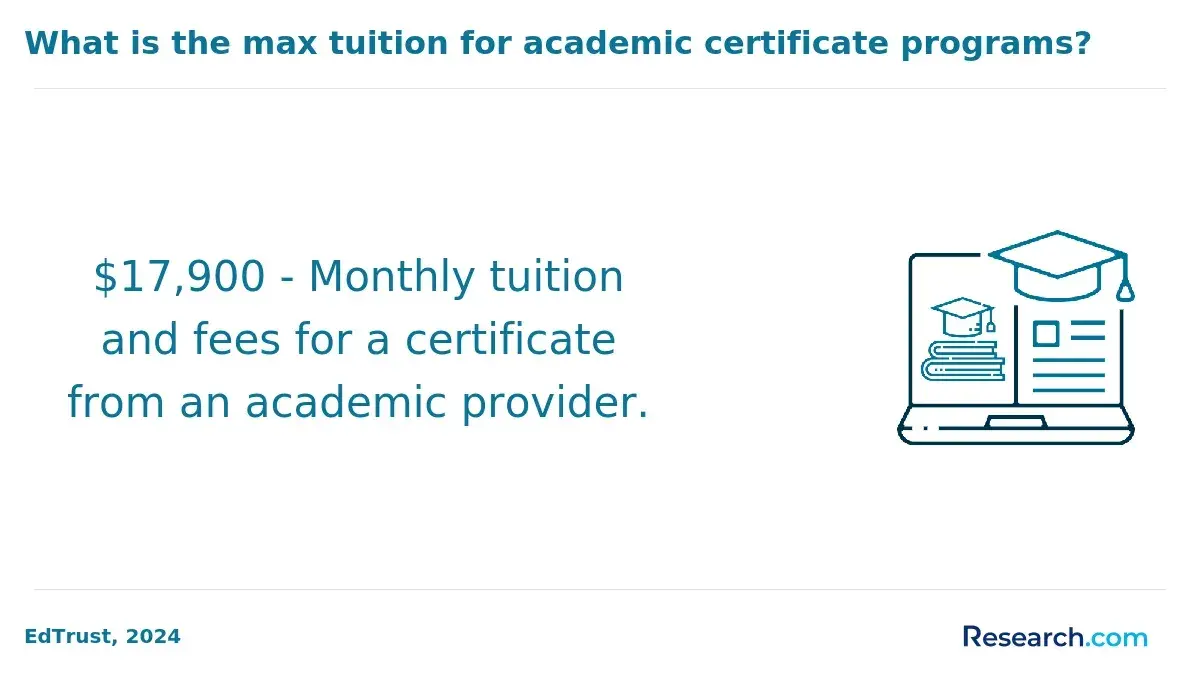
- Tuition Range: Graduate certificate programs in physics usually cost between $29,546 and $61,202 annually, depending on the institution's reputation and location, illustrating the physics certificate program tuition cost comparison across schools.
- Per-Credit Billing: Some institutions charge per credit, often approximately $1,000 per credit, with total costs reflecting the number of credits required, typically 12 to 18 for program completion.
- Shorter Program Duration: Certificates can be completed in less than a year, resulting in lower total tuition costs compared to degree programs despite higher annual rates.
- Online vs. On-Campus: Online certificate programs may offer reduced per-credit costs; for example, some schools charge as low as $384 per credit for undergraduate certificates.
- Limited Financial Aid: Financial aid options are generally more limited for certificate programs, with fewer scholarships and federal loans available.
Students evaluating the average tuition for a physics degree in the United States should also consider program length and financial aid opportunities. For those interested in more affordable options, researching low tuition online colleges may provide additional pathways to reduce education costs without sacrificing quality.
Can You Transfer Certificate Credits Toward a Physics Degree Later On?
Yes, you can sometimes transfer certificate credits toward a physics degree, but it depends heavily on factors like the university's policies, accreditation of the certificate program, and how closely the courses align with the physics curriculum. Most institutions accept credits only from accredited schools where courses match the rigor and content of their own offerings. Typically, only relevant courses-such as calculus-based physics-are considered for transfer. The physics department often reviews detailed course materials to determine equivalency before granting credit.
Key points to remember include limits on how many credits can be transferred, which can vary by school, with some capping acceptance at around 15 credit-hours. A minimum grade, usually a C or higher, is generally required for transfer approval. It's also essential to get formal approval from both the academic advisor and the physics department. To avoid issues later, students should always confirm transfer policies before enrolling in a certificate program to ensure their credits will be recognized.
Are Certificate Programs Accredited the Same Way as Physics Degrees?
Physics certificate programs and degree programs are not accredited through the same processes. Degree programs-such as bachelor's, master's, and doctoral degrees-are generally accredited at the institutional or departmental level by recognized agencies, ensuring they meet established academic and quality standards nationally or regionally. This accreditation is often validated by organizations acknowledged by the U.S. Department of Education or the Council for Higher Education Accreditation (CHEA).
In contrast, physics certificate programs tend to be more specialized and geared toward continuing education or professional development. Their accreditation is less uniform; some certificates, like those in medical physics, may be accredited by specialized bodies such as CAMPEP, but many certificate programs lack formal accreditation altogether.
Accreditation plays a critical role in assuring program quality, facilitating federal financial aid eligibility, and enabling credit transfer between institutions. Employers and licensing authorities often require degrees from accredited programs, which adds to their value in the job market.
When evaluating physics programs, students should verify the institution's accreditation by recognized agencies and seek specialized accreditation for niche areas if applicable. It is important to be wary of certificate programs without formal accreditation, as their recognition and usefulness can be limited. Prospective students should always verify accreditation status through official databases maintained by regulatory agencies before enrolling.
What Jobs Can You Get with a Physics Degree vs. a Certificate?
Both physics degrees and certificates offer pathways to employment, though they typically prepare graduates for different positions and responsibilities. While a degree often leads to advanced roles in research or specialized fields, a certificate tends to support entry-level or technician-level jobs. Below is a comparison of typical careers associated with each credential.
Jobs You Can Get with a Physics Degree
- Academic researcher: Conducts experiments and studies to advance understanding in physics, usually within universities or research institutions.
- Data analyst: Interprets complex data sets to support scientific or business decisions, often working in tech, finance, or healthcare sectors.
- Secondary school science teacher: Educates high school students in physics and related sciences, developing lesson plans and hands-on activities.
- Clinical scientist (medical physics): Applies physics concepts in medical settings to improve diagnostic tools and treatment methods.
- Research scientist (physical sciences): Investigates physical phenomena to develop new technologies or theories, typically employed in labs or industrial research.
Jobs You Can Get with a Physics Certificate
- Laboratory technician or assistant: Supports experiments by preparing equipment and collecting data, mostly in academic or industrial labs.
- Science outreach coordinator: Organizes educational programs to engage the public or students with science topics, often working with museums or non-profits.
- Technical support specialist: Provides assistance and troubleshooting for scientific instruments or software used in labs or companies.
- Quality control technician: Monitors product standards by testing materials and processes in manufacturing environments.
What Is the Average Starting Salary for a Certificate vs. Physics Degree Graduates?
Salary potential often varies significantly between physics certificate holders and graduates with a physics degree. These differences can impact career choices and long-term earning opportunities. Understanding the starting salaries for each group helps clarify the financial benefits of pursuing a full degree versus a certificate program.
Here is a side-by-side comparison of average starting salaries and key factors influencing earnings for graduates of physics degree and certificate programs:
- Typical Salary Range: Physics graduates with a bachelor's degree typically earn a median starting salary for physics degree holders between $62,000 and $70,000 per year, with national entry-level figures ranging from $46,000 to $58,000.
- Certificate Program Salaries: Physics certificate program graduates usually have lower starting salaries, often between $35,000 and $45,000, reflecting more technician and support-level roles.
- Influencing Factors: Level of education, industry, job location, and prior experience are major influences. Advanced degrees can push starting salaries above $70,000, and higher pay is found in government, engineering, and tech sectors, especially in states like California, New York, and Pennsylvania.
- Career Outlook: Degree holders benefit from stronger career advancement and earning potential, while certificate holders frequently fill entry-level positions with fewer growth opportunities.
- Additional Resources: Prospective students interested in affordable options can explore cheap online bachelor degrees for accessible pathways to higher salary potentials.
Here's What Graduates of Physics Programs Say About Their Degree or Certificate
- Solomon: "Pursuing the physics certificate program was a fantastic choice for me because it offered a much faster learning pace compared to a full degree. The focused curriculum allowed me to quickly build essential skills without committing to the higher costs typically associated with a degree program. If you're looking for an efficient way to enhance your knowledge without the extensive time and financial demands, a certificate is worth considering."
- Letty: "Choosing the physics degree program was a deliberate decision driven by my desire to deeply understand the subject and open more career opportunities. Although the degree took longer and cost significantly more, the comprehensive learning experience and recognition it provides have been crucial in advancing my career in research. For anyone weighing degree vs. certificate, it's important to consider your long-term goals and whether you can invest the necessary time and resources. "
- Santiago: "Having completed both the physics certificate and degree programs, I can say that each has its unique advantages. The certificate provided a quicker, cost-effective introduction, while the degree offered an immersive experience that truly prepared me professionally. Balancing the difference in cost and depth of study was key for me; I recommend evaluating how deeply you want to engage with physics and what impact you expect on your career before deciding. "
Other Things You Should Know About Physics Degrees
In 2027, physics degrees are generally more valued by employers compared to certificates. Degrees offer comprehensive education and research experience, making graduates eligible for a broader range of positions, whereas certificates often signify a focus on specific skills or topics within the field.
Yes, physics certificate programs can be valuable for degree holders seeking to update their skills or gain expertise in a specific subfield, such as computational physics or materials science. These programs often focus on emerging technologies or practical applications, helping professionals stay current and potentially qualify for promotions or new roles.
In 2027, physics degree programs offer extensive research opportunities, including lab projects and collaboration with faculty on cutting-edge studies. Certificate programs are less focused on research and generally provide fewer opportunities for in-depth scientific investigation.
Physics degree programs typically offer a deeper and more comprehensive study of mathematics, essential for in-depth understanding and research. Certificate programs, on the other hand, often focus on applied mathematics, which may cover basic calculus and algebra but lack the rigor and breadth needed for advanced theoretical work.
References
- Postgraduate physics: Entry requirements explained https://postgradaustralia.com.au/campus/postgraduate-physics-entry-requirements-explained
- Degrees vs. Certificate Programs: What's the Difference? https://www.snhu.edu/about-us/newsroom/education/certificates-vs-degrees
- SEMESTER TUITION FEES FOR FULL- AND PART-TIME BACHELOR AND MASTER STUDIES FOR INTERNATIONAL STUDENTS BEGINNING THEIR STUDIES IN THE ACADEMIC YEAR 2023/2024 https://old.international.agh.edu.pl/eng/regular-studies/tuition-fees/
- Physics Engineering Accreditation Program https://www.accredit.org/afson/blog/education/physics-engineering-accreditation-program/
- Certificate vs. Degree: Pros, Cons, and Career Outcomes | National University https://www.nu.edu/blog/certificate-vs-degree/
- Curious where your education can lead you? Have a dream job and unsure how to get there? https://www.educationplannerbc.ca/institutions/vancouver-community-college/6c0e98f4-97d4-44bd-af8a-e87b8fd48418/programs/VCC-university-transfer-physics-certificate-transfer-to-sfu
- Transfer Credit https://physics.cornell.edu/transfer-credit
- Physics Transfer https://www.stcc.edu/explore/programs/phys.as/
- Accreditation, Validation and Recognition of Physics Degrees https://telescoper.blog/2022/09/19/accreditation-validation-and-recognition-in-physics-degrees/
- Finishing the physics graduate curriculum as undergrad https://academia.stackexchange.com/questions/47024/finishing-the-physics-graduate-curriculum-as-undergrad


