
2027 What Does a Biomedical Scientist Do: Responsibilities, Requirements, and Salary

Co-Founder and Chief Data Scientist
Individuals who are fascinated by science and want to make a real difference in healthcare may want to explore a career as a biomedical scientist. Biomedical scientists work behind the scenes to research diseases, develop treatments, and ensure accurate laboratory testing that guides medical decisions.
In this in-depth guide, I discuss the key responsibilities, educational requirements, and expected salary of biomedical scientists. Whether you are a high school senior planning your college major or a recent graduate exploring science-related careers, this guide will help you understand what it takes to succeed in this essential profession.
What are the benefits of becoming a biomedical scientist?
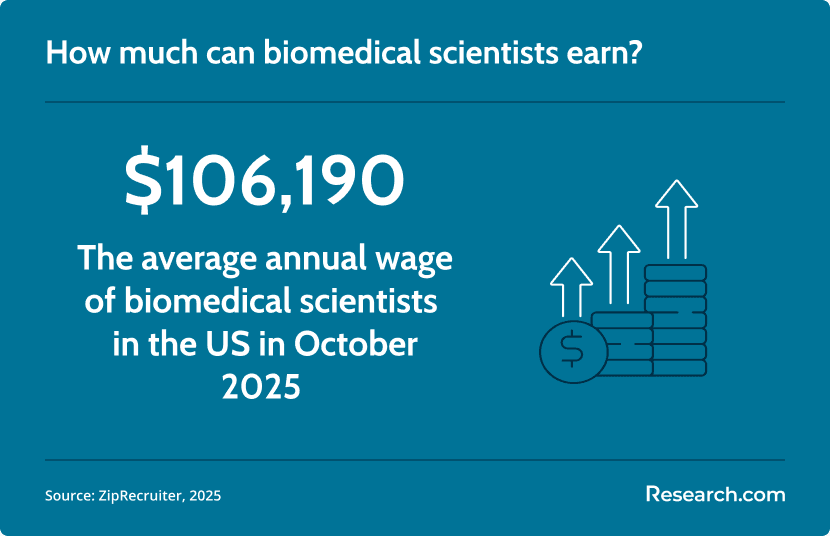
- In the US, the average annual salary for biomedical scientists is $106,190 in October 2025 (ZipRecruiter, 2025).
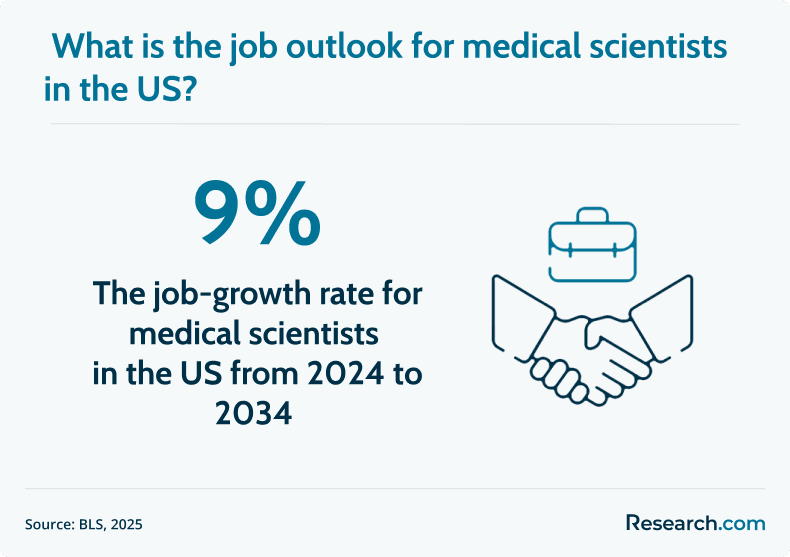
- From 2024 to 2034, employment for medical scientists in the US is expected to increase by 9%, which is much faster than the average job-growth rate for all US occupations (US BLS, 2025).
- Aspiring biomedical scientists may pursue other related professions, including medical science, biomedical engineering, and biochemistry. However, they may need additional education and training.
What does a biomedical scientist do on a typical workday?
Biomedical scientists play an important role in advancing medical knowledge, diagnosing diseases, and supporting patient care. Their workday usually involves a combination of research, analysis, and collaboration in laboratory settings.
Key responsibilities include the following:
- Conducting Laboratory Tests and Experiments: Biomedical scientists analyze blood, tissue, and other samples to detect diseases, monitor treatments, and ensure accurate test results that support medical decisions.
- Researching and Developing New Treatments: They design and perform experiments to study disease mechanisms, contributing to the discovery of new drugs, vaccines, and diagnostic tools that improve healthcare outcomes.
- Maintaining Laboratory Equipment and Safety Standards: Biomedical scientists ensure that lab instruments are properly calibrated, sterile, and compliant with health and safety regulations to maintain reliable and ethical research conditions.
What educational background is required for a biomedical scientist role?
To become a biomedical scientist, individuals usually need at least a bachelor’s degree in biomedical science, biology, or a related life science field. This foundational education covers essential topics, such as microbiology, genetics, chemistry, and laboratory techniques.
However, many employers—especially in research or specialized clinical settings—prefer candidates with a master’s degree or PhD in biomedical science or medical research. A doctoral degree is often required for those pursuing independent research, university teaching, or leadership roles in biotechnology or healthcare institutions.
In addition to formal education, gaining laboratory experience through internships or research assistantships is highly valuable for developing the technical and analytical skills necessary in this field.
What specializations exist within biomedical science?
Biomedical science offers diverse specializations that enable professionals to focus on specific areas of medical research and diagnostics. These fields help scientists apply their expertise to advance healthcare and disease prevention. Common specializations include the following:
- Microbiology: Microbiology focuses on studying microorganisms, such as bacteria, viruses, fungi, and parasites, to understand how they cause infections and to develop effective treatments and vaccines.
- Clinical Biochemistry: Clinical biochemistry involves analyzing bodily fluids, including blood and urine, to detect chemical changes that indicate disease. It aids in diagnosis and treatment planning.
- Hematology: Hematology centers on the study of blood, blood-forming organs, and related disorders, including anemia, clotting problems, and cancers.
Professionals may also enhance their expertise through a graduate certificate in biotechnology online, which broadens their skills in laboratory techniques and applied biomedical research.
What skills do you need to have as a biomedical scientist?
Biomedical scientists need a combination of technical, analytical, and interpersonal skills to conduct research, analyze data, and support clinical decision-making. These competencies ensure accuracy, safety, and innovation in laboratory and research settings.
Key skills include the following:
- Analytical Thinking: The ability to interpret complex data, identify patterns, and draw accurate conclusions is essential for diagnosing diseases and validating research findings.
- Laboratory and Technical Skills: Proficiency in using advanced lab equipment and following precise experimental procedures ensures reliable and reproducible results.
- Attention to Detail: Biomedical scientists must maintain high accuracy in recording data, labeling samples, and performing experiments to avoid costly errors.
- Communication Skills: Clear written and verbal communication helps convey research findings, collaborate with healthcare professionals, and present results effectively.
- Problem-solving Abilities: Biomedical scientists often encounter unexpected results or challenges during experiments, requiring creative and critical thinking to find effective solutions.
What is the typical career path for a biomedical scientist?
The career path for biomedical scientists usually begins with earning a bachelor’s degree in biomedical science or a related field, such as biology or biochemistry. Graduates often start as laboratory technicians or research assistants, gaining hands-on experience in clinical or research laboratories.
With experience and advanced training, professionals can progress to higher-level roles, such as biomedical scientist, clinical researcher, or specialist in diagnostic testing.
Many biomedical scientists pursue a master’s degree or PhD to specialize in relevant areas, including immunology, molecular biology, or genetics. This advanced education opens doors to leadership, academic, or research positions. Some individuals transition into regulatory affairs, biotechnology, or pharmaceutical development, applying their expertise to improve healthcare innovations.
As part of the broader field of careers in biology, biomedical science continues to evolve, offering professionals strong career advancement and opportunities to contribute to medical breakthroughs that impact global health.
What is the average salary for a biomedical scientist?
In the US, the average annual salary for biomedical scientists is $106,190 in October 2025 (ZipRecruiter, 2025). Meanwhile, medical scientists working across the country had a 2024 median annual wage of $100,590. The lowest 10% of medical scientists in terms of wage earned less than $61,860, while the highest 10% earned over $168,210 (US BLS, 2025).
Several factors influence the salary of biomedical scientists, with pay varying based on education, experience, and workplace setting. Common factors include the following:
- Education Level: Biomedical scientists with advanced degrees, such as a master’s degree or a PhD, often earn higher salaries due to specialized knowledge and research expertise.
- Experience: Professionals with years of laboratory or clinical experience usually command higher pay as they bring advanced skills and leadership capabilities.
- Industry and Workplace: Salaries differ across professional settings. Those in pharmaceuticals, biotechnology, or private research institutions may generally earn more than those in academic or public health sectors.
Professionals pursuing advanced credentials may also research masters in biotechnology salary trends to understand how graduate education impacts earning potential.
What is the job outlook for a biomedical scientist?
From 2024 to 2034, employment for medical scientists in the US is expected to increase by 9%, which is much faster than the average job-growth rate for all occupations across the country. This translates to an average of around 9,600 annual job openings forecasted to be available to medical scientists over the decade (US BLS, 2025).
The job outlook for biomedical scientists and relevant professions depends on several key factors that shape demand across healthcare and research sectors. Common factors include the following:
- Advancements in Medical Research: Ongoing discoveries in genetics, biotechnology, and disease prevention increase the need for skilled biomedical scientists.
- Public Health Priorities: Growing focus on global health challenges, such as infectious diseases and chronic conditions, drives demand for biomedical research professionals.
- Funding and Government Support: Job availability often depends on research grants and funding from government agencies, universities, and private institutions that sustain biomedical projects and innovation.
The chart below provides a visualization of the forecasted annual job openings for professionals in the biomedical sciences and related fields between 2024 and 2034, according to 2025 data from the US BLS.
What are the alternative careers for a biomedical scientist?
Biomedical scientists have a wide range of alternative careers for biology majors that enable them to apply their scientific knowledge and laboratory skills in related fields. Common alternative professions include the following:
- Bioengineers and Biomedical Engineers: These professionals design and develop medical devices, prosthetics, and equipment that improve patient care. They combine principles of biology and engineering to solve medical and technological challenges. The 2024 median annual salary for biomedical engineer and bioengineering professionals in the US was $106,950 (US BLS, 2025).
- Biochemists and Biophysicists: These professionals study the chemical and physical processes within living organisms to understand diseases, genetics, and cellular functions. Their research contributes to developing new drugs and therapies.
- Biological Technicians: These specialists assist scientists by preparing experiments, collecting data, and maintaining laboratory equipment. They play an important role in supporting research and ensuring accurate, reliable scientific results.
The chart below provides a visualization of the 2024 median annual wages of professionals in the biomedical sciences and related fields, according to 2025 data from the US BLS.
What are the biggest challenges biomedical scientists face?
Biomedical scientists face several challenges that test their problem-solving skills, adaptability, and commitment to advancing scientific knowledge. Common challenges in the field include the following:
- Rapid Technological Advancements: The fast pace of innovation requires scientists to continually learn new tools, laboratory techniques, and data analysis methods to stay current in their research.
- Funding Limitations: Securing research grants and financial support can be highly competitive. It may limit the scope or progress of important studies in biomedical science.
- Ethical and Regulatory Constraints: Biomedical scientists must navigate strict ethical guidelines and government regulations, particularly when working with human subjects or genetic materials, as it can slow down research timelines.
How do you know if becoming a biomedical scientist is the right career choice for you?
Choosing a career in biomedical science requires a passion for discovery, problem-solving, and improving human health. You may be suited for this field if you possess the following qualities and motivations:
- You enjoy scientific inquiry: If you are curious about how the human body works and eager to explore diseases and treatments, biomedical science may be a strong fit.
- You are detail-oriented and analytical: Success in this field demands precision in experiments, data interpretation, and adherence to safety protocols.
- You are motivated by impact: Biomedical scientists play a direct role in advancing healthcare and medicine, making it an ideal career for individuals who want their work to contribute to the well-being of society.
What Do Biomedical Scientists Say about Their Careers
- Leo: "Working as a biomedical scientist allows me to contribute to life-saving research every day. It’s rewarding to know my work directly improves patient care and medical outcomes."
- Jessica: "I love the constant discovery in biomedical science—no 2 days are the same. The combination of laboratory research and problem-solving keeps my career both meaningful and exciting."
- Kim: "Being a biomedical scientist has given me the chance to work with advanced technology and brilliant minds. It’s fulfilling to be part of innovations that shape the future of healthcare."
Key Findings
- Many employers prefer biomedical scientists with a master’s degree or a PhD in relevant fields. A doctoral degree is often required for independent research, university teaching, or leadership roles in biotechnology or healthcare institutions.
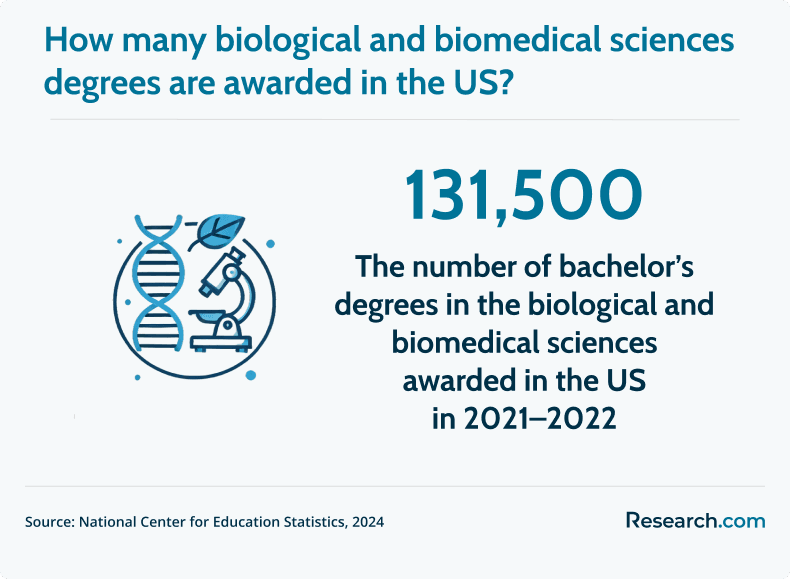
- In the academic year 2021–2022, 131,500 bachelor’s degrees in the biological and biomedical sciences were awarded in the US (National Center for Education Statistics, 2024).
- The average annual wage of biomedical scientists in the US is $106,190 in October 2025 (ZipRecruiter, 2025).
- From 2024 to 2034, an average of around 9,600 annual job openings are forecasted to be available to medical scientists in the US (US BLS, 2025).
- Alternative professions for biomedical scientists include bioengineers and biomedical engineers, biochemists and biophysicists, and biological technicians.
Other Things You Should Know about Becoming a Biomedical Scientist
Biomedical science can be challenging to study due to its focus on biology, chemistry, and lab research. However, it is highly rewarding for students passionate about science and healthcare.
To become a biomedical scientist in 2027, typically a bachelor's degree in biomedical science or a related field is required. Additionally, certification from a recognized body such as the Institute of Biomedical Science (IBMS) is usually necessary for practicing in many regions.
In 2027, biomedical scientists are responsible for conducting laboratory research to diagnose diseases, developing innovative healthcare solutions, and collaborating with interdisciplinary teams. They must also ensure compliance with regulatory standards and stay updated with technological advancements in their field.
References
- National Center for Education Statistics. (2024, May). Undergraduate Degree Fields. https://nces.ed.gov/programs/coe/indicator/cta
- US Bureau of Labor Statistics. (2025, August 28). Biochemists and Biophysicists. Occupational Outlook Handbook. https://www.bls.gov/ooh/life-physical-and-social-science/biochemists-and-biophysicists.htm
- US Bureau of Labor Statistics. (2025, August 28). Bioengineers and Biomedical Engineers. Occupational Outlook Handbook. https://www.bls.gov/ooh/architecture-and-engineering/biomedical-engineers.htm
- US Bureau of Labor Statistics. (2025, August 28). Biological Technicians. Occupational Outlook Handbook. https://www.bls.gov/ooh/life-physical-and-social-science/biological-technicians.htm
- US Bureau of Labor Statistics. (2025, August 28). Medical Scientists. Occupational Outlook Handbook. https://www.bls.gov/ooh/life-physical-and-social-science/medical-scientists.htm
- US Bureau of Labor Statistics. (2025, August 28). Microbiologists. Occupational Outlook Handbook. https://www.bls.gov/ooh/life-physical-and-social-science/microbiologists.htm
- ZipRecruiter. (2025). Biomedical Scientist Salary. https://www.ziprecruiter.com/Salaries/Biomedical-Scientist-Salary


