
2027 What Does a Health Science Major Do: Responsibilities, Requirements, and Salary

Co-Founder and Chief Data Scientist
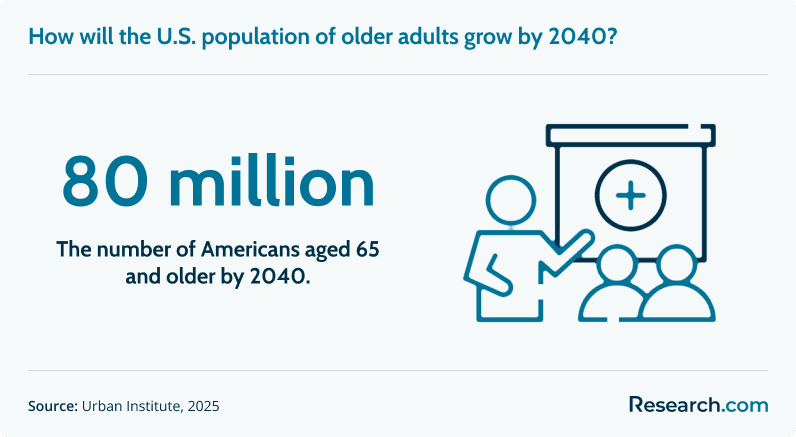
Are you drawn to healthcare but worried you aren't a "science person"? You're not alone. The good news is that a health science major is designed for people who want to improve community well-being using applied, human-centered skills—not just theoretical knowledge. With the number of Americans aged 65 and older projected to reach 80 million by 2040, the need for these professionals has never been greater.
To help you decide if this path is right for you, our career planning experts with more than 10 years of experience have created this comprehensive guide. We'll explore exactly what you'll do, what you'll learn, and what you can earn.
Key Things You Should Know About Being a Health Science Major
- Think of it less as a narrow path to one job and more as a versatile launchpad for a wide range of professional roles in health education, administration, and community outreach.
- This field values your ability to connect with people, solve problems, and explain complex ideas clearly—making it perfect for those who want to use their human-centered skills in a scientific field.
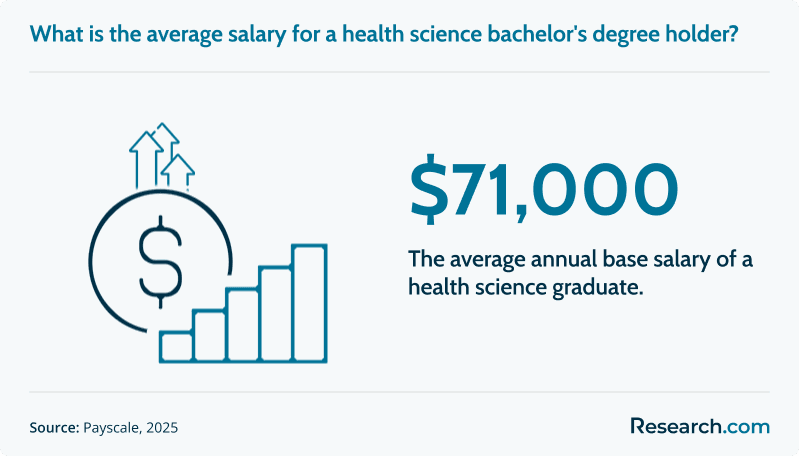
- With an average base salary of around $71,000 per year, this career offers you the opportunity to build a financially stable future while doing meaningful work.
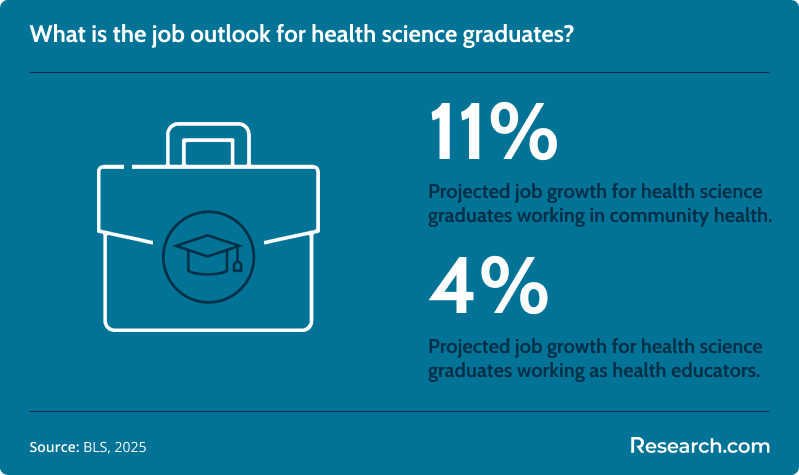
- With job growth for roles like community health workers projected at 11% over the next decade—much faster than average—you are stepping into a field that offers genuine long-term security.
- At its heart, this career is about designing and leading real-world programs that create better health outcomes for entire communities.
What are the primary responsibilities of a health science professional?
The primary responsibilities of a health science professional involve planning, implementing, and evaluating programs that promote health and prevent disease within a community. Far from just distributing pamphlets, this is a strategic role that requires you to be a researcher, planner, and project manager.
A typical day might involve a mix of the following core duties:
- Community Health Assessment: You'll use data, surveys, and conversations to identify the most pressing health challenges a community faces, acting like a detective to uncover the root causes.
- Program Planning and Development: Based on your research, you will design and develop targeted health education campaigns and materials that address the community's needs.
- Project Management and Implementation: You will lead health initiatives from start to finish, including managing budgets, coordinating with partners such as local clinics or schools, and ensuring the program runs smoothly.
- Evaluation and Reporting: After a program launches, you will track its progress and measure its impact, using data to report on successes and recommend improvements for the future.
As you can see, this is a dynamic role focused on creating measurable change. To succeed with these responsibilities, you'll need a specific set of skills—which are often more accessible than you might think.
What core skills will I learn and use in this field?
The core skills you'll use in health science are focused on applied science—translating complex information into actionable programs that help people. If you're worried this major is only for lab researchers, you can relax. This field is built for strategic thinkers and clear communicators.
Based on the professional standards for health education specialists, here are the key competencies you will develop:
- Critical Thinking and Problem-Solving: You will learn to analyze health data, identify the root causes of community health issues, and design creative, evidence-based solutions.
- Communication and Advocacy: You will master creating clear, persuasive health messages and advocating for policies and resources that support community well-being.
- Planning and Management: You will gain the skills to manage projects from concept to completion, including budgeting, coordinating with stakeholders, and overseeing implementation.
- Social and Cultural Perceptiveness: You will develop a deep understanding of the social determinants of health, allowing you to create programs that are culturally competent and effective.
These competencies are the hallmark of many roles that answer the question of what can you do with an applied sciences degree, because they focus on real-world application. To see how these skills fit into the broader healthcare landscape, it helps to compare this major to other common paths.
Who is a Health Science Major For? (vs. Nursing and Health Administration)
A key insider tip for choosing the right path is to think about the scale at which you want to make an impact. This will help you find the role that best fits your personality and career goals.
- A health science major is for the systems thinker. If you're the person who asks "why" a health problem exists and wants to design large-scale solutions that prevent illness before it starts, this is your path. It's ideal for the strategist, educator, and advocate who wants to improve the health of an entire community.
- A nursing major is for the direct caregiver. If you feel a strong pull toward providing hands-on, compassionate care to individual patients, nursing is the clear choice. This path is for those who find fulfillment in being on the front lines of treatment and making a direct, personal impact on a patient's recovery.
- A health administration major is for the organizational leader. If you are fascinated by the business and operational side of healthcare—improving efficiency, managing teams, and ensuring a hospital runs effectively—this is the path for you. It's designed for those who want to lead the organizations that support the caregivers.
What are the typical educational requirements for a career in health science?
A bachelor's degree in health science is the standard entry-level educational requirement for a professional career in this field. While you might see many leaders with advanced degrees, a bachelor's is the essential foundation that opens the door to your first role and is the most common credential. In fact, data on health researchers shows that 59% hold a bachelor's degree as their highest level of education.
This educational path is distinct from the requirements for purely clinical roles. Understanding the advantages of a BSN degree, for instance, can help clarify whether your passion lies more in hands-on patient care or in the systems-level work of a health science major. But the degree itself is just the first step. For those looking to specialize and advance, the next move is often professional certification.
Beyond the Degree: The Role of Professional Certification
An important insider tip is that many bachelor's programs are specifically designed to prepare you for nationally recognized professional certifications. Think of a credential like the Certified Health Education Specialist (CHES®) as a professional key.
It signals to employers that you have met a high standard of competence and dedication to the field. This can unlock more specialized roles, higher salaries, and greater leadership opportunities. This means that as you complete your degree, you're also building a direct pathway to the credentials that will accelerate your future career.
What kind of courses are usually included in a health science major?
A health science curriculum is designed to be interdisciplinary, giving you a well-rounded understanding of human health from multiple perspectives. The strength of this major is its unique blend of foundational science, social science, and practical skills. This ensures you're prepared not just with knowledge, but with the ability to apply it.
You can expect your coursework to be organized around these core areas:
- Foundational Sciences: These courses provide the essential scientific context for understanding human health. This typically includes subjects like biology, anatomy and physiology, chemistry, and nutrition.
- Social and Behavioral Sciences: This is where you explore the human side of health. You'll take courses in psychology, sociology, and ethics to understand how individual behaviors and societal factors impact well-being.
- Practical and Professional Skills: These courses are focused on the "how-to" of the profession. You will learn tangible skills through classes in health communication, program planning and evaluation, epidemiology, and public health policy.
This balanced approach means you'll be able to understand the science behind a health issue and have the practical skills to create a solution that works for real people. With this education, a world of opportunity opens up.
What are the common career paths for a health science graduate?
A health science graduate can pursue diverse career paths in public health, healthcare administration, and corporate wellness. The key is to see the health science major not as a single track but as a flexible foundation you can build on to match your specific interests and goals.
Here are a few common career archetypes you can step into with this degree:
- The Community Health Advocate: This professional works directly with communities to assess health needs and develop educational programs. They are the on-the-ground strategists, running campaigns on topics from nutrition to disease prevention.
- The Healthcare Administrator or Coordinator: In this role, you would focus on the operational side of healthcare. You might manage a specific department in a hospital, coordinate patient services, or ensure that a clinic runs efficiently and effectively.
- The Corporate Wellness Specialist: Many companies now hire health science professionals to design and manage wellness programs for their employees. This involves everything from organizing health screenings to creating initiatives that reduce workplace stress.
While your degree provides the foundation for these roles, specializing and advancing often involves earning a professional certification.
How Certifications Unlock and Advance Your Career
An insider tip for those looking to pivot within healthcare is to view certification as the tool that translates your degree and experience into a specific, marketable expertise. A credential such as the Certified Health Education Specialist (CHES®) is a powerful signal to employers that you have mastered the profession's core competencies.
For those with a clinical background, a health science degree can be the stepping stone to a leadership role. It provides the systems-level perspective needed to manage teams and improve patient care from an administrative standpoint. This is why many experienced nurses pursue advanced credentials and are often looking for the best online nurse executive leadership MSN programs to take that next step.
In which industries do health science majors typically work?
Health science majors work across a broad spectrum of industries, but the largest and most established employers are general medical hospitals and government public health agencies. These sectors provide a stable foundation for the health science profession, offering a clear and direct path from graduation to a meaningful career.
The U.S. Bureau of Labor Statistics provides a clear map of where the majority of these professionals build their careers. While these traditional paths are excellent options, some of the most dynamic and fastest-growing opportunities are now found in the private sector.
Emerging Opportunities in the Private Sector
A key insider tip is to look beyond the traditional employers to the expanding roles in private industry. Companies are increasingly investing in employee and customer health, creating demand for professionals with a health science background.
This includes exciting roles in corporate wellness programs, where you help a company's workforce stay healthy. You can also find opportunities with health insurance companies, medical device firms, and in the booming health tech industry. For example, the rise of health technology has created a massive need for professionals who can manage electronic health records, a field you can enter through one of the best online CAHIIM-accredited health information management degree programs. This means you have the flexibility to choose a work environment that truly aligns with your goals.
What is the salary potential with a health science degree?
According to Payscale data, the average base salary for a professional with a Bachelor of Science in Health Sciences is approximately $71,000 per year.
This figure is important because it counters the common misconception that careers focused on community well-being don't come with financial stability. This is a professional degree that leads to professional compensation, allowing you to build a secure future while doing work that matters. To fully appreciate this earning potential, it helps to see how it fits within the broader landscape of applied sciences.
Comparing Salaries Across Applied Science Fields
A smart way to evaluate any career path is to look at comparative data. When you place the earning potential of a health science graduate alongside other fields, its value becomes even clearer.
For instance, while the environmental science salary is also competitive, compensation in health science is particularly robust, driven by constant, growing demand in the healthcare industry. This means you are not being asked to choose between having a purpose and a paycheck; you are stepping onto a career path structured to provide both.
What is the job outlook for health science careers?
The job outlook for health science careers is excellent, with projected growth that is much faster than the average for all occupations. This high demand is a powerful indicator of long-term career security, giving you confidence that your skills will be needed well into the future.
According to the U.S. Bureau of Labor Statistics, the number of community health worker roles is expected to grow by 11% over the next decade. An important insider tip is to recognize that this growth isn't limited to doctors and nurses. As the healthcare system expands, so does the need for professionals who can manage programs, educate communities, and improve health outcomes at scale.
Choosing a health science major means you are aligning your career with a fundamental and growing sector of the economy. The numbers show a secure future, and now we can zoom out to explore the major forces driving that security.
What major trends are shaping the future of health science?
The future of the health science field is being shaped by powerful societal trends that are turning major challenges into historic career opportunities. For anyone considering a health science major, understanding these forces is key to seeing the long-term impact you can have.
Three major trends, in particular, are driving the demand for health science professionals:
- Responding to an Aging Population: As the baby boomer generation ages, the healthcare system needs experts to design programs to manage chronic diseases and promote healthy aging. The number of Americans aged 65 and older is projected to reach 80 million by 2040, creating a sustained need for these skills.
- Advancing Health Equity: There is a growing focus on addressing health disparities among different populations. Health science professionals are at the forefront of this movement, working to ensure everyone has access to the resources they need to be healthy.
- Integrating Technology into Healthcare: From telehealth to data analytics, technology is changing how healthcare is delivered. This trend increases the need for professionals who can bridge the gap between tech and the patient, ensuring new tools are used effectively and ethically.
These trends confirm that this career is not just stable; it's central to solving some of the most critical challenges of our time. This brings us to the final verdict.
Is a health science major worth it?
Deciding if a degree is "worth it" goes beyond just the data. It's about finding the right fit for your skills, your goals, and the impact you want to make. It requires looking at the intersection of personal satisfaction, professional opportunity, and societal need.
So, when you look at it through that lens, is a health science major worth it? The answer is a clear and confident yes.
This path is for the systems thinker who wants to solve problems, not just treat symptoms. It offers a versatile and stable career with strong financial rewards. Most importantly, it places you in a position to address some of the biggest challenges in our society, from caring for an aging population to advancing health equity. Suppose you are looking for a career that offers a rare combination of purpose, security, and impact. In that case, health science is a truly worthwhile investment in your future.
Here's What Graduates Have to Say About Their Health Science Major
- Anya: "I have always been passionate about health, but the thought of heavy science courses was intimidating. This degree path was different because it focused on how to apply scientific principles to solve real-world community problems. The online classes allowed me to keep my job while I studied, and now I'm working in public health, translating complex data into programs that actually help people. It's the impactful career I wanted, without having to be a lab scientist."
- Chika: "Watching the news about healthcare always made me feel anxious and helpless. I wanted to be part of the solution, not just a bystander. This major gave me the tools to do just that, focusing on things like health equity and program planning. The curriculum felt so relevant to today's biggest challenges, and it empowered me to find a career where I'm actively working to make the system better for everyone."
- : "As a former paramedic, I saw the same health issues in the community over and over again. I realized I wanted to work on prevention rather than just response. This degree was the bridge that allowed me to do that, giving me the credentials to work on policy and education. I can now use my frontline experience to advocate for changes that stop health emergencies before they even start, which is a new and deeply rewarding way to serve."
Key Findings
- The average base salary for professionals with a health science degree is approximately $71,000 per year, confirming that this is a financially stable career path, not just a passion project.
- With job growth for community health workers projected at 11% over the next decade, this field offers significant long-term security in a vital and expanding sector of the economy.
- The curriculum's focus on applied skills directly prepares graduates for the professional world, which is why 59% of health researchers hold a bachelor's degree as their highest level of education.
- The field is fundamentally tied to major societal needs, particularly the fact that the number of Americans aged 65 and older is expected to reach 80 million by 2040.
- Success in this field is driven by human-centered skills like communication and problem-solving, making it an accessible and rewarding path for those who want to apply science in a practical, impactful way.
- The degree is a versatile launchpad, preparing graduates for roles in top employing industries like hospitals, which have over 9,800 jobs, as well as emerging private-sector fields like corporate wellness and health tech.
Other Things You Need To Know About a Health Science Major
In 2027, health science majors excel in roles involving healthcare administration, clinical support, health education, and health promotion. They frequently work in hospitals, clinics, and public health organizations, focusing on improving health outcomes and streamlining health services.
Yes, a bachelor's degree is the standard entry-level requirement for many professional roles in health science. While some graduates pursue master's degrees for advanced or specialized positions, the bachelor's degree is the most common credential in the field. It is designed to prepare you directly for careers in community health, public health, healthcare administration, and corporate wellness.
In 2027, a health science major focuses on the clinical and technical aspects of health care and prepares students for roles in diagnostics, therapy, or administration. In contrast, a public health major emphasizes population health, preventive care, and health policy, aiming to improve health outcomes at a community or global level.
While a health science major can be a good pre-med track, it is not exclusively designed for that purpose. The curriculum provides many of the foundational science courses required for medical school and offers a broad, systems-level understanding of healthcare that can be very beneficial. However, students on a pre-med path must be diligent in ensuring they also complete all specific prerequisites for the medical schools they plan to apply to, which may require taking additional courses.
References
- National Commission for Health Education Credentialing. (2020). A competency-based framework for health education specialists 2020. Retrieved November 5, 2025, from NCHEC.
- Payscale. (2025). Bachelor of Science (BS / BSc), Health Sciences Degree Salary. Retrieved November 5, 2025, from Payscale.
- Urban Institute. (2025). What the future holds: U.S. population aging. Retrieved November 5, 2025, from Urban Institute.
- U.S. Bureau of Labor Statistics. (2025a). Occupational outlook handbook: Community health workers. Retrieved November 5, 2025, from BLS.
- U.S. Bureau of Labor Statistics. (2025b). Occupational outlook handbook: Health education specialists. Retrieved November 5, 2025, from BLS.
- U.S. Bureau of Labor Statistics. (2025c). Occupational employment and wage statistics. Retrieved November 5, 2025, from BLS.
- U.S. Department of Labor, Employment and Training Administration. (n.d.). 21-1091.00 - Health Education Specialists. O*NET OnLine. Retrieved November 5, 2025, from O*NET OnLine.
- Zippia. (2025). Health researcher education requirements. Retrieved November 5, 2025, from Zippia.


