
2027 What Does a Public Health Consultant Do: Responsibilities, Requirements, and Salary

Co-Founder and Chief Data Scientist
Choosing a public health career can be difficult because the field is broad: you can work with disease data, health policy, community programs, environmental risks, hospital systems, or nonprofit initiatives. A public health consultant sits at the intersection of those areas, helping organizations diagnose population health problems and turn evidence into practical action.
The opportunity is significant. With nearly 1.9 million healthcare jobs expected to open annually over the next decade, public health professionals who can analyze data, communicate clearly, and guide programs are positioned for meaningful work across government, healthcare, research, education, nonprofits, and private consulting.
This guide explains what a public health consultant does, where consultants work, how much they can earn, what education is typically expected, and how to decide whether this path fits your goals. It is designed for students planning a public health degree, healthcare workers considering a career shift, and professionals who want to move into higher-impact advisory roles.
Key Things You Should Know About What Does a Public Health Consultant Do
- You can expect strong earning potential, as senior-level management roles in the field earn a median salary of around $117,960 annually.
- The job outlook is excellent, with related management positions projected to grow by an impressive 23% over the next ten years.
- At its core, the job is about being a strategic problem-solver, using data to help organizations improve community health.
- To get into consulting, a Master of Public Health (MPH) is the recognized industry standard and your key to top roles.
- You'll find opportunities in a variety of places, from government health departments and hospitals to private consulting firms.
What is a public health consultant?
A public health consultant is a specialist who helps organizations solve population-level health challenges. Instead of treating individual patients, consultants study patterns across communities, workplaces, regions, or healthcare systems and recommend actions that can improve health outcomes at scale.
The work is often advisory, but it is not limited to writing reports. A consultant may analyze health data, assess community needs, evaluate programs, recommend policy changes, design prevention strategies, support grant-funded initiatives, or help leaders decide where to invest limited resources. The value of the role is the ability to move from evidence to implementation.
What public health consultants actually do
- Identify the problem: Review data, interviews, community feedback, budgets, policies, and prior program results.
- Explain the causes: Look for social, environmental, behavioral, economic, and system-level factors behind health outcomes.
- Recommend a strategy: Translate findings into clear options that decision-makers can act on.
- Measure results: Track whether a policy, campaign, intervention, or operational change is working.
Tackling Real-World Health Disparities
Much of public health consulting focuses on health disparities: preventable differences in health outcomes among groups of people. These gaps may appear by geography, income, race and ethnicity, age, disability status, occupation, or access to care.
For example, a consultant might be asked why heart disease death rates are significantly higher in some states than others, or why smoking rates in West Virginia are more than double those in California. The consultant’s job is not simply to point out the gap. It is to help explain why the gap exists, identify what can realistically be changed, and recommend interventions that improve access, prevention, education, policy, or service delivery.
What are the different types of public health consultants?
“Public health consultant” is an umbrella title. Consultants often share a common foundation in population health, but their day-to-day work can look very different depending on their specialization, employer, and client needs. Choosing a focus area early can help you select the right courses, internships, projects, and certifications.
Epidemiology and Biostatistics Consultants
These consultants specialize in data, disease patterns, risk factors, and intervention outcomes. They may analyze surveillance data, investigate outbreaks, build dashboards, evaluate prevention strategies, or explain statistical findings to health officials and program leaders.
This path is a strong fit if you like quantitative analysis, research methods, statistical software, and evidence-based decision-making. It often requires comfort with messy datasets and the ability to communicate uncertainty clearly.
Health Policy and Management Consultants
Health policy and management consultants work on the systems side of public health. They may advise government agencies, hospitals, health departments, managed care organizations, or nonprofits on policy design, operations, financing, quality improvement, and service delivery.
For example, a state government might hire a consultant to examine why heart disease rates are high in a region and recommend policy or program changes. This specialization fits professionals who are interested in leadership, health systems, public administration, economics, and organizational change.
Health Promotion and Education Consultants
These consultants design, manage, and evaluate programs that encourage healthier behaviors and prevent disease. Their work can include smoking cessation campaigns, nutrition education, vaccination outreach, school health initiatives, chronic disease prevention, or community wellness programs.
This track is best suited for people who enjoy community engagement, health communication, program planning, and culturally responsive education. Success depends on more than good messaging; programs must be realistic for the people they are intended to serve.
Environmental Health Consultants
Environmental health consultants focus on how surroundings affect health. They may assess risks related to air and water quality, food safety, occupational hazards, housing conditions, waste management, or emergency preparedness.
This specialization often appeals to professionals interested in science, regulation, workplace safety, sustainability, and risk assessment. The work can involve field investigations, compliance review, data analysis, and recommendations to reduce exposure to harmful conditions.
How to choose a specialization
| Consulting focus | Best fit if you enjoy | Typical work products |
| Epidemiology and biostatistics | Data analysis, research, disease patterns | Outbreak reports, statistical models, surveillance dashboards, evaluation findings |
| Health policy and management | Systems, strategy, operations, leadership | Policy briefs, operational recommendations, strategic plans, performance metrics |
| Health promotion and education | Community work, communication, prevention | Campaign plans, training materials, program evaluations, outreach strategies |
| Environmental health | Risk assessment, regulation, science, safety | Exposure assessments, compliance reviews, safety recommendations, risk reports |
The chart below illustrates the kind of regional health disparities consultants are often hired to investigate.
How much can you earn as a public health consultant?
Public health consultant earnings vary by specialization, employer, education level, region, and seniority. The strongest salary comparisons usually come from related occupations because “public health consultant” is not always reported as one standardized job title.
Key salary benchmarks show solid earning potential. Epidemiologists had a median salary of $83,980 in 2024. Health education specialists, who often work on the program and prevention side of public health, earned a median of $63,000. Medical and health services managers earned a median of $117,960 in 2024, which is relevant for consultants who move into leadership, operations, or health systems management.
What affects your salary?
- Specialization: Quantitative, policy, management, and systems-focused roles may pay differently from community education roles.
- Employer type: Government agencies, hospitals, universities, nonprofits, research organizations, and private consulting firms often use different pay structures.
- Education: A master’s degree is commonly expected for consulting roles and may support access to higher-responsibility positions.
- Experience: Entry-level analysts usually earn less than consultants who manage projects, advise senior leaders, or bring a recognized area of expertise.
- Scope of responsibility: Consultants who manage budgets, teams, clients, and strategic decisions typically command higher compensation.
Understanding Your Earning Potential
The median salary is a useful benchmark, but it does not represent the ceiling. While the median salary for an epidemiologist is $83,980, the top 10% in the field earn over $134,860. As consultants gain experience, lead larger projects, and move into management, their earnings can increase substantially.
The practical takeaway: public health consulting can be financially rewarding, but the highest earnings usually require advanced skills, a strong track record, and the ability to connect technical analysis with organizational decision-making.
As the following chart shows, there is a significant increase in earnings with experience and specialization.
What is the job outlook for public health consultants?
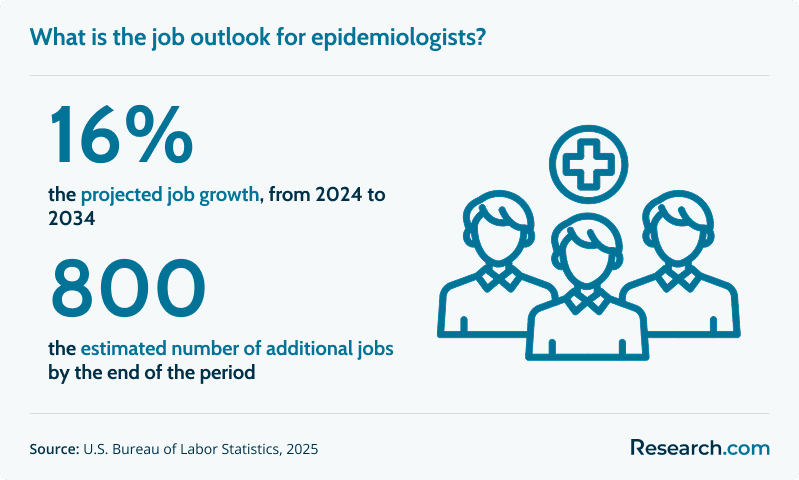
The outlook is strong for occupations closely aligned with public health consulting. Demand for epidemiologists is expected to grow by 16% between 2024 and 2034. Roles for medical and health services managers are projected to increase by 23% during that same period.
Those projections matter because public health consultants often work in the same spaces: disease prevention, healthcare quality, data analysis, community health planning, policy implementation, and health systems improvement. Organizations need professionals who can interpret evidence and guide action, especially when resources are limited and public expectations are high.
Why the High Demand?
Several forces are supporting demand for public health expertise. An aging population increases pressure on healthcare systems. More organizations are using data to guide policy and program decisions. Public agencies and healthcare organizations are also paying closer attention to prevention, health equity, emergency preparedness, and the cost of poor health outcomes.
Consultants are valuable because they help organizations answer difficult questions: Which communities are most at risk? Which interventions are working? Which programs should be changed or discontinued? How can outcomes improve without wasting funding? The projected 16% growth in epidemiologist jobs reflects this growing need for skilled analysis and applied public health strategy.
Where can you work as a public health consultant?
Public health consultants work in more settings than many people expect. Government agencies are major employers, but consulting opportunities also exist in healthcare organizations, research institutions, universities, nonprofits, foundations, private firms, and corporations.
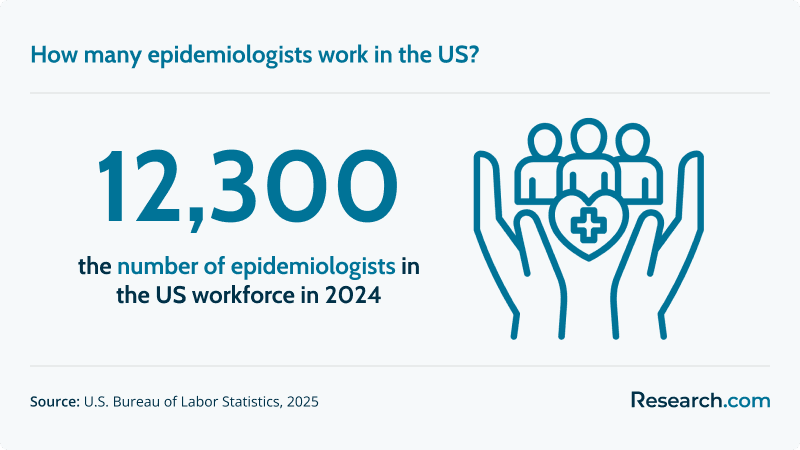
As of 2024, there are over 12,300 epidemiologists in the U.S. workforce, spread across sectors such as state and local government, general medical and surgical hospitals, scientific research organizations, and universities. These environments reflect the broader range of places where public health consulting skills are used.
Common work settings
| Work setting | What consultants may do there | Best fit for |
| Government agencies | Support disease surveillance, policy planning, emergency preparedness, public programs, and community health initiatives | Professionals interested in population-level impact and public service |
| Hospitals and healthcare systems | Improve quality, patient safety, prevention programs, care coordination, and community benefit strategies | Professionals with clinical, operations, or health systems interests |
| Research organizations and universities | Conduct studies, evaluate interventions, analyze data, and publish findings | Professionals drawn to evidence generation and academic partnerships |
| Nonprofits and NGOs | Design and evaluate programs related to prevention, access, maternal health, vaccination, nutrition, or global health | Professionals motivated by mission-driven and community-centered work |
| Private consulting firms | Advise clients on strategy, operations, policy, analytics, and implementation | Professionals who want variety, client-facing work, and project-based problem-solving |
| Corporations | Develop employee wellness programs, occupational health strategies, and health-related risk management plans | Professionals interested in workplace health and organizational strategy |
The right setting depends on your preferred pace, mission, compensation goals, tolerance for bureaucracy, and interest in client-facing work. Government and nonprofit roles may offer strong mission alignment, while private consulting can provide broader project variety and faster movement across industries.
What skills do you need to succeed as a public health consultant?
A strong public health consultant combines technical expertise with advisory skills. Data matters, but data alone rarely changes policy or improves programs. Consultants must understand the evidence, explain it to nontechnical audiences, and help organizations make decisions that are realistic, ethical, and measurable.
Key Technical Skills
- Data Analysis and Epidemiology: Consultants need to work with large datasets, identify trends, understand risk factors, and apply epidemiological principles to real-world problems.
- Biostatistics and Research Methods: The ability to interpret study designs, evaluate evidence quality, and explain statistical findings is essential in many consulting roles.
- Health Policy Analysis: Consultants should understand how policies are developed, funded, implemented, and evaluated, as well as how policy decisions affect health outcomes.
- Program Planning and Evaluation: Public health work often depends on designing interventions, setting measurable goals, tracking implementation, and assessing whether a program achieved its intended results.
- Financial Acumen: Consultants frequently work with budgets, grant requirements, resource allocation, cost considerations, and sustainability planning.
- Technical Communication: Findings must be presented through memos, dashboards, briefs, slide decks, reports, and executive summaries that decision-makers can use.
Essential Soft Skills
- Communication and Stakeholder Management: Consultants must explain complex issues to executives, public officials, clinicians, community members, funders, and program staff.
- Critical Thinking and Problem-Solving: Public health problems rarely have one cause. Consultants need to identify root causes, test assumptions, and weigh trade-offs.
- Cultural Competency: Effective recommendations must reflect the cultural, social, and economic realities of the communities affected by the work.
- Leadership: Consultants may not always have formal authority, but they still need to guide teams, build trust, and move projects toward action.
- Ethical Judgment: Public health decisions can affect entire communities, so consultants must be careful with privacy, equity, transparency, and unintended consequences.
Common mistakes to avoid
- Presenting data without a clear recommendation.
- Designing programs without community input.
- Assuming one intervention will work the same way in every population.
- Ignoring budget, staffing, politics, or implementation barriers.
- Using technical language that prevents decision-makers from understanding the main point.
What education is required to be a public health consultant?
A bachelor’s degree can help you enter the public health field, but a master’s degree is commonly the professional standard for public health consulting roles. Employers often expect consultants to bring advanced training in epidemiology, biostatistics, policy, program evaluation, management, or a related concentration.
The Master of Public Health (MPH) is the most common and widely recognized graduate credential for this career path. In 2023, over 19,000 bachelor’s degrees in public health were awarded, and a nearly equal 17,800 master’s degrees were also conferred. That pattern reflects how important graduate-level preparation has become for professional advancement in the field.
Students who need flexibility may consider an online public health degree, especially if they are balancing work, caregiving, military service, or a career change. When comparing programs, look carefully at accreditation, curriculum fit, faculty expertise, internship or practicum requirements, career services, total cost, and whether the program supports your intended specialization.
Common educational route
- Earn a relevant bachelor’s degree: Public health, health science, biology, psychology, sociology, statistics, nursing, environmental science, or public policy can all be useful foundations.
- Gain practical experience: Internships, research assistantships, community health work, hospital quality roles, or health department experience can strengthen your profile.
- Complete graduate training: An MPH or related master’s degree builds the analytical and applied skills usually expected in consulting.
- Build a portfolio: Employers value examples of reports, dashboards, evaluations, policy briefs, needs assessments, and measurable project results.
The chart below shows a full breakdown of the credentials earned by public health professionals.
What are some alternative paths to becoming a public health consultant?
You do not always need to start over if you already have professional experience or an advanced degree in another field. Many public health consultants enter the field from nursing, medicine, social work, statistics, data science, business, public administration, environmental science, education, or nonprofit leadership.
The best alternative path depends on what you already bring. A clinician may need stronger policy and evaluation training. A data analyst may need public health context. A nonprofit manager may need epidemiology and biostatistics. The goal is to close the right gaps without duplicating education you already have.
Graduate Certificates in Public Health
A graduate certificate can be a practical option for professionals who already hold a master’s degree or have substantial experience in a related field. It can provide core public health competencies without requiring a second full graduate degree. In 2023 alone, over 2,000 post-baccalaureate certificates in public health were awarded.
Certificates can be especially useful for professionals in business, social work, data science, healthcare, or public administration who need formal public health training to support a career pivot. Some online certifications may also help professionals build targeted skills, though they should be evaluated carefully for relevance, credibility, and employer recognition.
Specialized Master's Degrees
A specialized master’s degree can combine your current expertise with public health applications. For example, a registered nurse with a BSN could earn a Master of Science in Nursing (MSN) with a specialization in public health, then move into consulting work related to community health, patient safety, population health management, or healthcare systems improvement.
Experience-first transitions
Some professionals move toward consulting by first taking roles in program coordination, quality improvement, research operations, health analytics, grant management, or community health leadership. This route can work well if you build a record of measurable results and later add graduate coursework or a certificate to strengthen your credentials.
What are the typical career paths for a public health consultant?
A public health consulting career usually develops in stages. Early roles focus on research, coordination, and analysis. Mid-level roles involve managing projects and advising clients or internal leaders. Senior roles require subject matter expertise, strategic judgment, business development, team leadership, or organizational authority.
Typical progression
- Entry-Level: Research Analyst, Program Coordinator, Evaluation Assistant, Health Data Analyst, or Public Health Associate. Work may include data collection, literature reviews, interview support, project logistics, basic analysis, and draft reports.
- Mid-Level: Consultant, Project Manager, Program Evaluator, Epidemiologist, or Policy Analyst. Responsibilities often include leading workstreams, managing timelines, communicating with stakeholders, and developing recommendations.
- Senior-Level: Senior Consultant, Principal, Senior Epidemiologist, Evaluation Lead, or Strategy Advisor. These roles typically require recognized expertise, client leadership, complex project oversight, staff mentoring, and high-stakes recommendations.
- Executive-Level: Director, Partner, Practice Lead, Chief Public Health Officer, or senior health system leader. At this level, professionals set strategy, manage major portfolios, build partnerships, and influence organizational direction.
Advancement and Specialization
Career advancement often comes from deeper specialization. A consultant may become known for health equity, global health security, hospital quality improvement, chronic disease prevention, maternal health, environmental risk, outbreak response, or health policy evaluation.
Senior-level roles can align with higher salary benchmarks, including the median salary of $117,960 for medical and health services managers in 2024. For professionals interested in top-tier research, academic leadership, or executive public health roles, an online PhD in public health may support long-term advancement, depending on the role and institution.
How to strengthen advancement prospects
- Develop a clear specialty rather than trying to be a generalist in every area.
- Build a portfolio of measurable project outcomes.
- Learn to write concise recommendations for executives and public officials.
- Gain experience with budgets, grants, implementation, and evaluation.
- Seek mentors in the sector where you want to work, such as government, consulting, healthcare, or NGOs.
How do you get started on your public health consultant career?
The most effective way to enter public health consulting is to build your qualifications in sequence: education, experience, graduate training, applied skills, and professional relationships. You do not need to have every credential before starting, but you do need evidence that you can solve real public health problems.
- Earn a Relevant Bachelor's Degree. A degree in public health, health science, biology, statistics, sociology, psychology, environmental science, nursing, or public policy can provide a useful foundation. Some easiest bachelor’s in public health programs can offer an accessible entry point, but admissions ease should not be the only factor. Also compare accreditation, cost, graduation support, curriculum, and transfer policies.
- Gain Practical Experience. Look for internships, volunteer roles, research assistantships, AmeriCorps-style service opportunities, health department roles, hospital quality projects, nonprofit program work, or community outreach experience. Practical exposure helps you understand how public health work actually gets implemented.
- Pursue a Master's Degree. An MPH is the most common graduate pathway for consultants. Choose concentrations and electives that match your target role, such as epidemiology, biostatistics, health policy, environmental health, global health, health promotion, or healthcare management.
- Develop Key Skills and Network. Build technical skills in analysis, evaluation, policy review, budgeting, and communication. At the same time, connect with faculty, alumni, public health associations, conference speakers, internship supervisors, and professionals already working in your target setting.
What to do before applying for consulting roles
- Create work samples, such as a policy brief, needs assessment, data visualization, evaluation plan, or program proposal.
- Practice explaining technical findings to a nontechnical audience.
- Learn the terminology used in your target sector, such as health departments, hospitals, NGOs, or private consulting firms.
- Prepare examples that show measurable impact, not just participation.
- Apply to analyst and coordinator roles if you do not yet qualify for consultant titles.
Is becoming a public health consultant worth it?
Becoming a public health consultant can be worth it if you want a career that combines evidence, strategy, and social impact. The role can offer meaningful work, strong long-term demand, and solid earning potential, especially for professionals who develop advanced analytical, policy, management, or evaluation skills.
The trade-off is the investment. A master’s degree is commonly expected for consulting roles, and graduate education requires time, money, and careful planning. The career also demands strong communication, comfort with ambiguity, and the patience to work through complex systems where change can be slow.
Reasons it may be worth it
- You want your work to improve health outcomes beyond individual patient care.
- You enjoy using data and evidence to guide decisions.
- You are interested in health equity, prevention, policy, or systems change.
- You want a career with multiple settings, including government, healthcare, research, nonprofits, and private consulting.
- You are willing to invest in graduate-level training and applied experience.
Reasons to think carefully
- You want a role with immediate entry after a bachelor’s degree and no graduate study.
- You dislike data, evaluation, policy, writing, or stakeholder communication.
- You prefer direct patient care and may not enjoy advisory or systems-level work.
- You are not prepared for project deadlines, complex clients, or competing priorities.
Making the Decision That's Right for You
Start by comparing the cost of education with your target roles, likely work setting, and expected salary range. The field includes roles connected to strong projections, including 16% growth for epidemiologists and 23% growth for medical and health services managers between 2024 and 2034. Senior-level earnings can also align with benchmarks such as the $117,960 median salary for medical and health services managers in 2024.
If the mission fits but cost is your main concern, comparing affordable MPH online programs can be a practical next step. Focus on total cost, accreditation, fieldwork support, course quality, and whether the program helps you build the consulting skills employers actually value.
Here’s What Graduates Have To Say About Their Public Health Consultant Careers
- : "After 10 years as a floor nurse, I felt I had hit a ceiling. My MPH allowed me to pivot into a consulting role where I now advise hospitals on improving patient safety protocols. I still use my clinical background every day, but instead of caring for one person, my work helps protect thousands. It was the strategic move I needed. — Ellen"
- : "I came straight from my undergrad in biology, and my first project after graduating was tracking a measles outbreak for a state health department. The epidemiology and biostatistics courses were a lifesaver; they gave me the exact tools I needed to analyze the data and create visualizations that helped officials decide where to direct resources. I felt like I was making a real difference from day one. — Gabrielle"
- : "I focus on global health, consulting for NGOs that run programs in developing countries. A lot of my work involves analyzing the effectiveness of vaccination campaigns or maternal health initiatives. It's challenging and requires a deep understanding of cultural context, but knowing my analysis helps make these life-saving programs more efficient is incredibly motivating. — Timothy"
Key Findings
- A public health consultant helps organizations solve population-level health problems through data analysis, policy guidance, program design, evaluation, and strategic recommendations.
- The field includes several specializations, including epidemiology and biostatistics, health policy and management, health promotion and education, and environmental health.
- Earning potential varies by role and experience. Epidemiologists had a median salary of $83,980 in 2024, health education specialists earned a median of $63,000, and medical and health services managers earned a median of $117,960 in 2024.
- Related career outlooks are strong, with epidemiologist roles projected to grow by 16% and medical and health services manager roles projected to grow by 23% between 2024 and 2034.
- A master’s degree, especially an MPH, is commonly the professional standard for consulting roles, although certificates and specialized graduate degrees can support career changers.
- The career is most worthwhile for people who want to use evidence, communication, and strategy to improve community health, reduce disparities, and influence systems-level change.
Other Things You Should Know About What Public Health Consultant Do
Public health consultants may travel frequently, depending on the nature of their projects. Some roles require visiting multiple sites to assess health programs, conduct workshops, or liaise with stakeholders, while others may offer remote flexibility.
In 2027, public health consultants are responsible for designing health programs, advising organizations on policy, conducting health data analysis, and implementing disease prevention strategies. They may work with government entities, healthcare facilities, or non-profits to improve public health outcomes.
References
- Data USA. (2025). Public health. Retrieved October 29, 2025, from Data USA.
- Statista. (2025). Death rates due to heart disease in the United States in 2023, by state (per 100,000 population). Retrieved October 29, 2025, from Statista.
- U.S. Bureau of Labor Statistics. (2025). Epidemiologists. In Occupational Outlook Handbook. Retrieved October 29, 2025, from BLS.
- U.S. Bureau of Labor Statistics. (2025). Health education specialists. In Occupational Outlook Handbook. Retrieved October 29, 2025, from BLS.
- U.S. Bureau of Labor Statistics. (2025). Healthcare occupations. In Occupational Outlook Handbook. Retrieved October 29, 2025, from BLS.
- U.S. Bureau of Labor Statistics. (2025). Medical and health services managers. In Occupational Outlook Handbook. Retrieved October 29, 2025, from BLS.
- Western Governors University. (2025). How to become a public health consultant. Retrieved October 29, 2025, from WGU.


