
2027 What Does a Radiology Technologist Do: Responsibilities, Requirements, and Salary

Co-Founder and Chief Data Scientist
With a median salary of $77,660, a career as a radiology technician certainly looks promising on paper. But for those switching careers or just starting out, that number can feel abstract. You’re likely facing high-stakes questions: Is the investment in education worth it? And what does the job really entail day-to-day?
To help you find clear answers, our team of career planning experts with over a decade of experience has created this comprehensive guide. We'll provide the data-driven insights and realistic advice you need to decide with confidence if this is the right path for your future.
Key Things You Should Know About What Does a Radiology Technologist Do
- For their primary responsibility of performing diagnostic imaging exams, radiology technologists earn a median annual salary of $77,660.
- The standard requirement to enter this field is a two-year associate's degree from an accredited institution.
- This career offers stable job prospects, with a projected growth rate of 4% through 2034, driven by ongoing healthcare demands.
- While hospitals are the largest employers, outpatient clinics provide a common alternative with more predictable schedules.
- Specializing in advanced modalities like MRI or CT is the most effective strategy for reaching the top of the salary range, which can exceed $100,000.
What is a radiology technologist?
A radiology technologist is a highly skilled, certified medical professional responsible for performing diagnostic imaging examinations. Think of them as the experts who operate sophisticated equipment like X-ray, CT, and MRI scanners to create the detailed images that doctors need.
The most common point of confusion, and the most important to understand, is the difference between a technologist and a radiologist. They are two distinct and separate professions.
Technologist vs. Radiologist: The Core Distinction
The simplest way to understand the difference is this: the technologist creates the image, and the radiologist interprets it. A radiologist is a medical doctor who has completed over a decade of education, including medical school and a specialized residency. They are responsible for analyzing the images to diagnose medical conditions.
A radiology technician, on the other hand, typically enters the field after completing a two-year associate's degree. Their expertise is in patient positioning, equipment operation, and radiation safety. To complete the picture, other professionals like radiology nurses may assist with patient care, and understanding the radiology nurse requirements helps further define the technologist's specific, technology-focused role in the imaging process.
What does a radiology technologist do day-to-day?
While no two days are exactly the same, a technologist's shift is built around a core set of critical responsibilities that blend technical expertise with direct patient care. It’s far more than just taking pictures; it's about being a vital part of the diagnostic team.
A typical day involves these key duties:
- Prepare for the patient. This means carefully reviewing a physician’s orders and the patient's medical history to understand what kind of imaging is needed.
- Ensure patient comfort and safety. You'll explain the procedure, answer questions, and precisely position the patient to get the best possible image while following strict radiation safety protocols.
- Operate advanced imaging equipment. This is the hands-on part of the job, where you use complex machinery like X-ray, CT, or MRI scanners to capture the diagnostic images.
- Produce high-quality images. Your goal is to create images that are clear and accurate, checking them for quality before sending them to the radiologist for interpretation.
How Your Workday Changes by Environment
It’s important to realize that the feel of your day changes dramatically based on where you work. A technologist in a fast-paced hospital emergency room deals with unpredictable trauma cases and critically ill patients, requiring quick thinking and composure under pressure.
In contrast, working at an outpatient imaging center is much more structured. Your day is built around scheduled appointments for routine screenings or follow-ups, offering a more predictable and calm environment with regular business hours.
What skills are essential for a successful career in radiologic technology?
Success in this field hinges on a unique blend of technical knowledge and interpersonal skills. While being good with technology is important, your ability to work with patients who are often anxious or in pain is just as critical. Many people find they already have a strong foundation in some of these skills from previous jobs or life experiences.
Here are the core competencies you'll need to develop.
Technical Skills
- Attention to Detail: You must be meticulous in following physician's orders and safety protocols, as even small errors can impact diagnostic quality and patient safety.
- Anatomical Knowledge: A deep understanding of human anatomy is essential for positioning patients correctly to capture the precise images needed for diagnosis.
- Technical Proficiency: You need to be comfortable learning and operating complex, sophisticated medical imaging equipment with confidence and precision.
- Understanding of Physics: Foundational knowledge of radiation physics is crucial for operating equipment safely and effectively to produce the highest quality images.
Interpersonal Skills
- Communication: You must be able to clearly explain procedures to nervous patients and communicate effectively with doctors, nurses, and other members of the healthcare team.
- Empathy and Compassion: The ability to make patients feel safe, heard, and cared for during a vulnerable time is a vital part of the job.
- Teamwork: Radiology departments are collaborative environments, and you'll need to work seamlessly with a wide range of medical professionals.
- Composure Under Pressure: In situations involving trauma or critically ill patients, the ability to remain calm and focused is absolutely essential for performing your duties effectively.
Mastering both sets of these skills is what separates a good radiology technician from a great one. Once you build this foundation, you open the door to a wide variety of exciting specializations and career opportunities.
What specializations and career advancement paths are available?
One of the best things about this career is that your initial certification is a launchpad, not a final destination. The field offers clear, structured pathways for you to grow your skills, increase your salary, and take on new challenges. This isn't just a job; it's a career with a real future.
You can grow in two main directions: deepening your clinical expertise or moving into leadership.
Clinical Specializations
- Magnetic Resonance Imaging (MRI): Uses powerful magnets and radio waves to create detailed images of organs and tissues.
- Computed Tomography (CT): Employs sophisticated X-ray technology to create cross-sectional images of the body.
- Mammography: Specializes in using low-dose X-rays to screen for and diagnose breast cancer.
- Interventional Radiography: Assists physicians with minimally invasive, image-guided procedures like biopsies or placing stents.
Career Advancement
- Lead Technologist: Manages the daily workflow and supervises other technologists in a specific area.
- Department Manager: Oversees the entire radiology department, including budgeting, staffing, and administration.
- Clinical Educator: Trains student technologists in an academic or hospital setting.
- Sales Application Specialist: Works for an equipment manufacturer, training hospital staff on how to use new machines.
Advancement into Education and Leadership
That experience you gain working directly with patients and technology becomes incredibly valuable over time, opening doors to roles beyond the imaging suite. Some experienced technologists who discover a passion for teaching, for example, may even go on to pursue advanced degrees in other fields, such as an MSN in nursing education online, to become clinical educators for a variety of healthcare programs.
These leadership and specialized federal roles are often among the highest-paying in the field. For instance, technologists working in the Federal Executive Branch earn a median salary of $93,970, while those in Management of Companies and Enterprises earn around $88,790 annually. This shows a clear financial incentive for pursuing an advanced career path.
Where do radiology technologists work?
One of the most appealing aspects of this career is the flexibility to choose a work environment that fits your lifestyle. While hospitals are the most common employer, they are far from the only option. This variety allows you to find a role with a schedule and pace that works for you, whether you thrive in a high-stakes environment or prefer a predictable 9-to-5.
Most radiology technologists work in one of the following settings:
- Hospitals (General Medical and Surgical): The largest employer, offering experience with a wide variety of cases, including emergency and trauma imaging, often with 24/7 shift requirements.
- Outpatient Imaging Centers: These facilities focus on scheduled, non-emergency procedures and typically offer a more predictable work week with regular business hours.
- Private Physician's Offices: Many specialty practices, like orthopedic or cardiology groups, have their own imaging equipment for patient convenience.
- Urgent Care Clinics: These clinics bridge the gap between a doctor's office and an ER, requiring technologists to handle a range of common injuries and illnesses.
- Government and Federal Facilities: This includes VA hospitals and military facilities, which offer competitive benefits and unique patient populations.
Where the Jobs Are: Top Employers by Industry
While you have options, it's helpful to know where the majority of jobs are concentrated. The data clearly shows that hospitals are the primary hub for this profession.
According to 2024 figures, general medical and surgical hospitals employ around 131,800 technologists, making them the largest single sector. Physicians' offices are a distant second with about 37,390 jobs. This means that while you can build a great career in a clinic, most technologists will start their journey and gain crucial experience in a hospital setting.
The chart below breaks down the top employment sectors for this profession.
What are the requirements to become a radiology technologist?
The path to becoming a radiology technologist is very structured and clear, which is great for career planning. Unlike some fields that have vague entry points, this profession has a standardized set of requirements focused on ensuring you have the knowledge and skill to care for patients safely.
Here is the step-by-step process you’ll need to follow.
- Earn a high school diploma or equivalent. This is the foundational requirement for entry into any accredited program.
- Complete an accredited program. This is typically an Associate of Science (A.S.) degree, which takes about two years. It’s absolutely critical that your program is accredited by an organization like the Joint Commission on Education in Radiologic Technology (JRCERT), as this is a non-negotiable requirement for certification.
- Pass the ARRT certification examination. After graduating, you must pass the national certification exam administered by the American Registry of Radiologic Technologists (ARRT). This is the primary credential for the profession.
- Obtain a state license (if required). Many, but not all, states require you to be licensed to practice. In most cases, the state license is granted based on your ARRT certification.
Choosing the Right Educational Program
The most important decision you will make is choosing your educational program. It can be tempting to look for shortcuts, but there are none. Avoid any program that isn't accredited, as it will be a dead end. While all accredited programs are rigorous, prospective students often look for the easiest radiology programs to get into to streamline their career transition and find a clear path to their new role. The key is to find that balance between accessibility and a high-quality education that prepares you for the ARRT exam.
How much can you earn as a radiology technologist?
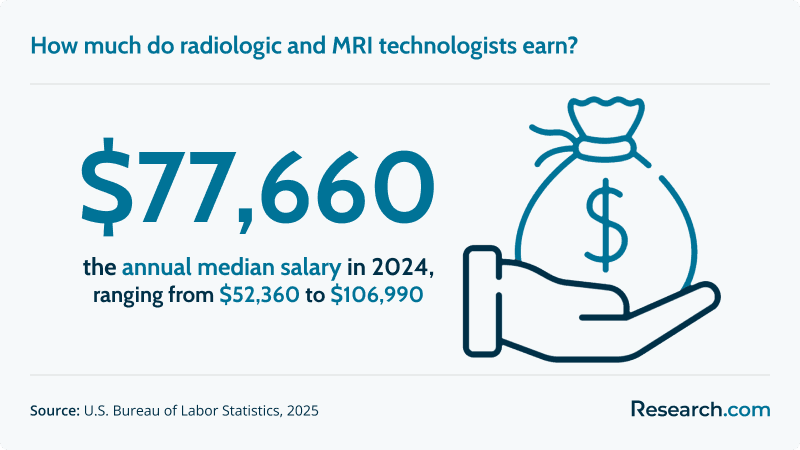
In 2024, the median annual salary for a radiology technician was $77,669, with most earning around $52,360 to $106,990. This strong earning potential, especially with just a two-year associate's degree, is one of the biggest draws of the profession.
This salary places the career well above the median for all occupations, providing a comfortable, middle-class income. It’s a clear return on the investment you make in your education.
What Factors Influence Your Salary?
That wide salary range exists for a reason, and understanding why is key to maximizing your own earning potential. It’s not just random; your income is directly influenced by a few key factors.
First, geography plays a huge role; salaries are higher in states with a greater demand and higher cost of living. Second, specialization is the most powerful tool you have for increasing your pay. Technologists with advanced certifications in MRI or CT almost always earn more than those in general radiography. Finally, experience and your work environment also matter—a senior technologist at a large urban hospital will typically earn more than a new graduate at a small, rural clinic.
What is the job outlook for radiology technologists?
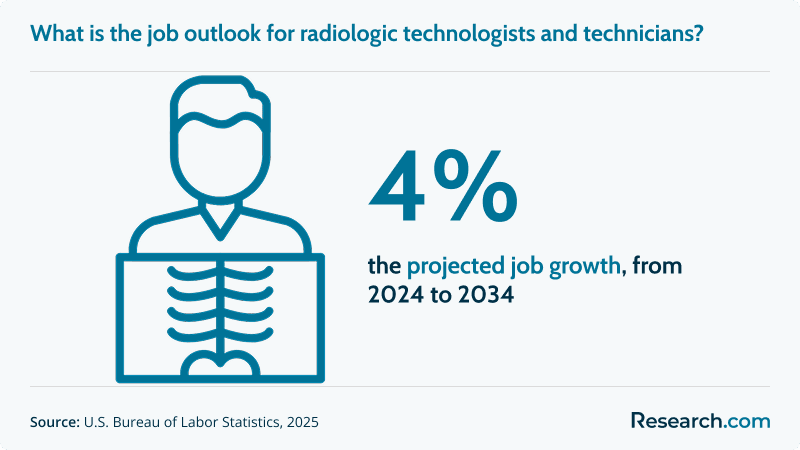
The field is projected to grow by 4% between 2024 and 2034, which the U.S. Bureau of Labor Statistics considers as fast as the average for all occupations. While that number might not sound explosive, in a large, established field like this, it translates to thousands of new job openings each year.
The Driving Force: An Aging Population
So what’s behind this steady demand? The primary reason is a simple demographic fact: our population is aging. As the large Baby Boomer generation gets older, there is an increased need for diagnostic imaging to manage a wide range of age-related medical conditions, from osteoporosis to heart disease and cancer.
This reliable, long-term trend provides a foundation of stability for the profession. It means this isn't a career that's likely to disappear or shrink. Furthermore, the large number of existing technologists means that retirements and people changing careers create a consistent flow of job openings, independent of new job growth.
What are the pros and cons of being a radiology technologist?
Every career has its rewards and its challenges, and it’s important to go in with a clear-eyed view of both. Being a radiology technologist can be an incredibly fulfilling profession, but you need to be sure that its demands are a good fit for your personality and lifestyle.
Thinking through these points is a great way to gut-check your decision.
Pros
- Excellent Return on Investment: You can enter a well-paying, professional career with a two-year associate's degree, which is one of the best educational ROIs available.
- Direct Patient Impact: You play a direct, hands-on role in helping people get the diagnoses they need, which provides a strong sense of purpose.
- Career Stability: The demand for imaging is consistent and growing, offering a high degree of job security in an essential healthcare role.
- Work with Advanced Technology: If you enjoy working with sophisticated, cutting-edge equipment, this career keeps you at the forefront of medical technology.
Cons
- Physically Demanding: The job requires you to be on your feet for long hours and often involves lifting or positioning patients who have limited mobility.
- Potential for Emotional Stress: You will work with patients who are very sick, in pain, or anxious, which can be emotionally taxing over time.
- Exposure to Trauma and Illness: In a hospital setting, you will inevitably be exposed to traumatic injuries and serious diseases, which can be difficult to witness.
- Non-Traditional Hours: Many jobs, especially in hospitals, require working nights, weekends, and holidays, and may include on-call shifts.
Flexibility in Education vs. In-Person Clinical Demands
The educational path itself can be demanding, especially for those juggling other responsibilities. It’s important to know that while the hands-on clinical requirements of the job cannot be done remotely, many students seek the flexibility of radiology technician online programs for their didactic coursework to better balance their studies with work and family life.
What are some alternative career paths to consider?
If the role of a radiology technologist sounds interesting but you're not 100% sure it's the perfect fit, it can be helpful to compare it to other similar allied health professions. Seeing how the roles differ can often bring clarity and either confirm your choice or point you in a better direction.
All of these careers require a similar level of education, typically a two-year associate's degree, and they all involve a blend of patient care and technology.
- Diagnostic Medical Sonographer: These professionals use ultrasound equipment to create images, which means they don't work with radiation. Their role is often more interpretive as they perform the scan.
- Radiation Therapist: This is a therapeutic role, not a diagnostic one. They work with radiation oncologists to administer high doses of radiation to treat cancer.
- Nuclear Medicine Technologist: This highly specialized role involves administering radioactive drugs to patients to show how organs and tissues are functioning, rather than just what they look like.
- Surgical Technologist: If you thrive in a fast-paced team environment, this role involves working directly in the operating room, preparing sterile equipment and assisting surgeons during procedures.
Accelerated and Alternative Training Routes
It’s also worth knowing that the standard two-year degree isn't the only way into this field. For those who already hold a degree in a related science field, some institutions offer accelerated certificate options, often referred to as 1 year radiology tech programs, which build on existing college credits to get you into the workforce faster.
Is a career as a radiology technologist worth it?
Whether this career is worth it is a personal decision, but the evidence points to a clear conclusion. This path is an excellent choice if you are looking for a stable, well-paying job that blends hands-on technology with meaningful patient care, and you have the attention to detail and composure the role requires.
The enduring value of this career comes from its powerful combination of a practical, two-year entry path and the long-term security and growth it provides for a radiology technician.
How Location Impacts Your Career's Value
A final, practical piece of the "worth it" equation is geography. Where you work has a significant impact on your earning potential, which can change the value proposition dramatically. While high-paying states often have a higher cost of living, the salary boost can be substantial.
For example, the median salary in California is $107,670, and it's over $99,000 in states like Massachusetts, Hawaii, Oregon, and the District of Columbia. For those willing to relocate, moving to a high-demand area can be a powerful strategy for maximizing the financial return on your educational investment.
Here’s What Radiology Technologists Have To Say About What They Do
- Jared: "I was stuck in a retail management job with unpredictable hours and a salary that had hit its ceiling. The idea of going back to school was intimidating, but the online classes for my coursework let me study after my kids were asleep. Now, I have a professional career with a stable income that supports my family, and I'm home for dinner every night. It’s the security I was looking for."
- Mark: "After my first few years in a busy hospital ER, I transitioned to an outpatient orthopedic clinic, and it has been amazing for my work-life balance. The schedule is a predictable 9-to-5, which means I never miss my son's soccer games. The associate's degree gave me the foundation to get started, but the field gave me the flexibility to build a career that truly fits my life."
- Sandra: "I saw my initial radiography certification as just the beginning. I worked in general X-ray for two years to build a strong foundation, and then I cross-trained to get my certification in MRI. That specialization not only made my work more interesting but also came with a significant pay increase. This career has a real ladder you can climb if you're motivated."
Key Findings
- With a median annual salary of $77,660, a career in radiologic technology provides a strong return on investment for the typical two-year associate's degree required to enter the field.
- The profession offers significant job security with a projected growth rate of 4% through 2034, providing the stability that many career-switchers seek.
- General medical and surgical hospitals are the largest employers in the field, with over 131,800 positions, making them the most common environment for new technologists to gain experience.
- A clear path to higher earnings exists through advancement, with median salaries reaching $93,970 for technologists working in the Federal Executive Branch.
- Geographic location is a major factor in earning potential, as demonstrated by states like California where the median annual salary is $107,670, well above the national average.
- The wide salary range, from $52,360 to $106,990, highlights the financial importance of specialization, as advanced certifications are the primary driver for reaching the upper income brackets.
Other Things You Need To Know About What Radiology Technologist Does
In 2027, radiology technologists must complete 24 continuing education (CE) credits every two years to maintain ARRT certification. These credits ensure professionals stay up-to-date with technological advancements and best practices in imaging, benefiting both patient care and career development.
Radiology technologists in 2027 need to obtain certification from the American Registry of Radiologic Technologists (ARRT). This typically requires completing an accredited educational program and passing the ARRT exam. Specific states might have additional licensing requirements, so it’s essential to check local regulations.
References
- American Society of Radiologic Technologists. (2025). ASRT professional practice resources. Retrieved November 12, 2025, from ARST.
- Mayo Clinic College of Medicine and Science. (2025). Radiologic technologist. Retrieved November 12, 2025, from Mayo Clinic.
- U.S. Bureau of Labor Statistics. (2025). Occupational employment and wage statistics (OEWS) profiles - May 2024. Retrieved November 12, 2025, from BLS.
- U.S. Bureau of Labor Statistics. (2025). Radiologic and MRI technologists. Retrieved November 12, 2025, from BLS.


