
2027 What Does a Sports Event Manager Do: Responsibilities, Requirements, and Salary

Co-Founder and Chief Data Scientist
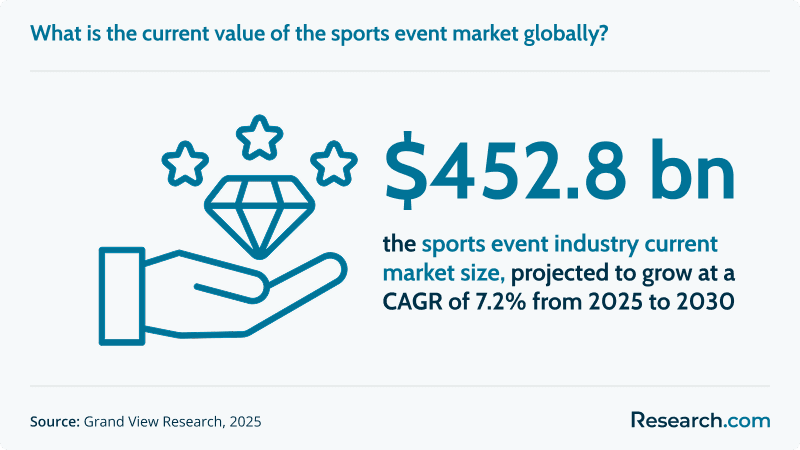
Sports event management is the career path for people who want to turn live competition into a safe, profitable, well-run experience for athletes, fans, sponsors, broadcasters, and host communities. The global sports event industry is a massive $452.8 billion business, which means the field offers real opportunity—but also real competition. Passion for sports helps, but employers hire people who can manage budgets, coordinate teams, reduce risk, and deliver under pressure.
This guide is for students, early-career professionals, career changers, and sports fans who want a practical view of what the job actually involves. You will learn what a sports event manager does before, during, and after an event; what skills and education matter; where the jobs are; and how to think realistically about salary, job outlook, and career growth.
Key Things You Should Know About What a Sports Event Manager Does
- This is a business role first, a sports role second. Success depends on your skills in project management, budgeting, and logistics, not just your knowledge of the game.
- Hands-on experience is non-negotiable. Internships and volunteer work are more valuable on your resume than a perfect GPA when you're starting out.
- The job outlook is strong. The U.S. Bureau of Labor Statistics projects that jobs for event planners will grow 18% between 2021 and 2031, much faster than the average.
- Salaries for event planners have a wide range, but the median pay is about $62,734 per year, with significant potential for growth as you gain experience and manage larger events.
- This is not a 9-to-5 job. Expect to work long hours, including nights, weekends, and holidays, especially in the weeks leading up to an event.
What is a sports event manager?
A sports event manager is the person responsible for planning, coordinating, and executing sporting events. The role combines project management, operations, marketing, budgeting, vendor management, safety planning, and stakeholder communication. In simple terms, this professional makes sure the event works for everyone involved: fans, athletes, sponsors, media partners, venue staff, public agencies, and the organization paying for the event.
The role is broader than venue management or public relations. A venue manager focuses on the facility. A public relations manager focuses on media and reputation. A sports event manager connects those functions and keeps the entire event plan moving toward one outcome: a safe, organized, financially sound event that meets its goals.
The scale can vary widely. One manager may organize a local 5k race, while another may help coordinate a global event such as the Tour de France, which draws an incredible 12 million spectators. The same core principles apply at every level: define the objective, build the plan, manage people and resources, anticipate problems, and execute with discipline.
The hidden job market beyond teams and leagues
Many people assume sports event jobs exist only with professional teams, leagues, or major athletic departments. In reality, a large share of the work happens through sports commissions, event agencies, venue operators, tourism boards, nonprofit organizations, collegiate athletics departments, youth sports organizations, and specialized event management firms.
That matters for career planning. If you are coming from corporate project management, hospitality, marketing, logistics, finance, public safety, or customer experience, you may already have transferable skills. Employers in this field value people who can create structure, manage deadlines, communicate clearly, and keep a complex operation moving even when conditions change.
What does a sports event manager do day-to-day?
Most of a sports event manager’s work happens long before fans arrive. The job is often office-based during planning periods and becomes highly on-site and time-sensitive as the event approaches. A typical day may involve updating timelines, answering emails, reviewing contracts, checking ticketing reports, meeting with sponsors, coordinating vendors, refining staffing plans, and solving problems that could affect the event schedule or budget.
The work is cyclical. Early planning can be strategic and methodical. The weeks before an event are usually faster, longer, and more reactive. Event day is the highest-pressure phase, but it is only visible because months of planning have already happened.
Common daily tasks
- Project tracking: Maintaining timelines, task lists, approvals, deadlines, and status updates.
- Stakeholder communication: Coordinating with executives, sponsors, coaches, athletes, media teams, vendors, venue staff, and public agencies.
- Budget monitoring: Reviewing expenses, invoices, revenue projections, and vendor costs.
- Operational planning: Updating layouts, staffing plans, transportation details, credentialing procedures, security plans, and emergency protocols.
- Marketing coordination: Checking ticket sales, promotional calendars, sponsor obligations, and audience engagement plans.
- Problem-solving: Handling schedule changes, weather concerns, staffing gaps, vendor delays, or compliance issues.
The modern manager’s toolkit
Technology is now part of the baseline skill set. Sports event managers commonly use project management platforms such as Asana, Trello, or Monday.com to organize tasks and hold teams accountable. They may also work with ticketing systems, customer relationship management tools, budgeting spreadsheets, venue mapping tools, communication platforms, and reporting dashboards.
For students and entry-level candidates, becoming comfortable with these tools is a practical way to stand out. You do not need to be a software engineer, but you do need to be organized, accurate, and confident working with shared systems where many people depend on current information.
What are the key responsibilities during event planning?
The planning phase determines whether an event is likely to succeed. This is where the manager turns a concept into a workable plan, tests assumptions, identifies risks, and secures the people and resources needed to execute the event. Strong planning reduces surprises; weak planning creates expensive problems later.
Core planning responsibilities usually include:
- Defining the event goals: Clarifying whether the event is designed to generate profit, raise charitable funds, increase fan engagement, support tourism, promote a brand, or serve a competitive purpose.
- Assessing feasibility: Determining whether the date, venue, budget, staffing model, audience size, and operational requirements are realistic.
- Building the master plan: Creating timelines, milestones, task assignments, approval processes, communication procedures, and contingency plans.
- Securing the venue: Reviewing availability, capacity, rental terms, insurance requirements, accessibility, parking, loading access, technology, concessions, and emergency procedures.
- Hiring and coordinating vendors: Managing security, ticketing, medical services, catering, transportation, signage, equipment, cleaning, production, and other outside services.
- Managing permits and compliance: Working with local authorities when required for road closures, public safety, alcohol service, health requirements, noise rules, or crowd control.
- Creating risk plans: Preparing for weather, medical emergencies, crowd issues, technology failures, delayed teams, vendor no-shows, and other disruptions.
It is tempting to think of planning as the creative part of the job. Creativity matters, but planning is also risk management. A good sports event manager constantly asks, “What could go wrong, who needs to know, and what is our backup plan?”
Planning for a greener game
Sustainability has become a more important part of sports event planning because cities, sponsors, venues, and fans increasingly pay attention to environmental impact. Managers may be asked to reduce waste, improve recycling, limit single-use materials, coordinate public transportation options, conserve energy, or work with vendors that follow more sustainable practices.
This can also be a career differentiator. Candidates who understand sustainable event operations can bring value to organizations that want to improve their public reputation, meet sponsor expectations, or comply with local environmental standards.
The following chart illustrates the massive attendance figures for some of the world's top sporting events.
How do you become a sports event manager?
The most reliable path into sports event management combines education, experience, and relationships. A degree can help you understand the business side of sports, but hands-on experience is usually what convinces employers that you can handle the pace and pressure of live events.
Many professionals enter the field with a bachelor’s degree in sports management, business, marketing, hospitality, communications, or a related area. Coursework can build useful knowledge in finance, sponsorship, operations, leadership, law, marketing, and event planning. However, classroom learning should be paired with internships, volunteer work, part-time roles, and campus athletics experience as early as possible.
Experience often carries more weight than grades alone. An employer may prefer a candidate with a 3.0 GPA and three strong internships over a 4.0 student with no real-world event experience. That is because sports events require judgment, reliability, communication, and composure—skills that develop through doing the work.
Practical steps to enter the field
- Start with local opportunities: Volunteer at races, tournaments, school events, recreation leagues, charity events, or campus athletic events.
- Work in athletics or venues: Look for roles in ticketing, fan services, operations, facilities, marketing, concessions, or game-day staffing.
- Build a portfolio: Track the events you support, your responsibilities, the size of the audience, the tools you used, and the problems you helped solve.
- Pursue internships strategically: Consider minor league teams, sports commissions, collegiate athletic departments, event agencies, venue operators, and youth sports organizations.
- Develop business skills: Learn budgeting, spreadsheets, sponsorship basics, contract review, project management tools, and professional communication.
- Network before you need a job: Stay in touch with supervisors, vendors, alumni, professors, and event professionals you meet during volunteer or internship work.
Educational pathways to a career in sports
A strong education can make it easier to compete for internships and entry-level roles, especially when the program includes career services, industry connections, and applied projects. For many students, an option such as a sports management bachelor's degree online can provide foundational knowledge while allowing time to gain hands-on experience.
When comparing programs, look beyond the title of the degree. Review the curriculum, internship requirements, faculty background, alumni outcomes, accreditation status, and flexibility. The best program for this career is usually one that helps you build both business knowledge and a practical event resume.
What is the manager's role in marketing and promotion?
A sports event manager usually does not create every social media post, advertisement, or press release personally. Instead, the manager oversees the marketing plan and makes sure promotional activity supports the event’s goals. The main question is not simply “How do we get attention?” but “How do we reach the right audience, sell tickets or registrations, satisfy sponsors, and create a strong event experience?”
The manager’s marketing role often includes defining the target audience, setting ticket or registration goals, coordinating promotional timelines, managing the marketing budget, reviewing campaign performance, and making sure sponsors receive the exposure promised in their agreements.
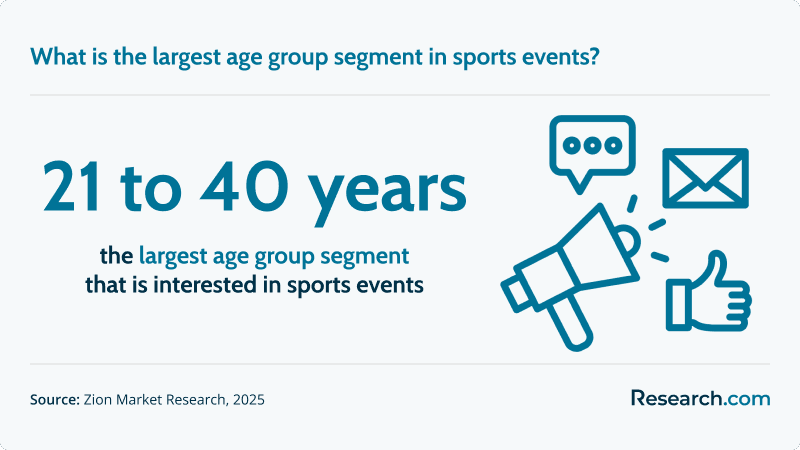
This work is especially important when reaching the largest demographic for sports events, the 21 to 40-year-old age group, which responds best to digital-first campaigns.
What the manager coordinates
- Audience strategy: Identifying who is most likely to attend, register, watch, sponsor, or share the event.
- Ticketing and pricing coordination: Aligning promotions with sales goals, group packages, early-bird pricing, premium experiences, or family offers.
- Digital promotion: Coordinating email, social media, paid ads, influencer partnerships, video content, and website updates.
- Public relations: Working with communications teams on media outreach, press access, athlete appearances, and community stories.
- Sponsor activation: Making sure sponsors are integrated into the event in ways that are visible, measurable, and consistent with the agreement.
- Performance tracking: Reviewing which channels drive awareness, engagement, ticket sales, registrations, or sponsor value.
Targeting the modern sports fan
Sports marketing is increasingly digital, visual, and community-driven. Fans may discover events through Instagram, TikTok, podcasts, local sports creators, athlete content, team newsletters, or targeted ads. Behind-the-scenes videos, countdown campaigns, player features, venue previews, and fan contests can help build momentum before event day.
This creates an advantage for candidates who understand digital behavior and can connect marketing activity to measurable results. For career changers, it is a signal to learn the basics of digital advertising, content calendars, audience segmentation, and campaign reporting.
How do managers handle event budgets and finances?
Budget management is one of the clearest differences between an entry-level coordinator and a senior event manager. A sports event manager may be responsible for building the budget, tracking revenue and expenses, negotiating costs, protecting profit margins, and explaining financial performance to leadership or sponsors.
In this role, money management is not just bookkeeping. It shapes almost every decision: venue selection, staffing levels, marketing spend, security needs, ticket pricing, vendor contracts, sponsor packages, hospitality options, and contingency planning. A great event that loses money or creates unexpected liabilities can still be judged as unsuccessful.
In an industry where top teams like the Dallas Cowboys are valued at over $10 billion, understanding the financial side of sports is not optional. Even smaller events need disciplined budgeting because margins can be tight and unexpected costs can appear quickly.
Common budget categories
| Budget area | What it may include | Why it matters |
| Revenue | Ticket sales, registrations, sponsorships, merchandise, concessions, premium experiences | Determines whether the event can cover costs and meet financial goals |
| Venue and operations | Rental fees, utilities, equipment, staging, signage, cleaning, parking, permits | Often includes major fixed costs that must be negotiated early |
| Staffing and vendors | Security, medical teams, ushers, production crews, officials, contractors, temporary staff | Affects safety, service quality, compliance, and fan experience |
| Marketing | Advertising, creative production, email tools, influencer partnerships, media buys | Supports ticket sales, attendance, sponsor visibility, and brand awareness |
| Risk and contingency | Insurance, emergency planning, weather backup, reserve funds | Protects the event from avoidable financial and operational shocks |
Sponsorships and the language of ROI
Sponsorship has become more performance-focused. A logo on a banner may not be enough for companies that want measurable value. Sponsors often want to know how an event will help them reach customers, generate leads, improve brand awareness, support community goals, or create content they can use after the event.
This is an opportunity for professionals with sales, finance, marketing, or business backgrounds. If you can build sponsorship proposals that connect event assets to a sponsor’s business goals, you can become valuable quickly. Strong managers understand both sides: what the event needs financially and what the sponsor needs in return.
How are on-site operations and logistics managed?
On-site operations are where the event plan is tested in real time. The sports event manager becomes a central point of coordination, making sure staff, vendors, security, medical teams, entertainment crews, ticketing teams, and venue personnel are working from the same schedule and communication plan.
Event day is not the time to improvise the basics. Strong managers arrive with a run-of-show, contact list, site map, escalation process, emergency plan, staffing assignments, vendor load-in schedule, credentialing rules, and backup options for likely disruptions.
Key on-site responsibilities include:
- Managing staff and volunteers: Assigning roles, confirming check-in, answering questions, adjusting coverage, and maintaining morale during a long day.
- Coordinating vendors: Making sure security, medical staff, catering, ticketing, production, transportation, and other service providers deliver as scheduled.
- Protecting spectator safety: Monitoring crowd movement, entry lines, weather conditions, emergency access, and communication with security or public safety teams.
- Executing the run-of-show: Keeping ceremonies, warmups, entertainment, sponsor moments, competition windows, and post-event activities on time.
- Managing communication: Making sure the right people receive accurate updates quickly through radios, messaging channels, command centers, or designated leads.
- Solving problems calmly: Responding to delays, missing equipment, staffing gaps, fan complaints, credential issues, or last-minute changes without creating confusion.
The fan experience: atmosphere and entertainment
Logistics are not only about safety and schedules. They also shape the fan experience. Entry lines, signage, music, announcements, concessions, seating flow, halftime entertainment, sponsor activations, and post-game exits all affect how people remember the event.
Sports event managers often coordinate with entertainment, production, and audio professionals to create the right atmosphere. Some of those specialists may have training similar to a fast-track bachelor's in audio and music degree online, especially for roles that involve live sound, production timing, and performance coordination.
What do sports event managers do once the event is over?
The event is not finished when the crowd leaves. The post-event phase is where managers close out operations, evaluate performance, document lessons, and prepare for the next event. Skipping this phase is a common mistake because it leaves valuable information uncollected and makes future planning harder.
Immediate post-event work often includes breakdown, cleanup, equipment return, vendor closeout, invoice review, lost-and-found procedures, staff dismissal, incident reporting, and venue walkthroughs. The manager may also need to confirm that the venue is returned to its required condition.
After the site is closed, attention shifts to evaluation. Managers review attendance, sales, expenses, sponsor deliverables, social media engagement, fan feedback, staff performance, operational issues, and safety reports. The findings are usually summarized for leadership, sponsors, partners, or future planning teams.
Post-event questions that matter
- Did the event meet its attendance, revenue, fundraising, or engagement goals?
- Were sponsors satisfied, and were all contracted benefits delivered?
- Where did fans experience delays, confusion, or poor service?
- Which vendors performed well, and which require follow-up?
- What safety, staffing, or logistics issues should be fixed before the next event?
- What marketing channels produced the strongest results?
Creating the post-event narrative
A strong post-event report does more than list numbers. It tells the story of what the event achieved and gives decision-makers evidence they can use for renewals, sponsorship pitches, community support, or future marketing.
Many organizations create highlight reels, sponsor recap decks, photo galleries, testimonials, and case studies. This may involve hiring creative professionals from fields like those covered in the shortest cinematography programs online to produce video content that captures the energy and value of the event. Done well, the post-event narrative becomes a sales tool for the next event.
What skills do you need to succeed in sports event management?
Sports event management requires a mix of technical skill, business judgment, communication ability, and emotional control. Being organized and friendly helps, but the job demands more than that. Managers must make decisions quickly, manage competing priorities, and stay accountable when many people are depending on them.
Hard skills
Hard skills are the technical abilities that help you plan, measure, and control an event. Important examples include:
- Budgeting and financial management: Creating budgets, tracking expenses, monitoring revenue, reviewing invoices, and managing the financial health of an event.
- Project management: Building timelines, assigning tasks, managing dependencies, tracking progress, and keeping complex work on schedule.
- Contract negotiation: Reviewing terms with venues, vendors, sponsors, and service providers to manage cost, scope, deadlines, and risk.
- Data analysis: Using attendance figures, ticket sales, marketing metrics, survey results, and sponsor data to make better decisions.
- Technology fluency: Working with spreadsheets, project management software, ticketing systems, communication tools, and reporting dashboards.
- Risk planning: Preparing for weather, emergencies, crowd management issues, vendor failures, and operational disruptions.
Soft skills
Soft skills determine how well you lead people and perform under pressure. The most important include:
- Communication: Giving clear instructions, writing concise updates, managing stakeholder expectations, and keeping teams aligned.
- Problem-solving: Responding calmly when plans change and finding practical solutions without slowing down the entire operation.
- Attention to detail: Catching schedule errors, contract issues, signage problems, staffing gaps, or missing equipment before they affect the event.
- Leadership: Motivating staff and volunteers, making decisions, resolving conflict, and keeping people focused during stressful periods.
- Adaptability: Adjusting quickly when weather, attendance, staffing, or competition schedules change.
- Professional judgment: Knowing when to escalate a problem, when to make a decision, and when to slow down to reduce risk.
The growing importance of data-driven decision making
Data skills are becoming more important because sports organizations want evidence behind decisions. Managers who can interpret sales trends, fan behavior, marketing performance, attendance patterns, and sponsor outcomes are better equipped to improve events and defend budget choices.
For a broader view of where analytics fits in the sports industry, exploring what can you do with a master's degree in sports analytics shows how valuable this skill set can be for advanced roles.
How much can you earn as a sports event manager?
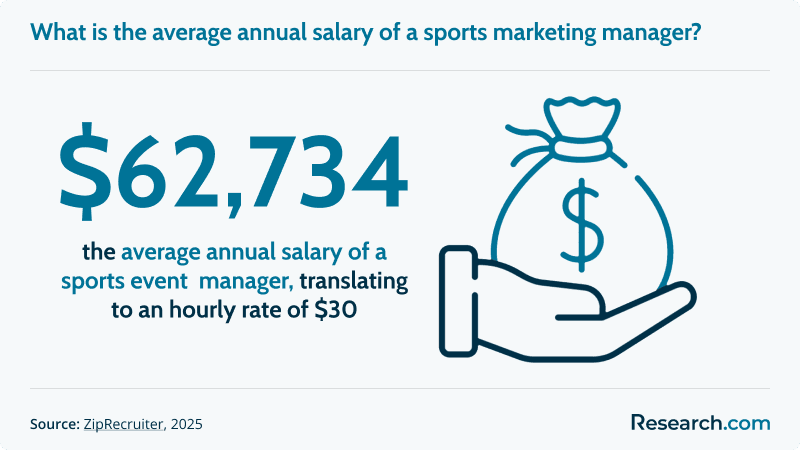
Earnings in sports event management vary widely by role, organization, market, event scale, and experience. According to ZipRecruiter, the average annual salary for a closely related role, sports marketing manager, is $62,734. This can serve as a useful benchmark, but it should not be treated as a guaranteed salary for every sports event role.
Entry-level coordinator positions might start in the $40,000 range, while experienced directors at major universities or professional organizations can earn well over $150,000 as they take on more responsibility. Compensation can also differ depending on whether the position is full-time, seasonal, contract-based, or tied to a specific event series.
Factors that influence your earning potential
- Geographic location: Major markets with multiple professional teams, large venues, and major collegiate programs, such as New York or Los Angeles, generally offer higher salaries, though cost of living may also be higher.
- Type of organization: A major professional league or Division I university may pay more than a smaller nonprofit, recreation organization, or minor league team.
- Scale of events: Managing a national championship, major marathon, tournament series, or large venue event usually carries more responsibility than managing local tournaments.
- Experience and track record: Your earning potential grows when you can show successful events, strong budgets, satisfied sponsors, safe operations, and measurable results.
- Specialized skills: Budgeting, sponsorship sales, digital marketing, analytics, venue operations, and risk management can all strengthen your value.
Students should also understand the “passion tax.” Because many people want to work in sports, some entry-level roles may pay less than comparable operations, marketing, or project management roles in other industries. That does not mean the field is not worthwhile, but it does mean you should compare salary, workload, career growth, and location before accepting an offer.
What is the job outlook for sports event managers?
The job outlook for sports event managers is supported by the broader demand for live events, fan experiences, youth sports, collegiate athletics, tourism-driven tournaments, and emerging forms of competition. The U.S. Bureau of Labor Statistics projects that employment for event planners will grow by 5% between 2024 and 2034.
Competition will still be strong for jobs with major professional teams and leagues because those roles attract many applicants. The broader opportunity may be easier to find in adjacent areas such as youth sports tourism, college athletics, sports commissions, event agencies, venue operations, endurance events, and specialized event production companies.
The industry’s massive $452.8 billion market size reflects how many organizations are involved in planning, hosting, promoting, and monetizing sports events. For career planning, the smart approach is to look beyond the most visible teams and identify where events are growing, where your skills fit, and where you can gain responsibility quickly.
Emerging niches: the rise of esports
Esports is one of the most important emerging areas for event professionals. Competitive video gaming has developed into a global event category with live audiences, streaming production, sponsorships, team operations, fan communities, and venue-based competitions.
This creates opportunities for candidates who understand digital audiences, online communities, live production, gaming culture, sponsorship activation, and hybrid events. The field is still professionalizing, which can make it appealing for younger professionals and career changers who want to build experience in a fast-moving part of the industry. The potential is reflected in the game business and esports salary ranges available to skilled professionals in this space.
Key Findings
- Sports event management is a business and operations career, not just a way to work near sports. The strongest candidates understand planning, budgets, logistics, marketing, safety, and stakeholder management.
- The global sports event industry is a massive $452.8 billion business, creating opportunities across professional sports, collegiate athletics, youth sports, tourism events, agencies, venues, nonprofits, and esports.
- Hands-on experience is critical. Internships, volunteer roles, campus athletics work, and event-day jobs often matter as much as, or more than, classroom performance alone.
- Planning is largely risk management. Strong managers build timelines, secure vendors, control budgets, prepare contingency plans, and communicate clearly before problems become visible.
- Marketing and sponsorship are increasingly digital and data-driven, especially when reaching the 21 to 40-year-old age group.
- Salary varies by role and organization. ZipRecruiter lists $62,734 as the average annual salary for the closely related sports marketing manager role, while entry-level coordinator roles might start in the $40,000 range and experienced directors can earn well over $150,000.
- The U.S. Bureau of Labor Statistics projects 5% employment growth for event planners between 2024 and 2034, but the best opportunities may be outside the most competitive professional team roles.
- Esports, youth sports tourism, sustainability, analytics, and sponsorship ROI are important areas to watch for career growth.
Other Things You Should Know About What a Sports Event Manager Does
In 2027, technology has significantly reduced the need for travel in sports event management. Many tasks, such as virtual site inspections and remote team collaboration, can be efficiently managed online, minimizing the necessity for frequent travel and improving work-life balance.
To become a sports event manager in 2027, a bachelor’s degree in sports management, event management, or a related field is typically required. Some positions may prefer candidates with a master’s degree or specialized certifications in event planning or sports administration.
In 2027, a sports event manager's primary responsibilities include planning, organizing, and overseeing sports events. They coordinate logistics, manage budgets, secure venues, and liaise with vendors. They also ensure compliance with regulations and implement marketing strategies to enhance event visibility. Effective communication and problem-solving skills are essential in this role.
References
- Greenwell, T. C., Danzey-Bussell, L. A., & Shonk, D. J. (2017). Managing sport events. Human Kinetics.
- National Center for Spectator Sports Safety and Security. (n.d.). Best practices. The University of Southern Mississippi. Retrieved October 30, 2025, from https://ncs4.usm.edu/solutions/best-practices/
- TeamWork Online. (n.d.). The ultimate guide to starting your career in sports. Retrieved October 30, 2025, from https://www.teamworkonline.com/blog/the-ultimate-guide-to-starting-your-career-in-sports
- U.S. Bureau of Labor Statistics. (2024, September 4). Meeting, convention, and event planners. Occupational Outlook Handbook. Retrieved October 30, 2025, from https://www.bls.gov/ooh/business-and-financial/meeting-convention-and-event-planners.htm
- ZipRecruiter. (2025). Sports marketing manager salary. Retrieved October 30, 2025, from https://www.ziprecruiter.com/Salaries/Sports-Marketing-Manager-Salary


