
2027 Which Construction Management Degree Careers Have the Lowest Unemployment Risk?

Co-Founder and Chief Data Scientist
Construction management can offer strong job prospects, but unemployment risk is not the same across every role, specialization, employer, or region. A graduate managing infrastructure work in a growing metro area may face a very different labor market than someone tied to a narrow residential market or a highly cyclical private developer.
Data shows that credentialed construction managers specializing in public works and commercial developments report an average unemployment rate nearly 40% below the national construction management average. That gap matters because job stability affects more than whether a graduate finds work; it influences income continuity, career progression, debt repayment, relocation decisions, and the value of additional credentials.
This guide explains which construction management career paths, industries, certifications, degree choices, and geographic markets are most likely to reduce unemployment exposure. It is designed for students choosing a concentration, early-career professionals planning their next role, and experienced construction workers considering a degree or credential to move into management.
Key Things to Know About the Construction Management Degree Careers With the Lowest Unemployment Risk
- Historical unemployment rates for construction management degree holders with professional licensure are consistently 2-3% lower-licensure significantly enhances job security by mitigating automation risks and economic downturn impacts.
- Ten-year employment projections emphasize geographic markets with ongoing urban expansion-careers in infrastructure development and green building show 15%+ demand growth, reinforcing recession resilience.
- Graduate education combined with certifications like PMP reduces long-term unemployment exposure by equipping practitioners to manage complex projects-critical as automation targets routine construction tasks.
What Makes Construction Management Degree Jobs More or Less Resistant to Unemployment?
Construction management jobs are more resistant to unemployment when they are tied to essential projects, regulated work, specialized technical judgment, and employers with steady funding. They become more vulnerable when they depend heavily on discretionary private development, routine administrative tasks, or a single regional industry.
It helps to separate the main types of unemployment. Structural unemployment comes from long-term changes such as automation, shifting building methods, or declining local industries. Frictional unemployment refers to short gaps between jobs, often during relocation or career transitions. Cyclical unemployment rises when the broader economy slows and owners delay or cancel projects. Strong construction management career planning considers all three.
Data from the Bureau of Labor Statistics, O*NET occupational profiles, and Lightcast labor market analytics point to several factors that shape job security for construction management degree holders:
- Occupational licensing: Roles that require formal licensure or recognized credentials have stronger barriers to entry. This can reduce competition and make qualified professionals harder to replace.
- Employer diversity: Careers available across public agencies, contractors, healthcare systems, utilities, universities, and private developers are generally safer than roles concentrated in one employer type.
- Sector growth rate: Specializations connected to infrastructure, sustainable construction, digital construction, and regulatory compliance benefit when demand outpaces the supply of experienced managers.
- Role replaceability: Jobs requiring judgment, negotiation, field leadership, safety interpretation, and complex sequencing are less exposed to automation than roles built around repetitive documentation or standardized reporting.
- Credential portability: Certifications, licensure, and technical skills that travel across states, sectors, and employer types can shorten job searches after layoffs or relocations.
Degree level and specialization also matter. A bachelor's degree can qualify graduates for coordinator, field engineer, estimating, and assistant project management roles. Advanced degrees or respected certifications may open doors to senior project leadership, public-sector management, consulting, or specialized technical positions that are less vulnerable to layoffs.
Geography is another major variable. Regions with sustained infrastructure investment, diversified economies, and active commercial development tend to offer more stable construction management opportunities than areas tied to one volatile industry. Students comparing programs should also consider whether the program supports internships, local employer connections, and credential preparation. Those evaluating affordability can review online schools that accept FAFSA as part of a broader education financing plan.
Key unemployment-resistance factors to compare
| Factor | Why it matters | Lower-risk signal |
| Industry | Some sectors continue building through downturns because projects are essential or publicly funded. | Infrastructure, public works, utilities, healthcare, and code-driven facility upgrades. |
| Credentials | Licensure and respected certifications can act as hiring filters. | Roles where CCM, PMP, OSHA, LEED, or state licensure is valued or required. |
| Tasks | Routine work is easier to automate or outsource. | Complex coordination, field leadership, risk management, and stakeholder negotiation. |
| Location | Construction demand is local and regional, especially for site-based roles. | Diverse metro areas with active public and private project pipelines. |
| Employer type | Funding sources influence layoffs and hiring freezes. | Large diversified contractors, public agencies, healthcare systems, and utilities. |
The strongest strategy is not simply choosing the highest-paying role. It is choosing a path with durable demand, transferable skills, and credentials that remain useful if the economy slows or a local market weakens.
Which Construction Management Career Paths Have the Lowest Historical Unemployment Rates?
The construction management career paths with the lowest historical unemployment risk are usually those connected to essential oversight, cost control, safety compliance, public accountability, and facility continuity. Analysis of over a decade of BLS Current Population Survey data, combined with insights from NACE First-Destination Survey outcomes and Federal Reserve Bank labor market research, points to several roles that have remained comparatively resilient across economic cycles.
- Project managers: Project managers coordinate budgets, schedules, owners, subcontractors, and risk decisions from planning through closeout. Their work is difficult to remove from complex projects because poor coordination can trigger delays, claims, safety problems, and cost overruns.
- Cost estimators: Estimators help owners and contractors decide whether a project is financially viable. Demand for accurate forecasting persists in both strong and weak markets because lenders, public agencies, and executives need reliable numbers before committing funds.
- Safety managers: Safety professionals support OSHA compliance, worker training, incident prevention, and documentation. Because safety obligations do not disappear during downturns, these roles can offer steadier demand than positions tied only to project volume.
- Construction inspectors: Inspectors verify compliance with building codes, plans, quality standards, and regulatory requirements. Their work remains important in public infrastructure, commercial construction, and private development because approvals and occupancy often depend on inspection outcomes.
- Scheduling coordinators: Skilled schedulers help prevent trade conflicts, idle labor, missed milestones, and cascading delays. The role is strongest when it involves analysis and coordination rather than only updating software.
- Facilities managers: Facilities managers oversee building operations, maintenance, repairs, vendor coordination, and capital improvements. Because existing buildings require ongoing management even when new construction slows, this path can reduce exposure to construction-start cycles.
How to choose among lower-risk paths
Students should compare these roles by the kind of work they want to do every day. Project management and field engineering are strong choices for people who like site coordination and fast decision-making. Estimating and scheduling suit detail-oriented professionals who enjoy planning, data, and risk analysis. Safety and inspection roles fit graduates who value compliance, prevention, and clear standards. Facilities management can be attractive for those who want steadier operations work rather than project-by-project employment.
Historical unemployment data should not be the only factor. A role with low unemployment may still require relocation, difficult hours, field travel, or high liability. Prospective students should also evaluate automation exposure, credential requirements, local demand, and whether the role has a clear ladder into senior management.
Some graduates broaden their employability by adding adjacent credentials or interdisciplinary training. For example, an accelerated MSW program online is not a construction credential, but it may interest professionals who want to combine project leadership with community development, housing, workforce services, or public-sector program work.
How Does the Construction Management Job Market Compare to the National Unemployment Average?
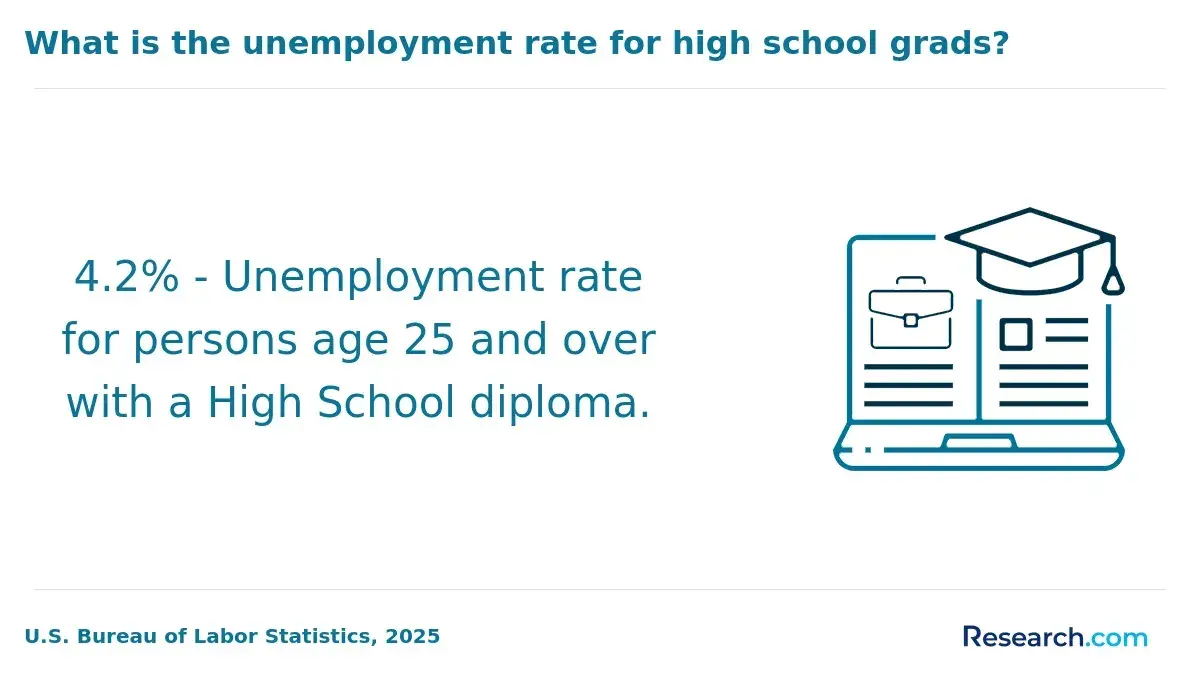
The construction management job market compares favorably with the national unemployment average for college graduates. The unemployment rate for construction management degree holders is around 1.3%, compared to 2.5% for college graduates nationwide. In practical terms, that difference can mean shorter job searches, fewer income interruptions, and a better chance of staying on a relevant career track after graduation.
That said, the headline rate should be interpreted carefully. Construction management is tied to local project volume, employer funding, and sector mix. A graduate in a strong infrastructure market may have multiple options, while a graduate in a region with stalled development may need to relocate, accept a related role, or add credentials to stay competitive.
- Labor market stability: Construction management roles are often connected to active capital projects, infrastructure maintenance, compliance, and facility operations. These needs can continue even when some private projects slow.
- Underemployment risk: Unemployment is not the only concern. Some graduates may work in roles that do not fully use their degree. Construction management graduates typically experience lower underemployment rates than many peers, suggesting that many find work related to their training.
- Small-field volatility: Specialized construction management niches can show year-to-year swings because the workforce is smaller. Multi-year trends are more useful than a single data point.
- Local-market dependence: National averages do not replace regional research. Students should compare job postings, wages, employer types, and internship pipelines in the markets where they expect to work.
A graduate's experience often depends on strategy as much as the degree itself. One construction management graduate described sending many applications before receiving callbacks, then using networking to secure an internship that led to a full-time role. The lesson was clear: the degree helped, but credentials, local market demand, internships, and employer relationships made the difference.
Students should use unemployment rates as a starting point, not a guarantee. The strongest outcomes usually come from pairing the degree with field experience, a marketable specialization, and a realistic plan for where to work after graduation.
What Construction Management Specializations Are Most In-Demand Among Employers Right Now?
The most in-demand construction management specializations are concentrated in areas where employers face regulatory pressure, technology change, infrastructure needs, and shortages of experienced professionals. Demand is not evenly distributed across the field, so students should choose electives, internships, and certifications with a specific labor market in mind.
- Sustainability and green building: Employers value managers who understand energy-efficient design, LEED documentation, sustainable materials, waste reduction, and owner sustainability goals.
- Digital construction and BIM management: Building Information Modeling, coordination platforms, drones, digital twins, and project management software have increased demand for professionals who can use technology to reduce errors and improve coordination.
- Health and safety compliance: Safety-focused managers remain important because construction employers must manage injury prevention, training, reporting, and OSHA-related obligations.
- Infrastructure and civil projects: Public works, transportation, utilities, bridges, and water systems require managers who can coordinate large teams, public stakeholders, compliance requirements, and long project timelines.
- Preconstruction and cost estimating: Owners and contractors need accurate budgets before committing to projects. Estimating, value engineering, and bid analysis remain valuable skills in uncertain markets.
- Modular and offsite construction: Prefabrication and modular delivery create demand for managers who understand manufacturing coordination, logistics, quality control, and installation sequencing.
- Residential project management: Housing demand supports opportunities in many regions, although this specialization can be more sensitive to interest rates, local affordability, and economic cycles.
How to verify demand before choosing a specialization
Students should not rely only on national trend language. Before committing to a concentration, compare employer postings in the target region, ask internship supervisors which skills are hardest to hire for, review certification preferences, and check whether local employers are public agencies, commercial contractors, industrial builders, residential firms, or specialty subcontractors.
For technology-oriented students, digital fluency can be a differentiator. A game development degree online is not a standard construction management route, but the underlying skills in modeling, simulation, visualization, and interactive design may overlap with emerging digital construction tools when paired with construction-specific training.
The best specialization is one that matches three conditions: employers are hiring for it, the skills are transferable across multiple sectors, and the work fits the graduate's strengths. A narrow specialty can pay off, but it should not leave the graduate dependent on one employer or one type of project.
Which Industries Employing Construction Management Graduates Offer the Greatest Job Security?
The industries offering the greatest job security for construction management graduates are those with essential services, long-term capital needs, regulatory requirements, and diversified funding. These sectors may not always offer the fastest salary growth, but they can provide steadier demand across economic cycles.
- Infrastructure and public works: This sector includes highways, transit systems, bridges, water systems, public buildings, and other government-funded projects. Construction managers need skills in scheduling, cost control, procurement, public reporting, safety, environmental compliance, and stakeholder coordination.
- Healthcare facility construction: Hospitals, clinics, laboratories, and medical campuses require renovation, expansion, and compliance-driven upgrades. Managers in this area must understand phased construction, infection control, technical systems, equipment coordination, and work in occupied facilities.
- Energy and utilities: Utility and energy projects often involve essential infrastructure, safety requirements, environmental oversight, and long project timelines. Construction managers coordinate contractors, technical experts, regulators, and operations teams.
- Commercial real estate development: Commercial projects can offer strong opportunities in growing urban areas, but the sector is moderately sensitive to financing conditions and business cycles. Managers need budgeting, negotiation, schedule control, quality assurance, and communication skills.
- Industrial and manufacturing facilities: These projects require knowledge of industrial processes, equipment installation, safety standards, site logistics, and coordination with engineers and operations staff.
| Industry | Job-security advantage | Main risk to watch |
| Infrastructure and public works | Public need and government funding can support long-term project pipelines. | Budget delays, procurement rules, and political funding shifts. |
| Healthcare facility construction | Regulatory upgrades and facility modernization create recurring work. | Complex compliance requirements and high coordination demands. |
| Energy and utilities | Essential services require ongoing construction, repair, and modernization. | Environmental approvals, safety risk, and policy changes. |
| Commercial real estate development | Urban growth can create substantial demand for experienced managers. | Greater sensitivity to financing and economic cycles. |
| Industrial and manufacturing facilities | Specialized facilities need managers who understand operations and technical systems. | Exposure to manufacturing cycles and site-specific technical requirements. |
Graduates should avoid becoming too dependent on a single industry. Cross-sector skills such as contract administration, regulatory compliance, project finance, safety, BIM coordination, and stakeholder communication make it easier to move if one market slows.
One professional described building job security by moving between healthcare and public works projects. The work was demanding because safety, scheduling, and compliance pressures often collided, but the experience made her more adaptable. She noted that mastering different regulatory frameworks helped her compete for roles across sectors, not just within one niche.
How Do Government and Public-Sector Construction Management Roles Compare in Unemployment Risk?
Government and public-sector construction management roles generally carry lower unemployment risk than many private-sector roles. Data from the Bureau of Labor Statistics, the Office of Personnel Management, and the National Association of State Personnel Executives support the view that public employment is often more stable because it is tied to public infrastructure, essential facilities, civil service rules, and long-term capital planning.
- Unemployment rates: Employees in public-sector construction management face unemployment rates often half those seen in private industry. Public agencies continue to manage roads, schools, utilities, public buildings, and infrastructure even when private development slows.
- Layoff frequency: Layoffs are often less frequent in federal, state, and local government roles because civil service regulations, collective bargaining agreements, and budget procedures can make reductions slower and more structured.
- Career tenure: Public-sector roles often encourage longer tenure through benefits, pension incentives, internal promotion systems, and predictable job classifications.
- Federal agency positions: These roles tend to offer strong job security because they are less directly exposed to private market cycles and often operate under formal employment protections.
- State and local government roles: These positions are generally stable but can still be affected by budget constraints, tax revenue, and capital improvement planning.
- Public universities and research institutions: Construction and facilities roles may depend on capital budgets or grant cycles, but they often benefit from institutional stability.
- Quasi-governmental organizations: These positions usually fall between government and private-sector employment in risk because they may rely on mixed funding sources.
Public sector versus private sector trade-offs
The main trade-off is usually pay growth versus stability. Initial and mid-career salaries in public roles tend to be lower than those in private sectors with similar responsibilities. However, benefits such as defined benefit pensions, stronger leave policies, health benefits, and eligibility for public service loan forgiveness may improve long-term financial security.
Risk-averse graduates who prioritize predictable employment, public benefits, and long-term service may prefer public-sector construction management. Graduates who want faster income growth, entrepreneurial opportunities, or exposure to large private developments may accept higher unemployment risk in exchange for greater upside.
The best choice depends on financial priorities. A public-sector role can be a strong fit for someone managing debt, family obligations, or a need for predictable income. A private-sector role may be better for someone comfortable with market swings and motivated by performance-based advancement.
What Role Does Licensure or Certification Play in Protecting Construction Management Degree Holders From Unemployment?
Licensure and certification can reduce unemployment risk by signaling competence, meeting legal requirements, and narrowing the pool of eligible applicants. In construction management, credentials are especially valuable when they are connected to safety, public contracting, project leadership, engineering responsibility, or sustainability requirements.
Some roles require mandatory state licensure or registration as a legal condition of practice, such as licensed general contractors in certain contexts and professional engineers engaged in construction projects. When a credential is required by law, uncredentialed candidates cannot simply replace qualified professionals, which can create a stronger employment floor during downturns.
Construction management graduates should separate credentials into three categories:
- Essential licensure: Credentials required by law for specific duties, contracts, or scopes of work. These are the highest priority when they apply to the target career path.
- Valued certifications: Credentials that are not legally mandatory but are respected by employers and often appear in job postings. Examples include Certified Construction Manager (CCM) and Project Management Professional (PMP).
- Low-value credentials: Certificates with limited employer recognition or little connection to the graduate's target role. These may not justify the time and cost.
A recent Bureau of Labor Statistics report quantifies the protective effect: licensed construction managers have unemployment rates nearly 30% lower than their unlicensed peers. This does not mean a credential guarantees employment, but it can improve screening outcomes, promotion eligibility, and mobility across employers.
How to build a credential strategy
Graduates should begin with the credential most closely tied to their target role. A safety-focused path may prioritize OSHA-related credentials. A project leadership path may benefit from PMP or CCM. A sustainability path may emphasize LEED. A public infrastructure or engineering-adjacent path may require careful review of state licensure rules.
Timing also matters. Entry-level workers may start with accessible credentials that support internships and assistant roles, then pursue advanced credentials after meeting experience requirements. Mid-career professionals can use certifications to move into senior project management, consulting, compliance, or owner-representative positions.
The wrong approach is collecting certificates without a labor market reason. The right approach is reviewing job postings, employer preferences, state requirements, and promotion criteria, then choosing credentials that directly reduce barriers to hiring or advancement.
How Does Geographic Location Affect Unemployment Risk for Construction Management Degree Graduates?
Geographic location has a major effect on unemployment risk for construction management degree graduates because most construction work is tied to local project pipelines. Data from the Bureau of Labor Statistics (BLS), American Community Survey (ACS), and Lightcast show that some states and metropolitan areas offer steadier construction management demand than others.
Regions with diversified economies tend to reduce unemployment exposure. Healthcare corridors, government centers, technology hubs, financial services clusters, and growing university or research markets often support multiple types of construction at the same time. Metropolitan areas such as Dallas-Fort Worth, Seattle, and Washington, D.C. benefit from broad employer bases and ongoing infrastructure or commercial investment.
By contrast, states dependent on cyclical industries such as oil extraction or seasonal tourism may expose construction management graduates to greater volatility. When the dominant local industry slows, project starts, capital budgets, and hiring can decline together.
- Metropolitan advantage: Cities like Austin, Boston, and Denver show strong construction management job demand linked to diversified industries.
- Economic volatility: Regions tied to energy or seasonal tourism sectors can face longer unemployment spells and more uneven project volume.
- Remote work impact: Planning, estimating, document control, and contract administration may allow some remote or hybrid work, reducing dependence on one local market.
- Onsite limitations: Superintendent, field engineer, inspection, and site safety roles remain closely tied to regional construction activity.
- Recent trend: Metropolitan areas with technology and healthcare clusters experienced a 12% faster rebound in construction management job openings compared to the national average.
How to evaluate a market before relocating
Graduates should compare BLS area-specific employment data, regional wage benchmarks, LinkedIn job filters, employer career pages, and local public works plans. A strong market usually has multiple employer types hiring for similar skills, not just one large project or one dominant contractor.
Credentials can also improve geographic flexibility. Reviewing the best certifications for jobs can help graduates identify credentials that employers recognize across regions. Students who need to enter the field quickly may also compare program timelines, including the fastest online construction management degree, while still confirming accreditation, transfer policies, and employer recognition.
The safest geographic strategy is to build skills that are useful in more than one local economy. A graduate who can move between infrastructure, healthcare, commercial, and facilities work is less exposed to a single regional downturn.
Which Construction Management Careers Are Most Vulnerable to Automation and Technological Disruption?
The construction management careers most vulnerable to automation are those dominated by routine data entry, standardized document review, repetitive reporting, and predictable rule-based decisions. Research frameworks from the McKinsey Global Institute, Oxford Martin School, and MIT's Work of the Future research show that technology is most likely to replace tasks that are structured, repeatable, and easy to define in software.
Artificial intelligence, machine learning, drones, sensors, BIM tools, and robotic process automation are changing how construction managers work. These tools do not eliminate the need for construction leadership, but they can reduce demand for roles that add little beyond updating schedules, processing forms, or checking standard conditions.
- Project scheduler and planner: Basic schedule updates, routine timeline reports, and data aggregation are increasingly handled by advanced scheduling platforms. Schedulers who interpret risk and coordinate trade-offs are less vulnerable than those who only maintain software files.
- Procurement and contract administrator: Standard contract preparation, vendor document review, purchase order processing, and bid comparison can be partially automated through document analysis and procurement systems.
- Cost estimator - low-complexity projects: Estimating for standardized construction types is more exposed as AI-driven cost databases and automated takeoff tools improve.
- Quality control inspector (standard testing): Routine inspections may be supplemented or replaced in part by sensors, drones, imaging tools, and automated reporting systems.
Careers are less vulnerable when they require judgment in uncertain conditions. Complex project managers, safety managers, compliance officers, stakeholder coordinators, and client-facing leaders rely on negotiation, ethical decision-making, field awareness, and conflict resolution. Technology can support these professionals, but it does not easily replace the human judgment required on difficult projects.
- Construction project manager - complex projects: These professionals manage multidisciplinary teams, resolve unexpected field problems, and make decisions under uncertainty.
- Safety manager and compliance officer: These roles require interpretation, training, persuasion, and situational judgment that cannot be fully automated.
- Client relations and stakeholder coordination: Trust-building, negotiation, and conflict resolution depend on communication and emotional intelligence.
Automation risk is probabilistic, not certain. Actual disruption depends on employer investment, project type, regulation, technology maturity, and whether software is cheaper and more reliable than human labor for a given task.
The best response is not to avoid technology. It is to become the professional who can manage it. Graduates should learn BIM, scheduling platforms, cost tools, digital documentation, data interpretation, and automation oversight while also building leadership, safety, negotiation, and field problem-solving skills. Programs such as fast track mental health counseling are outside construction management, but they illustrate the value of interpersonal and behavioral skills in roles where communication and human judgment remain central.
How Does a Graduate Degree Reduce Unemployment Risk for Construction Management Degree Holders?
A graduate degree can reduce unemployment risk for construction management degree holders by qualifying them for senior, specialized, research, consulting, or executive roles that are less accessible to bachelor's-only candidates. Advanced education can also strengthen technical depth, leadership credibility, and eligibility for certain licensure-linked or management-track positions.
Advanced degrees significantly lower unemployment rates for construction management graduates-typically by 2 to 4 percentage points compared to those with just a bachelor's degree, according to data from Georgetown University's Center on Education and the Workforce and BLS statistics. Master's and doctoral degree holders in construction management fields often earn 15% to 35% more than bachelor's-only peers, reflecting a premium for specialized skills and leadership capacity identified by NACE research.
- Professional master's degrees: These programs often focus on construction management, engineering management, project delivery, or related technical areas. They can support advancement into senior project leadership, owner representation, consulting, or roles connected to licensure.
- Research-focused master's and doctoral programs: These degrees prepare graduates for advanced technical, academic, research, or specialized consulting roles. They may reduce competition by placing graduates in narrower high-skill labor markets.
- MBA programs: An MBA can help construction professionals move toward operations leadership, finance, development, executive management, or business ownership, especially in larger firms.
Costs, timing, and alternatives
- Cost and duration: Graduate programs typically span 1 to 3 years and cost between $20,000 and $60,000 or more, depending on the institution and length.
- Opportunity cost: Time in school may reduce immediate earnings or slow field experience, especially for students who leave full-time work.
- Break-even analysis: Many graduates recover educational expenses within 5 to 10 years through increased salary and steadier job retention.
- Alternatives: PMP, LEED, OSHA-related credentials, CCM, employer-sponsored training, relocation to stronger markets, or a high-demand specialization may reduce unemployment risk with lower upfront cost.
A graduate degree is most useful when it solves a clear career problem: moving into leadership, shifting into a more stable sector, qualifying for specialized technical work, or competing for senior roles. It is less useful if the student has no target role, no plan to use the credential, or could achieve the same goal with a shorter certification.
Before enrolling, compare the program's accreditation, employer recognition, faculty industry experience, internship or capstone options, alumni outcomes, and compatibility with full-time work. The decision should be based on expected career mobility, not prestige alone.
What Entry-Level Construction Management Career Paths Offer the Fastest Route to Long-Term Job Stability?
The fastest entry-level routes to long-term construction management stability are roles that build field experience, expose graduates to budgets and schedules, and lead to clear promotion ladders. Early jobs matter because they shape a graduate's network, technical confidence, and eligibility for certifications or supervisory roles.
- Project coordinator: Project coordinators support scheduling, documentation, subcontractor communication, budgeting, meeting notes, and closeout tasks. This role is a strong launch point because it provides broad exposure to how projects are planned and controlled. Advancement to project manager usually occurs within two to four years, supported by certification milestones like Associate Constructor.
- Field engineer: Field engineers work close to jobsite operations, technical specifications, quality control, RFIs, submittals, and coordination between design and construction teams. Advancement to superintendent or lead estimator typically happens within 18 to 36 months.
- Cost estimator analyst: This path builds skills in quantity takeoff, pricing, bid review, value engineering, and risk evaluation. Estimating experience is transferable across contractors, developers, owners, and consulting firms.
- Construction safety specialist: Safety roles can lead to stable careers because employers must manage training, incident prevention, compliance, and documentation. OSHA-related credentials and field credibility can support advancement into safety management or broader operations leadership.
What to look for in a first employer
A good entry-level employer offers more than a job title. Look for structured mentoring, internal promotion, exposure to active projects, support for certifications, and managers who allow junior staff to learn both field and office functions. Graduates should also review retention patterns, employee feedback, project backlog, and whether the company works in stable sectors such as infrastructure, healthcare, utilities, or diversified commercial construction.
Advancement from entry-level to stable mid-career roles generally occurs within one to four years. The graduates who reduce unemployment risk fastest are usually those who combine technical competence, reliability, communication skills, and a credential plan. A first job should build durable career equity, not just provide short-term income.
What Graduates Say About the Construction Management Degree Careers With the Lowest Unemployment Risk
- : "Choosing a career specialization in sustainable construction has truly set me apart in a competitive market. It is a growing area that has helped me stay resilient against unemployment. Working primarily on urban development projects in the Pacific Northwest exposed me to innovative green building methods, and obtaining LEED accreditation early helped me compete for stronger opportunities. — Kylian"
- : "Focusing on infrastructure project management in the Southeast changed my career path. The region's continuous public investment gave me a level of stability that mattered at every stage. I recommend earning the PMP credential because employers recognized it when I was applying for entry-level roles and later when I moved toward senior leadership. — Dallas"
- : "My experience showed me the value of diversifying across industries. Commercial real estate and healthcare construction gave me strong options, especially when I stayed geographically flexible across the Southwest. Mid-career, earning the Certified Construction Manager (CCM) certification helped me qualify for senior roles with more responsibility and better job security. — Ryan"
Other Things You Should Know About Construction Management Degrees
The 10-year employment outlook for construction management careers with the lowest unemployment risk is generally positive, driven by steady demand for infrastructure repair, urban development, and sustainable building projects. Roles focusing on project management in commercial construction and specialties like environmental and safety compliance are expected to grow faster than average. This growth helps maintain low unemployment rates among professionals certified in these areas.
Mid-career demand is strongest for construction managers skilled in technology integration, such as Building Information Modeling (BIM) and construction automation. Careers specializing in green building and energy-efficient design also experience high demand, as environmental regulations tighten. These tracks offer durable employment opportunities and typically align with rising industry standards.
Freelance and self-employment options provide flexibility but often carry higher unemployment risks due to the variable nature of contract work. Construction management graduates who build a diverse client base and maintain up-to-date certifications reduce these risks significantly. However, reliance on freelance work without steady long-term contracts can lead to intermittent unemployment periods.
In 2027, construction management careers focusing on sustainable building practices and infrastructure development are expected to have the highest employment security. With green building standards and government infrastructure projects increasing, roles like sustainability project managers and infrastructure supervisors are in high demand.
References
- Will Construction Managers be replaced by AI & Robots? https://willrobotstakemyjob.com/construction-managers
- What are the chances AI will take your construction job? - Construction Briefing https://www.constructionbriefing.com/news/what-are-the-chances-ai-will-take-your-construction-job/8034424.article
- Employability of Graduate Students in Construction Management | Journal of Professional Issues in Engineering Education and Practice | Vol 139, No 2 https://ascelibrary.com/doi/10.1061/%28ASCE%29EI.1943-5541.0000139
- Construction Employment Update: Construction Labor Demand Bucks National and Seasonal Trend https://news.constructconnect.com/construction-employment-update-construction-employment-update-construction-labor-demand-bucks-national-and-seasonal-trend
- Which Jobs Have The Highest And Lowest Unemployment Rates? https://www.kunc.org/2011-01-12/which-jobs-have-the-highest-and-lowest-unemployment-rates
- The Essential Guide to Construction Manager Education and Career Paths https://abcsocal.org/construction-manager-education/
- How the Geography of Jobs Affects Unemployment https://www.richmondfed.org/publications/research/econ_focus/2014/q3/feature2
- News Releases | ABC: Construction Underperforms Broader Economy i https://www.abc.org/News-Media/News-Releases/abc-construction-underperforms-broader-economy-in-december-jobs-report
- Construction Management Jobs and Career Path | Cardinal Civil https://cardinalcivil.com/blog/what-jobs-can-you-get-with-a-construction-management-degree


