
2027 Certified Nurse Aide (CNA) License Education Requirements in Oklahoma

Co-Founder and Chief Data Scientist
Obtaining a Certified Nurse Aide (CNA) license in Oklahoma offers a strong career path in a growing healthcare market. The state projects a 15% growth in CNA employment over the next decade, reflecting a steady demand for skilled caregivers. This growth translates into job stability and regular income for licensed CNAs, making certification a valuable investment. For those seeking a practical entry into healthcare, pursuing CNA licensure in Oklahoma fits well with workforce needs and personal career goals.
This article details the specific education requirements necessary to earn a CNA license in Oklahoma. Developed by experts in career planning, it provides clear, actionable guidance to help potential candidates navigate the certification process efficiently and confidently.
Key Things to Know About CNA License Education Requirements in Oklahoma
- Complete a state-approved CNA training program with at least 75 hours of instruction including clinical practice, meeting Oklahoma Nursing Board standards.
- Pass the Oklahoma CNA certification exam consisting of a written test and a skills demonstration to validate competency.
- Submit to a criminal background check as part of the licensure process, ensuring compliance with state workforce regulations and patient safety.
- What are the education requirements to become a CNA in Oklahoma?
- What subjects are taught in CNA classes in Oklahoma?
- What steps are required to get a CNA license in Oklahoma?
- How long does it take to receive a CNA license in Oklahoma?
- How often do you need to renew your CNA license in Oklahoma?
- What continuing education is required for CNAs in Oklahoma?
- Can out-of-state CNAs transfer their license to Oklahoma?
- Which employers hire newly certified nurse aides in Oklahoma?
- What is the average salary for CNAs in Oklahoma?
- How can CNAs in Oklahoma advance to higher nursing roles?
- Can CNAs Transition to a Medical Assistant Role in Oklahoma?
What are the education requirements to become a CNA in Oklahoma?
Formal education and structured training play a vital role in preparing Certified Nurse Aides (CNAs) to provide safe, effective care across Oklahoma's healthcare facilities. As the demand for entry-level healthcare workers grows, adhering to Oklahoma CNA certification education requirements ensures candidates are well-equipped to meet professional standards and patient needs. Below are the key education and training steps to become a certified nurse aide in Oklahoma.
- Minimum Age Requirement: Candidates must be at least 16 years old to enroll in a state-approved CNA training program. This age threshold guarantees a level of maturity needed for handling patient care responsibilities responsibly.
- State-Approved CNA Training Program: Completion of an approved training program is mandatory; Oklahoma does not allow skipping training or substituting work experience. These programs cover essential nursing skills, infection control, and communication techniques crucial for quality care.
- Training Hours: A minimum of 75 training hours is required, generally split into classroom instruction, skills practice, and supervised clinical experience. This structured approach balances theoretical knowledge with hands-on practice under professional supervision.
- Clinical Training Requirements: At least 16 hours of clinical work is mandated before direct resident contact, including specific training focused on Alzheimer's care. This ensures CNAs understand the unique needs of vulnerable patient groups.
- Background Check and Health Screenings: Passing a criminal background check and completing health screenings like TB tests safeguard patients and staff alike from potential risks.
- Language and Academic Skills: Although not requiring a high school diploma or GED for state certification, applicants must demonstrate proficiency in English for effective communication during training and in exams. Some programs may set additional academic requirements.
For those curious about related medical terminology and career information, exploring the DNP medical abbreviation can provide additional context in healthcare pathways.
What subjects are taught in CNA classes in Oklahoma?
Certified Nurse Aide (CNA) training programs in Oklahoma are carefully structured to equip students with essential knowledge and practical skills required for delivering effective patient care. These programs blend theory and clinical practice, ensuring students gain competence in real healthcare environments. Below are the core subjects typically included in the CNA curriculum requirements in Oklahoma:
- Basic Nursing Skills: This subject focuses on fundamental caregiving tasks such as assisting with bathing, dressing, feeding, and transferring patients. Students also learn how to take vital signs and maintain a clean patient environment, which are critical for daily patient support.
- Anatomy and Physiology: Understanding the structure and function of the human body allows CNAs to recognize warning signs of health changes. This knowledge is vital for monitoring patients effectively and ensuring prompt communication with medical staff.
- Infection Control: This training emphasizes standard hygiene practices, use of protective equipment, and procedures to prevent infection spread. Mastery of infection control is essential for protecting both patients and healthcare workers from communicable diseases.
- Communication Techniques: CNAs develop skills in effective verbal and non-verbal communication, cultural sensitivity, and conflict resolution. These abilities ensure they can interact compassionately with patients, families, and team members.
- Patient Safety Procedures: Students learn key safety protocols such as fall prevention, emergency responses like the Heimlich maneuver, and safe patient transfers. Emphasizing safety minimizes risks and supports a secure care environment.
- Resident Rights and Ethics: This covers legal and ethical responsibilities including patient confidentiality, rights, and abuse prevention. Ethics training fosters respect and dignity in patient care.
- Care for Special Populations: Specialized instruction prepares CNAs to meet the needs of patients with conditions like Alzheimer's and dementia, tailoring care approaches accordingly.
- Mental Health and Social Service Needs: This module addresses recognizing and supporting the emotional and social well-being of patients. It equips CNAs to provide holistic care sensitive to mental health factors.
For individuals considering further expansion of their healthcare skills beyond CNA training, the fastest way to become a holistic nurse practitioner may be a path to explore within your career planning.
What steps are required to get a CNA license in Oklahoma?
Completing the CNA licensing process in Oklahoma guarantees that nurse aides are equipped with the necessary skills, knowledge, and ethical standards to provide safe and effective patient care. This process protects both patients and healthcare facilities by ensuring all CNAs meet strict state and federal requirements. The following steps detail the pathway to obtain a CNA license in Oklahoma.
- Meet Eligibility Criteria: Applicants must be at least 16 years old to enroll in a CNA training program. Some programs may require candidates to be 18 with a high school diploma or GED, but the state sets the minimum age at 16 to ensure readiness for training and caregiving duties.
- Complete a State-Approved Training Program: Oklahoma requires a minimum of 75 hours of state-approved instruction, including classroom learning, skills labs, and supervised clinical experience. This comprehensive training prepares candidates to handle the technical and interpersonal demands of patient care.
- Obtain Required Immunizations and Certifications: Up-to-date immunizations, including TB tests and flu shots, are mandatory. CPR certification is also required, often provided during training, to ensure CNAs can respond effectively in emergencies.
- Pass the CNA Competency Exam: The exam includes written or oral components and a practical skills test, with a minimum passing score of 75%. Candidates have up to three attempts within two years of training completion.
- Undergo a Criminal Background Check: State and federal background checks are required to protect vulnerable patients and uphold public trust.
- Submit Application for State Certification: After passing the exam and meeting all requirements, applicants must provide necessary documentation to the Oklahoma State Department of Health for placement on the Nurse Aide Registry.
- Maintain Certification: CNAs must renew their certification every two years and demonstrate at least eight hours of employment as a nurse aide within that period to stay eligible.
How long does it take to receive a CNA license in Oklahoma?
The total timeline to receive a certified nurse aide license in Oklahoma varies depending on several factors, including the length of the training program, availability of certification exam dates, and how quickly the state processes certification paperwork. While some candidates can complete the steps in about two months, others may face delays due to testing center schedules, background checks, or immunization verifications. Planning for these variables is essential for an efficient path to licensure.
Most candidates finish state-approved CNA training programs within a few weeks to a couple of months. These programs require at least 75 hours of instruction, including classroom, lab, and supervised clinical practice. Once training is complete, candidates must pass the Oklahoma Nurse Aide Competency Examination, which includes a written or oral knowledge test and a hands-on skills evaluation. Exam scheduling may extend the timeline due to limited testing slots or the need for retakes. After passing, the state aims to process registry placement within 30 days, but administrative factors can cause additional waiting. Background checks and documentation of immunizations can also delay the overall process. For most, the journey from starting training to becoming a licensed CNA in Oklahoma typically spans two to four months.
A certified nurse aide from Oklahoma who graduated from a local program recalled that while the academic requirements took about six weeks, scheduling the exam took an additional few weeks due to limited testing dates. "The paperwork and background checks felt like the longest part," he shared, reflecting on the wait after passing his exam. Despite these hurdles, he emphasized how careful planning and keeping organized documents helped him navigate the process without unnecessary delays. "It's a journey that requires patience, but reaching the finish line and seeing your name on the registry makes it all worth it," he said.
How often do you need to renew your CNA license in Oklahoma?
Renewing your CNA license is essential to remain certified, ensuring that your skills stay current and you comply with Oklahoma's healthcare standards. Staying on top of the CNA license renewal requirements in Oklahoma protects your ability to work legally and helps maintain the quality of care provided in healthcare settings. Below are the practical steps and key details to keep your certification active.
- Renewal Frequency: CNA licenses in Oklahoma require renewal every 24 months. This two-year cycle applies universally, whether you work in long-term care, home health, or other nursing related settings.
- Renewal Deadline: Submit your renewal application before the expiration date on your CNA certificate. Since Oklahoma does not routinely send renewal reminders, it's important you track this deadline closely to avoid lapsing into inactive status.
- Renewal Fees: For Long-Term Care nurse aides, there is no renewal fee. However, other certifications like Home Health Aide or Residential Care Aide require a $10 non-refundable fee per certification, payable by check or money order.
- Minimum Work Hours: To qualify for renewal, you must prove at least 8 hours of paid work under licensed nurse supervision in the past 24 months. Acceptable proof includes pay stubs, W-2 forms, or employer verification.
- Continuing Education (for Certified Medication Aides): Certified Medication Aides must submit documentation of 8 hours of continuing education annually after the first year. These CEUs must focus on medication administration and related skills.
- Application Submission: Complete the renewal form in full and submit it by mail or email to the Oklahoma Nurse Aide Registry. Include legal documents if your name has changed to avoid processing delays.
If you want to learn more about advancing your healthcare career, consider exploring the best rated acute care nurse practitioner programs available.
What continuing education is required for CNAs in Oklahoma?
Continuing education is vital for certified nurse aides (CNAs) in Oklahoma to maintain their licenses, improve patient care abilities, and keep pace with changes in healthcare. Staying current through ongoing training supports CNAs in delivering safe and effective care tailored to evolving standards. Here are the practical continuing education requirements for CNAs in Oklahoma:
- Required Hours and Renewal: Oklahoma CNAs do not have a mandated number of continuing education hours for license renewal. Instead, they must work at least 8 hours in a nursing-related role within the last two years. Many CNAs also participate in regular in-service training, typically involving a minimum of 2 hours of job-specific instruction monthly.
- Approved Training Topics: Training commonly covers communication, infection control, safety procedures, and promoting patient independence. Employers may require additional content depending on the care setting and specific job demands.
- Course Formats: Training is flexible in format, often delivered in-person but sometimes offered online, depending on employer policies and training providers. CNAs seeking flexible options can explore various methods including online modules.
- Recordkeeping Expectations: Employers usually maintain records of completed training to meet state and organizational compliance standards, so CNAs should ensure their training participation is documented.
- Advancement Opportunities: CNAs interested in further education and certifications can explore options such as post msn certificate programs to expand their qualifications and career prospects.
Can out-of-state CNAs transfer their license to Oklahoma?
Oklahoma permits certified nurse aides (CNAs) licensed in other states to transfer their credentials through a process called reciprocity. To qualify, CNAs must hold an active certification in good standing, free from disciplinary issues or unresolved complaints. The state requires verification from the original state's Nurse Aide Registry and expects applicants to have recent practical experience, such as paid employment under nurse supervision within the last two years. While some states impose background checks separately, Oklahoma's process focuses primarily on current certification status and employment history.
To transfer a CNA license, applicants submit the official reciprocity application along with proof of certification, a Social Security card, and valid photo ID. Notably, Oklahoma does not charge application fees or require additional exams, simplifying the transfer. Processing times vary but generally are swift if documentation is complete. This streamlined approach encourages qualified CNAs to relocate without redundant testing or costs.
A certified nurse aide from Oklahoma who graduated locally and had transferred her license from another state reflected, "It was reassuring how straightforward the entire process was. Unlike where I came from, I didn't have to retake tests or pay fees-I just submitted my documents and waited. The biggest challenge was gathering proof of recent work hours under nurse supervision, but once that was done, things moved quickly. It made relocating feel less stressful and more welcoming." This experience highlights how Oklahoma's reciprocity supports nurses with practical, no-nonsense solutions for career mobility.
Which employers hire newly certified nurse aides in Oklahoma?
Newly certified nurse aides in Oklahoma find a variety of opportunities in healthcare settings that provide direct patient care and support licensed nurses. Entry-level CNAs are consistently in demand across multiple facility types, driven by the ongoing need for quality long-term and acute care staff.
- Hospitals: CNAs assist with vital signs monitoring, hygiene support, and aid nursing staff in diverse units such as medical-surgical and intensive care. Hospitals frequently hire new graduates to maintain 24/7 staffing and offer comprehensive clinical experience.
- Nursing Homes and Long-Term Care Facilities: These employers rely on CNAs for daily care tasks like feeding, bathing, and mobility assistance. Due to Oklahoma's aging population, new CNAs are regularly brought on for essential roles with on-the-job training.
- Assisted Living Communities: CNAs in these settings help residents with daily living activities and health monitoring. These communities often welcome newly certified aides as the care pace is generally less acute, providing a supportive environment to build skills.
- Home Health Agencies: CNAs provide personal care and mobility support to clients in their homes, sometimes performing basic medical tasks under nurse supervision. Agencies actively hire new graduates to meet increasing demand for in-home care services.
- Rehabilitation Centers: CNAs assist patients recovering from surgery or illness with daily care and therapy support. These centers value CNAs for hands-on patient involvement and frequently seek new graduates to manage patient turnover.
What is the average salary for CNAs in Oklahoma?
CNA salaries in Oklahoma vary notably based on factors such as experience, work setting, and geographic location. Recognizing these pay differences is essential for CNAs to strategically plan their career paths and assess job offers wisely. Below are key insights into certified nurse aide pay rates Oklahoma that highlight important salary trends.
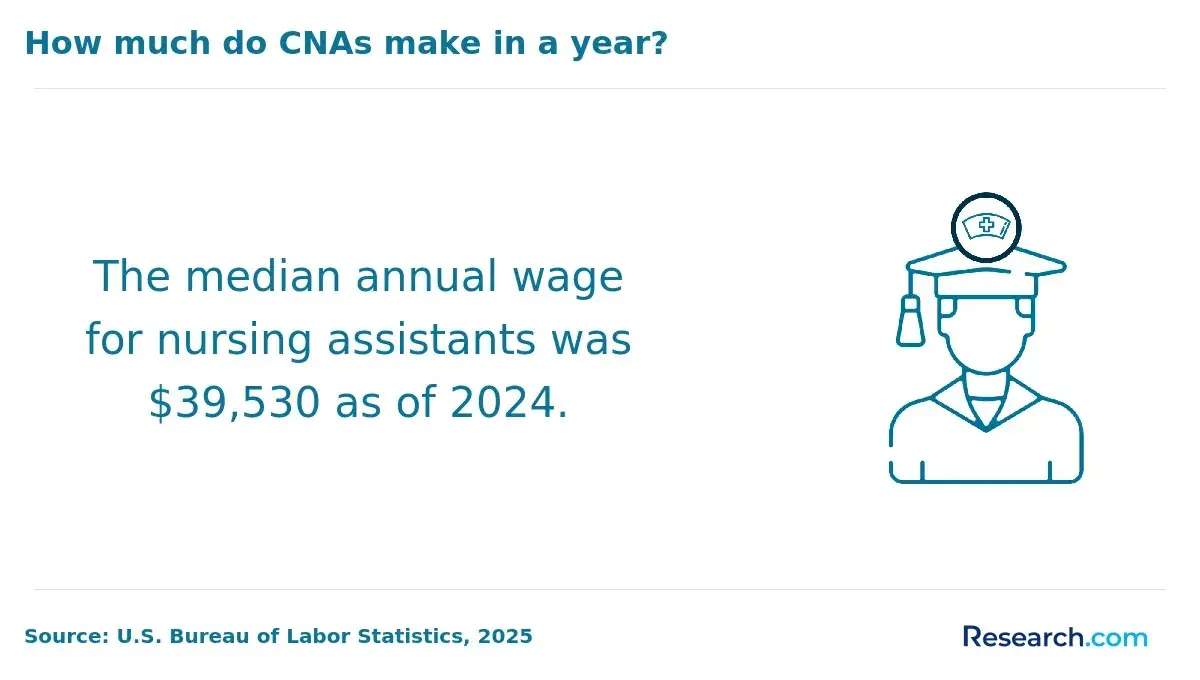
- Average Hourly and Annual Pay: Most CNAs in Oklahoma earn between $15.86 and $18.53 per hour, with the state average falling near $16-18 per hour. Annual salaries typically range from $32,147 to $34,900, slightly below national averages.
- Pay Variation by Experience Level: Entry-level CNAs generally start at $15-$17 per hour, while more experienced aides can earn significantly higher wages. National data show first-year CNAs earn about $18.63 hourly, increasing to $22.39 after ten years.
- Differences Across Healthcare Facilities: Hospitals and government roles in Oklahoma tend to offer the highest pay, followed by nursing homes and assisted living. Home health agencies usually provide lower wages in comparison.
- Regional Pay Trends Within Oklahoma: Urban centers like Oklahoma City offer hourly rates around $16.92, somewhat above the state average. Rural areas may pay less but sometimes include bonuses or overtime incentives.
- Additional Factors That Influence Earnings: Shift differentials, overtime premiums, certifications, and bilingual skills can increase pay. For those considering advancement, understanding the duration of schooling for nurse practitioner roles provides perspective on earning potential through further education.
How can CNAs in Oklahoma advance to higher nursing roles?
Many certified nurse aides in Oklahoma leverage their foundational healthcare experience as a stepping stone toward more advanced nursing careers. Progressing in this field typically requires additional education, certification, and supervised clinical training to meet increasing responsibilities and patient care complexity. Below are common career advancement paths available to CNAs in Oklahoma, with key details on education, training duration, and potential salary improvements.
- Certified Medication Aide (CMA): CNAs can obtain CMA certification through a state-approved training program lasting a few months, combining classroom and clinical learning. This role allows medication administration under supervision and often results in higher wages than CNA positions.
- Licensed Practical Nurse (LPN): Transitioning to an LPN involves completing about one year of training and passing the NCLEX-PN exam. LPNs perform more advanced patient care tasks and typically earn $10,000-$15,000 more annually than CNAs.
- Registered Nurse (RN): CNAs seeking the highest clinical roles may pursue an ADN or BSN degree, requiring two to four years of study plus NCLEX-RN exam passage. Registered nurses earn substantially higher salaries and have expanded career opportunities.
- Restorative Aide: This rehabilitation-focused role requires several months of additional certification and provides hands-on experience with therapies while offering modest pay increases over CNA wages.
- Lead CNA or CNA Supervisor: Experienced CNAs can advance into supervisory roles overseeing care teams, requiring leadership training and practical experience, with moderate salary increases and management skill development.
Can CNAs Transition to a Medical Assistant Role in Oklahoma?
For CNAs seeking career diversification, transitioning into a medical assistant role can leverage their established patient care skills in a broader clinical context. The role combines clinical duties with administrative tasks, offering a unique opportunity to expand healthcare competencies while maintaining a focus on patient service. Professional development initiatives and specialized training programs help CNAs acquire the additional skills required for this transition. Interested professionals should review resources on how to become a medical assistant in Oklahoma for detailed guidance on education pathways, certification requirements, and employment opportunities in Oklahoma.
What Do CNAs in Oklahoma Say About Their Career?
- Completing my CNA program at Tulsa Healthcare Academy truly set the foundation for a rewarding career. Starting work in a local school allowed me to connect deeply with students and staff, blending healthcare with education in ways I never imagined. I find immense satisfaction in supporting young people's well-being and seeing the positive impact firsthand. Oklahoma's close-knit communities offer a unique environment where my role feels both vital and appreciated. This journey has made me passionate about continuing professional growth and expanding my skills to better serve my community. Darla
- After graduating from Oklahoma City Nurse Training Center, I began my career as a certified nurse aide in a local academic institution, and it has been a transformative experience. The job stability in Oklahoma, combined with opportunities to contribute to youth care, highlights the state's commitment to health education. Working in this setting has helped me grow personally, developing empathy and patience I hadn't realized I possessed. Living and working here also means adapting to Oklahoma's unique cultural and environmental challenges, which makes my work even more meaningful. Trixie
- My education at Norman Medical Academy opened doors to a fulfilling CNA role within a local school, where I've been fortunate to advance professionally while making a tangible difference. Oklahoma's resources for healthcare workers, including continuous training programs, have helped me enhance my expertise. The diversity of the student population enriches my daily experience, fostering skills in cultural sensitivity and holistic care. This profession pushes me to remain both compassionate and professional, and I look forward to growing within this vital field as part of my lifelong career. Keon
Related Articles for Nearby States
- 2027 Certified Nurse Aide (CNA) License Education Requirements in Texas
- 2027 Certified Nurse Aide (CNA) License Education Requirements in Kansas
- 2027 Certified Nurse Aide (CNA) License Education Requirements in Arkansas
- 2027 Certified Nurse Aide (CNA) License Education Requirements in Missouri
- 2027 Certified Nurse Aide (CNA) License Education Requirements in Colorado
- 2027 Certified Nurse Aide (CNA) License Education Requirements in New Mexico
- 2027 Certified Nurse Aide (CNA) License Education Requirements in Nebraska
- 2027 Certified Nurse Aide (CNA) License Education Requirements in Louisiana
- 2027 Certified Nurse Aide (CNA) License Education Requirements in Iowa
- 2027 Certified Nurse Aide (CNA) License Education Requirements in Mississippi
References:
- The Physical Demands of CNA Career https://www.cnaprograms.org/blog/physical-demands-of-cna-career/
- Salary: Nursing Aide in Oklahoma 2025 | Glassdoor https://www.glassdoor.com/Salaries/oklahoma-nursing-aide-salary-SRCH_IL.0,8_IS847_KO9,21.htm
- Oklahoma Statutes §59-567.8 (2024) - Denial, revocation or suspension of license or certification - Administrative penalties. :: 2024 Oklahoma Statutes :: U.S. Codes and Statutes :: U.S. Law :: Justia https://law.justia.com/codes/oklahoma/title-59/section-59-567-8/
- CNA | Certified Nurse Aide | Tri County Tech https://tricountytech.edu/adult/cna
- Nurse Aide | Francis Tuttle Technology Center https://www.francistuttle.edu/programs-and-classes/career-training-programs/pre-nursing/nurse-aide-0
- Nurse Aide https://oklahoma.gov/careertech/testing-center/health-professional-certifications/nurse-aide.html
- Oklahoma Nursing CE Requirements https://www.nursingcenter.com/continuing-education/license-renewal-requirements-by-state/oklahoma-ce-requirements
- The Vital Role of CNAs: Responsibilities and Duties of Certified Nursing Assistants - ESHYFT https://eshyft.com/the-vital-role-of-cnas/
- Oklahoma Training Requirements | CareAcademy https://careacademy.com/state-requirements/oklahoma/
- CNA Classes & Programs in Oklahoma https://www.registerednursing.org/certified-nursing-assistant/programs/oklahoma/
Other Things You Should Know About Certified Nurse Aide (CNA) License Education Requirements in Oklahoma
In 2027, to become a Certified Nurse Aide in Oklahoma, individuals must complete a state-approved training program consisting of at least 75 hours. This includes classroom instruction and clinical practice. Additionally, candidates must pass the Oklahoma State Department of Health's CNA competency exam to earn certification.
In 2027, Oklahoma requires CNA candidates to complete a state-approved training program, which includes at least 75 hours of classroom and clinical instruction. After training, candidates must pass the competency exam to obtain certification. This process ensures that CNAs are prepared to provide quality care in various healthcare settings.


