
2027 How to Become a Mechanic in Virginia: Requirements & Certification

Co-Founder and Chief Data Scientist
Nearly 25% of automotive service technicians in Virginia report difficulty finding qualified beginners to fill entry-level mechanic positions, highlighting a growing challenge in the industry. This shortage can hinder both career seekers and employers looking for skilled labor.
This article, prepared by experts in career planning, offers a detailed guide on how to become a mechanic in Virginia. It covers essential training requirements, certification processes, and practical steps to enter the field, helping readers navigate the complexities of starting a mechanic career effectively and confidently.
Key Things to Know About Becoming a Mechanic in Virginia
- The mechanic job market in Virginia is projected to grow by 7% from 2022 to 2032, reflecting steady demand in the region.
- The median annual salary for automotive service technicians and mechanics in Virginia is approximately $47,000, slightly above the national median.
- Most accredited mechanic training programs in Virginia last between 6 months to 2 years, with many offering ASE certification preparation as part of the curriculum.
- What are the steps to become a mechanic in Virginia?
- What training and education options are available in Virginia?
- Do you need certifications to work as a mechanic in Virginia?
- How long does it take to become a mechanic in Virginia?
- How much does it cost to become a mechanic in Virginia?
- What job opportunities are available for mechanics in Virginia?
- How much do mechanics make in Virginia?
- Can automotive mechanics successfully transition into HVAC or related technical fields?
- How Are Emerging Technologies Shaping the Mechanic Profession in Virginia?
- How Can Business Acumen Enhance a Mechanic’s Career in Virginia?
- What additional certifications or cross-training opportunities can further enhance a mechanic's career in Virginia?
- What are the workplace safety and regulatory requirements for mechanics in Virginia?
- What tools and skills do mechanics need to succeed?
- What are the career growth opportunities for mechanics in Virginia?
- What are the pros and cons of becoming a mechanic in Virginia?
What are the steps to become a mechanic in Virginia?
Complete Foundational Education
Starting with a high school diploma or GED is essential, as it lays the groundwork for all future technical learning. This baseline education equips you with critical thinking and basic skills needed to tackle more specialized automotive studies.
Choose an Educational Pathway
Consider enrolling in an Associate in Occupational Science program focused on automotive repair for a thorough understanding of vehicle systems. Alternatively, vocational and technical schools offer shorter, intensive courses that emphasize practical skills in areas like engine repair, braking systems, and electrical diagnostics. Both approaches serve different needs but ultimately prepare you for entry-level roles.
Gain Practical Experience Through Apprenticeships
Hands-on training under a licensed mechanic is invaluable. Apprenticeships provide real-world exposure, allowing you to apply classroom knowledge and develop problem-solving skills on actual vehicles. This stage often bridges the gap between education and full-time employment.
Obtain Recognized Certifications
While Virginia doesn’t require a state license for general mechanics, earning ASE certifications is highly recommended. These credentials demonstrate expertise and commitment, and they often influence hiring decisions and salary potential. Completing the required work experience before certification exams ensures your skills meet industry standards.
Consider Specializations and Continuing Education
Specializing in areas like hybrid or electric vehicles can set you apart in a changing market. Stay current by engaging in ongoing education to keep pace with technological advances. Networking with professional organizations can further enhance your knowledge and career opportunities.
What training and education options are available in Virginia?
Choosing the right path for automotive training in Virginia involves balancing hands-on experience with recognized certifications. Each option offers distinct advantages depending on your career goals and learning style.
- Community colleges provide structured programs blending theory and practice, ideal for those seeking a solid foundation. Tidewater Community College’s Automotive Technology Program covers essential repairs and diagnostics, preparing students for modern challenges.
- Reynolds Community College offers an Associate of Applied Science in Automotive Technology with a focus on systematic diagnosis and repair, including hybrid and electric vehicle systems. Their selective admission process favors students actively working in the field.
- New River Community College’s ASE-accredited certification program emphasizes automotive analysis and repair, ensuring industry-recognized skills that enhance employability.
- Trade schools like Advanced Technology Institute focus on rapid workforce entry, delivering practical skills tailored for immediate employment as automotive or diesel technicians.
- Certification courses play a critical role in Virginia, where credentials such as ASE certification, VA State Inspection license, and Emissions Repair Technician Certification validate expertise and improve job prospects.
Engaging with high-demand trade jobs in Virginia often requires formal training combined with these certifications. Exploring the diverse offerings of Virginia automotive technology programs at community colleges alongside auto mechanic certification courses in Virginia allows prospective mechanics to build a competitive edge that aligns with evolving industry standards.
The pie chart below shows that 38 % of automotive mechanics nationwide stop at a high school diploma and only 27 % earn an associate degree—highlighting why Virginia’s community colleges and trade schools play a critical role. By offering one‐ to two‐year certificate and AAS programs, these institutions ensure that aspiring technicians gain the hands‐on skills and recognized credentials (ASE preparation, state inspection licensing, etc.) needed to succeed in Virginia’s automotive industry.
Do you need certifications to work as a mechanic in Virginia?
In Virginia, there is no mandatory state-issued mechanic certification Virginia for general auto mechanics, which can be surprising to those entering the field. However, pursuing certifications greatly enhances your professional standing and job prospects.
The ASE certification requirements in Virginia, while voluntary, are widely respected and viewed as a mark of technical competence. Achieving ASE certification involves gaining hands-on experience—typically two years—passing specialized exams, and recertifying every five years. This process ensures mechanics maintain current knowledge and skills relevant to evolving automotive technologies.
Beyond ASE, obtaining the VA State Inspection license and the Emissions Repair Technician Certification can further demonstrate your qualifications within the state. These credentials align with specific regulatory requirements and employer preferences, making you a more competitive candidate especially in regions with strict vehicle inspection and emissions standards.
Starting with formal education, such as programs offering an Associate Degree in Occupational Science, provides a solid foundation for mechanics. Combining this education with practical experience helps meet certification prerequisites. For those interested in advancing, the ASE Master Technician status represents a pinnacle of expertise by requiring mastery across multiple specialized tests.
Strategically, consider focusing your effort on relevant certifications that align with your career goals. Some certifications might be prioritized depending on whether you specialize in maintenance, repair, or diagnostics. This approach mirrors pathways seen in related fields, and for those curious about comprehensive credentialing steps, you might also explore the requirements to become a HVAC technician for additional insights on professional certification journeys.
How long does it take to become a mechanic in Virginia?
Becoming a skilled mechanic in Virginia involves a combination of education, practical experience, and certification that can span from just over a year to several years. The journey requires commitment but offers flexibility depending on the path chosen.
Many begin with entry-level training that can last from six months to two years, often through trade schools or community college programs. This phase lays the foundation with essential skills and prepares students for immediate employment or further specialization. Gaining hands-on experience is crucial; typically, two years of relevant work is needed to qualify for ASE certification, though formal education can sometimes substitute part of this requirement.
In practice, this means that motivated individuals who enroll in accelerated programs or combine work with study can shorten the timeline significantly. One Virginia mechanic recalled the intense pressure of balancing night shifts at a local shop with daytime classes while mastering complex diagnostic tools. The challenge was daunting, but the sense of progress with each certification exam passed brought a rewarding sense of accomplishment.
ASE certification is a key milestone, requiring exam preparation that can take a few months depending on prior knowledge and study time. It must be renewed every five years, ensuring mechanics keep pace with evolving automotive technologies. Aspiring mechanics are encouraged to leverage state resources and pursue specializations in high-demand areas such as hybrid or electric vehicle repair to enhance employability.
Ultimately, the path is flexible and can be tailored to individual circumstances, balancing formal training, real-world experience, and continuous learning to build a sustainable and successful career in Virginia’s automotive industry.
How much does it cost to become a mechanic in Virginia?
Becoming a mechanic in Virginia typically requires an investment of around $8,500 to $10,500 for a two-year community college program, although costs can vary significantly depending on the pathway chosen. Thoughtful planning and leveraging available financial resources are essential to manage these expenses effectively.
Key expenses to consider include:
- Community college tuition for two years: approximately $7,472
- Trade school tuition (shorter programs): ranging from $10,000 to $20,000
- Books and supplies: $500 to $1,359
- Personal tools: $300 to $800
- Certification and licensing fees: $100 to $500
- Uniforms and safety gear: $100 to $250
Choosing accredited programs ensures quality training and can improve employment prospects. Virginia’s community colleges, such as Danville Community College, offer affordable options with industry-recognized diplomas that prepare students for certifications including ASE and state vehicle safety licenses. For those seeking a faster route, private trade schools provide accelerated programs but at higher tuition costs.
The state's G3 program offers significant financial relief by covering tuition, fees, and books for eligible students pursuing mechanical technician certificates at institutions like Piedmont Virginia Community College. Taking advantage of these programs, along with scholarships and grants, can substantially reduce the overall cost of mechanic training in Virginia.
Planning for certification fees early and building a personal tool kit gradually can prevent unexpected financial burdens. Balancing the potential higher upfront cost of trade schools against their shorter duration and quicker workforce entry is a strategic consideration worth evaluating.
For those exploring career options, reviewing quick to learn trade jobs that pay well examples can provide valuable insight into the benefits of vocational training pathways like automotive school tuition in Virginia.
What job opportunities are available for mechanics in Virginia?
Automotive Technicians and Mechanics
Automotive technicians in Virginia benefit from a thriving market where major brands continuously seek skilled professionals. The variety of work—from diagnostics to maintenance—ensures that technicians build versatile skills. One mechanic recalls the challenge of navigating from an entry-level role to securing a position at a dealership, emphasizing patience and ongoing learning as key factors. For those aiming to enter this field, pursuing an automotive technology degree cost can be a worthwhile investment, opening doors to multiple career paths. The abundance of openings supports the long-term growth of automotive technician career paths in Virginia hiring now.
Diesel Mechanics
Diesel mechanics find steady demand in Virginia, especially given the importance of transportation and agriculture sectors. Mobile diesel repair, in particular, offers flexibility and the chance to work directly with fleet operations. This role requires not only technical expertise but also adaptability to varied work environments. An experienced diesel mechanic shared that mastering mobile service logistics was instrumental in securing repeat clients and steady work. Competitive salaries and regional demand make mechanic jobs available in Virginia with competitive salary attractive for those specializing in diesel systems.
Master Technicians and Specialty Roles
Advanced certifications can elevate a mechanic’s career to master technician status, often accompanied by supervisory roles and higher pay. Specialties such as hybrid and electric vehicle repair are becoming more vital, reflecting industry shifts. A mechanic who transitioned into hybrid vehicle service described the initial learning curve as steep but rewarding, noting that embracing new technologies led to greater job security. For anyone serious about long-term advancement, these specialty roles represent promising avenues within Virginia’s mechanic jobs available in Virginia with competitive salary landscape.
Fleet and Municipal Mechanics
Working with municipal or fleet vehicles offers stability and benefits, appealing to mechanics seeking consistent schedules. These roles often involve maintaining public safety and utility vehicles, where reliability is critical. One mechanic remembered the satisfaction of servicing emergency vehicles, knowing the work directly impacted community safety. Those exploring automotive technician career paths in Virginia hiring now will find these positions offer both security and meaningful work.
The chart below shows that mechanics working in natural gas distribution and electric power generation earn some of the highest median wages (around $102k and $93k, respectively). In Virginia, this translates into top-paying opportunities for technicians who service utility fleets and industrial equipment. Beyond traditional auto shops and dealerships, skilled mechanics can find roles with gas utilities, power companies, and large manufacturing or research firms—where the demand for specialized maintenance expertise commands higher salaries and stable, long-term employment.
How much do mechanics make in Virginia?
Automotive mechanics in Virginia experience a diverse wage landscape influenced by experience, specialization, and location. The average mechanic salary in Virginia varies, with some sources reporting hourly rates from $25 to over $32, highlighting the range of earnings possible in this field.
Entry-level mechanics typically earn around $50,883 annually, but this number increases with experience and additional training. Specialization plays a key role in boosting income, with certain roles paying up to 110% more than the average. Urban centers in Virginia tend to offer higher wages than rural areas, reflecting cost of living differences and demand.
For those wondering how much do auto mechanics make in Virginia, the range can be quite broad. ZipRecruiter data shows salaries from as low as $12.15 up to $40.04 per hour. This spread indicates opportunities for advancement and the importance of certifications and skill development.
Mechanics seeking to enhance their career prospects should also consider education pathways. Pursuing an online mechanical engineering degree can provide valuable knowledge that complements hands-on skills and opens doors to higher-paying positions.
Job availability in Virginia is somewhat limited at present, but positions exist across private companies, public sectors, and retail chains. Being strategic about location, gaining certifications, and focusing on specialized skills remain the best strategies for maximizing earnings in this competitive but rewarding field.
The image below shows a national median wage of $49,670 for automotive technicians and mechanics—providing a benchmark for Virginia, where entry‐level technicians start around $50k and experienced, ASE‐certified specialists can earn well into the mid-$60k range. This strong wage foundation, combined with demand across dealerships, fleet services, and utility contractors, makes Virginia an attractive market for mechanics seeking both stable employment and opportunities for higher pay.

Can automotive mechanics successfully transition into HVAC or related technical fields?
Automotive mechanics can leverage their diagnostic expertise and technical problem-solving skills to enter adjacent fields such as HVAC. Transitioning requires understanding system-specific regulations and safety standards, along with exposure to components unique to environmental control systems. Pursuing targeted training programs and relevant certifications can facilitate this cross-disciplinary advancement. For those interested in diversifying their career path, learning how to get HVAC license in Virginia provides a practical starting point to expand technical proficiencies and meet industry demands.
How Are Emerging Technologies Shaping the Mechanic Profession in Virginia?
Technological advancements are redefining everyday practices in automotive repair. Virginia’s industry is increasingly integrating smart diagnostic systems, computerized repair tools, and data-driven maintenance techniques. These innovations not only enhance repair accuracy but also require mechanics to adapt through specialized training and digital proficiency. Professionals embracing these emerging tools position themselves advantageously amidst evolving market demands and regulatory standards. In parallel, some technicians augment their technical expertise by exploring adjacent fields, such as how to become an electrician in Virginia, thereby broadening their career horizons in the interconnected landscape of modern technical services.
How Can Business Acumen Enhance a Mechanic’s Career in Virginia?
Developing business skills can be as crucial as mastering technical expertise for those aiming for managerial or entrepreneurial roles. Mechanics who expand their knowledge into areas such as financial management, customer relations, and operational planning often find themselves better prepared to optimize repair shop functions or launch new ventures. Enhancing business acumen offers a strategic advantage in decision-making and operational efficiency, promoting long-term career growth and success. For insights into quality academic programs that combine these disciplines, consider exploring top business schools in Virginia.
What additional certifications or cross-training opportunities can further enhance a mechanic's career in Virginia?
Mechanics in Virginia can broaden their professional scope by pursuing complementary certifications and cross-training programs beyond traditional automotive repair. Strategic additions—such as courses in fleet management, hybrid vehicle technology, or business operations—provide diversified expertise that is highly valued by employers. Exploring related technical fields can also offer guidance on structured certification processes and quality standards, as reflected by Virginia ultrasound technician requirements. Such targeted training not only increases marketability but also fosters long-term career resilience in a rapidly evolving industry.
What are the workplace safety and regulatory requirements for mechanics in Virginia?
Mechanics in Virginia must comply with strict workplace safety protocols and state-specific regulatory standards to ensure both personal wellbeing and operational efficiency. Adherence to Occupational Safety and Health Administration (OSHA) guidelines, including the use of appropriate personal protective equipment and regular equipment inspections, is fundamental. In addition, maintaining robust liability insurance and thorough documentation of safety processes helps mitigate risks and aligns with legal obligations. Mechanics are encouraged to pursue targeted safety training modules and certification courses to remain current with evolving regulations—a prudent investment similar to resources on how to become a radiology technician in Virginia.
What tools and skills do mechanics need to succeed?
Success as an automotive mechanic requires a blend of technical knowledge, practical skills, and personal attributes. Mastery of these elements allows mechanics to diagnose problems accurately, perform repairs efficiently, and build trust with clients and employers alike.
Key tools and skills for mechanics to develop include:
- Strong understanding of automotive systems, including engines, brakes, electrical, and transmission components.
- Proficiency with diagnostic equipment and software to identify issues quickly and accurately.
- Manual dexterity and mechanical aptitude to perform precise repairs and maintenance.
- Problem-solving skills to troubleshoot unexpected faults and develop effective repair strategies.
- Commitment to continuous learning to keep up with evolving vehicle technologies and industry standards.
- Effective communication skills for explaining complex issues in clear terms to customers and collaborating with team members.
- Attention to detail to ensure safety and quality in every task performed.
- Time management abilities to handle multiple jobs efficiently while meeting deadlines.
- Physical stamina and strength, as the work often involves standing, lifting, and working in confined spaces.
- Adherence to safety protocols to protect oneself and others in the workshop environment.
By cultivating these competencies, mechanics position themselves to thrive in Virginia’s dynamic automotive industry, where technological advances and customer expectations continue to raise the bar.
What are the career growth opportunities for mechanics in Virginia?
Steady Demand Amid Regional Variations
The automotive mechanic field in Virginia offers stable employment opportunities, though demand and wages can differ by location. Urban centers tend to provide more job openings and higher pay, reflecting greater vehicle density and commercial activity. Rural areas, while offering fewer positions, often present less competition and opportunities for community-based work.
Skill Development and Certification Impact
Advancing as a mechanic in Virginia depends heavily on continuous skill enhancement and obtaining certifications. Industry-recognized credentials, such as ASE certification, can significantly increase employability and earning potential. Mechanics who invest in mastering emerging automotive technologies, including electric and hybrid vehicles, position themselves for future growth.
Workforce Trends and Technological Change
The automotive repair sector is evolving rapidly with new vehicle technologies and diagnostic tools. Mechanics who adapt to these changes by embracing ongoing training will find greater career resilience. Additionally, integration of computer-based systems in vehicles requires a blend of mechanical expertise and tech-savviness, which can distinguish candidates in a competitive job market.
Career Mobility and Advancement Paths
Virginia mechanics can pursue various advancement routes, including specialization in areas like diesel engines, collision repair, or fleet maintenance. Leadership roles such as service manager or shop owner become attainable with experience and business acumen. Networking within local industry groups and maintaining strong customer relationships also contribute to career longevity and success.
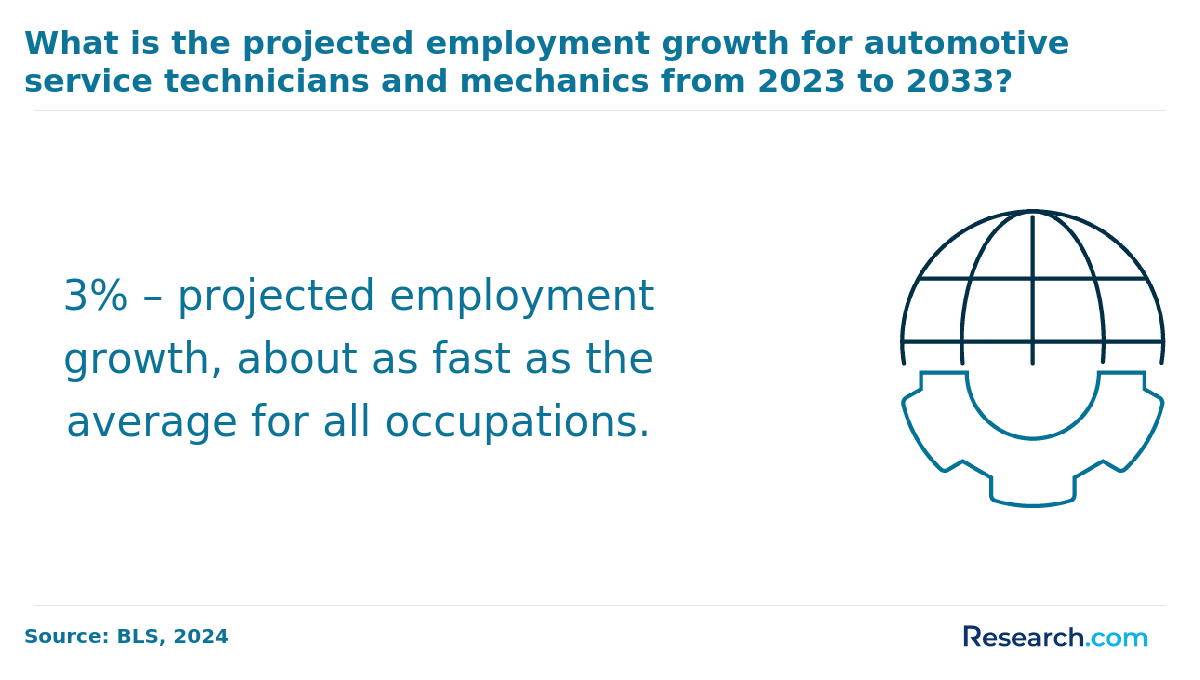
The image below shows a projected 3 % national growth rate for automotive service technicians from 2023 to 2033—paralleling Virginia’s steady demand. This modest but reliable increase means mechanics in the state can expect stable job openings across dealerships, fleet services, and industrial maintenance, with opportunities to advance as more vehicles hit Virginia’s roads and technology continues to evolve.
What are the pros and cons of becoming a mechanic in Virginia?
Choosing to become a mechanic in Virginia involves weighing both rewarding opportunities and notable challenges. Insight into these factors can help you make an informed decision about this career path.
Pros
Virginia’s diverse economy supports a steady demand for skilled mechanics, offering relatively stable job prospects. The hands-on nature of the work appeals to those who enjoy practical problem-solving and working with technology. Mechanics often find satisfaction in diagnosing and repairing vehicles, seeing immediate results from their efforts.
Training programs and apprenticeships are accessible in the state, providing pathways to enter the field without necessarily requiring a four-year degree. Earning potential can increase with experience and specialization, particularly in areas like diesel engines or advanced diagnostics. Additionally, the growth of automotive technology means mechanics who stay current with new systems can maintain a competitive edge.
Cons
Working as a mechanic can be physically demanding and sometimes involves exposure to hazardous materials or uncomfortable environments. The job may require irregular hours or overtime, especially in busy repair shops or during peak seasons.
Competition for higher-paying positions can be stiff, particularly for those without certifications or specialized skills. The evolving nature of automotive technology also means continuous learning is essential, which can be a barrier for some. Lastly, entry-level wages may be modest, requiring persistence and dedication to advance financially.
What do mechanics say about their careers in Virginia?
- Joining the vocational program in Virginia gave me hands-on experience with real engines early on, which made learning both practical and engaging. The instructors were supportive, and I appreciated how the curriculum balanced theory with plenty of time to practice repairs. This approach helped me feel confident stepping into the workforce. Marcus
- The nonprofit program I attended emphasized community service alongside technical skills, allowing me to apply what I learned by helping local drivers. Working directly on vehicles taught me the value of precision and patience in automotive mechanics. It was rewarding to see how my efforts kept cars safe and reliable for families in my area. Stanley
- Enrolling in the Virginia state automotive program gave me access to updated tools and a curriculum aligned with industry standards. Practicing diagnostics and repairs daily helped me develop a strong foundation and a genuine interest in problem-solving. The hands-on training was exactly what I needed to prepare for a steady career in mechanics. Daniel
Related Articles for Nearby States
- 2027 How to Become a Mechanic in West Virginia: Requirements & Certification
- 2027 How to Become a Mechanic in Maryland: Requirements & Certification
- 2027 How to Become a Mechanic in North Carolina: Requirements & Certification
- 2027 How to Become a Mechanic in Tennessee: Requirements & Certification
- 2027 How to Become a Mechanic in Kentucky: Requirements & Certification
- 2027 How to Become a Mechanic in Pennsylvania: Requirements & Certification
- 2027 How to Become a Mechanic in South Carolina: Requirements & Certification
- 2027 How to Become a Mechanic in Ohio: Requirements & Certification
- 2027 How to Become a Mechanic in Delaware: Requirements & Certification
- 2027 How to Become a Mechanic in New Jersey: Requirements & Certification
References:
- AHA. Mechanic Evaluation and Certification for Health Care (MECH).
- ASE. Frequently Asked Questions.
- Craftsman Auto Care. Auto Repair Northern VA - Mechanic Near Me - Oil Change.
- Herald-Tribune. Learn to be an automotive technician and get paid while you do it.
- Michigan.gov. Mechanics.
- NYADI. How Long Does ASE Certification Last?
- Technical Safety BC. Elevating Devices Mechanic - Mechanic in Training Renewal.
- UTI. How to Become An Auto Mechanic in 7 Steps.
- Virginia Automotive Service. Auto Repair Shop & Mechanic Near Richmond, VA.
- WeGo Public Transit. Apprenticeship Program.
Other Things You Need to Know About Becoming a Mechanic in Virginia
To become a mechanic in Virginia in 2027, you need to complete a high school diploma or equivalent, and an accredited automotive technology program. These programs typically include courses in engine repair, electronics, and diagnostics, preparing you for certification exams.
In Virginia, completing an apprenticeship is not a strict requirement to become a certified mechanic in 2027. However, obtaining hands-on experience through an apprenticeship or similar program can significantly enhance your skills and employability in the industry.


