
2027 How to Become a Police Officer: Education Requirements in Wyoming

Co-Founder and Chief Data Scientist
Wyoming offers a unique landscape for law enforcement careers, with a police officer employment growth rate of 5.2% expected by 2030, above the national average. The state’s low population density and strong community ties make local policing roles both challenging and rewarding. Median wages for Wyoming officers exceed $57,000 annually, reflecting the demand for well-trained personnel.
This article analyzes the specific education requirements to enter police work in Wyoming, providing data-driven insight. Prepared by career planning experts, it addresses key qualifications and certification processes to guide prospective candidates toward successfully meeting state standards and advancing in this vital profession.
Key Things to Know About Becoming a Police Officer in Wyoming
- Applicants must have a high school diploma or GED as a minimum educational requirement, aligning with Wyoming law enforcement standards.
- Completion of a Wyoming Law Enforcement Academy certified training program is mandatory, typically lasting 13 to 15 weeks to meet state criteria.
- While an associate degree in criminal justice or related fields is not required, 22% of Wyoming officers possess some college education, enhancing career prospects.
- What is the minimum education requirement to become a police officer in Wyoming?
- Which majors are most recommended for aspiring police officers in Wyoming?
- What subjects are taught in Wyoming police academy?
- Can military service replace education requirements for police officers in Wyoming?
- How much does it cost to get a police officer education in Wyoming?
- Are scholarships available for aspiring police officers in Wyoming?
- What certifications benefit a police officer's career development in Wyoming?
- What alternative career paths are available for law enforcement professionals in Wyoming?
- What roles can you get as a police officer in Wyoming?
- What is the average salary of police officers in Wyoming?
- What education trends are affecting law enforcement careers in Wyoming?
What is the minimum education requirement to become a police officer in Wyoming?
Wyoming’s police officer high school diploma requirement establishes a baseline that prioritizes accessibility and foundational skills. The minimum education requirement for police officer in Wyoming is clearly defined and consistently enforced within the state’s law enforcement hiring framework.
- High School Diploma or GED: Applicants must have graduated from an accredited high school or obtained a General Educational Development (GED) certificate. This requirement is mandated statewide by the Wyoming Peace Officer Standards and Training Commission and applies to all local police agencies and the Wyoming Highway Patrol.
- No College Coursework Required: Wyoming does not require any post-secondary coursework for initial police officer eligibility. The state focuses on essential literacy and numeracy skills, as demonstrated through the Police Officer Selection Test (POST), rather than formal college education.
- Basic Skill Assessment: The POST exam evaluates candidates on mathematics, reading comprehension, spelling, grammar, and report writing to ensure they possess the skills necessary for effective job performance.
These standards enable a wide range of individuals to pursue law enforcement careers while expecting further professional development through specialized training at the Wyoming Law Enforcement Academy. Prospective officers can advance their careers, potentially increasing their earning potential, which is notable given the availability of competitive law enforcement career salaries nationwide.
Which majors are most recommended for aspiring police officers in Wyoming?
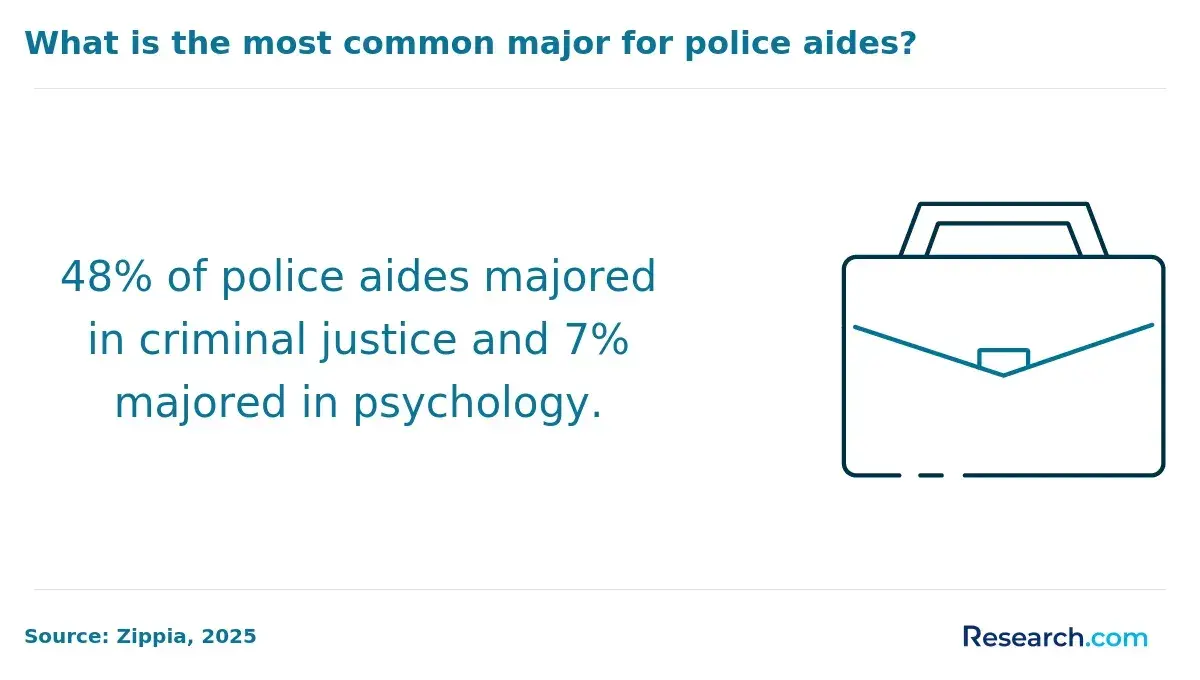
Choosing the right college major can significantly strengthen an aspiring police officer’s qualifications in Wyoming, enhancing both foundational skills and a competitive edge for advancement. Departments increasingly prefer candidates with relevant degrees, such as below, which also open doors to specialized roles and potential salary increases.
- Criminal Justice: This major offers direct training in law enforcement procedures, criminal law, and investigative techniques. Wyoming agencies often require at least an associate’s degree in criminal justice, valuing its practical focus and alignment with real-world policing needs, making it one of the best criminal justice degree programs in Wyoming. Coursework typically includes internships with federal agencies, providing hands-on experience.
- Criminology: Emphasizing the causes of crime and societal responses, criminology prepares candidates to analyze trends and develop prevention strategies. Its focus on community policing and juvenile justice is particularly valued in Wyoming for addressing social factors behind criminal behavior.
- Psychology: Understanding human behavior and mental health equips officers for crisis intervention and de-escalation techniques. Wyoming law enforcement increasingly recognizes this major’s importance in managing encounters with vulnerable populations.
- Sociology: Offering insight into social dynamics and inequality, sociology helps officers communicate effectively within diverse communities. This expertise supports efforts to address issues like domestic violence and substance abuse prevalent in Wyoming.
- Political Science: This major introduces governmental structures and public policy, essential for candidates targeting leadership roles or policy-related duties within law enforcement agencies.
- Law: Pre-law and legal studies provide a thorough understanding of constitutional rights and courtroom procedure, skills that reduce legal liability and enhance investigative integrity in Wyoming departments.
- Public Administration: Focused on organizational management and budgeting, this major prepares officers for supervisory and administrative responsibilities, critical for advancing in Wyoming’s law enforcement hierarchy.
- Homeland Security: Programs emphasize emergency management and interagency collaboration, important for Wyoming’s rural environment and specialized roles such as disaster response and border security.
Pursuing one of these law enforcement majors Wyoming offers not only meets education requirements but also boosts readiness for positions at all levels. For candidates interested in high accountability and rewards, these fields often lead to high salary criminal justice jobs, reflecting the value placed on formal education by Wyoming’s law enforcement employers.
What subjects are taught in Wyoming police academy?
Police academy training in Wyoming provides recruits with the critical skills, knowledge, and professional judgment necessary for effective law enforcement. The curriculum, encompassing over 600 hours and extending up to nearly 1,000 hours for state troopers, covers a wide range of subjects that prepare officers for the varied challenges they face on duty.
- Constitutional and Criminal Law: This subject ensures recruits understand legal protections and procedures, such as search and seizure, and laws of arrest. Mastery here prevents legal violations and supports the delivery of justice in all police interactions.
- Firearms Training: Recruits receive instruction in safe firearm handling, accuracy, and use-of-force decision-making. These skills are essential for maintaining safety and responding appropriately in potentially lethal situations.
- Custody & Control/Defensive Tactics: Training focuses on physical control, handcuffing techniques, and self-defense. It equips officers to restrain suspects securely while minimizing harm to both parties.
- Emergency Vehicle Operations: This covers high-speed driving and pursuit tactics, emphasizing safety and efficiency in urgent responses. Proper training reduces accident risks in emergency scenarios.
- Traffic Law and Stops: Instruction includes traffic regulations and crash investigation methods. These skills promote highway safety and effective management of vehicle stops.
- Investigations and Building Searches: Recruits learn evidence collection and systematic crime investigation, ensuring thorough casework and personal safety.
- Ethics and Professional Standards: Emphasizing integrity and accountability, this instills high ethical principles that build public trust and professionalism.
- Community Policing and Crisis Intervention: Officers train in conflict de-escalation, mental health crisis response, and community engagement, fostering stronger relationships and effective service in diverse environments.
Can military service replace education requirements for police officers in Wyoming?
Wyoming does not recognize military service as a substitute for its minimum education requirement for police officers. The state mandates that every candidate hold at least a high school diploma or GED before progressing through the application process. This requirement is explicitly stated by the Wyoming Law Enforcement Academy and relevant statutes, with no provisions allowing any length or type of military service to replace formal education. Applicants, including veterans, must satisfy this baseline credential to be eligible for entry-level training, which encompasses written and physical assessments, background investigations, and medical screenings. While states like Texas and Florida may waive some college coursework based on prior military experience, Wyoming maintains a firm standard emphasizing formal education credentials regardless of military background.
Although military service is not accepted as an educational substitute, it still provides indirect advantages for aspiring officers in Wyoming. Veterans often possess physical conditioning, discipline, and stress management skills that can improve performance during the academy’s rigorous training. Law enforcement agencies in Wyoming tend to value military experience in fields such as military police, security forces, or leadership roles when evaluating candidates’ overall qualifications. Additionally, financial benefits like the Montgomery G.I. Bill may assist veterans with tuition costs related to police training programs. Thus, military service enhances competitiveness and readiness but does not alter or fulfill the existing education requirements.
I spoke with a Wyoming police officer who graduated from the Wyoming Law Enforcement Academy after serving in the military. He recalled, “Even with my years in the military, I still had to ensure I met the high school diploma requirement before applying. The academy was demanding, but my time in service helped with physical fitness and mental toughness.” He described the process as challenging but fair, emphasizing that military experience gave him an edge in training and discipline but never replaced the need for formal education. “It wasn’t about shortcuts,” he reflected, “it was about meeting the state’s standards and building on what I already knew.” His journey illustrates how veterans can leverage their backgrounds effectively while respecting Wyoming’s clear educational prerequisites.
How much does it cost to get a police officer education in Wyoming?
The cost of police officer education in Wyoming varies significantly depending on the educational path chosen. Candidates may enroll in community college criminal justice programs, pursue bachelor’s degrees at universities, or pay tuition directly for police academy training. Each option presents its own set of expenses, from tuition to required equipment and testing fees, which all contribute to the overall investment needed for a law enforcement career.
- Police Academy Tuition: The Wyoming Law Enforcement Academy Peace Officer Basic course tuition is $4,600, plus a $400 non-refundable application fee, totaling about $5,000 for self-sponsored candidates.
- Community College Tuition: Wyoming community colleges, such as Central Wyoming College, charge between $3,000 and $5,000 per year for in-state students enrolled in criminal justice or law enforcement programs.
- University Tuition: Pursuing a bachelor’s degree in criminal justice at Wyoming universities costs approximately $5,400 to $6,000 annually for in-state students, while out-of-state tuition may exceed $15,000 per year.
- Uniforms and Equipment: Candidates should budget $200 to $500 for required uniforms, footwear, and basic gear, although specific items and costs can differ between programs.
- Medical and Psychological Evaluations: These necessary assessments for academy applicants typically cost between $100 and $300, depending on the provider.
- Entry-Level Testing Fees: Candidates must pay a $35 fee to take the Wyoming POST entry-level test required for police training eligibility.
- Firearms and Range Fees: Some criminal justice courses require students to provide firearms and ammunition, with related expenses usually ranging from $100 to $300 per course.
- Physical Fitness Assessment: While there is no direct fee, incidental costs for gym memberships or fitness training in preparation for assessments can be under $100.
- Written and Skills Exam Retake Fees: Although included in academy tuition, retaking certification exams costs $25 to $50 per attempt if initial standards are not met.
- Miscellaneous Costs: Background checks, travel, and personal supplies can add another $100 to $300 to the total expenses.
For those interested in expanding their knowledge in related fields, several online forensic science major programs offer complementary education that can enhance a law enforcement career.
Are scholarships available for aspiring police officers in Wyoming?
Scholarships and financial aid play a vital role in reducing the financial challenges faced by individuals pursuing law enforcement careers in Wyoming. These funding options help cover the costs of criminal justice degrees and specialized police training, making this career pathway more accessible. Several common scholarship categories support aspiring officers at different educational levels and with various eligibility criteria.
- State-Funded and Law Enforcement Association Scholarships: These scholarships, such as those offered by the Wyoming Peace Officers Association, are available to Wyoming residents connected to law enforcement. They typically cover tuition and educational expenses up to $1,000, providing targeted support for students pursuing law enforcement degrees.
- University and College-Based Criminal Justice Scholarships: Institutions like the University of Wyoming and local community colleges award scholarships ranging from $500 to $1,500. These funds assist students demonstrating financial need or academic merit and help pay for tuition, books, and internship-related costs.
- Local and Community Organization Scholarships: Programs focused on specific regions, like the Jackson Hole Law Enforcement Career Program, offer financial aid tied to participation in community internships. Eligibility usually includes high school juniors or seniors planning further education in law enforcement.
- Specialized and Memorial Scholarships: Memorial awards support students with military backgrounds or demonstrated law enforcement interest, offering sums that often start at $500. These scholarships may prioritize wounded veterans or those with service-related experience, helping offset general education expenses.
- General Public Service and Criminal Justice Awards: Broader scholarships encourage candidates committed to public safety careers and typically require evidence of leadership and community involvement. They serve to strengthen the pipeline of future law enforcement professionals by supporting academic and training costs.
A police officer from Wyoming, who graduated from a local academy, shared reflections on navigating educational expenses. She recalled, “Applying for scholarships was a crucial part of my journey because the costs felt overwhelming at first.” She described how receiving a combination of state-funded scholarships and university awards eased her financial burden, allowing her to focus more on training and less on tuition worries. “Knowing there were programs that recognized my commitment and background made it feel like the community supported my goals,” she said. The officer also highlighted the importance of local scholarships tied to internships, which enabled her to gain practical experience alongside financial assistance. Her experience confirms the critical role these scholarships play in helping Wyoming’s aspiring police officers embark on their careers with confidence and less financial stress.
What certifications benefit a police officer's career development in Wyoming?
Obtaining specialized certifications allows Wyoming police officers to significantly enhance their skill set, which in turn boosts job performance and opens doors to advancement in specialized units or leadership roles. These credentials demonstrate adherence to police officer certification requirements in Wyoming, signaling a commitment to maintaining and expanding professional expertise through continuous training.
- Wyoming P.O.S.T. Certification: This foundational certification requires officers to complete a 14-week basic training academy and pass comprehensive testing. Officers must also complete 40 hours of advanced training every two years to stay in good standing, ensuring they meet the ongoing Wyoming POST advanced peace officer certification standards required statewide.
- Firearms Training Certification: Officers engage in firearms proficiency courses focused on safe weapon handling, marksmanship, and tactical shooting. Such training is critical for assignments in specialized units like SWAT or K9 roles, enhancing both officer and public safety.
- Emergency Medical Response Certification: This certification equips officers with essential first aid and emergency care skills, enabling immediate intervention during medical emergencies. It broadens an officer’s effectiveness in high-pressure situations and raises their operational value within the department.
- Criminal Investigations Certification: Training in evidence handling, interviewing, and case management qualifies officers for detective roles. This credential supports career growth by allowing access to investigative assignments with higher responsibility.
- Cybercrime Investigation Training: With the rise of digital crime, certification in cybercrime investigation covers digital forensics and cyber threat analysis. Officers with this expertise are well-positioned for technology-focused law enforcement roles and can pursue a career in forensic science.
- Crisis Intervention and De-escalation Training: This training enhances an officer’s ability to manage mental health crises and reduce use-of-force incidents through negotiation and conflict de-escalation techniques. Departments highly value these skills for improving community relations.
- Leadership and Supervisory Training: Courses on team management, ethical leadership, and strategy prepare officers for promotion to supervisory or command positions, essential for career advancement within Wyoming law enforcement hierarchies.
What alternative career paths are available for law enforcement professionals in Wyoming?
Law enforcement expertise can support career transitions into fields that demand strong investigative and analytical skills. For instance, professionals may leverage their background to enter specialized areas such as internal investigations, security management, or legal support roles. Researching opportunities like how to become a paralegal in Wyoming provides insight into legal career pathways that complement policing experience. Specialized training programs and certifications can further facilitate a smooth transition, broadening both career versatility and long-term professional growth.
What roles can you get as a police officer in Wyoming?
Law enforcement careers in Wyoming extend beyond basic patrol, offering roles that align with officers’ unique skills and interests. These specialized positions require additional training and play vital roles in ensuring public safety across communities.
- Patrol Officer: Serves as the frontline of policing by responding to emergencies, conducting traffic stops, and maintaining community presence. Requires Wyoming P.O.S.T. certification and ongoing physical and legal training.
- Detective/Criminal Investigator: Handles serious crimes like burglary and fraud, collecting evidence and preparing cases. Requires patrol experience and advanced investigative training.
- K-9 Unit Officer: Works with trained police dogs for drug detection and suspect tracking, requiring specialized K-9 handling courses and continuous team training.
- SWAT Team Member: Responds to high-risk incidents using tactical skills, demanding rigorous physical fitness and tactical training.
- Community Outreach Officer: Builds relationships with the community through education and prevention programs, needing communication and cultural awareness training.
- Traffic Enforcement Officer: Enforces traffic laws and investigates accidents, requiring additional training in accident reconstruction and traffic safety.
- Training Instructor: Provides ongoing education for department staff, requiring instructor certification and subject expertise.
What is the average salary of police officers in Wyoming?
Police officer salaries in Wyoming vary notably based on geographic location, years of service, educational attainment, and departmental rank. Urban areas and larger municipalities tend to offer more competitive compensation packages, while officers with advanced education or specialized certifications often qualify for higher pay. Understanding the police officer pay scale Wyoming requires considering these factors in combination.
- Entry-Level Police Officer Salary: The starting salary typically ranges from $42,660 to $46,000 annually, with some cities like Sheridan offering higher starting pay around $64,748 due to local budget priorities and living costs.
- Mid-Career Police Officer Salary: Officers with several years of experience earn between $60,040 and $65,136 yearly. In cities such as Gillette and Cheyenne, mid-career salaries generally fall between $61,860 and $62,500, often including shift differentials and overtime incentives.
- Senior Police Officer Salary: Senior-level officers or those in supervisory roles may earn up to $77,340 or more, with Sheridan reporting top salaries near $93,989. Rank, certifications, and departmental policies substantially influence these figures.
The average police officer salary in Wyoming stands close to $60,040 per year, somewhat below the national average but competitive regionally. Officers often enhance earning potential by pursuing higher education, such as degrees in criminal justice or certifications through programs like online forensic science master’s programs, which are valued in many departments for qualifying candidates for specialized roles and promotions.
What education trends are affecting law enforcement careers in Wyoming?
Evolving education expectations are increasingly shaping the landscape of modern policing careers in Wyoming. While the minimum educational requirement remains a high school diploma or GED, growing trends emphasize advanced education, specialized training, and ongoing professional development to address complex law enforcement challenges.
- Growing Preference for Post-Secondary Education: Agencies increasingly favor candidates holding associate’s or bachelor’s degrees, viewing higher education as a marker of professionalism and critical thinking skills valuable for policing.
- Impact of Specialized Majors: Degrees in criminal justice, psychology, sociology, and cybersecurity equip officers with expertise to handle mental health issues, digital crime, and community relations effectively.
- Continuing Education and Advanced Training: Wyoming mandates Peace Officer Basic Training exceeding 600 hours, with ongoing advanced courses in leadership, crisis intervention, and technology to maintain certification and adapt to evolving policing demands.
Staying informed about these education trends is crucial for aspiring and current officers in Wyoming. As responsibilities grow more complex, advanced education and specialized skills enhance career prospects and the ability to serve diverse communities effectively.
What Do Police Officers in Wyoming Say About Their Career
- Completing my training at Central Wyoming Police Academy was a defining moment. The rigorous program prepared me for the unique challenges we face here, from rural calls to wildlife encounters. Starting my career working in a local school gave me the chance to impact young lives positively, helping them feel safe and supported. There's a real sense of pride in serving a community where everyone knows your name and trusts your judgment. Wyoming offers unmatched career stability and the opportunity to grow professionally in ways I hadn't imagined. Devin
- My journey began at the Wyoming Law Enforcement Academy, and it truly shaped my approach to policing. Working within a local school environment, I became passionate about mentoring students and being a steady presence in their lives. The vast open spaces and rugged environment create unique situations that challenge my problem-solving skills every day. I find great fulfillment in knowing my role goes beyond enforcement—I contribute to the overall well-being of the youth and community alike. Yara
- Graduating from Northern Wyoming Community College's police training program was just the first step in what has become an exciting career path. Serving as a school resource officer ignited my passion for fostering safe school environments and promoting trust between students and law enforcement. Wyoming's strong emphasis on community ties and natural resource protection adds a layer of responsibility that has enhanced my professional development. It’s a rewarding role that pushes me to continually improve and adapt. Candy
Related Articles for Nearby States
- 2027 How to Become a Police Officer: Education Requirements in Montana
- 2027 How to Become a Police Officer: Education Requirements in South Dakota
- 2027 How to Become a Police Officer: Education Requirements in Nebraska
- 2027 How to Become a Police Officer: Education Requirements in Colorado
- 2027 How to Become a Police Officer: Education Requirements in Idaho
- 2027 How to Become a Police Officer: Education Requirements in Utah
- 2027 How to Become a Police Officer: Education Requirements in North Dakota
- 2027 How to Become a Police Officer: Education Requirements in Kansas
- 2027 How to Become a Police Officer: Education Requirements in Iowa
- 2027 How to Become a Police Officer: Education Requirements in Nevada
References:
- Wyoming Law Enforcement Job Openings | Go Law Enforcement https://golawenforcement.com/job-openings/wyoming/
- City of Wyoming > About Wyoming > City Departments > Public Safety - Police > Hiring & Internships https://www.wyomingmi.gov/About-Wyoming/City-Departments/Public-Safety-Police/Join-the-Wyoming-Department-of-Public-Safety
- Job Opportunities | Jackson, WY https://www.jacksonwy.gov/357/Job-Opportunities
- Police Department Employment Opportunities | Laramie, WY - Official Website https://www.cityoflaramie.org/265/Police-Department-Employment-Information
- Join Our Team - Gillette, WY https://www.gillettewy.gov/Departments/Gillette-Police-Department/Join-Our-Team
- Wyoming Peace Officers Association Law Enforcement Scholarship - BigFuture Scholarship Search https://bigfuture.collegeboard.org/scholarships/wyoming-peace-officers-association-law-enforcement-scholarship
- Laramie Campus Scholarships - LCCC | Laramie County Community College, Wyoming https://www.lccc.wy.edu/albanycountycampus/accScholarships.aspx
- Scholarships - Wyoming Highlanders https://wyominghighlanders.org/about-us/scholarships/
- Top 71 Law Enforcement Scholarships in September 2025 - Scholarships360 https://scholarships360.org/scholarships/law-enforcement-scholarships/
- Wyoming Law Enforcement | Training to be a Police Officer https://www.securityguardtrainingcentral.com/wyoming-law-enforcement-training-police-officer/
Other Things You Need to Know About Becoming a Police Officer in Wyoming
In 2027, to become a police officer in Wyoming, you must have a high school diploma or GED. Although a college degree is not mandatory, pursuing criminal justice or a related field can enhance job prospects and career advancement opportunities. Additional training at the Wyoming Law Enforcement Academy is also required.
It typically takes around six months to complete the police academy training in Wyoming in 2026. This includes both classroom instruction and field training, covering a wide range of law enforcement skills needed for effective policing.


