
2027 How to Become an Ultrasound Technician in Arizona

Co-Founder and Chief Data Scientist
Arizona’s healthcare sector continues to expand rapidly, with radiologic technologist employment projected to reach 5,120 by 2032. This steady growth reflects the state’s rising population, aging communities, and increasing demand for advanced diagnostic services. As medical imaging becomes central to preventative and specialized care, ultrasound technicians stand out as vital professionals within this evolving landscape.
In this guide, I will cover how to become an ultrasound technician in Arizona, outlining education pathways, certification requirements, costs, and salary expectations. I will also offer insights into job outlook trends, regional opportunities, and practical steps to build a rewarding sonography career in the state.
Key Things to Know About Becoming an Ultrasound Technician in Arizona
- In Arizona, you will need to complete an accredited diagnostic medical sonography program and gain supervised clinical experience to build essential skills.
- While Arizona does not mandate state licensure, most employers require the American Registry for Diagnostic Medical Sonography (ARDMS) certification to improve credibility and expand job opportunities.
- Ultrasound technicians in Arizona earn an average annual salary of $91,579, with demand supported by the state’s growing healthcare sector.
- What education is required to become an ultrasound technician in Arizona?
- What specialties can ultrasound technicians choose from in Arizona?
- Which certification exams are required to become an ultrasound technician in Arizona?
- Is a license required to practice as an ultrasound technician in Arizona?
- What to expect during ultrasound technician clinical training in Arizona?
- How much does it cost to become an ultrasound technician in Arizona?
- What are the continuing education opportunities for ultrasound technicians in Arizona?
- Can ultrasound technicians transition into other specialized healthcare roles?
- What is the average salary for ultrasound technicians in Arizona?
- What is the job outlook and demand for ultrasound technicians in Arizona?
- What are the career advancement steps for ultrasound technicians in Arizona?
- What are the common challenges ultrasound technicians face in Arizona?
What education is required to become an ultrasound technician in Arizona?
Becoming an ultrasound technician in Arizona means navigating a path that blends rigorous academics with practical experience. Accredited ultrasound technician programs in Arizona focus on building strong clinical skills alongside foundational knowledge.
- Minimum Degree Requirement: Candidates must earn at least an Associate of Science in Diagnostic Medical Sonography from an accredited institution, though some accelerated certificate options exist for those with prior healthcare degrees.
- Accreditation Requirement: Programs must be accredited by recognized bodies like the Commission on Accreditation of Allied Health Education Programs (CAAHEP) or the Accrediting Bureau of Health Education Schools (ABHES) to ensure proper certification eligibility and quality training.
- General Education Prerequisites: Coursework in biology, humanities, and mathematics is typically required before entering a sonography program, ensuring a well-rounded academic base.
- Clinical Practicum/Internship Hours: Hands-on training with real patients is essential; many programs, such as those at Maricopa Community Colleges, demand extensive supervised clinical rotations alongside classroom study.
- Panel Interview: Some competitive programs incorporate a panel interview to assess applicants’ readiness and commitment.
- GPA Expectations: A strong cumulative GPA, particularly in general education courses, can enhance admission chances, with top applicants often having GPAs between 3.75 and 4.00.
- Residency Preference: Public colleges may prioritize Arizona residents or those from specific counties during admissions.
- Certification Exam Eligibility: Graduates become eligible to take certification exams like the Sonography Principles and Instrumentation (SPI) exam by ARDMS, a key step to becoming registered sonographers in Arizona.
- Program Length: Standard associate degrees typically take two years, though accelerated certificate tracks can be completed in around 12 months for qualified students.
Sonographers in Arizona enjoy competitive salaries, with the Phoenix metropolitan area averaging $87,520 annually. For comparison, the average salary for radiologist shows the strong earning potential in medical imaging professions overall. The chart below from Zippia shares the ultrasound technician wage gap by degree level.
What specialties can ultrasound technicians choose from in Arizona?
Ultrasound technicians in Arizona have a diverse range of specialties to explore, each offering unique opportunities to impact patient care. From imaging the heart to focusing on pediatric patients, the state provides robust training options tailored to various interests.
Below is a detailed look at the key ultrasound technician specialties available in Arizona.
- Abdominal Sonography: Focuses on imaging abdominal organs like the liver and kidneys; foundational for many entry-level roles.
- Obstetric and Gynecologic (OB/GYN) Sonography: Centers on pregnancy and female reproductive health, crucial for women’s health clinics and hospitals.
- Vascular Sonography: Involves imaging blood vessels to detect vascular issues, supported by strong job placement programs in Arizona.
- Cardiac (Echocardiography) Sonography: Specializes in heart imaging and diagnosis, with high graduate employment rates.
- Pediatric Sonography: Dedicated to ultrasound imaging of infants and children, requiring specialized training and knowledge of pediatric anatomy.
For those curious about the path ahead, learning how many years to become an ultrasound technician and choosing the right specialty can shape a rewarding career. Programs focusing on cardiac and vascular sonography in Arizona highlight the state’s commitment to producing skilled sonographers ready for dynamic healthcare environments.
Which certification exams are required to become an ultrasound technician in Arizona?
Certification exams serve as a vital gateway for ultrasound technicians in Arizona, signaling verified expertise and professionalism to employers and patients alike. While the state does not legally mandate certification, most healthcare employers expect or require it to ensure high-quality care. These exams validate a technician’s knowledge in sonography physics, clinical practice, and specialty areas.
- SPI Exam – ARDMS: This foundational exam, offered by ARDMS, tests candidates on ultrasound physics, instrumentation, and safety protocols. Passing the SPI is essential before pursuing specialty credentials like RDMS or RDCS. Candidates in Arizona often take this exam during or shortly after completing relevant coursework.
- Specialty Examinations – ARDMS (e.g., Abdomen, OB/GYN, Vascular Technology): After the SPI, technicians must pass at least one specialty exam. These tests focus on clinical knowledge and practical application within specific sonography fields. Graduates from Arizona’s accredited programs may apply directly, while others might need additional clinical experience to qualify.
- Sonography Certification Exam – ARRT: The American Registry of Radiologic Technologists (ARRT) provides an alternative certification, recognized nationally and by Arizona employers. This exam covers patient care, imaging techniques, and equipment operation. Eligibility includes graduation from ARRT-accredited programs or related associate degrees, common among graduates from local institutions like West Coast Ultrasound Institute.
- Cardiovascular Credentialing International (CCI) Exams: For specialists in cardiac or vascular sonography, CCI offers credentials such as Registered Vascular Specialist (RVS) and Registered Cardiac Sonographer (RCS). These exams assess advanced knowledge relevant to these specialties. Some Arizona programs integrate CCI exam prep, aligning with local workforce needs.
Successfully passing these respected exams not only strengthens professional credibility but also broadens career opportunities in Arizona’s growing healthcare sector. Certification ensures technicians meet rigorous national and state-relevant standards, making them sought-after team members in medical settings.

Is a license required to practice as an ultrasound technician in Arizona?
No state-issued license is required to practice as an ultrasound technician in Arizona, setting it apart from states with stricter licensing laws. This means aspiring sonographers skip the sometimes complex state licensing process but still need to meet high professional standards. Employers and the healthcare industry emphasize certification and education to ensure safe, quality patient care.
Arizona’s approach relies on national certification bodies like ARDMS, ARRT, or CCI rather than state licensure, with no dedicated state agency managing ultrasound technician licenses. Most employers strongly prefer or require these recognized certifications, which depend on completing accredited education programs approved by CAAHEP. While the state doesn’t regulate licensure, certification exams such as the SPI (Sonography Principles & Instrumentation) and specialty tests hold significant weight for employability across Arizona’s medical facilities.
Passing national exams and completing 1,800 to 1,900 hours of clinical training allows ultrasound technicians in Arizona to build credibility and stay competitive in a fast-growing field. One graduate from a local community college explained that while the absence of a state license reduced stress, the ARDMS certification process carried intense pressure.
He emphasized how hands-on training prepared him for the SPI and specialty exams, noting that balancing clinical hours with study was the toughest part. Ultimately, he found that national certification served as the true gold standard, giving him confidence and meeting the expectations of employers statewide.
What to expect during ultrasound technician clinical training in Arizona?
Clinical training is an essential phase where students in Arizona transition from theory to practice, building the skills and confidence necessary for certification and employment. This immersive stage challenges students to engage with real patients and advanced sonography equipment under expert supervision, shaping their proficiency in diverse clinical settings.
- Hands-On Patient Care: Expect to interact directly with patients, obtaining histories and preparing them for ultrasound procedures to ensure accurate diagnostics.
- Supervised Use of Imaging Equipment: Training includes operating sophisticated sonography machines while receiving guidance from licensed professionals to master image capturing and interpretation.
- Specialty Clinical Rotations: Clinical placements span OB/GYN, vascular, abdominal, and cardiac sonography, offering exposure to various pathologies and patient populations.
- Mentorship from Licensed Sonographers: Throughout clinical hours, students receive constant feedback and professional mentoring, fostering growth and ethical practice.
- Extensive Clinical Hours: Programs typically require 1,800 to 1,900 clinical hours spread over multiple days per week, often in shifts of 8.5 to 10.5 hours, mimicking real healthcare demands.
- Competency Evaluations: Regular assessments ensure students demonstrate proficiency in sonography techniques and patient care, aligning with ARDMS certification standards.
- Program and State-Specific Requirements: Admission may include interviews, GPA minimums, completion of prerequisites, and residency conditions to comply with accreditation and licensure.
- Professional Communication and Ethics: Students develop strong skills for effective communication with patients and healthcare teams while upholding high ethical standards.
- Flexible Scheduling: Clinical shifts often vary by site, including early mornings, reflecting the dynamic environment of sonography practice in Arizona.
These comprehensive experiences equip students to excel on certification exams, sharpen their clinical expertise, and transition confidently into the fast-paced healthcare workforce in Arizona.
How much does it cost to become an ultrasound technician in Arizona?
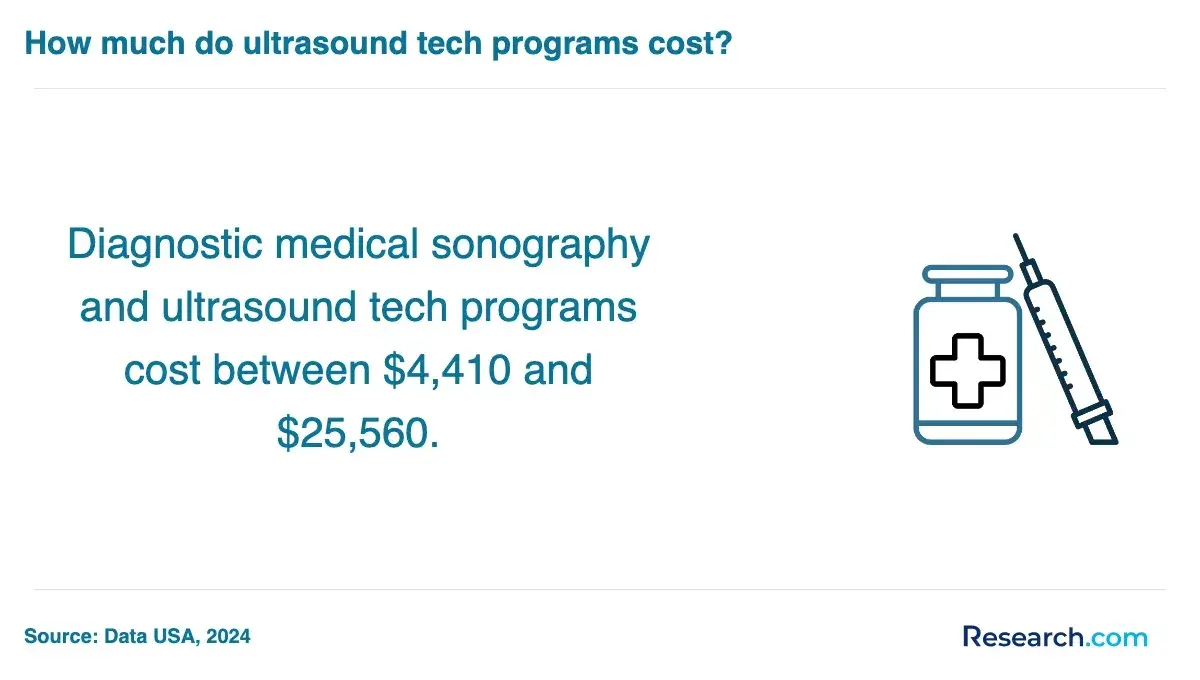
The cost of ultrasound technician programs in Arizona usually ranges from $10,000 to over $43,000, covering tuition and essential extras for a complete education. These expenses vary greatly depending on the program type and institution, with added fees for hands-on training, materials, and certification. Exploring these costs helps you plan effectively for your journey into this rewarding healthcare field.
- Tuition and Fees: Associate’s degree programs at community colleges typically cost between $9,875 and $11,775, while specialized private programs can reach up to $38,500 for tuition alone.
- Clinical Training Expenses: Fees for labs, uniforms, insurance, and transportation during externships often add about $2,800 or more to the total cost.
- Certification and Exam Fees: Passing exams such as the ARDMS usually requires an investment of $225 to $800, which may be paid separately after coursework.
- Licensing or State Fees: Arizona does not require a state license for diagnostic medical sonographers, so there are no mandatory recurring licensing fees.
- Books and Materials: Textbooks, supplies, software, and technology needs can add approximately $1,200 to the program cost.
- Living Expenses: Housing, food, and personal costs are important considerations, especially if relocating for clinical rotations or attending full-time.
Costs vary depending on whether you choose a certificate, associate’s, or bachelor’s degree, and your school’s location within Arizona. Many students find financial aid, scholarships, or employer tuition assistance valuable to reduce these expenses, and researching the best online sonography program options can also offer flexible alternatives to traditional schooling.
What are the continuing education opportunities for ultrasound technicians in Arizona?
Ultrasound technicians in Arizona can pursue a variety of continuing education options to remain proficient and aligned with evolving diagnostic technologies. Industry-sponsored workshops, accredited short-term courses, and hands-on simulation labs provide targeted learning experiences that support recertification requirements and technical skill refinement. The integration of online accredited programs also allows professionals to balance clinical responsibilities with advanced learning, ensuring they are prepared for shifts in imaging practices and regulatory standards. Professionals interested in broadening their scope while maintaining clinical excellence can consider exploring how to become a radiology technician in Arizona as a pathway to additional specialized expertise.
Can ultrasound technicians transition into other specialized healthcare roles?
Ultrasound technicians in Arizona can leverage their technical expertise and clinical experience to explore lateral moves into specialized healthcare fields. This transition may involve pursuing further certifications or focused training that integrate diagnostic acumen with direct patient care. Professionals looking to broaden their scope of practice might consider pathways that build on existing skills—for example, exploring opportunities to how to become a nurse midwife in Arizona. Such cross-disciplinary initiatives can enhance career longevity and provide access to roles that demand both technical and holistic patient management expertise.
What is the average salary for ultrasound technicians in Arizona?
The average annual salary for ultrasound technicians in Arizona is about $91,579, with weekly earnings typically ranging between $1,138 (25th percentile) and $2,275 (75th percentile). Some reports note salaries as high as $2,787 and as low as $663, reflecting the wide variation across the state.
Geographic location plays a major role in earnings. Tuba City offers the highest pay, averaging 20.6% above the state norm, with Scottsdale following at 8.1% higher and Vail close behind. These differences highlight how local demand and cost of living influence technician salaries in Arizona.
Salaries in Arizona dance to the rhythm of local healthcare needs, offering adventurous professionals a chance to earn well by matching their skills to dynamic regional markets.
What is the job outlook and demand for ultrasound technicians in Arizona?
Arizona’s ultrasound technician employment is projected to grow by 24% between 2022 and 2032, outpacing the national average and reflecting strong demand in the state’s healthcare sector. During this period, the field is expected to see around 340 annual job openings, creating steady opportunities for aspiring diagnostic medical sonographers in Arizona’s fast-growing workforce.
- Population Growth and Aging: A rapidly expanding and aging population fuels the need for more imaging services to monitor chronic and age-related conditions.
- Healthcare Expansion: New hospitals, clinics, and outpatient centers continually increase demand for skilled ultrasound technicians across varied medical environments.
- Technological Advancements: Cutting-edge ultrasound innovations create specialized roles like vascular and cardiac imaging, broadening career pathways.
- Preventive Care Trends: Early detection becomes vital as ultrasound supports non-invasive diagnostics, sparking greater demand in preventative medicine.
- Regional Demand Variations: While urban centers such as Phoenix and Tucson abound with job openings, rural areas offer unique opportunities with competitive pay and advancement potential.
An ultrasound technician from Arizona, who graduated from a local school, reflected on this vibrant job landscape. She recalled the constant buzz of hiring at her first clinic and how “every day brought new chances to learn and grow.” Despite occasional challenges like juggling patient volume and adapting to evolving tech, she described the journey as rewarding and stable. “Knowing there’s a growing need here makes the work feel purposeful—it’s more than just a job; it’s a vital part of community health.”
Her experience underscores how this career path in Arizona is both promising and deeply connected to real-world impact.
What are the career advancement steps for ultrasound technicians in Arizona?
Growing your career as an ultrasound technician in Arizona opens doors through focused specialization, advanced certifications, and stepping into leadership roles. Each path offers unique opportunities to deepen expertise, increase earning potential, and broaden professional impact. Exploring these options with an open mind can set the stage for a rewarding journey in healthcare.
- Specialization: Concentrate on clinical areas like OB/GYN, vascular, or cardiac sonography to sharpen your skills and boost your marketability. Specializing unlocks higher salaries and roles in specialized clinics or major hospitals.
- Advanced Certifications: Earn credentials from organizations such as ARDMS, ARRT, or CCI to qualify for specialty roles and leadership positions. These certifications demonstrate commitment and enhance your professional credibility.
- Higher Education: Pursuing bachelor’s or master’s degrees expands career options into management, research, or teaching. Many professionals transition from associate degrees, considering programs with a focus on what are the easiest medical degree programs to balance study and work.
- Leadership Roles: Move into supervisory, department head, or administrative jobs within healthcare organizations. Effective clinical and communication skills often propel experienced sonographers into managing teams and operations.
- Education and Training: Become a program instructor, clinical trainer, or curriculum developer to influence the next generation of ultrasound technicians. Additional teaching credentials or further education usually support this advancement.
- Research or Technology Development: Engage in studies or collaborate with equipment manufacturers to innovate medical imaging technology. This direction suits those passionate about advancing clinical tools and patient outcomes.
Career advancement for an ultrasound technician career path in Arizona reveals paths not only to increase salary but also to extend your influence across patient care and healthcare innovation statewide.
What are the common challenges ultrasound technicians face in Arizona?
Facing challenges for ultrasound technicians in Arizona shapes the daily life of sonographers and influences their professional growth. Exploring these obstacles reveals how clinical training difficulties for Arizona sonographers intersect with the dynamic healthcare environment. Understanding these realities prepares technicians to adapt and thrive.
- Physical Strain and Ergonomics: Repetitive motions and long hours spent scanning often lead to musculoskeletal issues, making injury prevention essential.
- Emotional Stress: Managing sensitive medical situations, such as difficult diagnoses, requires emotional resilience and compassionate care.
- Workload and Staffing Shortages: Balancing heavy caseloads with limited support increases pressure, especially in high-demand urban and rural settings.
- Certification and Continuing Education Requirements: Maintaining credentials demands time and effort, which must be carefully balanced with work obligations.
- Technology Adaptation: Rapid integration of new ultrasound devices and digital platforms challenges technicians to continuously learn and update skills.
- Job Market Competition: Regional demand varies, so graduates face competition in cities and must consider flexibility for rural opportunities.
Recognizing these challenges empowers aspiring ultrasound technicians to seek proper support and training, including understanding the online ultrasound tech school requirements, enabling them to overcome obstacles and succeed in Arizona’s evolving healthcare landscape.
What do ultrasound technicians in Arizona say about their careers?
- Completing my ultrasound technician program at Pima Medical Institute was a transformative experience. The hands-on training prepared me thoroughly for the realities of the job, and starting my career in a local school setting gave me a unique opportunity to work closely with young people. I find tremendous fulfillment in contributing to their well-being and watching how ultrasound technology can impact lives at such an early stage. Arizona’s diverse population and healthcare needs have allowed me to develop a broad skill set that keeps me engaged every day. - Jada
- Graduating from Gateway Community College opened doors I never thought possible. Beginning my work as an ultrasound technician in a local academic institution allowed me to grow professionally in a structured environment that values continuous learning. Arizona’s thriving healthcare sector provides stability and exciting chances for career advancement, which I embrace fully. The blend of cutting-edge medical technology and caring community drives my passion to excel and make a real difference. -Lana
- After finishing my training at Rio Salado College, I found that being an ultrasound technician in Arizona brings unique challenges and rewarding experiences. The state’s distinctive cultural and environmental factors, like its large indigenous communities and desert healthcare needs, gave me a perspective that fuels my commitment to serve with empathy and understanding. This career has not only helped me grow personally but also allowed me to contribute meaningfully to the local community’s health and education. It’s inspiring to play a part in improving lives through such specialized knowledge. - Aria
Related Articles for Nearby States
- 2027 How to Become an Ultrasound Technician in New Mexico
- 2027 How to Become an Ultrasound Technician in Nevada
- 2027 How to Become an Ultrasound Technician in California
- 2027 How to Become an Ultrasound Technician in Utah
- 2027 How to Become an Ultrasound Technician in Colorado
- 2027 How To Become an Ultrasound Technician in Texas
- 2027 How to Become an Ultrasound Technician in Oklahoma
- 2027 How to Become an Ultrasound Technician in Kansas
- 2027 How to Become an Ultrasound Technician in Wyoming
- 2027 How to Become an Ultrasound Technician in Idaho
References:
- Data USA (n.d.). Diagnostic Medical Sonographers. Retrieved from https://datausa.io/profile/soc/diagnostic-medical-sonographers?redirect=true
- O*NET OnLine (n.d.). Arizona Employment Trends 29-2034.00 - Radiologic Technologists and Technicians. Retrieved from https://www.onetonline.org/link/localtrends/29-2034.00?st=AZ
- Zippia (2025). Ultrasound Technologist Demographics and Statistics in the US. Retrieved from https://www.zippia.com/ultrasound-technologist-jobs/demographics/
- ZipRecruiter (2025). Ultrasound Technician Salary in Arizona. Retrieved from https://www.ziprecruiter.com/Salaries/Ultrasound-Technician-Salary--in-Arizona#Yearly
Other Things You Should Know About Being an Ultrasound Technician in Arizona
Completing an online ultrasound technician program can be a viable pathway to qualify for a career in Arizona, provided the program is accredited and meets the state's certification requirements. Many accredited online programs offer comprehensive coursework combined with required clinical training, often arranged locally, which is essential for hands-on experience.
Graduates must also obtain certification through recognized bodies like the American Registry for Diagnostic Medical Sonography (ARDMS) to enhance job prospects and meet employer standards in Arizona. Therefore, while an online program can facilitate your education, ensuring clinical practice and proper certification is crucial to becoming a qualified ultrasound technician in the state.
Ultrasound technicians in Arizona can find freelance and travel opportunities, though these roles are less common than standard hospital or clinic positions. Freelance ultrasound technicians often work on a contract basis with multiple healthcare providers, offering flexibility and diverse experience.
Traveling ultrasound technologists typically join specialized agencies that place them in temporary assignments across various locations, including Arizona, which can be appealing for those seeking higher pay and varied work environments. However, maintaining proper certification and licensure in Arizona is essential to qualify for these roles and ensure compliance with state regulations.


