
2027 How to Become an Ultrasound Technician in California

Co-Founder and Chief Data Scientist
Many aspiring healthcare professionals face uncertainty about entering the ultrasound technician field in California, where demand grows rapidly. The state employed over 8,700 diagnostic medical sonographers in 2022, with a projected job growth rate of 24% through 2032, significantly outpacing the national average.
Pursuing a career as an ultrasound technician in California offers competitive salaries and strong employment prospects. In this guide, I will provide a comprehensive guide to the educational requirements, certification process, and career pathways necessary to navigate and succeed in this dynamic healthcare sector.
Key Things to Know About Becoming an Ultrasound Technician in California
- Aspiring ultrasound technicians must complete an accredited sonography program approved by the Commission on Accreditation of Allied Health Education Programs (CAAHEP) to ensure eligibility for certification.
- Professional certification from the American Registry for Diagnostic Medical Sonography (ARDMS) is often required by employers in California.
- California’s median annual wage for ultrasound technicians exceeds the national average, currently around $96,986, reflecting strong demand and competitive salaries in the state.
- What education is required to become an ultrasound technician in California?
- What specialties can ultrasound technicians choose from in California?
- Which certification exams are required to become an ultrasound technician in California?
- Is a license required to practice as an ultrasound technician in California?
- What to expect during ultrasound technician clinical training in California?
- How much does it cost to become an ultrasound technician in California?
- What is the average salary for ultrasound technicians in California?
- How can ultrasound technicians in California stay current with evolving practices?
- How can interdisciplinary collaboration boost career prospects for ultrasound technicians in California?
- What is the job outlook and demand for ultrasound technicians in California?
- What are the career advancement steps for ultrasound technicians in California?
- What are the common challenges ultrasound technicians face in California?
What education is required to become an ultrasound technician in California?
Candidates pursuing an ultrasound technician career in California must complete specific educational milestones within accredited ultrasound technician programs in California. These programs ensure comprehensive classroom learning paired with clinical experience, fostering both theoretical knowledge and practical skills.
- High School Diploma or GED: Completion of a high school diploma or equivalent is mandatory before entering any diagnostic medical sonography degree California program.
- Minimum Age: Applicants must be at least 17 years old to apply and 18 years old before starting clinical training.
- Enrollment in Accredited Programs: Candidates must enroll in an accredited sonography program, which can range from certificate and diploma to associate’s and bachelor’s degrees, with associate and diploma programs generally lasting 24–26 months and bachelor’s degrees up to four years.
- Prerequisite Coursework: Completion of prerequisite courses such as anatomy, physiology, and medical terminology with a minimum grade of “C” from a regionally accredited college is required.
- Minimum GPA: A cumulative GPA of at least 2.0 in all college coursework must be maintained.
- Clinical Internship/Practicum: Programs include a supervised clinical practicum or internship, providing essential hands-on patient care experience in healthcare settings.
- Physics Course: Completion of a physics course within the curriculum is required prior to sitting for certification exams.
- Certification Exam Eligibility: Graduates qualify to take the Sonography Principles & Instrumentation (SPI) exam and specialty exams from credentialing bodies like ARDMS or ARRT.
- Health and Background Checks: Proof of good physical and mental health, immunization records, and cleared background checks are needed for clinical placement.
Prospective students interested in this field should explore the specifics of each accredited program, considering these requirements as foundational steps. For insights on compensation, visit the page detailing ultrasound technician salary.
What specialties can ultrasound technicians choose from in California?
These sonography specializations in California often determine the clinical settings in which technicians work and can influence their salary potential. The following list outlines key ultrasound technician specialties available in the state:
- Obstetric and Gynecologic Sonography: Focuses on imaging the female reproductive system and monitoring fetal development during pregnancy; widely utilized in hospitals and OB/GYN clinics.
- Abdominal Sonography: Involves imaging abdominal organs such as the liver, kidneys, and pancreas to diagnose conditions; essential for emergency and routine diagnostics.
- Cardiac Sonography (Echocardiography): Specializes in assessing heart function and vascular health through ultrasound imaging; highly sought after in cardiology departments.
- Vascular Technology: Centers on evaluating blood flow and detecting vascular diseases; common in both inpatient and outpatient cardiovascular settings.
- Neurosonography: Focuses on brain and nervous system imaging, particularly for neonatal and pediatric patients; typically found in larger hospitals and specialized centers.
- Breast Sonography: Specialized in imaging breast tissue to detect abnormalities such as tumors and cysts; integral to women’s health programs and clinics.
Choosing a specialty can impact an ultrasound technician’s career trajectory and compensation, with the California average salary for sonographers at $96,986. Those interested in exploring training pathways can learn more about how to become a sonogram tech and align their education with these specialized fields.
Which certification exams are required to become an ultrasound technician in California?
Certification exams are essential for ultrasound technicians in California as they validate the candidate’s expertise in critical sonography skills and safeguard patient care standards. Employers widely require these certifications to ensure professional competency, although the state itself does not issue a separate licensing process. Successfully passing these exams confirms alignment with industry norms and enhances employment prospects.
- Sonography Principles and Instrumentation (SPI) Exam: Administered by the American Registry for Diagnostic Medical Sonography (ARDMS), the SPI exam lays the foundation for all aspiring sonographers. It evaluates knowledge of ultrasound physics, instrumentation, clinical safety, and quality assurance. Candidates typically must have completed a physics course within an accredited Diagnostic Medical Sonography (DMS) program. In California, the SPI must be passed during or after the DMS program and is required before attempting any specialty exam. Failure to pass a specialty exam within five years necessitates retaking the SPI.
- ARDMS Specialty Examinations: Following the SPI, candidates take one or more specialty exams to earn credentials like Registered Diagnostic Medical Sonographer (RDMS), Registered Diagnostic Cardiac Sonographer (RDCS), or Registered Vascular Technologist (RVT). These tests delve into anatomy, pathology, and scanning techniques specific to specialties such as Abdomen, Obstetrics and Gynecology, or Vascular Technology. Eligibility requires completion of an accredited DMS program and relevant clinical experience. These credentials are strongly encouraged and often required by California employers.
- American Registry of Radiologic Technologists (ARRT) Sonography Exam: The ARRT offers an alternative certification recognized in California for those graduating from an ARRT-accredited educational program. The exam covers patient care, ultrasound physics, and specialty-specific content. While ARDMS credentials remain more prevalent, ARRT certification provides additional avenues for employment.
- Cardiovascular Credentialing International (CCI) Exams: Targeting physicians focusing on cardiac or vascular sonography, the CCI credentials include Registered Cardiac Sonographer (RCS) and Registered Vascular Specialist (RVS). The exams emphasize cardiovascular anatomy, imaging techniques, and patient evaluation. Candidates must complete an approved educational program or possess equivalent experience. Though less commonly mandated than ARDMS certifications, some employers value these credentials for specialized roles.
Obtaining and maintaining these certifications not only enhances a technician’s professional credibility but also broadens career opportunities while ensuring compliance with California’s high standards for diagnostic medical sonography practice.
Is a license required to practice as an ultrasound technician in California?
Yes, a state license is required to practice as an ultrasound technician in California, making it distinct from many other states that rely mainly on national certification. This requirement ensures that all sonographers meet California’s legal standards for competency and patient safety before entering the workforce. Understanding these regulations is essential for anyone aiming to work professionally within the state.
California mandates that diagnostic medical sonographers obtain a Certified Radiologic Technologist (CRT) license issued by the Radiologic Health Branch (RHB) of the California Department of Public Health. While national certifications such as those from the American Registry for Diagnostic Medical Sonography (ARDMS) are not legally required, they are highly valued by employers and often pursued prior to licensure. There are no provisions for provisional practice without a CRT license, meaning new graduates must complete all licensing requirements beforehand.
Certification exams, including the Sonography Principles and Instrumentation (SPI) exam plus at least one specialty exam, are crucial for earning ARDMS credentials and thus play an important role in California’s licensing process.
Most candidates complete national certification to enhance both eligibility and employment prospects before applying for the state license. Compliance with these standards ensures legal practice, enhances professional credibility, and improves access to jobs in healthcare facilities.
According to Zippia, Florida has the highest number of ultrasound technician jobs with 2,564 positions, followed closely by Texas with 2,326. California ranks third at 1,919 jobs, showing that large and growing states dominate employment opportunities for this profession.
What to expect during ultrasound technician clinical training in California?
Clinical training is an essential phase in preparing ultrasound technician students in California for certification and professional clinical practice. It provides supervised, hands-on experience that bridges theoretical knowledge and practical skills necessary for effective patient care and imaging. This phase ensures compliance with state and certification standards while fostering technical proficiency.
- Hands-on Patient Care: Students directly engage with patients, confirming medical histories and performing ultrasounds under supervision to enhance communication and bedside manner.
- Supervised Use of Imaging Equipment: Trainees operate ultrasound machines, capture real-time images, and learn imaging best practices guided by certified sonographers.
- Specialty Rotations: Clinical experiences include exposure to diverse sonography disciplines such as OB/GYN, vascular, abdominal, and cardiac imaging to broaden diagnostic skills.
- Mentorship from Licensed Professionals: Experienced ultrasound technicians provide continual guidance, feedback, and support to develop both clinical competency and professional confidence.
- Program-Specific Clinical Hours: Accredited California programs typically require completion of 800 to 1,000 clinical hours across healthcare settings for comprehensive hands-on training.
- Competency Evaluations: Regular assessments, including practical exams like the Sonography Principles and Instrumentation (SPI) exam, are used to monitor progress and readiness for certification.
These clinical training components cultivate the technical abilities and patient care expertise essential for successfully passing certification exams and thriving in entry-level ultrasound technician roles within California’s healthcare system.
How much does it cost to become an ultrasound technician in California?
The average total cost to become an ultrasound technician in California ranges from $25,000 to $50,000, primarily driven by tuition and additional expenses such as clinical fees and certification exams. Costs vary depending on the program type, with bachelor’s degrees generally costing more, and living expenses can significantly impact the overall investment.
- Tuition and Fees: Accredited associate’s or certificate programs in California typically cost between $25,000 and $50,000, with some vocational schools charging near the higher end of this range; bachelor’s programs and private institutions usually exceed these amounts.
- Clinical Training Expenses: Students must budget for clinical lab fees averaging $1,000 to $3,000, plus uniforms, background checks, liability insurance, and possible transportation costs to externship sites.
- Certification and Exam Fees: Passing professional exams such as those offered by the American Registry for Diagnostic Medical Sonography involves fees of approximately $225 to $250 per exam, along with a $100 application fee.
- Licensing or State Fees: California does not require a state license for ultrasound technicians, so there are no state licensure fees involved.
- Books and Materials: Expect to spend $500 to $1,500 on textbooks, software, and necessary supplies like transducer gel and anatomical models throughout the program.
- Living Expenses: Full-time students, especially in high-cost areas like Los Angeles or San Francisco, should anticipate annual living costs between $20,000 and $30,000, covering housing, food, and transportation.
The total ultrasound technician program cost in California varies based on the chosen program and location, with urban areas typically incurring higher expenses. Many students reduce the cost of sonography school in California through financial aid, scholarships, or employer tuition assistance, making education more affordable. Prospective students may also consider exploring online associate sonography programs as an alternative pathway.
What is the average salary for ultrasound technicians in California?
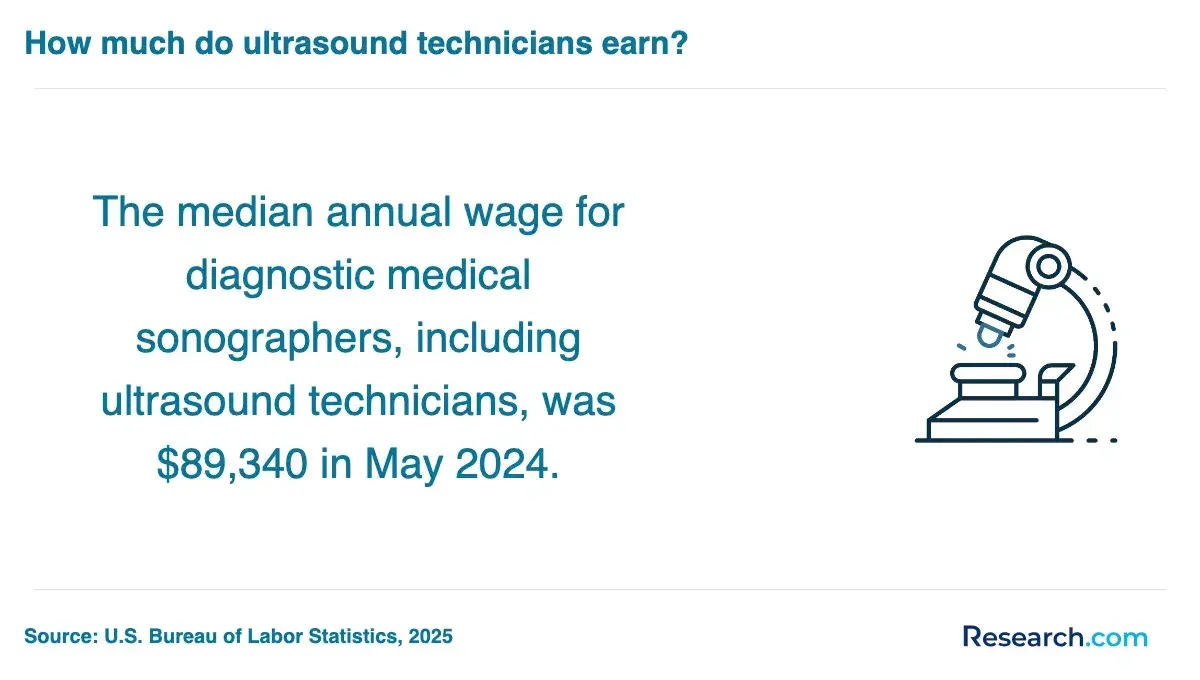
The average annual salary for ultrasound technicians in California is approximately $96,986, with hourly wages around $$46.63. Salaries generally depend on the following factors:
- Experience Level: Entry-level sonographers usually earn between $71,903 and $79,136 annually, while senior technicians with extensive experience can make up to $148,860 per year.
- Education and Certifications: Advanced credentials like the RDMS certification and specialized certificates in areas such as vascular or cardiac sonography can significantly increase earning potential.
- Work Setting: Hospitals and outpatient care centers typically offer higher wages and more opportunities for additional pay compared to physician offices or smaller clinics.
- Geographic Location: Urban areas, including Los Angeles, San Francisco, and San Diego, provide greater salaries than rural or inland regions, reflecting higher living costs and demand.
- Specialization: Sonographers skilled in OB/GYN, cardiovascular, or abdominal imaging tend to command higher salaries, with cardiac sonographers earning averages above $144,000.
How can ultrasound technicians in California stay current with evolving practices?
Ultrasound technicians in California must engage in ongoing professional development to ensure compliance with updated clinical standards and technological innovations. Regular participation in accredited continuing education courses, workshops, and industry conferences enhances both clinical skills and career competitiveness. In addition, connecting with professional organizations provides access to the latest research, procedural updates, and networking opportunities that support career longevity. For guidance on expanding related competencies, explore how to become a radiology technician in California.
How can interdisciplinary collaboration boost career prospects for ultrasound technicians in California?
Interdisciplinary collaboration plays an essential role in expanding the skill set and professional opportunities for ultrasound technicians. Working alongside colleagues in related healthcare fields fosters a deeper understanding of diagnostic processes, enhances patient care through shared expertise, and supports the adoption of innovative treatment protocols. Exposure to complementary roles—such as exploring pathways on how to become a nurse midwife in California—can provide ultrasound technicians with valuable insights into integrated healthcare delivery, ultimately contributing to career advancement and improved clinical outcomes.
What is the job outlook and demand for ultrasound technicians in California?
Employment for ultrasound technicians in California is expected to grow by nearly 24% between 2022 and 2032, surpassing the national average growth rate of 15% for this profession. This increase reflects a strong statewide demand fueled by several key factors.
- Population Growth and Aging: California’s expanding and aging population drives a greater need for diagnostic imaging as more patients require ultrasound services for a variety of health concerns.
- Healthcare Expansion: The ongoing establishment of new healthcare facilities, including clinics and hospitals, particularly in urban areas, creates continuous openings for skilled ultrasound technicians.
- Technological Advancements: Innovations in ultrasound technology broaden the scope of sonography, generating new specialized roles that require advanced training and expertise.
- Preventive Care Trends: A state-wide focus on early detection increases ultrasound utilization, emphasizing its importance in preventive diagnostics across multiple conditions.
- Regional Demand Variations: Urban centers offer more abundant job opportunities, whereas rural regions face shortages, encouraging technicians to consider diverse geographic locations within California.
Collectively, these dynamics ensure that ultrasound technology remains a stable and expanding career choice with promising prospects for qualified professionals in California.
What are the career advancement steps for ultrasound technicians in California?
Ultrasound technicians in California can enhance their career prospects by pursuing specialized training, obtaining advanced sonography certifications in California, or assuming leadership roles within healthcare institutions. These avenues offer professionals opportunities to deepen expertise and qualify for more responsible positions.
- Specialization: Focusing on areas such as OB/GYN, vascular, or cardiac sonography allows technicians to broaden their clinical skills and become competitive candidates for senior roles like lead sonographer or imaging department director.
- Advanced Certifications: Earning credentials from established bodies like the American Registry for Diagnostic Medical Sonography (ARDMS), Cardiovascular Credentialing International (CCI), or the American Registry of Radiologic Technologists (ARRT) validates advanced competencies and increases employability.
- Higher Education: Pursuing a bachelor’s or master’s degree in diagnostic medical sonography or related fields opens doors to expanded career options including management and education. Many technicians choose programs recognized for accessibility, such as the easiest radiology program, to facilitate this progression.
- Leadership Roles: Experienced sonographers may advance into supervisory, administrative, or managerial positions within hospitals and clinics, gaining responsibilities in department oversight and staff coordination.
- Education and Training: Transitioning to roles as program instructors or clinical trainers enables professionals to prepare upcoming sonographers, contributing to workforce development across California.
- Research or Technology Development: Engagement in medical imaging research or ultrasound technology innovation allows sonographers to influence the future of diagnostic practices and improve patient outcomes.
Advancing through these steps not only boosts earning potential but also enhances a technician’s professional impact within California’s evolving healthcare system. To provide additional context, the following chart shows the age distribution of ultrasound technicians, highlighting that most professionals are 40 years and older.
What are the common challenges ultrasound technicians face in California?
Knowledge of common challenges ultrasound technicians face in California is essential for managing expectations and career development. Recognizing these difficulties aids in building resilience and adopting effective strategies to mitigate professional risks, especially concerning ultrasound technician burnout in California.
- Physical Strain and Ergonomics: Repetitive scanning motions and long hours lead to musculoskeletal issues such as joint, back, neck, and wrist pain, causing significant physical strain.
- Emotional Stress: Working with patients facing serious diagnoses requires balancing empathy with professionalism, often leading to emotional fatigue.
- Workload and Staffing Shortages: High demand in California results in heavy caseloads and limited staff support, increasing job pressure and contributing to burnout.
- Certification and Continuing Education Requirements: Maintaining credentials through ARDMS and meeting clinical hour demands requires balancing study with work responsibilities.
- Technology Adaptation: Rapid technological advancements necessitate ongoing learning to proficiently use new ultrasound equipment and digital imaging systems.
- Job Market Competition: Regional variations, particularly in Southern California, create a competitive environment for new graduates despite positive national growth projections.
By understanding these challenges for ultrasound technicians in California, individuals can proactively develop coping mechanisms and targeted skills to sustain long-term career success. Aspiring technicians should also explore resources on medical sonographer salary to align expectations with industry standards.
What do ultrasound technicians in California say about their careers?
- Completing my ultrasound technician program at Foothill College in California was a transformative experience. The hands-on training and access to advanced imaging technology prepared me exceptionally well for my role in a local school where I contribute daily to student health initiatives. It’s deeply fulfilling to know that my work supports the well-being of young people and helps identify health issues early. California’s diverse community gives me incredible opportunities to grow professionally and personally, making this career path truly rewarding. - Maxi
- Starting my career as an ultrasound technician within a local academic institution allowed me to combine my passion for teaching with my technical skills. Graduating from Santa Monica College was just the beginning, and working in California’s rapidly evolving healthcare landscape has presented unique challenges I’m proud to overcome. I appreciate the stability and continuous learning that the role offers, especially in a state that embraces innovation and multiculturalism. This journey has shaped me into a confident professional who strives to impact students’ lives positively every day. - Cess
- After finishing my ultrasound program at Pasadena City College, I found the opportunities in California unmatched, especially because of the state’s commitment to healthcare advancement. The vibrant environment here pushes me to stay updated with new technologies and expand my career possibilities enthusiastically. I’m proud to be part of a community where I can make a direct difference in diagnosing and caring for diverse populations, which enriches my personal growth. California’s unique cultural and environmental factors truly enhance every aspect of my work life. - Kenji
Related Articles for Nearby States
- 2027 How to Become an Ultrasound Technician in Nevada
- 2027 How to Become an Ultrasound Technician in Oregon
- 2027 How to Become an Ultrasound Technician in Arizona
- 2027 How to Become an Ultrasound Technician in Idaho
- 2027 How to Become an Ultrasound Technician in Utah
- 2027 How to Become an Ultrasound Technician in Washington
- 2027 How to Become an Ultrasound Technician in New Mexico
- 2027 How to Become an Ultrasound Technician in Colorado
- 2027 How to Become an Ultrasound Technician in Montana
- 2027 How to Become an Ultrasound Technician in Wyoming
References:
- American Registry of Radiologic Technologists. (2023). Enrollment snapshot 2023. ASRT. https://www.asrt.org/docs/default-source/research/enrollment-snapshot/enrollment-snapshot-2023.pdf?sfvrsn=116b77d3_4
- American Registry of Radiologic Technologists. (2024). Enrollment snapshot 2024. ASRT. https://www.asrt.org/docs/default-source/research/enrollment-snapshot/enrollment-snapshot-2024.pdf?sfvrsn=494bb9ce_4
- American Registry of Radiologic Technologists. (2024). White paper: Consensus committee on the future of medical imaging and radiation therapy. ASRT. https://www.asrt.org/docs/default-source/research/whitepapers/2024-consensus-committee-on-the-future-of-medical-imaging-and-radiation-therapy.pdf?sfvrsn=1f869819_12
- Bureau of Labor Statistics. (2024). Diagnostic medical sonographers and cardiovascular technologists and technicians: Occupational outlook handbook. U.S. Department of Labor. https://www.bls.gov/ooh/healthcare/diagnostic-medical-sonographers.htm
- Bureau of Labor Statistics. (2024). Diagnostic medical sonographers: State and area data. U.S. Department of Labor. https://www.bls.gov/ooh/healthcare/diagnostic-medical-sonographers.htm#tab-3
- Data USA. (2024). Diagnostic medical sonography/ultrasound technician. Data USA. https://datausa.io/profile/cip/diagnostic-medical-sonography-ultrasound-technician
- Focused Ultrasound Foundation. (2023). State of the field 2023: Executive summary. Focused Ultrasound Foundation. https://cdn.fusfoundation.org/2023/09/18135732/Focused-Ultrasound-Foundation-State-of-the-Field-2023-Chapter-1-Executive-Summary.pdf
- GE Healthcare. (2024). Ultrasound market insights. GE Healthcare. https://gehealthcare.showpad.com/share/OjWhTIHX4YYi4nGK7voP4
- PubMed. (2024). Exploring the relationship between job satisfaction and burnout among sonographers. PubMed. https://pubmed.ncbi.nlm.nih.gov/39952774/
- Society of Diagnostic Medical Sonography. (2024). Exploring the relationship between job satisfaction and burnout among sonographers. SDMS. https://www.sdms.org/docs/default-source/jdmspdf/pdf-of-article-exploring-the-relationship-between.pdf?sfvrsn=2
- ZipRecruiter. (n.d.). What is the average ultrasound technician salary by state. ZipRecruiter. https://www.ziprecruiter.com/Salaries/What-Is-the-Average-Ultrasound-Technician-Salary-by-State
- Zippia. (2025). Ultrasound technologist workforce demographics. Zippia. https://www.zippia.com/ultrasound-technologist-jobs/demographics/
Other Things You Should Know About Becoming an Ultrasound Technician in California
In 2027, to become an ultrasound technician in California, you need to obtain certification from a recognized body like the American Registry for Diagnostic Medical Sonography (ARDMS) by passing their exams. Certification ensures professionalism and competence in the field.
To become an ultrasound technician in California, you must complete a clinical training program, which typically includes around 1,000 hours of hands-on experience. This requirement ensures that you gain practical skills in addition to theoretical knowledge before entering the field.
To become an ultrasound technician in California in 2027, you need to complete an accredited diagnostic medical sonography program, typically offering an associate degree. Additionally, obtaining certification through the American Registry for Diagnostic Medical Sonography (ARDMS) greatly enhances job prospects.


