
2027 How to Become an Ultrasound Technician in Delaware

Co-Founder and Chief Data Scientist
Becoming an ultrasound technician in Delaware involves following a structured path that combines education, certification, and hands-on training. Across the United States, more than 50,000 diagnostic medical sonographers are currently employed, and the field is projected to grow by 28% through 2032—well above the national average. This trend reflects both the increasing demand for skilled imaging professionals and the opportunity for stable, well-compensated careers in healthcare.
I have researched this profession extensively, with a focus on Delaware’s requirements and outlook. In this article, I will cover the essential education steps, certification process, potential salaries, and job opportunities available.
Key Things to Know About Becoming an Ultrasound Technician in Delaware
- Accredited training programs in Delaware require 18–24 months, and selecting a CAAHEP-accredited school strengthens certification prospects.
- Certification from the ARDMS is essential for employment, and Delaware employers prefer candidates who hold this national credential along with state licensure.
- The median salary for ultrasound technicians in Delaware is approximately $98,358, and competition for jobs continues to increase, making clinical experience during training vital for securing employment.
- What education is required to become an ultrasound technician in Delaware?
- What specialties can ultrasound technicians choose from in Delaware?
- Which certification exams are required to become an ultrasound technician in Delaware?
- Is a license required to practice as an ultrasound technician in Delaware?
- What to expect during ultrasound technician clinical training in Delaware?
- How much does it cost to become an ultrasound technician in Delaware?
- What is the average salary for ultrasound technicians in Delaware?
- What is the job outlook and demand for ultrasound technicians in Delaware?
- What are the career advancement steps for ultrasound technicians in Delaware?
- What are the common challenges ultrasound technicians face in Delaware?
- What are the best continuing education resources for ultrasound technicians in Delaware?
What education is required to become an ultrasound technician in Delaware?
Educational pathways for ultrasound technicians in Delaware require formal training that balances theory with practical experience. Candidates must meet specific criteria to advance in this profession effectively.
- Minimum Educational Requirement: A high school diploma or equivalent is necessary before enrolling in any accredited ultrasound technician program.
- Degree Requirement: Completion of an accredited associate’s or bachelor’s degree in diagnostic medical sonography is mandatory, following the standards set by Delaware sonography education requirements.
- Accreditation: Programs must be accredited by the Commission on Accreditation of Allied Health Education Programs (CAAHEP) or the Joint Review Committee on Education in Diagnostic Medical Sonography (JRC-DMS) to ensure eligibility for professional certification and employment.
- Clinical Training/Practicum Hours: Comprehensive clinical rotations and lab training are integral, with total clinical practicum hours often exceeding several hundred, ensuring hands-on experience.
- Certification Requirement: Graduates must obtain certification from bodies like the ARDMS or ARRT by passing relevant exams.
- Licensure Requirement: Ultrasound technicians must be licensed by the Delaware Board of Medical Licensure and Discipline, which typically requires certification and fulfillment of state-specific mandates.
- Program Costs and Financial Aid: In-state tuition averages $18,644 for an associate’s degree, with scholarships available to reduce financial burden.
Those considering the timeline for entering this field should consult resources such as how long does it take to become a radiology technician for additional perspectives on program length and career preparation.
What specialties can ultrasound technicians choose from in Delaware?
Ultrasound technicians in Delaware can pursue various specialties within sonography, each requiring tailored skills and knowledge. Below is a concise overview of common specialties available to ultrasound technicians in the state.
- Abdominal Sonography: Emphasizes imaging of abdominal organs like the liver and pancreas to aid in diagnosing internal diseases.
- Obstetric and Gynecologic Sonography: Focuses on pregnancy and women’s reproductive health through detailed fetal and organ imaging.
- Vascular Sonography: Involves evaluating blood vessels and flow to detect vascular conditions in clinical settings.
- Cardiac (Echocardiography) Sonography: Specializes in heart imaging to assist cardiologists in assessing cardiac function and abnormalities.
- Musculoskeletal Sonography: Targets muscles, tendons, and joints, providing valuable insights for orthopedic and sports medicine cases.
- Pediatric Sonography: Requires mastery of developmental anatomy to image infants and children effectively in specialized healthcare environments.
Choosing from these options depends on one’s interests and the demand for specialized skills in Delaware. For those researching why pursue a career in radiology, these specialty paths highlight the diverse opportunities within diagnostic medical sonography that may align with both professional goals and local healthcare needs.
It is also worth noting that, although associate degrees are the most prevalent, the workforce is educationally diverse, as shown in the chart below.
Which certification exams are required to become an ultrasound technician in Delaware?
Certification exams serve as a vital benchmark for ultrasound technicians in Delaware, confirming they have the necessary expertise and skills for safe, effective diagnostic imaging. Employers and state regulators often mandate these certifications to ensure consistent professional standards and protect patient safety.
While requirements can vary, several key exams are widely recognized within Delaware’s healthcare community.
- Sonography Principles & Instrumentation (SPI) Exam (ARDMS): Administered by the American Registry for Diagnostic Medical Sonography (ARDMS), this foundational exam covers physical principles, instrumentation, safety, and quality assurance. Candidates must complete formal sonography education, and passing the SPI is required before attempting any ARDMS specialty exams. Delaware aligns with national standards, without additional state-specific SPI requirements.
- Registered Diagnostic Medical Sonographer (RDMS) Specialty Exams (ARDMS): After the SPI, technicians choose a specialty such as Abdomen or Obstetrics and Gynecology. These exams assess advanced clinical knowledge and require graduation from an accredited program. RDMS certification is broadly recognized in Delaware and is often necessary for licensure and employment.
- Registered Diagnostic Cardiac Sonographer (RDCS) Exam (ARDMS): Geared towards cardiac sonographers, this exam includes the SPI portion plus a specialty in adult, fetal, or pediatric echocardiography. Eligibility may include accredited education or equivalent clinical experience. Delaware values the RDCS credential but does not impose state-specific content demands.
- Registered Vascular Technologist (RVT) Exam (ARDMS): For those focusing on vascular imaging, the RVT requires passing the SPI and a vascular specialty exam. This credential is often preferred or required in Delaware healthcare settings for vascular sonography roles.
- American Registry of Radiologic Technologists (ARRT) Sonography Certification: Offering an alternative certification pathway, ARRT covers patient care, physical principles, and clinical procedures. Delaware recognizes these credentials, particularly in facilities with diverse imaging services.
- Cardiovascular Credentialing International (CCI) Exams: Including the Registered Cardiac Sonographer (RCS) and Registered Vascular Specialist (RVS), these exams are accepted by many Delaware employers. Eligibility involves completion of an accredited program or equivalent experience.
Successfully passing these exams enhances professional credibility, broadens career options for ultrasound technicians, and ensures ultrasound technicians meet Delaware’s expectations for clinical competency and patient safety.
Is a license required to practice as an ultrasound technician in Delaware?
Delaware does not require a state license to work as an ultrasound technician, but national certification is essential for employment. Since the state has no dedicated licensing board or regulations for sonographers, credentials from organizations like ARDMS, ARRT, or CCI serve as the recognized standard of qualification.
Accredited training programs remain a critical first step, as they prepare students to sit for these national certification exams. Without provisional or state-supervised practice options, certification becomes the key pathway to entering the profession legally and competitively.
When I spoke with an ultrasound technician from Delaware—who graduated from a local technical college—he reflected on the journey: “Without a state license, the emphasis was always clear—getting certified nationally was non-negotiable. While it felt daunting at first, passing the ARDMS exams became the true gateway to job offers.
I remember feeling relieved but proud knowing my credentials aligned with both employer demands and patient safety. It reinforced that, even without state licensure, proving one’s skills through national certification was the essential step to build a career here.”
What to expect during ultrasound technician clinical training in Delaware?
Clinical training in Delaware is a vital phase for ultrasound technician students, allowing them to integrate theoretical knowledge with practical skills in healthcare environments. This hands-on experience is crucial for meeting certification requirements and developing professional competence. Students undergo structured rotations that aim to build technical proficiency and clinical judgment under the guidance of experienced practitioners.
- Direct Patient Care: Students engage directly in patient positioning and preparation, learning to deliver safe and empathetic care while adhering to ethical standards under supervision.
- Supervised Use of Imaging Equipment: Clinical rotations provide practical experience with ultrasound machines and software, essential for capturing accurate diagnostic images.
- Specialty Rotations: Exposure to key areas such as OB/GYN, vascular, abdominal, and cardiac sonography broadens students’ skills and informs potential specialization choices.
- Mentorship from Licensed Professionals: Licensed sonographers and physicians offer guidance, feedback, and role modeling to enhance clinical and professional growth.
- Competency Evaluations: Regular assessments monitor technical abilities and clinical performance, ensuring students meet required benchmarks for certification readiness.
- Program-Specific Clinical Hours: Accredited Delaware programs mandate completion of designated clinical hours and achieve minimum academic credits, such as at Delaware Technical and Community College.
- Integration of Didactic and Clinical Learning: Clinical experiences reinforce classroom studies in anatomy and sonographic principles, promoting a deeper understanding through real-world application.
- Adherence to Accreditation Standards: Training complies with CAAHEP and JRC-DMS guidelines, aligning with national standards for certification eligibility.
- Professional Communication Skills: Students develop effective communication with healthcare teams, essential for accurate reporting and collaborative care.
- Compliance with Safety and Legal Standards: Emphasis on patient safety, confidentiality, and legal protocols ensures responsible practice in clinical settings.
These comprehensive clinical experiences help students not only prepare for demanding certification exams but also cultivate the practical skills and professional confidence needed for success in healthcare environments across Delaware and beyond.
How much does it cost to become an ultrasound technician in Delaware?
The cost of becoming an ultrasound technician in Delaware depends on whether you are an in-state or out-of-state student, as well as the specific program you choose. At Delaware Technical Community College (DTCC), the Owens Campus associate degree program costs about $18,644 for in-state students, which includes tuition, books, and fees.
For out-of-state students, the total rises to around $35,114. At DTCC’s Terry Campus in Dover, the estimated total cost is about $22,876, although many students pay less when financial aid is applied, with average annual net costs ranging from $8,479 to $8,684.
Nationally, associate degree programs in diagnostic medical sonography typically cost between $6,000 and $40,000, while certificate programs range from $5,000 to $25,000. Beyond tuition, students should also plan for additional expenses such as textbooks, uniforms, background checks, CPR certification, and other program fees, which can add several hundred to over a thousand dollars. The ARDMS certification exam, which is required for most employment, costs approximately $200 to $250 per attempt.
Overall, Delaware residents pursuing an associate degree in sonography can expect to spend between $18,000 and $23,000 for their education, while out-of-state students may pay closer to $35,000. With financial aid, however, many students see their yearly costs significantly reduced, making this career path more accessible.
What is the average salary for ultrasound technicians in Delaware?
Ultrasound technicians in Delaware earn an average annual salary ranging from about $63,600 to $127,100, and an average of approximately $98,358 (ZipRecruiter, 2025). Hourly wages also vary, generally between $30.58 and $61.11, depending on several key factors.
- Experience Level: Entry-level technicians earn closer to the lower end, while senior sonographers often surpass $90,000 annually due to advanced skills and years of practice.
- Education and Certifications: Holding credentials like the RDMS can significantly increase earning potential compared to basic qualifications.
- Work Setting: Hospital-employed technicians typically receive higher pay and better benefits than those in outpatient clinics or private offices.
- Geographic Location: Urban areas such as Wilmington offer the highest salaries, whereas rural regions generally report lower ranges.
- Specialization: Focus in areas like OB/GYN or cardiovascular sonography often leads to greater compensation due to specialized demand.
Holding a master’s degree offers the most significant wage premium, with salaries $12,424 higher than bachelor’s holders and $21,401 higher than associate/some college graduates. This indicates that while the majority of technicians may enter with an associate degree, advanced education substantially increases long-term earning potential.
What is the job outlook and demand for ultrasound technicians in Delaware?
Employment for ultrasound technicians in Delaware is expected to grow by 28% through 2032, notably exceeding the national growth rate near 15%. While this suggests strong opportunities, various regional and technological factors influence these projections and deserve consideration.
- Population Growth and Aging: Delaware’s expanding and aging population increases the frequency of diagnostic imaging needs, particularly ultrasounds, but demographic shifts could alter these demands over time.
- Healthcare Expansion: New clinics and outpatient centers are creating jobs, especially in growing urban areas; however, economic changes could affect future healthcare investments.
- Technological Advancements: Innovation in ultrasound equipment is enabling specialization in fields like cardiac or vascular sonography, though adapting to new technologies requires ongoing training.
- Preventive Care Trends: Emphasis on early disease detection broadens ultrasound applications, yet healthcare policies and insurance coverage changes may impact access to such services.
- Regional Demand Variations: Urban centers typically offer more opportunities due to larger facilities and patient volumes, whereas rural areas may present challenges related to fewer available positions.
Ultrasound technology remains a stable career choice in Delaware, offering solid growth potential while being shaped by regional healthcare needs and advancements in medical technology. The demand for skilled technicians creates consistent job opportunities, though adapting to new machines and subspecialties requires ongoing learning.
One Delaware ultrasound technician I spoke with shared how clinics were hiring immediately after she graduated, which reassured her about job stability. She noted that staying current with technology is both challenging and rewarding, and that working in hospitals and outpatient centers has broadened her skills while exposing her to diverse patient needs.
What are the career advancement steps for ultrasound technicians in Delaware?
Ultrasound technicians in Delaware can enhance their career advancement for ultrasound technicians in Delaware by pursuing various strategic paths such as specialization, earning advanced certifications, or stepping into leadership roles in diagnostic medical sonography Delaware. Each option brings different benefits and challenges, requiring thoughtful consideration based on individual goals and the evolving healthcare landscape.
- Specialization: Developing expertise in areas like OB/GYN, vascular, musculoskeletal, or cardiac sonography helps technicians meet growing demands in specialized medical fields and increases job marketability.
- Advanced Certifications: Obtaining credentials from organizations like ARDMS, CCI, or ARRT is often necessary for higher-level roles and preferred by employers in Delaware.
- Higher Education: Pursuing a bachelor’s or master’s degree broadens career options, including leadership and specialized clinical roles. For those exploring foundational qualifications, exploring the easiest medical degrees may provide a useful starting point.
- Leadership Roles: Experienced sonographers can transition to supervisory or administrative positions, managing teams and coordinating patient care within hospitals and outpatient clinics.
- Education and Training: Becoming a program instructor or clinical trainer allows sonographers to shape future professionals and influence educational standards in Delaware’s sonography programs.
- Research or Technology Development: Technicians interested in innovation may contribute to medical imaging research or collaborate with equipment manufacturers to improve diagnostic techniques.
These career steps not only improve earning potential but also expand professional impact, enabling ultrasound technicians to contribute meaningfully to healthcare delivery and patient outcomes across Delaware.
What are the common challenges ultrasound technicians face in Delaware?
Delaware ultrasound technicians face a range of workplace challenges that can impact their job performance and career longevity. Awareness of these obstacles is vital for managing the physical demands of sonography jobs in Delaware and navigating the profession successfully.
- Physical Strain and Ergonomics: Long hours of standing and repetitive scanning motions often lead to musculoskeletal issues if proper ergonomics are not practiced.
- Emotional Stress: Technicians regularly interact with patients confronting difficult medical diagnoses, which can contribute to emotional fatigue over time.
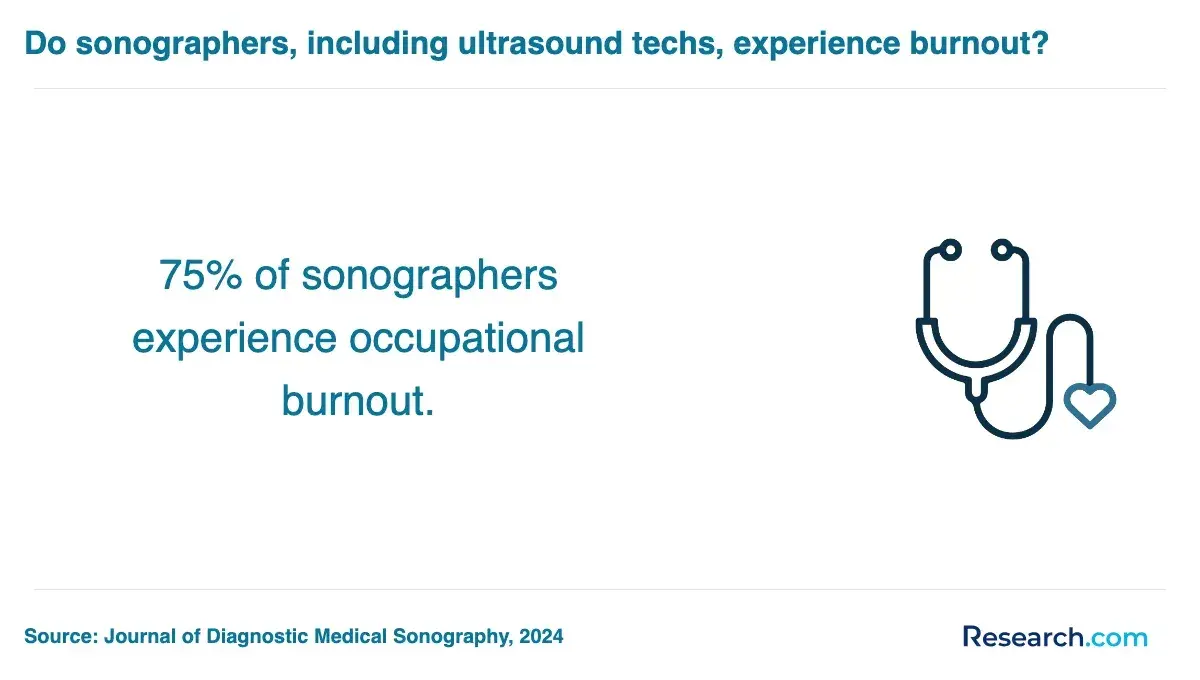
- Workload and Staffing Shortages: Balancing heavy caseloads with limited staff support increases the risk of burnout in busy healthcare settings.
- Certification and Continuing Education Requirements: Maintaining credentials demands ongoing learning, which can be challenging alongside full work schedules.
- Technology Adaptation: Rapid advances in ultrasound equipment require continual skill updates and flexibility in adapting to new tools.
- Job Market Competition: Despite strong projected growth, limited local graduates create competition for prime positions, especially in urban centers.
Recognizing these challenges enables ultrasound technicians in Delaware to better prepare strategies for resilience. For those wondering whether is associates degree in radiology online affordable, understanding workplace realities is a key factor in making informed educational and career decisions.
What do ultrasound technicians in Delaware say about their career?
- Completing my ultrasound technician program at Delaware Technical Community College was a transformative experience. The hands-on training and supportive faculty prepared me to confidently begin my career working in a local academic institution. It’s been incredibly rewarding to use my skills to contribute to the health and well-being of students every day. Delaware’s close-knit community makes collaboration and continuous learning feel natural and fulfilling. - Vana
- Starting my career as an ultrasound technician in a Delaware school opened doors I hadn’t anticipated. The stability of the job allowed me to focus on growing professionally while also feeling deeply connected to the diverse student population I serve. The unique challenges of working in this environment, combined with Delaware’s dedication to education and healthcare integration, have fueled my passion for ongoing development and helping others. - Patrick
- Graduating from the University of Delaware’s diagnostic medical sonography program gave me both the technical skills and confidence needed to thrive. Practicing as an ultrasound technician in Delaware has offered not only career advancement but a meaningful sense of contributing to my community’s well-being. I appreciate how Delaware’s healthcare and educational resources have supported my growth, allowing me to make a positive impact on students’ lives every day. - Simon
What are the best continuing education resources for ultrasound technicians in Delaware?
Ultrasound technicians can enhance their clinical expertise through accredited workshops, online courses, and professional seminars tailored to the latest imaging techniques and patient care standards. Many local healthcare institutions and professional associations in Delaware host regular training sessions that align with ongoing certification requirements and emerging industry best practices. Additionally, targeted conferences and peer networking events provide platforms for technicians to share insights, discover innovative practices, and stay informed about regulatory changes. For professionals seeking interdisciplinary growth and comparative role perspectives, exploring resources on how to become a nurse midwife in Delaware can offer valuable guidance.
References:
- CHCP. (n.d.). How to become an ultrasound technician. The College of Health Care Professions. https://www.chcp.edu/blog/how-to-become-an-ultrasound-technician/
- HealthJob. (n.d.). How to become an ultrasound technician in Delaware. https://www.healthjob.org/guide/how-to-become-an-ultrasound-technician-in-delaware
- NurseJournal. (2023, May 5). Here are the steps to becoming an ultrasound technician. https://nursejournal.org/healthcare/ultrasound-technician/how-to-become/
- Ultrasound Schools Info. (n.d.). Sonography student clinical training. https://www.ultrasoundschoolsinfo.com/student-clinical-training
- Ultrasound Technician Schools. (n.d.). Sonography technician schools in Delaware. https://www.ultrasoundtechnicianschools.com/specialty/sonography/delaware/
- ZipRecruiter. (n.d.). Ultrasound tech salary in Delaware. https://www.ziprecruiter.com/Salaries/Ultrasound-Tech-Salary--in-Delaware
Other Things to Know About Becoming an Ultrasound Technician in Delaware
To become an ultrasound technician in Delaware, you need to complete an accredited educational program, usually an Associate’s or Bachelor’s degree in Diagnostic Medical Sonography. Accreditation from CAAHEP is crucial. Online programs can supplement education but hands-on clinical training is essential.
In 2027, ultrasound technicians in Delaware can expect to earn an average annual salary ranging from $60,000 to $85,000, depending on experience and specialization. Factors such as location, employer type, and additional certifications can influence earnings.
Yes, you can become an ultrasound technician in Delaware with an online program, but you must ensure the program includes an accredited clinical internship. Hands-on experience is crucial, so choose programs that offer in-person clinical training alongside online coursework to meet certification requirements.


