
2027 How to Become an Ultrasound Technician in Florida

Co-Founder and Chief Data Scientist
Many aspiring healthcare professionals in Florida face uncertainty when choosing a stable, high-demand career. In Florida, the demand for ultrasound technicians is projected to grow 19% from 2022 to 2032, nearly double the national average. This surge reflects the state's expanding healthcare needs and aging population. Pursuing this career offers competitive salaries and opportunities in diverse medical settings, including hospitals and outpatient centers.
This article, crafted by experts in career planning, explores the essential steps to becoming an ultrasound technician in Florida, highlighting education pathways, certification requirements, and emerging trends shaping this evolving profession.
Key Things to Know About Becoming an Ultrasound Technician in Florida
- Complete an accredited diagnostic medical sonography program; Florida requires programs recognized by the Commission on Accreditation of Allied Health Education Programs (CAAHEP) for certification eligibility.
- Obtain certification from the American Registry for Diagnostic Medical Sonography (ARDMS). Over 80% of Florida employers prefer certified ultrasound technicians, reflecting rising industry standards.
- Stay updated on emerging technologies such as AI integration in imaging and telemedicine, which are expected to reshape Florida’s healthcare landscape and enhance diagnostic accuracy by 2030.
- What education is required to become an ultrasound technician in Florida?
- What specialties can ultrasound technicians choose from in Florida?
- Which certification exams are required to become an ultrasound technician in Florida?
- Is a license required to practice as an ultrasound technician in Florida?
- What to expect during ultrasound technician clinical training in Florida?
- How much does it cost to become an ultrasound technician in Florida?
- What is the average salary for ultrasound technicians in Florida?
- Which professional organizations support ultrasound technicians in Florida?
- What are the continuing education opportunities for ultrasound technicians in Florida?
- What is the job outlook and demand for ultrasound technicians in Florida?
- What are the career advancement steps for ultrasound technicians in Florida?
- What are the common challenges ultrasound technicians face in Florida?
What education is required to become an ultrasound technician in Florida?
Emerging trends in healthcare suggest growing integration of technology and enhanced clinical training within accredited ultrasound technician programs in Florida. The future educational landscape will likely emphasize both academic rigor and hands-on experience to prepare candidates for evolving diagnostic demands.
Key Florida ultrasound technician degree requirements include:
- Minimum Degree Requirement: Candidates must obtain an Associate Degree in Diagnostic Medical Sonography (A.S.) from a CAAHEP-accredited institution, typically completed in two years.
- Accreditation: Enrollment in a program accredited by CAAHEP ensures quality education and eligibility for certification exams.
- Prerequisite Coursework: Completion of foundational courses such as Anatomy and Physiology I & II, College Composition, and Physics with a grade of “C” or better is essential for admission.
- Minimum GPA: Programs generally require an overall college GPA between 2.5 and 3.0 to maintain competitive admission status.
- Clinical Training Hours: Extensive clinical practicum experience is mandatory, often involving weekday rotations supervised by registered sonographers, integral to the total credit requirements.
- Progression Standards: Advancement demands maintaining at least a “C” grade in all didactic coursework and a satisfactory pass (“S”) in clinical settings.
- Certification Eligibility: Graduates become qualified to pursue national certification exams like the American Registry of Diagnostic Medical Sonographers (ARDMS) or the American Registry of Radiologic Technologists (ARRT).
- State Licensure: Florida does not mandate state licensure, but employers prefer candidates with recognized national certification.
To explore the pathway in more detail, visit this resource on how to become an ultrasound technician.
What specialties can ultrasound technicians choose from in Florida?
Ultrasound technicians in Florida have multiple specialties to choose from, reflecting a broad spectrum of medical imaging needs that align with evolving healthcare demands. As technology advances, these specialties will likely become more integrated with other diagnostic modalities and tailored to specific patient populations.
Below is an overview of ultrasound technician specialties in Florida, highlighting current options and potential growth areas.
- Abdominal Sonography: This core specialty involves imaging organs such as the liver, kidneys, pancreas, spleen, and gallbladder, forming the foundation of many entry-level positions in Florida’s accredited programs.
- Obstetric and Gynecologic (OB/GYN) Sonography: Focused on the female reproductive system and fetal development, this specialty meets high demand in Florida due to its large population and expanding healthcare facilities.
- Vascular Sonography: Technologists assess blood flow and identify vascular issues; programs offering vascular tracks contribute to the growing need for specialists in this area, particularly in outpatient care centers.
- Cardiac Sonography (Echocardiography): Specializing in heart imaging, this advanced track is an important option in Florida, where cardiac and vascular sonography programs Florida continue to expand with technological advances.
- Small Parts Sonography: Imaging small organs like the thyroid and breast, this specialty is often combined within general training but is becoming more distinct as demand for targeted diagnostics grows.
- Neurologic Sonography: Although less common, this specialty focuses on neurological structures in pediatric patients and is poised for growth alongside advancements in neuroimaging techniques.
The future of ultrasound technician specialties in Florida is marked by increasing subspecialization and cross-disciplinary collaboration. As healthcare providers seek more precise diagnostic tools, areas like cardiac and vascular sonography programs in Florida are poised to grow in prominence, supported by dedicated educational tracks.
The chart below highlights the most common skills ultrasound technicians are expected to rely on in 2025. These competencies—ranging from patient care to specialized ultrasound procedures—directly support the specialty options available in Florida, showing how skill development aligns with emerging career pathways.
For those exploring career options, understanding these specialties offers a strategic advantage. More broadly, insights into the wider field and career paths can be found at radiology careers.
Which certification exams are required to become an ultrasound technician in Florida?
Certification exams are fundamental for ultrasound technicians in Florida, serving as proof of professional competence and adherence to evolving industry standards. While Florida does not require state licensure for sonographers, certification remains a key expectation for most employers, reflecting dedication to patient safety and up-to-date clinical knowledge. These exams are likely to become even more critical as technology and healthcare regulations advance.
- Sonography Principles & Instrumentation (SPI) Exam (ARDMS): This foundational, computer-based exam, administered by the American Registry of Diagnostic Medical Sonographers, covers clinical safety, ultrasound physics, pulsed echo instrumentation, and quality assurance. Eligibility generally requires completion of an accredited program, such as those in Florida, and passing the SPI is necessary before taking specialty credentials. Maintaining active certification helps avoid retaking this exam.
- Specialty Certification Exams (ARDMS): After SPI success, candidates must pass at least one specialty exam like Abdomen, Obstetrics & Gynecology, or Adult Echocardiography. These tests deepen clinical expertise relevant to specific sonographic fields and require graduation from a CAAHEP-accredited program and SPI completion. These nationally recognized credentials are highly valued among Florida employers.
- American Registry of Radiologic Technologists (ARRT) Sonography Exam: Offered as an alternative to ARDMS certification, this exam assesses patient care, sonographic procedures, and ultrasound physics. Candidates must complete accredited education or possess clinical experience. It is accepted by select Florida employers and benefits those working in roles that combine sonography with radiologic technology.
- Cardiovascular Credentialing International (CCI) Exams: Focused on cardiac and vascular sonography, these certifications require formal education and clinical experience. Although less prevalent than ARDMS credentials, CCI certificates are gaining recognition in Florida’s specialized cardiology and vascular labs.
Successfully passing these exams enhances a sonographer’s credibility and career prospects, while aligning their skills with Florida’s healthcare quality standards. As ultrasound technology evolves, maintaining active certification will become progressively important to meet future clinical challenges and regulatory expectations.
Is a license required to practice as an ultrasound technician in Florida?
Florida does not require a state license to practice as an ultrasound technician, which means professionals in this field rely on national certification and accredited education to demonstrate their qualifications. This approach places more emphasis on meeting established industry standards rather than specific state regulations. It opens opportunities while maintaining quality through recognized credentials. The state’s regulatory framework centers on certification from national organizations such as ARDMS, ARRT, and CCI.
Unlike radiologic technologists, ultrasound technicians in Florida are not subject to state licensing laws or exams, nor are there provisional practice rules under supervision. Instead, candidates must complete an accredited program—typically one approved by CAAHEP—and pass relevant exams such as the SPI test and specialty exams to earn certification.
Following these national certification requirements not only aligns with legal practice standards but also strengthens employability and professional credibility in Florida’s sonography job market. Employers consistently prioritize ARDMS or ARRT credentials, reflecting industry trust in these benchmarks.
When I spoke with an ultrasound technician from Florida who graduated from a local accredited school, he shared that navigating the certification process was initially challenging but ultimately rewarding. “Without a state license, everything came down to passing those national exams and proving my skills through certification,” he said.
He remembered feeling uncertain at first but appreciated how this system allowed him to focus on attaining solid credentials that employers genuinely value in Florida’s competitive healthcare environment.
What to expect during ultrasound technician clinical training in Florida?
Clinical training in Florida serves as the essential transition from academic knowledge to practical proficiency in ultrasound technology. It equips students with the skills and confidence necessary for certification and dynamic healthcare environments. This hands-on phase integrates real patient care with expert guidance to build competency across multiple sonography specialties.
- Extensive Hands-On Patient Care: Students actively engage with patients, applying positioning and communication skills under supervision to conduct ultrasound exams effectively.
- Supervised Use of Imaging Equipment: Training involves operating high-frequency ultrasound machines with oversight from seasoned professionals ensuring adherence to safety and best practices.
- Specialty Clinical Rotations: Rotations expose students to OB/GYN, abdominal, vascular, and cardiac sonography, fostering adaptability to Florida’s varied patient demographics.
- Mentorship from Licensed Professionals: Direct guidance and feedback come from credentialed sonographers and radiologists, enhancing clinical decision-making and professional development.
- Structured Clinical Hours: Programs mandate around 1,488 hours across diverse settings and shifts, mirroring actual clinical schedules including evenings and weekends.
- Competency Evaluations: Regular performance assessments and skills testing ensure students meet benchmarks required for certification readiness.
- Program and State-Specific Requirements: Prerequisite coursework and maintaining GPA standards are required for clinical placement and progression through the program.
These comprehensive experiences sharpen clinical judgment and technical expertise, effectively preparing students for certification exams and fast-paced employment opportunities within Florida’s healthcare systems.
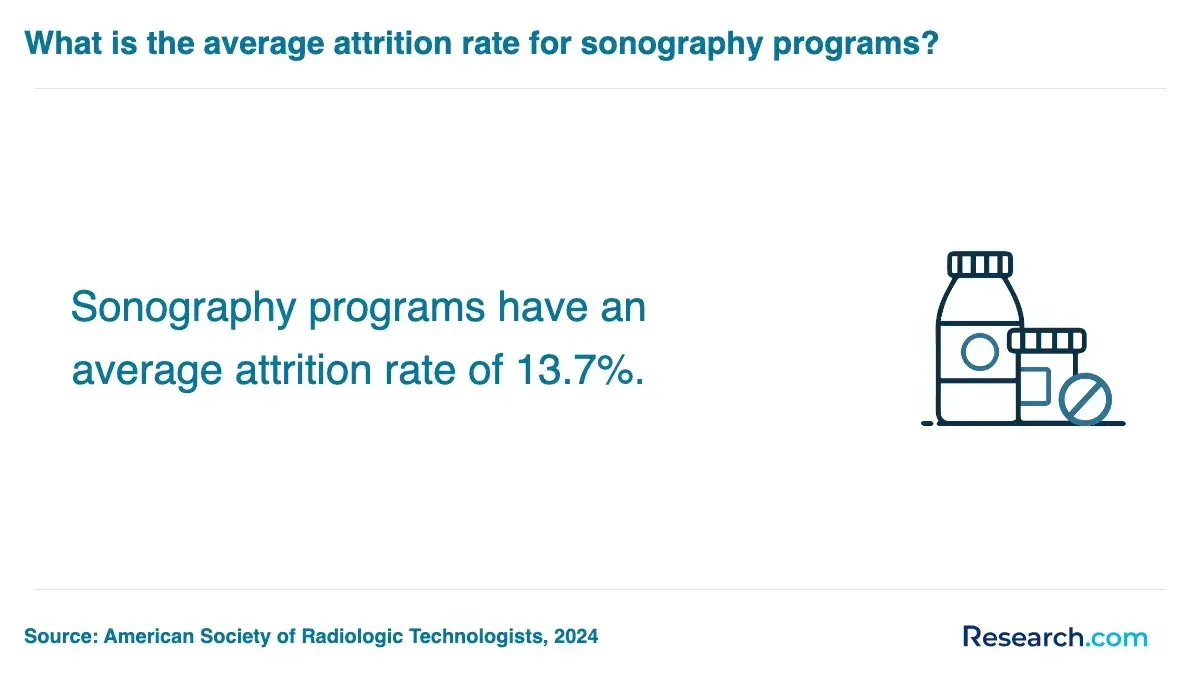
Clinical training is demanding, and not every student completes the journey. As shown below, sonography programs have an average attrition rate of 13.7%. This underscores the importance of persistence and preparation for Florida students entering such intensive, hands-on learning environments.
How much does it cost to become an ultrasound technician in Florida?
The average total cost to become an ultrasound technician in Florida ranges from about $11,000 to $21,000 for in-state students. This estimate covers tuition, fees, clinical training, certification exams, and required materials but excludes personal living expenses. Costs vary significantly depending on the program type and institution.
- Tuition and Fees: Associate degree programs at public colleges typically cost between $11,000 and $13,500 for in-state students, while private schools and bachelor’s programs can exceed $30,000.
- Clinical Training Expenses: Lab fees, uniforms, background checks, and immunizations usually add $1,300 to $2,800 in expenses required for clinical internships and externships.
- Certification and Exam Fees: The ARDMS Sonography Principles & Instrumentation exam costs about $250, with specialty exams ranging from $275 to $550 each, often required for graduation.
- Licensing or State Fees: Florida does not require state licensure for sonographers, so there are no mandatory licensing fees, though professional society memberships may cost around $45 yearly.
- Books and Materials: Textbooks and software generally cost between $600 and $1,000, with some programs recommending additional technology purchases like laptops.
- Living Expenses: Housing, food, transportation, and other personal costs vary widely depending on location and lifestyle and are not included in program tuition.
These costs reflect the ultrasound technician program cost in Florida but can fluctuate based on program length, training modalities, and geographic region. Many students can reduce their financial burden through scholarships, financial aid, or employer tuition assistance. For those exploring options, this list of the best online sonography programs may offer flexible paths with different pricing structures.
While tuition and fees represent the upfront investment, potential earnings help put these costs into perspective. The chart below illustrates how ultrasound technician salaries vary by degree level, with higher education credentials often translating into significantly greater annual income across the profession in Florida and beyond.
What is the average salary for ultrasound technicians in Florida?
The average annual salary for ultrasound technicians in Florida ranges from $54,470 to $73,439, which is lower than the national average hourly wage of about $44.11. Florida’s hourly rates typically fall between $25.17 and $35.31, reflecting regional market differences and demand.
- Experience Level: Entry-level technicians earn around $34,840 annually, while seasoned sonographers may reach salaries up to $102,175 based on skills and tenure.
- Education and Certifications: Advanced degrees and certifications like RDMS increase earning potential by demonstrating specialized expertise.
- Work Setting: Hospitals usually offer higher wages and better benefits compared to outpatient centers or physician offices.
- Geographic Location: Urban areas such as Miami and Orlando tend to pay more than rural regions due to local demand and cost of living.
- Specialization: Sonographers in cardiac or vascular specialties typically earn more than those focusing on general abdominal or OB/GYN imaging.
Which professional organizations support ultrasound technicians in Florida?
Participation in recognized professional organizations is instrumental in advancing clinical expertise and maintaining industry-relevant standards. In Florida, associations such as the Society of Diagnostic Medical Sonography and the American Registry for Diagnostic Medical Sonography provide exclusive access to continuing education, industry conferences, and mentorship initiatives. These networks offer critical insights into evolving diagnostic techniques and emerging technologies while fostering collaboration among peers. For professionals considering parallel career paths or expanding their scope of practice, reviewing resources on how to become a radiology technician in Florida can further enhance career growth strategies.
What are the continuing education opportunities for ultrasound technicians in Florida?
Florida offers a range of continuing education options for ultrasound technicians to maintain certification and stay abreast of emerging diagnostic technologies. Accredited workshops, online webinars, and hands-on seminars enable professionals to update clinical techniques and adhere to evolving safety standards. These educational initiatives are often coordinated by professional associations and accredited institutions, ensuring both compliance and relevance. Ultrasound technicians may also explore complementary clinical pathways, such as reviewing how to become a nurse midwife in Florida, to broaden their skill set and drive career progression.
What is the job outlook and demand for ultrasound technicians in Florida?
Employment for ultrasound technicians in Florida is set to expand at a rate equal to or above the national average of 14.3%, reflecting vibrant growth in this healthcare specialty. Over 500 job openings annually highlight a robust market fueled by evolving healthcare needs across the state.
- Population Growth and Aging: Florida’s rapidly aging population demands increased diagnostic imaging, pushing ultrasound usage to monitor chronic and age-related conditions more frequently.
- Healthcare Expansion: New hospitals, clinics, and outpatient centers—particularly in metropolitan areas—are rapidly increasing positions for skilled ultrasound technicians as healthcare infrastructure diversifies.
- Technological Advancements: Emerging imaging technologies and specialized ultrasound applications are creating new roles, requiring technicians to continually update expertise and certifications.
- Preventive Care Trends: A growing focus on early disease detection boosts ultrasound’s role in routine screenings, emphasizing non-invasive diagnostic techniques and preventive health strategies.
- Regional Demand Variations: Urban centers like Miami exhibit higher demand due to population density and healthcare access, whereas rural areas see steadier but slower job growth tied to limited facilities.
In Florida, the ultrasound technician career landscape is both stable and full of advancement opportunities, shaped by demographic growth and rapid technological change. A graduate from a local program described the job market as “very encouraging yet demanding,” noting the challenge of balancing ongoing training with rising caseloads as clinics expanded around Miami.
She emphasized that while strong demand creates opportunity, success in the field requires adaptability, continuous learning, and a proactive approach to meet evolving patient care needs.
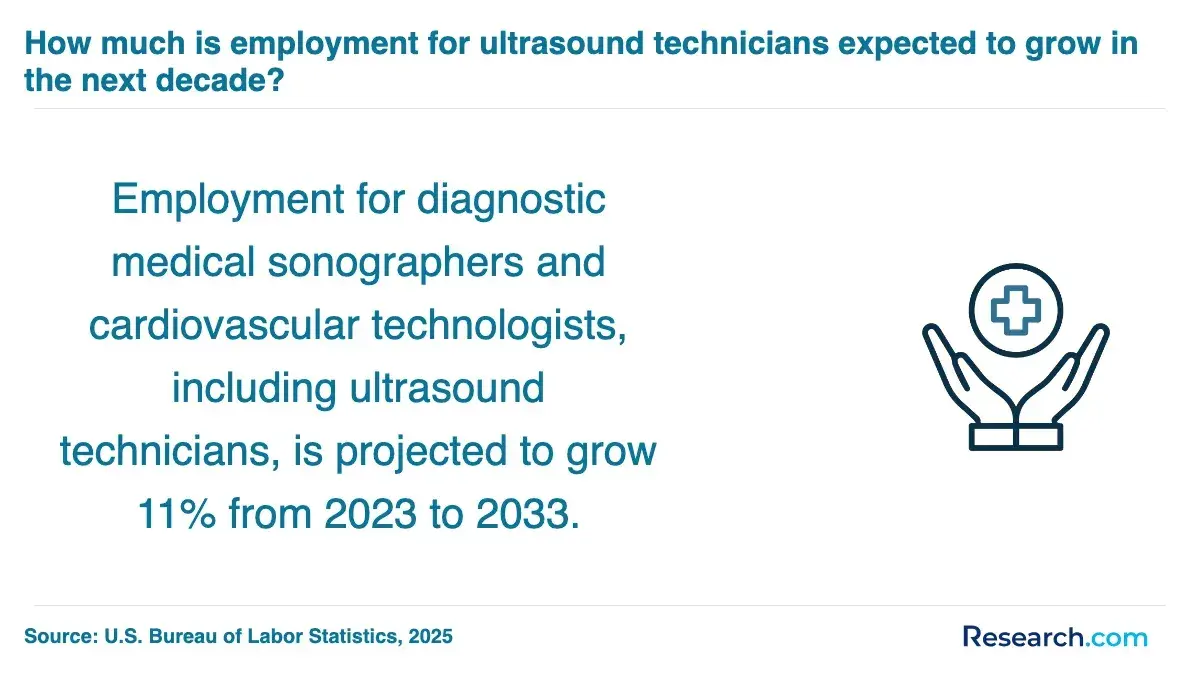
National data reinforces Florida’s strong outlook, with the U.S. Bureau of Labor Statistics projecting 11% job growth for ultrasound technicians from 2023 to 2033. The chart below highlights this trend, showing why sonographers in Florida can anticipate consistent career opportunities in the coming decade.
What are the career advancement steps for ultrasound technicians in Florida?
Ultrasound technicians in Florida can enhance their careers by focusing on specialization, obtaining advanced certifications, or stepping into leadership positions. These paths allow professionals to meet evolving healthcare demands while maximizing their impact within clinical settings. Embracing these strategies sets the stage for strong career advancement for ultrasound technicians in Florida.
- Specialization: Developing expertise in areas such as OB/GYN, vascular, or cardiac sonography can increase employability in niche, high-demand environments, positioning technicians for more complex and rewarding roles.
- Advanced Certifications: Earning credentials from recognized bodies like ARDMS, CCI, or ARRT strengthens a sonographer’s qualifications, often leading to higher salaries and eligibility for advanced clinical positions.
- Higher Education: Pursuing bachelor’s or master’s degrees in medical imaging or healthcare administration broadens career options, including eligibility for management and specialized clinical roles.
- Leadership Roles: Experience can propel sonographers into supervisory or administrative jobs, such as imaging department manager, where they guide teams and influence operational decisions, reflecting the growing demand for ultrasound technician management roles in Florida.
- Education and Training: Veteran technicians often transition to becoming instructors or clinical trainers, sharing expertise through accredited programs or continuing education workshops to shape future professionals.
- Research or Technology Development: Some sonographers engage in research or collaborate with medical imaging companies, driving innovation in imaging technology and protocols.
Advancement not only elevates earning potential—top earners in Florida command salaries above $100,000—but also extends professional influence in a rapidly expanding healthcare marketplace. For those considering upskilling, exploring a list of best ultrasound technician certification programs can be an essential step toward growth.
What are the common challenges ultrasound technicians face in Florida?
Recognizing work environment issues for florida sonographers is essential to navigating the profession’s demands effectively. These challenges shape everyday tasks and long-term career development, influencing how technicians manage their roles and maintain well-being. Preparing for these obstacles can lead to more sustainable job satisfaction and growth.
- Physical Strain and Ergonomics: Repetitive scanning and prolonged standing often cause musculoskeletal discomfort, requiring preventive measures to avoid chronic injury.
- Emotional Stress: Sonographers face sensitive situations regularly, necessitating strong emotional resilience and empathy to handle patient care with professionalism.
- Workload and Staffing Shortages: High patient volumes and limited staff can result in burnout, making time management and teamwork critical to quality care.
- Certification and Continuing Education Requirements: Staying certified demands ongoing education, challenging technicians to balance coursework with demanding schedules.
- Technology Adaptation: Continuous learning of new ultrasound equipment and digital systems is vital to maintain accuracy and compliance in imaging standards.
- Job Market Competition: Regional job availability varies, with metropolitan areas requiring advanced credentials and experience to stand out.
By understanding the challenges for ultrasound technicians in florida, candidates can develop strategies to overcome them and thrive in a competitive healthcare landscape. For those considering educational options, exploring the ranking of most affordable associates degrees in radiology online may provide valuable pathways to enter the field prepared for these demands.
What do ultrasound technicians in Florida say about their career?
- Completing my ultrasound technician program at Miami Dade College opened the door to a fulfilling career right here in Florida. The hands-on experience and supportive faculty prepared me well for the challenges of the job. Starting work in a local academic institution gave me the chance to combine my passion for healthcare and education, helping students understand the importance of diagnostic imaging. Florida’s diverse population and vibrant healthcare environment create unique and rewarding cases every day. Darryl
- After finishing my studies at Valencia College, I found the transition to working as an ultrasound technician both exciting and demanding. Florida’s booming healthcare sector ensures job stability and continual professional growth, which has been instrumental for me. The multicultural aspects of Florida’s communities add a layer of complexity and interest to my work, pushing me to stay current with the latest techniques and technology. I feel proud knowing that my role positively impacts the health and futures of so many young people. Aiza
- Attending St. Petersburg College for my ultrasound technician education was a transformative experience that deepened my respect for this profession. Working in a local school setting has allowed me to not only grow professionally but to contribute meaningfully to the community by training the next generation of healthcare workers. Florida’s rich natural environment also presents unique cases related to coastal health issues, which keeps my daily work interesting and challenging. It’s a career that encourages continuous learning and personal fulfillment. Christian
Related Articles for Nearby States
- 2027 How to Become an Ultrasound Technician in Georgia
- 2027 How to Become an Ultrasound Technician in Alabama
- 2027 How to Become an Ultrasound Technician in South Carolina
- 2027 How to Become an Ultrasound Technician in Mississippi
- 2027 How to Become an Ultrasound Technician in Tennessee
- 2027 How to Become an Ultrasound Technician in North Carolina
- 2027 How to Become an Ultrasound Technician in Louisiana
- 2027 How to Become an Ultrasound Technician in Kentucky
- 2027 How to Become an Ultrasound Technician in Arkansas
- 2027 How to Become an Ultrasound Technician in Virginia
References:
- Best-Trade-Schools.net. How to Become an Ultrasound Technician in Florida.
- Eastern Florida State College. Estimated Expenses | EFSC Sonography Program.
- EduMed. Online Sonography Programs in Florida: Degrees & Details.
- Florida Institute of Ultrasound, Inc. Tuition and Fees.
- Florida National University. What to Look for in an Ultrasound Technician or Medical Sonographer Program in Miami.
- Mayo Clinic College of Medicine & Science. Tuition and Aid - Sonography Program (Florida and Minnesota).
- Miami Dade College. Diagnostic Medical Sonography | Associate in Science.
- Santa Fe College. Diagnostic Medical Sonography, A.S.
- UltrasoundSchoolsInfo.com. Find Accredited Ultrasound Technician Schools in Florida.
- Valencia College. Diagnostic Medical Sonography Degree.
Other Things You Should Know About How to Become an Ultrasound Technician in Florida
To start a career as an ultrasound technician in Florida, you typically need a high school diploma and must complete an accredited program, usually an Associate's Degree in Diagnostic Medical Sonography. Accreditation from the Commission on Accreditation of Allied Health Education Programs (CAAHEP) is recommended.
Completing an online ultrasound technician program can help you qualify for a career in Florida, but it is important to ensure the program is accredited and meets the requirements for certification. Many reputable online programs combine virtual coursework with in-person clinical training, which is essential for gaining hands-on experience.
Graduates must also obtain certification from recognized bodies, such as the American Registry for Diagnostic Medical Sonography (ARDMS), to enhance job prospects and meet state standards. Ultimately, while an online program can provide the necessary education, practical clinical experience and certification remain crucial for becoming a qualified ultrasound technician in Florida.
To work as an ultrasound technician in Florida, obtaining certification from the American Registry for Diagnostic Medical Sonography (ARDMS) is typically required. The process involves passing the Sonography Principles & Instrumentation exam, along with a specialty exam like Abdomen (AB) or Obstetrics & Gynecology (OB/GYN).


