
2027 How to Become an Ultrasound Technician in Indiana

Co-Founder and Chief Data Scientist
Indiana’s healthcare workforce reflects both growth and opportunity. In 2022, the state reported 300 projected annual job openings for radiologic technologists through 2032, highlighting a steady demand for imaging professionals. This demand signals promising prospects for those considering careers in diagnostic medical sonography, a field closely aligned with radiologic technology.
In this guide, I will walk you through the essential steps to becoming an ultrasound technician in Indiana. I will also cover the educational requirements, certification pathways, career outlook, and practical tips for thriving in the state’s healthcare system.
Key Things to Know About Becoming an Ultrasound Technician in Indiana
- In Indiana, you will need to complete an accredited diagnostic medical sonography program, typically two years, to qualify for entry-level positions.
- Certification through the American Registry for Diagnostic Medical Sonography (ARDMS) is strongly preferred by employers and can significantly improve both job opportunities and salary potential.
- Ultrasound technicians in Indiana benefit from steady demand, with around 1,000 jobs statewide and ongoing opportunities for clinical experience through internships and externships.
- What education is required to become an ultrasound technician in Indiana?
- What specialties can ultrasound technicians choose from in Indiana?
- Which certification exams are required to become an ultrasound technician in Indiana?
- Is a license required to practice as an ultrasound technician in Indiana?
- What to expect during ultrasound technician clinical training in Indiana?
- How much does it cost to become an ultrasound technician in Indiana?
- What are the ongoing training and development opportunities for ultrasound technicians in Indiana?
- What essential soft skills do ultrasound technicians in Indiana need to succeed?
- What is the average salary for ultrasound technicians in Indiana?
- What is the job outlook and demand for ultrasound technicians in Indiana?
- What are the career advancement steps for ultrasound technicians in Indiana?
- What are the common challenges ultrasound technicians face in Indiana?
What education is required to become an ultrasound technician in Indiana?
Achieving a career as an ultrasound technician in Indiana demands more than just enrolling in any education program; it calls for deliberate selection of accredited ultrasound technician programs in Indiana that align with industry standards. These carefully structured programs ensure graduates meet Indiana diagnostic medical sonography degree requirements essential for entering the healthcare field.
- Minimum Degree Requirement: Candidates must earn at least an Associate of Science or Associate of Applied Science degree in Diagnostic Medical Sonography (DMS), with Bachelor’s degrees available for advanced career paths.
- Accredited Program Requirement: Graduation from a program accredited by the Commission on Accreditation of Allied Health Education Programs (CAAHEP) is mandatory to qualify for the ARDMS certification exam, a prerequisite for most employers.
- Program Duration: Associate degrees typically span 22 months to 2 years, while Bachelor’s programs require around 4 years of study.
- Prerequisite Coursework: Foundational courses in human anatomy, physiology, composition, public speaking, and introductory psychology are generally required before admission.
- Clinical Practicum Hours: Hands-on clinical experience is essential, often involving a minimum of 1,000 hours of supervised patient care embedded throughout the curriculum.
- Certification Requirement: Passing the ARDMS exam after completing an accredited program is crucial for professional validation and employment.
Those weighing their path should consider the value of these requirements deeply, especially since a structured education not only prepares you technically but positions you strategically in a healthcare field that is growing steadily. For a comprehensive view of career prospects and earnings, explore the ultrasound technician career path.
What specialties can ultrasound technicians choose from in Indiana?
Ultrasound technicians in Indiana can focus their careers by selecting from various specialized sonography fields aligned with both patient needs and evolving medical technology. These specialties enable professionals to hone targeted diagnostic skills while addressing high-demand healthcare areas. The following list outlines key options within sonography specialization programs that Indiana offers.
- Abdominal Sonography: Concentrates on imaging organs like the liver, kidneys, pancreas, and spleen to detect conditions often missed in broader exams.
- Obstetric and Gynecological Sonography: Monitors fetal growth and female reproductive health, reflecting significant needs in prenatal and women’s health care sectors.
- Vascular Sonography: Focuses on blood flow and vessel integrity, a growing field vital for diagnosing circulatory disorders.
- Cardiac Sonography (Echocardiography): Targets heart structure and function, crucial for managing cardiovascular diseases; offered in select Indiana institutions.
- Breast Sonography: Provides detailed breast tissue imaging, increasingly important in cancer detection beyond standard mammography.
- Pediatric Sonography: Addresses the unique challenges of imaging infants and children, though available less frequently.
By exploring these ultrasound technician specialties in Indiana, students can align their training with areas exhibiting robust employment prospects and medical significance. Those seeking clarity on program duration and requirements might consider resources like how many years to become an ultrasound technician to better plan their educational trajectory.
Which certification exams are required to become an ultrasound technician in Indiana?
Certification exams underline the competency and professionalism expected of ultrasound technicians in Indiana, bridging the gap between education and employability. Though the state does not mandate licensure, employers consistently demand nationally recognized certifications to safeguard patient care standards and institutional reputation. These exams rigorously evaluate theoretical knowledge and practical skills, setting a benchmark for career readiness.
- ARDMS Examinations: The ARDMS is the leading credentialing organization nationwide, including Indiana. Candidates must pass the Sonography Principles and Instrumentation (SPI) exam plus one specialty exam, such as Abdomen or Obstetrics & Gynecology. Eligibility generally requires graduation from a CAAHEP-accredited sonography program and relevant clinical experience, both common requirements at Indiana institutions.
- American Registry of Radiologic Technologists (ARRT) Sonography Certification: The ARRT offers the RT(S) credential, covering patient care, sonographic procedures, and physics. It appeals especially to candidates with existing radiologic technology backgrounds and requires completion of an ARRT-approved education program plus clinical competency documentation. Indiana healthcare employers frequently recognize this certification.
- Cardiovascular Credentialing International (CCI) Exams: Specializing in cardiac and vascular sonography, CCI certifications like Registered Cardiac Sonographer (RCS) and Registered Vascular Specialist (RVS) are valuable within Indiana’s cardiology and vascular departments. These exams focus on cardiovascular ultrasound principles and require accredited education or relevant practical experience.
- Ultrasound Student Assessment (USA) Exam (Program-Specific): Certain Indiana programs, including Ivy Tech Community College, mandate the USA exam for admission. Though not a professional certification, this aptitude test ensures applicants possess foundational readiness for the sonography curriculum.
Achieving these certifications not only enhances professional credibility but also significantly improves job prospects by aligning candidates with Indiana’s healthcare standards and employer preferences. They validate mastery of essential sonography skills, making technicians indispensable in a rapidly expanding field.
Is a license required to practice as an ultrasound technician in Indiana?
No state license is required to practice as an ultrasound technician in Indiana, which shifts the focus from local government regulation to national standards. This distinction matters because it places significant emphasis on certification bodies that confirm the professional’s competency rather than the state’s approval. Understanding this framework clarifies how ultrasound technicians gain legitimacy and employment in Indiana’s healthcare sector.
Indiana does not impose direct licensure or require registration for sonographers, leaving regulatory oversight minimal at the state level. Instead, Indiana relies almost exclusively on national certification organizations like ARDMS, ARRT, and Cardiovascular Credentialing International (CCI). There are no state-specific licensing laws or provisional pathways; all ultrasound technicians practice under these national credentials, which employers widely recognize and demand.
Certification involves passing rigorous examinations such as the Sonography Principles & Instrumentation (SPI) exam alongside specific specialty exams administered by ARDMS. These certifications are the de facto standard for practicing in Indiana, ensuring technicians meet nationally accepted benchmarks of knowledge and skill. Compliance not only protects legal and professional practice but also enhances employability and credibility in a competitive job market where employers expect certified competence.
An ultrasound technician from Indiana reflected that while the absence of a state license initially felt uncertain, it ultimately underscored the importance of national certification. He explained that passing the ARDMS exams gave him confidence, opened career opportunities, and motivated him to fully master the material since certification served as his “license” in Indiana. His experience shows how national standards provide both structure and credibility in the profession. To further understand career stability in this field, the chart below illustrates the unemployment rate of ultrasound technicians over the years.
What to expect during ultrasound technician clinical training in Indiana?
Clinical training in Indiana is the essential bridge between textbook knowledge and competent, confident practice as an ultrasound technician. With 37,820 diagnostic medical sonographers holding a bachelor’s degree as their main educational level, students are entering the field with strong academic foundations. Clinical placements then thrust them into real healthcare environments where they refine technical skills, interact with patients, and meet the rigorous standards expected by certifying bodies and employers alike.
- Hands-On Patient Care: Students directly perform ultrasound procedures, learning to communicate effectively, ensure patient safety, and maintain comfort during exams.
- Supervised Use of Imaging Equipment: Under experienced sonographers’ supervision, trainees operate ultrasound machines to capture accurate diagnostic images critical for clinical decisions.
- Specialty Rotations: Clinical experiences span OB/GYN, vascular, abdominal, and cardiac sonography, broadening expertise and helping students identify areas of specialization.
- Mentorship from Licensed Professionals: Seasoned sonographers provide feedback, model professional behavior, and support students’ growth throughout the training period.
- Competency Evaluations: Regular assessments challenge students to demonstrate proficiency in scanning techniques, image interpretation, and ethical practice standards.
- Program-Specific Clinical Hours: Indiana programs demand completion of roughly 1,000 to 1,200 supervised clinical hours, ensuring sufficient exposure before graduation and certification eligibility.
- Integration of Didactic and Clinical Learning: Classroom theories are continuously reinforced through hands-on training, solidifying the connection between knowledge and practice.
- Professionalism and Ethical Practice: Maintaining confidentiality and adhering to ethical guidelines are non-negotiables, reflecting both state regulations and national certification requirements.
This immersive clinical training primes students for ARDMS certification exams by demanding technical precision and ethical conduct. It also cultivates the readiness and adaptability necessary to thrive in fast-paced healthcare settings across Indiana.
How much does it cost to become an ultrasound technician in Indiana?
Becoming an ultrasound technician in Indiana requires a clear understanding of both educational and supplemental expenses beyond tuition alone. By examining program costs, certification fees, and living expenses, aspiring sonographers can better prepare for the financial commitment of this career path.
- Tuition and Fees: Associate degree programs at Indiana’s public colleges usually range from $8,500 to $12,000 for in-state students. Bachelor’s degree programs or private institutions may cost between $26,000 and $42,000. Certificate programs, while shorter in duration, typically align with associate-level tuition ranges.
- Clinical Training Expenses: Additional expenses for lab fees, uniforms, malpractice insurance, and transportation to clinical sites generally total $500 to $2,000, depending on program requirements.
- Certification and Exam Fees: Employers commonly require ARDMS certification, with exam costs averaging $225–$250 per test. Some students may need to take more than one specialty exam, which increases overall fees.
- Licensing or State Fees: Indiana does not mandate a state license for diagnostic medical sonographers, though maintaining ARDMS certification requires periodic renewal fees.
- Books and Materials: Textbooks, digital resources, and program-specific supplies typically add $500 to $1,000 over the course of the program.
- Living Expenses: Full-time students in Indiana should anticipate spending approximately $9,500 to $14,500 annually for housing, transportation, meals, and personal expenses.
Careful financial planning is essential for students who want to balance affordability with high-quality training. Comparing costs between Indiana programs and online options can also reveal significant savings. For those researching cost-effective pathways, the ranking of most affordable associates degrees in radiology online can serve as a helpful guide to evaluate programs nationwide and identify accessible options that align with long-term career goals.
What are the ongoing training and development opportunities for ultrasound technicians in Indiana?
Ultrasound technicians in Indiana can expand their professional expertise and stay current through accredited continuing education, specialized workshops, and targeted training sessions on emerging imaging technologies. These programs enhance clinical precision, support certification renewal, and offer pathways to broaden skill sets in advanced sonography. Engaging with such development initiatives can also enable a strategic transition to related imaging roles, such as how to become a radiology technician in Indiana.
What essential soft skills do ultrasound technicians in Indiana need to succeed?
Ultrasound technicians benefit significantly from cultivating strong communication, empathy, and teamwork skills, which are crucial in fostering trust with patients and collaborating effectively with interdisciplinary teams. Proficiency in clear patient communication minimizes misunderstanding during procedures and enhances overall care quality, while active listening and adaptability help navigate the dynamic challenges of healthcare environments. Additionally, stress management techniques and proactive conflict resolution are key components that support professional resilience and improved patient outcomes. Professionals seeking to broaden their healthcare skillset may consider exploring related fields, such as how to become a nurse midwife in Indiana, to gain insights into holistic patient care and interdisciplinary collaboration.
What is the average salary for ultrasound technicians in Indiana?
The average yearly pay for an ultrasound technician in Indiana is $93,513, with regional differences shaping compensation. Clayton leads as the highest-paying city, with Valparaiso and Carmel close behind in second and third. Carmel offers salaries about 4.9% above the state average, while Clayton tops the chart with pay that is 7.3% higher than Indiana’s average.
Specialization also impacts earnings. For example, ultrasound technicians focusing on vascular technology earn around $99,626 annually, reflecting the premium on advanced expertise. Indiana’s ultrasound technician salaries reflect a complex balance of local healthcare demand, institutional capacity, and personal qualifications, challenging simplistic notions of pay equity across states.
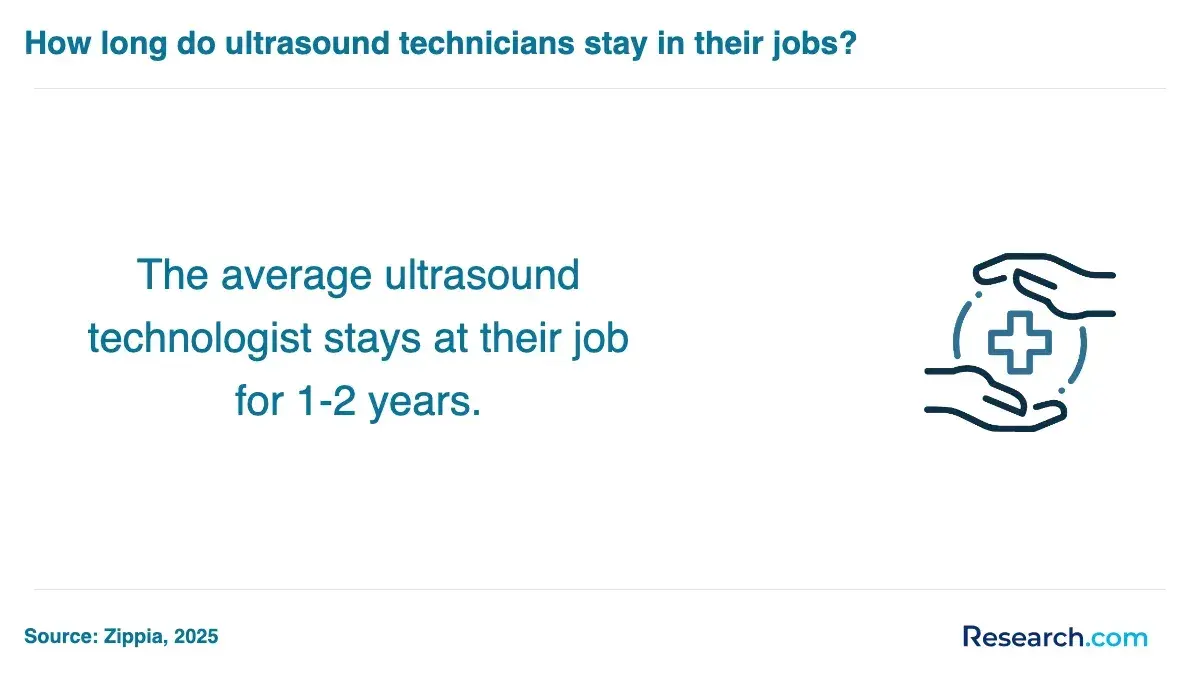
These salary patterns connect closely to career stability and longevity, which is highlighted in the image below showing the average tenure of ultrasound technicians.
What is the job outlook and demand for ultrasound technicians in Indiana?
Employment for ultrasound technicians in Indiana was recorded at 5,230 in 2022, with projections reaching 5,450 by 2032. This represents a 4% growth rate over the decade, reflecting steady, though slower than national expansion. While not rapid, the increase still points to stable demand for skilled sonographers across Indiana’s healthcare system.
- Population Growth and Aging: Indiana’s expanding and aging population drives greater demand for diagnostic imaging, as older adults require more frequent and complex evaluations.
- Healthcare Expansion: New clinics, hospitals, and outpatient centers continually emerge, broadening opportunities and diversifying roles for sonographers statewide.
- Technological Advancements: Innovations like 3D imaging and portable ultrasound devices open specialized career paths, pushing traditional boundaries of sonography practice.
- Preventive Care Trends: With increased emphasis on early diagnosis, ultrasound plays a crucial role in less invasive screenings, escalating the need for skilled technicians.
- Regional Demand Variations: Urban centers concentrate most jobs due to large healthcare facilities, yet rural areas face critical shortages, creating unique market dynamics.
When I spoke with an ultrasound technician who graduated from a local Indiana school, she described the job market as “both challenging and rewarding.” She recalled starting her career navigating rapid growth in outpatient imaging centers, where workflow sometimes felt overwhelming but energized by the clear need for skilled professionals. “Each new clinic opening felt like a door of opportunity, yet also a reflection of how critical this role is becoming,” she noted.
Her experience affirmed that demand isn’t just about numbers but about the evolving healthcare landscape that values adaptable, proficient technicians capable of meeting increasing complexity and regional disparities.
What are the career advancement steps for ultrasound technicians in Indiana?
Ultrasound technicians in Indiana can accelerate their professional journey by embracing career advancement for ultrasound technicians in Indiana through focused specialization, advanced certifications, and leadership development. Each pathway not only deepens expertise but also opens doors to diverse roles within a robust healthcare network.
- Specialization: Concentrating on niche areas like OB/GYN, vascular, or cardiac sonography enriches technical skills and often leads to higher wages or positions in specialized departments.
- Advanced Certifications: Obtaining credentials from bodies such as the ARDMS, CCI, or ARRT enhances employability and is frequently required by top Indiana employers, reflecting the value of specialized sonography certifications in Indiana.
- Higher Education: Pursuing bachelor’s or master’s degrees, including programs like the 18-month Bachelor of Science in Diagnostic Sonography, broadens career options and qualifies technicians for supervisory or teaching roles.
- Leadership Roles: Experienced sonographers may transition into supervisory or administrative positions, where they influence operations and policy within healthcare facilities.
- Education and Training: Becoming an instructor or clinical trainer allows seasoned professionals to shape the future workforce while sharing critical expertise.
- Research or Technology Development: Engaging with research projects or collaborating on new ultrasound technologies fosters innovation and advances medical imaging capabilities.
Higher qualifications and certifications not only boost earning potential but also empower technicians to take on more impactful roles statewide. For those considering further study, exploring CUNY radiology programs offers accessible pathways to advance in this dynamic field. To better understand where these professionals work, the chart below from Zippia highlights ultrasound technician jobs by sector.
What are the common challenges ultrasound technicians face in Indiana?
Meeting the challenges for ultrasound technicians in Indiana requires more than skill; it demands resilience and adaptability. Recognizing these obstacles allows professionals to anticipate difficulties and sustain their career growth. The physical demands of sonography jobs in Indiana are a significant factor shaping daily work life.
- Physical Strain and Ergonomics: Repetitive scanning motions and extended hours standing contribute to musculoskeletal issues, making physical discomfort a common concern despite ergonomic efforts.
- Emotional Stress: Sonographers often face intense emotional moments working with patients during sensitive diagnoses, which can add psychological pressure to their role.
- Workload and Staffing Shortages: Heavy caseloads combined with limited staff require balancing numerous patients, often intensified by weekend and holiday shifts that increase burnout risks.
- Certification and Continuing Education Requirements: Maintaining credentials like RDMS while managing demanding schedules challenges even the most dedicated technicians.
- Technology Adaptation: Frequent updates in ultrasound equipment and digital systems demand ongoing learning, sometimes without sufficient training opportunities.
- Job Market Competition: Regional demands and the popularity of sonography make securing positions competitive, favoring candidates with specialized skills and experience.
These challenges underscore the importance of preparedness and ongoing education. Exploring what are the best schools for ultrasound technician can also guide aspiring professionals toward programs that support overcoming these industry demands.
What do ultrasound technicians in Indiana say about their careers?
- Completing my ultrasound technician program at Ivy Tech Community College in Indiana was a turning point in my life. The hands-on training and supportive instructors prepared me well for the realities of the job, and starting my career in a local school allowed me to combine my passion for healthcare with education. Knowing that I contribute directly to the health and well-being of children in my community keeps me motivated every day. I appreciate the stability and growth opportunities Indiana offers in this field, which makes me excited about my future in ultrasound technology. - Ali
- After graduating from Ball State University’s ultrasound program, I began working at a local school where I discovered how rewarding it is to support young people not only medically but also emotionally. Indiana’s strong focus on community health and education gave me the chance to participate in unique outreach initiatives that aim to increase awareness about pediatric health. The experience has fostered incredible personal growth for me, teaching patience and empathy that extend beyond the workplace. I truly feel like I am making a difference in my community. - Randy
- Indiana’s natural resources and diverse patient population create unique challenges and learning opportunities as an ultrasound technician. Completing my studies at Vincennes University provided a solid foundation, and starting my profession in a local academic institution allowed me to advance professionally within a system that values continual development. The career paths here are promising, with roles that range from clinical practice to education and research. I’m proud to work in a state where my skills directly impact people’s lives and where ongoing education is encouraged. - Laney
Related Articles for Nearby States
- 2027 How to Become an Ultrasound Technician in Ohio
- 2027 How to Become an Ultrasound Technician in Illinois
- 2027 How to Become an Ultrasound Technician in Kentucky
- 2027 How to Become an Ultrasound Technician in Michigan
- 2027 How to Become an Ultrasound Technician in Wisconsin
- 2027 How to Become an Ultrasound Technician in Missouri
- 2027 How to Become an Ultrasound Technician in Tennessee
- 2027 How to Become an Ultrasound Technician in Iowa
- 2027 How to Become an Ultrasound Technician in West Virginia
- 2027 How to Become an Ultrasound Technician in Minnesota
References:
- Data USA (n.d.). Diagnostic Medical Sonographers. Retrieved from https://datausa.io/profile/soc/diagnostic-medical-sonographers?redirect=true
- O*NET OnLine (n.d.). Indiana Employment Trends 29-2034.00 - Radiologic Technologists and Technicians. Retrieved from https://www.onetonline.org/link/localtrends/29-2034.00?st=IN
- Zippia (2025). Ultrasound Technologist Demographics and Statistics in the US. Retrieved from https://www.zippia.com/ultrasound-technologist-jobs/demographics/
- ZipRecruiter (2025). Ultrasound Technician Salary in Indiana. Retrieved from https://www.ziprecruiter.com/Salaries/Ultrasound-Technician-Salary--in-Indiana
Other Things You Should Know About Being an Ultrasound Technician in Indiana
In 2027, aspiring ultrasound technicians in Indiana can partially complete their education online, but must attend in-person labs and clinical placements to gain hands-on experience. Accreditation from the Commission on Accreditation of Allied Health Education Programs (CAAHEP) is crucial for these programs to ensure proper training and eligibility for certification exams.
To become an ultrasound technician in Indiana in 2027, complete a CAAHEP-accredited program, typically taking 2 years. Obtain ARDMS certification afterward. Consider specializations for enhanced career prospects. Finally, gain state licensure if required, staying informed of any new mandates by checking state health regulatory bodies.


