
2027 How to Become an Ultrasound Technician in Maine

Co-Founder and Chief Data Scientist
Many aspiring healthcare professionals in Maine face uncertainty about the best path to becoming an ultrasound technician. In Maine, the demand for diagnostic medical sonographers is projected to grow by over 15% in the next decade, driven by an aging population and expanding medical facilities. This career offers strong job security, an average annual salary above the state median, and meaningful patient interaction.
This article, developed by experts in career planning, outlines the educational requirements, certification processes, and practical steps needed to launch a successful career in this dynamic field. Readers will gain clear guidance to transform their ambitions into achievements.
Key Things to Know About Becoming an Ultrasound Technician in Maine
- Complete an accredited diagnostic medical sonography program, typically a two-year associate degree, to meet Maine’s educational standards.
- Obtain certification through the American Registry for Diagnostic Medical Sonography (ARDMS), which boosts job prospects and validates your skills.
- Leverage Maine’s growing healthcare sector, where ultrasound technician jobs are expected to grow by 14% through 2030, offering strong employment opportunities and competitive salaries.
- What education is required to become an ultrasound technician in Maine?
- What specialties can ultrasound technicians choose from in Maine?
- Which certification exams are required to become an ultrasound technician in Maine?
- Is a license required to practice as an ultrasound technician in Maine?
- What to expect during ultrasound technician clinical training in Maine?
- How much does it cost to become an ultrasound technician in Maine?
- What is the average salary for ultrasound technicians in Maine?
- Can expanding expertise to related imaging fields boost career prospects?
- Can interdisciplinary training broaden career opportunities for ultrasound technicians in Maine?
- What is the job outlook and demand for ultrasound technicians in Maine?
- What are the career advancement steps for ultrasound technicians in Maine?
- What are the common challenges ultrasound technicians face in Maine?
What education is required to become an ultrasound technician in Maine?
To pursue a rewarding career as an ultrasound technician in Maine, proper education and training provide the foundation for success. Here are the key educational requirements to set you on this path:
- Minimum Degree Requirement: An associate degree in diagnostic medical sonography is generally required for entry-level roles, typically completed in about two years. Bachelor’s degrees are also available and may improve job prospects in the field.
- Program Accreditation: Education should come from a program accredited by respected bodies like CAAHEP or JRCERT, though accredited sonography programs in Maine are limited, prompting students to explore options in nearby states or related radiologic programs.
- Clinical Practicum/Internship Hours: Hands-on clinical experience is essential, with nearly all degree programs requiring completion of several hundred practicum or internship hours to develop practical skills.
- High School Diploma or Equivalent: A high school diploma or GED is required before enrolling in any associate or bachelor’s degree sonography program.
- Certification Preferences: While state licensure is not mandatory, employers in Maine often prefer candidates who have earned certification from ARDMS, which requires passing an exam after education and training.
- Prerequisite Coursework: Some programs may require foundational courses in biology, anatomy, or physics before admission, reinforcing essential knowledge for the sonography curriculum.
- Continuing Education: Maintaining ARDMS certification involves ongoing education to stay current with advancements and standards in sonography practice.
Graduates entering this field can expect competitive opportunities, reflecting the positive growth outlook seen nationally. For perspective on earnings, consult the average radiology tech job salary by state, which offers valuable insights into compensation trends.
What specialties can ultrasound technicians choose from in Maine?
Ultrasound technicians in Maine have the opportunity to specialize in several rewarding fields within diagnostic medical sonography specialties in Maine. These options allow professionals to align their skills with areas that inspire them while meeting the healthcare needs of diverse patient populations.
Below are the primary specialties ultrasound technicians can pursue in the state.
- Abdominal Sonography: Focuses on imaging vital organs within the abdomen such as the liver and kidneys, providing critical diagnostic information in many healthcare settings.
- Obstetric and Gynecologic Sonography: Centers on female reproductive health and fetal development monitoring, a specialty with steady demand in maternity and women’s health clinics.
- Cardiac Sonography (Echocardiography): Involves detailed heart imaging to assess cardiac function and structure, commonly utilized in large hospitals and cardiology practices.
- Vascular Sonography: Specializes in examining blood vessels and circulation, crucial for detecting conditions like arterial blockages and widely employed in Maine hospitals.
- Musculoskeletal Sonography: Addresses imaging of muscles, tendons, and joints, growing in importance in orthopedic and sports medicine environments.
- Pediatric Sonography: Focuses on imaging infants and children, requiring specialized knowledge to meet the unique needs of younger patients.
For those drawn to a dynamic and expanding field, choosing from ultrasound technician specialties in Maine offers a path to meaningful, high-growth careers. Further insight into the broader radiology career landscape can be found at radiology career.
The chart below highlights the most common skills ultrasound technicians are expected to use in 2025. These competencies, from patient care to specialized ultrasound procedures, directly support the specialty tracks available in Maine, showing how skill mastery translates into career versatility and demand.
Which certification exams are required to become an ultrasound technician in Maine?
Certification exams serve as a vital benchmark for ultrasound technicians in Maine, reflecting professional competence and adherence to industry best practices. Although Maine does not mandate state licensure for sonographers, most employers strongly prefer or require certification to ensure high standards of patient care and technical skill. Earning these credentials demonstrates your commitment to excellence and readiness to advance in a competitive healthcare environment.
- Sonography Principles and Instrumentation (SPI) Exam (ARDMS): This foundational exam, administered by the American Registry for Diagnostic Medical Sonography (ARDMS), tests essential knowledge of ultrasound physics and instrumentation. Candidates must complete an accredited educational program or meet clinical experience prerequisites, making it a mandatory first step for all ARDMS certifications.
- Specialty Certification Exams (ARDMS): After passing the SPI exam, candidates pursue specialty certifications such as Registered Diagnostic Medical Sonographer (RDMS), Registered Diagnostic Cardiac Sonographer (RDCS), or Registered Vascular Technologist (RVT). These exams evaluate expertise in areas like Abdomen, Obstetrics & Gynecology, and Vascular Technology, requiring documented clinical education or experience and are managed through ARDMS.
- American Registry of Radiologic Technologists (ARRT) Sonography Exam: Recognized nationally, the ARRT sonography exam covers patient care, physical principles of ultrasound, and specialized imaging procedures. Eligibility includes completing an ARRT-approved program and meeting ethical standards. Though less common in Maine, some employers, particularly in radiology-focused settings, recognize this credential.
- Cardiovascular Credentialing International (CCI) Exams: CCI offers certification for cardiovascular sonography roles such as Registered Cardiac Sonographer (RCS) and Registered Vascular Specialist (RVS). These exams test cardiovascular anatomy, physiology, and relevant sonography skills. Certified credentials are often preferred for cardiac or vascular sonography jobs, especially within Maine’s hospital cardiology departments.
Achieving certification through these respected exams not only validates your expertise but also significantly enhances your employment prospects in Maine’s healthcare facilities. These credentials provide assurance to employers and patients that you uphold the highest standards of medical imaging and patient care.
Is a license required to practice as an ultrasound technician in Maine?
No state license is required to practice as an ultrasound technician in Maine, which sets the state apart from others that enforce formal licensure mandates. Instead of navigating state-specific requirements, professionals in Maine focus on meeting national certification and employer expectations. This framework allows greater flexibility for entry into the field but makes national credentials the central measure of competency and employability.
Maine does not regulate sonographers through state law or a dedicated board, unlike radiologic technologists, who fall under the Maine Radiologic Technology Board of Examiners. The state instead relies on national certification bodies such as ARDMS, ARRT, and CCI.
To qualify for these credentials, aspiring ultrasound technicians must complete an accredited education program and pass exams like the ARDMS Sonography Principles and Instrumentation (SPI) and specialty tests. While not legally mandated, these certifications are widely expected by employers, providing proof of expertise, professional credibility, and access to broader career opportunities.
When I spoke with an ultrasound technician from Maine who graduated from a local school, he reflected on his journey with great clarity. “I never had to worry about state licensing hoops, which was a relief, but I quickly understood that national certification was the real key,” he said.
“Passing the SPI and specialty exams took dedication, but it felt like earning a true professional badge.” He shared how this clear focus on certification gave him confidence and motivation, stating, “Knowing that my employers value those credentials made every study session worthwhile.” His experience shows that while Maine skips licensing, certification is the cornerstone of success in sonography here.
What to expect during ultrasound technician clinical training in Maine?
Clinical training in Maine offers ultrasound technician students vital hands‑on experience that bridges classroom knowledge with practical skill. Through guided rotations, students learn to confidently operate imaging technology and deliver compassionate patient care, essential for certification and professional success.
- Hands-On Patient Care: Students perform live ultrasound scans under supervision, developing communication skills and empathy while interacting with diverse patient populations.
- Supervised Use of Imaging Equipment: Trainees master the operation of advanced ultrasound machines, focusing on image quality, safety protocols, and technical precision with expert oversight.
- Specialty Rotations: Clinical experiences cover key areas like OB/GYN, vascular, abdominal, and cardiac sonography, allowing students to explore varied disciplines and refine their interests.
- Mentorship from Licensed Professionals: Experienced sonographers provide direct coaching, constructive feedback, and professional guidance throughout the training process.
- Competency Evaluations: Regular assessments ensure students meet rigorous standards in technique, patient care, and image accuracy before completing their programs.
- Required Clinical Hours: Although there is no state-mandated minimum, programs generally require several hundred hours of hands-on practice to ensure readiness for certification.
- Accredited Training Opportunities: While Maine lacks CAAHEP-accredited programs, students gain accreditation-compliant clinical experience via affiliated hospitals or through programs in neighboring states.
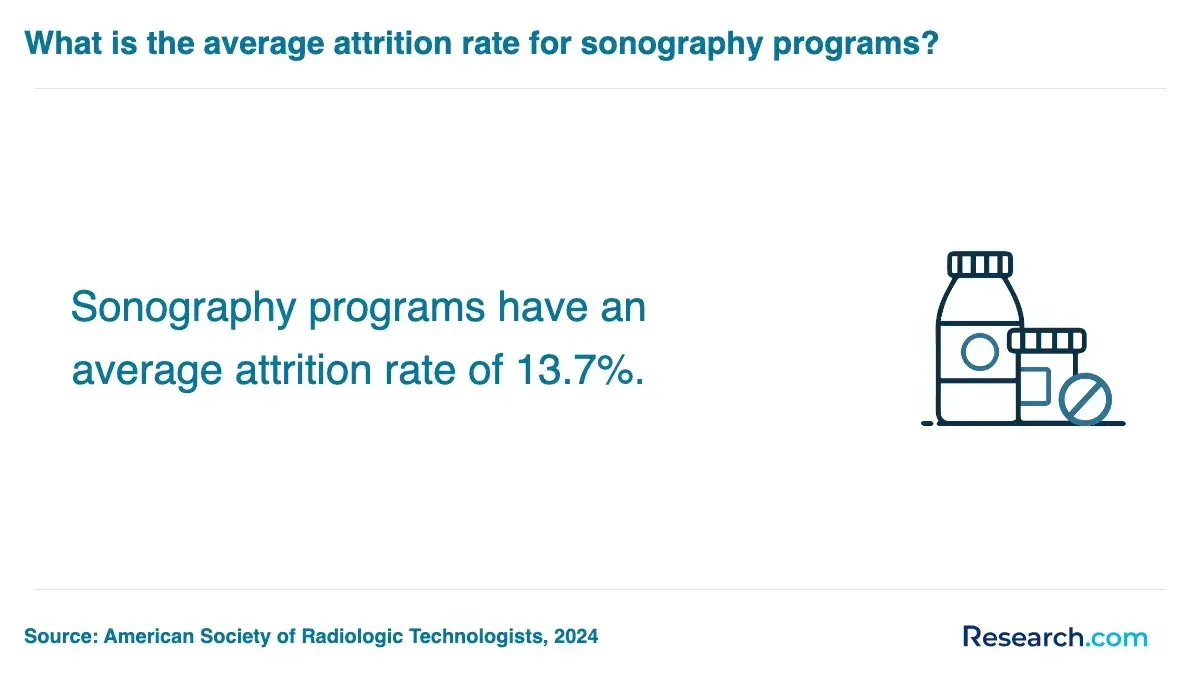
These clinical training components not only prepare students to excel on ARDMS certification exams but also build the practical skills and confidence needed for immediate success in healthcare environments. Clinical training in Maine can be rigorous, and not every student completes the journey. As shown below, sonography programs nationwide average a 13.7% attrition rate, underscoring the challenges students face and the persistence required to succeed in this demanding field.
How much does it cost to become an ultrasound technician in Maine?
Training to become an ultrasound technician in Maine typically runs between $7,000 and $20,000 per year in tuition for accredited programs. Total program costs can increase when factoring in expenses for textbooks, supplies, lab fees, clinical materials, and certification — often adding several thousand dollars more.
Nationally, sonography training ranges widely: certificate programs can cost $5,000 to $25,000, associate degrees $6,000 to $40,000, and bachelor’s degrees $30,000 to $48,000.
Given that Maine lacks in-state sonography bachelor’s programs, most students pursue associate degrees or advanced certificates, typically completing training in 12–24 months. Adding materials, certifications, and living costs, the overall investment in Maine likely totals $15,000 to $30,000, depending on program length and institution type. Financial aid, scholarships, and grants can help offset part of the financial burden for many eligible students.
While upfront costs can be significant, long-term earning potential offsets the investment. The chart below shows how salaries increase with higher education levels, making advanced degrees or even the best online sonography program a smart choice for those seeking greater career mobility and higher pay in Maine and beyond.
What is the average salary for ultrasound technicians in Maine?
The average annual salary for ultrasound technicians in Maine is approximately $95,148, which equates to about $45.74 per hour. This is slightly below the national average of around $49.19 per hour but remains a competitive wage within the healthcare field.
- Experience Level: Entry-level sonographers typically earn less, while those with years of experience or senior roles command higher salaries, reflecting their advanced skills and expertise.
- Education and Certifications: Advanced credentials, including specialty certifications, often lead to increased pay and greater professional recognition.
- Work Setting: Hospitals and outpatient centers generally offer higher wages compared to smaller clinics or physician offices, where budgets can be tighter.
- Geographic Location: Urban areas like Portland and Sanford offer higher salaries due to demand and cost of living, while rural areas may have lower pay but less competition.
- Specialization: Sonographers focusing on OB/GYN, cardiovascular, or abdominal imaging often earn premiums based on their specialized skills.
Salaries in Maine mirror the state’s healthcare demands and the availability of skilled professionals, rewarding those who invest in their education and experience.
Can expanding expertise to related imaging fields boost career prospects?
Diversifying your skills by integrating complementary diagnostic imaging disciplines can open additional career pathways and enhance professional resilience. By leveraging targeted training and cross-disciplinary certifications, ultrasound technicians can expand their scope of practice and access broader job opportunities in both clinical and mobile settings. For instance, exploring certification pathways and training opportunities can facilitate a smooth transition into roles that require a dual skill set. Consider reviewing how to become a radiology technician in Maine to understand how complementary expertise can further broaden your career prospects.
Can interdisciplinary training broaden career opportunities for ultrasound technicians in Maine?
Ultrasound technicians in Maine can enhance their professional versatility by integrating interdisciplinary training that bridges diagnostic imaging with broader healthcare practices. Collaborative learning with disciplines such as midwifery enriches technical expertise and patient interaction skills, potentially paving the way for leadership roles and expanded clinical responsibilities. For example, exploring pathways like how to become a nurse midwife in Maine can offer insight into complementary skill sets and cross-disciplinary certification options that lead to a more holistic approach in patient care.
What is the job outlook and demand for ultrasound technicians in Maine?
Employment for ultrasound technicians in Maine is projected to grow steadily, matching the national sonographer job growth rate of about 10% from 2018 to 2028. This encouraging outlook opens doors for aspiring ultrasound professionals ready to make an impact in healthcare across the state.
- Population Growth and Aging: Maine's aging population increases the need for diagnostic imaging like ultrasound, crucial for managing chronic health conditions and maintaining well-being.
- Healthcare Expansion: The rise of new clinics, hospitals, and outpatient centers, especially in larger cities, creates fresh employment opportunities for ultrasound technicians statewide.
- Technological Advancements: Cutting-edge ultrasound technologies enable technicians to specialize in fields such as cardiovascular and musculoskeletal imaging, broadening career paths and enhancing earning potential.
- Preventive Care Trends: Ultrasound plays a vital role in early disease detection and routine screenings, aligning with Maine’s focus on proactive healthcare.
- Regional Demand Variations: Job availability is strong in urban areas like Portland, while rural communities face greater shortages, highlighting the need for skilled sonographers across Maine.
Ultrasound technology offers a stable and growing career path in Maine, with opportunities to make a meaningful impact in healthcare. A local graduate shared that while demand can be unpredictable outside major cities, this creates valuable chances to fill critical gaps and strengthen her skills across specialties.
She noted that adapting to new equipment and building confidence were early challenges, but the supportive professional community and the ability to contribute directly to patient care made the career both rewarding and fulfilling.
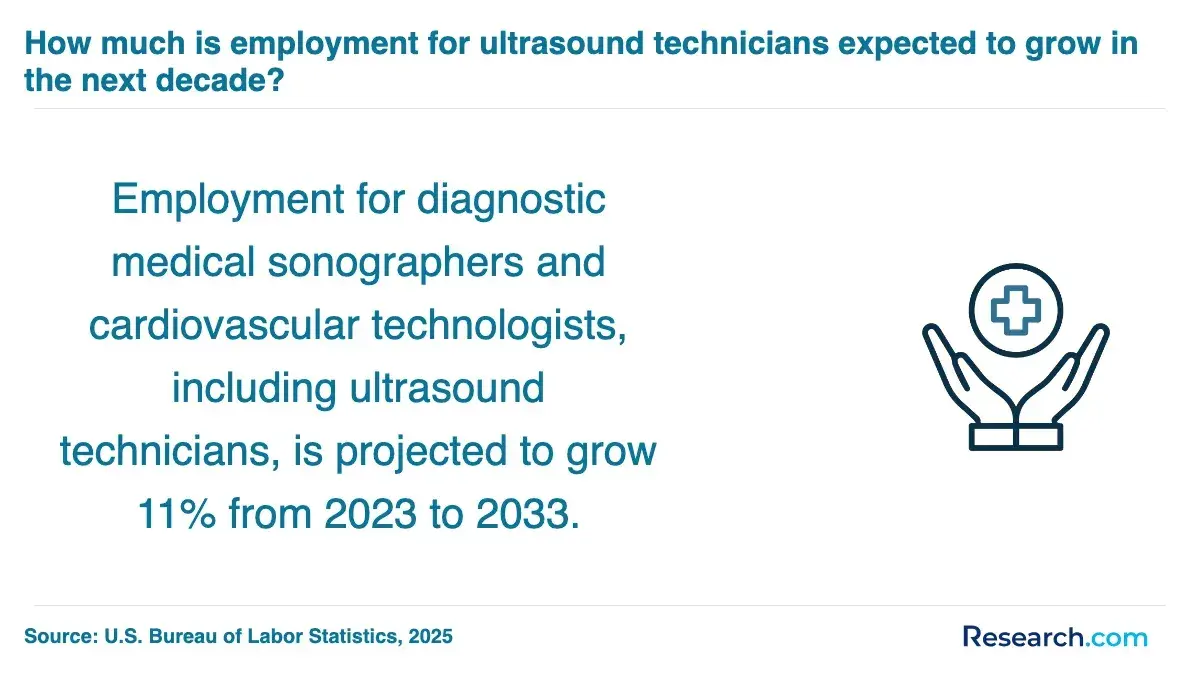
National projections further reinforce Maine’s steady demand, with employment for diagnostic medical sonographers expected to grow 11% between 2023 and 2033. The chart below highlights this outlook, showing why Maine ultrasound technicians can anticipate consistent opportunities across both urban centers and underserved rural areas.
What are the career advancement steps for ultrasound technicians in Maine?
Ultrasound technicians in Maine can elevate their careers by gaining specialized skills, pursuing advanced certifications, or stepping into leadership roles that enhance their professional influence. Each pathway offers valuable opportunities to increase both expertise and earning potential while positively impacting patient care.
- Specialization: Focusing on areas like OB/GYN, vascular, or cardiac sonography enables technicians to handle more complex cases and become indispensable team members within healthcare facilities.
- Advanced Certifications: Obtaining credentials from ARDMS, CCI, or ARRT demonstrates advanced proficiency, making technicians more competitive in the job market and opening doors to higher-level positions.
- Higher Education: Earning a bachelor’s or master’s degree expands career options into management, research, or education, and may be required for advanced healthcare roles in Maine.
- Leadership Roles: Experienced technicians often move into supervisory or administrative positions, guiding imaging teams and influencing clinical operations.
- Education and Training: Transitioning into roles as program instructors or clinical trainers allows seasoned sonographers to mentor new professionals entering the field.
- Research or Technology Development: Some pursue careers in research or medical imaging companies, contributing to innovations that advance ultrasound technology and clinical best practices.
For those seeking career advancement opportunities for ultrasound technicians in Maine, exploring the best ultrasound technician certification programs is an excellent starting point. Achieving these milestones not only boosts salary but also expands a technician’s professional impact across diverse healthcare settings.
What are the common challenges ultrasound technicians face in Maine?
Recognizing the challenges for ultrasound technicians in Maine helps aspiring professionals build resilience and confidence as they enter this rewarding field. Awareness of the realities of working conditions for sonographers in Maine promotes proactive strategies to thrive both personally and professionally.
- Physical Strain and Ergonomics: Repetitive scanning movements and long hours on their feet can cause musculoskeletal issues, especially in the shoulders, neck, and back.
- Emotional Stress: Sonographers often support patients facing sensitive medical situations, requiring compassion and emotional strength.
- Workload and Staffing Shortages: Balancing heavy caseloads with limited staff support often means long shifts and weekend work.
- Certification and Continuing Education Requirements: Maintaining credentials demands ongoing learning, which can be challenging alongside full-time schedules.
- Technology Adaptation: Rapid advances in imaging equipment require technicians to stay flexible and quickly learn new systems.
- Job Market Competition: Opportunities and career growth vary regionally, with more demand in urban centers than rural areas.
By understanding these challenges, technicians can better prepare and seek support to succeed. For those exploring pathways, an affordable associates degree in radiology online is a valuable starting point toward a strong career in Maine’s medical imaging field.
What do ultrasound technicians in Maine say about their career?
- Completing the ultrasound technician program at Kennebec Valley Community College was a pivotal moment in my life. The hands-on training combined with knowledgeable instructors gave me the confidence I needed to start my career at a local school. I've found such joy in supporting young students' health and development, knowing the impact I have on their futures. Maine’s small communities make the work feel deeply personal and rewarding, and I feel truly appreciated daily. Aster
- Starting my career as an ultrasound technician within a local academic institution in Maine offered me unique insights into the healthcare system and allowed me to engage with a diverse group of colleagues and patients. The professional growth opportunities here are remarkable; I've taken additional certifications that have expanded my skills and improved patient outcomes. Maine's close-knit environment encourages collaboration, which has been crucial in my ongoing development. The sense of stability here in the medical field is reassuring, especially in such uncertain times. Dante
- Attending the University of Southern Maine’s ultrasound program gave me not only clinical skills but also a deep appreciation for the special challenges our rural communities face. Working in healthcare here means adapting to the environment and making sure that even remote populations receive quality care. It’s fulfilling to contribute to community well-being and to see how accessible education and health services can uplift local families. This career has pushed me to grow personally and professionally in ways I hadn’t anticipated. Lara
Related Articles for Nearby States
- 2027 How to Become an Ultrasound Technician in New Hampshire
- 2027 How to Become an Ultrasound Technician in Massachusetts
- 2027 How to Become an Ultrasound Technician in Vermont
- 2027 How To Become an Ultrasound Technician in Connecticut
- 2027 How to Become an Ultrasound Technician in Rhode Island
- 2027 How to Become an Ultrasound Technician in New York
- 2027 How to Become an Ultrasound Technician in New Jersey
- 2027 How to Become an Ultrasound Technician in Pennsylvania
- 2027 How to Become an Ultrasound Technician in Delaware
- 2027 How to Become an Ultrasound Technician in Maryland
References:
- CHCP (College of Health Care Professions). Is Sonography a Good Career?
- Dreambound. How to Become a Medical Sonographer in Maine (2024).
- Eastern Maine Community College. Medical Radiography.
- Explore Medical Careers. Ultrasound Technician Schools in Maine (Sonography).
- HealthcareGraduate.com. Sonography Training Programs Maine - See Accredited Schools.
- Lento Law Firm. Defending Medical Sonography Students.
- MCHP (Maine College of Health Professions). Advanced Certificate in Diagnostic Medical Sonography.
- NHTI – Concord’s Community College. Diagnostic Medical Sonography.
- Southern Maine Community College. Cardiovascular Technology Associate Degree.
- UltrasoundSchoolsInfo.com. Find Accredited Ultrasound Technician Schools in Maine.
Other Things You Should Know About How to Become an Ultrasound Technician in Maine
To become an ultrasound technician in Maine in 2027, one needs to complete an accredited ultrasound technician program, typically at a community college or vocational school. This program usually takes 1-2 years and culminates in an associate degree. Additionally, obtaining certification through the American Registry for Diagnostic Medical Sonography (ARDMS) can enhance job prospects.
Ultrasound technicians in Maine have several pathways to transition into related healthcare roles by leveraging their strong foundation in diagnostic imaging and patient care. Many choose to advance their careers by obtaining additional certifications in specialized fields such as cardiovascular sonography or moving into roles like radiologic technologist or diagnostic medical sonographer.
With further education or training, they can also shift toward positions in healthcare management, education, or even nursing, broadening their scope within the healthcare industry. Maine’s healthcare landscape supports these transitions through accessible continuing education programs and professional development opportunities tailored for sonographers seeking growth.


