
2027 How to Become an Ultrasound Technician in Maryland

Co-Founder and Chief Data Scientist
Maryland projects around 190 annual job openings for radiologic and imaging technologists from 2022 to 2032, reflecting steady demand for healthcare professionals. With its strong medical infrastructure, home to Johns Hopkins Medicine and the University of Maryland Medical System, the state offers fertile ground for careers in diagnostic imaging, including ultrasound technology.
In this guide, I will explain how to become an ultrasound technician in Maryland, covering education, certification, and career pathways. I will also feature costs, training options, and resources available in the state to help them enter this rewarding healthcare field.
Key Things to Know About Becoming an Ultrasound Technician in Maryland
- In Maryland, you will need to complete an accredited ultrasound technician program, usually taking 1–2 years, to meet educational requirements.
- Certification through the American Registry for Diagnostic Medical Sonography (ARDMS) is strongly recommended, as most employers in the state prefer or require it.
- Ultrasound technicians in Maryland benefit from robust clinical training opportunities and earn median annual wages of $95,378, with strong career prospects in the state’s expanding healthcare sector.
- What education is required to become an ultrasound technician in Maryland?
- What specialties can ultrasound technicians choose from in Maryland?
- Which certification exams are required to become an ultrasound technician in Maryland?
- Is a license required to practice as an ultrasound technician in Maryland?
- What to expect during ultrasound technician clinical training in Maryland?
- How much does it cost to become an ultrasound technician in Maryland?
- What is the average salary for ultrasound technicians in Maryland?
- Which professional organizations and networking resources are available for ultrasound technicians in Maryland?
- What is the job outlook and demand for ultrasound technicians in Maryland?
- What are the career advancement steps for ultrasound technicians in Maryland?
- What continuing education opportunities are available for ultrasound technicians in Maryland?
- What are the common challenges ultrasound technicians face in Maryland?
What education is required to become an ultrasound technician in Maryland?
The path to becoming an ultrasound technician in Maryland demands a blend of formal education and hands-on experience through CAAHEP-accredited sonography programs in Maryland. This ensures a solid foundation in both theory and clinical practice.
- Minimum Education Requirement: Completion of a certificate, associate, or bachelor’s degree in diagnostic medical sonography from an accredited program is essential to enter the field.
- Prerequisite Coursework: Many programs mandate at least 60 college-level credits along with specific prerequisite courses prior to admission.
- High School Diploma or Equivalent: Applicants must hold a high school diploma or GED before enrolling in sonography programs.
- Patient Care Experience: Some programs require proof of at least 40 hours of volunteer or work experience in a patient care setting to demonstrate familiarity with clinical environments.
- Information Session Attendance: Attendance at a sonography information session is compulsory at certain institutions, fostering informed applicant decisions.
- Clinical Training/Internship: Accredited programs include supervised clinical rotations providing essential hands-on experience using ultrasound equipment, critical for skill development and employment prospects.
- Application Materials: Successful candidates must submit official transcripts, a resume, reference appraisals, and verification of patient care experience or employment.
- Minimum GPA: A GPA of at least 2.5 and a minimum grade of "C" in all prerequisite courses is often required, reflecting academic preparedness.
- Selection Process: Competitive admission may involve interviews and review of academic and professional references to ensure candidate readiness.
While Maryland does not mandate state licensure for sonographers, most employers prefer candidates with national certification. If you wonder can I become a radiologist with a radiography degree, understanding these requirements will also clarify pathways related to ultrasound technician education requirements in Maryland.
What specialties can ultrasound technicians choose from in Maryland?
Ultrasound technicians in Maryland have a variety of focused career paths to choose from, each addressing different medical needs and patient populations. These ultrasound technician specialties in Maryland reflect both the diversity of the diagnostic process and the evolving demands of healthcare. Expanding your expertise in specific areas can enhance your impact and career prospects within the state's medical community.
Below are some prominent diagnostic medical sonography concentrations that Maryland professionals often pursue:
- Abdominal Sonography: Centers on imaging organs in the abdominal cavity, such as the liver and kidneys, essential for detecting tumors and other abnormalities.
- Obstetric and Gynecologic Sonography (OB/GYN): Focuses on female reproductive imaging and fetal monitoring, a highly sought specialty in major Maryland healthcare centers.
- Cardiac Sonography (Echocardiography): Specializes in heart imaging to evaluate function and structure, with growing demand tied to cardiovascular health concerns.
- Vascular Sonography: Involves imaging blood vessels to diagnose clots and circulatory problems, playing a critical role in vascular disease management.
- Breast Sonography: A more advanced field aimed at breast tissue imaging to aid in cancer detection, with some Maryland colleges providing specialized coursework.
- Neurosonography and Pediatric Sonography: Focused on brain and nervous system imaging in infants and children, usually offered in larger medical centers requiring extra training.
Choosing among ultrasound technician specialties in Maryland means aligning your career with areas of high patient need and technological advancement. For those interested in prospects within this expanding field, it’s worth exploring the radiology career outlook to understand growth trends and specialty demands. Maryland offers expertise in these targeted diagnostic medical sonography concentrations. Maryland offers positions for sonographers to meet both current healthcare challenges and future innovations.
Which certification exams are required to become an ultrasound technician in Maryland?
Certification exams are vital for ultrasound technicians in Maryland to prove their expertise and ensure quality patient care. While Maryland does not require state licensure, most employers expect certification to confirm a sonographer’s competence and adherence to industry standards. These exams serve as benchmarks for knowledge, clinical skills, and professionalism in a competitive healthcare environment.
- Sonography Principles and Instrumentation (SPI) Exam: This exam evaluates foundational knowledge of ultrasound physics, instrumentation, and safety. It is administered by ARDMS and is mandatory before taking any specialized ARDMS exams. Eligibility generally requires completion of an accredited sonography program or equivalent experience.
- Registered Diagnostic Medical Sonographer (RDMS) Specialty Exams: After passing the SPI exam, candidates pursue RDMS certifications by passing specialty exams such as Abdomen, Breast, or Obstetrics & Gynecology. These tests assess advanced clinical knowledge and skills. Maryland employers widely recognize the RDMS credential, even though it is not mandated by state law.
- Registered Vascular Technologist (RVT) Exam: Focused on vascular sonography, the RVT exam covers vascular anatomy, hemodynamics, and protocols. It shares similar eligibility requirements with the RDMS pathway. This credential is often preferred for vascular-focused positions in Maryland healthcare settings.
- Registered Cardiac Sonographer (RCS) and Registered Diagnostic Cardiac Sonographer (RDCS) Exams: Cardiac specialists can obtain certification through the CCI’s RCS exam or ARDMS’s RDCS exam, validating their skills in echocardiography. Both require recognized program completion and clinical experience. These credentials are highly preferred for cardiac sonography roles across Maryland.
- Registered Vascular Specialist (RVS) Exam: Offered by Cardiovascular Credentialing International (CCI), this exam serves as an alternative vascular certification to the ARDMS RVT. Eligibility includes relevant education and experience, with some Maryland employers accepting this credential for vascular sonographers.
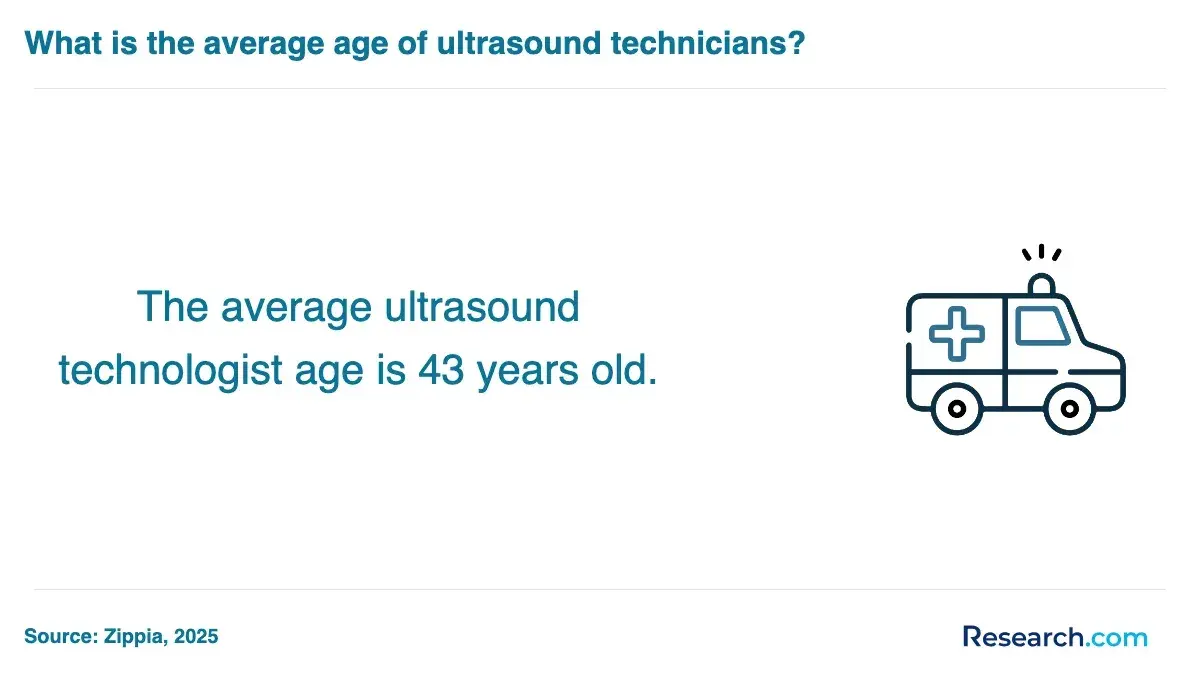
Successfully passing these certification exams enhances credibility, broadens employment opportunities, and aligns sonographers with Maryland’s evolving healthcare expectations. Holding nationally recognized credentials reflects a commitment to the high standards that employers across the state increasingly demand. To add more context about who is entering and advancing in the field, the chart below from Zippia shows the age breakdown of ultrasound technicians.
Is a license required to practice as an ultrasound technician in Maryland?
Maryland does not require a state license to practice as an ultrasound technician, which directly impacts how professionals enter the field. Rather than navigating state-level mandates, sonographers must focus on meeting employer standards and obtaining credentials through nationally recognized organizations. This approach places certification at the center of professional qualification, ensuring consistency across the workforce.
Unlike some healthcare professions, there is no dedicated licensing board or agency in Maryland that governs diagnostic medical sonographers. Instead, the state defers entirely to national certifying bodies such as ARDMS, ARRT, and CCI. Because no provisional or temporary licenses exist, compliance with national requirements becomes the sole pathway for entry into the profession.
To build credibility and secure employment, candidates typically complete an accredited sonography program and pass both the Sonography Principles and Instrumentation (SPI) exam and at least one specialty exam.
An ultrasound technician from Maryland explained that while completing his local program was manageable, preparing for the ARDMS exams—especially the SPI—was the most demanding part of his journey. He emphasized that without a state license to worry about, certification was the true benchmark for professional readiness. His experience illustrates how, in Maryland, national certification is the key to establishing trust and advancing in the field.
What to expect during ultrasound technician clinical training in Maryland?
Clinical training forms the cornerstone of preparing ultrasound technicians in Maryland, blending practical skill development with professional readiness. This hands-on phase is designed to immerse students in real healthcare settings, equipping them with the critical abilities needed for certification and workplace success.
- Hands-On Patient Care: Students engage directly with patients, learning to collect medical histories, prepare patients for ultrasound exams, and ensure their comfort and safety throughout procedures.
- Supervised Use of Imaging Equipment: Under experienced sonographers’ guidance, trainees develop proficiency in operating ultrasound machines and performing accurate diagnostic imaging.
- Specialty Rotations: Clinical placements expose students to diverse fields such as abdominal, OB/GYN, vascular, and cardiac sonography, broadening their technical skills and understanding of patient needs.
- Mentorship from Licensed Professionals: Licensed sonographers provide expert feedback and mentorship, fostering professional conduct and problem-solving abilities in clinical environments.
- Program-Specific Clinical Hours: Accredited Maryland programs require completion of extensive practicum hours, with each clinical course building on the last to fulfill accreditation and certification standards.
- Competency Evaluations: Regular assessments through direct observation, checklists, and exams ensure students meet the skill and knowledge benchmarks essential for safe practice.
- Integration of Key Skills: Training emphasizes cognitive understanding, psychomotor skills for imaging, and affective skills such as communication and ethical behavior.
- Exposure to Healthcare Settings: Students gain experience across hospitals, imaging centers, and clinics, adapting to diverse patient populations and professional settings.
- Safety and Professionalism: Strict adherence to safety protocols, ethical practices, and effective communication is ingrained throughout clinical education.
- Certification Eligibility: Completing clinical training is mandatory for graduation and for eligibility to sit for national certification exams, which Maryland employers highly value despite no state licensure mandate.
These clinical experiences cultivate the critical judgment, technical proficiency, and confidence necessary for certification success. They also prepare students to contribute effectively as skilled professionals within Maryland’s dynamic healthcare environment.
How much does it cost to become an ultrasound technician in Maryland?
The average total cost to become an ultrasound technician in Maryland ranges from $13,000 to $53,000, depending on the type of program and institution. Expenses include not only tuition but also mandatory fees and other essentials, making financial planning critical.
Understanding these cost components ensures you are fully prepared for the investment required to start your career in diagnostic medical sonography.
- Tuition and Fees: Costs vary based on program choice, associate’s, bachelor’s, or certificate. Public community colleges in Maryland tend to be more affordable, while private institutions and universities charge significantly more.
- Clinical Training Expenses: Expect to pay several hundred to a few thousand dollars for lab fees, scrubs, medical supplies, liability insurance, and transportation to clinical sites.
- Certification and Exam Fees: The ARDMS exam is approximately $225 per specialty, with additional charges possible for retakes or eligibility verification.
- Licensing or State Fees: Maryland does not require state licensure for ultrasound technicians, so no state licensing fees apply.
- Books and Materials: Textbooks, study guides, and necessary software can range between $500 and $1,500 throughout the program.
- Living Expenses: Students should budget for housing, meals, and transportation. Costs vary, especially between urban centers like Baltimore and smaller towns.
Overall, the expense depends heavily on program type and location, but options such as scholarships, federal financial aid, and employer tuition reimbursement can make pursuing this rewarding career more manageable.
What is the average salary for ultrasound technicians in Maryland?
The average annual salary for ultrasound technicians in Maryland is $95,378, with typical weekly earnings ranging from $1,184 (25th percentile) to $2,371 (75th percentile). Salaries can be as high as $2,902 and as low as $691, reflecting significant variation across locations and roles.
Geographic differences also play a role. Gwynn Oak pays 11.7% above the state average, while Severn offers 14.5% higher than the $95,378 average, making them top-paying areas. Notably, there is a gender pay gap, with male technicians earning an average of $175,542 compared to $83,974 for their female counterparts.
Salaries in Maryland illustrate how local healthcare needs and employer competition influence compensation, balancing below-national-average pay with solid opportunities across the state. Understanding these factors can help aspirants navigate the market wisely.
Which professional organizations and networking resources are available for ultrasound technicians in Maryland?
Ultrasound technicians in Maryland can leverage several professional organizations and networking opportunities that extend well beyond traditional clinical roles. Membership in local or national associations offers access to industry conferences, mentorship programs, and specialized webinars that keep practitioners abreast of emerging diagnostic technologies and evolving regulatory standards. Furthermore, these networks often facilitate discussions on best practices in patient care, workplace innovation, and career diversification. Engaging with such professional communities underscores a commitment to excellence and can serve as a valuable resource for long-term career development, much like exploring how to become a nurse midwife in Maryland.
What is the job outlook and demand for ultrasound technicians in Maryland?
Employment for ultrasound technicians in Maryland is projected to reach 3,290 employees by 2032, reflecting a 7% growth rate between 2022 and 2032. This steady expansion highlights ongoing demand for skilled sonographers across the state’s healthcare system.
- Population Growth and Aging: Maryland’s growing and aging population increases the need for frequent imaging, as older adults typically require more diagnostic procedures.
- Healthcare Expansion: The surge in new clinics, hospitals, and outpatient centers, especially in urban hubs, fuels demand for skilled sonographers to support expanded patient care.
- Technological Advancements: Emerging ultrasound technologies open doors for technicians trained in specialized imaging methods, enhancing career opportunities.
- Preventive Care Trends: Growing emphasis on early disease detection makes ultrasound a key tool, elevating sonographers’ roles in proactive healthcare.
- Regional Demand Variations: Urban areas like Baltimore offer more positions, while rural regions, though fewer in number, present meaningful chances to serve underserved communities.
These combined forces create a robust environment for ultrasound technicians in Maryland, ensuring both stability and growth across diverse healthcare settings. When I spoke with an ultrasound technician who graduated from a local Maryland program, she reflected on how the consistent demand shaped her early career. “After finishing school, I quickly noticed that hospitals and outpatient centers were actively recruiting,” she shared.
Yet, she also described adapting to the rapidly evolving tech landscape as a challenge that kept her work engaging. “I had to stay updated with new ultrasound machines and techniques, which felt demanding but rewarding,” she said. Her experience highlights the practical reality behind growth statistics: steady openings paired with ongoing learning, making it a dynamic and fulfilling ultrasound technician career path in Maryland.
What are the career advancement steps for ultrasound technicians in Maryland?
Ultrasound technicians in Maryland have various pathways for career advancement through specialization, certifications, and leadership opportunities. Pursuing targeted expertise or higher education enables professionals to enhance their skills and secure more influential roles. These steps reflect a commitment to growth that benefits both the technician and the healthcare community.
- Specialization: Focusing on areas like OB/GYN, vascular, or cardiac sonography requires specific training and certification, often leading to higher demand and better salaries in outpatient care centers.
- Advanced Certifications: Credentials from organizations such as ARDMS, CCI, or ARRT validate advanced skills and open doors to specialized positions, with certified sonographers earning up to $102,564 annually in cities like College Park.
- Higher Education: Earning bachelor’s or master’s degrees expands career options into research, administrative, or supervisory roles, making advanced education a critical factor in long‑term growth and leadership.
- Leadership Roles: Experienced technicians can transition into supervisory or administrative positions within healthcare, requiring added education or certification and offering greater influence on operations and policies.
- Education and Training: Becoming instructors or clinical trainers allows technicians to shape future professionals, reflecting strong demand in Maryland for educational roles and contributing to the profession’s sustainability.
- Research or Technology Development: Advanced sonographers may engage in clinical research or collaborate on ultrasound innovations, typically requiring extensive experience and higher education to impact the future of diagnostic imaging.
Career advancement for ultrasound technicians in Maryland not only increases earning potential, with average salaries ranging from $95,270 in Baltimore to $102,440 in Rockville, but also expands their professional impact.
For those seeking further education, exploring easy radiology programs can be a practical step in advancing their sonography specialization opportunities in Maryland. To better understand the educational backgrounds that shape these career paths, the chart below from Zippia highlights the most common college majors among ultrasound technicians.
What continuing education opportunities are available for ultrasound technicians in Maryland?
Ongoing professional development is crucial for ultrasound technicians to stay current with evolving diagnostic technologies and clinical best practices. In Maryland, clinicians can pursue accredited workshops, online courses, and industry seminars that offer advanced techniques and updated standards. Engaging in targeted training helps refine technical skills and prepares professionals for complementary roles in healthcare. For additional insights into related certification pathways, explore how to become a radiology technician in Maryland.
What are the common challenges ultrasound technicians face in Maryland?
Recognizing the common challenges for ultrasound technicians in Maryland is vital to building a sustainable career in this demanding field. Awareness allows technicians to develop coping strategies and adapt to the realities they will face daily. This insight helps balance the dedication required with the profession’s physical and emotional strains.
- Physical Strain and Ergonomics: Repetitive scanning motions and long hours on their feet cause musculoskeletal issues that are prevalent among sonographers in Maryland.
- Emotional Stress: Technicians often support patients in sensitive or traumatic medical situations, especially in obstetric and oncology settings, adding emotional weight to their daily tasks.
- Workload and Staffing Shortages: Heavy caseloads combined with limited staff increase pressure, requiring flexibility and resilience to maintain quality care.
- Certification and Continuing Education Requirements: Balancing ongoing CME credits with full work schedules is necessary to keep credentials current and maintain professional standards.
- Technology Adaptation: Rapid advancements in ultrasound equipment and digital systems demand continuous learning, which can challenge even experienced technicians.
- Job Market Competition: Regional differences in demand mean some areas are more competitive, especially for new graduates or those without specialized credentials.
Embracing these challenges with preparation enhances not only personal well-being but also career longevity. For more information on training, exploring the best rated schools for ultrasound technician can provide valuable guidance.
What do ultrasound technicians in Maryland say about their careers?
- Completing my ultrasound technician program at Cecil College was a game-changer for my career. The hands-on training and knowledgeable instructors prepared me exceptionally well for the practical demands of the profession. Starting my career in a local school allowed me to apply my skills directly to help students with medical imaging needs, and it's deeply fulfilling to contribute to their health and educational experience. Maryland’s rich healthcare environment offers stability and excellent benefits, which gave me confidence in my career path. I truly feel like I’m making a difference every day. - Yza
- After graduating from the University of Maryland Eastern Shore’s ultrasound program, I began working at a nearby academic institution, and it was a perfect fit. The job stability and professional development opportunities here are impressive, especially with Maryland’s strong commitment to healthcare education. I’ve been able to grow my skills in diverse settings, which has boosted my confidence and expertise. Being part of this community keeps me motivated to push forward and continue advancing my career. - Anna
- Training at Baltimore City Community College opened doors I never imagined. Maryland’s unique cultural diversity and access to cutting-edge medical technologies give ultrasound technicians like me a chance to serve varied populations and face exciting challenges daily. Working in a local school environment, I’ve witnessed firsthand how my role positively impacts young people’s lives, which is incredibly rewarding. Pursuing this career has helped me grow personally and professionally, and I look forward to continued advancement in this fulfilling field. - Heidi
Related Articles for Nearby States
- 2027 How to Become an Ultrasound Technician in Virginia
- 2027 How to Become an Ultrasound Technician in West Virginia
- 2027 How to Become an Ultrasound Technician in Pennsylvania
- 2027 How to Become an Ultrasound Technician in Delaware
- 2027 How to Become an Ultrasound Technician in New Jersey
- 2027 How to Become an Ultrasound Technician in New York
- 2027 How to Become an Ultrasound Technician in Ohio
- 2027 How to Become an Ultrasound Technician in North Carolina
- 2027 How to Become an Ultrasound Technician in Kentucky
- 2027 How To Become an Ultrasound Technician in Connecticut
References:
- Data USA (n.d.). Diagnostic Medical Sonographers. Retrieved from https://datausa.io/profile/soc/diagnostic-medical-sonographers?redirect=true
- O*NET OnLine (n.d.). Maryland Employment Trends 29-2034.00 - Radiologic Technologists and Technicians. Retrieved from https://www.onetonline.org/link/localtrends/29-2034.00?st=MD
- Zippia (2025). Ultrasound Technologist Demographics and Statistics in the US. Retrieved from https://www.zippia.com/ultrasound-technologist-jobs/demographics/
- Zippia (2025). Ultrasound Technologist Education Requirements. Retrieved from https://www.zippia.com/ultrasound-technologist-jobs/education/
- ZipRecruiter (2025). Ultrasound Technician Salary in Maryland. Retrieved from https://www.ziprecruiter.com/Salaries/Ultrasound-Technician-Salary--in-Maryland
Other Things You Should Know About Being an Ultrasound Technician in Maryland
To become an ultrasound technician in Maryland in 2027, you need a high school diploma or GED. Enroll in an accredited program, typically requiring some prerequisites like courses in math and biology. A clinical internship is also required to gain hands-on experience.
Becoming an ultrasound technician in Maryland through an online program is feasible, provided the program is accredited and meets the state's certification requirements. Many online programs offer comprehensive coursework combined with in-person clinical training, which is essential for gaining hands-on experience. Maryland requires certification from recognized bodies like the ARDMS, which typically mandates completion of an accredited educational program and clinical hours.
Therefore, while the theoretical components can be completed online, prospective ultrasound technicians must ensure their chosen program includes clinical placements in Maryland or nearby locations to fulfill state and certification prerequisites.
Ultrasound technicians in Maryland can find opportunities to work as freelance or traveling professionals, though these roles may require additional certifications and flexibility. Freelance ultrasound technicians often contract with multiple medical facilities, providing services on an as-needed basis, which can offer a variety of work environments and schedules.
Traveling ultrasound technician positions are available through staffing agencies that place qualified sonographers in different locations across the state or even nationwide, appealing to those seeking adventure or diverse clinical experiences. Maryland’s demand for skilled ultrasound technicians, combined with its proximity to major metropolitan areas, makes it a viable state for both freelance and travel opportunities, provided individuals meet licensing and credentialing requirements.
In 2027, the average salary for an ultrasound technician in Maryland is expected to range from $65,000 to $85,000 annually, depending on factors such as education, experience, and location within the state.


