
2027 How to Start a Career in Cybersecurity With No Experience

Co-Founder and Chief Data Scientist
Starting a cybersecurity career can feel confusing because employers ask for experience, certifications, technical skills, and sometimes a degree—even for “entry-level” jobs. The path is possible, but it works best when you treat cybersecurity as a skills-based career: learn the fundamentals, practice in labs, document what you can do, and apply first to roles that give you real security exposure.
This guide explains how to enter cybersecurity in 2026, including what cybersecurity professionals do, which skills matter most, whether a degree is necessary, which certifications are useful for beginners, how to build a portfolio, and how to compare education options without overpaying. It is designed for students, career changers, IT support workers, veterans, and self-taught learners who want a practical route into the field.
Quick Answer: How do you start a cybersecurity career?
The fastest realistic path into cybersecurity is to build core IT knowledge, learn networking and security fundamentals, earn one beginner-friendly certification, complete hands-on labs or projects, and apply for feeder roles such as IT support, SOC analyst, junior security analyst, or network support. A degree can help, but it is not the only route. Employers often look for proof that you can investigate alerts, understand networks, explain risk, and solve problems under pressure.
- Best first step: Learn networking, operating systems, basic scripting, and security concepts before jumping into advanced hacking tools.
- Best beginner certification: CompTIA Security+ is commonly used to show foundational cybersecurity knowledge.
- Best portfolio evidence: Documented labs, home network projects, CTF writeups, GitHub work, and security reports.
- Best entry route with no experience: Start in IT support, help desk, networking, or a junior SOC role, then move deeper into security.
- Career outlook: Information security analysts earn a median annual wage of $120,360, and employment is projected to grow 33% from 2023 to 2033.
Key Things You Should Know About a Career in Cybersecurity
- Demand is strong, but competition still exists at the entry level: The U.S. has a shortage of 359,000 skilled cybersecurity workers, and information security analyst roles are projected to have about 19,500 openings each year. However, beginners still need proof of hands-on ability.
- Cybersecurity matters because breaches are expensive: A data breach costs businesses an average of $4.35 million, while healthcare organizations face an average cost of $10.1 million per breach.
- Specialization improves your long-term direction: Cloud security, penetration testing, governance, compliance, incident response, and digital forensics each require different skills and lead to different job paths.
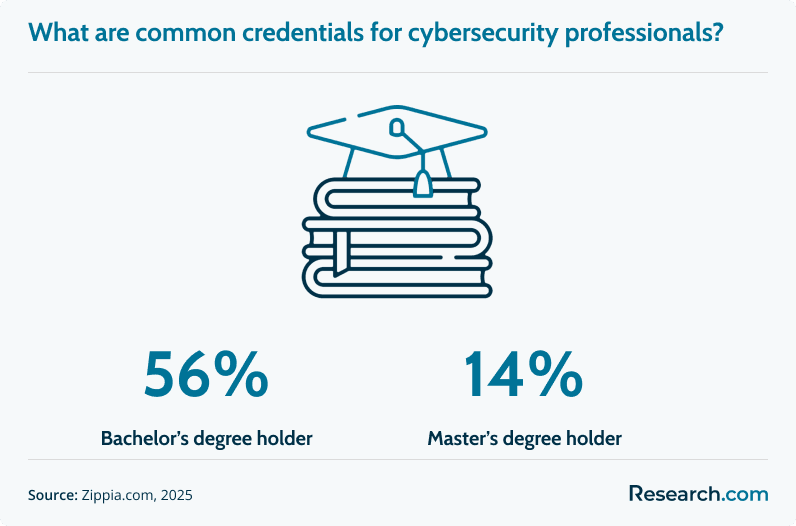
- A degree is helpful but not always mandatory: Only 14% of cybersecurity professionals hold a computer science degree, and many enter through information technology, bootcamps, certifications, military experience, or self-directed projects.
- Your portfolio can make or break your first job search: A strong beginner portfolio should include lab notes, security writeups, open-source work, GitHub projects, or Capture The Flag challenge documentation.
- What does a cybersecurity professional do?
- Is cybersecurity a good career in 2026?
- What are the key areas of specialization in cybersecurity?
- How do you build cybersecurity-specific knowledge and skills?
- How can you start a cybersecurity career with no experience?
- Do you need a degree to work in cybersecurity?
- How can you evaluate the cost-benefit of a cybersecurity degree?
- What are the salary and career advancement opportunities in cybersecurity?
- What are the best cybersecurity certifications for beginners?
- How can an advanced degree enhance my cybersecurity career?
- Is an accelerated bachelor's degree in computer science beneficial for a cybersecurity career?
- Can added expertise in software engineering enhance my cybersecurity career?
- How does cybersecurity address the unique challenges in healthcare?
- What are the top entry-level cybersecurity jobs?
- How do you build a strong cybersecurity portfolio?
- Can mentorship and professional networking accelerate my cybersecurity career?
- What are the best resources to learn cybersecurity?
- How can interdisciplinary studies drive cybersecurity innovation?
What does a cybersecurity professional do?
A cybersecurity professional protects an organization’s systems, networks, applications, devices, and data from unauthorized access, misuse, disruption, and theft. The work can be defensive, investigative, strategic, or compliance-focused depending on the role.
In practical terms, cybersecurity teams monitor threats, reduce vulnerabilities, respond to incidents, enforce access controls, test systems, train users, and help leaders understand technology risk. Some professionals spend most of their day reviewing alerts in a security operations center. Others write security policies, test cloud configurations, investigate suspicious activity, or advise software teams on secure coding.
Common cybersecurity responsibilities
| Responsibility | What it means in practice | Why it matters |
| Threat prevention | Configure firewalls, endpoint protection, encryption, access controls, and monitoring tools. | Reduces the chance that attackers can enter or move through systems. |
| Risk assessment | Find weak points in networks, applications, vendors, processes, and user behavior. | Helps organizations prioritize fixes before a breach occurs. |
| Incident response | Investigate alerts, contain attacks, preserve evidence, and restore systems. | Limits damage when suspicious activity or a confirmed compromise occurs. |
| Compliance and training | Support security policies, audits, employee awareness, and regulatory requirements. | Keeps organizations aligned with legal, contractual, and industry obligations. |
Cybersecurity differs from data science because it focuses on protecting assets and reducing risk, while data science focuses on analyzing data to generate insights. If you are comparing study options, review the difference between cybersecurity and data science degree programs before choosing a path.
Is cybersecurity a good career in 2026?
Cybersecurity remains a strong career choice in 2026 for people who enjoy technology, investigation, continuous learning, and high-stakes problem-solving. The field offers strong pay potential and long-term demand, but it is not an easy shortcut into a high salary. Beginners need patience, hands-on practice, and often a willingness to start in adjacent IT roles.
Information security analysts earn a median salary of $120,360 per year, and employment is projected to grow 33% from 2023 to 2033. The U.S. also faces a shortage of 359,000 skilled cybersecurity workers, with about 19,500 information security analyst openings projected each year over the next decade.
When cybersecurity is a good fit
- You like solving unclear problems: Security work often starts with incomplete information and requires careful investigation.
- You can keep learning: Tools, attacker techniques, cloud platforms, and compliance expectations change constantly.
- You communicate well: Security professionals must explain risk to managers, developers, employees, and customers.
- You can handle pressure: Incidents, outages, and urgent vulnerabilities may require fast decisions.
When another tech path may be better
- You want predictable tasks every day: Cybersecurity work can shift quickly when alerts, audits, or vulnerabilities appear.
- You dislike documentation: Reports, policies, incident notes, and evidence handling are major parts of many roles.
- You want to avoid ongoing study: Certifications, new tools, and updated threat knowledge are part of the career.
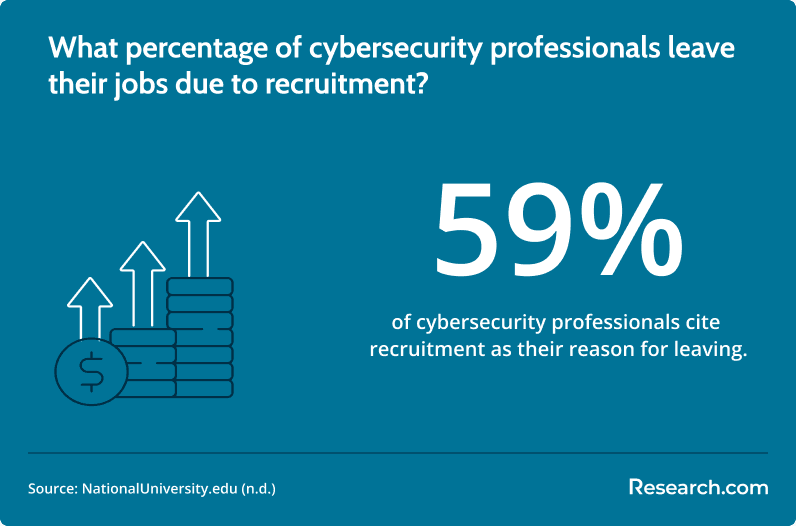
The financial pressure behind cybersecurity demand is significant. A single data breach costs businesses an average of $4.35 million, and in healthcare, the average cost rises to $10.1 million. If you want a structured route into the field, an accelerated online cyber security degree may help you build relevant knowledge more efficiently.
What are the key areas of specialization in cybersecurity?
Cybersecurity is not one job. It is a collection of specialties that range from deeply technical offensive security to policy, compliance, and risk management. Choosing a specialization early can help you select better courses, labs, certifications, and entry-level roles.
| Specialization | Best for learners who enjoy | Typical focus |
| Security architecture | Designing systems and thinking across networks, software, hardware, and cloud platforms. | Building secure environments before problems occur. |
| Risk assessment and penetration testing | Finding weaknesses, testing defenses, and thinking like an attacker. | Vulnerability discovery, ethical hacking, and security validation. |
| Incident response | Investigating alerts, working under pressure, and coordinating recovery. | Containment, evidence review, root cause analysis, and remediation. |
| Governance and compliance | Policy, audits, regulation, documentation, and business risk. | Security frameworks, internal controls, and legal or contractual requirements. |
| Cloud security | Modern infrastructure, identity management, automation, and platform configuration. | Protecting data and applications in AWS, Azure, Google Cloud, and hybrid systems. |
| Forensics and cyber investigations | Evidence analysis, cybercrime patterns, and post-incident reconstruction. | Digital evidence, breach investigation, and investigative reporting. |
Specialization can make your job search more focused. For example, a learner interested in cloud security should prioritize networking, identity and access management, scripting, and cloud platform fundamentals. Someone interested in compliance should build knowledge of policy, audits, documentation, and risk frameworks. If you are comparing graduate options, an affordable program such as one listed among the most affordable online cybersecurity degrees may support deeper specialization without unnecessary cost.
How do you build cybersecurity-specific knowledge and skills?
Cybersecurity skills build in layers. Beginners should not start by memorizing tools without understanding how networks, operating systems, users, and applications work. A strong foundation makes advanced topics such as penetration testing, threat hunting, malware analysis, and cloud security easier to learn.
Cybersecurity also overlaps with several technical disciplines. It is one of many engineering-related career paths where analytical thinking, systems knowledge, and problem-solving matter as much as specific tools.
Technical skills to build first
- Networking: Learn IP addressing, DNS, routing, ports, firewalls, VPNs, and common protocols.
- Operating systems: Understand Windows, Linux, file permissions, logs, processes, and command-line tools.
- Security fundamentals: Study authentication, encryption, access control, vulnerability management, incident response, and risk.
- Scripting and programming: Use Python, Java, C++, or shell scripting to automate tasks, parse logs, and understand how software behaves.
- Security tools: Practice with Wireshark, Metasploit, vulnerability scanners, log analysis tools, and endpoint monitoring platforms.
- Cloud security: Learn the basics of securing AWS, Azure, or Google Cloud environments, especially identity, permissions, storage, and logging.
Soft skills employers notice
- Clear communication: You must explain technical risk in language nontechnical stakeholders can understand.
- Attention to detail: Small anomalies in logs, permissions, or network traffic can reveal larger problems.
- Structured problem-solving: Strong candidates can show how they investigated an issue, tested assumptions, and reached a conclusion.
- Professional judgment: Security work involves sensitive information, responsible disclosure, and ethical decision-making.
How can you start a cybersecurity career with no experience?
You can start a cybersecurity career without direct cybersecurity experience, but you need to create evidence that you can do the work. That usually means building technical foundations, practicing in labs, documenting projects, earning an entry-level credential, and applying to roles that give you access to real systems.
If you are choosing an academic path, understand how cybersecurity overlaps with broader computing fields. Comparing a data science degree and a computer science degree can help you decide whether you want to focus on security, software, analytics, or a broader technical foundation.
A practical no-experience roadmap
- Learn core IT first: Start with networking, operating systems, hardware, basic cloud concepts, and troubleshooting.
- Study cybersecurity fundamentals: Learn common attacks, defensive controls, identity management, encryption, logging, and incident response basics.
- Practice in labs: Use beginner-friendly environments to investigate simulated attacks, configure firewalls, analyze packets, and write short security reports.
- Build a small portfolio: Document your home lab, CTF writeups, vulnerability notes, scripts, and lessons learned.
- Earn one relevant certification: A beginner certification can help your resume pass early screening, especially if you do not have a degree.
- Apply for feeder roles: Look at IT support, junior network roles, SOC analyst positions, security internships, apprenticeships, and help desk jobs with security responsibilities.
- Network with practitioners: Join local groups, online communities, conferences, and LinkedIn conversations where security teams discuss real problems.
How to strengthen your resume before your first security job
- List relevant coursework and training: Include networking, Linux, programming, cybersecurity, cloud, and risk management topics.
- Describe projects like work experience: Explain what problem you solved, what tools you used, what you found, and what you would recommend.
- Show open-source or GitHub activity: Contributions to open-source security projects on GitHub can demonstrate practical initiative.
- Translate past experience: Customer support, military service, auditing, compliance, operations, and software work can all provide transferable skills.
Do you need a degree to work in cybersecurity?
You do not always need a degree to work in cybersecurity, but a degree can help you build a deeper foundation, qualify for some employer requirements, and compete for roles that prefer formal education. The best choice depends on your background, budget, timeline, and target job.
Many cybersecurity professionals study computer science, information technology, cybersecurity, computer information systems, or criminal justice. If you are deciding between programs, compare the difference between cyber security and computer science degrees: cybersecurity programs usually emphasize defense, risk, threats, and compliance, while computer science programs focus more broadly on programming, algorithms, systems, and software development.
Common degree backgrounds in cybersecurity
| Degree background | Share listed | How it can support cybersecurity work |
| Computer Science | 14% | Builds programming, algorithms, software, and systems knowledge useful for technical security roles. |
| Computer Information Systems | 12% | Focuses on business technology systems, databases, IT management, and organizational security needs. |
| Information Technology | 10% | Develops practical knowledge of hardware, networks, systems administration, and infrastructure support. |
| Criminal Justice | 9% | Can be useful for cybercrime investigations, digital evidence, compliance, and law enforcement-related work. |
| Other Majors | 55% | Shows that many professionals enter from varied academic backgrounds and build security expertise through experience, certifications, and self-study. |
Degree vs. alternative path: which makes sense?
| Path | Best for | Trade-offs |
| Cybersecurity degree | Students who want a structured curriculum and a credential aligned with security roles. | Can be more expensive and may still require labs, internships, and certifications. |
| Computer science degree | Learners who want broad technical depth and flexibility across software, systems, and security. | May include less direct cybersecurity coursework unless you choose electives or projects carefully. |
| Certifications and self-study | Career changers who need a lower-cost, faster way to demonstrate job-ready skills. | Requires discipline and may not satisfy employers that require a degree. |
| Bootcamp or short program | Learners who want guided practice and career support in a compressed format. | Quality varies, and completion alone is rarely enough without a portfolio. |
If you already have a bachelor’s degree and want leadership or specialized roles, review what you can do with an advanced credential in What Can I Do with a Master's Degree in Cyber Security.
How can you evaluate the cost-benefit of a cybersecurity degree?
To evaluate whether a cybersecurity degree is worth the cost, compare the total price of the program with the skills, credentials, support services, and career outcomes it provides. Do not look only at tuition. Fees, books, equipment, certification exam costs, time away from work, and transfer credit policies can change the true cost substantially.
For a closer look at tuition considerations, see How much does a cyber security degree cost?.
Questions to ask before enrolling
- Is the school properly accredited? Accreditation affects credit transfer, graduate school eligibility, and employer recognition.
- Does the curriculum include hands-on labs? Cybersecurity is difficult to learn through theory alone.
- Are certifications built into the program? Some programs align coursework with exams such as Security+, Network+, cloud certifications, or ethical hacking credentials.
- What support is available for internships? Real-world experience can matter as much as coursework.
- Can you transfer previous credits? Transfer credits can shorten completion time and reduce cost.
- Does the program match your target role? A policy-heavy program may not be ideal if you want penetration testing, and a technical program may not be ideal if your goal is compliance leadership.
| Cost-benefit factor | What to check | Why it affects ROI |
| Total cost | Tuition, fees, books, equipment, software, and certification costs. | The sticker price may not reflect the full financial commitment. |
| Program length | Full-time, part-time, accelerated, and transfer-credit options. | Time to completion affects how quickly you can pursue higher-paying roles. |
| Hands-on learning | Labs, simulations, capstones, cloud practice, and incident response exercises. | Employers want evidence that you can apply concepts, not just define them. |
| Career support | Internship connections, resume reviews, interview prep, and employer partnerships. | Strong support can improve your transition from school to employment. |
| Curriculum fit | Courses aligned with your specialization, such as cloud, forensics, governance, or testing. | A degree is more valuable when it prepares you for your intended role. |
What are the salary and career advancement opportunities in cybersecurity?
Cybersecurity offers strong advancement potential because organizations need professionals who can protect systems, explain risk, manage incidents, and lead security programs. The median annual wage for information security analysts is $120,360, but actual pay depends on role, location, industry, experience, certifications, and specialization.
Career growth often follows a progression from support or analyst roles into specialized, senior, or leadership positions. Professionals who build expertise in threat intelligence, risk management, cloud security, secure software development, compliance, or incident response may qualify for broader responsibilities over time.
Common cybersecurity advancement path
| Career stage | Example roles | What helps you move forward |
| Entry level | IT support, junior SOC analyst, cybersecurity specialist, network support. | Networking fundamentals, ticketing experience, labs, Security+, and clear documentation. |
| Early career | Security analyst, incident responder, vulnerability analyst, IT auditor. | Real incident experience, scripting, reporting, tool proficiency, and specialization. |
| Mid-career | Security engineer, penetration tester, cloud security analyst, governance analyst. | Advanced certifications, project ownership, architecture knowledge, and measurable results. |
| Senior or leadership | Security architect, security manager, risk leader, senior incident response lead. | Strategy, budgeting, cross-functional leadership, compliance knowledge, and executive communication. |
Because cybersecurity overlaps with broader technology careers, it can be helpful to compare compensation and roles across a computer science jobs list and salary guide when planning your long-term direction.
What are the best cybersecurity certifications for beginners?
Beginner certifications can help validate your knowledge when you do not yet have professional cybersecurity experience. They are most useful when paired with projects, labs, internships, or related IT work. A certification alone rarely proves job readiness, but it can help your resume get noticed.
Beginner cybersecurity certifications to consider
| Certification | What it emphasizes | Best use case |
| CompTIA Security+ | Threats, vulnerabilities, risk, architecture, operations, and basic security concepts. | A common first cybersecurity credential for entry-level roles. Learn more through the CompTIA certification page. |
| CompTIA Network+ | Network implementation, troubleshooting, infrastructure, and network security basics. | Useful if your networking foundation is weak or you are coming from outside IT. |
| Certified Ethical Hacker (CEH) | Ethical hacking concepts and vulnerability identification. | Best for learners interested in penetration testing, but it should be supported by hands-on practice. |
| Cloud certifications | Cloud architecture, identity, storage, networking, and platform-specific security. | Helpful for learners targeting AWS, Microsoft, or Google cloud security environments. |
| ISACA CSX Cybersecurity Fundamentals | Core cybersecurity concepts, terminology, and security principles. | Useful for learners who want a broad introduction to security practices. |
If you want structured preparation, compare online cybersecurity courses with certificates and choose options that include labs, practice exams, and clear alignment with your target role.
How can an advanced degree enhance my cybersecurity career?
An advanced degree can help experienced professionals move toward security leadership, research, architecture, policy, risk management, or specialized technical roles. It may also be valuable for people who want to teach, manage security programs, or work in highly regulated industries where formal credentials carry weight.
A graduate program is usually most useful when it adds something you cannot easily get through certifications alone: advanced theory, research opportunities, leadership development, interdisciplinary coursework, or access to specialized labs. For professionals working near healthcare, genomics, biomedical data, or scientific computing, programs such as online bioinformatics master's programs may offer domain knowledge that complements security expertise in data-sensitive environments.
When an advanced degree may be worth considering
- You already have cybersecurity or IT experience and want to move into leadership.
- Your target employers prefer or require graduate education.
- You want advanced study in policy, risk, cloud security, forensics, or security architecture.
- You are seeking roles in research, academia, government, healthcare, or regulated industries.
Is an accelerated bachelor's degree in computer science beneficial for a cybersecurity career?
An accelerated bachelor’s degree in computer science can be useful for cybersecurity if you want a strong technical foundation and need to complete your degree faster than a traditional timeline. Computer science coursework can strengthen your understanding of programming, algorithms, operating systems, software design, and computing architecture—all of which support technical security roles.
This path may be especially helpful if you want to work in application security, malware analysis, secure software engineering, cloud security, or security automation. If speed and flexibility matter, compare options for an accelerated bachelor's degree in computer science before committing to a cybersecurity-specific program.
Can added expertise in software engineering enhance my cybersecurity career?
Software engineering knowledge can make you a stronger cybersecurity candidate because many security problems come from how applications are built, tested, deployed, and maintained. If you understand code, development workflows, APIs, databases, and software architecture, you can better identify vulnerabilities and communicate with development teams.
Programming skills also support automation, secure code review, vulnerability research, threat detection, and custom security tooling. If you want a lower-cost way to build this foundation, explore affordable online bachelor's degrees in software engineering and compare how their curricula support cybersecurity goals.
How does cybersecurity address the unique challenges in healthcare?
Healthcare cybersecurity is challenging because organizations must protect sensitive patient data, medical devices, clinical systems, legacy software, and regulated records while keeping care delivery available. A security control that causes excessive downtime can affect patient care, so healthcare security must balance protection, compliance, usability, and operational continuity.
Healthcare environments often require strong access controls, encryption, risk assessments, vendor oversight, employee training, incident response planning, and attention to HIPAA-related obligations. Professionals who want to work at the intersection of healthcare data and security may benefit from interdisciplinary programs such as accelerated online master's in health informatics programs.
What are the top entry-level cybersecurity jobs?
Entry-level cybersecurity jobs vary widely. Some are true security roles, while others are feeder roles that build the experience security teams expect. If you have no prior IT background, you may need to start with support, networking, or systems work before moving into a dedicated cybersecurity position.
| Entry-level role | Typical responsibilities | Good preparation |
| Cybersecurity specialist | Monitor systems, enforce basic security controls, manage firewalls, and support security operations. | Security fundamentals, networking, endpoint tools, and clear documentation. |
| Cybercrime analyst | Review cyber incidents, analyze patterns, support investigations, and help recover compromised data. | Forensics basics, log analysis, investigative thinking, and report writing. |
| Incident responder | Help contain security events, analyze alerts, support remediation, and improve defenses after incidents. | Hands-on labs, SIEM exposure, networking, scripting, and incident documentation. |
| IT auditor | Review systems, security policies, access controls, and compliance practices. | Risk management, documentation, controls testing, and regulatory awareness. |
| Cryptographer | Work with encryption methods and secure data protection techniques. | Strong mathematics, programming, and computer science fundamentals. |
Many professionals reach cybersecurity through IT support, network administration, systems administration, software development, or compliance roles. Those jobs can provide the real-world context that purely academic learning often lacks.
How do you build a strong cybersecurity portfolio?
A cybersecurity portfolio should prove that you can apply what you know. It does not need to be flashy. It needs to be clear, ethical, well documented, and relevant to the jobs you want.
What to include in a beginner cybersecurity portfolio
- Home lab documentation: Show how you built a virtual network, configured security tools, collected logs, or tested defenses.
- CTF and lab writeups: Explain your process, commands, tools, findings, and lessons learned from Capture The Flag challenges or training labs.
- Security reports: Write short reports that summarize vulnerabilities, risk level, evidence, and remediation steps.
- GitHub projects: Include scripts, detection rules, documentation, or contributions to security-related repositories.
- Open-source contributions: Demonstrate collaboration, version control, and practical technical skill.
- Volunteer or freelance work: If appropriate and authorized, document security awareness training, basic assessments, or process improvements for small organizations.
How to present portfolio work professionally
- Explain the problem: Start each project with what you were trying to learn or solve.
- Show the method: Include tools, commands, diagrams, screenshots, or logs where appropriate.
- Protect sensitive information: Never publish private data, real credentials, internal systems, or unauthorized findings.
- Connect projects to job skills: Make it easy for employers to see how the project relates to monitoring, incident response, vulnerability management, or cloud security.
A portfolio can help offset limited work experience, especially when paired with formal training or graduate study. If you want a deeper academic path, compare online master's programs in cybersecurity.
Can mentorship and professional networking accelerate my cybersecurity career?
Mentorship and networking can shorten your learning curve because experienced professionals can help you avoid weak training options, choose better projects, understand hiring expectations, and prepare for interviews. Cybersecurity is also a trust-based field, so professional relationships can help employers see your judgment, ethics, and commitment.
Good places to build your cybersecurity network
- Local cybersecurity meetups and professional associations.
- University career events, alumni networks, and employer panels.
- Online communities focused on blue team, red team, cloud security, governance, or digital forensics.
- Conferences, workshops, CTF events, and security training groups.
- LinkedIn conversations with analysts, engineers, recruiters, and security leaders.
Networking is not only about asking for jobs. Better questions include: “What skills do junior analysts lack most often?” “Which labs helped you learn incident response?” “What would you expect in a beginner portfolio?” For learners combining cybersecurity with scientific or health data expertise, a bioinformatics master may also create networking opportunities in specialized data-intensive fields.
What are the best resources to learn cybersecurity?
The best cybersecurity learning plan combines structured courses, hands-on labs, documentation practice, and exposure to real industry discussions. Avoid relying only on videos. You need to practice, make mistakes, investigate problems, and write about what you found.
Useful learning categories
- Online courses: Platforms such as Coursera, edX, and Cybrary can help beginners learn networking, ethical hacking, security operations, and threat detection.
- Interactive labs: Hack The Box and TryHackMe provide hands-on practice in controlled environments.
- Certification preparation: Study plans for CompTIA Security+, Network+, CISSP, and cloud credentials can give structure to your learning.
- GitHub repositories: Reviewing security tools and documentation can help you understand real workflows and codebases.
- Home labs: Virtual machines, packet captures, log analysis, and simulated attacks can create portfolio-ready evidence.
- Industry communities: Forums, LinkedIn groups, conferences, and professional associations help you follow emerging practices such as AI-driven security automation and zero-trust architecture.
How can interdisciplinary studies drive cybersecurity innovation?
Cybersecurity problems are rarely only technical. They often involve law, human behavior, finance, healthcare operations, software design, public policy, and organizational leadership. Interdisciplinary study can help security professionals understand how systems are actually used and why controls succeed or fail.
For example, healthcare administration knowledge can help a cybersecurity professional understand patient workflows, regulatory expectations, staffing constraints, and operational risk. If your goal is to work in healthcare technology or compliance-heavy environments, an online health administration degree may provide useful context alongside technical security training.
Common mistakes to avoid when entering cybersecurity
- Skipping networking fundamentals: Many beginners jump into hacking tools before they understand how systems communicate.
- Choosing a program without checking accreditation: Accreditation can affect transfer credits, graduate study, and employer confidence.
- Focusing only on tuition: Fees, certification exams, equipment, lost work time, and program length all affect cost.
- Assuming an online program meets every career requirement: Always verify curriculum, lab access, internship support, and employer recognition.
- Collecting certifications without projects: Certifications are stronger when supported by labs, reports, and real examples of your work.
- Ignoring feeder roles: Help desk, IT support, networking, and systems roles can be practical stepping stones into security.
- Relying only on rankings: Rankings can be useful, but curriculum fit, affordability, support services, and hands-on work matter more.
- Assuming salary outcomes are guaranteed: Pay depends on your role, location, experience, employer, specialization, and performance.
References:
- Bureau of Labor Statistics. (n.d.). Information security analysts. U.S. Department of Labor.
- Zippia. (n.d.). Cyber security specialist jobs.
- ZipRecruiter. (n.d.). Entry-level cyber security salary.
- Statista. (n.d.). Cyber crime & security market overview.
- TechTarget. (n.d.). Cybersecurity definition.
- Indeed. (n.d.). How to get a cyber security job with no experience.
- The Forage. (n.d.). How to get into cybersecurity with no experience.
- National University. (n.d.). How to start a career in cybersecurity.
- National University. (n.d.). Cybersecurity statistics.
- Loyola Marymount University. (2024, May 16). Cyber security resume examples and tips to get you hired.
Key Insights
- Cybersecurity is a strong 2026 career option, but entry-level candidates need hands-on proof of skill—not just interest in the field.
- Information security analysts earn a median annual wage of $120,360, and employment is projected to grow 33% from 2023 to 2033.
- A degree can help, but it is not the only path. Certifications, IT experience, labs, and a strong portfolio can also support entry into the field.
- Beginners should master networking, operating systems, security fundamentals, scripting, and documentation before pursuing advanced specializations.
- The best first jobs may be feeder roles such as IT support, network support, junior SOC analyst, or cybersecurity specialist.
- Specialization matters. Cloud security, incident response, governance, penetration testing, and forensics each require different preparation.
- Before paying for a degree or bootcamp, check accreditation, total cost, hands-on lab access, transfer credits, certification alignment, and career support.
- Your portfolio should show how you think: what you investigated, what evidence you found, what tools you used, and what you recommended.
Other Things You Should Know About Being in Cybersecurity
A degree is not strictly necessary to start a cybersecurity career in 2027. Many employers accept certifications like CompTIA Security+ or Certified Information Systems Security Professional (CISSP) as valid credentials, allowing individuals to demonstrate expertise and skills without a formal degree.
To begin a cybersecurity career in 2027 without prior experience, consider obtaining foundational certifications like CompTIA Security+ or taking an online course on cybersecurity basics. These provide essential knowledge and can make you stand out to potential employers.


