
2027 Pediatric Nurse Practitioner Salary by State

Co-Founder and Chief Data Scientist
As a career and education expert, I know that understanding the salary landscape for pediatric nurse practitioners is a crucial step in your professional journey. However, gathering accurate and specific salary data is more complex than a simple search might suggest. Key challenges arise because federal agencies like the Bureau of Labor Statistics do not disaggregate data for specific NP specialties, lumping all nurse practitioners together.
Additionally, a wide array of factors beyond geography, such as years of experience, practice setting (hospital vs. private clinic), and full versus reduced practice authority by state, can cause significant pay variations. Therefore, one must look at multiple data points and consider these nuances.
What are the benefits of becoming a pediatric nurse practitioner?
- Career Advancement: The PNP role offers increased autonomy and leadership, allowing for career advancement into specialized areas, research, or academia.
- Earning Potential: PNPs earn significantly more than RNs, with a national average salary of around $113,387 per year and top earners making over $150,000.
- Job Satisfaction: PNPs consistently report high job satisfaction due to their ability to make a direct, positive impact on a child's health and form long-term relationships with families.
What can I expect from an online pediatric nurse practitioner program?
- Core courses: Builds diagnostic expertise through advanced pathophysiology, pharmacology, and health assessment.
- Pediatric curriculum: Focuses on child development and managing pediatric conditions across age groups.
- Clinical practice: Applies classroom learning through supervised rotations in pediatric care settings.
- On-campus intensives: Delivers hands-on training and assessments not feasible online.
- DNP focus: Develops leadership and systems-thinking through a real-world capstone project.
Where do pediatric nurse practitioners work?
- Physician offices and clinics: PNPs deliver primary care, exams, and chronic illness management.
- Hospitals: Work in acute settings like PICU, NICU, and ER.
- School health centers: Provide care, screenings, and health education for students.
- Specialty clinics: Focus on pediatric subspecialties like oncology or cardiology.
- Home care: Manage complex conditions in the child’s home environment.
How much can a pediatric nurse practitioner make?
- Analyst-level roles: A new graduate or entry-level PNP can expect to start with an average annual salary of around $93,899, which includes bonuses and other compensation.
- Management-level roles: Mid-career PNPs with a few years of experience typically earn an average annual salary of about $113,387, reflecting their increased skills and responsibilities.
- Senior & specialized roles: The highest-paid PNPs can command salaries well over $150,000, with some top earners making as much as $186,000 or more, particularly in high-demand and high-cost-of-living areas.
- What are the pediatric nurse practitioner salaries by state for 2027? Salaries by State
- What does a pediatric nurse practitioner do? PNP Roles
- What education is required to become a pediatric nurse practitioner? Education
- What certifications and licenses do pediatric nurse practitioners need? Certifications
- What skills are essential for success as a pediatric nurse practitioner? Core Skills
- How do scope of practice laws vary for pediatric nurse practitioners by state? How do scope of practice laws vary for pediatric nurse practitioners by state?
- What are the main responsibilities of pediatric nurse practitioners in primary care? Responsibilities
- What is the job outlook for pediatric nurse practitioners? Job Outlook
- What are the challenges pediatric nurse practitioners commonly face? What are the challenges pediatric nurse practitioners commonly face?
- What career advancement opportunities exist for pediatric nurse practitioners? Career Advancement
What are the pediatric nurse practitioner salaries by state for 2027?
Pediatric nurse practitioner (PNP) salaries vary significantly across the United States, with compensation influenced by regional demand, cost of living, and healthcare infrastructure. Analyzing salaries across all 50 states plus the District of Columbia highlights where PNPs earn the highest wages and how these figures compare to the national average. Understanding nursing degree levels can provide context for these salaries, as advanced degrees often correlate with higher earning potential in specialized nursing roles.
Top 10 States
Pediatric nurse practitioner salaries in the United States show notable variation, with some regions offering significantly higher pay than the national average of $130,143. The following top ten states and the District of Columbia represent the highest salary levels, highlighting where practitioners can expect the strongest earnings potential in 2025.
In 2025, pediatric nurse practitioners in Washington earned an average annual salary of $153,083, which is 17.6% higher than the national average of $130,143. The District of Columbia closely followed at $152,735, or 17.4% above the national average, while New York and Massachusetts reported salaries of $147,871 and $147,612, exceeding the national benchmark by 13.6% and 13.4%, respectively.
Alaska also ranked high at $145,561, or 11.8% above average, with Vermont at $143,710 (10.4% above), North Dakota at $143,011 (9.9% above), and Oregon at $142,904 (9.8% above). Colorado reported an annual salary of $142,124, or 9.2% above the national figure, while Hawaii rounded out the top ten at $140,427, or 7.9% higher than average.
Overall, the data, shown in the graph below, indicates that the highest-paying states and the District of Columbia consistently exceed the national mean by substantial margins, with Washington and D.C. offering the strongest premiums for pediatric nurse practitioners. These results suggest that both coastal and northern states dominate the upper tier of salaries, reflecting regional demand and cost of living factors.
Bottom 10 States
In 2025, pediatric nurse practitioners in Tennessee earned an annual salary of $122,674, which is 5.7% below the national average of $130,143, while Alabama followed closely at $122,508, or 5.9% lower. Kansas reported $120,543, or 7.4% under the average, with Michigan and Kentucky at $117,805 and $117,391, representing decreases of 9.5% and 9.8%, respectively.
Louisiana salaries averaged $115,579, falling 11.2% short of the national figure, while Georgia stood at $114,127, or 12.3% below. Arkansas ranked even lower at $111,765, which is 14.1% under the average. West Virginia recorded $104,637, nearly 19.6% lower, and Florida posted the lowest pay among all states at $101,005, or 22.4% below the national benchmark.
Overall, the bottom ten states reveal a consistent trend of lower compensation across the South and parts of the Midwest, with Florida and West Virginia showing the steepest gaps compared to national earnings. This highlights a pronounced regional divide in pediatric nurse practitioner salaries, underscoring how geography and local healthcare economics shape pay levels.
Mid-range States
Relative to the national average ($130,143), slightly above average (+0–6%) states pay $130,863–$137,635: +5–6% (Nevada, New Jersey), +4–5% (Wisconsin, Pennsylvania), +3–4% (Delaware, South Dakota), +2–3% (Virginia, California), +1–2% (Minnesota, Rhode Island), and +0–1% (New Hampshire, Maryland, New Mexico, Illinois, Maine).
Slightly below average (−0–2%) states pay $129,919–$128,007 (Wyoming, Nebraska, Indiana, Connecticut, Ohio, Mississippi); moderately below (−2–4%) pay $127,172–$125,423 (Idaho, Iowa, Missouri, Arizona, Texas, South Carolina); and notably below (−4–6%) pay $124,799–$122,834 (Oklahoma, Montana, Utah, North Carolina).
Together, these mid-range states illustrate a narrow salary band clustered around the national average, reinforcing that only the very top and bottom states drive the widest pay disparities for pediatric nurse practitioners.
What does a pediatric nurse practitioner do?
Pediatric nurse practitioners (PNPs) are advanced practice registered nurses who provide comprehensive healthcare to children from infancy through young adulthood. Their duties encompass a wide range of responsibilities, from preventive care to the management of acute and chronic illnesses. An increasing number of PNPs have graduated from online pediatric nurse practitioner programs offered by accredited institutions.
- Conduct health assessments: They perform comprehensive physical exams and take detailed health histories to assess a child's overall well-being.
- Diagnose conditions: PNPs evaluate symptoms and use diagnostic tests to identify a wide range of pediatric illnesses, injuries, and health conditions.
- Develop and implement treatment plans: They create and manage care plans, which may include prescribing medication, ordering therapies, and coordinating with specialists.
- Prescribe medications: A core responsibility is prescribing appropriate medications, including controlled substances in many states, based on a child's specific needs.
- Order and interpret diagnostic tests: They order and review lab work, X-rays, and other diagnostic tests to aid in diagnosis and treatment.
- Provide health education: PNPs educate both children and their families on topics such as nutrition, disease prevention, safety, and proper medication administration.
- Administer immunizations: They follow recommended vaccination schedules and administer vaccines to protect children from preventable diseases.
- Monitor growth and development: They track a child’s physical, cognitive, and social development, identifying potential delays or issues.
- Manage chronic conditions: PNPs help children and families manage chronic health issues such as asthma, diabetes, and allergies.
- Advocate for patients: They serve as a vital link between the patient and other healthcare professionals, advocating for their needs within the healthcare system.
- Perform well-child visits: This includes routine checkups that focus on health promotion and ensuring children are meeting key developmental milestones.
- Address behavioral and mental health concerns: They screen for and provide initial management of common behavioral and mental health issues in children.
PNPs are crucial to the healthcare system, providing essential and often autonomous care that ensures the healthy development of children. Their patient-centered approach and focus on family education make them invaluable partners in a child's health journey.
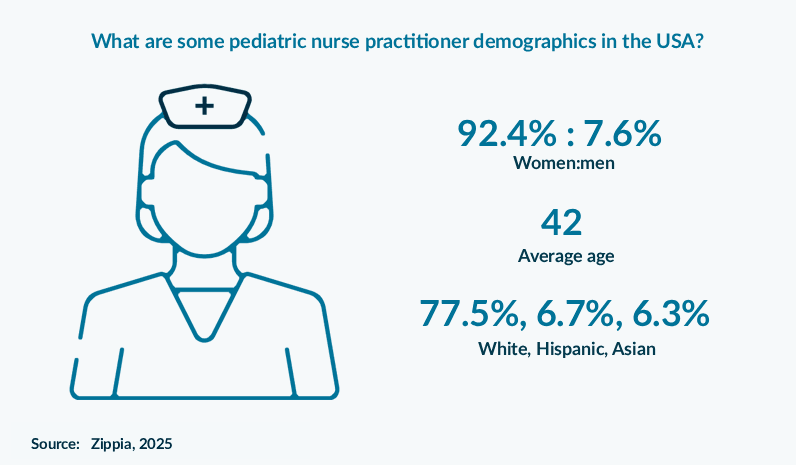
According to Zippia (2025), pediatric nurse practitioner demographics in the USA show a workforce that is overwhelmingly female, with 92.4% women and just 7.6% men. The average age of these professionals is 42. In terms of racial demographics, the profession is predominantly white at 77.5%, followed by Hispanic at 6.7%, Asian at 6.3%, and Black professionals at 4.7%. The data, shown in the graphic below, indicates that while the field is vital for children's health, it currently lacks significant gender and racial diversity.
What education is required to become a pediatric nurse practitioner?
Becoming a pediatric nurse practitioner requires a significant commitment to education, building upon a foundation of nursing knowledge and clinical experience. The educational journey is structured in a clear, multi-step progression that culminates in advanced practice licensure. Just how long does it take to become a nurse practitioner?
- Bachelor of Science in Nursing (BSN): The first step is to earn a BSN degree from an accredited institution. This four-year program provides the foundational knowledge and skills required for professional nursing practice.
- Registered Nurse (RN) licensure: After graduating with a BSN, candidates must pass the National Council Licensure Examination (NCLEX-RN) to become a licensed registered nurse.
- Clinical experience: Many graduate programs require at least one to two years of clinical experience as an RN, often in a pediatric or related setting, before a student can begin their advanced practice program.
- Graduate education: The final step is to complete a Master of Science in Nursing (MSN) or a Doctor of Nursing Practice (DNP) degree with a specialization in pediatrics. These programs typically last between two and four years, depending on the degree and enrollment status.
The combination of foundational nursing education, hands-on experience, and graduate-level training prepares PNPs to deliver comprehensive and specialized care to pediatric patients.
Based on the data from the American Association of Nurse Practitioners (2025) shown in the graph below, a clear trend emerges in the distribution of nurse practitioners across different certification areas. The vast majority of nurse practitioners, 68.7%, are certified in family care, which is the most common primary care specialty. Adult-gerontology primary care and psychiatric/mental health are the next largest certification areas, with 7.9% and 7.1% respectively. While adult care accounts for 7.0%, the adult-gerontology acute care specialty follows closely behind at 6.1%.
Pediatric care, both primary and acute, represents a much smaller portion of the workforce, with pediatric primary care accounting for 2.9% and pediatric acute care at just 0.7%. Other smaller specialties include women’s health (2.0%), gerontology (0.9%), and neonatal (0.9%), indicating a concentration of the nurse practitioner workforce in generalist and adult-focused roles.
This distribution highlights a significant focus on general and adult care within the nurse practitioner profession, while pediatric and other specialized populations are served by a smaller, dedicated group of practitioners.
What certifications and licenses do pediatric nurse practitioners need?
To practice legally as a pediatric nurse practitioner, an individual must obtain a combination of state-specific licenses and national certifications. These credentials confirm that the PNP meets the professional and clinical standards necessary to provide safe and effective care. Understanding OR nurse salary can also help prospective PNPs evaluate how specialization, certification, and experience impact overall compensation in advanced nursing roles.
- RN license: They must hold an active, unencumbered registered nurse license in the state where they plan to practice.
- APRN license: After earning a graduate degree and national certification, a PNP must apply for an advanced practice registered nurse (APRN) license from their state’s board of nursing.
- PNCB certification: The Pediatric Nursing Certification Board (PNCB) offers two main certifications: the Primary Care Certified Pediatric Nurse Practitioner (CPNP-PC) and the Acute Care Certified Pediatric Nurse Practitioner (CPNP-AC). These are the most common certifications for PNPs.
- Other certifications: Depending on their specific role and work environment, PNPs may also pursue additional certifications in areas like basic life support (BLS) and pediatric advanced life support (PALS).
National certification validates a PNP’s specialized knowledge, while state licensure provides the legal authority to practice. If you do not desire to work with children, consider how to become an adult gerontology nurse practitioner instead.
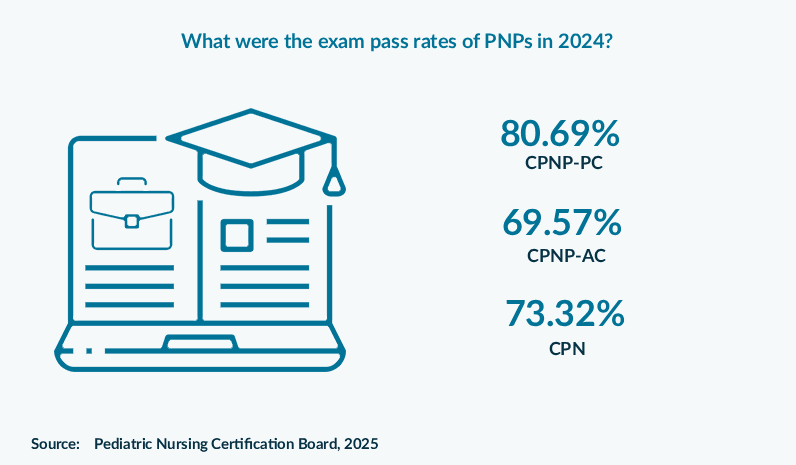
Based on 2024 data from the Pediatric Nursing Certification Board (2025), distinct trends can be seen in the pass rates and active certification numbers for various pediatric nursing roles. The largest group is the certified pediatric nurse (CPN), with 3,660 candidates testing, and a first-time pass rate of 73.32%, leading to a total of 32,670 active certificants. Among the advanced practice roles, the certified pediatric nurse practitioner—primary care (CPNP-PC) saw 1,318 candidates test, achieving a first-time pass rate of 80.69%, resulting in 21,993 active certificants.
In contrast, the more specialized advanced practice roles had fewer candidates but varied pass rates. The certified pediatric nurse practitioner—acute care (CPNP-AC) saw 691 candidates with a 69.57% first-time pass rate, resulting in 5,372 active certificants. The smallest group by a considerable margin was the pediatric mental health specialist (PMHS), with only 119 candidates testing and the highest first-time pass rate at 85.37%, contributing to 932 active certificants.
The data, shown in the graphic below, reveals that while general pediatric nursing has the largest workforce, advanced practice roles demonstrate higher first-time pass rates, suggesting these professionals are well-prepared for their specialized certification exams.
What skills are essential for success as a pediatric nurse practitioner?
A successful pediatric nurse practitioner needs a blend of medical knowledge, strong interpersonal skills, and emotional resilience. These skills are critical for navigating the unique challenges of caring for children and their families. Professionals exploring career options may also consider OT specialties, as understanding different healthcare specialties can help inform skill development and potential career pathways.
- Clinical expertise: They need in-depth knowledge of pediatric pathophysiology, pharmacology, and physical assessment to accurately diagnose and manage childhood conditions.
- Communication skills: PNPs must communicate effectively with both children and adults, using age-appropriate language to explain conditions and treatments to young patients and providing clear, compassionate guidance to their parents or guardians.
- Empathy and compassion: A genuine sense of empathy is crucial for understanding the fears and anxieties of a sick child and for providing emotional support to their families during difficult times.
- Critical thinking: They must be able to think critically and make quick, sound judgments, especially in fast-paced or emergency settings, where a child's condition can change rapidly.
- Patience and flexibility: Working with children requires immense patience and the ability to adapt to a child's unpredictable mood or behavior.
- Problem-solving: They must be skilled at identifying the root causes of health issues, especially when patients are too young to articulate their symptoms.
- Advocacy: PNPs often serve as advocates for their patients, ensuring they receive the best possible care and resources within the healthcare system.
These skills enable PNPs to build trust, provide holistic care, and make a profound impact on the lives of their young patients.
How do scope of practice laws vary for pediatric nurse practitioners by state?
The legal scope of practice for pediatric nurse practitioners can vary dramatically from state to state, a factor that significantly impacts their autonomy and daily work. These laws generally fall into one of three categories, which determine the level of physician oversight required. Students should also be aware of what math classes are required for nursing, as these foundational courses support critical thinking and calculation skills needed across nursing specialties, including pediatrics.
- Full practice authority: In these states, PNPs can practice independently without physician supervision. They are authorized to diagnose and treat patients, order and interpret diagnostic tests, and prescribe medications (including controlled substances) on their own.
- Reduced practice authority: States with reduced practice authority require a collaborative agreement with a physician for at least one element of the PNP’s practice. This may include a formal collaboration agreement for prescribing medications or a requirement for a physician to periodically review patient charts.
- Restricted practice authority: In these states, PNPs are required to practice under direct physician supervision for most, if not all, clinical tasks. This is the most restrictive model and can limit a PNP’s ability to act as a primary care provider.
The varying regulations across states create a complex environment for PNPs, influencing everything from their prescriptive authority to their ability to open an independent practice. These laws are often the subject of ongoing legislative efforts to expand the role of nurse practitioners to help address healthcare access issues.
What are the main responsibilities of pediatric nurse practitioners in primary care?
In a primary care setting, pediatric nurse practitioners play a central role in promoting long-term health and wellness for children and their families. Their focus is on prevention, education, and the management of common health issues to ensure optimal development.
- Conducting well-child exams: They perform routine checkups from infancy to adolescence, monitoring growth, developmental milestones, and overall health.
- Administering immunizations: PNPs follow and administer routine vaccinations, educating parents on their importance and addressing any concerns.
- Screening and assessment: They conduct developmental, behavioral, and vision/hearing screenings to identify potential issues early on.
- Diagnosing and treating acute illnesses: They are the first point of contact for common pediatric ailments like ear infections, strep throat, and viral illnesses.
- Managing chronic conditions: They provide ongoing care for chronic conditions such as asthma, eczema, and allergies, helping families create effective management plans.
- Providing parental education: A significant part of their role is teaching parents about topics like proper nutrition, safety, sleep habits, and how to manage minor illnesses at home.
- Behavioral health screening: They screen for mental and behavioral health issues, such as anxiety, depression, and ADHD, and provide initial guidance or referrals to specialists.
PNPs in primary care are vital in building long-term relationships with families, serving as trusted partners in a child's health and development from birth into adulthood.
What is the job outlook for pediatric nurse practitioners?
The job outlook for pediatric nurse practitioners is exceptionally strong, reflecting a growing demand for qualified healthcare providers, especially in primary care. The Bureau of Labor Statistics projects a rapid increase in nurse practitioner jobs over the next decade.
- Projected growth: The overall job growth for nurse practitioners is projected to be much faster than the average for all occupations at 40%.
- Primary care shortage: There is a significant and growing shortage of primary care physicians, particularly in underserved and rural areas. PNPs are well-positioned to fill this gap, providing essential care and improving access.
- Aging population: While PNPs work with children, the overall healthcare landscape is affected by an aging population. This creates a higher demand for all healthcare professionals, including PNPs, to help manage the patient load.
- Autonomy and cost-effectiveness: The increasing recognition of the PNP role and their ability to practice with greater autonomy in many states makes them a cost-effective and efficient solution for healthcare delivery.
The combination of these factors ensures that PNPs will continue to be in high demand for the foreseeable future, offering excellent job security and career opportunities. This is also why accelerated nurse practitioner programs are increasing in popularity.
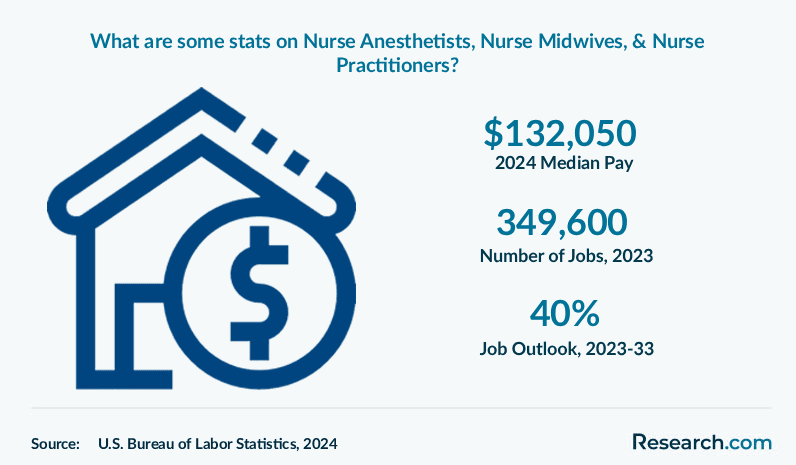
According to the U.S. Bureau of Labor Statistics (2024), nurse anesthetists, nurse midwives, and nurse practitioners earned a 2024 median pay of $132,050. The field employed approximately 349,600 people in 2024. These positions are projected to experience an exceptionally strong job outlook, with a 40% growth rate from 2024 to 2034, a trend that is much faster than the average for all occupations. This data, shown in the graphic below, collectively indicates a highly paid and rapidly expanding profession within the healthcare sector.
What are the challenges pediatric nurse practitioners commonly face?
Despite the rewarding nature of the role, pediatric nurse practitioners encounter several challenges in their day-to-day practice. These obstacles can range from legal and administrative hurdles to emotional and interpersonal complexities.
- Varying scope of practice: One of the most significant challenges is the inconsistency of scope of practice laws across states, which can limit autonomy and require them to seek physician supervision.
- Communication with non-verbal patients: Caring for infants and very young children requires strong observational skills to interpret non-verbal cues and accurately assess a patient's condition. This is also why specialized neonatal nurse practitioner online programs have been designed for infants and young children.
- Emotional stress: PNPs often deal with critically ill children and their anxious families, which can be emotionally demanding and lead to burnout.
- Complex family dynamics: They must navigate various family dynamics and cultural beliefs that may impact a child's health and the family's adherence to a treatment plan.
- Insurance and reimbursement issues: In some cases, PNPs may face challenges with insurance reimbursement for their services, which can be different from that of a physician.
- Limited resources: In rural or underserved areas, PNPs may have limited access to specialists, diagnostic equipment, or other resources needed to provide comprehensive care.
Overcoming these challenges requires a high degree of adaptability, resilience, and strong advocacy for their patients.
What career advancement opportunities exist for pediatric nurse practitioners?
Pediatric nurse practitioners have several avenues for career advancement, allowing them to expand their influence, specialize further, and take on leadership roles. These opportunities build on their clinical foundation and can lead to new and fulfilling professional paths.
- Subspecialty roles: PNPs can pursue further specialization in areas such as pediatric oncology, cardiology, or endocrinology, often through post-graduate certificate programs or on-the-job training.
- Leadership and management: With experience, a PNP can transition into leadership roles such as chief nurse practitioner, clinic director, or manager of a pediatric unit.
- Education and academia: Experienced PNPs can become faculty members at nursing schools, teaching the next generation of nurse practitioners through classroom instruction and clinical preceptorship.
- Research: For those interested in scientific inquiry, a PNP can become a nurse scientist, conducting research to improve pediatric healthcare outcomes and patient care.
- Independent practice: In states with full practice authority, a PNP can open and operate their own independent practice, providing direct care and managing all aspects of the business.
These diverse opportunities allow PNPs to grow professionally and contribute to the field of pediatric healthcare in a variety of meaningful ways. Students can start by enrolling in 1 year nurse practitioner programs online.
Here's What Graduates Say About Their Pediatric Nurse Practitioner Degrees
- Ariadne: "I chose a pediatric nurse practitioner program for its deep clinical immersion and mentorship, and I passed my national board exam on the first attempt. Now I lead child visits in a community clinic, and the trust I feel from kids and parents every day makes the long nights of studying worth it. "
- Soren: "Balancing an online curriculum with my hospital night shifts let me finish over 700 supervised clinical hours close to home. Within weeks of graduating, I stepped into a pediatric cardiology NP role, and seeing anxious families relax when I explain a plan is the most rewarding part of my day. "
- Roger: "My DNP project focused on reducing asthma flare ER visits in a bilingual neighborhood, and we cut avoidable visits by nearly 20 percent. Serving families in their own language while practicing evidence based care has been the most meaningful professional milestone of my life. "
Key Findings
- Demographics: The profession is overwhelmingly female (92.4% women vs. 7.6% men) with an average age of 42, and it is predominantly White (77.5%), followed by Hispanic (6.7%), Asian (6.3%), and Black professionals (4.7%) (Zippia, 2025).
- Certification exam performance: The highest first-time pass rate for a pediatric nursing certification in 2024 was 85.37% for pediatric primary care mental health specialists, while certified pediatric nurse practitioners—primary care had the highest number of testing candidates among advanced practice roles at 1,318 (Pediatric Nursing Certification Board, 2025).
- Workforce & job outlook: The field of nurse anesthetists, nurse midwives, and nurse practitioners collectively had a 2024 median pay of $132,050 and a total of 349,600 jobs, with a projected 40% growth rate from 2024–2034, which is much faster than the national average (U.S. Bureau of Labor Statistics, 2024).
- Workforce distribution: The majority of nurse practitioners (68.7%) are certified in family care, with pediatric primary and acute care specialties representing a much smaller portion of the workforce, at 2.9% and 0.7%, respectively (American Association of Nurse Practitioners, 2025).
- Geographic salary trends: Pediatric nurse practitioner salaries in 2025 show Washington and the District of Columbia as the highest-paying locations, at $153,083 and $152,735 respectively, while Florida and West Virginia are among the lowest-paying, at $101,005 and $104,637 respectively (Zippia, 2025).
- Average-range geographic salaries: Salaries for pediatric nurse practitioners in mid-range states vary, with those in states like New Jersey and Wisconsin earning slightly above the national average at $130,863–$137,635, while salaries in states such as Texas and Arizona fall moderately below the average, ranging from $125,423–$127,172 (Zippia, 2025).
References:
- American Association of Nurse Practitioners. (2025). 2024 national nurse practitioner sample survey: Practice report. American Association of Nurse Practitioners.
- Bureau of Labor Statistics, U.S. Department of Labor. (2025, April 18). Nurse anesthetists, nurse midwives, and nurse practitioners. Bureau of Labor Statistics.
- Data USA. (2025). Pediatric nurse: Overview and statistics. Data USA.
- Pediatric Nursing Certification Board. (2025). 2024 exam statistics. Pediatric Nursing Certification Board.
- Zippia. (2025). Pediatric nurse practitioner demographics and statistics in the United States. Zippia.
- ZipRecruiter. (2025). What is the average pediatric nurse practitioner salary by state. ZipRecruiter.
Other Things You Should Know About Pediatric Nurse Practitioners
In 2027, pediatric nurse practitioner salaries are often adjusted for the cost of living in different states. For instance, practitioners in states with high living costs such as California may expect higher salaries compared to states with lower living expenses like Mississippi.
In 2027, the average salary for pediatric nurse practitioners varies by state. For instance, in California, the average salary might reach $138,000 annually, while in Texas, it might be closer to $110,000. Factors influencing these figures include cost of living and state demand for healthcare professionals.
In 2027, states like California, New York, and Texas are noted for offering some of the highest average salaries for pediatric nurse practitioners. These states typically offer more competitive wages due to higher costs of living and greater demand for healthcare professionals.


