
2027 Occupational Therapy Certifications & Specialties

Co-Founder and Chief Data Scientist
Aspiring healthcare professionals often wonder if occupational therapy certifications and specialties are a viable path for a rewarding career in the medical field. The employment of occupational therapists is projected to grow by 14% from 2024 to 2034, a rate significantly faster than the average for all occupations. This growth indicates an increasing demand for these skilled professionals.
With over a decade of experience in career planning, the Research.com team has authored this article using only credible sources. The information presented here will provide readers with a clear understanding of the diverse specialties available within occupational therapy and the benefits of pursuing them.
Key Things You Should Know About Occupational Therapy Certifications & Specialties
- While a general occupational therapist helps a wide range of individuals with daily living, a specialized occupational therapist has additional training and certification to provide focused care for specific conditions or populations, such as hand therapy or brain injury rehabilitation.
- NBCOT OTR certification is a mandatory national certification in the U.S. that aspiring occupational therapists must pass to ensure they meet standardized entry-level competencies in knowledge and skills for safe and effective practice, a prerequisite for state licensure.
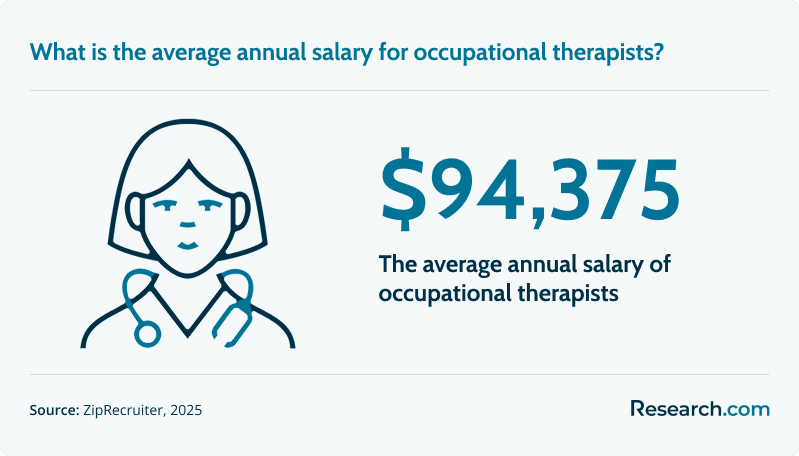
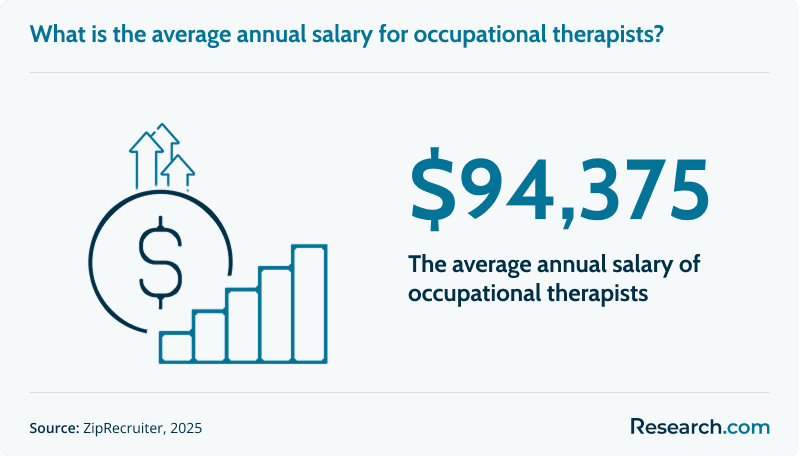
- The average annual salary of occupational therapists ranges from $94,375 to $98,340, which can increase with experience and specialized certifications.
- What is the difference between an occupational therapist and a specialized occupational therapist? What is the difference between an occupational therapist and a specialized occupational therapist?
- What is the NBCOT OTR certification, and why is it essential for all aspiring occupational therapists? NBCOT OTR Certification
- What are the eligibility requirements for taking the NBCOT certification exam? Eligibility Requirements
- List of OT Certifications and Specialties OT Certifications & Specialties
- What is the typical timeline and cost for getting an occupational therapy certification? Timeline & Cost
- What are the steps to transition from one specialty to another as my OT career evolves? What are the steps to transition from one specialty to another as my OT career evolves?
- What is the job outlook for occupational therapists? Job Outlook
- What is the average annual salary of occupational therapists? Average Salary
- What are the long-term career paths for an occupational therapist with multiple certifications? Career Paths
- What is the role of continuing education units (CEUs) in maintaining my OT certification and license? What is the role of continuing education units (CEUs) in maintaining my OT certification and license?
- Are there any emerging OT specialty areas or certifications that are worth exploring in the future? Are there any emerging OT specialty areas or certifications that are worth exploring in the future?
What is the difference between an occupational therapist and a specialized occupational therapist?
The difference between an occupational therapist (OT) and a specialized occupational therapist lies primarily in the depth of expertise and focus area. Professionals comparing career paths may also consider nursing informatics salary to understand how specialization and advanced training in healthcare roles can impact earning potential.
An occupational therapist is a healthcare professional who helps individuals develop, regain, or maintain skills needed for daily living and work activities. They address a broad range of physical, cognitive, and emotional challenges through therapeutic exercises, adaptive tools, and environmental modifications to improve independence and quality of life.
A specialized occupational therapist, on the other hand, has pursued additional training and certification in a specific area of occupational therapy. This specialization allows them to develop deeper skills and provide targeted interventions for particular conditions or populations.
Examples of specialties include hand therapy (rehabilitating hand and wrist function), driving rehabilitation, lymphedema therapy, low vision therapy, and sensory integration therapy for issues like autism or sensory processing disorders.
Specialized OTs focus on more specific therapies tailored to patient needs, often requiring advanced education or certification beyond the general OT degree. This pursuit of specialized credentials is common across many professions, much like a professional in finance might pursue a CFE certification to specialize in fraud examination.
What is the NBCOT OTR certification, and why is it essential for all aspiring occupational therapists?
The NBCOT OTR certification refers to the Occupational Therapist Registered (OTR) credential granted by the National Board for Certification in Occupational Therapy (NBCOT). It is a national certification that aspiring occupational therapists must earn by passing the NBCOT examination. When choosing an educational program, it’s also important to know what is the best accreditation for nursing schools, as attending a properly accredited program ensures you receive the training and credentials recognized across healthcare professions, including occupational therapy.
This certification verifies that the individual has met the required entry-level competencies in knowledge and skills necessary to safely and effectively practice occupational therapy.
The NBCOT OTR certification is essential for several reasons:
- Licensure Requirement: Most U.S. states, the District of Columbia, Guam, and Puerto Rico require passing the NBCOT OTR exam as a prerequisite for obtaining state licensure to legally practice as an occupational therapist.
- Professional Standard: It ensures that occupational therapists meet standardized professional practice and ethical standards, which helps protect public safety and promotes high-quality care.
- Career Credentialing: The OTR certification is widely recognized and demonstrates the therapist's commitment to maintaining competency through continuing education.
- Eligibility: Candidates must graduate from an accredited occupational therapy program and agree to abide by the NBCOT Code of Conduct to be eligible for the certification exam.
What are the eligibility requirements for taking the NBCOT certification exam?
The eligibility requirements for taking the NBCOT Occupational Therapist Registered (OTR) certification exam are as follows. Students should also be aware of what math is required for nursing, as strong quantitative skills are essential not only in nursing but also in allied health programs like occupational therapy, where calculations and data interpretation play a key role in safe practice.
- Education: Candidates must have graduated with an entry-level occupational therapy degree from an ACOTE-accredited occupational therapy program. This degree meets the current entry-level degree requirements.
- International Education: If the degree was earned outside the U.S., candidates must apply through the Occupational Therapist Eligibility Determination (OTED) process, which reviews educational and fieldwork comparability to U.S. standards.
- Character and Conduct: Candidates must agree to abide by the NBCOT Practice Standards and Code of Conduct, and pass a character review.
- Documentation: Candidates must submit an official final college or university transcript or a Degree Verification Form to verify eligibility.
- Time Limit: Candidates have up to three years from their graduation date to take the exam under the eligibility requirements in place at their time of graduation; after three years, new eligibility requirements apply.
- Additional: Candidates may undergo a background check if applicable, and if found ineligible, they can appeal the decision in writing to the NBCOT Board of Directors.
List of OT Certifications and Specialties
An OT certification is a professional designation indicating that an occupational therapist has met specific criteria, often including advanced education, experience, and examination, in a specialized area of practice. Professionals comparing roles may also consider how much does a pediatric nurse practitioner make to understand the earning potential of specialized healthcare careers.
These credentials allow OTs to demonstrate their expertise in a niche field, providing advanced care and opening up new career opportunities. Here is a list of 10 prominent occupational therapy certifications and specialties.
Certified Hand Therapist (CHT)
A Certified Hand Therapist is an occupational or physical therapist who has achieved a high level of competency in treating hand and upper extremity conditions. This specialization requires extensive post-graduate experience, including at least three years as a licensed therapist and a minimum of 4,000 hours of direct hand therapy practice.
The CHT certification demonstrates expertise in managing complex injuries and diseases of the hand, wrist, elbow, and shoulder.
Board Certification in Physical Rehabilitation (BCPR)
Offered by the American Occupational Therapy Association (AOTA), this certification is for occupational therapists who demonstrate advanced clinical knowledge and skills in physical rehabilitation. OTs seeking this credential must have a minimum of three years of experience with at least 3,000 hours dedicated to physical rehabilitation.
The BCPR signifies a commitment to providing advanced, evidence-based care to individuals with physical disabilities across various settings.
Certified Aging-in-Place Specialist (CAPS)
This designation is for professionals who are trained to help older adults and people with disabilities live independently and safely in their homes for as long as possible. A Certified Aging-in-Place Specialist conducts home assessments and recommends modifications, from simple grab bars to major renovations, to improve accessibility and prevent falls.
This certification is particularly valuable for OTs working in home health or private practice.
Assistive Technology Professional (ATP)
An Assistive Technology Professional is an expert in the selection, configuration, and use of assistive devices. This includes a wide range of products from basic mobility aids like walkers and wheelchairs to complex computer access and augmentative communication systems.
The ATP credential, offered through the Rehabilitation Engineering and Assistive Technology Society of North America (RESNA), signifies a professional's ability to help clients choose and utilize technology to enhance their daily functioning and independence.
Hippotherapy Clinical Specialist (HPCS)
A Hippotherapy Clinical Specialist is a licensed occupational therapist who uses the movement of a horse as a therapeutic tool. This unique specialty engages a patient's sensory, motor, and cognitive systems in a dynamic and motivating way.
The HPCS credential requires specialized training in the principles of hippotherapy and practical experience, combining a deep understanding of neurorehabilitation with expertise in working with equines.
Certified Brain Injury Specialist (CBIS)
This certification recognizes professionals who have a strong foundation in the care and treatment of individuals with brain injuries. A Certified Brain Injury Specialist works in various settings, helping patients regain motor skills, cognitive function, and independence in daily living activities.
The CBIS credential is a testament to an OT's dedicated experience and knowledge in this complex field of neurorehabilitation.
Certified Low Vision Therapist (CLVT)
A Certified Low Vision Therapist specializes in helping individuals with significant vision impairments maximize their remaining vision to perform everyday tasks. This can include teaching compensatory strategies, recommending specialized magnifiers or lighting, and training clients to navigate their environment safely.
The CLVT works to enhance a patient's quality of life and independence despite their visual challenges.
Certified Driver Rehabilitation Specialist (CDRS)
A Certified Driver Rehabilitation Specialist is an occupational therapist who evaluates and provides training to help people with disabilities or medical conditions drive safely. This role involves assessing a person's physical, cognitive, and visual skills to determine their ability to operate a vehicle, and if necessary, providing training with adaptive equipment or modifications.
The CDRS certification ensures that the therapist has the specialized knowledge required for this critical area of practice.
Certified Lymphedema Therapist (CLT)
A Certified Lymphedema Therapist is an OT who specializes in the treatment of lymphedema, a chronic condition causing swelling, most often in the arms or legs. This specialty requires specific post-graduate training in Manual Lymphatic Drainage (MLD) and Complete Decongestive Therapy (CDT), which includes bandaging, skin care, and exercise.
The CLT designation signifies a therapist's expertise in providing comprehensive care to manage this lifelong condition.
Seating and Mobility Specialist (SMS)
This advanced certification, also offered through RESNA, is for professionals who have a high level of expertise in assessing and providing custom seating and mobility solutions. A Seating and Mobility Specialist works with clients to determine the most appropriate manual wheelchairs, power wheelchairs, and seating systems to meet their specific needs.
This role is crucial for preventing pressure injuries and ensuring optimal function, posture, and independence for individuals with significant mobility limitations.
Exploring these certifications can significantly enhance a career in occupational therapy. Similarly, those interested in helping people with respiratory conditions can look into careers with an associate in respiratory care therapy, which offer another valuable path in the healthcare field.
What is the typical timeline and cost for getting an occupational therapy certification?
Pursuing occupational therapy certifications involves both time and financial investment, and understanding these factors can help prospective professionals plan ahead. The costs and completion time vary depending on the program, but there are general benchmarks that most candidates can expect.
The typical timeline and cost for obtaining the NBCOT Occupational Therapist Registered (OTR) certification are as follows:
Timeline
- After graduating from an accredited occupational therapy program and meeting eligibility requirements, candidates must apply for the NBCOT exam.
- Once the application is approved, candidates receive an Authorization to Test (ATT) letter that allows them to schedule the exam.
- The exam itself is a computer-based test lasting four hours, with a total testing appointment time slightly longer.
- Candidates often take one to three months to study and prepare for the exam, though some may take up to six months.
- After taking the exam, scoring and reporting typically take a few weeks. Thus, the overall process from graduation to certification is commonly around two to four months, depending on readiness and scheduling.
Cost
- Initial online exam application fee: $540
- Paper application fee (if used): $595
- Reapplication fees for retaking the exam online: $430, or $485 for paper
- Additional fees may include application rescheduling or score transfers.
- Certification renewal fees are $65 online or $75 by paper, and continuing education units are required to maintain certification. This initial exam fee is a major part of the cost of certification, but candidates should also budget for study materials and potential retakes if needed.
What are the steps to transition from one specialty to another as my OT career evolves?
To transition from one occupational therapy specialty to another as a career evolves, the typical steps include:
- Self-Assessment and Goal Setting: Assess current skills, interests, and reasons for transitioning. Identify the desired specialty and career goals to ensure alignment.
- Research Specialty Requirements: Investigate the education, certification, and clinical experience needed for the new specialty. This often involves specialized coursework, clinical rotations, or advanced certifications.
- Continuing Education and Training: Enroll in relevant certification programs, workshops, or advanced degree options. Many specialties require additional formal education or practical hours.
- Gain Clinical Experience: Seek opportunities to work or volunteer in the new specialty area to build hands-on skills and professional network connections.
- Obtain Certification: Complete the specialty certification process, which may include passing exams and fulfilling supervised clinical requirements.
- Update Licensure and Credentials: Ensure licensure boards and employers recognize the new specialty credentials; update professional profiles accordingly.
- Transition Roles: Gradually shift practice focus by negotiating role adjustments at current employment or seeking new positions aligned with the specialty.
- Maintain Professional Growth: Participate in specialty-specific professional organizations, continuing education, and networking to stay current in the new field.
What is the job outlook for occupational therapists?
The job outlook for occupational therapists (OTs) is very positive and growing faster than the average for all occupations. According to the U.S. Bureau of Labor Statistics, employment of occupational therapists is projected to grow by 14% from 2024 to 2034.
This growth is driven largely by an aging population, including the baby boomer generation. As people live longer, the prevalence of chronic conditions such as arthritis, stroke, and diabetes increases, all of which can significantly impact a person's ability to perform everyday tasks.
Occupational therapists play a vital role in helping these individuals adapt to physical and cognitive changes, teaching them new ways to complete activities, and helping them use assistive devices to live safely and independently at home.
Beyond the aging population
The occupational therapy field is expanding into new and diverse settings, further solidifying the job market. The growing recognition of OT's value in mental health services, substance abuse recovery, and early intervention programs for children with developmental disabilities is creating new opportunities. OTs are also increasingly being hired in non-traditional settings like schools, community health centers, and private practice.
Furthermore, the role of an OT is evolving with technology; many therapists are now specializing in designing adaptive equipment, training clients on assistive technologies, and using virtual reality to improve motor skills. These new applications ensure the profession remains relevant and vital for the future of healthcare.
In 2024, about occupational therapists held about 160,000 jobs. The largest employers of occupational therapists were as follows:
What is the average annual salary of occupational therapists?
The average annual salary of occupational therapists (OTs) in the United States in 2025 ranges from approximately $94,375 to $98,340. On an hourly basis, this translates to an average wage of about $45 to $47, providing a competitive income compared to many other healthcare professions.
For those just beginning their careers, entry-level salaries typically start near $73,000. This starting point reflects both the professional education required for certification and the demand for OTs in a variety of healthcare settings. Over time, as therapists gain more experience and skills, their earning potential increases significantly.
At the higher end of the scale, experienced therapists can earn upwards of $130,000 annually, particularly in regions with a higher cost of living or in specialized healthcare facilities. Roles in hospitals, private practices, and advanced rehabilitation centers often offer greater compensation due to the complexity of cases and the expertise required.
Aside from geographic location and years of experience, specialty certifications in areas such as pediatrics, hand therapy, or geriatrics can raise earning potential by demonstrating advanced skills. Finally, the work setting—whether in hospitals, schools, outpatient clinics, or home health—can impact salary levels due to differences in demand and funding sources.
Now, let's break down the numbers to see how they look across different pay periods.
What are the long-term career paths for an occupational therapist with multiple certifications?
Long-term career paths for an occupational therapist with multiple certifications tend to offer greater specialization, advancement opportunities, leadership roles, and influence within the profession.
- Clinical Specialist or Expert: Multiple certifications enable an OT to become a recognized expert in several key practice areas, such as hand therapy, pediatric care, brain injury, or gerontology. This often leads to more complex cases, higher patient impact, and sometimes higher pay.
- Advanced Clinical Roles: With specialized certifications and experience, an OT can pursue advanced practice roles such as Advanced Practice Occupational Therapist (APOT), requiring leadership in clinical decision-making and mentoring others.
- Leadership and Management: Experienced OTs with multiple certifications can move into supervisory, management, or director roles within healthcare facilities, outpatient clinics, rehabilitation centers, or school systems, overseeing programs and staff.
- Education and Academia: Certifications can support transitions into teaching roles in universities or colleges, developing OT programs, and training the next generation of therapists.
- Research and Advocacy: OTs with multiple credentials may engage in research to improve treatment methods or advocate for occupational therapy policy, expanding the profession’s reach and evidence base.
- Consulting and Entrepreneurship: Some OTs use multiple certifications to offer specialized consulting services, start private practices, or develop innovative therapeutic products and programs.
Similarly, in the nursing field, a graduate certificate can lead to new specializations, such as a pediatric NP graduate certificate jobs which allows a nurse to become a Pediatric Nurse Practitioner and specialize in treating children in various clinical settings.
This highlights a broader trend in healthcare where advanced certifications and specializations are key to career growth and a wider range of professional opportunities.
What is the role of continuing education units (CEUs) in maintaining my OT certification and license?
Continuing Education Units (CEUs) play a critical role in maintaining occupational therapy certification and licensure. For NBCOT certification renewal, OTs must earn at least 36 Professional Development Units (PDUs) every three years.
These units are obtained through approved continuing education activities such as workshops, online courses, seminars, or conferences, with an assessment component at the end of the program. One contact hour usually converts to one PDU, and one Continuing Education Unit (CEU) equals 1.25 PDUs.
CEUs ensure that occupational therapists stay current with clinical knowledge, ethical standards, and emerging best practices, which is essential for safe and effective patient care. Renewing certification also requires agreeing to the NBCOT Certificant Attestation and paying renewal fees. State licensure boards similarly require CEUs for license renewal, though the exact number and types of acceptable CEUs may vary by state.
To further illustrate this commitment to ongoing professional development, let's look at the most common degrees held by occupational therapists.
Are there any emerging OT specialty areas or certifications that are worth exploring in the future?
Beyond the traditional practice areas, there are several emerging specialty areas and certifications in occupational therapy that are worth exploring in the near future. These specializations not only reflect the evolving landscape of healthcare but also offer new ways to address patient needs and expand career opportunities.
Before even considering these advanced certifications, it's important to understand the best occupational therapy majors to pursue at the undergraduate level, such as psychology, biology, kinesiology, or health sciences, as they provide a strong foundation for a future in this field. Emerging specialty areas and certifications in occupational therapy that are worth exploring in the near future include:
Telehealth Care Services and Remote Monitoring
The rise of telehealth allows OTs to provide therapy services remotely, increasing accessibility for patients. This specialty involves virtual assessments, therapy sessions, and home safety evaluations facilitated by technology. A key component of this is understanding “what is teletherapy?”, which is the delivery of therapy services through telecommunication technology.
Virtual and Augmented Reality (VR/AR) Therapy
Using VR and AR technology, OTs create immersive environments for rehabilitation, especially for children with autism spectrum disorder and stroke survivors. This innovative approach enhances engagement and functional skill development.
Sensory Integration Therapy
Growing in demand for treating children with cerebral palsy and other sensory processing disorders, this specialty focuses on improving motor development, movement skills, and attention spans through targeted sensory activities.
Key Findings
- The employment of occupational therapists is projected to grow by 14% from 2024 to 2034.
- The average annual salary for occupational therapists in the United States in 2025 is between $94,375 and $98,340.
- Entry-level salaries for occupational therapists start at approximately $73,000, while experienced therapists can earn upwards of $130,000.
- The initial online application fee for the NBCOT OTR exam is $540, with a renewal fee of $65 every three years.
- To maintain NBCOT certification, occupational therapists must earn at least 36 Professional Development Units (PDUs) every three years.
References:
- Accreditation Council for Occupational Therapy Education (ACOTE®). (n.d.). https://acoteonline.org
- How to become an Occupational Therapist: What it is and career path - ZiPpia. (2025, January 8). https://www.zippia.com/occupational-therapist-jobs
- Occupational therapist salary. (2025). ZipRecruiter. Retrieved September 23, 2025, from https://www.ziprecruiter.com/Salaries/Occupational-Therapist-Salary#Yearly
- Occupational Therapists. (2025, August 28). U.S. Bureau of Labor Statistics. Retrieved September 23, 2025, from https://www.bls.gov/ooh/healthcare/occupational-therapists.htm
Other Things You Should Know About Occupational Therapy Certifications & Specialties
In 2027, occupational therapists can pursue several certifications, including Certified Hand Therapist (CHT), Pediatric Certified Specialist (PCS), and Certified Neuro Specialist (CNS). Each certification focuses on a different area of therapy and enhances specific skills, allowing therapists to provide specialized care in their field of interest.
To enroll in a 2026 occupational therapy specialty certification, you typically need to hold a current NBCOT OTR certification and have completed a specified number of practice hours in the relevant specialty area. Some programs may also require submission of case studies or completion of specific coursework.


