2027 Robotic Careers: A Guide to Career Paths, Options & Salary

Co-Founder and Chief Data Scientist
Choosing a robotics career means deciding how you want to work at the intersection of machines, software, sensors, automation, and real-world problem solving. Robotics is no longer limited to factory arms or research labs; it now appears in healthcare, manufacturing, transportation, agriculture, logistics, education, home devices, and scientific exploration. For students, career changers, and working professionals, the main question is not simply whether robotics is interesting. The better question is: which robotics path fits your strengths, education plans, and long-term career goals?
This guide explains what robotics professionals do, why the field matters, which career paths are available, what skills employers typically value, how education and certifications can help, and how to compare robotics with related technology career paths. It also covers salary data, job outlook, interdisciplinary options, common mistakes, and practical steps for building a competitive robotics profile.
Quick Answer: Is Robotics a Good Career Path?
Robotics can be a strong career path for people who enjoy engineering, programming, systems thinking, hands-on experimentation, and continuous learning. The field offers roles in design, software development, maintenance, research, automation, medical technology, and artificial intelligence. It can also be competitive, so students should build practical experience through labs, internships, research projects, coding portfolios, robotics competitions, or applied engineering work.
The robotics market has shown substantial growth. Zion Market Research reported that the robotics market was approximately 41.7 billion in 2021 and was expected to increase to 81.4 billion by 2028. According to “STEM Careers: 2024 Guide to Career Paths, Options & Salary” (2024), STEM has become part of 67% of jobs in the U.S., which helps explain why robotics-related skills are becoming useful across many industries.
What Is Robotics?
Robotics is the design, development, programming, testing, deployment, and maintenance of machines that can sense, move, process information, or perform tasks with varying levels of automation. A robotics system may include mechanical parts, motors, sensors, control systems, software, artificial intelligence, user interfaces, and safety features.
Robotics is a multidisciplinary field. A single project may require mechanical engineering for movement, electrical engineering for circuits and sensors, computer science for software, data science for interpretation, human factors for usability, and business knowledge for cost and market decisions. That is why robotics careers often reward both technical depth and the ability to collaborate with people from different specialties.
Why Pursue a Career in Robotics?
A robotics career can appeal to people who want to build technology that acts in the physical world. Unlike purely digital products, robotics systems must work with hardware constraints, safety risks, environmental variables, and human users. That makes the field challenging, but also highly practical.
Robotics professionals may help improve manufacturing efficiency, support surgeons with precise tools, automate repetitive or hazardous work, expand space exploration, improve agricultural processes, assist people with disabilities, or design machines for research and education. The work can be highly specialized, but the skills behind it—programming, systems design, troubleshooting, data interpretation, and project collaboration—can also transfer into other technology and engineering roles.
Robotics is not the right fit for everyone. It often requires patience with trial and error, comfort with mathematics and computing, and the ability to diagnose problems that may come from either software or hardware. Students who prefer work with immediate, predictable results may find robotics frustrating. Students who enjoy iterative testing, technical puzzles, and applied design may find it rewarding.
| Robotics may be a good fit if you... | You may want another path if you... |
| Enjoy programming, building, testing, and improving systems | Dislike debugging, technical uncertainty, or long testing cycles |
| Want a career connected to automation, AI, engineering, or advanced manufacturing | Prefer work that is mostly nontechnical or unrelated to machines and software |
| Like solving practical problems with both hardware and software | Want a career with minimal math, coding, or systems analysis |
| Are willing to keep learning as tools, sensors, and AI methods change | Prefer a field where core tools and methods remain mostly stable |
Robotics also matters because it touches everyday life more often than many people realize. Phones, computers, vehicles, retail systems, banking technologies, home cleaning devices, warehouse automation, and medical tools all rely on related computing, sensing, automation, or control concepts. Not every technology-enabled device is a robot, but many rely on the same knowledge areas that robotics professionals study.
The field also leaves room for creativity. A robotics professional may design a safer manufacturing process, create a more responsive assistive device, improve a warehouse workflow, develop better autonomous navigation, or build educational robots that help students learn STEM concepts. The strongest candidates usually combine technical skill with curiosity about how people actually use technology.
Career Paths in the Robotics Field
Robotics careers are not all the same. Some professionals spend most of their time designing mechanical systems, while others write software, test sensors, repair equipment, manage projects, or research artificial intelligence. Many jobs overlap, so it is helpful to understand both the role title and the type of work behind it.
Saint Leo University’s article, “7 of the Top Careers in Robotics with a Bachelor’s Degree”, describes several robotics-related roles and average earnings. The roles below reflect common paths students and early-career professionals often consider.
| Robotics role | Typical focus | Salary information stated in the source text | Best fit for |
| Robotics Engineer | Designs, builds, tests, and improves robotic systems and components | The Bureau of Labor Statistics (BLS) found the average pay for engineers and designers is $95,300 per year. | Students interested in engineering design, mechanics, systems integration, and applied problem solving |
| Industrial Robot Design | Focuses on robotic design for manufacturing and production settings | Salary not separately stated in the source text | People who enjoy creative engineering, manufacturing systems, and machine design |
| Medical Robotics | Plans, builds, and maintains robotic tools used in medical environments | Salary not separately stated in the source text | Students interested in healthcare technology, precision devices, and safety-critical systems |
| Robotics Technician | Maintains, repairs, troubleshoots, and supports robotic equipment | As of May 2021, BLS reports technicians earn around $60,360 a year. | Hands-on learners who want to work directly with equipment and operations |
| Robotics Specialist | Coordinates teams, tracks project progress, documents development, and checks systems before completion | On average, specialists earn around $61,237 yearly. | People who combine technical understanding with organization, communication, and project oversight |
| Robotics Software Developer | Creates, improves, and tests software that controls or supports robotic systems | The national reported salary is approximately $122,386. | Candidates who enjoy coding, algorithms, simulation, automation, and software architecture |
| Computer and Information Research Scientist | Develops advanced computing methods, automation systems, AI tools, and robotics software concepts | As of May 2021, the BLS reports the annual pay is around $131,490. | Students interested in research, AI, machine learning, and advanced computing problems |

Core Areas of Robotics Work
Most robotics jobs involve one or more of the following technical areas. Knowing these categories can help students choose courses, projects, internships, and graduate study options more strategically.
| Robotics area | What it involves | Examples of related work |
| Operator Interface | How humans communicate with, monitor, or control a robotic system | Control panels, dashboards, remote operation tools, safety alerts, usability testing |
| Mobility or locomotion | How a robot moves through its environment | Wheeled robots, walking robots, drones, autonomous navigation, motion planning |
| Manipulators and Effectors | How a robot interacts physically with objects | Robotic arms, grippers, surgical tools, pick-and-place systems, end-of-arm tooling |
| Programming | The software, algorithms, and control logic that allow the robot to function | Embedded programming, path planning, automation scripts, machine learning integration |
| Sensing and Perception | How a robot gathers and interprets information from the world | Cameras, LiDAR, proximity sensors, force sensors, computer vision, sensor fusion |
How Business Analytics Can Strengthen a Robotics Career
Technical ability is essential in robotics, but business judgment can become increasingly important as professionals move into product development, operations, consulting, entrepreneurship, or leadership. Robotics projects often involve expensive equipment, long testing cycles, safety constraints, supply chain decisions, and uncertain market demand. Analytics skills can help professionals evaluate costs, forecast adoption, prioritize features, manage risk, and communicate the value of a robotics project to nontechnical stakeholders.
For robotics professionals who want to move toward management or product strategy, an affordable online MBA business analytics program may be worth comparing with technical graduate degrees. It is not a replacement for engineering depth, but it can be useful for people who want to lead teams, justify investments, or connect robotics innovation with business outcomes.
Job Outlook for Robotics Careers
Robotics employment is shaped by automation demand, manufacturing investment, artificial intelligence, advanced sensors, healthcare technology, logistics systems, and the need for safer or more efficient work environments. Because many robotics roles sit inside broader engineering, computer science, and technician categories, students should review job postings carefully instead of relying only on a single job title.
Early STEM exposure can also matter. Research has indicated that STEM-related education at earlier ages can help students prepare for fast-changing technology fields. For robotics specifically, earlier experience with coding, math, electronics, design thinking, and experimentation can make later coursework and projects more manageable.
Career opportunities in robotics may appear under titles such as automation engineer, controls engineer, robotics technician, robotics software engineer, field service engineer, mechatronics engineer, machine vision engineer, research engineer, or AI robotics specialist. Because titles vary by employer, candidates should search by skills as well as job names.
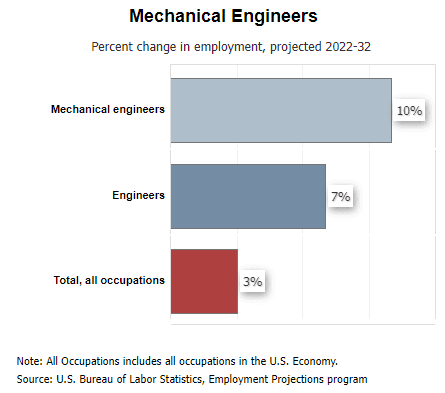
The Bureau of Labor Statistics (BLS) predicts that jobs in robotics are expected to grow 10% (28,500 job openings) from 2022 to 2032. This growth is tied to continued advances in machinery, automation, and programming.
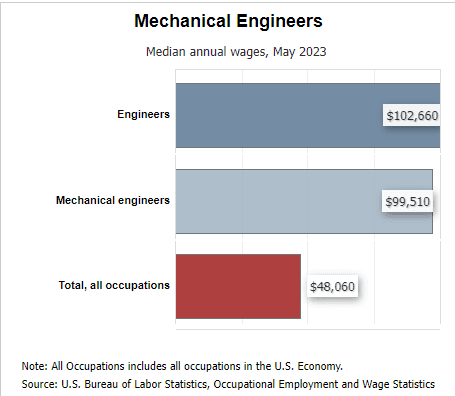
According to BLS, as of May 2023 individuals with careers in robotics earn an annual wage between $64,560 and $157,470 with a median of $99,510. Median annual wages also vary by industry:
| Industry | Median annual wage |
| Scientific research and development services | $125,640 |
| Computer and electronic product manufacturing | $104,070 |
| Transportation equipment manufacturing | $99,930 |
| Architectural, engineering, and related services | $99,290 |
| Machinery manufacturing | $90,040 |
Education Pathways for a Robotics Career
There is no single academic route into robotics. Many professionals enter through mechanical engineering, electrical engineering, computer engineering, computer science, mechatronics, robotics, artificial intelligence, or related technical programs. The right path depends on whether you want to work more with hardware, software, research, maintenance, or systems integration.
| Pathway | What it can prepare you for | When it makes sense |
| Bachelor’s Degree in Robotics or a Related Field | Entry-level engineering, software, technician, automation, or systems roles depending on the curriculum and experience | Best for students who want a broad technical foundation in programming, mechanics, electronics, math, and design |
| Master’s Degree in Robotics or Artificial Intelligence | More specialized research, advanced engineering, machine learning, robotic vision, or autonomous systems work | Useful for students targeting advanced technical roles, research-heavy work, or leadership in specialized robotics areas |
| Technical Certifications | Skill development in programming languages, artificial intelligence, robotic process automation, controls, or vendor-specific tools | Helpful for working professionals who need targeted skills or students who want to strengthen a resume alongside a degree |
| Internships and Research Projects | Hands-on evidence of practical ability, teamwork, testing, documentation, and problem solving | Essential for students who need experience beyond coursework and want stronger job applications |
How an Online Computer Science Degree Can Support Robotics Innovation
Robotics increasingly depends on software: perception systems, embedded code, simulation, autonomous decision-making, control logic, data pipelines, and AI models. Students who want to focus on the software side of robotics may benefit from a strong computer science foundation. An online computer science degree can be especially relevant for learners who want flexibility while developing programming, algorithms, operating systems, and systems design skills.
How Biotechnology Knowledge Can Connect with Robotics
Biotechnology and robotics can overlap in medical devices, lab automation, rehabilitation tools, assistive technology, environmental monitoring, and bio-inspired design. A robotics professional who understands biological systems may be better prepared to work on devices that interact with people, living systems, or healthcare workflows. Students interested in that intersection can explore a biotechnology career path to understand how biology, research, and technology connect.
How Artificial Intelligence Elevates Robotics
Artificial intelligence can make robots better at interpreting sensor data, adapting to changing environments, improving navigation, detecting anomalies, and supporting predictive maintenance. AI is not magic; robotics teams still need reliable data, careful testing, safety validation, and strong engineering controls. However, AI skills are becoming valuable for professionals who want to work on autonomy, computer vision, human-machine interaction, or intelligent automation. Students comparing programs may want to review online AI degree programs if they want formal training in this area.
How Bioinformatics Can Inform Robotics Applications
Bioinformatics combines computing, data analysis, and biological information. In robotics, this type of expertise may be useful in precision medicine, automated laboratories, diagnostics, environmental sensing, and systems that interpret biological signals. Learners who want to connect biological data with automation may compare options such as the cheapest online bioinformatics master's programs while considering whether their long-term goal is robotics, healthcare analytics, computational biology, or a hybrid role.
How Emerging AI Trends Are Changing Robotics Careers
AI is changing employer expectations in robotics. Professionals may be asked to understand machine learning workflows, sensor interpretation, predictive maintenance, simulation, human-machine interaction, and adaptive control systems. These skills are most useful when paired with strong fundamentals in safety, testing, hardware limitations, and real-world deployment. For learners who want a faster way to build AI knowledge, fastest artificial intelligence programs online may be worth comparing carefully for curriculum depth, admissions requirements, and project-based learning opportunities.
General and Technical Skills Needed in Robotics
Robotics employers usually look for a mix of technical skills, transferable skills, and evidence that a candidate can solve messy real-world problems. A resume that lists programming languages but shows no projects may be weaker than one that demonstrates testing, iteration, documentation, and teamwork.
| Skill area | Why it matters in robotics | How to build evidence |
| Problem-solving | Robotic systems can fail because of code, sensors, motors, materials, calibration, power, or environmental conditions | Document projects, debugging steps, test results, and design improvements |
| Programming | Software controls movement, perception, automation, data processing, and user interaction | Build coding projects, contribute to repositories, complete robotics simulations, or create automation tools |
| Mechanical and electrical fundamentals | Robots must operate safely and reliably in the physical world | Take lab-based courses, work on hardware projects, learn circuits, sensors, actuators, and controls |
| Communication | Robotics teams often include engineers, programmers, managers, clients, technicians, and end users | Practice technical writing, presentations, documentation, and stakeholder explanations |
| Time management | Robotics projects involve testing cycles, dependencies, deadlines, and unexpected failures | Use project plans, version control, issue tracking, and milestone-based work |
| Leadership | Senior professionals may guide teams, coordinate resources, evaluate risk, and make design trade-offs | Lead student teams, internships, research projects, or cross-functional technical tasks |
| Teamwork | Few robotics systems are built by one person; collaboration is central to the field | Join robotics clubs, competitions, labs, capstone projects, or open-source teams |
| Interpersonal skills | Robotics products must be understandable, usable, and safe for real people | Work with users, explain technical ideas simply, and seek feedback during testing |

Why Cybersecurity Skills Matter in Robotics
Robotic systems are increasingly connected to networks, cloud tools, sensors, industrial equipment, and data systems. That creates security risks. A robot used in a factory, hospital, warehouse, or transportation setting can become a safety and operational concern if its software, network connection, or control system is compromised.
Robotics professionals do not all need to become cybersecurity specialists, but they should understand secure coding, access control, vulnerability testing, system monitoring, and basic network defense. Students who want a formal foundation can compare options such as an online cyber security associates degree, especially if they are interested in industrial automation, critical infrastructure, or connected devices.
Interdisciplinary Paths That Can Expand Robotics Opportunities
Robotics is not only an engineering field. It connects with analytics, business strategy, healthcare, biotechnology, cybersecurity, game development, artificial intelligence, and human-centered design. Interdisciplinary knowledge can help professionals translate a technical idea into a useful product, a safe workplace system, or a scalable service.
For example, a robotics engineer who understands business analytics may be better prepared to evaluate whether a prototype can be manufactured affordably, whether a company should automate a process, or which market segment should be prioritized. Professionals aiming for project leadership, operations, or product strategy may consider an affordable online mba business analytics program as a complement to technical experience.
Robotics knowledge can also support fields that may seem separate at first. In game development, robotics concepts such as motion, feedback systems, physics, simulation, and real-time decision-making can improve interactive environments and virtual testing. Students interested in simulation-heavy work can explore online degree programs for game development to see how real-time systems, design, and user interaction are taught.
How to Prepare for a Robotics Career
Preparation should go beyond choosing a major. Employers and graduate programs often want evidence that you can apply knowledge, learn new tools, and work through technical problems. Use the following steps to build a stronger path.
- Choose your robotics focus. Decide whether you are most interested in hardware, software, AI, controls, manufacturing, medical robotics, research, maintenance, or product management.
- Select an education route that matches that focus. Mechanical engineering may suit machine design, computer science may suit robotics software, electrical engineering may suit sensors and embedded systems, and robotics or mechatronics programs may offer a broader integrated path.
- Build projects early. Create robots, simulations, automation scripts, computer vision demos, sensor projects, or control systems that show what you can actually do.
- Document your work. Keep project notes, diagrams, code samples, test results, failures, fixes, and short explanations of your role.
- Seek applied experience. Look for internships, research labs, robotics clubs, competitions, maker spaces, technician roles, or automation projects.
- Learn tools used in your target area. The right tools depend on the role, but programming, version control, simulation, electronics, data analysis, and technical documentation are commonly useful.
- Develop communication skills. Practice explaining complex systems to nonexperts. Robotics projects often require approvals, safety reviews, budgets, and user feedback.
- Keep learning after graduation. Robotics changes quickly, especially in AI, sensors, cybersecurity, and automation platforms.
Common Mistakes to Avoid
| Mistake | Why it can hurt your career plans | Better approach |
| Choosing a program only because it has “robotics” in the name | The curriculum may not match your target role | Compare courses in programming, controls, electronics, mechanics, AI, labs, and capstone projects |
| Ignoring hands-on experience | Robotics is applied; grades alone may not prove practical ability | Build a portfolio with projects, code, prototypes, testing notes, and team contributions |
| Focusing only on salary | Pay varies by role, industry, location, experience, and technical specialization | Compare responsibilities, advancement paths, work environment, and skill requirements |
| Assuming all robotics jobs are engineering jobs | The field also includes technicians, software developers, researchers, analysts, specialists, and managers | Search by skills and responsibilities, not only by job title |
| Overlooking cybersecurity and safety | Connected robotic systems can create operational and physical risks | Learn secure design basics, testing procedures, and safety standards relevant to your industry |
| Relying only on coursework | Employers often want proof that you can troubleshoot real systems | Use labs, competitions, internships, research, and personal projects to show applied skill |
| Choosing an online program without checking practical components | Some robotics skills require labs, hardware access, or project-based learning | Ask about lab kits, simulations, campus residencies, partnerships, capstones, and internship support |
Questions to Ask Before Choosing a Robotics Program or Career Track
- Does the program teach the specific robotics area I want: software, hardware, AI, controls, manufacturing, medical devices, or research?
- Are there hands-on labs, capstone projects, research opportunities, internships, or robotics teams?
- What programming, simulation, electronics, and engineering tools will I actually use?
- Do graduates move into robotics roles, broader engineering jobs, software positions, or technician work?
- How does the program support portfolio development and employer connections?
- If the program is online, how are hardware labs, testing, and team projects handled?
- Will I need graduate school for my target role?
- Does the curriculum include safety, ethics, cybersecurity, and human-machine interaction?
- Can I combine robotics with AI, business analytics, biotechnology, cybersecurity, or another field?
A Practical Outlook for Robotics Careers
Robotics offers meaningful opportunities, but it is not a shortcut career. The field rewards people who are willing to learn continuously, test carefully, collaborate across disciplines, and solve problems that do not always have simple answers. Demand for robotics skills is connected to broader trends in automation, AI, advanced manufacturing, healthcare technology, logistics, research, and connected systems.
For students, the best next step is to identify a target role and work backward: choose the right degree path, build relevant projects, gain hands-on experience, and develop both technical and communication skills. For career changers, the best route may be to start with a related strength—software, electronics, data, maintenance, engineering, cybersecurity, or operations—and move gradually toward robotics through projects, certifications, or additional education.
Key Insights
- Robotics is multidisciplinary. The field blends engineering, programming, sensing, automation, AI, design, safety, and human usability.
- Career options vary widely. Robotics engineers, technicians, software developers, specialists, medical robotics professionals, industrial designers, and research scientists may do very different work.
- Market growth supports long-term interest. The robotics market was approximately 41.7 billion in 2021 and was expected to increase to 81.4 billion by 2028.
- Salary depends on role and industry. The source text reports robotics-related wages ranging from $60,360 for technicians to around $131,490 for computer and information research scientists, with BLS also reporting an annual wage between $64,560 and $157,470 and a median of $99,510 as of May 2023.
- Hands-on proof matters. Projects, internships, research, labs, competitions, and documentation can make a robotics candidate more credible than coursework alone.
- AI and cybersecurity are becoming more important. Robotics professionals increasingly need to understand intelligent systems, connected devices, secure design, and safe deployment.
- The best education path depends on your target role. Mechanical engineering, electrical engineering, computer science, robotics, AI, biotechnology, cybersecurity, and business analytics can all support different robotics goals.
Other Things You Should Know About Robotic Careers
To pursue a career in robotics, a bachelor's degree in robotics engineering, computer science, or a related field is typically required. Advanced positions may require a master's degree or Ph.D., especially for roles involving research and development.
Key skills for a robotics career include problem-solving, programming, mechanical design, software development, and proficiency in mathematics and physics. General skills such as communication, teamwork, and time management are also crucial.
In 2027, robotics professionals can expect an average salary ranging from $85,000 to $130,000 annually, depending on the level of experience and specialization. Factors influencing salaries include expertise in AI, location, and industry demand.
The job outlook for the robotics industry is very positive, with a projected growth rate of 10% from 2022 to 2032. This growth is driven by advancements in technology and an increasing reliance on automation across various industries.
Robotics professionals are employed across several industries, including scientific research and development services, computer and electronic product manufacturing, transportation equipment manufacturing, and machinery manufacturing.
A career in robotics offers the opportunity to work on innovative projects that can significantly impact society, including advancements in healthcare, environmental conservation, and automation. It is a field that encourages creativity, continuous learning, and provides a high earning potential.
Key specializations within robotics include operator interface, mobility or locomotion, manipulators and effectors, programming, and sensing and perception. Each specialization focuses on different aspects of robotics technology and application.
Robotics impacts various sectors by improving efficiency, safety, and productivity. In healthcare, robotics assists in surgeries and patient care. In manufacturing, robots streamline production processes. In space exploration, robotics enables missions that are beyond human capability.