2027 Steps to Become a Registered Dietitian in Delaware

Co-Founder and Chief Data Scientist
Delaware is poised for steady growth in the nutrition and healthcare sector, with projected employment for dietitians reaching 420 by 2032. This trend reflects the state’s increasing emphasis on public health, wellness programs, and evidence-based nutrition interventions, highlighting the critical role registered dietitians play in improving community health outcomes.
In this article, I will break down educational requirements, supervised practice, and exam eligibility. I will also offer state licensure procedures as a clear roadmap to enter a rewarding career where professionals contribute to both individual and community well-being.
Key Things to Know About Becoming a Registered Dietitian in Delaware
- In Delaware, you will need an ACEND-accredited Didactic Program in Dietetics, a supervised dietetic internship of at least 1,200 hours, and a passing score on the CDR exam to become a registered dietitian.
- Licensure through the Delaware Board of Dietetics/Nutrition is required to legally practice in the state.
- Dietitians in Delaware earn an average annual salary of $76,066, with opportunities for higher pay depending on experience, work setting, and location.
- What degree is required to become a registered dietitian in Delaware?
- How many supervised practice hours are needed to become a registered dietitian in Delaware?
- What are the eligibility requirements for the dietetic registration exam in Delaware?
- How can you get a license after passing the dietetic registration exam in Delaware?
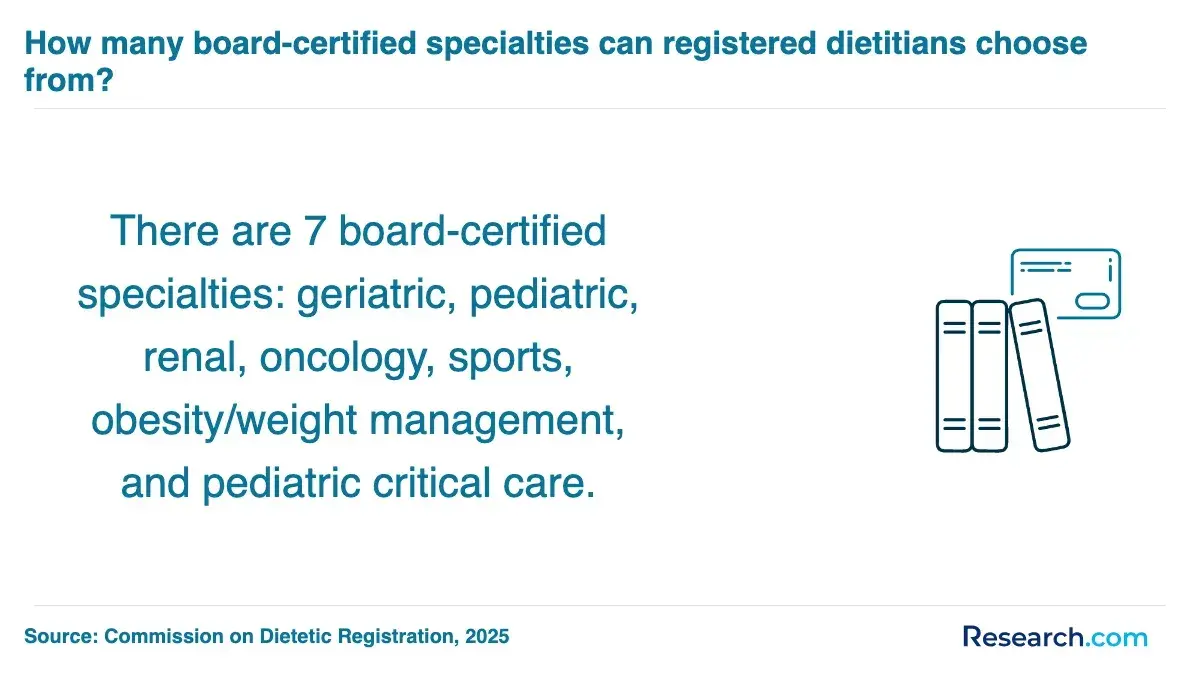
- What types of dietitian specializations can you pursue in Delaware?
- What is the average salary of a registered dietitian in Delaware?
- What emerging trends are shaping the future of registered dietitians in Delaware?
- How can registered dietitians collaborate effectively with other healthcare professionals in Delaware?
- What do you need to keep your dietitian registration active in Delaware?
- How long does it take to become a registered dietitian in Delaware?
- Can international students qualify to become registered dietitians in Delaware?
- What career paths can registered dietitians pursue in Delaware?
What degree is required to become a registered dietitian in Delaware?
The educational path to becoming a registered dietitian in Delaware involves specific degree requirements that ensure a solid foundation in the field. These requirements reflect the state's emphasis on comprehensive academic preparation and relevant coursework.
- Bachelor’s Degree: A bachelor’s degree is the minimum prerequisite, typically obtained from an ACEND-accredited dietetics program in Delaware, which provides essential knowledge in nutrition science and dietetics principles.
- Master’s Degree: Increasingly, a master’s degree is preferred or required, focusing on advanced dietetics studies and research methodologies to deepen expertise and meet evolving professional standards.
- Graduate Coursework in Related Fields: For those with degrees in related areas, completing additional graduate-level dietetics coursework is often necessary to cover specialized topics and competencies mandated by credentialing bodies.
While the bachelor’s degree in dietetics in Delaware offers foundational training, pursuing a master’s degree may enhance career prospects and align with national credentialing trends. It is also important for candidates to consider the practical aspects of their education, including supervised clinical experiences, which are critical for professional readiness.
For those exploring career options, consulting resources like the highest paying medical jobs 2025 can provide insight into the financial and occupational outlook in related healthcare professions. The chart below from the Bureau of Labor Statistics details the highest-paying industries for dietitians and nutritionists.
How many supervised practice hours are needed to become a registered dietitian in Delaware?
To become a licensed dietitian in Delaware, you must complete at least 900 hours of supervised practice in dietetics, as required by the Delaware Board of Dietetics/Nutrition. This supervised experience must be documented and overseen by a qualified supervisor who meets state requirements. In most cases, these hours are earned through an ACEND-accredited program, which often exceeds the 900-hour minimum to ensure comprehensive competency across different areas of nutrition practice.
Completion of an ACEND-accredited program is also the main pathway to eligibility for the national registration exam and state licensure, reflecting Delaware’s alignment with national credentialing standards. While the state does not mandate hours beyond the minimum, most applicants complete more extensive training through accredited programs. Accurate documentation and supervisor verification are essential for the licensure process, and recent trends show Delaware’s requirements shifting in line with national movements toward graduate-level education and advanced program completion.
What are the eligibility requirements for the dietetic registration exam in Delaware?
Meeting the eligibility requirements for the dietetic registration exam in Delaware involves several key steps that ensure candidates are academically and professionally prepared. These steps include educational qualifications, verification processes, and exam registration, with some state-specific nuances in licensure. Understanding these components is essential for those pursuing a career as a registered dietitian in Delaware.
- Minimum Educational Qualification: Candidates must hold at least a graduate degree from a U.S. Department of Education (USDE) recognized institution or its equivalent for foreign degrees, in any field accredited by a recognized agency.
- Delaware ACEND-accredited dietitian program requirements: Completion of a nutrition or dietetics curriculum from an ACEND-accredited program, such as a Didactic Program in Dietetics (DPD), Coordinated Program (CP), or Graduate Program (GP), is mandatory to cover all required nutrition science coursework.
- Verification of Eligibility: The program director of the ACEND-accredited curriculum must submit documentation to the Commission on Dietetic Registration (CDR) confirming the candidate has met all academic and supervised practice requirements before exam registration is permitted.
- Registration for the National Exam: Once eligibility is confirmed by CDR, candidates must register and pay the exam fee through the CDR’s online portal; the exam is administered at Pearson VUE centers, including locations in Delaware like Dover and Newark.
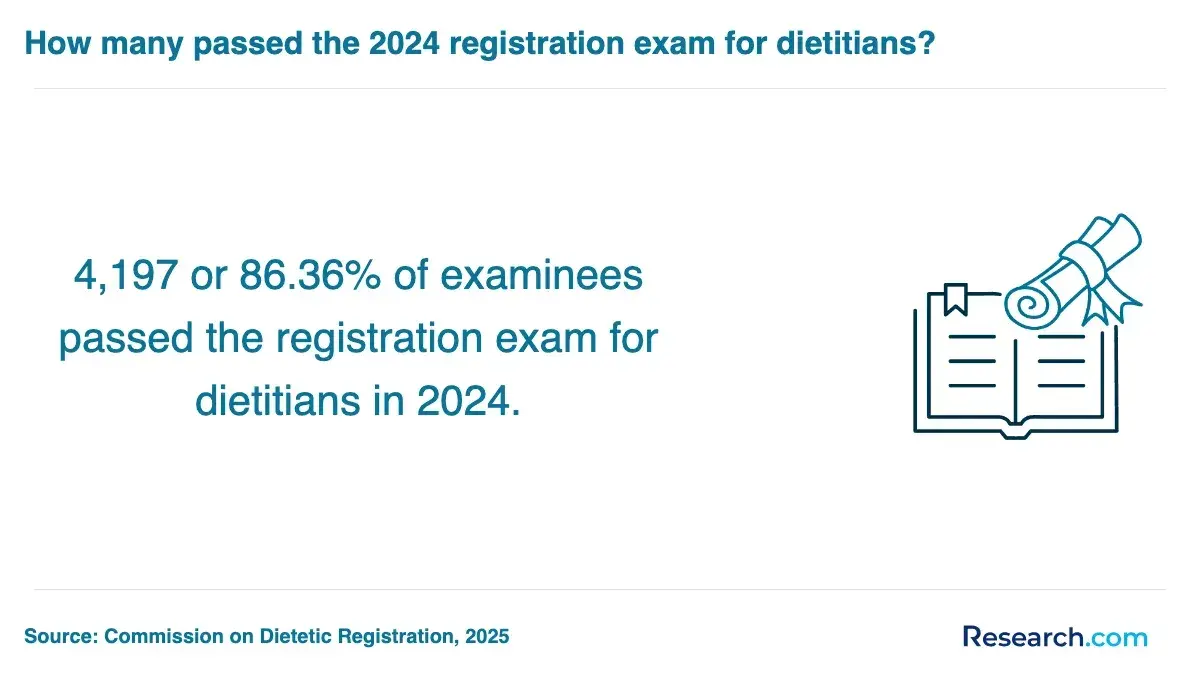
- Passing the Registration Examination: The exam is a computerized, multiple-choice test requiring candidates to answer a minimum of 125 questions, with immediate results provided; retakes are allowed after a 45-day wait if necessary.
- State-Specific Licensure Pathways: Passing the national exam is required for licensure as a Registered Dietitian in Delaware, which also accepts other nationally recognized nutrition credentials for nutritionist licensure; official transcripts and application submission to the Delaware Division of Professional Regulation complete the process.
While supervised practice hours are critical to dietetic education, they are integrated within the accredited program and must be verified by the program director prior to exam eligibility. Prospective dietitians should also consider career factors such as nutrition salary trends when planning their professional path.
How can you get a license after passing the dietetic registration exam in Delaware?
Obtaining a dietitian license in Delaware involves a series of clear but precise steps designed to verify qualifications and ensure public safety. Each phase requires attention to detail and compliance with state regulations to avoid delays or denials.
- Verify Eligibility: Confirm passing the Commission on Dietetic Registration exam and holding a current CDR registration card, which establishes basic licensure qualifications.
- Obtain Official Transcripts: Request that your academic institution to send official transcripts directly to the Delaware Board, verifying your educational background from an accredited school.
- Document Supervised Practice: Submit proof of at least 900 hours of supervised dietetic practice under an approved supervisor, ensuring practical competence.
- Complete Application: Fill out and notarize the licensure application found on the Delaware Division of Professional Regulation website.
- Pay Required Fees: Include the $182 application processing fee payable to the State of Delaware to cover administrative costs.
- Submit Exam Verification: Provide official confirmation of passing the CDR exam, typically by submitting your registration card.
- Send Practice Assessment: Have your supervisor complete and directly send the Supervised Practice Experience Assessment to validate your practical training.
- Mail All Materials: Compile and mail your application, fees, and supporting documents to the Delaware Division of Professional Regulation at the specified address.
- Await Board Review: The Board evaluates your submission for completeness and compliance; be prepared to respond to any requests for additional information.
- Receive License: Upon approval, you receive the Licensed Dietitian Nutritionist credential, permitting professional practice in Delaware.
When speaking with a registered dietitian from Delaware who graduated locally, she reflected on the licensing process as a "rigorous but fair system that really ensures readiness." She noted that while Delaware does not offer broad license reciprocity, this encouraged her to thoroughly complete each step, which ultimately provided a strong sense of professional legitimacy. “Navigating the paperwork and supervised practice assessments was challenging,” she admitted, “but having graduated nearby helped me access resources and mentorship easily.”
Her experience highlights the advantage of local support networks in managing the complex licensure requirements and the confidence gained from complying fully with Delaware’s standards, rather than relying on reciprocity agreements.
What types of dietitian specializations can you pursue in Delaware?
Dietitians in Delaware have the opportunity to specialize in various fields, tailoring their expertise to meet the diverse nutritional needs of specific populations and health conditions. These specializations require additional training, experience, and often certification beyond initial licensure. While specialization can enhance career opportunities, it also demands a commitment to ongoing education and practical experience.
Common dietitian specializations in Delaware include:
- Certified Diabetes Care and Education Specialist (CDCES): Focuses on diabetes prevention and management, requiring specific continuing education and clinical experience in diabetes care.
- Board Certified Specialist in Sports Dietetics (CSSD): Works with athletes to optimize performance through nutrition, necessitating supervised practice in sports dietetics and passing a specialty exam.
- Certified Clinical Transplant Dietitian (CCTD): Provides nutrition care for transplant patients, demanding extensive transplant-related experience and education.
- Pediatric Nutrition Specialist: Addresses the nutritional needs of infants and children, often requiring pediatric-specific training and certification.
- Renal Nutrition Specialist: Specializes in kidney disease nutrition, with an available board certification for experienced practitioners.
- Gerontological Nutrition Specialist: Focuses on nutrition for older adults, involving additional training to manage age-related health issues.
- Oncology Nutrition Specialist: Supports cancer patients nutritionally through treatment phases, with certification available for advanced experience.
- Community and Public Health Nutritionist: Designs and implements nutrition programs targeting public health goals such as food security and chronic disease prevention.
What is the average salary of a registered dietitian in Delaware?
The average annual pay for a Dietitian in Delaware is $76,066 a year. This works out to approximately $36.57 per hour, or the equivalent of $1,462 per week and $6,338 per month.
Below are some of the aspects that affect a dietitian's salary in Delaware:
- Experience Level: Salary increases with years of experience, from entry-level salaries around $47,000 to over $87,000 for seasoned professionals.
- Location Within Delaware: Urban centers like Wilmington and Dover typically offer higher wages than rural areas due to demand and cost-of-living differences.
- Work Setting: Dietitians in hospitals, government agencies, or specialized clinics generally earn more than those in schools or community programs.
- Demand and Job Activity: Delaware’s relatively small and less active job market for dietitians can limit wage growth and opportunities.
- Regional Salary Trends: Larger healthcare systems tend to pay better, while school-based roles may offer other benefits despite lower pay.
- Salary Growth Projections: Salaries are expected to grow steadily with specialization and leadership roles, reflecting national trends in nutrition awareness and healthcare needs.
The chart below from Zippia shows the registered dietitian wage gap by degee level.
What emerging trends are shaping the future of registered dietitians in Delaware?
Registered dietitians in Delaware are increasingly integrating digital innovations and modern service delivery models to meet evolving public health needs. Recent trends include the expansion of telehealth services for remote nutrition counseling, the use of data analytics for personalized dietary planning, and the incorporation of digital management tools that streamline client care and documentation. This shift is influencing curriculum updates, continuing education content, and professional development opportunities, ensuring practitioners remain at the forefront of technology-driven nutrition care. For additional insights into contemporary practice models and career opportunities, explore how to become a nutritionist in Delaware.
How can registered dietitians collaborate effectively with other healthcare professionals in Delaware?
Collaboration among registered dietitians, physicians, nurses, and allied health professionals plays a crucial role in delivering comprehensive patient care. Interdisciplinary partnerships, including opportunities like learning how to become a medical assistant in Delaware, foster mutual expertise and improve coordinated care practices. Such collaborations facilitate shared clinical insights, optimize resource utilization, and support the continuous professional development needed to address complex community health challenges.
What do you need to keep your dietitian registration active in Delaware?
Maintaining an active dietitian registration in Delaware ensures legal compliance and professional credibility, allowing practitioners to deliver safe, up-to-date nutrition care. This process requires meeting specific obligations set by the Delaware Board of Dietetics/Nutrition to demonstrate ongoing competence and ethical practice.
- Renewal Frequency: Licenses must be renewed every two years by May 31 of odd-numbered years through the DELPROS online system.
- Continuing Education: Complete 30 hours of approved continuing professional education per renewal cycle, with up to 15 hours allowed via CDR-approved self-study.
- Attestation and Audit: Licensees attest to fulfilling education requirements at renewal; some may undergo random audits requiring proof of completed CPE.
- Renewal Fees: A renewal fee is paid online, typically by credit card, with the amount specified in renewal notices.
- Late Renewal and Reinstatement: Late renewal is allowed up to one year with a fee; after five years of expiration, a new application is necessary.
- Professional Conduct: Reporting changes and adhering to ethical standards are mandatory for maintaining good standing.
When I spoke with a registered dietitian from Delaware who graduated locally, he reflected on the challenges of maintaining his registration. He noted that although the biennial renewal and continuing education requirements are rigorous, they help keep his skills sharp.
He also emphasized how license reciprocity, or the lack thereof, affected his career choices; having to meet Delaware’s specific renewal criteria meant extra effort compared to other states with more lenient transfer rules. However, he views this as an advantage in establishing trust with clients, knowing his credentials reflect strict, state-specific standards rather than a general license. Overall, he found the process demanding but ultimately rewarding in sustaining professional growth.
How long does it take to become a registered dietitian in Delaware?
Becoming a registered dietitian in Delaware involves a timeline that typically ranges from five to seven years, reflecting the combined duration of academic study and practical training. The registered dietitian education and training requirements in Delaware often require students to complete both undergraduate and graduate degrees, along with supervised practice, before they are eligible for credentialing. This timeline can vary depending on program structure and individual circumstances.
Most candidates spend about four to six years earning the necessary degrees, usually including a master’s, followed by one to two years of supervised practice such as internships or coordinated programs. Delays may occur due to part-time study, difficulty securing supervised practice placements, or time taken to pass the registration exam. These factors contribute to the overall duration and highlight the importance of planning for flexibility in the pathway.
For those considering alternatives, exploring different program formats or accelerated pathways might shorten the time to credentialing. Additionally, students interested in less traditional routes may find value in researching online dietetics programs as potential options. Still, it is essential to weigh the benefits and challenges of each approach when estimating how long does it take to become a registered dietitian in Delaware.
Can international students qualify to become registered dietitians in Delaware?
International students have the opportunity to qualify as registered dietitians in Delaware, though they must navigate additional steps beyond those required of domestic applicants. Meeting credential evaluation and visa requirements is essential to align with U.S. educational and legal standards.
- Degree Equivalency Verification: Foreign degrees must be evaluated by a recognized credential agency to confirm equivalency to a U.S. regionally accredited bachelor’s or master’s degree before applying to ACEND-accredited programs.
- Enrollment in ACEND-Accredited Programs: Acceptance into an ACEND-accredited dietetics program within the U.S., such as those at the University of Delaware or Delaware State University, is mandatory following degree verification.
- Supervised Practice Completion: International students must complete at least 1,000 hours of supervised practice within an ACEND-accredited internship or coordinated program, ensuring practical experience meets U.S. standards.
- Language Proficiency: Non-native English speakers are typically required to demonstrate English proficiency through exams like TOEFL or IELTS, although specific requirements can vary by program.
- Credentialing Examination Eligibility: Since January 1, 2024, candidates must hold a master’s degree or higher to sit for the CDR registration exam, a requirement that applies equally to international applicants.
- Visa and Legal Status: Maintaining appropriate visa status, such as F-1 or J-1, is essential during study and internships; work authorizations like OPT may be necessary for supervised practice.
- State Licensure Application: After obtaining the RDN credential, international graduates must apply for Delaware licensure, which recognizes the CDR credential as the standard for practice.
For those exploring advanced studies, resources such as masters of dietetics programs demonstrate the importance of accredited programs and credential recognition, a principle equally relevant for dietetics professionals seeking licensure in Delaware.
What career paths can registered dietitians pursue in Delaware?
Registered dietitians in Delaware have multiple career opportunities across diverse settings, reflecting a dynamic field with varying demands and rewards. These roles offer different outlooks and salaries, which can influence career decisions for those exploring registered dietitian jobs in Delaware.
- Clinical Dietitian: Employed in hospitals or outpatient clinics, focusing on medical nutrition therapy for patients with chronic or acute conditions; salaries range from $64,330 to $97,260 annually with steady demand.
- Community Nutritionist: Work within public health agencies or nonprofits to deliver nutrition education programs, usually earning near the state average of $75,060.
- Outpatient Weight Management Specialist: Provide personalized counseling in private or outpatient settings, with hourly rates around $55, equating to about $114,400 annually for full-time roles, though many positions are part-time.
- Long-Term Care Dietitian: Support nursing home residents and rehabilitation patients, offering competitive pay and development opportunities in facilities like Coral Springs Rehab.
- Private Practice Dietitian: Operate independently or in groups with income varying widely but potentially exceeding the state average based on client volume and services.
- Corporate Wellness Consultant: Advise businesses on employee nutrition and wellness programs; these roles are niche but often pay at or above the state average.
- Research and Academia: Limited in Delaware, these positions focus on teaching or research with stable career paths and pay aligned with national academic standards.
- Diabetes Educator: Specializes in diabetes management, often part-time with pay around $55/hour, reflecting strong demand due to rising chronic disease rates.
- School Nutrition Specialist: Manage school meal programs and policies with stable full-time positions offering salaries near the state average.
For those considering advancing their credentials to enhance career prospects, exploring the best jobs with a online nutrition masters degree may provide valuable insights into specialized roles and higher earning potential in this evolving field.
What do registered dietitians in Delaware say about their careers?
- Completing my dietetic program at Delaware State University truly set the foundation for a rewarding career. Starting as a registered dietitian in a local school allowed me to directly influence children’s health and nutrition in a meaningful way. I love how stable and supportive the job market is here, which gives me peace of mind as I grow professionally. It’s deeply fulfilling to contribute to the well-being of young students and watch them develop healthier habits. The community’s welcoming spirit makes every day inspiring and full of purpose. - Keane
- After finishing my studies at the University of Delaware, beginning my career in a local academic institution opened doors I hadn’t imagined. Delaware’s unique coastal environment presents interesting challenges and opportunities for nutrition education, especially with the emphasis on local food systems and sustainability. This experience has sharpened my skills and expanded my understanding of how culture and environment shape dietary needs. I find great satisfaction in mentoring students and helping them embrace nutrition as a vital part of their lives. The balance of professional growth and community impact is unmatched here. - Yara
- The personal growth I experienced while completing my dietetics program at Wilmington University was profound. Working as a registered dietitian in Delaware’s school system has allowed me to engage with diverse populations and address health disparities firsthand. It’s a challenging but incredibly rewarding path, especially knowing that I’m helping to shape healthier futures for children in our communities. The career advancement potential in Delaware’s academic settings is strong, and I appreciate the ongoing professional development resources available. This journey has been both a privilege and an honor. - Divo
Related Articles for Nearby States
- 2027 Steps to Become a Registered Dietitian in Maryland
- 2027 Steps to Become a Registered Dietitian in New Jersey
- 2027 Steps to Become a Registered Dietitian in Pennsylvania
- 2027 Steps to Become a Registered Dietitian in Virginia
- 2027 Steps to Become a Registered Dietitian in West Virginia
- 2027 Steps to Become a Registered Dietitian in New York
- 2027 Steps to Become a Registered Dietitian in Connecticut
- 2027 Steps to Become a Registered Dietitian in Rhode Island
- 2027 Steps to Become a Registered Dietitian in North Carolina
- 2027 Steps to Become a Registered Dietitian in Ohio
References:
- O*NET OnLine (n.d.). Delaware Employment Trends 29-1031.00 - Dietitians and Nutritionists. Retrieved from https://www.onetonline.org/link/localtrends/29-1031.00?st=DE
- US BLS (2025). Dietitians and Nutritionists. Retrieved from https://www.bls.gov/ooh/healthcare/dietitians-and-nutritionists.htm#tab-5
- Zippia (2025). Registered dietitian demographics and statistics in the US. Retrieved from https://www.zippia.com/registered-dietitian-jobs/demographics/
- ZipRecruiter (2025). Dietitian Salary in Delaware. Retrieved from https://www.ziprecruiter.com/Salaries/Dietitian-Salary--in-Delaware
Other Things You Should Know About Being a Registered Dietitian in Delaware
In 2027, aspiring registered dietitians in Delaware must earn a bachelor's degree in dietetics, complete a supervised practice program, and pass the Commission on Dietetic Registration (CDR) exam. Starting from 2024, a master's degree will be required to sit for the CDR exam.
Dietetic internships in Delaware are typically unpaid, as is common nationwide, since many programs are structured as supervised practice experiences required for registration eligibility. While some internships may offer stipends or hourly wages, these opportunities are limited and vary by program and placement site.
Prospective dietetic interns should prepare financially for this period, as securing paid positions can be competitive and are not guaranteed. Exploring scholarships, grants, or part-time work may help offset expenses during the internship phase of becoming a registered dietitian in Delaware.
Scholarships and financial aid opportunities are available for dietetics students in Delaware, primarily through university programs and professional organizations. The University of Delaware offers various scholarships specifically for nutrition and dietetics majors, helping to alleviate tuition costs.
Furthermore, students can explore funding from the Academy of Nutrition and Dietetics Foundation, which provides scholarships and grants nationwide to support aspiring registered dietitians. Federal financial aid, including Pell Grants and student loans, is also accessible to eligible students pursuing dietetics programs in Delaware. Combining these resources can make education more affordable and support students on their path to becoming registered dietitians.