
2027 Steps to Become a Registered Dietitian in Florida

Co-Founder and Chief Data Scientist
Florida faces a growing demand for registered dietitians as chronic diseases linked to poor nutrition affect over 35% of its adult population. This shortage challenges healthcare providers and highlights the need for qualified professionals.
Pursuing a career as a registered dietitian in Florida offers promising job stability and competitive salaries, driven by an aging population and increasing health awareness. Emerging trends suggest expanding roles in telehealth and community nutrition initiatives, creating new opportunities.
This article, prepared by experts in career planning, outlines essential steps to become a registered dietitian in Florida, equipping readers to navigate evolving requirements and future prospects effectively.
Key Things to Know About Becoming a Registered Dietitian in Florida
- Complete a minimum of a bachelor’s degree in nutrition or dietetics from an accredited program, anticipating the 2024 requirement for a master’s degree to become standard.
- Fulfill a supervised practice internship of at least 1,200 hours, increasingly offered through innovative virtual and hybrid models to expand accessibility in Florida.
- Pass the Commission on Dietetic Registration (CDR) exam, with Florida’s demand for registered dietitians projected to grow 9% by 2030, highlighting strong career prospects.
- What degree is required to become a registered dietitian in Florida?
- How many supervised practice hours are needed to become a registered dietitian in Florida?
- What are the eligibility requirements for the dietetic registration exam in Florida?
- How can you get a license after passing the dietetic registration exam in Florida?
- What types of dietitian specializations can you pursue in Florida?
- What is the average salary of a registered dietitian in Florida?
- What do you need to keep your dietitian registration active in Florida?
- What continuing education and networking opportunities boost a dietitian's career in Florida?
- Could a background in allied health fast-track my registered dietitian journey in Florida?
- How long does it take to become a registered dietitian in Florida?
- Can international students qualify to become registered dietitians in Florida?
- What career paths can registered dietitians pursue in Florida?
What degree is required to become a registered dietitian in Florida?
The evolving landscape of nutritional science and healthcare suggests increasing emphasis on advanced education for registered dietitians in Florida. Emerging trends point toward more rigorous academic preparation to meet future professional demands.
Key degree pathways currently shaping the profession include:
- Master’s Degree in Nutrition or Dietetics: Completion of an accredited nutrition degree program in Florida at the master’s level is becoming the standard, reflecting the growing complexity of dietetic practice and regulatory expectations.
- Didactic Program in Dietetics (DPD): This undergraduate program remains foundational but is increasingly viewed as a stepping stone toward master’s degree requirements for Florida registered dietitian licensure.
- Master’s Degree Requirements for Florida Registered Dietitian: Florida is aligning with national trends requiring a master’s degree to qualify for registration, ensuring candidates acquire advanced competencies in clinical nutrition, research, and public health.
- Supervised Practice Program: Regardless of degree, completion of a supervised internship or coordinated program is essential, providing practical experience that complements academic learning.
As demand rises for dietitians with higher qualifications, future candidates may find that integrating technology and interdisciplinary coursework into their studies becomes increasingly important. Those aiming for the highest paying job in medical field will likely benefit from pursuing these rigorous educational paths.
How many supervised practice hours are needed to become a registered dietitian in Florida?
To become a registered dietitian in Florida, candidates must complete a minimum of 900 supervised practice hours, which is slightly lower than the national standard of 1000 hours required by many ACEND-accredited programs. This state-specific requirement reflects Florida’s regulatory approach while still aligning closely with national training expectations.
The following points outline key factors influencing the supervised practice hour requirements and their implications for aspiring dietitians in Florida.
- Florida State Licensure Requirement: The Florida Department of Health mandates at least 900 hours of planned, continuous supervised practice, emphasizing state oversight and licensure eligibility.
- ACEND-Accredited Internship Standards: Most Florida internships follow a 1000-hour standard, preparing candidates for both the national registration exam and state licensure, suggesting a dual compliance model.
- Required Practice Settings: The 900-hour Florida requirement specifies minimum exposure across clinical nutrition, community nutrition, and foodservice management, ensuring comprehensive practical experience.
- Educational Alternatives: Florida permits documentation of equivalent education or experience as a substitute for some supervised hours, though guidelines remain in development, indicating potential flexibility.
- Recent Academic Changes: Starting 2024, a master’s degree is required to qualify for the national registration exam, raising the educational bar for dietitians entering the field.
- Licensure Application and Fees: Candidates must submit applications, pay fees totaling $165, and verify supervised practice completion to the Florida Department of Health, underscoring administrative prerequisites.
What are the eligibility requirements for the dietetic registration exam in Florida?
The eligibility requirements for the registered dietitian exam in Florida are evolving to reflect both national standards and state-specific licensure rules. Candidates must meet rigorous educational and credentialing benchmarks to qualify for the CDR exam, which remains a pivotal step in becoming a licensed dietitian in Florida. Future trends may further refine these criteria as the profession advances.
- Minimum Educational Qualification: Candidates must possess at least a master’s degree from a USDE-recognized accredited institution, a requirement effective nationwide since January 1, 2024.
- Required Nutrition Coursework: Completion of a major course of study in human nutrition, food and nutrition, dietetics, or food management is mandatory, and must be within an ACEND-accredited Didactic Program in Dietetics (DPD), Coordinated Program (CP), or Graduate Program (GP).
- Program Director Submission: Eligibility verification must be submitted by the program director of the ACEND-accredited program directly to the CDR before exam registration is permitted.
- National Exam Registration and Passing: Candidates must register for and pass the CDR’s national Registration Examination for Dietitians to achieve credentialing.
- State-Specific Licensure Pathways: Florida requires official transcripts and documentation to be sent to the Dietetics and Nutrition Practice Council; applicants can pursue licensure via examination or endorsement depending on prior credentials.
- Foreign Degree Holders: Those with foreign academic degrees must have credentials validated by a US Department of Education-approved agency to demonstrate equivalency to US baccalaureate or postbaccalaureate degrees.
While supervised practice hours remain a core component nationwide, the increased emphasis on advanced degrees and stringent state licensure documentation highlights an ongoing trend toward higher professional standards. Prospective dietitians in Florida should anticipate that meeting both the Florida dietitian registration exam qualifications and national requirements will continue to be critical.
To explore various career opportunities in nutrition and how these pathways might evolve, consider reviewing this nutrition career path.
How can you get a license after passing the dietetic registration exam in Florida?
Obtaining a dietitian license in Florida after passing the registration exam involves several strategic steps that align with evolving professional standards and digital application processes.
- Submit Application: Complete the official Dietetics and Nutrition Application online, ensuring all personal and educational details are accurate for swift processing.
- Verify Exam Credentials: Arrange for the Commission on Dietetic Registration to send your official exam scores directly, which could increasingly move toward digital verification.
- Pay Fees: Include the required licensing fee, mindful that future fee structures may adapt to inflation or administrative updates.
- Confirm Education and Experience: Provide transcripts and proof of supervised practice hours, potentially leveraging electronic records for faster validation.
- Provide Additional Documents: Submit any out-of-state licenses or legal documents to support your application, anticipating more streamlined reciprocity checks.
- Await Review and Issuance: Expect a review period that may shorten as state agencies adopt more automated systems for quicker license delivery.
- Consider Reciprocity: If licensed elsewhere, explore endorsement options, with future policies possibly expanding interstate recognition to ease mobility.
When I spoke with a registered dietitian from Florida who graduated locally, she reflected on her licensing journey with thoughtful nuance. “Navigating the application was straightforward, but the lack of full reciprocity from neighboring states meant I had to carefully prepare extra documentation,” she explained.
She appreciated how the council’s thorough review ensured her qualifications were respected, though she noted, “Having graduated here helped me align quickly with Florida’s specific requirements without unexpected delays.” Her experience highlights the balance between rigorous standards and the potential benefits of growing reciprocity, which could ease future transitions for dietitians moving between states.
What types of dietitian specializations can you pursue in Florida?
Florida offers a dynamic landscape for dietitians to develop expertise in areas that address both current health challenges and future nutritional needs. Emerging trends in healthcare technology and demographic shifts suggest expanding roles for dietitians in specialized sectors. Below are key dietitian specializations that reflect these evolving opportunities in Florida.
- Clinical Dietetics: Provides medical nutrition therapy in healthcare settings to manage chronic diseases and improve patient outcomes.
- Community Nutrition: Focuses on public health initiatives promoting healthy eating and disease prevention across diverse populations.
- Food Service Management: Oversees institutional food operations ensuring nutritional quality, safety, and budget efficiency.
- Sports Nutrition: Develops tailored nutrition plans to enhance athletic performance and recovery for athletes at all levels.
- Pediatric Nutrition: Addresses the unique dietary needs of children, supporting growth and managing conditions like allergies and obesity.
- Geriatric Nutrition: Specializes in nutrition care for older adults, vital in a state with a large senior population facing chronic health issues.
- Renal Nutrition: Manages dietary interventions for patients with kidney disease, often working closely with dialysis centers.
- Research Dietetics: Conducts nutrition science studies to innovate dietary guidelines and improve public health strategies.
- Education and Academia: Trains future dietitians through university teaching and curriculum development, ensuring high standards in the profession.
- Nutrition Informatics: Combines nutrition science with technology to enhance data management and optimize patient care in healthcare systems.
What is the average salary of a registered dietitian in Florida?
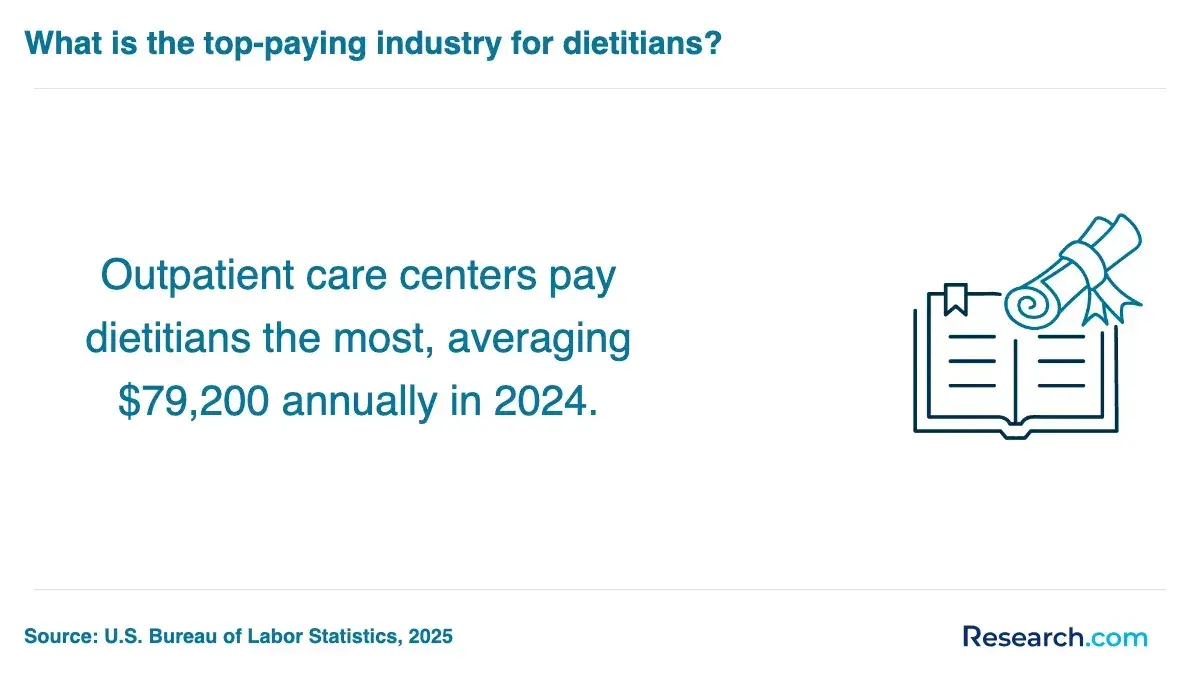
The average salary of a registered dietitian in Florida is approximately $80,813 per year, or about $40.90 per hour, based on 2025 data. This figure varies by source, with some estimates ranging from $61,310 to $67,211 annually and hourly wages between $26.83 and $40.35. Compared to the national average hourly wage of $49.59, Florida’s salaries tend to be 23–27% lower, reflecting regional economic factors and demand.
- Location within Florida: Urban centers like Tampa report higher hourly wages around $33.94, whereas rural areas generally offer lower pay.
- Experience level: Entry-level dietitians start near $65,517 annually, while experienced professionals can earn up to $109,496.
- Work setting: Hospitals and large healthcare systems typically pay more than schools or community organizations.
- Demand and job market: Florida ranks 50th nationally for dietitian pay, indicating a competitive market with slower growth.
- Regional trends: Metropolitan areas such as Miami, Orlando, and Tampa provide higher salaries compared to smaller cities and rural locations.
- Salary growth projections: Increasing focus on nutrition and chronic disease management suggests steady future salary growth and advancement opportunities.
What do you need to keep your dietitian registration active in Florida?
Maintaining an active dietitian registration in Florida is essential for legal practice and professional credibility. Staying current ensures compliance with evolving standards and protects public health, while positioning dietitians for future career growth amid changing healthcare demands.
- Biennial License Renewal: Renew your license every two years by May 31 of odd-numbered years to maintain your legal right to practice.
- Continuing Education Requirements: Complete 30 hours of approved continuing education per cycle, including at least 10 hours of live training and specific courses like preventing medical errors.
- Renewal Application and Fees: Submit your renewal application and pay fees before expiration, with additional charges such as fingerprint retention fees if applicable.
- Background Screening: Maintain or update fingerprints for background checks as required by the state.
- CE Reporting: Report all continuing education through Florida’s official system, CE Broker.
A registered dietitian from Florida, who graduated locally, shared his experience navigating these requirements. He noted the initial relief in completing the first renewal cycle, emphasizing that understanding fingerprint retention deadlines was challenging but crucial. “The state’s clear reminders helped prevent any lapse,” he recalled.
He also reflected on license reciprocity, appreciating that having a Florida license simplified his practice mobility within the state, unlike peers who faced delays transferring credentials from other states. “Staying proactive with CE and renewal is not just a formality—it’s a professional commitment that opens doors for advancement.” His journey highlights the importance of organized planning and embracing the evolving regulatory landscape.
What continuing education and networking opportunities boost a dietitian's career in Florida?
Registered dietitians in Florida can further enhance their expertise and broaden professional connections through a variety of accredited continuing education programs and networking events. Industry-specific webinars, specialized workshops, and professional conferences provide avenues to stay updated on emerging practices, such as telehealth innovations and community nutrition strategies, while also reinforcing compliance with evolving practice standards. Additionally, active participation in state and national dietetic associations can offer mentorship, collaborative research opportunities, and insights into policy developments, all of which are critical for sustained career growth. For professionals eyeing complementary roles, consider exploring how to become a nutritionist in Florida as an alternative avenue to diversify your expertise.
Could a background in allied health fast-track my registered dietitian journey in Florida?
Candidates with prior experience in allied health, such as roles obtained through learning how to become a medical assistant in Florida, may benefit from a deeper understanding of clinical environments and patient care dynamics. This practical exposure can enhance communication skills, foster interdisciplinary collaboration, and provide contextual insights during dietetic internships. While such experience does not replace the required academic credentials and supervised practice hours, it may strengthen applications and contribute to a more adaptable professional profile for those entering Florida’s competitive healthcare landscape.
How long does it take to become a registered dietitian in Florida?
The journey to become a registered dietitian in Florida generally spans six to seven years, from starting college to earning the dietetic registration credential. While the timeline can fluctuate based on individual choices and program structures, most candidates complete their education and supervised practice within this period. The process integrates undergraduate and graduate studies alongside required practical experience, shaping a comprehensive professional foundation.
Emerging educational models and integrated programs are reshaping the traditional timeline. For example, some universities now offer combined master's and internship paths that reduce the overall duration, providing a more streamlined route. Such innovations could influence how long does it take to become a registered dietitian in Florida by making the process more efficient without compromising quality.
Future trends may also include greater flexibility through online learning options and varied internship formats, which can affect the timeline and accessibility for many students. For those exploring these opportunities, resources like best online nutrition degree programs can offer valuable alternatives. As the profession evolves, so will the pathways to meet the registered dietitian education requirements in Florida, potentially shortening or customizing the timeline to fit diverse learner needs.
Can international students qualify to become registered dietitians in Florida?
International students have a clear pathway to become registered dietitians in Florida by fulfilling certain credentialing and educational criteria. Meeting these requirements ensures their qualifications align with state standards and supports their integration into Florida’s healthcare workforce.
- Degree Equivalency Evaluation: International degrees must be officially evaluated to confirm equivalency to a U.S. bachelor’s or graduate degree in relevant nutrition or dietetics fields as mandated by Florida law and the CDR.
- Official Transcript Submission: Transcripts must be sent directly from the international institution or submitted with the institution’s official seal in a sealed envelope to maintain authenticity and comply with Florida standards.
- Completion of Supervised Practice: At least 900 hours of pre-professional supervised practice or an equivalent combination of education and experience is required, aligning with Florida administrative rules and ensuring practical competency.
- ACEND-Accredited Program Admission: Regardless of prior international education, coursework and supervised practice must be completed through ACEND-accredited programs, which are increasingly accessible to international applicants in Florida.
- English Language Proficiency: Demonstrating proficiency in English through tests like TOEFL or IELTS is typically necessary for admission and credentialing, reflecting the evolving expectations of dietetics programs and the CDR.
- Visa and Legal Status Compliance: Maintaining valid visa status throughout education and supervised practice is essential to meet U.S. immigration laws and program requirements.
- Licensure Application for Foreign Graduates: Foreign graduates must follow a tailored application process with the Florida Department of Health, including specific documentation to become eligible for the CDR exam.
Emerging trends suggest continued growth in demand for dietitians in Florida, positioning international students to contribute meaningfully to this dynamic field. For those seeking advanced academic opportunities, exploring options such as the best dietetics masters programs can provide valuable knowledge that further elevates nutrition and dietetics expertise.
What career paths can registered dietitians pursue in Florida?
The landscape of registered dietitian jobs in Florida is evolving, offering diverse career opportunities across clinical, community, and emerging digital health sectors. These roles reflect both the growing population and increasing demand for preventive and specialized nutrition services.
- Clinical Dietitian: Employed mainly in hospitals and outpatient clinics, these dietitians provide medical nutrition therapy with salaries ranging from $61,250 to $86,330, benefiting from Florida’s expanding healthcare infrastructure.
- Long-Term Care Dietitian: Serving elderly populations in nursing homes and assisted living, this role is fueled by Florida’s large senior demographic, with average pay near $70,180.
- Community/Public Health Dietitian: Working in public health departments and nonprofits, job growth is strong due to state health initiatives, with salaries between $65,000 and $75,000.
- Private Practice Dietitian: Offering flexible, personalized nutrition counseling, these professionals can earn above the state average, especially in metropolitan areas like Miami at $73,830.
- Virtual/Telehealth Dietitian: Growing in popularity, this role provides remote consultations statewide, with compensation comparable to in-person services depending on experience.
- Academia/Instructor: Teaching dietetics in colleges requires advanced degrees and offers stable roles often exceeding $70,000 annually.
For those exploring career opportunities for dietitians in Florida, considering advanced education options like the cheapest online masters in nutrition can enhance prospects in this competitive and expanding field.
What do registered dietitians in Florida say about their career?
- Completing my dietetics program at the University of Central Florida gave me a strong foundation and a real connection to the community I serve. Starting my career in a local school allowed me to channel my passion for nutrition into helping students make healthier choices every day. Florida’s diverse population and vibrant culture provide unique challenges, but also incredible opportunities to tailor nutrition education in ways that resonate deeply with families. This work has been incredibly fulfilling, knowing I contribute to the well-being and future success of young people in my own backyard. - Analise
- My journey began at Florida State University, where the rigorous program prepared me well for the dynamic environment of school nutrition services. Working within an academic institution has offered me stability and ongoing professional growth, with ample chances to advance through leadership roles. I appreciate how Florida’s abundant natural resources inspire creative, locally sourced meal plans that promote sustainability and health. Reflecting on my career, I’m proud of the impact I make daily in shaping healthy habits and supporting student achievement. - Jerome
- Graduating from the University of South Florida’s program was a pivotal moment in my life, opening doors to a rewarding career as a registered dietitian in a local school. The multicultural fabric of Florida brings unique nutritional needs and opportunities to innovate in ways that respect cultural traditions while promoting wellness. This role has challenged me to grow personally and professionally, combining my love for science with a heartfelt mission to empower children and families. It’s inspiring to witness the positive ripple effect of nutrition education on the broader community. - Rafael
Related Articles for Nearby States
- 2027 Steps to Become a Registered Dietitian in Georgia
- 2027 Steps to Become a Registered Dietitian in Alabama
- 2027 Steps to Become a Registered Dietitian in South Carolina
- 2027 Steps to Become a Registered Dietitian in Mississippi
- 2027 Steps to Become a Registered Dietitian in Tennessee
- 2027 Steps to Become a Registered Dietitian in North Carolina
- 2027 Steps to Become a Registered Dietitian in Louisiana
- 2027 Steps to Become a Registered Dietitian in Kentucky
- 2027 Steps to Become a Registered Dietitian in Arkansas
- 2027 Steps to Become a Registered Dietitian in Virginia
References:
- BecomeANutritionist.org. (n.d.). Becoming a Registered Dietitian in Florida. BecomeANutritionist.org
- Commission on Dietetic Registration. (2025). Registered Dietitian (RD) and Registered Dietitian Nutritionist (RDN). CDR
- Florida Academy of Nutrition and Dietetics. (n.d.). Florida Dietetics and Nutrition Licensing. Florida Academy
- Florida Department of Health. (2025). Application and License Requirements. Florida Health
- Florida International University. (2025). Bachelor of Science in Dietetics & Nutrition - Didactic Program in Dietetics. FIU
- Florida State University. (2025). Dietetic Internship. FSU
- NutritionED.org. (n.d.). Florida Nutritionist Certification. NutritionED.org
- University of North Florida. (2025). Nutrition & Dietetics - Didactic Program in Dietetics (B.S.). UNF
- University of South Florida. (2025). Online MPH with a Concentration in Nutrition and Dietetics. USF
- Zippia. (n.d.). Registered dietitian demographics and statistics in the US. Zippia
Other Things You Should Know About Becoming a Registered Dietitian in Florida
The cost of the registration examination for dietitians in Florida in 2027 is $200. This examination is conducted by the Commission on Dietetic Registration (CDR) and is a required step to achieve the Registered Dietitian credential.
Yes, scholarships are available for students pursuing a registered dietitian degree in Florida in 2026. Various organizations, including the Academy of Nutrition and Dietetics, offer scholarships based on academic performance, financial need, and career goals to help alleviate tuition costs.


