
2027 Steps to Become a Registered Dietitian in New Jersey

Co-Founder and Chief Data Scientist
Pursuing a career as a registered dietitian in New Jersey is a smart move. With nearly 20% of residents facing diet-related health challenges, the demand for skilled professionals continues to grow. The state also offers competitive salaries and strong job outlooks, making dietetics both a meaningful and rewarding career choice.
This article, prepared by career planning experts, breaks down the essential steps to becoming licensed in New Jersey. From education and internships to certification requirements, it provides a clear guide to help you confidently navigate your path to success.
Key Things to Know About Becoming a Registered Dietitian in New Jersey
- Complete a bachelor’s degree in nutrition or dietetics—New Jersey requires coursework accredited by the Accreditation Council for Education in Nutrition and Dietetics (ACEND) to qualify for registration.
- Finish a supervised dietetic internship of at least 1,200 hours, which is mandatory before sitting for the national RDN exam.
- Pass the Commission on Dietetic Registration (CDR) exam and then apply for state licensure to practice legally in New Jersey.
- What degree is required to become a registered dietitian in New Jersey?
- How many supervised practice hours are needed to become a registered dietitian in New Jersey?
- What are the eligibility requirements for the dietetic registration exam in New Jersey?
- How can you get a license after passing the dietetic registration exam in New Jersey?
- What types of dietitian specializations can you pursue in New Jersey?
- What is the average salary of a registered dietitian in New Jersey?
- How can professional associations boost my registered dietitian career in New Jersey?
- How can interdisciplinary collaboration enhance your registered dietitian career in New Jersey?
- What do you need to keep your dietitian registration active in New Jersey?
- How long does it take to become a registered dietitian in New Jersey?
- Can international students qualify to become registered dietitians in New Jersey?
- What career paths can registered dietitians pursue in New Jersey?
What degree is required to become a registered dietitian in New Jersey?
If you’re aiming to become a registered dietitian in New Jersey, there are some key degrees and credentials you’ll need to keep in mind. These requirements ensure you’re fully prepared and meet the latest standards in the field.
- Bachelor’s Degree in Dietetics or Nutrition: This is the basic foundation, and it must be earned from an ACEND-accredited dietetics program that New Jersey recognizes. It covers all the essential science and nutrition courses you’ll need for further training.
- Completion of an ACEND-Accredited Dietetic Internship: After your bachelor’s, you’ll need to complete about 1,200 hours of supervised practice. This hands-on experience is a must for licensure and helps you apply what you’ve learned in real-world settings.
- Master’s Degree in Nutrition or Related Field: Starting January 1, 2024, there’s a master’s degree requirement for registered dietitian in New Jersey candidates. This degree can be in nutrition, public health, or a similar area, and it must come from an accredited school.
- Verification Statement: You’ll get this from your ACEND-accredited program once you finish all coursework and internships, which lets you sit for the national exam.
- Passing the Registration Examination for Dietitians: The final step is passing the national exam to officially become a Registered Dietitian Nutritionist (RDN).
For those exploring options, check out the best nutrition certification online to complement your education and boost your credentials. Meanwhile, the chart below highlights the most common majors chosen by registered dietitians on this career path.
How many supervised practice hours are needed to become a registered dietitian in New Jersey?
To become a registered dietitian in New Jersey, you need to complete a supervised practice experience that meets the national standard of at least 1,200 hours. This requirement aligns with ACEND guidelines and is consistent across the U.S. Beyond hours, there are important program and licensure details to keep in mind. Here’s a quick overview of the key factors related to supervised practice in New Jersey:
- ACEND-Accredited Program Requirement: Supervised practice must be completed through an ACEND-accredited program, such as a Coordinated Program (CP) or a Didactic Program in Dietetics (DPD), followed by a Dietetic Internship (DI).
- Program Structure: Coordinated Programs integrate supervised practice with academic coursework, while DPDs require a separate internship after graduation.
- Uniform National Standard: New Jersey follows the national baseline for supervised practice hours, ensuring consistency with other states.
- Recent Program Examples: Some programs, like Saint Elizabeth University’s M.S. in Nutrition, offer over 1,100 hours, sometimes exceeding the minimum.
- Licensure Status: The state requires CDR registration or proof of meeting education and supervised practice standards to qualify for licensure, with a licensure system being implemented.
- Master’s Degree Requirement: Starting in 2024, candidates must hold a master’s degree to be eligible for the CDR exam, along with completing supervised practice.
What are the eligibility requirements for the dietetic registration exam in New Jersey?
Getting ready to take the dietetic registration exam in New Jersey means meeting a few key eligibility requirements. These focus mostly on your education, coursework, and some state-specific rules you should know about. Here’s a straightforward guide to what you need in order to qualify:
- Minimum Educational Qualifications: You must have at least a graduate degree from a U.S. Department of Education-recognized accredited institution or an equivalent foreign institution, no matter the major, though nutrition-related fields are common.
- Required Nutrition Coursework: Completion of an ACEND-accredited dietetics program, like a Didactic Program in Dietetics (DPD), Coordinated Program (CP), or Graduate Program (GP), is mandatory to ensure you have the foundational nutrition knowledge.
- Submission of Eligibility by Program Directors: Once you finish the necessary coursework and degree, your program director needs to verify your eligibility and send it to the Commission on Dietetic Registration (CDR) so you can register for the exam.
- National Registration Exam Requirement: You have to register for and pass the CDR’s Registration Examination for Dietitians, which is offered at various Pearson VUE test centers across New Jersey, including places like Princeton and Jersey City.
- State-Specific Licensure Pathways: New Jersey requires applicants to be at least 18 years old and of good moral character. You can get licensed either by holding valid RDN registration with the CDR or by proving you’ve completed all educational, supervised practice, and exam requirements.
Keep in mind that if your degree is from outside the U.S., you’ll need a credential evaluation. Also, while supervised practice hours are part of the process, the focus here is mainly on academic and exam eligibility. For those curious about the broader nutrition career requirements, this is a solid starting point to understand what New Jersey expects.
How can you get a license after passing the dietetic registration exam in New Jersey?
Here’s a quick rundown of what you’ll need to do after passing the dietetic registration exam in New Jersey to get your state license:
- Confirm Eligibility: Make sure you’re 18 or older, have good moral character, and hold a current Registered Dietitian Nutritionist (RDN) credential from the Commission on Dietetic Registration.
- Gather Documentation: Collect your CDR registration proof, transcripts, and supervised practice records. If your degree is from outside the U.S., get a credential evaluation done by an approved service.
- Monitor Licensing Updates: Keep an eye on the New Jersey Board of Dietitians and Nutrition or the state Academy website for when the actual license application becomes available.
- Complete the Application: Once the application is live, fill it out carefully with your personal and educational details as requested by the Board.
- Submit Fees: Pay the required application and licensing fees as specified by the Board when the process starts.
- Background Check: Be ready for a background check or moral character verification as part of the process.
- Wait for Board Review: After submission, your application will be reviewed and, if everything checks out, you’ll get your official license to practice in New Jersey.
A registered dietitian from New Jersey who graduated from a local school shared how the licensing process felt a bit like waiting for a green light that hadn’t turned on yet. She mentioned that while she could practice using her RDN credentials, not having the state license yet meant she was cautious about using the official “Licensed Dietitian Nutritionist” title.
She found the idea of reciprocity interesting because, coming from New York, she hoped for a smoother path, but learned that New Jersey’s rules were still catching up. Despite that, she appreciated that the state’s upcoming system would help standardize the profession and give more recognition to dietitians like herself. “It’s a bit of a waiting game, but knowing the Board is working on it makes me optimistic,” she said, reflecting on how staying informed and prepared really helped her feel ready when the time comes.
What types of dietitian specializations can you pursue in New Jersey?
If you’re considering a career as a dietitian in New Jersey, you’ll find plenty of ways to specialize and carve out your own niche. Each specialization addresses different nutrition needs and offers unique opportunities to make a real impact on people’s health.
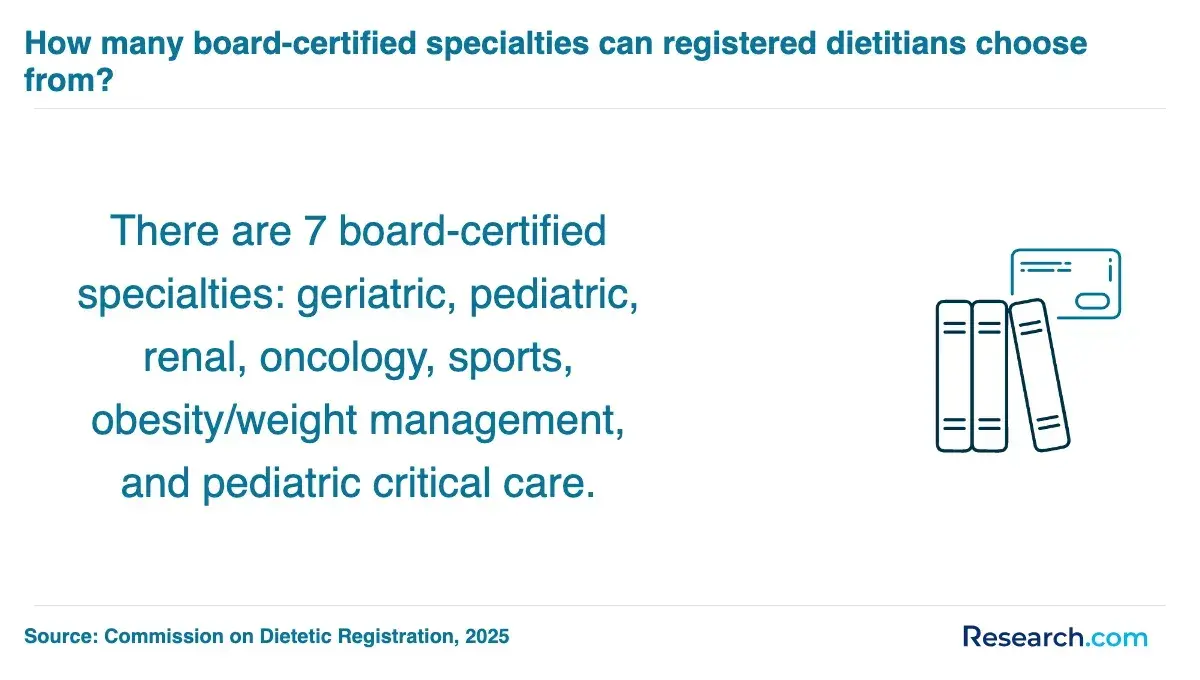
Here’s a quick rundown of the main types of dietitian specializations you can pursue in the state:
- Clinical Dietitian: Work directly with patients in hospitals or clinics, providing medical nutrition therapy for chronic or acute conditions, fully licensed under New Jersey law.
- Pediatric Dietitian: Focus on children and teens, helping with growth, managing allergies, and tackling obesity issues common among New Jersey youth.
- Geriatric Dietitian: Specialize in nutrition for older adults, managing diseases like diabetes and heart conditions as the state’s population ages.
- Sports Dietitian: Help athletes optimize performance and recovery, often with certifications like the Sports Nutritionist (C-ISSN) recognized locally.
- Community Dietitian: Design public health nutrition programs in schools and agencies, aiming to reduce chronic diseases like obesity in New Jersey communities.
- Foodservice Dietitian: Manage meal planning and food safety in institutions such as hospitals and schools, overseeing large-scale food operations.
- Research Dietitian: Conduct studies on nutrition’s effects and support evidence-based practices, often working in academic or private research settings.
- Integrative and Functional Nutrition Dietitian: Use holistic approaches and complementary therapies to address nutrition-related health issues, with recognized academic backgrounds.
- Nutrition Educator: Teach healthy eating and disease prevention in schools, community groups, or extension services.
- Corporate Wellness Dietitian: Create nutrition programs to improve employee health and cut healthcare costs for businesses and organizations.
What is the average salary of a registered dietitian in New Jersey?
The average salary for a registered dietitian in New Jersey is about $77,590 per year as of 2025, with an hourly wage around $36.46. This is a bit higher than the national average, making New Jersey a pretty competitive place to work as a dietitian.
Exact salaries, however, will depend on these factors:
- Location within the State: Dietitians near NYC and other urban areas tend to earn more due to higher living costs and demand.
- Experience Level: Beginners make around $69,919 annually, while seasoned pros with extra certs can earn over $93,000.
- Work Setting: Hospital and clinic jobs usually pay better than school or community health roles.
- Demand for Services: Metropolitan areas with large healthcare networks offer better pay and more opportunities.
In terms of regional trends, places like Newark and Jersey City generally offer higher salaries compared to suburban or rural spots. Hourly wages can vary quite a bit—from about $30.53 on the low end to $41.01 on the high end—depending on where you work. The outlook is positive too, with steady salary growth expected as nutrition awareness and healthcare services expand across the state.
If you are looking for the top paying medical jobs, dietitians and nutritionists are among the top 20, especially with years of experience.
How can professional associations boost my registered dietitian career in New Jersey?
Local professional associations play a pivotal role in advancing your career through networking opportunities, mentorship programs, and access to industry-specific events. Engaging with these organizations helps you stay abreast of the latest regulatory updates, emerging research, and specialized training that complement your formal education. Additionally, membership often provides platforms to share innovative practices and gain insights into career diversification, such as exploring roles beyond clinical settings. For professionals considering a broader scope in nutrition, learning how to become a nutritionist in New Jersey can be an effective strategy to further enhance expertise and industry presence.
How can interdisciplinary collaboration enhance your registered dietitian career in New Jersey?
Registered dietitians in New Jersey increasingly benefit from working within interdisciplinary healthcare teams. By engaging in case conferences, joint research initiatives, and professional workshops, dietitians can integrate complementary insights from physicians, nurses, and allied health professionals. This collaboration not only enriches clinical decision-making but also positions dietitians as pivotal contributors in comprehensive patient care. Exploring strategies such as understanding how to become a medical assistant in New Jersey further bolsters the value of teamwork while opening avenues for career advancement and broadened professional influence.
What do you need to keep your dietitian registration active in New Jersey?
Keeping your dietitian registration active in New Jersey is key to practicing legally and staying sharp in your field. The state has clear rules to make sure dietitians keep learning and that they uphold professional standards. Here’s what you need to know to stay on track:
- License Renewal: Renew your license every two years, typically from May 1 of an odd year to April 30 of the next odd year.
- Continuing Education: Complete 30 continuing education credits (CEUs) every renewal cycle, with at least one credit on opioid prescription education.
- Initial Renewal Exception: The first renewal after initial licensure doesn’t require CEUs unless the license was obtained through reciprocity.
- CDR Maintenance: If you’re an RDN, renew your national registration every five years with 75 continuing professional education units (CPEUs).
- Fees: Pay the renewal fee as determined by the New Jersey Board of Dietitians Nutritionists.
- Good Standing: Maintain ethical standards and report any legal or disciplinary issues promptly.
- Documentation: Keep records of all CEUs and CPEUs for possible audits.
A New Jersey registered dietitian who graduated from a local school shared that staying on top of renewals felt overwhelming at first, especially navigating the nuances around reciprocity. “Because I got my license directly here, I didn’t have to worry about CEUs for my first renewal, which was a relief. But I’ve seen colleagues who transferred licenses struggle with those extra requirements,” he explained.
He also appreciated that completing continuing education kept him connected to evolving nutrition trends, saying, “It’s not just paperwork—it really helps me feel confident and current in my practice.”
How long does it take to become a registered dietitian in New Jersey?
Typically, it takes around six to seven years from starting college to earning the dietetic registration credential. This includes completing both a bachelor’s and a master’s degree, which has recently become mandatory, along with a supervised internship and passing the national exam.
The registered dietitian education and training timeline New Jersey involves at least a year of supervised practice after finishing your graduate degree, plus some additional months preparing for the Commission on Dietetic Registration exam. While this timeline might seem long, it ensures you’re fully prepared for a rewarding career in nutrition and dietetics.
If you’re looking to save time and money, some schools offer accelerated or coordinated programs that combine these steps efficiently. You may also want to explore options for the cheapest online nutrition degree to help manage costs while you work through the process.
The chart below demonstrates that dietetics and nutrition is a female-dominated field, with more than 90% of the workforce being women.
Can international students qualify to become registered dietitians in New Jersey?
International students can definitely become registered dietitians in New Jersey, but they have a few extra hoops to jump through compared to local applicants. So, if you're an international student, these steps make sure your education and skills match U.S. standards and help you get ready for the professional world here.
- Foreign Credential Evaluation: You’ll need to get your transcripts officially evaluated by a recognized agency like World Education Services (WES) to prove your degrees match U.S. academic standards before applying to ACEND-accredited programs or for licensure.
- English Language Proficiency: If English isn’t your first language, you must submit acceptable scores from tests like the TOEFL or IELTS. For example, Rutgers University expects a minimum TOEFL score of 550 or 6.5 on the IELTS.
- Admission to ACEND-Accredited Program: Enroll in and finish a master’s-level dietetics program accredited by the Accreditation Council for Education in Nutrition and Dietetics (ACEND). This master’s degree is now mandatory to sit for the Registered Dietitian Nutritionist (RDN) exam starting January 2024.
- Supervised Practice Completion: Complete at least 1,200 hours of supervised practical experience, generally through an internship included in coordinated dietetics programs available at schools like Rowan University and Rutgers University.
- Successful Passage of RDN Exam: After finishing your education and supervised practice, pass the Commission on Dietetic Registration (CDR) exam to earn your RDN credential.
- State Licensure Application: Finally, apply for New Jersey state licensure by meeting requirements such as age, good moral character, and submitting your application with fees.
What career paths can registered dietitians pursue in New Jersey?
If you’re exploring career opportunities for registered dietitians in New Jersey, you’ll find a variety of paths that suit different interests and work environments. Whether you prefer clinical settings, community programs, or private consulting, there’s something for everyone.
- Clinical Dietitian: Work in hospitals or nursing homes managing patient nutrition, with salaries around $74,850 statewide and even higher in metro areas; job growth is strong at 10.5% through 2032, making clinical dietitian jobs in New Jersey a solid choice.
- Community Nutritionist: Develop public health programs and provide education through nonprofits or local agencies, earning about the state average while helping improve community wellness.
- Foodservice Management Dietitian: Lead nutrition services in schools or healthcare facilities, handling menu planning and staff training with competitive pay.
- Private Practice Consultant: Offer personalized nutrition counseling or corporate wellness services, enjoying flexible hours and higher earning potential based on your client base.
- Nutrition Educator/Faculty: Teach future dietitians at colleges or community programs, often requiring advanced degrees and offering steady salaries.
- Long-Term Care Dietitian: Focus on older adults’ nutrition in assisted living or rehab settings, with stable demand as the population ages.
- Corporate Wellness Dietitian: Create employee wellness programs for businesses, often with good benefits, especially in larger metro areas.
- Research Dietitian: Join clinical trials or public health studies at universities or hospitals, contributing to evidence-based nutrition practice.
- Nutrition Program Manager: Manage community nutrition projects or statewide initiatives, with chances for advancement and higher pay in bigger organizations.
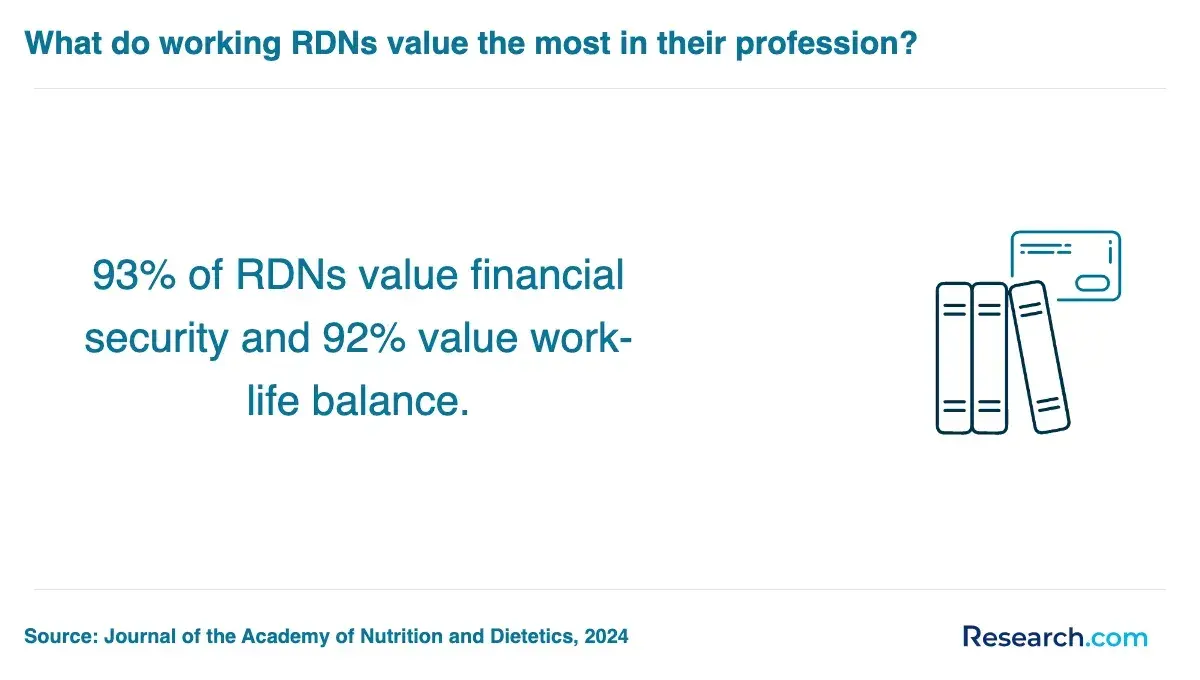
For those considering education in this field, pursuing a nutritional science degree is a great starting point to unlock these diverse career paths. To add perspective, the image below shows what registered dietitians value most in their jobs.
What do registered dietitians in New Jersey say about their careers?
- Completing my dietetics program at Montclair State University gave me a solid foundation and deep connection to New Jersey’s diverse communities. Starting my career as a registered dietitian in a local school has been incredibly rewarding, as I get to educate young minds on nutrition while adapting lessons to the unique cultural backgrounds of my students. The stability of working within the school system paired with the opportunity to see real-time progress in children’s health has truly fueled my passion. It’s inspiring to be part of a community that values wellness and education so highly. Andie
- Graduating from Rutgers University’s dietetics program was just the beginning of an exciting journey. My initial role in a New Jersey academic institution allowed me to grow professionally in ways I hadn’t anticipated. The environment is rich with opportunities for continuing education and leadership, which has helped me advance my career steadily. I appreciate the balance between the challenges posed by the state’s diverse population and the resources available to address those challenges effectively. Working here has deepened my commitment to making a tangible difference in public health. Ashley
- Choosing to study dietetics at The College of New Jersey was pivotal for my personal and professional growth. Being a registered dietitian in New Jersey means engaging with a community that values health but also faces unique nutritional challenges due to its urban and suburban mix. The opportunity to impact local families and students by promoting healthier lifestyles keeps me motivated every day. The cultural richness of the region allows me to tailor my approach and connect deeply with those I serve, which is both humbling and fulfilling. Shaun
Related Articles for Nearby States
- 2027 Steps to Become a Registered Dietitian in Delaware
- 2027 Steps to Become a Registered Dietitian in Pennsylvania
- 2027 Steps to Become a Registered Dietitian in New York
- 2027 Steps to Become a Registered Dietitian in Maryland
- 2027 Steps to Become a Registered Dietitian in Connecticut
- 2027 Steps to Become a Registered Dietitian in Rhode Island
- 2027 Steps to Become a Registered Dietitian in Virginia
- 2027 Steps to Become a Registered Dietitian in Massachusetts
- 2027 Steps to Become a Registered Dietitian in West Virginia
- 2027 Steps to Become a Registered Dietitian in Ohio
References:
- Become a Nutritionist. (n.d.). Becoming a Registered Dietitian in New Jersey. becomeanutritionist.org.
- Become a Nutritionist. (n.d.). Ultimate Guide to Becoming a Registered Dietitian. becomeanutritionist.org.
- Commission on Dietetic Registration. (n.d.). Registered Dietitian (RD) Examination - Eligibility Requirements. CDRNET.org.
- Commission on Dietetic Registration. (n.d.). Registered Dietitian (RD) or Registered Dietitian Nutritionist (RDN) Certification. CDRNET.org.
- Commission on Dietetic Registration. (n.d.). State Licensure. CDRNET.org.
- New Jersey Division Consumer Affairs. (n.d.). Board of Dietetics and Nutrition. njconsumeraffairs.gov.
- NutritionED.org. (n.d.). Steps to Become a Registered Dietitian in New Jersey. nutritioned.org.
- Salary.com. (2025, August 1). Dietitian Salary in New Jersey. salary.com.
- U.S. Language Services LLC. (n.d.). How to Work in the U.S. As a Foreign-Educated Dietician or Nutritionist. uslanguageservices.com.
Other Things You Should Know About Becoming a Registered Dietitian in New Jersey
In New Jersey, to qualify for dietetics prerequisites, you must complete accredited coursework in dietetics regardless of your major. Though a bachelor's degree in any field is acceptable, fulfilling specific dietetics coursework, accredited by the Accreditation Council for Education in Nutrition and Dietetics (ACEND), is essential for program eligibility.
To become a Registered Dietitian in New Jersey in 2027, complete a bachelor's degree in dietetics from an ACEND-accredited program, finish a dietetic internship, and pass the RD exam. Starting in 2024, a master's degree will be required. Obtain state licensure to practice legally in New Jersey.


