
2027 Best Online Jewelry Design and Repair Trade School Programs

Co-Founder and Chief Data Scientist
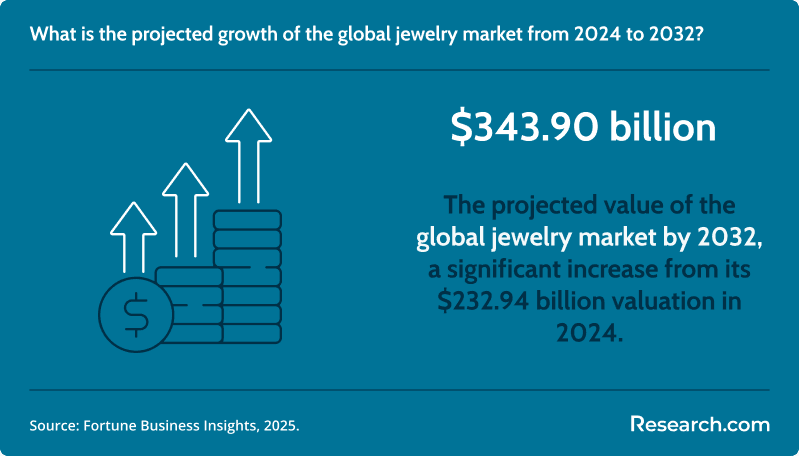
An individual interested in the jewelry industry may question whether it is a worthwhile career path. With the global jewelry market size projected to grow to USD 343.90 billion by 2032, the industry presents considerable opportunities.
At Research.com, our team has over ten years of experience in career planning, and we rely exclusively on credible sources to provide accurate and useful information. This article will assist you in navigating the educational landscape of the jewelry industry, providing a comprehensive guide to the best online jewelry design and repair trade school programs.
What are the benefits of getting an online jewelry design and repair trade school program?
- Opens doors to diverse jobs such as jewelry designer, repair technician, bench jeweler, gemologist, and custom jeweler, allowing you to work in retail, manufacturing, or start your own business.
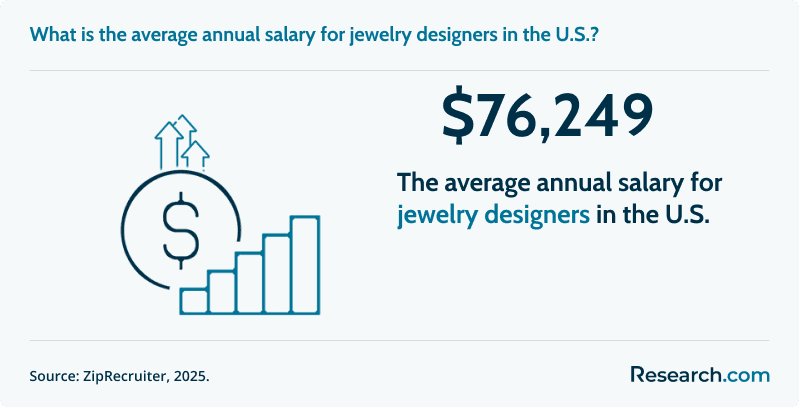
- Median annual salaries for jewelry repair professionals and designers are $53,775 and $76,249, respectively. Experienced artisans and specialists earn significantly more as they build their reputation and skills.
- Online jewelry design and repair programs offer flexible learning schedules, allowing you to gain hands-on skills at your own pace from anywhere, making it ideal for balancing work, life, and education without sacrificing quality or access to expert instructors.
What can I expect from an online jewelry design and repair trade school program?
An online jewelry design and repair trade school program equips students with practical skills in designing, crafting, and repairing jewelry. The core curriculum typically covers metalworking, stone setting, design principles, and repair techniques. Students often complete a capstone project to showcase their skills, along with required internship hours to gain real-world experience.
Tuition for online jewelry design and repair programs generally ranges from $3,000 to $15,000, depending on the school and program length. Online classes are delivered through a mix of video tutorials, live virtual workshops, interactive assignments, and downloadable resources. This format provides flexibility, allowing students to learn at their own pace while still accessing expert guidance and hands-on practice opportunities remotely.
Where can I work with an online jewelry design and repair trade school qualification?
An online jewelry design and repair trade school qualification opens diverse career opportunities. Graduates can work in corporate settings, government agencies, nonprofits, or start their businesses. Common roles include jewelry designer, bench jeweler, goldsmith, stone setter, and repair specialist. They may manage stores, consult, or specialize in custom design and repair.
Skills gained, such as problem-solving and critical thinking, enable graduates to be adaptable across various industries. For example, graduates can work in retail, manufacturing, or design studios.
According to U.S. labor data, about 46,200 jewelers and precious stone workers held jobs in 2023, with roles in retail (24%) and manufacturing (14%). While employment may slightly decline, ongoing demand exists, especially for skilled repairers and designers. This qualification offers pathways including entrepreneurship, management, and creative careers.
How much can I make with an online jewelry design and repair trade school qualification?
The average salary for someone with an online jewelry design and repair trade school qualification is around $53,775 per year, or about $26 per hour in the U.S. Entry-level jewelers typically earn between $30,000 and $42,000 annually, while experienced professionals can make upwards of $66,000 to $76,000.
Salaries vary by location, with cities like Nome, AK, and Berkeley, CA offering higher pay, around $63,000 to $67,000 annually. Industry and skill level also affect earnings, as specialized roles like jewelry designers or Computer-Aided Design (CAD) designers can earn more.
Advanced certifications and experience generally lead to higher salary growth and opportunities for management or specialized work.
- List of the Best Online Jewelry Design and Repair Trade School Programs for 2027 List of Programs
- How long does it take to complete an online jewelry design and repair trade school program? Completion Time
- How does an online jewelry design and repair trade school program compare to an on-campus program? How does an online jewelry design and repair trade school program compare to an on-campus program?
- What is the average cost of an online jewelry design and repair trade school program? Average Cost
- What are the financial aid options for students enrolling in an online jewelry design and repair trade school program? Financial Aid
- What are the prerequisites for enrolling in an online jewelry design and repair trade school program? Requirements
- What courses are typically in an online jewelry design and repair trade school program? What courses are typically in an online jewelry design and repair trade school program?
- What types of specializations are available in an online jewelry design and repair trade school program? What types of specializations are available in an online jewelry design and repair trade school program?
- How to Choose the Best Online Jewelry Design and Repair Trade School Programs How to Choose the Best Online Jewelry Design and Repair Trade School Programs
- What career paths are available for graduates of an online jewelry design and repair trade school program? Career Paths
- Are online jewelry design and repair programs accredited and recognized in the industry? Are online jewelry design and repair programs accredited and recognized in the industry?
- What is the job market for graduates with an online jewelry design and repair trade school program? Job Market
- What additional certifications can boost your jewelry design and repair credentials? What additional certifications can boost your jewelry design and repair credentials?
Best Online Jewelry Design and Repair Trade School Programs for 2027
Choosing an online jewelry design or repair program is not the same as choosing a typical online class. Jewelry work depends on visual design, material knowledge, tool handling, stone setting, repair judgment, and—if you want to sell your work—business skills. The right program depends on whether you want a short creative course, a career diploma, a degree, a gemology credential, or appraisal training.
This guide is for beginners exploring jewelry as a trade, working adults looking for flexible training, retail jewelry employees who want stronger technical knowledge, and creative entrepreneurs planning to sell custom pieces. You will learn how online programs compare, what they cost, how long they take, what skills they teach, how to check recognition and accreditation, and which career paths may be realistic after training.
Quick Answer: What Is the Best Online Jewelry Design and Repair Program?
The best online jewelry design and repair program depends on your goal. If you want a full degree and portfolio-based training, the Academy of Art University or Fashion Institute of Technology may fit better. If you want a shorter, lower-cost entry point, Penn Foster Career School, NYIAD, or IAP Career College may be more practical. If your focus is gemstones, appraisal, or industry credentials, GIA, the International School of Gemology, the Diamond Council of America, Jewelers of America, or the American School of Jewelry may be more relevant.
For hands-on bench skills, online study works best when it includes projects, tool practice, instructor feedback, or optional in-person workshops. For gemology, appraisal, design theory, CAD, sales, and business planning, online programs can be especially useful because much of the learning can be delivered through readings, videos, assignments, and guided evaluation.
How we evaluate the programs
Because tuition, training quality, and credential value vary widely in jewelry education, our program review considers cost, program length, accreditation or recognition, curriculum relevance, flexibility, and how well each option supports a specific career goal. The goal is not to identify one universal “best” program, but to help readers match programs to their intended outcome.
Research.com relies on established education data sources where applicable, including the IPEDS database, Peterson's database, the College Scorecard database, and the National Center for Education Statistics. These sources help support transparent comparisons for DEGREE programs. You can review Research.com’s broader ranking process on the methodology page.
Online Jewelry Design and Repair Programs Compared
| Program | Best fit | Length | Cost information | Credential or recognition |
| Academy of Art University – Online Jewelry & Metal Arts Degree | Students seeking a full online degree, portfolio development, and design training | 48 months | $1,301 per unit | Western Association of Schools and Colleges, Senior College and University Commission (WSCUC) |
| Penn Foster Career School – Jewelry Design & Repair Career Diploma | Beginners who want a self-paced career diploma in design and repair basics | 10 months | $789 flat fee | Distance Education Accrediting Commission (DEAC), COGNIA, and the Middle States Association of Colleges and Schools |
| New York Institute of Art and Design – Jewelry Design Course | Creative learners interested in design, beading, wirework, and selling jewelry | Up to 18 months | $699 flat fee | Licensed by the New York State Education Department; accredited by the Better Business Bureau |
| IAP Career College – Online Jewelry Designer Certificate | Students looking for a short, low-cost introduction to jewelry design and business planning | Recommended 6 weeks; can be completed in 4-12 weeks | $149 flat fee | Recognized as a career college offering certificate programs |
| International School of Gemology – Online Jewelry Design & Appraisal | Learners focused on gemology, appraisal, and created or treated gemstones | Self-paced | Registered Gemologist Program is $1,995; Registered Gemologist Appraiser Program is $2,995 | Courses are certified by state insurance departments; member of the National Association of Independent Insurance Adjusters; A+ rating with the Better Business Bureau |
| Diamond Council of America – Diamond Specialist Certification | Jewelry sales associates and professionals who want diamond and gemstone product knowledge | Not specified | $125 for members, $200 for non-members per course | Accredited by the Distance Education and Training Council (DETC) |
| Fashion Institute of Technology – Associate in Applied Science in Jewelry Design | Students who want a hybrid associate degree with extensive studio work | 2 years | Approximately $219 in-state, $658 out-of-state, and $669 international for undergraduate students | Middle States Commission on Higher Education (MSCHE) |
| Gemological Institute of America – Graduate Gemologist | Students preparing for gem identification, grading, and gemology-related roles | 6 months (28 weeks) | $23,130 tuition | Accrediting Commission of Career Schools and Colleges (ACCSC), and the Distance Education Accrediting Commission (DEAC) |
| Jewelers of America – Online Master Valuer Program | Students pursuing jewelry appraisal education through correspondence and workshop training | Correspondence course designed to be completed within one year | $1,750 correspondence course with a discount, $150 registration fee, and $1,295 workshop | Recognized by the American Society of Appraisers for education hours toward their certification |
| American School of Jewelry – Certified Master Jeweler | Aspiring or working jewelers seeking self-paced bench jewelry training | Self-paced, no set length | $3,900 tuition | School director and main trainer Edgardo Zargon was the first person in Florida to become a Certified Master Jeweler, the highest certification awarded by Jewelers of America |
1. Academy of Art University – Online Jewelry & Metal Arts Degree
The Academy of Art University offers an online Jewelry & Metal Arts degree for students who want structured art-school training with an emphasis on design, technique, and portfolio development. The program uses lectures, demonstrations, and digital materials to teach both traditional jewelry practices and modern design approaches. Its format may appeal to students who want a longer academic pathway rather than a short trade certificate.
- Program length: 48 months
- Cost per unit: $1,301
- Total credits: 120 semester units
- Accreditation: Western Association of Schools and Colleges, Senior College and University Commission (WSCUC)
2. Penn Foster Career School – Jewelry Design & Repair Career Diploma
The Penn Foster Career School Jewelry Design & Repair Career Diploma is a self-paced option for beginners who want practical exposure to repair and design fundamentals. Coursework includes skills such as stone setting, resizing, and metal finishing, making it a more trade-oriented choice for students exploring work as a jeweler or jewelry repairer.
- Program length: 10 months
- Cost per credit: $789 (flat fee)
- Total credits: N/A
- Accreditation: Distance Education Accrediting Commission (DEAC), COGNIA, and the Middle States Association of Colleges and Schools
3. New York Institute of Art and Design – Jewelry Design Course
The NYIAD Jewelry Design Course is built for learners who want to develop creative jewelry-making skills while also learning how to market and sell finished work. The course covers beginner through more advanced design techniques, including beading and wirework, and includes one-on-one mentorship and advisor access.
- Program length: Up to 18 months
- Cost per credit: $699 (flat fee)
- Total credits: N/A
- Accreditation: Licensed by the New York State Education Department. The school is also accredited by the Better Business Bureau.
4. IAP Career College – Online Jewelry Designer Certificate
IAP Career College offers a short online Jewelry Designer Certificate for students who want a fast, introductory route into jewelry design. The course is self-paced and focuses on practical starting points, including design planning, business development, and marketing your jewelry.
- Program length: Recommended 6 weeks (can be completed in 4-12 weeks)
- Cost per credit: $149 (flat fee)
- Total credits: N/A
- Accreditation: Recognized as a career college offering certificate programs.
5. International School of Gemology – Online Jewelry Design & Appraisal
The International School of Gemology provides online, self-paced education for students interested in gemology and jewelry appraisal. Its curriculum includes training related to created and treated gemstones and is designed for learners who want appraisal-focused knowledge rather than a general jewelry design course.
- Program length: Self-paced
- Cost per credit: Flat fee: Registered Gemologist Program is $1,995; Registered Gemologist Appraiser Program is $2,995
- Total credits: N/A
- Accreditation: The school's courses are certified by state insurance departments, and it is a member of the National Association of Independent Insurance Adjusters. It has an A+ rating with the Better Business Bureau.
6. Diamond Council of America – Diamond Specialist Certification
The Diamond Council of America offers online, self-paced training aimed largely at jewelry professionals and sales associates. Its courses focus on diamonds, colored gemstones, fine jewelry knowledge, and customer-facing sales skills, making this option more relevant for retail jewelry roles than bench repair training.
- Program length: Not specified
- Cost per credit: Not applicable ($125 for members, $200 for non-members per course)
- Total credits: Not specified
- Accreditation: Accredited by the Distance Education and Training Council (DETC).
7. Fashion Institute of Technology – Associate in Applied Science in Jewelry Design
The hybrid Associate in Applied Science in Jewelry Design at the FIT is a two-year option for students who want more intensive studio-based preparation. The curriculum emphasizes fabrication, stone setting, wax modeling, and technical design skills for careers such as jeweler, designer, or model maker.
- Program length: 2 years
- Cost per credit: Approximately $219 (in-state), $658 (out-of-state), and $669 (international) for undergraduate students
- Total credits: 64 credits
- Accreditation: Middle States Commission on Higher Education (MSCHE)
8. Gemological Institute of America – Graduate Gemologist
The Graduate Gemologist program at GIA is designed for students preparing to work with diamonds and colored stones. Available through online and on-campus formats, the program trains students to use professional gemological equipment for grading and identification.
- Program length: 6 months (28 weeks)
- Cost per credit: $23,130 (tuition)
- Total credits: N/A
- Accreditation: Accrediting Commission of Career Schools and Colleges (ACCSC), and the Distance Education Accrediting Commission (DEAC)
9. Jewelers of America – Online Master Valuer Program
The Master Valuer Program at Jewelers of America is a distance education appraisal program for the gem and jewelry field. It combines correspondence study with a required 3-day practical workshop and is intended for students building appraisal methodology and gemological evaluation skills.
- Program length: The correspondence course is designed to be completed within one year.
- Cost per credit: The correspondence course is $1,750 (with a discount) plus a $150 registration fee, and the workshop is an additional $1,295.
- Total credits: N/A
- Accreditation: The program is recognized by the American Society of Appraisers for its education hours toward their certification.
10. American School of Jewelry – Certified Master Jeweler
The Certified Master Jeweler program from the American School of Jewelry is a self-paced online program for aspiring and practicing jewelers. It focuses on bench jewelry skills and hands-on projects, including gemstone work and repair tasks, to strengthen technical confidence.
- Program length: Self-paced, no set length.
- Cost per credit: $3,900 (tuition)
- Total credits: N/A
- Accreditation: Edgardo Zargon, the school's director and main trainer, was the first person in Florida to become a Certified Master Jeweler, the highest certification awarded by Jewelers of America.
How long does an online jewelry design and repair program take?
Online jewelry design and repair programs vary from short certificate courses to multi-year degree programs. A career-focused online program may take about 10 months, while some comprehensive programs run 24 weeks, or around 5-6 months. Degree pathways can take longer, such as 48 months for a bachelor’s-style pathway or 2 years for an associate degree.
Timeline depends on four main factors: whether the program is self-paced or cohort-based, whether hands-on projects are required, whether the program includes gemology or appraisal content, and whether students are preparing for an outside certification. Students who already own tools and have prior craft experience may move faster through introductory content, but bench skills still require repeated practice.
| Training option | Typical time commitment from programs listed | When it makes sense |
| Short online certificate | Recommended 6 weeks; can be completed in 4-12 weeks | You want a low-cost introduction before investing in tools or a longer credential. |
| Career diploma or design course | 10 months or up to 18 months | You want structured beginner training with flexibility for work or family obligations. |
| Gemology or appraisal program | Self-paced, 6 months (28 weeks), or within one year depending on program | You want to evaluate gemstones, support appraisal work, or strengthen retail expertise. |
| Associate or degree pathway | 2 years or 48 months | You want deeper design education, portfolio development, and broader academic training. |
If you are comparing jewelry programs with other creative fields, an accelerated digital photography online degree can help show how timelines differ across creative career training options.
Online vs. on-campus jewelry design programs: which is better?
Online jewelry programs are best for students who need flexibility and want to study design theory, business planning, gemology concepts, appraisal methods, CAD basics, or repair principles from home. They usually rely on video demonstrations, readings, assignments, exams, and independent practice. This format can work well if you are disciplined and can set up a safe practice area.
On-campus programs are usually stronger for students who need direct supervision while learning bench skills. Jewelry repair, soldering, stone setting, wax modeling, fabrication, and polishing are tactile skills, and in-person studios provide access to tools, materials, ventilation, safety oversight, and immediate instructor correction.
The best choice depends on your career target. If you want to sell handmade pieces online, an online design course with business training may be enough to start practicing. If you want to become a bench jeweler in a repair shop, you may need more supervised hands-on experience than many online-only programs can provide.
| Factor | Online program | On-campus or hybrid program |
| Schedule | More flexible and often self-paced | More structured with set studio times |
| Hands-on tool access | Depends on whether the school provides kits or requires students to buy tools | Usually stronger access to studio equipment and materials |
| Instructor feedback | May happen through assignments, email, video, or mentor review | Immediate feedback during bench work |
| Best for | Design theory, gemology, appraisal, business, CAD, introductory repair concepts | Fabrication, soldering, stone setting, casting, wax modeling, and advanced bench skills |
| Main limitation | Limited direct supervision for physical techniques | Less schedule flexibility and possible commuting or relocation costs |
Online professional training can work in many fields when the curriculum matches the skill being taught. For example, an ISC2 CGRC online certification may be well suited to remote study because it focuses heavily on knowledge and exam preparation. Jewelry programs require a closer look because some outcomes depend on physical technique.
How much does an online jewelry design and repair program cost?
Costs vary widely by credential type. A complete online jewelry design and repair diploma program may cost around $839 to $1,039. Shorter certificate-style courses may cost between $149 and $300, while more specialized or intensive programs can cost more, especially when they include gemology, appraisal, workshops, or degree-level tuition.
Students should compare the full cost, not just the advertised tuition. Jewelry training may require tools, safety equipment, metals, stones, wax, software, shipping, workshop fees, and replacement materials for practice. Some providers include digital textbooks and study materials; others may require separate purchases.
| Cost item | Why it matters | Question to ask |
| Tuition or flat fee | This is the visible program price, but it may not include everything. | Is the listed price the total program cost? |
| Tools and materials | Bench practice may require pliers, files, saws, soldering tools, stones, metals, or wax. | Does the program include a kit, or do I buy supplies separately? |
| Software | CAD-focused programs may require access to jewelry design software. | Are software licenses included or discounted? |
| Workshop or lab fees | Hybrid or appraisal programs may require in-person practical sessions. | Are workshops mandatory, and what do they cost? |
| Payment plan costs | Monthly plans can improve access but may change the final amount paid. | Is there a lower price for paying in full? |
When comparing costs, avoid assuming every online credential has the same pricing logic. A nurse administrator online graduate certificate program, for example, follows a very different academic and professional structure from a jewelry repair diploma. Trade programs also differ from fields such as HVAC, where the cheapest HVAC certification schools may include different equipment, certification, and licensing considerations.
What financial aid options are available for online jewelry students?
Financial aid depends on the school, credential type, accreditation status, and whether the program qualifies for federal or state aid. Some jewelry programs are short private courses and may not qualify for traditional aid, while accredited degree-granting institutions may offer broader aid options.
- Jewelry industry scholarships: Jewelers of America offers support for jewelry students, including the Seymour & Evelyn Holtzman Bench Scholarship. This scholarship supports tuition costs for accredited jewelry or metalsmithing programs in the U.S. Applicants must be 18 or older, enrolled in an accredited program, and submit essays and jewelry work samples. Scholarships are paid directly to the schools.
- School payment plans: Some online providers, including Penn Foster, may offer monthly payment options that spread costs over time.
- Federal or state aid: Students may qualify for federal or state grants and loans if the institution and program meet eligibility rules.
- Institutional aid: Degree-granting colleges may offer school-based grants, scholarships, or tuition discounts.
- Local and trade association scholarships: Community jewelry associations, metalsmithing groups, and local arts organizations may offer small awards or training support.
Before enrolling, ask the school whether the program is aid-eligible, whether scholarships apply to online students, and whether payment plans change the total price.
What are the enrollment requirements for online jewelry design and repair programs?
Many online jewelry design and repair programs are beginner-friendly and do not require prior jewelry experience. Short courses and career diplomas may use open enrollment, while degree programs, hybrid studio programs, and competitive art programs may require additional materials.
Common enrollment requirements may include a completed application, minimum age requirement, tuition agreement, access to a computer and internet connection, and the ability to purchase or safely use basic tools and materials. Programs that emphasize design may ask for a portfolio, résumé, or statement of intent. Studio-based or degree programs may also review artistic readiness, hand-eye coordination, and prior creative work.
Do not confuse easy enrollment with automatic career readiness. A short program can introduce important concepts, but repair work and stone setting require practice, feedback, and safe tool handling. This is true across online career training: an online Microsoft Azure dual certification boot camp and a jewelry program both require students to verify whether the training format fits the skills employers expect.
The chart below shows the most common jewelry technician degrees.
What do students learn in an online jewelry design and repair program?
Coursework depends on whether the program is focused on design, bench repair, gemology, appraisal, or business. Strong programs explain not only how jewelry is made, but why certain materials, settings, and construction methods work better for durability, comfort, and appearance.
- Jewelry design fundamentals: Students study form, proportion, texture, color, balance, visual composition, sketching, and sometimes software-based design.
- Metalworking and fabrication: Coursework may introduce soldering, forming, engraving, polishing, electroplating, and working with metals such as gold, silver, platinum, and base metals.
- Stone setting: Programs may cover prong, bezel, flush, and bead setting, along with how stone shape and material affect setting choices.
- Jewelry repair: Students may learn resizing, clasp repair, reshanking, soldering repairs, engraving, polishing, and restoration basics.
- CAD and CAM: Some programs introduce Rhino, ZBrush, MatrixGold, digital sculpting, 3D modeling, digital rendering, and 3D printing prototypes.
- Wax modeling and casting: Students may learn how wax models are prepared for casting and production.
- Jewelry engineering: Coursework may address comfort, durability, manufacturing constraints, casting, die-striking, and production feasibility.
- Gem and metal identification: Programs may introduce the properties, handling, and evaluation of gemstones and precious metals.
- Portfolio development: Students may build digital or physical samples to show design ability and technical progress.
- Entrepreneurship and business: Some programs include pricing, marketing, customer relations, accounting basics, and planning for a jewelry business.
Structured online coursework can be effective when assignments build toward practical competence. This is similar to how nurse education online graduate certificate programs organize skill-focused coursework around professional outcomes, although jewelry programs require more attention to tools and hands-on practice.
The chart below shows the most in-demand jeweler skills.
What specializations can you pursue in jewelry design and repair?
Jewelry training can lead in several directions. Some students want to design custom pieces, some want to repair jewelry at the bench, and others prefer gemology, appraisal, or retail product expertise. Selecting a specialization early can help you avoid paying for coursework that does not match your goal.
- Laser welding and engraving: Training in precision repair, custom engraving, and modern equipment used for delicate jewelry work.
- Advanced CAD and 3D printing: Study of digital jewelry design, 3D modeling, and printed wax models for complex pieces.
- Gemological equipment use: Practice with loupes, microscopes, diamond testers, and related tools for gemstone identification and evaluation.
- Antique jewelry restoration: Focused training for repairing or restoring heirloom, vintage, or antique pieces while preserving design integrity.
- Custom jewelry design: Work centered on one-of-a-kind pieces, personalized commissions, and engagement or wedding jewelry.
- Jewelry cleaning and maintenance: Professional polishing, inspection, cleaning, and preventive care for customer pieces.
- Appraisal and valuation: Training for insurance appraisals, market valuation, documentation, and appraisal methodology.
- Security and workshop management: Planning secure, organized, efficient jewelry workspaces and repair workflows.
- Jewelry business and marketing: Skills for selling, client management, branding, pricing, and running a jewelry business.
If you are comparing jewelry with other hands-on trades, affordable welding certification schools can provide a useful contrast because welding and jewelry both involve metalwork, but the scale, safety requirements, tools, and employment pathways differ significantly.
How to choose the best online jewelry design and repair trade school program
The best program is the one that matches your intended job, your learning style, your budget, and your access to tools. A low-cost course may be ideal for testing your interest, but it may not be enough for employment as a bench jeweler. A degree or gemology credential may carry more structure, but it may be more than you need if your goal is to sell handmade fashion jewelry online.
Start with your career goal
Decide whether you want to become a jewelry designer, bench jeweler, repair technician, gemologist, appraiser, retail jewelry specialist, or independent business owner. Each path requires a different mix of design, bench, gemology, sales, and business training.
Review the curriculum carefully
Look for specific skills rather than broad promises. A useful jewelry repair program should identify topics such as metalworking, stone setting, soldering, resizing, polishing, and repair methods. A design program should include sketching, materials, portfolio work, CAD if relevant, and critique or mentorship.
Check hands-on practice requirements
Ask whether the school provides tool kits, supply lists, demonstrations, project assignments, or optional in-person workshops. Online learning alone is not enough for many bench skills unless students practice consistently with appropriate tools and safety procedures.
Compare instructor access and feedback
Programs with mentor review, instructor comments, live sessions, assignment critique, or discussion forums can provide better support than programs that only provide readings and quizzes.
Verify accreditation, recognition, and transfer value
Accreditation matters most when you want financial aid, transfer credit, an academic degree, or employer recognition. Industry recognition may matter more for retail, appraisal, or gemology roles. If you are also exploring adjacent creative education, such as most affordable online fashion merchandising programs, compare accreditation and career outcomes separately rather than assuming all fashion and jewelry programs carry the same value.
Ask these questions before enrolling
- Does the program teach the specific skills required for my target job?
- Is the credential a certificate, diploma, degree, certification, or continuing education course?
- Are tools, metals, stones, software, and shipping included in the price?
- Will I receive instructor feedback on actual jewelry projects?
- Does the program include portfolio development or business training?
- Is there an in-person workshop requirement?
- Is the school accredited, licensed, or recognized by relevant industry organizations?
- Can I speak with graduates or review student work?
- What support is available after completion?
What jobs can you pursue after an online jewelry design and repair program?
Graduates may pursue several jewelry-related paths, but outcomes depend on program depth, hands-on practice, portfolio quality, local hiring needs, and whether the graduate can demonstrate bench skills. Short programs may help students start practicing or selling beginner work, while more advanced programs may better support technical, gemology, or appraisal roles.
- Jewelry designer: Creates original pieces, develops collections, selects materials, sketches concepts, and may work for a brand, retailer, manufacturer, or independent studio.
- Bench jeweler: Handles hands-on tasks such as sizing, soldering, stone setting, polishing, fabrication, and repair in stores, workshops, or manufacturing environments.
- Jewelry repair technician: Focuses on restoring, fixing, resizing, and maintaining customer jewelry using bench tools and repair techniques.
- Custom jewelry maker: Designs and fabricates personalized pieces for individual clients, often including engagement rings, wedding bands, and commemorative jewelry.
- Gemologist: Identifies, grades, and evaluates gemstones, often in retail, laboratory, appraisal, auction, or high-end jewelry settings.
| Career path | Most useful training | Portfolio or proof of skill |
| Jewelry designer | Design fundamentals, sketching, CAD, materials, collection development | Design portfolio, finished pieces, digital renderings |
| Bench jeweler | Soldering, fabrication, stone setting, repair, polishing, safety | Repair samples, before-and-after work, hands-on test pieces |
| Repair technician | Ring sizing, clasp repair, reshanking, soldering, cleaning, inspection | Documented repair projects and tool competency |
| Gemologist | Gem identification, grading, equipment use, diamond and colored stone training | Gemology credential, grading practice, equipment familiarity |
| Independent jewelry business owner | Design, production, pricing, marketing, customer service, business planning | Product line, online shop, customer reviews, brand materials |
Are online jewelry design and repair programs accredited and industry-recognized?
Some online jewelry programs are accredited by institutional or distance education accreditors, while others are licensed, recognized by industry organizations, or offered as private career courses. These distinctions matter. Accreditation may affect financial aid eligibility, transfer credit, and academic recognition. Industry recognition may be more relevant for appraisal, gemology, retail jewelry, or professional credibility.
Before enrolling, verify the school directly with the accreditor or licensing body when possible. Also ask employers, local jewelry stores, working jewelers, or industry associations whether they recognize the credential. A program can be useful without being a degree, but students should understand exactly what the credential does and does not prove.
Working adults comparing jewelry programs with broader online education options may also want to review the cheapest online universities for working adults to understand how accredited colleges differ from private career courses.
What is the job market for jewelry design and repair graduates?
According to the Bureau of Labor Statistics, employment of jewelers and precious stone and metal workers is projected to decline by 4% from 2023 to 2033. Even with that projected decline, the occupation is expected to have approximately 5,400 openings each year.
Those openings are expected largely because employers need to replace workers who retire, leave the occupation, or move into other fields. The field also has a strong self-employment component: 48% of workers are self-employed. Others work in retail and manufacturing settings.
The broader jewelry market remains substantial. In 2024, the global jewelry market was valued at USD 232.94 billion. It is projected to reach USD 343.90 billion by 2032, with a compound annual growth rate (CAGR) of 5.10% from 2025 to 2032.
Market growth differs by region and product category. In 2024, Asia Pacific held a 39.28% market share, supported by the cultural importance of gold and diamonds and a growing middle class. Rings are expected to continue holding the largest market share, supported by demand for personalized engagement and wedding jewelry.
Technology is also changing the field. CAD, 3D printing, digital rendering, laser equipment, online sales platforms, and smart rings are expanding what jewelry professionals may need to understand. Students interested in the broader effect of technology on careers may compare this trend with fast-changing fields such as shortest artificial intelligence certification online pathways, where rapid upskilling is also a major theme.
The chart below shows the largest employers of jewelers and precious stone and metal workers in 2023.
Student perspectives on online jewelry design and repair programs
- Joselle: "Studying online gave me a way to build jewelry skills without disrupting my family schedule. I could review lessons when I had time, practice at home, and use instructor feedback to improve my custom pieces. The flexibility helped me move from interest to real client work."
- Rye: "I wanted jewelry training but could not relocate for school. The online lessons and mentoring helped me understand fabrication, stone setting, and design basics. I later found part-time work at a local jewelry store, where I use those skills regularly."
- Shari: "A traditional campus program was not realistic while I was working full time. The online format let me study classic and modern repair methods at my own pace, then practice the techniques until I felt ready to take on small projects for clients."
What additional certifications can strengthen jewelry design and repair credentials?
Additional credentials can help jewelry professionals show focused expertise beyond a general course or diploma. Depending on your career goal, you may benefit from training in gemology, appraisal methodology, diamond grading, colored stones, CAD, laser welding, retail sales, or advanced bench repair.
Choose certifications based on employer expectations and your intended specialty. A future appraiser may need different training from a custom designer, while a retail jewelry associate may benefit more from diamond and gemstone product knowledge. Learners comparing broader credential options can also review affordable graduate certificate online programs, but jewelry trade certifications should be evaluated separately because they serve a different professional market.
Common mistakes to avoid when choosing a jewelry program
- Choosing only by price: A low tuition number may not include tools, materials, software, workshops, or adequate instructor feedback.
- Ignoring hands-on practice: Jewelry repair and stone setting require repeated physical practice, not just watching videos.
- Assuming every credential is accredited: Certificates, diplomas, degrees, and industry courses are not the same. Verify what the credential means.
- Skipping employer research: Ask local jewelry stores, repair shops, or studios what training and skills they value before enrolling.
- Overlooking safety: Soldering, polishing, chemicals, dust, heat, and tools require safe workspace planning.
- Expecting guaranteed earnings: Training can build skills, but income depends on experience, location, portfolio, customer base, and hiring demand.
- Buying tools too early: Wait for a program supply list when possible so you do not spend money on equipment that does not match the course.
- Relying only on rankings: A ranked program may still be the wrong fit if it does not teach your target skill set.
Key Insights
- Online jewelry training is useful, but not all skills transfer equally well online. Design theory, CAD, business, gemology, appraisal, and retail knowledge can work well remotely; advanced bench work often benefits from in-person supervision.
- The best program depends on your outcome. A future bench jeweler, custom designer, appraiser, gemologist, and jewelry business owner should not choose the same curriculum automatically.
- Program length ranges widely. Options in this guide range from 4-12 weeks for a short certificate to 48 months for a degree pathway.
- Costs should be compared beyond tuition. Tools, metals, stones, software, workshops, shipping, and payment plan terms can change the real cost of training.
- Accreditation and industry recognition are different. Accreditation can matter for aid and academic value; industry recognition may matter more for appraisal, gemology, or retail jewelry credibility.
- The labor market is mixed. BLS projects a 4% decline from 2023 to 2033, but also approximately 5,400 openings each year, largely from replacement needs.
- Hands-on proof matters. Employers and clients often care about finished work, repair samples, gemstone knowledge, and practical skill more than course completion alone.
References:
- How to become a jeweler: What it is and career path - Zippia. (2025, January 8). https://www.zippia.com/jeweler-jobs
- How to become a jewelry technician: What it is and career path - Zippia. (2025, January 8). https://www.zippia.com/jewelry-technician-jobs
- Jewelers and precious stone and metal workers. (2025, April 18). U.S. Bureau of Labor Statistics. Retrieved August 11, 2025, from https://www.bls.gov/ooh/production/jewelers-and-precious-stone-and-metal-workers.htm
- Jewelry designer salary. (2025). ZipRecruiter. Retrieved August 11, 2025, from https://www.ziprecruiter.com/Salaries/Jewelry-Designer-Salary
- Jewelry Market Size, Share, Growth & Trends, 2025-2032. (n.d.). https://www.fortunebusinessinsights.com/jewelry-market-102107
- Jewelry repair salary. (2025). ZipRecruiter. Retrieved August 11, 2025, from https://www.ziprecruiter.com/Salaries/Jewelry-Repair-Salary#Yearly ZipRecruiter jewelry repair salary Fortune Business Insights jewelry market report
Other Things You Should Know About Online Jewelry Design and Repair Trade School Programs
In 2027, top online schools for jewelry design and repair include the New York Institute of Art and Design, Penn Foster Career School, and the Gemological Institute of America. These schools offer comprehensive curricula that blend design techniques with practical repair skills, often featuring flexible schedules and access to expert instructors.
The best online jewelry design and repair programs in 2027 are determined by criteria such as comprehensive curriculum covering both design and technical repair skills, experienced faculty, industry partnerships, student support services, and alumni success rates. Accreditation and positive student reviews also play crucial roles in evaluating a program's quality.


