
2027 Best Online MSN/MHA Dual Degree Programs

Co-Founder and Chief Data Scientist
With 69% of nurse leaders citing staff retention as their top challenge, it's clear that frontline management is more demanding than ever. You might feel like you're constantly fighting fires, equipped with clinical expertise but lacking the business tools to fix the system itself. This is where you face a choice: pursue a deep specialty or learn to lead the entire organization.
This degree is for those who choose to lead. To help you make that move with confidence, our career planning experts, with over a decade of experience, have created this comprehensive guide to the best online MSN/MHA dual degree programs. It's your strategic playbook for the C-suite.
What are the benefits of getting an online MSN/MHA dual degree?
- This degree prepares you for executive roles like director, vice president, or CNO, giving you the power to improve patient care on a systemic level.
- You can expect a significant salary increase, with the median pay for managers in hospitals reaching over $130,000 annually.
- The online format offers the flexibility to keep working while you learn and allows you to build a valuable national network of professional contacts.
What can I expect from an online MSN/MHA dual degree?
You should expect a rigorous and integrated curriculum that is designed to simulate the high-stakes decisions you'll face as an executive. Don't mistake the flexibility of an online format for a lack of intensity. These programs demand exceptional self-discipline, which is a core competency for any modern leader.
It's also important to understand the strategic purpose of this degree. While other MSN tracks create deep functional specialists, this dual degree is designed to produce broad organizational leaders. You're not just advancing your nursing skills; you're learning the language of business, finance, and operations.
This shift is why enrollment in traditional MSN-in-Administration programs has declined by 7% recently. The market now favors leaders who are fluent in both clinical quality and financial strategy. The best online MSN/MHA dual degree programs are built to make you that "bilingual" expert.
Where can I work with an online MSN/MHA dual degree?
According to employment data for medical and health services managers, the largest sectors of opportunity include:
- Hospitals: Employing 29% of managers, this is the most common environment for executive leadership roles.
- Physicians' Offices: Representing 14% of roles, these positions often involve managing large group practices.
- Nursing and Residential Care Facilities: This sector accounts for 9% of leadership positions.
- Government: Federal, state, and local government agencies employ 7% of healthcare managers.
- Outpatient Care Centers: This growing sector also makes up 7% of management roles.
How much can I make with an online MSN/MHA dual degree?
Professionals with an online MSN/MHA dual degree often earn more due to their expertise in both clinical operations and business administration. Salaries vary based on the specific healthcare sector and your experience level, but this credential positions you for high-impact, high-reward roles.
As of May 2024, the median annual wages for medical and health services managers in top industries were as follows:
- Government: $132,620
- Hospitals (State, Local, and Private): $130,690
- Outpatient Care Centers: $106,990
- Offices of Physicians: $100,780
- Nursing and Residential Care Facilities: $99,250
- List of the Best Online MSN/MHA Dual Degree Programs for 2027 List of Programs
- How long does it take to complete an online MSN/MHA dual degree program? Completion Time
- How does an online MSN/MHA dual degree program compare to an on-campus program? How does an online MSN/MHA dual degree program compare to an on-campus program?
- What is the average cost of an online MSN/MHA dual degree program? Program Cost
- What are the financial aid options for students enrolling in an online MSN/MHA dual degree program? Financial Aid
- What are the prerequisites for enrolling in an online MSN/MHA dual degree program? What are the prerequisites for enrolling in an online MSN/MHA dual degree program?
- What courses are typically in an online MSN/MHA dual degree program? What courses are typically in an online MSN/MHA dual degree program?
- What types of specializations are available in an online MSN/MHA dual degree program? Specializations
- How to Choose the Best Online MSN/MHA Dual Degree Program How to Choose the Best Online MSN/MHA Dual Degree Program
- What career paths are available for graduates of an online MSN/MHA dual degree program? Career Paths
- Should I Strengthen My Foundational Nursing Credentials Before Pursuing an MSN/MHA Dual Degree? Should I Strengthen My Foundational Nursing Credentials Before Pursuing an MSN/MHA Dual Degree?
- What is the job market for graduates of an online MSN/MHA dual degree program? Job Market
List of the Best Online MSN/MHA Dual Degree Programs for 2027
How do we rank schools?
Recognizing that paying for a degree is a significant investment, our ranking methodology ensures that students can make informed decisions based on comprehensive and transparent information. The ranking draws upon reliable sources such as the IPEDS database, Peterson's database, the College Scorecard database, and The National Center for Education Statistics.
These sources provide a robust foundation of data to evaluate and rank online MSN/MHA dual degree programs. For more details on our methodology, please visit Research.com’s methodology page.
1. Clarkson College - Master of Science in Nursing: Nursing Healthcare Administration
Clarkson College prepares nurses for executive roles by focusing on the design and implementation of complex healthcare strategies. The curriculum emphasizes evidence-based, data-driven decision-making to develop leaders who can pursue high-quality, safe, and affordable healthcare that results in positive outcomes for patients and organizations.
- Program Length: Approximately 2 years
- Specializations: Nursing Healthcare Administration; Nursing Education; Family Nurse Practitioner; Adult Gerontology Acute Care Nurse Practitioner; and Psychiatric-Mental Health Nurse Practitioner
- Required Credits to Graduate: 42
- Cost per Credit: $762
- Accreditation: Commission on Collegiate Nursing Education (CCNE)
2. Liberty University - Master of Science in Nursing and Healthcare Administration
Nursing professionals seeking executive leadership roles gain strategic planning skills and business management expertise through Liberty University’s dual-degree program. Blending research and scholarship with healthcare informatics and technology, the curriculum emphasizes collaboration with interprofessional teams and the application of best practices across diverse healthcare settings.
- Program Length: Approximately 2 years
- Required Credits to Graduate: 60
- Cost per Credit: $580
- Accreditation: Commission on Collegiate Nursing Education (CCNE)
3. Minnesota State University Moorhead - Dual Master of Science in Nursing (MSN) and Master of Healthcare Administration (MHA)
Earning two distinct master’s degrees in as little as two years becomes possible through Minnesota State University Moorhead’s efficient, cost-saving dual program. Its flexible, non-cohort online format lets students progress at their own pace while sharpening organizational leadership skills that apply across healthcare settings.
- Program Length: Approximately 2 years
- Required Credits to Graduate: 56-59
- Cost per Credit: $657.54
- Accreditation: Commission on Collegiate Nursing Education (CCNE); and Commission on Accreditation of Healthcare Management Education (CAHME)
4. Purdue Global - Master of Science in Nursing and Master of Health Care Administration Dual Degree
Purdue Global provides a competitive edge by combining advanced nursing practice with executive management expertise in a streamlined format. This dual degree prepares nurses for senior leadership roles in a variety of health systems by building on their clinical experience with a strong administrative foundation.
- Program Length: Approximately 2 years
- Concentration: Executive Leader
- Required Quarter Credits to Graduate: 74
- Cost per Quarter Credit: $420 (MSN); $485 (MHCA)
- Accreditation: Commission on Collegiate Nursing Education (CCNE)
5. Saint Joseph’s College of Maine - Master of Science in Nursing and a Master of Health Administration
Experienced RNs aiming for executive roles such as Chief Nursing Officer or hospital administrator can pursue this 60-credit dual-degree curriculum at Saint Joseph’s College of Maine. The program develops the expertise needed to tackle pressing national healthcare challenges around access, quality, and cost.
- Program Length: 3-5 years
- Required Credits to Graduate: 60
- Cost per Credit: $725
- Accreditation: Commission on Collegiate Nursing Education (CCNE)
6. University of Pennsylvania - Master of Science in Nursing and Master of Public Health
The University of Pennsylvania offers an interdisciplinary dual degree for nurses who want to lead quality improvement and manage care delivery across diverse settings. This program combines advanced nursing skills with a public health focus, preparing graduates to leverage strong networks and advance their professional roles.
- Program Length: 2-3 years
- Required Course Units to Graduate: 26
- Cost per Course Unit: $4,060
- Accreditation: Commission on Collegiate Nursing Education (CCNE); and Council on Education for Public Health (CEPH)
7. Valparaiso University - Master of Science in Nursing and Master of Health Administration
Valparaiso University offers a selective dual-degree program that prepares nurse leaders with a unique blend of interdisciplinary skills in both nursing education and healthcare administration. The curriculum is designed for students to earn both an MSN and an MHA in approximately 18 to 24 months.
- Program Length: 2-3 years
- Required Credits to Graduate: 57
- Cost per Credit: $715
- Accreditation: Commission on Collegiate Nursing Education (CCNE)
8. Wilmington University - M.S. in Nursing Leadership and M.S. in Management in Health Care
Through Wilmington University’s dual-degree structure, nurses gain a flexible and affordable pathway to expanded leadership roles. The program allows students to tailor their business education by choosing either a quantitative MBA track or a leadership-centered M.S. in Management, aligning studies with individual career goals in healthcare.
- Program Length: Approximately 2 years
- Required Credits to Graduate: 51
- Cost per Credit: $537
- Accreditation: Commission on Collegiate Nursing Education (CCNE)
How long does it take to complete an online MSN/MHA dual degree program?
Most online MSN/MHA dual degree programs take about two years to complete if you're studying full-time. If you choose a part-time track to better balance your current job and life commitments, you can expect to finish in three to four years. This timeline is comparable to other advanced roles that require significant training, like a flight nurse career path.
The 2-Year Sprint vs. The 4-Year Marathon
The choice between these timelines is a strategic one. A full-time, two-year "sprint" gets you to your goal faster, accelerating your return on investment. However, it demands an intense, near-total commitment. A part-time, four-year "marathon" offers a more sustainable pace, reducing the risk of burnout while you continue to work.
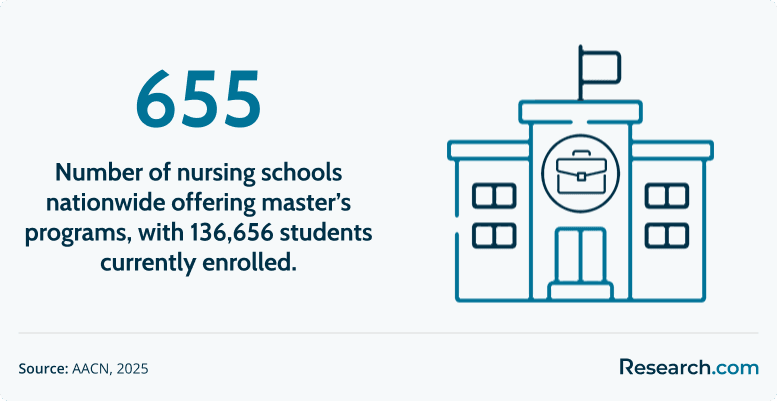
Neither path is inherently better; it’s about what fits your life. With 136,656 students currently enrolled in master's nursing programs, it's clear that many working professionals are finding a timeline that allows them to succeed. The best approach is to honestly assess your personal and professional capacity before you commit.
How does an online MSN/MHA dual degree program compare to an on-campus program?
For this specific credential, a high-quality online program is often the superior strategic choice. The old idea that online degrees are "less than" is outdated, especially in healthcare. The proof is in the numbers: 46% of registered nurses who graduated recently completed at least part of their degree online, a massive jump from 19% in previous years. Employers now recognize that online programs attract disciplined, self-motivated professionals—exactly the traits they want in a leader.
Building Your National Network Digitally
Here's the key distinction: an on-campus program helps you build a deep local network. An online program, however, allows you to build a broad national network. You'll be in classes with ambitious nurse leaders from top health systems across the country. For someone with C-suite aspirations, this national network is an incredible long-term asset, opening doors for opportunities far beyond your current city or state. The key is choosing a program with strong accreditation to ensure you're getting a respected, high-quality education.
What is the average cost of an online MSN/MHA dual degree program?
The total tuition for an online MSN/MHA dual degree can range widely, from around $30,000 for some public, in-state programs to over $100,000 for certain private universities. When you're comparing costs, remember to look beyond the per-credit price.
Be sure to account for technology fees, proctoring charges, and other administrative costs to get a true picture of the total investment—similar to evaluating an international business MBA online, where global exposure and program flexibility also factor into overall value.
Calculating Your Return on Investment
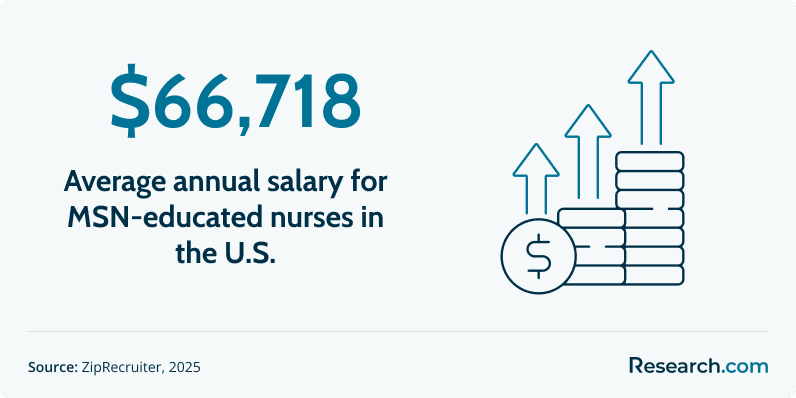
The most effective way to think about the cost is to calculate its potential return. Consider that the average annual salary for nurses with a standard MSN is around $66,718. By adding the MHA, you position yourself for executive roles that often pay more than double that baseline. When you're evaluating your options, looking at related roles, for example, the clinical nurse leader salary, can also provide useful context for your financial planning.
Don't forget that an online program also eliminates major expenses like relocation, campus housing, and daily commuting. The key is to view the tuition not as a cost, but as a calculated investment in a much higher future earning potential.
What are the financial aid options for students enrolling in an online MSN/MHA dual degree program?
Once you've calculated the investment, the next step is building a smart funding strategy. For working professionals pursuing online MSN/MHA dual degree programs, there are three main avenues you can leverage to significantly reduce your out-of-pocket costs: employer reimbursement, targeted scholarships, and strategic loans.
Maximizing Employer Tuition Reimbursement
For most nurse leaders, this is the single most powerful funding source. Many health systems use tuition benefits as a key strategy to retain and develop their future leadership talent. When you approach your manager, frame your request as a direct investment in the organization. You're not just getting a degree; you're gaining the skills to solve their operational and financial challenges.
Finding Targeted Scholarships
Look for scholarships specifically designated for "nursing leadership" or "healthcare administration," such as the AUPHA Sponsored Scholarships. These are often less competitive than general nursing scholarships simply because the applicant pool is smaller and more specialized. A few successful applications here can make a major difference.
Using Loans Strategically
After exhausting other options, federal and private loans are the most common way to cover any remaining tuition. The key is to be strategic: always compare interest rates and repayment terms carefully to find the most favorable option for your long-term financial health.
What are the prerequisites for enrolling in an online MSN/MHA dual degree program?
Getting into a competitive dual-degree program is about meeting a few key requirements. While every school is slightly different, here’s a straightforward checklist of what you'll typically need to have ready for your application:
- A Bachelor of Science in Nursing (BSN) from an accredited institution.
- An active, unencumbered Registered Nurse (RN) license.
- A minimum of two to three years of relevant clinical experience.
Many programs are also waiving GRE or GMAT scores, placing a much heavier emphasis on your professional history. Much like MBA programs online that accept transfer credits, these dual-degree pathways value practical experience and prior academic work, giving nurses flexibility to build on their previous education efficiently.
Framing Your Experience for Admissions Committees
MHA admissions committees aren't just looking for great nurses; they're looking for future executives. They want to see your leadership potential.
Don't just list your bedside duties on your resume. Highlight any experience where you managed people, processes, or resources. For example, if you've worked as a charge nurse, describe how you directed staffing, managed patient flow, and resolved conflicts. Understanding the full scope of charge nurse qualifications shows you've already been operating as a frontline manager.
What courses are typically in an online MSN/MHA dual degree program?
The curriculum in online MSN/MHA dual degree programs is intentionally integrated to make you fluent in the languages of both patient care and business operations. You won't find siloed courses; instead, you'll see core business concepts taught through a healthcare lens. You can expect a curriculum that includes courses like these:
- Core Business Courses: Healthcare Finance, Strategic Management, Health Economics, and Operations Management.
- Advanced Nursing Leadership Courses: Quality Improvement and Patient Safety, Health Policy and Ethics, and Nursing Leadership and Management.
Much like an online MPA no GRE program, these dual-degree pathways emphasize leadership, policy, and organizational strategy—helping professionals gain the administrative and decision-making expertise needed to move into executive healthcare roles.
The Educational Blueprint of a Healthcare Leader
This combination of coursework is the educational blueprint for a modern healthcare executive. Your nursing courses deepen your expertise in managing clinical quality, while your business courses give you the tools to manage budgets, staffing, and strategy. You're learning how to run the organization that delivers the care.
This "Health + Business" formula is precisely what the market demands. Data on the educational background of current medical and health services managers shows that the two most common fields of study are Health and Business.
What types of specializations are available in an online MSN/MHA dual degree program?
While the dual degree itself is a specialization in leadership, many programs allow you to sharpen your focus even further. These concentrations are typically offered on the MHA side of the curriculum and are designed to build deep functional expertise. Think of this as choosing the specific type of executive you want to become.
Healthcare Finance
This specialization is for the aspiring Chief Financial Officer or VP of Finance. You'll dive deep into financial modeling, investment strategy, and revenue cycle management. This is the right path if you want to be the one shaping the budget, not just working within its constraints.
Programs like an MBA in operations management online follow a similar principle—teaching students to optimize systems, streamline processes, and enhance performance—skills equally vital in healthcare administration.
Data Analytics
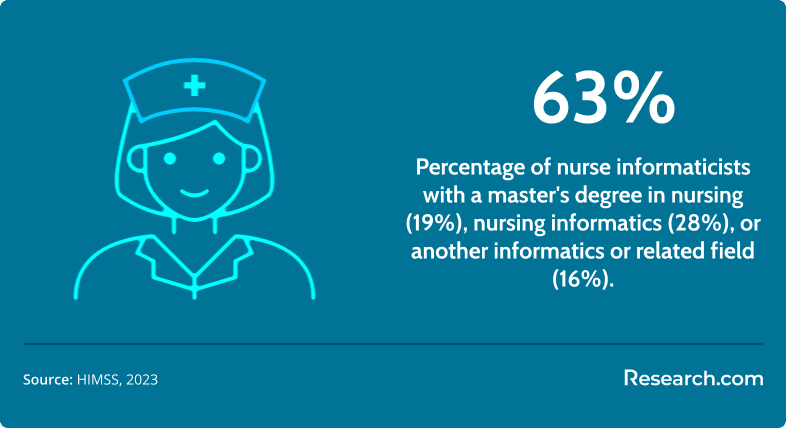
This is for the leader who wants to use data to drive strategy and improve patient outcomes. You'll learn how to interpret complex datasets to make smarter decisions about staffing, quality improvement, and operational efficiency. Just as 63% of nurse informaticists hold a master's degree to signal their expertise, this specialization marks you as an authority in data-driven leadership. This skill is critical in all settings, from large hospitals to organizations that manage home health nurse requirements.
Health Policy
If your ambition is to make an impact on a systemic level, this is the specialization for you. You'll focus on healthcare law, government relations, and public health policy. This track prepares you for leadership roles in government agencies, large advocacy organizations, or the policy departments of major health systems.
How to Choose the Best Online MSN/MHA Dual Degree Program
Choosing the right program is the most critical step in this process. With so many options, it's easy to get overwhelmed. To cut through the noise, use this four-step process to evaluate online MSN/MHA dual degree programs and find the one that truly aligns with your career goals.
- Verify Dual Accreditation. Ensure the nursing programs are CCNE or ACEN accredited and the business or health administration programs have AACSB or CAHME accreditation. This is non-negotiable proof of quality.
- Investigate the Faculty. Look for professors who are not just academics but also seasoned healthcare executives. Their real-world experience is what makes the curriculum relevant.
- Analyze the Curriculum for Integration. The best programs don't just staple two degrees together; they integrate the concepts. Look for courses like "Healthcare Finance," not just "Finance."
- "X-Ray" the Alumni Network. This is the most important step.
The Power of X-Raying the Alumni Network
A school's marketing materials will always sound impressive. The ultimate proof of a program's value is the success of its graduates.
Go on LinkedIn and use the university's alumni search tool. Look for graduates of the MSN/MHA program from the last five years. Where are they working now? What titles do they hold? Are they in the kinds of roles you aspire to? This simple "x-ray" gives you an unvarnished, real-world look at the program's true ROI. It's the most reliable way to see if a program delivers on its promises.
What career paths are available for graduates of an online MSN/MHA dual degree program?
Graduating with an MSN/MHA dual degree doesn't put you on a single career ladder; it places you on a dynamic career lattice with pathways into diverse sectors of the healthcare industry. This is the key difference between this and other MSN tracks. A clinical MSN prepares you to be a specialist expert, like a nurse practitioner. This dual degree prepares you to be a systems-level leader who manages those experts, whether in a hospital or a non-traditional setting. For instance, understanding, "What is a community health nurse?" can reveal how leadership skills are applied in public health contexts.
The Hospital C-Suite Trajectory
This is the traditional path many graduates pursue, moving from roles like Nurse Manager to Director of Nursing, Vice President of Patient Care Services, and ultimately, Chief Nursing Officer (CNO) or Chief Operating Officer (COO).
The Consultant & Strategist Path
Healthcare consulting firms highly value graduates who can speak both clinical and business languages. In this role, you would advise hospital systems on how to improve efficiency, patient outcomes, and financial performance.
The Health-Tech Innovator Role
The booming health-tech sector needs leaders who understand clinical workflows. You could lead clinical teams at a startup developing new electronic health records, telehealth platforms, or medical devices.
The Reality of the Role
Regardless of the path, the job is about solving complex problems. Leaders are hired to tackle immense challenges like staff retention, which 69% of executives cite as their top concern. With a median of 46 direct reports, your job is to create an environment where clinicians can do their best work. As the chart below shows, mastering these challenges in high-demand states can lead to significant financial rewards.
Should I Strengthen My Foundational Nursing Credentials Before Pursuing an MSN/MHA Dual Degree?
Candidates aiming to transition into executive leadership roles must first ensure that their foundational clinical skills and academic credentials are robust. Evaluating and, if necessary, bolstering your undergraduate nursing education can lead to a smoother integration into the rigorous, integrated curriculum of an MSN/MHA dual degree program. For instance, if you seek to solidify your nursing practice fundamentals prior to advancing into higher management and administrative functions, exploring easy RN-to-BSN programs can be a strategic move. This proactive step not only reinforces your clinical expertise but also enhances your readiness to absorb the business and organizational leadership components critical for success in advanced healthcare roles.
What is the job market for graduates of an online MSN/MHA dual degree program?
The job market for skilled healthcare leaders is not just strong; it's one of the fastest-growing sectors in the economy. The U.S. Bureau of Labor Statistics projects a 23% growth for medical and health services managers over the next decade. This translates to approximately 62,100 job openings projected each year, on average, as organizations expand and current leaders retire.
While national demand is high, it's always wise to research your specific regional market. However, the overall outlook is exceptionally positive for those with the right credentials.
Long-Term Security in a Growing Field
This isn't a short-term trend. The demand for healthcare leaders is driven by powerful, long-term shifts in our society. The aging of the U.S. population and the increasing complexity of healthcare delivery are structural tailwinds that will ensure high demand for your skills for decades to come.
Investing in an MSN/MHA dual degree isn't just a move for your next job; it's a strategic decision that positions you for long-term career security in a vital and expanding field. It provides the tools to not only advance your own career but to build a more resilient and effective healthcare system for the future.
Here’s What Graduates Have to Say about Their Online MSN/MHA Dual Degree Program
- Mateo: "In community health, you're always chasing the next grant and trying to stretch every dollar. I wanted to build something more sustainable. Learning about strategic finance and operations gave me the tools to develop programs with long-term viability. I’m still serving my community, but now I’m doing it from a position of financial strength and strategic foresight."
- Chiara: "I knew I had the leadership skills, but as a younger manager, I felt I needed the credentials to back them up. The online program was perfect because I didn't have to step off my career track. The best part was applying what I learned in a Friday night class to a staffing challenge at work on Monday morning. It gave me the authority and the evidence-based reasoning to be taken seriously."
- Sophie: "After a decade in oncology, I saw too many brilliant clinical trials get bogged down by logistical and financial hurdles. I was tired of feeling helpless. This program gave me the systems-thinking perspective to see the whole board, not just my one square. Now I work in research administration, making sure our clinical teams have the resources they need to get life-saving therapies to patients faster."
Key Findings
- The job market for medical and health services managers is projected to grow by 23% over the next decade, creating approximately 62,100 job openings each year.
- Graduates are positioned for high earning potential, with the median annual salary for managers in hospitals reaching $130,690.
- Online learning is a proven path for nurses, with 46% of recent RN graduates having completed at least part of their degree online.
- The curriculum prepares leaders for real-world challenges, where 69% of executives cite staff retention as their top operational concern.
- Data shows that over 234,000 current medical and health services managers majored in either Health (164,173) or Business (70,273), validating the integrated MSN/MHA focus.
- More than 136,656 students are currently enrolled in master's-level nursing programs, showing this is a popular and achievable step for career advancement.
References:
- American Association of Colleges of Nursing. (2024, April 25). Schools of nursing enrollment increases across most program levels signaling strong interest in nursing careers. Retrieved September 10, 2025, from https://www.aacnnursing.org/news-data/all-news/schools-of-nursing-enrollment-increases-across-most-program-levels-signaling-strong-interest-in-nursing-careers
- American Association of Colleges of Nursing. (n.d.). Data spotlight: Trends in graduate nursing program areas of study. Retrieved September 10, 2025, from https://www.aacnnursing.org/news-data/all-news/article/data-spotlight-trends-in-graduate-nursing-program-areas-of-study
- American Hospital Association. (2024, April 30). 4 ways to make nurse managers more impactful. Retrieved September 10, 2025, from https://www.aha.org/aha-center-health-innovation-market-scan/2024-04-30-4-ways-make-nurse-managers-more-impactful
- American Organization for Nursing Leadership. (2024). AONL longitudinal nursing leadership insight study. Retrieved September 10, 2025, from https://www.aonl.org/system/files/media/file/2024/01/AONL-Longitudinal-Nursing-Leadership-Insight-Study-5-Report_v5_0.pdf
- Data USA. (n.d.). Medical & health services managers. Retrieved September 10, 2025, from https://datausa.io/profile/soc/medical-health-services-managers
- Data USA. (n.d.). Registered nurses. Retrieved September 10, 2025, from https://datausa.io/profile/soc/registered-nurses
- Healthcare Information and Management Systems Society. (2020). 2020 HIMSS nursing informatics workforce survey. Retrieved September 10, 2025, from https://www.himss.org/resources/himss-nursing-informatics-workforce-survey
- Health Resources and Services Administration, Bureau of Health Workforce. (2024). The registered nurse workforce: National sample survey of registered nurses 2022. Retrieved September 10, 2025, from https://bhw.hrsa.gov/sites/default/files/bureau-health-workforce/Nurse-Survey-Fact-Sheet-2024.pdf
- National Council of State Boards of Nursing. (n.d.). NCLEX pass rates. Retrieved September 10, 2025, from https://www.ncsbn.org/exams/exam-statistics-and-publications/nclex-pass-rates.page
- Organization for Associate Degree Nursing. (2024, June). OADN voices June 2024 leadership message. Retrieved September 10, 2025, from https://oadn.org/news/oadn-voices-june-2024-leadership-message/
- PayScale. (n.d.). Master of Science in Nursing (MSN) degree salary. Retrieved September 10, 2025, from https://www.payscale.com/research/US/Degree=Master_of_Science_in_Nursing_(MSN)/Salary
- PayScale. (n.d.). Medical and health services manager salary. Retrieved September 10, 2025, from https://www.payscale.com/research/US/Job=Medical_and_Health_Services_Manager/Salary
- Smiley, R. A., Allgeyer, R. L., Shobo, Y., Lyons, K. C., Letourneau, R., & Zhong, E. (2023). The 2022 National Nursing Workforce Survey. Journal of Nursing Regulation, 14(1), S1–S96. https://doi.org/10.1016/S2155-8256(23)00047-9
- U.S. Bureau of Labor Statistics. (2023, November 8). Employer-reported workplace injuries and illnesses - 2022. Retrieved September 10, 2025, from https://www.bls.gov/news.release/pdf/osh.pdf
- U.S. Bureau of Labor Statistics. (2024, April 3). Occupational employment and wages, May 2023: 11-9111 Medical and health services managers. Retrieved September 10, 2025, from https://www.bls.gov/oes/2023/may/oes119111.htm
- U.S. Bureau of Labor Statistics. (2024, September 4). Medical and health services managers. In Occupational Outlook Handbook. Retrieved September 10, 2025, from https://www.bls.gov/ooh/management/medical-and-health-services-managers.htm
- U.S. Bureau of Labor Statistics. (2024, September 4). Registered nurses. In Occupational Outlook Handbook. Retrieved September 10, 2025, from https://www.bls.gov/ooh/healthcare/registered-nurses.htm
- ZipRecruiter. (n.d.). Medical and health services manager salary. Retrieved September 10, 2025, from https://www.ziprecruiter.com/Salaries/Medical-And-Health-Services-Manager-Salary
- ZipRecruiter. (n.d.). MSN salary. Retrieved September 10, 2025, from https://www.ziprecruiter.com/Salaries/Msn-Salary
Other Things You Should Know About Online MSN/MHA Dual Degree Programs
Pursuing a dual MSN/MHA degree online in 2027 generally reduces overall study time, as shared courses integrate nursing and healthcare administration elements. It also lowers total tuition costs and enhances career versatility, benefiting those aiming for leadership positions in healthcare without duplicating coursework.
Participation in 2027 online MSN/MHA dual degree programs typically requires a reliable internet connection, a computer with updated operating systems, and specific software applications. Some programs may also necessitate a headset with a microphone and a webcam for virtual meetings and exams.


