
2027 Easiest Nutrition Degree Programs

Co-Founder and Chief Data Scientist
With a median pay of $73,850, a nutrition degree offers a clear path to a stable career. Yet, many people hesitate, worried that intense science courses like chemistry and biology create an impossible barrier to entry. They see the opportunity but fear the path is too difficult.
That’s why this guide is different. Our career planning experts, with over 10 years of experience, have identified accessible and accredited programs that set you up for success. This is your expert roadmap to finding the easiest nutrition degree programs that lead to a secure, high-paying job, without the academic anxiety.
What are the benefits of getting a nutrition degree?
- You qualify for stable jobs in a wide range of settings, from corporate wellness programs to public health agencies.
- Earning potential is strong, with a median salary of $73,850 that far outpaces the average for all occupations.
- Many of the easiest nutrition degree programs are offered online, giving you the flexibility to study on your schedule.
What can I expect from a nutrition degree?
You can expect a curriculum that balances foundational science with applied skills in communication and coaching. The goal isn't to turn you into a research chemist; it's to prepare you to be an effective, credible expert who can connect with people.
Think of the role as part scientist, part coach. The science courses, like biology and anatomy, give you the essential knowledge to understand how the human body works. This is the foundation that makes your advice trustworthy and effective.
But just as important are the courses on counseling, health education, and behavioral science. These teach you how to translate that complex knowledge into practical advice that motivates people to make lasting changes. Modern nutrition is about inspiring change, not just giving out meal plans.
Where can I work with a nutrition degree?
While hospitals are a common setting, the majority of opportunities are now in community and corporate environments.
- Corporate wellness departments
- Public health agencies and non-profits
- Schools and university health centers
- Food and beverage companies
- Fitness centers and athletic organizations
- Private practice or consulting
How much can I make with a nutrition degree?
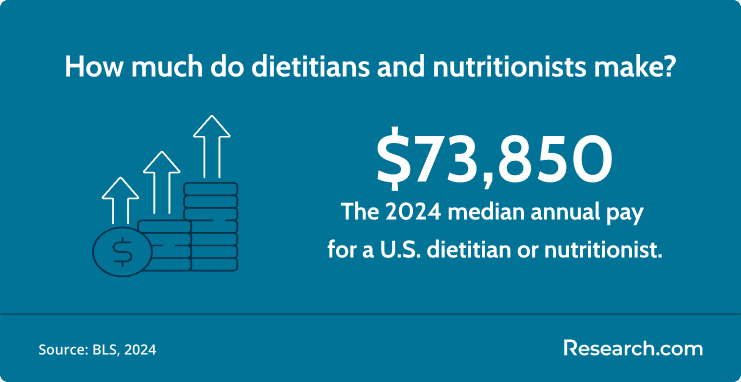
The median pay for dietitians and nutritionists is approximately $73,850 per year. That's significantly higher than the median salary for all jobs in the country, which sits around $49,500.
This data clearly shows that a nutrition degree isn't just for a "passion" career—it's a credential that leads to a professional-level income.
This strong earning potential provides a solid return on your educational investment and a secure financial future.
- List of the Easiest Nutrition Degree Programs for 2027 List of Programs
- How long does it take to complete a nutrition degree program? Completion Time
- How does an online nutrition degree program compare to an on-campus program? How does an online nutrition degree program compare to an on-campus program?
- What is the average cost of a nutrition degree program? Program Cost
- What are the financial aid options for students enrolling in a nutrition degree program? Financial Aid
- What are the prerequisites for enrolling in a nutrition degree program? What are the prerequisites for enrolling in a nutrition degree program?
- What courses are typically in a nutrition degree program? What courses are typically in a nutrition degree program?
- What types of specializations are available in a nutrition degree program? Specializations
- How to Choose the Easiest Nutrition Degree Program How to Choose the Easiest Nutrition Degree Program
- What career paths are available for graduates of a nutrition degree program? Career Paths
- What is the job market for graduates of a nutrition degree? Job Market
List of the Easiest Nutrition Degree Programs for 2027
How do we rank schools?
Recognizing that paying for a degree is a significant investment, our ranking methodology ensures that students can make informed decisions based on comprehensive and transparent information. The ranking draws upon reliable sources such as the IPEDS database, Peterson's database, the College Scorecard database, and The National Center for Education Statistics.
These sources provide a robust foundation of data to evaluate and rank DEGREE programs. For more details on our methodology, please visit Research.com’s methodology page.
1. University of Arizona - Nutrition & Dietetics Bachelor of Science
The University of Arizona offers a comprehensive online program grounded in nutritional biology, food science, and therapeutic diets. This curriculum provides the necessary DPD Verification Statement, preparing you for a career as a Registered Dietitian or for various other roles in the nutrition field.
- Program Length: 4 years
- Required Credits to Graduate: 120
- Cost per Credit: $525
- Accreditation: Accreditation Council for Education in Nutrition and Dietetics (ACEND)
2. Purdue University Global - Online Bachelor of Science Degree in Nutrition
Purdue University Global focuses on empowering students to help others through science-based, personalized nutrition strategies. The curriculum emphasizes the foundational sciences and clinical nutrition, with an option to focus your studies in a specialized area.
- Program Length: 3.5 years
- Concentrations: Holistic Nutrition
- Required Quarter Credits to Graduate: 180
- Cost per Credit: $371
- Accreditation: Higher Learning Commission (HLC)
3. The University of Alabama - Bachelor of Science (BS) in Food and Nutrition
The University of Alabama provides a 100% online program designed to explore the relationship between nutrition and human health. As one of the few accredited distance learning programs in the nation, it offers a clear, flexible path toward becoming a registered dietitian or pursuing other professional food and nutrition careers.
- Program Length: 4 years
- Required Credits to Graduate: 120
- Cost per Credit: $399
- Accreditation: Accreditation Council for Education in Nutrition and Dietetics (ACEND)
4. Georgia State University - Bachelor of Science in Nutrition
Georgia State University provides a well-rounded program that prepares students for diverse careers in health and wellness. You can choose a path focused on applied sciences for pre-professional studies or one centered on wellness promotion for entry-level roles in government and private industry.
- Program Length: 4 years
- Concentrations: Nutrition Science ; and Nutrition and Wellness
- Required Credits to Graduate: 120
- Cost per Credit (In-State | Out-of-State): $101 | $391
- Accreditation: Southern Association of Colleges and Schools Commission on Colleges (SACSCOC)
5. Arkansas State University - Bachelor of Science in Nutrition and Dietetics Online
Arkansas State University's fully online program emphasizes practical skills, allowing you to create recipes, develop meal plans, and prepare for nutrition counseling. The curriculum is designed for flexibility and ensures you will graduate with a valuable ServSafe certification, ready for a career in various food service settings.
- Program Length: 4 years
- Required Credits to Graduate: 120
- Cost per Credit: $292
- Accreditation: Higher Learning Commission (HLC)
6. Kansas State University - Nutrition and Health Bachelor's Degree
Kansas State University offers a customizable online program that dives into the science of food and its effects on health. The curriculum allows you to tailor your coursework to fit specific career goals, making it an excellent preparatory degree for pre-nursing, pre-physician assistant, or public health pathways.
- Program Length: 4 years
- Required Credits to Graduate: 120
- Cost per Credit: $493.95
- Accreditation: Higher Learning Commission (HLC)
7. Saint Louis University - Nutrition and Dietetics, B.S.
Saint Louis University emphasizes a unique "food as medicine" approach, blending nutrition science with the creativity of cooking and lifestyle innovation. The program provides hands-on experience in a modern culinary food lab and student-run café, preparing you to become a food-first expert in your chosen career.
- Program Length: 4 years
- Required Credits to Graduate: 123
- Cost per Credit: $463.09
- Accreditation: Accreditation Council for Education in Nutrition and Dietetics (ACEND)
8. Grand Canyon University - Bachelor of Science (BS) in Nutritional Science Degree
Grand Canyon University provides a program designed to turn a passion for wellness into a career helping others achieve optimal health. Through a biblically-rooted educational framework, the curriculum focuses on the science of how food influences health, preparing you for roles in nutrition, healthcare, and education.
- Program Length: 4 years
- Required Credits to Graduate: 120
- Cost per Credit: $687.50
- Accreditation: Higher Learning Commission (HLC)
9. Huntington University of Health Sciences - Bachelor of Science in Nutrition
Huntington University of Health Sciences offers a 100% online program designed to provide an extensive education in the science of nutrition. The curriculum incorporates an integrative approach, covering core topics as well as relevant areas like complementary medicine, nutraceuticals, and herbal sciences.
- Program Length: 4 years
- Required Credits to Graduate: 120
- Cost per Credit: $318
- Accreditation: Distance Education Accrediting Commission (DEAC)
10. Immaculata University - Bachelor of Science in Nutrition and Dietetics
Immaculata University offers a flexible program with face-to-face, hybrid, and online courses, preparing you for the national registration exam to become a Registered Dietitian Nutritionist. The university also features an accelerated 3+2 option, allowing you to earn both a bachelor's and a master's degree.
- Program Length: 4 years
- Required Credits to Graduate: 126
- Cost per Credit: $465
- Accreditation: Accreditation Council for Education in Nutrition and Dietetics (ACEND)
How long does it take to complete a nutrition degree program?
You can expect a bachelor's degree in nutrition to take about four years of full-time study. An associate's degree, which can be a great starting point, typically takes two years.
But it's important to remember that these are just standard timelines. You have more control over the pace than you might think, and the right program will fit your specific needs.
For students considering graduate study after their bachelor's, it's worth noting that there are best online master's in nutrition programs no GRE required, which can offer an accelerated and flexible path toward advanced credentials in the field.
Factors That Influence Program Length
Several factors can shorten or extend your time in school. If speed is your main goal, many universities now offer accelerated programs, and you can find some of the shortest nutrition degrees online. For those already in a health-related field, you can often transfer existing college credits, which can shave off a semester or even a full year.
Conversely, if you need to balance school with work or family, part-time study is a common and flexible option that extends the timeline but makes it more manageable. Committing this time means you're preparing to enter a large and stable field of over 107,000 professionals.
How does an online nutrition degree program compare to an on-campus program?
When it comes to comparing online and on-campus programs, the most important factor isn't the format—it's accreditation. A degree from a regionally accredited institution is equally valid to employers, whether you earn it online or in person. This means you can confidently choose one of the easiest nutrition degree programs online and know you're getting a quality education.
The best choice really comes down to your learning style and what your life requires right now.
Choosing the Right Format for You
An on-campus program offers structure, face-to-face interaction with professors, and direct access to campus resources like labs and libraries. Some students thrive in this traditional environment and find the routine helpful for staying on track.
On the other hand, an online program offers maximum flexibility, which is a game-changer for working adults or anyone with significant family commitments. You can study on your own schedule without having to commute. And you can be confident in this choice, as employer acceptance of online degrees from accredited schools is at an all-time high.
For students planning to continue into advanced clinical roles later on, this flexibility can be especially helpful. For instance, many online FNP programs that provide preceptors allow students to complete clinical placements in their local communities, ensuring hands-on experience without relocating or interrupting work schedules.
What is the average cost of a nutrition degree program?
The cost of a nutrition degree can vary widely depending on the school you choose. Our research shows that total tuition for a four-year bachelor's degree can range from as low as $12,000 to over $82,000.
However, understand that this "sticker price" is rarely what students actually pay. The most important number to focus on is the "net price," which is the cost after grants, scholarships, and other financial aid are subtracted.
Calculating Your Return on Investment
This is where the conversation shifts from cost to investment. When you weigh the net price of your degree against your future earning potential, the value becomes clear. The key is to remember that you are investing in a credential that unlocks a career with a median salary of $73,850.
Viewing your tuition through this lens changes everything. It's not just an expense; it's a direct investment in your long-term financial security. This strong earning potential is what makes a nutrition degree such a powerful and reliable financial decision.
Additionally, understanding how career paths vary in earning potential across the healthcare field can provide helpful context when considering your investment. For example, exploring roles such as the highest paid LPN specialty can highlight how specialization, certifications, and continued education can significantly increase income over time.
What are the financial aid options for students enrolling in a nutrition degree program?
You have several options available to help pay for your degree, and it's not as complicated as it might seem. The main types of financial aid are scholarships, grants, and loans.
The single most important step for any student is to fill out the Free Application for Federal Student Aid, or FAFSA. This form determines your eligibility for most types of aid, including federal grants and loans.
Finding the Right Aid for Your Situation
Scholarships are your best option because they are gift aid that you don't have to repay. You can find them through your university's financial aid office, professional organizations, and online search tools. Grants are also a form of gift aid, often based on financial need.
Loans must be paid back, but federal student loans typically have lower interest rates and more flexible repayment options than private loans. For those already working in a health-related field, a key strategy is to check if your employer offers tuition reimbursement. Many companies are willing to invest in helping their employees gain new skills.
Additionally, understanding the cost of education across healthcare fields can provide useful perspective as you make financial decisions. For instance, exploring dental assistant school cost can help you compare short-term training investments with longer academic programs, giving you a clearer sense of how different educational paths align with your budget and long-term career goals.
What are the prerequisites for enrolling in a nutrition degree program?
The prerequisites for most bachelor's programs in nutrition are quite straightforward. You will typically need a high school diploma or a GED. Some programs may also ask for foundational coursework in high school-level math and science, but many accessible programs have flexible entry requirements.
These prerequisites are not designed to be barriers. Instead, they ensure you have the basic foundation needed to succeed in the college-level curriculum.
Leveraging Your Prior Experience
If you're already working in a related field, your existing knowledge is a significant asset. Many programs will accept transfer credits for college-level science courses you've already completed, which can save you both time and money.
Think of it like other healthcare pathways. For example, there are programs designed to create an efficient path for experienced professionals, like the fastest paramedic to RN bridge program online. Similarly, in nutrition, your prior experience is often seen as a valuable starting point. Be sure to talk to an admissions advisor about getting credit for the work you've already done.
What courses are typically in a nutrition degree program?
A nutrition curriculum is designed to give you a comprehensive understanding of both the science of food and the art of helping people. You can expect your coursework to be divided into two main categories:
- Foundational Sciences: These courses form the bedrock of your expertise and typically include biology, anatomy and physiology, and chemistry.
- Applied Skills: This is where you learn to use that scientific knowledge. These courses often cover topics like food science, public health nutrition, and counseling and coaching techniques.
Applying Your Knowledge to Public Health Challenges
Those science courses are what give you credibility in a world full of health misinformation. They are the reason you can confidently explain the "why" behind your advice. This expertise is similar to what you'd find in a fast track exercise science degree online, where a deep understanding of the body is essential.
This knowledge isn't just theoretical; it's used to solve serious, real-world problems. For example, nutrition professionals work globally to address issues like childhood stunting, which affects over 3% of children in some regions. The science you learn in the classroom becomes a powerful tool for improving lives.
What types of specializations are available in a nutrition degree program?
After you build a strong foundation with your core courses, many programs offer the chance to specialize in a specific area of nutrition. This is how you can tailor your degree to your career goals and become an expert in a focused field.
Common specializations include sports nutrition, public health and community nutrition, and food systems management. Choosing a specialization can help you stand out in the job market and often leads to higher earning potential.
Specialization Spotlight: Sports Nutrition
Sports nutrition is one of the most popular and dynamic specializations. In this track, you'll learn how to apply nutritional science to optimize athletic performance, recovery, and overall health. It's a field that combines the science of the human body with the psychology of motivation, similar to what you might study in the fastest online sports psychology degree.
Graduates with this focus often work with sports teams, in university athletic departments, at high-end fitness centers, or in private practice counseling athletes. This kind of specialized expertise is in high demand and can place you in some of the highest-paying sectors of the nutrition field.
How to Choose the Easiest Nutrition Degree Program
When looking for the easiest nutrition degree programs, the key is to shift your definition of "easy" from "low quality" to "designed for your success." Here are the four key features to look for:
- Regional Accreditation. This is the most important factor. It's the official seal of approval that guarantees the program meets high academic standards and that your degree will be respected by employers.
- High Acceptance Rates. A school with a high acceptance rate is signaling that it is accessible and focused on providing opportunities, not on being exclusive.
- Strong Student Support. Look for programs that offer robust support services like tutoring, career counseling, and dedicated faculty advisors. These resources are designed to help you succeed.
- Flexible Formats. The availability of online or hybrid options gives you the flexibility to balance your studies with work and life, making the entire process more manageable.
Why Accreditation is the Great Equalizer
Of all these factors, accreditation is the one you cannot compromise on. Employers value a degree from an accredited institution, regardless of how selective that school is. It is the universal standard for quality in higher education. This means you can confidently choose an accessible, supportive program and know that your credential is valid, powerful, and a smart investment in your future.
What career paths are available for graduates of a nutrition degree program?
A bachelor's degree in nutrition is a complete credential that qualifies you for a number of important roles in the health and wellness field. You won't be limited to a hospital setting; in fact, most jobs are in community and government roles.
With your bachelor's, you can pursue job titles like:
- Health Educator
- Corporate Wellness Coordinator
- Public Health Nutritionist
- WIC Nutritionist
- Food Program Manager
These roles are found in a variety of industries, giving you the flexibility to build a career that matches your interests.
The Path to Becoming a Registered Dietitian (RDN)
It's important to understand the distinction between a nutritionist and a Registered Dietitian, or RDN. While the bachelor's degree opens all the doors mentioned above, the protected title of RDN is required for clinical roles and has a more advanced educational requirement.
To become an RDN, you must complete your bachelor's degree, then go on to earn a master's degree from an accredited program. If this is your long-term goal, you can find a fast track master's in nutrition online to continue your education. Think of the bachelor's as the essential foundation—a powerful credential on its own and the required first step toward licensure.
What is the job market for graduates of a nutrition degree?
The job market for nutrition graduates is strong and getting stronger. This is excellent news for anyone looking for a secure career path.
The U.S. Bureau of Labor Statistics projects that employment for dietitians and nutritionists will grow by 6% over the next decade. That's faster than the average for all occupations and translates to about 6,200 job openings each year. This steady demand is a clear sign of a healthy and expanding field, making even the easiest nutrition degree programs a solid investment.
Why Demand for Nutrition Experts is Growing
This isn't a temporary trend. The demand is driven by a major, long-term shift in our healthcare system toward preventative health. As a society, we are increasingly focused on using nutrition to prevent chronic diseases like diabetes and heart disease, which keeps qualified experts in high demand.
While technology will continue to evolve, it won't replace the need for human connection. AI might automate basic meal plans, but it can't provide the empathy, coaching, and motivational support that a trained nutrition professional can. This focus on human-centric skills is what will ensure your role remains valuable and secure for years to come.
Here’s What Graduates Have to Say About the Easiest Nutrition Degree Program
- Sandy: "I was a medical assistant and felt like I had hit a ceiling in my career. This degree was my path forward. I chose to specialize in public health, and the online format meant I didn't have to relocate or quit my job. Now I'm managing a nutrition outreach program, and I finally have the career growth I was looking for."
- Josh: "I was working in a clinic while I studied, and it was amazing how I could apply what I was learning almost immediately. A topic I covered in an online module one night would be relevant to a patient case the next day. It made the education feel incredibly practical and helped me become a better resource for my team long before I graduated."
- Gabby: "I chose this field because I wanted stability. I saw so many other industries facing uncertainty, but healthcare is always essential. The program gave me the exact skills employers were looking for, and I felt secure in my job search. Knowing this profession is projected to grow for years to come gives me real peace of mind."
Key Findings
- A nutrition degree is a strong financial investment, leading to a median salary of $73,850, which significantly outperforms the national average for all occupations.
- The job market for nutrition professionals is secure and growing, with a projected growth rate of 6%—faster than the average for all occupations—ensuring long-term career stability.
- Graduates enter a large and established profession of over 107,000 dietitians and nutritionists, providing a wide network of career opportunities.
- Career paths are diverse and not limited to clinical settings, with only 31% of professionals working in hospitals, while many others thrive in corporate wellness, government, and private practice.
- The skills gained in a nutrition program are directly applicable to solving critical public health issues, such as the global childhood stunting rate of 3.40%.
- While total tuition costs can range from $12,000 to over $82,000, the availability of affordable public and online options makes it possible to find a program that fits your budget.
References:
- Data USA. (n.d.). Dietitians & nutritionists. Retrieved September 15, 2025, from https://datausa.io/profile/soc/dietitians-nutritionists
- Global Nutrition Report. (2024). United States of America: Nutrition profile. Retrieved September 15, 2025, from https://globalnutritionreport.org/resources/nutrition-profiles/north-america/northern-america/united-states-america/
- U.S. Bureau of Labor Statistics. (2024, September 4). Dietitians and nutritionists. Occupational Outlook Handbook. Retrieved September 15, 2025, from https://www.bls.gov/ooh/healthcare/dietitians-and-nutritionists.htm
Other Things You Should Know About the Easiest Nutrition Degree Programs
While specific programs may vary, many nutrition degree programs in 2027 are offering flexible options regarding internships. Some may require them as part of the curriculum to provide practical experience, while others might offer them as optional. It’s essential to check the specific requirements of the institution you are interested in.
Look for programs accredited by the Accreditation Council for Education in Nutrition and Dietetics (ACEND) in 2027. Accreditation ensures that the program meets industry standards and adequately prepares students for future licensure and career opportunities in the field of nutrition.
To determine the easiest nutrition degree programs, students should research program curricula, graduation rates, and student feedback regarding workload and support services. Often, programs with flexible scheduling, online options, and accessible faculty support are perceived as easier, due to manageable stress levels and personalized learning experiences.
To maintain professional credentials and state licenses, nutritionists must regularly complete continuing education units (CEUs) to stay current with the latest nutritional science. For instance, Registered Dietiticians typically need to complete 75 credit hours of approved education every five years, while other certifications may require annual or biennial renewals. These requirements ensure that practitioners are updated on new research, evolving dietary guidelines, and advanced counseling techniques throughout their careers.


